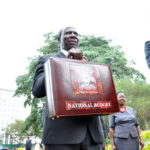

Kampala, Uganda — July 31, 2026-The government has reaffirmed its commitment to Uganda’s public finance laws by rejecting a request from the Uganda National Bureau of Standards (UNBS) to retain and spend the non-tax revenue it generates.
The position was presented by Henry Musasizi before Parliament’s Committee on Tourism, Trade and Industry during a review of the bureau’s budget performance.
Musasizi said UNBS, as a government vote, is required under the Public Finance Management Act to remit all revenue it collects to the Consolidated Fund

“UNBS has Vote status and should comply with the requirements of the Public Finance Management Act to remit all revenue collections to the Consolidated Fund without spending at source,” the minister said.
The government maintained that allowing agencies to spend revenue before remitting it would undermine the country’s public finance management system, which requires Parliament to appropriate public funds before they are spent.
UNBS had sought authority to retain part of its internally generated revenue, arguing that the arrangement would improve operational efficiency by providing quicker access to funds for inspections, laboratory services, standards enforcement, and other regulatory functions.
However, the Ministry of Finance argued that the bureau has continued to receive significant government funding. Its approved budget has increased from Shs65.04 billion in the 2021/22 financial year to Shs133.83 billion in 2025/26, while budget releases have consistently remained high.
During the same period, UNBS increased its non-tax revenue collections from Shs60.74 billion to Shs87.68 billion, largely driven by import inspection services.
The government’s decision signals that, despite growing revenue collections by public agencies, it intends to maintain strict adherence to the Public Finance Management Act, with all revenues passing through the Consolidated Fund before expenditure is approved by Parliament.
The issue is expected to remain part of wider discussions on improving the efficiency of government agencies while preserving transparency and accountability in the management of public finances.
Related Posts
 Warm and heartfelt greetings from the UNBS family of quality and standards
By Dr Ben Manyindo We are happy and excited whenever we buy or receive…