Uganda Railways Corporation (URC) has resumed transporting coffee exports by rail for the first time in eight years with efforts to lower logistics costs and improve the competitiveness of Uganda’s leading export commodity on the international market.
The corporation announced that it has successfully transported its first coffee export consignment by rail since 2018, a development expected to boost the country’s growing coffee industry while offering exporters a cheaper and more efficient alternative to road transport.

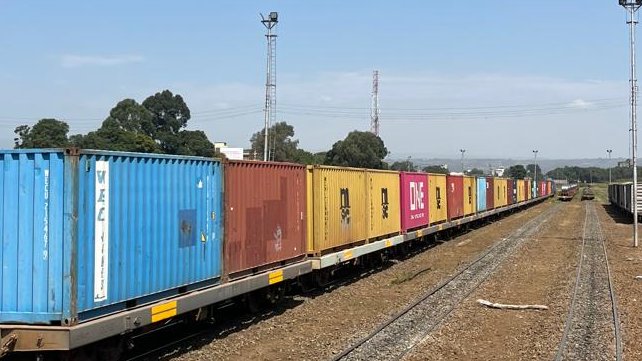
The maiden consignment comprised 29 containers, including 28 twenty foot containers and one forty foot container, carrying a total of 606.6 tonnes of coffee destined for the Port of Mombasa in Kenya for onward shipment to international markets.
According to the Ministry of Agriculture, Animal Industry and Fisheries, Uganda exported 8.6 million 60 kilogram bags of coffee between June 2025 and May 2026, underlining the crop’s continued importance as the country’s top foreign exchange earner. The latest export volumes reflect sustained growth in the sector, driven by increased production, improved farming practices and expanding international demand for Ugandan coffee.
Despite the record export performance, none of the coffee had been transported by rail during the period, making URC’s return to the coffee logistics chain a major breakthrough.

URC said transporting the 606.6 tonne consignment by road would have required about 17 heavy-duty trucks, each carrying an average load of 36 tonnes. At prevailing freight charges of about $2,900 per twenty-foot container and $3,300 for a forty-foot container, the exporter would have spent an estimated $84,500 on road transport.
Instead, the railway corporation moved the entire shipment on a single train at a rate of $735 per twenty-foot container and $990 for the forty-foot container, bringing the total freight bill to just $21,570.
The move enabled the exporter to save approximately $62,930 in transport costs, demonstrating the potential of rail freight to significantly reduce the cost of doing business for Ugandan exporters.
URC said the shift from road to rail also delivers wider economic and environmental benefits by removing around 17 heavy trucks from the highways, easing traffic congestion, reducing wear and tear on roads, lowering carbon emissions and minimizing risks associated with long distance cargo transportation.
“For URC, this marks a welcome return to coffee haulage and a meaningful step in diversifying our cargo portfolio,” the corporation said.
“It also demonstrates how rail can make Ugandan exports more competitive on the global market while contributing to Uganda’s broader economic development agenda,”the corporation added.
The development comes as the government continues to promote rail transport as a cost effective and environmentally sustainable mode of moving bulk cargo. Authorities have in recent years invested in rehabilitating sections of the metre gauge railway and strengthening regional rail connectivity to facilitate trade through the Northern Corridor linking Uganda to the Port of Mombasa.
Coffee remains Uganda’s most valuable agricultural export, supporting millions of households and contributing significantly to export earnings. Government targets under the National Coffee Roadmap aim to further increase production and expand value addition as the country seeks to strengthen its position among the world’s leading coffee exporters.
URC’s return to coffee transportation is aimed at encouraging more exporters to embrace rail, helping reduce logistics costs while enhancing the efficiency and competitiveness of Uganda’s export sector.