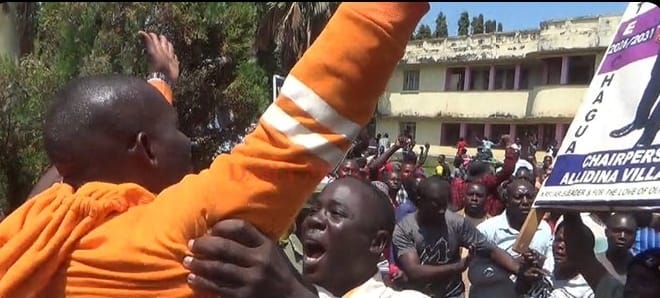

Jinja City, July,31,206— The Local Council I elections in Jinja City have produced a political outcome that differs sharply from the city’s voting pattern in the 2026 general elections, with the National Resistance Movement (NRM) emerging as the dominant force at the village level despite the opposition’s earlier victories in parliamentary and mayoral races.
Official results indicate that NRM candidates won 113 of the 141 LC1 chairperson positions contested across the city. The remaining seats were taken by independent candidates and a smaller number of opposition-backed contenders.
The results suggest that many voters separated local leadership from national politics, choosing candidates they considered best suited to address community concerns regardless of how they voted in higher-level elections.
Jinja City NRM General Secretary Medi Ntuyo described the outcome as evidence that the ruling party had rebuilt its grassroots structures after disappointing performances in the general elections.
He said the party invested in identifying respected community leaders, strengthening village mobilisation and encouraging candidates to remain visible among residents throughout the campaign period.

“Our focus was on presenting candidates who were already known for serving their communities,” Ntuyo said, adding that the strategy restored confidence among voters.
Opposition leaders, however, attributed the outcome to organisational weaknesses.
FDC Deputy National Head of Mobilisation Medi Mbentyo said the opposition failed to maintain unity in several villages, leading to multiple candidates competing for the same support base. He warned that unless opposition parties improve coordination, similar outcomes could recur in future grassroots elections.
Former Jinja City Mayor Peter Okocha Kasolo also argued that many opposition candidates concentrated on national political messaging while paying less attention to local issues such as sanitation, security and neighbourhood development.
According to Kasolo, village elections are won by candidates who maintain daily contact with residents and demonstrate a practical commitment to solving community problems.
Among those elected was Badiru Nabugo of Mainstreet West Village in Jinja South Division, who retained the chairmanship unopposed. He said his continued engagement with residents and willingness to assist the community earned him broad support.
NUP Head of Ideology and Training Pastor Andrew Muwanguzi declined to provide a detailed assessment of the party’s performance, saying he would comment after reviewing the overall results.
The LC1 elections, conducted across Uganda this week, have highlighted the importance of grassroots political structures, with many areas producing results that differed from those of the general elections.
In Jinja, the latest vote reinforces the view that while opposition parties continue to command significant support in national contests, the NRM retains a formidable village-level network capable of influencing local governance and future political mobilisation.
Related Posts
 EC issues LC1 elections roadmap: voters to queue behind candidates
The Electoral Commission (EC) has released a roadmap to the local council and women council…