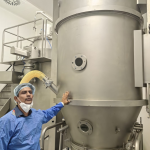

A financial institution has moved to recover outstanding loans from businessman Mathias Magoola by advertising the sale of several properties associated with his business empire, including the massive Dei pharmaceutical manufacturing facility in Matugga, Wakiso District.
This development that puts hundreds of billions of shillings invested by the government in the project under scrutiny.

The proposed auction comes at a time when the government has invested Shs723.4 billion in Dei BioPharma Limited, the privately operated pharmaceutical manufacturing project, with Parliament raising questions about the documentation of its shareholding, expected returns and accountability for public funds committed to the venture.
In a notice published on Thursday, November 5, 2026, Jald (U) Limited, a debt collection and property management firm, announced that it had received instructions from an unnamed financial institution to dispose of properties belonging to Dei Industries International Limited and its guarantors unless the outstanding loan balances, interest and associated costs are settled.
“Unless Dei Industries International Ltd or its guarantors pay to our client the outstanding loan balances, interest plus our fees and disbursements before the date of sale, we shall proceed to sale by Public Auction/Private Treaty the Commercial Property thereon below mentioned,” the notice reads.

The most prominent property listed is the industrial establishment in Matugga, measuring approximately 20.673 acres and registered under Dei Industries International Limited and Dei Natural Products International Limited.
The property houses the pharmaceutical manufacturing investment associated with Magoola, which has been presented by government as a strategic project intended to establish Uganda as a manufacturer of medicines, vaccines and other pharmaceutical products rather than relying heavily on imports.
The notice also lists a fully integrated and operational wheat milling plant along Sixth Link Road in Luzira, Kampala, among the properties targeted for disposal.
The debt collector has given occupants 14 days to vacate the affected premises to allow prospective buyers to inspect them, while the proposed sale is scheduled for 30 days after publication of the advertisement.
The financial institution seeking to recover the money and the exact amount of the outstanding debt have not been disclosed in the notice.
The development is particularly significant because the Matugga facility has received substantial financial backing from taxpayers, with the government becoming a co-investor in the privately operated enterprise.
According to a report presented to Parliament by the Committee on Presidential Affairs on October 6, 2026, government had cumulatively invested approximately Shs723.4 billion in Dei BioPharma.
The money was released in three major allocations, beginning with Shs70 billion in the 2023/2024 financial year, followed by another Shs75 billion in December 2023 and Shs578.4 billion through a supplementary budget in the 2024/2025 financial year.
Presenting the committee’s findings, Martin Ojara Mapenduzi said the substantial investment required stronger accountability mechanisms, particularly regarding the government’s ownership stake and the benefits expected from the project.
“The committee was informed that the Government had cumulatively invested approximately Shs723.4 billion in DEI BioPharma Limited,” Mapenduzi said.
The committee established that government holds a 9.4 per cent stake in the company, which is expected to increase if additional financing is provided. However, officials were unable to present documentation confirming the government’s shareholding during the assessment.
“Government should ensure that clear documentation of government’s shares in Dei BioPharma, the expected returns, deliverables and performance targets, commensurate with the public resources invested, are provided,” Mapenduzi told Parliament.
The committee further established that the pharmaceutical complex, which sits on a 150-acre site in Matugga, is designed to manufacture generic medicines, vaccines, injectables, cancer medicines, penicillin, medical devices and other pharmaceutical products.
Despite the enormous investment, the facility has not yet reached its intended production capacity. During the 2024/2025 financial year, it produced and distributed six generic medicines, including paracetamol, tramadol, metformin, doxycycline and metronidazole, while several specialised production lines remained under installation, validation and commissioning.
Parliament was also informed that the project requires an additional US$434 million to complete and fully operationalise the facility.
The committee warned that without addressing the remaining funding and infrastructure gaps, the country risks having a strategically important investment operating below its potential.
The project is expected to create up to 20,000 jobs when fully operational, compared with more than 1,000 jobs already attributed to the facility.
Government has also been urged to facilitate the provision of 100 megawatts of reliable electricity and adequate water infrastructure, with the factory expected to require between seven million and 10 million litres of water daily at full production capacity.
The latest debt recovery notice therefore raises important questions about the financial position of the companies associated with the project, the relationship between the outstanding bank loans and the assets being advertised, and the protection of public investment.
The financial institution has not publicly disclosed the amount it is seeking to recover, while the notice does not explain whether the loan obligations are connected to the financing of the pharmaceutical factory or other business operations.
Under the advertised terms, the properties will be sold through public auction or private treaty, with payment required in cash, bank draft or through Real Time Gross Settlement (RTGS).
The development comes as Parliament continues to demand stronger safeguards over public money invested in privately operated strategic projects, with Dei BioPharma among the major beneficiaries of government financing.