Energy Minister Monica Musenero has challenged oil companies, contractors and other stakeholders in Uganda’s petroleum sector to move beyond awarding contracts to local suppliers and invest in building industries that will enable the country to retain more money from its oil resources.
Musenero said Uganda must use the approaching commercial oil production to strengthen domestic manufacturing, develop technical skills, transfer technology and create businesses capable of surviving beyond individual petroleum projects.

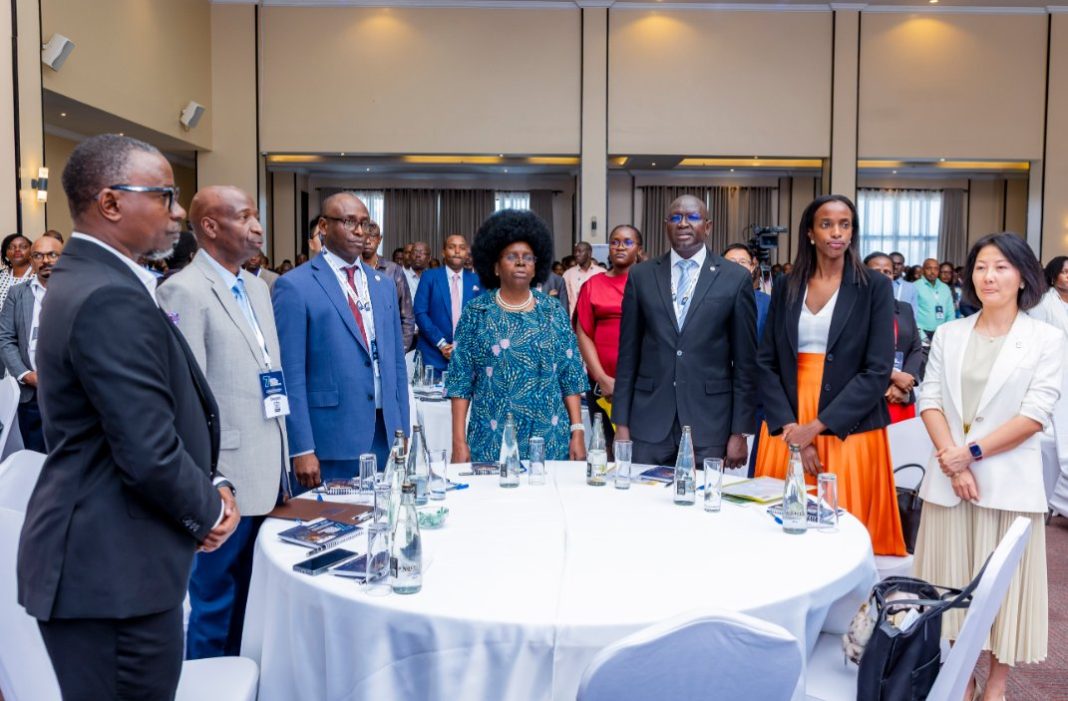
She made the remarks while officiating at the opening of the 7th Annual National Content Conference 2026 at Mestil Hotel and Residences in Kampala on Wednesday, November 25.
The two-day conference, running from November 25 to 26, is being held under the theme, “Sustaining National Participation, Competitiveness and Value Retention in Uganda’s Oil and Gas Sector.”
The conference brings together government institutions, international oil companies, contractors, financial institutions, development partners, academia and local businesses to assess Uganda’s progress in preparing citizens and enterprises to participate in the petroleum industry.

Musenero challenged stakeholders to measure national content beyond the number of Ugandan companies receiving contracts, saying the country must establish whether participation in the petroleum industry is translating into lasting economic benefits.
“Where is the money? Where are the industries? And where is the lasting value?” she asked, challenging industry players to examine how much of the money invested in the petroleum sector remains within Uganda.
She said national content should not be judged simply by the number of contracts awarded to Ugandan companies but by the industries, expertise and productive capacity established through those contracts.
The minister noted that Uganda had made progress through increased participation of local enterprises, employment opportunities, vocational training and professional development, but warned that the country risked missing the bigger economic benefits if it failed to build industries around the petroleum sector.
She called for stronger connections between oil and gas activities and other sectors, including manufacturing, agriculture, tourism, transport, housing, health and education.
Musenero also warned businesses that the transition from construction to petroleum production would change the nature of available employment and commercial opportunities.
She explained that companies which had benefited from construction contracts needed to prepare for a different market characterised by specialised technical services, equipment maintenance, inspection, environmental management and digital technologies.
“Companies must prepare for the next phase. The opportunities that come with construction will not necessarily be the same as those available during production and operations,” she said.
She urged licensed oil companies and their contractors to share their future procurement plans and workforce requirements early enough to enable Ugandan businesses, universities and vocational training institutions to prepare workers with the necessary skills.
The minister also raised the issue of financing, saying many local enterprises needed affordable capital to acquire equipment, improve their technical capacity and compete for petroleum contracts.
She disclosed that Government was advancing the development of a Local Content Development Fund Bill intended to establish a sustainable financing mechanism for enterprise development, skills enhancement and improved competitiveness.
Musenero further challenged oil companies and their contractors to improve procurement transparency and payment practices, particularly amid complaints that some Ugandan suppliers wait for extended periods to receive money for services already delivered.
She said local businesses needed opportunities to gain experience and expand their operations but should also be held accountable for delivering quality work and meeting industry standards.
“Give local enterprises opportunities to supply, build their experience and grow, while holding them accountable to the required standards,” she said.
The minister also called for continued investment in the Industry Enhancement Centre, professional certification, vocational training and structured technology transfer to ensure Ugandans acquire the skills required to participate in the industry.
She emphasised the need to deliberately involve women, young people and communities in petroleum-hosting areas in the opportunities emerging from oil development.
Her remarks come as Uganda continues preparations for commercial petroleum production, with the government now targeting first commercial oil production before the end of June 2027, following delays in completing critical infrastructure.
The East African Crude Oil Pipeline (EACOP), which will transport Uganda’s crude oil from Kabaale in Hoima District to the port of Tanga in Tanzania, is expected to be ready to receive crude by mid-December 2026. However, pipeline readiness should not be confused with the commencement of commercial production.
The 1,443-kilometre pipeline is a key component of Uganda’s oil export infrastructure, alongside the Tilenga project operated by TotalEnergies and the Kingfisher project operated by CNOOC.
Uganda’s petroleum industry has attracted investments exceeding $14 billion (about Shs57.4 trillion), according to figures presented by the Petroleum Authority of Uganda during a separate oil and gas sector conference in Kampala earlier this month.
The investments have supported infrastructure development and created business opportunities in construction, transport, manufacturing, hospitality and other sectors.
The Petroleum Authority of Uganda’s Acting Executive Director, Michael Otonga Ochan, previously disclosed that the sector had employed 22,234 people by June 30, 2026, with Ugandans accounting for 18,958, representing approximately 85 per cent of the workforce.
The figures highlight the importance of local participation as the country moves towards the production stage, when businesses will need to compete for specialised services rather than relying mainly on construction-related contracts.
Uganda’s national content framework also requires oil companies, contractors and subcontractors to prioritise qualified Ugandan businesses in designated goods and services. The regulatory guidelines provide for shorter payment periods and, where possible, advance payments to support local suppliers.
As the conference continues, stakeholders are expected to examine how Government, oil companies, financial institutions and local enterprises can turn national content commitments into measurable economic benefits.
Musenero urged industry players to ensure that Uganda’s petroleum resources leave behind more than oil revenues by creating competitive domestic businesses, skilled workers, technology and industries that can sustain the economy for generations.