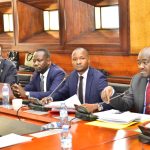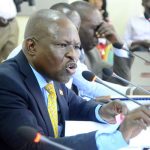

Parliament has questioned the United Nations High Commissioner for Refugees (UNHCR) over its occupation of a Kampala building linked to properties left behind by Asians expelled from Uganda in 1972, as investigations into the management of the assets expose questions about compensation, ownership and missing rental income.
The Committee on Commissions, Statutory Authorities and State Enterprises (COSASE), chaired by Kyadondo East MP Muwada Nkunyingi, questioned UNHCR officials on Tuesday over compensation funds released by the government for onward payment to 87 Asians who lost their properties during the expulsion.

Documents from the Bank of Uganda, signed by the Secretary to the Bank, indicate that the government released the compensation funds to UNHCR for transmission to the affected beneficiaries.
However, MPs want the agency to account for the money, establish when it received the funds and provide details of the beneficiaries who were paid.
The committee also questioned the agency about ownership of the building housing its Kampala country office, after establishing that the premises are among the properties associated with the compensation arrangements for departed Asians.

UNHCR officials told the committee that the agency does not own the building but occupies it as a tenant under a tenancy agreement with Mackenzie Development Company Limited.
The officials presented a tenancy agreement identifying Frank Katusime as the director of the company who signed the document.
However, MPs questioned how the company acquired the property and the basis for leasing the premises to the international agency, given the questions surrounding the ownership and management of properties previously placed under the Departed Asians Property Custodian Board.
Nkunyingi said the committee would summon Katusime to explain how he acquired the property and establish the circumstances under which it came under the company’s control.
“We are going to, as a committee, seek to interface with Frank Katusime, the alleged proprietor of this property, and establish how did he acquire the property,” Nkunyingi said.
The inquiry has also widened to include allegations that private individuals and companies are collecting rent from properties that should be under the management of the Custodian Board without remitting the money to the government institution.
Nkunyingi said the committee had received numerous complaints from people occupying properties believed to belong to the Board, particularly in Jinja, who claim to be paying rent to private individuals and companies.
“People are calling in hundreds that they are renting properties of the Departed Asians Property Custodian Board and that they are paying rent. Now the question is, if the board is saying they are not receiving the rent, then who is receiving that rent?” he asked.
The committee is also concerned about the Board’s failure to account for thousands of properties that were placed under its management following the expulsion of Asians.
Nkunyingi said the Board had indicated that it was directly managing fewer than five properties out of more than 2,500 that were originally under its responsibility.
“Out of the 2,500 properties that were to belong and to be under the management of the Departed Asians Property Custodian Board, they denied the responsibility and claimed that they are only managing less than five properties. This was very concerning,” he said.
COSASE obtained records from Bank of Uganda and the Custodian Board detailing 87 properties, including their plot numbers, locations, former owners and compensation amounts.
The committee wants UNHCR to independently verify the compensation records and establish whether the funds released by the government reached the intended beneficiaries.
UNHCR officials reportedly told MPs that the relevant records date back to 1999 and would require consultations with the agency’s headquarters in Geneva, Switzerland, where its legal team is based. They committed to seeking clarification and providing the requested information.
The dispute dates back to August 1972 when former President Idi Amin ordered Asians without Ugandan citizenship to leave the country within 90 days. More than 80,000 Asians were affected, leaving behind businesses, homes, factories, commercial buildings and other properties.
Government subsequently took control of the abandoned assets through the Departed Asians Property Custodian Board, which was established to manage and administer the properties under the law.
Over the years, the management of the assets has been dogged by allegations of fraudulent acquisition, missing records, illegal transfers and failure to collect government revenue.
Previous parliamentary investigations have also exposed cases in which individuals allegedly acquired departed Asians’ properties using questionable documents, while other properties remained under private occupation despite questions about their ownership.
In December 2025, the Custodian Board began verifying more than 200 people claiming ownership of properties left behind by expelled Asians, following concerns over competing ownership claims and the need to establish the rightful owners.
COSASE’s investigation will establish whether the 87 compensation transactions were properly handled, how the associated properties changed hands, and whether the government has lost control of assets and rental income through questionable arrangements.