
The Uganda Shilling depreciated by 7.8 per cent against the US Dollar in October 2026 as inflation climbed to 5.8 per cent, with rising food prices, expensive fuel and increased demand for foreign currency putting pressure on the economy.
The depreciation came as the cost of living increased, with the Ministry of Finance, Planning and Economic Development reporting that the average exchange rate weakened from Shs3,868.87 per US Dollar in September to Shs4,170.48 in October.

In its October 2026 Performance of the Economy Report released on November 22, the Ministry attributed the depreciation to reduced foreign exchange inflows from lower portfolio investments, declining international prices of agricultural exports, particularly coffee, and reduced tourism earnings.
The pressure was compounded by increased demand for dollars to finance imports, especially petroleum products, following higher international oil and shipping costs. Demand from the energy and manufacturing sectors also contributed to the weakening of the local currency.
“The weakening reflected a combination of reduced foreign exchange supply and increased demand for dollars,” the report states.

The Shilling also lost ground against other major international currencies, depreciating by 6.8 per cent against the British Pound, with the exchange rate moving from Shs5,190.23 to Shs5,544.13. Against the Euro, it weakened by 4.9 per cent from Shs4,453.98 to Shs4,671.45.
The currency depreciation coincided with an increase in annual headline inflation from 4.6 per cent in September to 5.8 per cent in October, driven by higher food prices, fuel costs and the rising cost of imported goods.
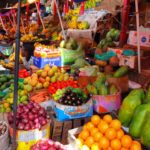
Food crop inflation more than doubled to 10.7 per cent from 4.5 per cent in September, with unfavourable weather conditions affecting harvests and supplies of major food commodities.
The report identified dry beans, sweet potatoes, tomatoes and pineapples among the food items whose prices increased significantly. On a monthly basis, pineapple prices rose by 17.5 per cent, matooke by 16.2 per cent, sweet potatoes by 11.9 per cent and tomatoes by 7.4 per cent.
Annual prices of dry beans increased by 22.5 per cent, while sweet potatoes registered a 15.1 per cent increase. Pineapple prices rose by 25.5 per cent, reversing an annual decline of 13.8 per cent recorded in September.
“Unfavourable weather conditions affected harvests, while the weaker Shilling and disruptions in oil supply and shipping raised the cost of imported goods,” the report states.
The cost of transportation also increased following higher fuel prices, with the national average price of petrol rising by Shs132 to Shs6,774 per litre, while diesel increased by Shs257 to Shs7,014 per litre.
Annual inflation in the Energy, Fuel and Utilities category rose from 14.5 per cent in September to 15.4 per cent in October. Diesel inflation accelerated to 49.2 per cent from 42.5 per cent, while petrol inflation increased to 34.3 per cent from 30.9 per cent.
The rising transport costs were reflected in passenger fares, with special-hire taxi fares increasing by 30.5 per cent annually compared to 18.6 per cent in September. Medium-distance taxi fares rose by 13.7 per cent, while boda boda fares increased by 4.9 per cent.
Annual core inflation, which excludes food crops, energy, fuel and utilities, also increased from 3.7 per cent to 4.4 per cent, although it remained below the Bank of Uganda’s medium-term target of 5 per cent.
Maize flour, rice, beef, refined cooking oil and cassava flour registered annual price increases of 6.2 per cent, 8.2 per cent, 9.2 per cent, 4.4 per cent and 37 per cent, respectively.
Uganda nevertheless recorded the second-lowest headline inflation rate among East African Community partner states in October, after Tanzania.
In response to the rising inflationary pressures and depreciation of the Shilling, the Monetary Policy Committee raised the Central Bank Rate from 9.75 per cent in September to 12 per cent in October.
The increase was intended to contain inflation and anchor expectations around the medium-term policy target of 5 per cent for core inflation.
Despite the tightening of monetary policy, lending rates on Shilling-denominated credit declined from 17.90 per cent in August to 17.19 per cent in September, partly due to an improvement in the quality of bank loans and a reduction in non-performing loans.
However, lending rates on foreign currency-denominated credit increased from 7.46 per cent to 7.78 per cent, largely due to tighter global financing conditions.
Government also raised Shs3.36 trillion through Treasury Bill and Treasury Bond auctions during October. Of this amount, Shs670.39 billion was used to refinance maturing securities, while Shs2.69 trillion went towards financing other government budget requirements.
Interest rates on Treasury Bills increased across all three major tenors. The 91-day yield rose from 10.1 per cent to 11.7 per cent, the 182-day yield increased from 10.6 per cent to 13.8 per cent, while the 364-day yield climbed from 11.3 per cent to 14.5 per cent.
Demand for government securities remained strong, with Treasury Bill auctions recording an average bid-to-cover ratio of 2.54, meaning that investor bids exceeded the amounts offered.
Yields on Treasury Bonds also increased across all seven tenors, ranging from two years to 25 years. The 25-year bond yield rose from 16.25 per cent in previous comparable issuances to 18.48 per cent, while the 15-year yield increased from 15.2 per cent to 17.93 per cent.
The Ministry attributed the increases to the Bank of Uganda’s tighter monetary policy and investors demanding higher returns to compensate for inflation and exchange rate risks.
Private sector lending, however, recorded growth, with outstanding credit increasing by 4.4 per cent from Shs28.62 trillion in August to Shs29.87 trillion in September.
Shilling-denominated credit increased from Shs19.50 trillion to Shs19.96 trillion, while foreign currency-denominated credit rose from Shs9.11 trillion to Shs9.90 trillion.
The growth was partly supported by increased lending to trade, agriculture, transport and communication, and mining and quarrying.
Banks approved Shs2.64 trillion out of loan applications worth Shs3.61 trillion in September, representing an approval rate of 73.3 per cent.
Personal and household loans accounted for the largest share of approved credit at Shs816.12 billion, representing 30.9 per cent. Of this amount, Shs215.55 billion was advanced through electronic money credit, including mobile money loans.
Trade received Shs546.33 billion, agriculture Shs404.05 billion, building, mortgage, construction and real estate Shs287.24 billion, while business, community, social and other services received Shs275.99 billion.
On economic activity, the Ministry reported that private sector businesses continued to expand, although the pace of growth slowed due to increased production costs.
The Purchasing Managers’ Index (PMI) declined from 53 in September to 50.9 in October but remained above the 50-point threshold, which separates expansion from contraction.
New orders continued to increase, supporting purchases of inputs and inventories, while employment remained largely unchanged. However, business output declined for the first time in 21 months.
Agriculture and industry registered increases in output, while construction, wholesale and retail trade and services recorded declines.
“The pace of expansion moderated, partly due to rising costs of production during the month,” the report states.
The Business Tendency Index, which measures business confidence and expectations, also remained above the 50-point threshold at 53.5, although it declined from 56.7 in September.
Optimism was recorded in financial services, agriculture, manufacturing and other services, while wholesale trade and construction remained pessimistic.
The Composite Index of Economic Activity, which measures overall economic performance, increased by 1.2 per cent to 196.80 in September from 194.44 in August, supported by growth in private sector credit and increases in imports and exports.
On international trade, Uganda’s merchandise export earnings increased by 47.7 per cent to $1.42 billion in September 2026, compared to $962.84 million during the same month in 2025.
Gold accounted for a significant share of the increase, with earnings rising from $410.99 million to $839.99 million over the period.
However, coffee export receipts declined by 14.5 per cent to $186.92 million from $218.55 million in September 2025.
The decline was attributed to reduced export volumes, which fell from 844,949 60-kilogramme bags to 735,435 bags, following lower production during the main harvest season in Greater Masaka and south-western Uganda.
The average export price also declined from $4.31 to $4.24 per kilogramme, partly due to expectations of a larger harvest in Brazil, the world’s leading coffee producer.
Excluding gold, Uganda’s formal export earnings increased by 5.5 per cent to $581 million, supported by higher receipts from base metals, cocoa beans, cement, sugar, plastic products and fish.
Despite the growth in exports, Uganda’s import bill increased by 45.4 per cent to $2.12 billion in September from $1.46 billion in September 2025.
The increase was mainly driven by imports of mineral products other than petroleum, machinery, equipment, vehicles and accessories, as well as chemicals and related products.
Consequently, the merchandise trade deficit widened to $694.32 million from $492.55 million in September 2025, although it narrowed from $817.03 million recorded in August 2026.
The Middle East remained Uganda’s leading export destination, accounting for 55 per cent of merchandise exports, with the United Arab Emirates taking 98.8 per cent of exports to the region. The East African Community accounted for 21.9 per cent, Asia 9.3 per cent and the European Union 7.8 per cent.
On the government budget, fiscal operations in October resulted in a surplus of Shs198.88 billion, below the programmed Shs390.35 billion.
Government revenue, including grants, amounted to Shs2.92 trillion against a target of Shs3.11 trillion, leaving a shortfall of Shs187.59 billion.
Domestic revenue collections contributed Shs2.90 trillion, while grants from development partners amounted to Shs22.15 billion.
Tax collections stood at Shs2.69 trillion against a target of Shs2.84 trillion, representing a shortfall of Shs144.72 billion. Direct domestic taxes contributed Shs814.59 billion, indirect domestic taxes Shs724.20 billion and international trade taxes Shs1.21 trillion.
The Ministry attributed the shortfall in domestic tax collections largely to lower-than-expected performance in direct and indirect taxes, particularly withholding tax, Pay As You Earn (PAYE), VAT and excise duty.
Government expenditure on expenses amounted to Shs2.48 trillion, exceeding the planned Shs2.44 trillion by Shs40.86 billion. Spending on grants to government agencies and other expenses was higher than programmed.
Government also spent Shs243.84 billion on acquiring non-financial assets, representing 86.8 per cent of the planned Shs280.82 billion.
The report further showed that Uganda’s trade deficit with East African Community partner states widened to $706.78 million in September 2026 from $102.94 million in September 2025.
Imports from the region increased by 183.3 per cent, outweighing the 21.3 per cent growth in exports.
Uganda recorded trade deficits with Kenya, Tanzania and Burundi but maintained surpluses with the Democratic Republic of Congo, South Sudan and Rwanda.
Kenya accounted for the largest increase in imports from the region, with purchases rising from $163.89 million to $694.30 million.
Across the region, Uganda recorded the highest depreciation against the US Dollar at 7.8 per cent. The Kenyan Shilling and Rwandan Franc each weakened by 0.2 per cent, while the Burundian Franc depreciated by 0.1 per cent. Tanzania’s currency appreciated by 0.2 per cent.
Annual headline inflation in Kenya increased to 7.3 per cent from 6.8 per cent, while Rwanda’s inflation rose to 26.5 per cent from 20 per cent. Tanzania recorded a slight decline from 4.3 per cent to 4.2 per cent.