Stanbic Bank
Stanbic Bank
24.8 C
Kampala
Stanbic Bank
Stanbic Bank
Home Blog Page 1088

Facebook brings Amber Alerts to South Africa in a first for the continent

Officials at the launch


South Africa has become the first country in Africa to join to the Facebook Amber Alerts programme. This follows the announcement of a partnership between Facebook and The South African Police Service (SAPS) to use the Facebook platform and community to help find missing children.

The system enables the South African Police Service to seek assistance from the public when it is suspected that a child has been abducted and there is reason to believe there is an immediate and serious risk to the health or welfare of the child.

Through Facebook’s Newsfeed, the Amber Alert enables people to instantly share important information about the missing child and suspected abductor, such as a photo, hair colour and clothing with their friends, family and Facebook groups.

By working with law enforcement in helping to share the right information with the right people, Facebook aims to help reunite missing children with their families as soon as possible.

Commenting on the launch, Emily Vacher, Facebook’s Director of Trust and Safety, said: “Amber Alerts is available in more than 20 countries worldwide, with more to follow. We are excited to partner with the South African Police Service to make Amber Alerts available in an African country for the first time.

“Africa is an important and growing market for us, and we are investing in our community across the continent. This partnership is a signal of our commitment to bringing the latest Facebook features to Africa, building communities, and giving people access to digital tools that improve their lives.”

How Amber Alerts work in South Africa

The decision to declare an Amber Alert is made by the law enforcement when investigating suspected abduction case. Once the law enforcement has been notified about an abducted child, they must first determine if the case meets their Amber Alert criteria, which includes: The abduction is of a child age 18 or younger; There is a reasonable belief that the child has been abducted; The South African Police Service believes the child is in imminent danger of serious bodily harm and there is enough descriptive information about the victim and suspected abduction for law enforcement to issue an Amber Alert to assist in recovering the child.

A senior member of the law enforcement will assess whether these criteria have been met before authorising the Amber Alert. The police service will then notify Facebook’s Global Security Operations Centre, which operates 24/7, that a verified Amber Alert is active. Facebook will then quickly send the alert to the News Feeds of people located in targeted search areas within the specific country.


Stories Continues after ad

Tondeka buses: Lasting solution to Kampala’s persistent traffic jam problem!


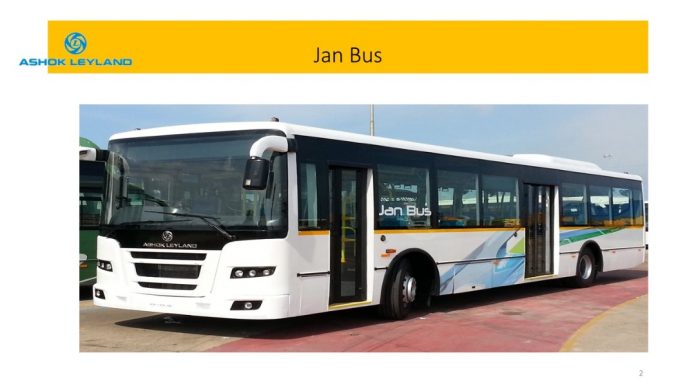
On Thursday the Tondeka Metro Bus Company held a ‘Greater Kampala Mass Transit Bus Service’ conference at the International University of East Africa under the theme “From Planning to Execution”. The conference that was attended by a number of high profile guests and various stake holders in the transport sector revealed a new bus system that would not only decongest the capital city but further provide a more organized and sanitary mode of transportation within Kampala and its neighboring districts.

The conference was officially opened by the Minister of Works, Gen. Katumba Wamala, who strongly urged for the support of the new bus system that would be more organized in terms of distribution of funds as well as pick-ups and drop offs of passengers compared to current and previous taxi organisations. “I am set to meet with taxi drivers to organize the transport industry and see how they can work together with Tondeka drivers and reduce the fights and chaos that usually happen-we need more laws and order within this sector.” said the Minister.

However, Matia Lwanga, the LCV, Wakiso district strongly believes that the problems in the taxi industry are majorly caused by the leaders in power due to the absence of clear, official line of authority and thus everyone can be a leader.

Being the capital city of Uganda, Kampala serves as both an administrative and business center within the nation and therefore attracts a lot of people and which inevitably leads to a lot of activity within the town. Studies have shown that although only 1.6 million people live within Kampala the number rises to a whopping four million during the day with the average Ugandan spending over 24 hours in traffic; forfeiting the businessman about two million shillings daily.

“As a leader of local government we welcome Tondeka because we have always had an issue of traffic Jam in towns,” George Frederick Kagimu, Mayor of Mukono Municipality stated. The leader expressed his dissatisfaction with the amount of time that Ugandans wasted on the road, especially those who lived outside of Kampala. With the introduction of the Tondeka buses the number of low capacity vehicles on the road is expected to reduce and this will eventually lead to a more organized traffic system as well as a drop in pollution levels.

Despite its delay in launching since last July when it first made an appearance, the Tondeka Metro buses were given the support of Government including a directive from the President Yoweri Kaguta Museveni who asked for the co-operation between local government, taxi drivers and Tondeka buses in order to fast track this project and also create employment opportunities within the transport industry.

Despite preceding companies such as Pioneer and Wakula Enume failing to maintain their route structures, Tondeka’s future looks brighter due to the involvement of a number stake holders such as Kampala Capital City Authority, Kiira Motors as well as taxi drivers who have promised to work hand in hand with the Tondeka operatives.

Sheikh Muzaata Baate thanked the organizers and leaders for involving the people of Uganda in the launch of such a timely initiative. He urged for leaders and people to continue working together in order to avoid misunderstandings and fights amongst their various colleagues: “Everyone is cooking their own thing, but if we cook together, then we can move forward as a country.” He went on to bless the occasion and chastised the leaders of Uganda for not respecting religious leaders and yet they are deemed to be the elders within their respective communities.

The first batch of buses is set to arrive in September will comprise of 980 Leyland buses from India, these will be accessible only through electronic payment by use of a metro card. The buses are supposed to cover a wider radius than taxi drivers in a bid to ease transportation and reduce the number of vehicles on the road. Some of the proposed routes include: Mukono-Kampala, Nsanji, Kampala-Buloba, Kampala-Wakiso, Kampala-Matugga, Kampala- Entebbe and Kampala-Ggaba. The buses will be monitored by the Uganda Development Corporation (UDC) and will greatly improve on the customer care of commuters.

Other partners such as KCCA have committed themselves to supporting the Tondeka bus system by improving the infrastructure like: road signage, Parking and improved roads in order to ensure the operations of the bus services run smoothly.


Stories Continues after ad

Boys beat girls as UNEB releases 2019 UCE results

Minister of Education Janet Museveni (L) with UNEB officials releasing 2019 UCE exams results


Male candidates have significantly performed better than females in the just released 2019 Uganda certificate of education (UCE) examination results. Females have however exhibited good performances in English subject even though boys still performed better in Mathematics and other sciences.

The examination results were released by the first lady Janet Kataaha Museveni who doubles as minister of education and sport. She said the teaching of English language has degenerated to encouraging learners to cram content that consists of very complicated words noting that this needs to stop as it is not helping students.

According to the Executive Secretary of Uganda national examination board (UNEB), Daniel Odong, UNEB registered 337770 for 2019 UCE exams however only 333060 appeared for exams.

Alluding to results, 9.9 per cent of male students passed in division and only 6.8 percent of the females got first grade. Grade two; 19.6 per cent males, 15.5 per cent females. Grade three; 24.9 per cent males and 22.5 per cent female. Grade four; 39.7 per cent males and 46.3 females. Division nine; 6.8 per cent male and 8.8 female.

He said overall performance improved with 92.2 per cent passing compared to 87.2 percent in the previous years. Failure rate dropped significantly from 12.8 per cent to 7.8 per cent. Malpractice cases Reduced from 1825 in 2018 to 1262. The cases are alluded to teachers providing assistance to the students during practical and students copying from one another particularly in the science subjects.

“A total of 410 special needs candidates registered for the 2019 UCE examination, as compared to 357 in 2018. These consisted of the blind, those with low vision, the deaf, and the dyslexics and physically handicapped.”

“A total of 1,262 candidates’ results withheld in accordance with the law, and to give the affected a fair hearing. This number was 1,825 in 2018. After the hearing of case, last year the board cancelled 1086 candidates and released the rest.”

The minister implored teachers to ensure that learners assess all the learning in the curriculum saying the entire curriculum and co-curricular activities are meant to develop the learners in a holistic manner.

“Malpractice at UCE2019 level has significantly reduced. We should recognize UNEB’s efforts in making this happen. It should be viewed as a way of fighting corruption,” she said.


Stories Continues after ad

Apple tops global smartphone market in Q4

Apple edge Samsung to become the world’s top smartphone vendor in the final quarter of 2019 thanks above all to the huge popularity of the iPhone 11, according to the latest report from Strategy Analytics. The company shipped 70.7 million iPhones during the 3-month period ending in December, equivalent to 18.9 per cent of the global market, up 7 percent from the 65.9 million units shipped a year earlier. The result was Apple’s best growth performance since 2015 due to cheaper iPhone 11 pricing over the holiday period and healthier demand in Asia and North America.

Samsung was close behind in second position, shipping 68.8 million smartphones for an 18.4 per cent market share in Q4, slightly down on the 69.3 million units shipped a year earlier. China’s Huawei fell to a 15.0 per cent share in third place on the back of 56.0 million unit shipments, down 7 percent year on year due to slowing domestic demand and tougher competition abroad in key markets like Europe. Xiaomi and Oppo rounded out the top 5 with shipments of 33.0 million and 30.5 million units for a market share of 8.8 per cent and 8.1 per cent respectively.

Overall global smartphone shipments held steady in the fourth quarter at 374.5 million units compared to 376.0 million units in the year-earlier quarter, with sharp declines in China balanced by strong growth across India and Africa.

Full-year smartphone shipments hit 1.41 billion in 2019, dipping 1 percent from 1.43 billion in 2018, attributed to mild inventory build in the second half of the year. However, the researcher warned that US trade wars and the China coronavirus scare could prove to be significant barriers to growth for smartphones in 2020.

Stories Continues after ad

Lack of minutes of Crane Bank sale complicates transfer of CDC Group shares

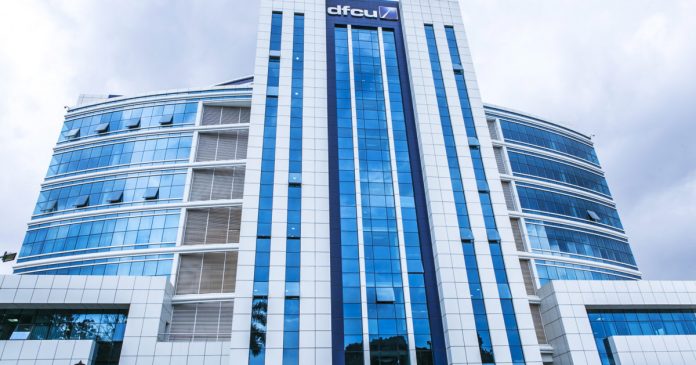
Dfcu head office

Britain’s Commonwealth Development Corporation (CDC) Group is still stuck with its 9.97 shares in Dfcu bank following the insistence by the potential buyer, Investment Fund for Development Countries that Dfcu bank avails minutes regarding the purchase of Crane Bank Limited on January 25, 2017.

Dfcu Limited on December 19, 2019 announced that CDC Group was to sell 74,580,276 shares which make up 9.97 per cent of the total 748, 144,033 ordinary shares in the company troubled by the controversial acquisition of CBL at Shs200 billion, paid in installments.

The demand by the Danish Company to look at the minutes, according to sources, has forced Dfcu management look at the possibility of approaching parliament and see if they can delete one of the findings of parliament’s Committee on Commissions, State Authorities and State Enterprises (COSASE) that investigated BoU over the controversial sale of seven commercial banks between 1993 and October 20, 2016. That finding is that BoU transferred CBL assets without any minutes written, something that COSASE found unusual in the transaction of such a magnitude.

During the probe of BoU, the then Executive Director of Supervision, Ms Justine Bagyenda confirmed to COSASE that the sale of CBL to Dfcu was done over telephone and that there was no any minutes written to effect the sale. The same was confirmed by MMKAS Advocates who were the transactional advisors acting on behalf of BoU.

During COSASE probe, Dfcu officials led by chairman board of directors Jimmy Mugerwa who appeared before COSASE as witnesses in the closure and purchase of Crane bank, made a defense presentation in regards to the terms of purchase of Crane bank agreement, however, the presentation was backed by fake documents which were neither dated nor signed by the bank authority. However, this prompted MPs of the committee to kick them out and allow them reorganize themselves.

“It’s prudent for this committee to throw out Dfcu team because they are so confused and disorganised; they are fidgeting with their own documents. It is in the best interest that Dfcu withdraws and reorganizes themselves,” the then COSASE chairman, Abdu Katuntu said.

Some of the documents that caused the MPs to chase away Dfcu bank officials led by Chairman Juma Mugerwa and new MD Mathias Katamba included one on “Fair valued loans and advances of customers of Crane Bank Limited (CBL). The other included schedules of CBL loans and advances.

The Auditor General John Muwanga in his report on defunct banks faulted Dfcu bank for engaging in transactions that did not follow proper guidelines as it bought of CBL assets at Shs200 billion, paid in installments. Dfcu Bank also bought the assets of Global Trust Bank without following guidelines as laid in the Financial Institutions Act, 2004.

However, matters were made worse when former Chief Executive Officer of Dfcu, Juma Kisaame confirmed to MPs on the Committee on Commissions, Statutory Authorities and State Enterprises that the invite for Dfcu to come and buy Crane bank was done on phone.

According to sources within the Dfcu group, a rift has cracked among the top executives as they blame each other for mess the bank is facing over lack of minutes. It is understood, the Managing Director, Mathias Katamba, board chairman, Jimmy Mugerwa are reportedly accusing Mr. Kisaame, former Deputy Governor, Dr.Louis Kasekende, William Ssekabembe and former Executive Director in charge of Supervision, Justine Bagyenda for having fast tracking the deal without minutes.

Eagle Online has also learnt that matters have been made worse by parliament rejecting a secret move by the bank to have a parliamentary hansard doctored so as to have sections implicating them of having bought Crane bank without any minutes removed so as they can be able to generate minutes to enable them sell CDC shares.

Sources also reveal that an attempt by Kasekende and top managers of Dfcu to meet the Speaker, Rebecca Kagada have been rejected leaving them without any solution CDC shares.

Stories Continues after ad

Zimbabwean entrepreneur invents open-sourced technology to improve access to education in Africa

William Sachiti


Zimbabwean AI expert William Sachiti, CEO of UK-based start-up Academy of Robotics has today published an open-source technology known as ‘Trees of Knowledge’ to improve access to education through smartphones in Africa. This free-to-develop technology enables a tree or rural landmark to broadcast a wifi connection providing access to a pre-loaded package of educational content. The wifi connection and content comes from a micro-computer moulded into the landmark to protect it from theft or damage.

A community-driven, secure and cost-free solution
Anyone within a roughly 100m radius can then access the content on any mobile device free of charge. Users can also charge their phone by plugging it into the accompanying solar-powered battery charging station. The micro-computers will run on the power equivalent of a small rechargeable battery and can run for years without maintenance. All the user needs is a wifi-enabled device such as a phone, tablet, laptop or computer. There is no need for the phone to be connected to a carrier or any network provider, removing the issue of expensive data charges.

The technology uses a basic computer like the Raspberry Pi computers which have been used in refugee camps in Lebanon by UNICEF as part of its Raspberry Pi for Learning initiative.

A global crisis in education
Globally there are 258 million children out of school and UNESCO’s new report Education Progress highlights that the problem is particularly acute in Sub-Saharan Africa where the population of primary-school aged children has doubled since 1990 and 1 in 5 children of primary school age are out of school. However, this is also a region witnessing rapid growth in smartphone adoption. Already more than 23% of people in Sub-Saharan Africa have access to a smartphone  –  a number which the GSMA estimates will rise to 39% in the next five years.

AI expert and serial entrepreneur, William Sachiti, who was educated in Zimbabwe before moving to the UK where he started his first technology company at 19 years old highlights the challenges:

One of the challenges in providing education through smartphones is that, while many people have access to a basic smartphone of some description, in many areas 3G coverage is still patchy. The data costs are high for most people and in rural areas keeping the phones charged is a problem when there is limited or no electricity. Trees of Knowledge aims to address all these challenges.”

Sachiti adds: “Every day millions of children walk for hours to get to school in the hope – often a vain hope – that they will find a teacher present at their school. In other cases, children are unable to attend school because they need to take care of the family’s cattle or support their families in other ways.

There is an urgent need to improve access to education for these children. For many children their classes are taught gathered under the shade of a large tree, so ‘Trees of Knowledge’ seemed a natural technical extension of this existing system.”

Last week, UNESCO Director-General Audrey Azoulay noted, “Rethinking tomorrow’s education must be done collectively.”

Sachiti believes that Africa’s burgeoning tech ecosystem can play a vital role in this collective effort commenting: “While many programmes already exist to fix this problem, it is still not enough. With the growth of the developer community in Africa, I believe we have the opportunity to simply release the technology and let local communities build it themselves. If this technology reaches one or two more children, then I feel it would be a success.”

The pre-loaded educational content is likely to be largely video-based and would be free to access by anyone at any time. Whilst the system can work with existing educational content packages, ultimately Sachiti hopes that content can also come from local educators.


Stories Continues after ad

Seven lessons for mobile app developers to beat the odds

Martin Zwilling


By Martin Zwilling


One of the quickest ways to become an entrepreneur these days is to develop and publish a smartphone app. The price of entry can be less than $10,000, so the competition is huge and growing rapidly. According to Tim Cook at Apple, there were over 20 million registered developers in 2018. Yet according to other statistics, vanishing few of these ever generate a significant profit.

We all hear about the big winners, such as the game Clash of Clans, which still pulls in over a million dollars a day, and the smartphone version of Skype, which is making money through credits as an extension of the website version. We don’t hear about the remaining several million apps that are mostly free, and garnering only trivial revenue through advertising.

Yet I still recommend apps as a good starting target for aspiring technical entrepreneurs, since they don’t require a large initial investment, and you can learn an incredible amount about the realities of business, without risking a lifetime of effort and several investor fortunes.

I also recommend the app development strategies outlined in the classic book, “Vaporized: Solid Strategies for Success in a Dematerialized World,” by Robert Tercek, who has lived on the digital edge for many years. Here are some ways we both recommend to beat the odds and thrive in today’s app ecosystem:

Sell a digital service through your app. The ideal business model is to establish a direct-to-consumer service that enables you to bill the customer directly. You provide the free app in the App Store that gives subscribers mobile access to your service. After this connection, you need not share the 30% of all revenue collected by the store platform.

Make your app support all platforms. Port every app to all the popular platforms – IOS and Android. Compensate for low profit by aiming for maximum reach. Cultivate a preferred relationship with Apple, Amazon, Facebook, Microsoft, and Google to ensure the best possible placement of your offering.

Offer premium services after user is hooked. Through a free base product, you give the first taste of the service or game away for free, get users hooked, and then convert as many as possible to paying customers. This freemium model has been used for years by web apps. Even a conversion rate of one percent can build a healthy business.

Build your own marketplace platform. This is a tough one to accomplish, but it has paid off handsomely for the first to win in other categories, such as Amazon Kindle and Netflix. To accomplish this move, you must remain studiously neutral on all contributors, and be prepared to fight to preserve your direct relationship with the customer.

Commoditize complementary products. Complements are products that must be bought together in order to be useful, like apps with mobile phones, and fitness products to go with your fitness app. If you want to drive up the demand for your core product, one smart tactic is to drive down the price of all complementary products.

Look for value points to control. No company has more value control points than Google, which spans advertising, e-commerce, social media, video and mobile, as well as a full suite of hardware products. But there are a wealth of other categories, new ones are constantly appearing, and the ecosystem is always shifting. Be aggressive and alert.

Position yourself to capitalize on the next frontier. Information is certain to grow faster than anything else generated by humans, and the Internet of Things (IoT) is a huge contributor. Apps are adept at collecting information and condensing it, whether it be for healthcare, home control, or gaming. Be there intentionally rather than randomly.

Above all, don’t forget to develop a comprehensive marketing and promotion strategy. Just getting an app accepted into the Store won’t get it found and downloaded by your targeted customers. ‘Free’ doesn’t make it stand out when there are a million alternatives at the same price. Promote your app vigorously, facilitate customer engagement, and listen to the feedback.

The Writer is a veteran startup mentor, executive, blogger, author, tech professional, professor, and investor. Published on Forbes, Entrepreneur, Inc, Huffington Post, etc.


Stories Continues after ad

Africa is the focus of the world as growth and investment frontier

Dr. Akinwumi A. Adesina


By Dr. Akinwumi A. Adesina


Africa is where the focus of the world is right now as the growth and investment frontier. Just last week, I was in London for the UK-Africa Summit. There has been China-Africa Summit, Japan-Africa Summit, India-Africa Summit, Korea-Africa Summit, Russia-Africa Summit, US-Africa Summit and several others.

What do all these countries see? They see opportunities that Africa offers.

With a population of 1.2 billion people that is expected to rise to 2.5 billion by 2050, a rising middle class, rapid urbanization – and a labor work force that will rise from 705 million today to well over 1 billion in the next 10 years – Africa offers huge market and investment opportunities. The Africa Continental Free Trade Area makes Africa a market worth $3.3 trillion.

Africa can no longer be ignored. African economies are growing well, higher than the global average. Our African Economic Outlook estimates show that growth is projected to rise from 3.4 per cent in 2019 to 3.9 per cent in 2020 and 4.1 per cent in 2021. This aggregate growth rate masks highly diversified and resilient growth patterns. Indeed, 20 countries are projected this year to grow at 3-5 per cent, while 20 countries are projected to achieve growth rates of 5 per cent and above. That’s impressive!

Even more impressive is that 6 of the 10 fastest growing economies in the world are now in Africa: Rwanda (8.7 per cent), Cote d’Ivoire (7.4 per cent), Ethiopia (7.4 per cent), Ghana (7.1 per cent), Tanzania (6.8 per cent) and Benin (6.7 per cent).

Some regions are growing faster than others. East Africa is the fastest growing region with growth rate of 5 per cent in 2019, followed by North Africa (4.1 per cent), West Africa (3.7 per cent), Central Africa (3.2 per cent) and Southern Africa (0.7 per cent).

For the first time in more than one decade, growth in Africa is due largely to expansion of investments rather than consumption, as well as from exports.

Just think of the following: Foreign Direct Investment to Africa rose by 11 per cent in 2019, compared to just 4 per cent in Asia, while it declined by -13 per cent globally and by -23 per cent for developed economies.

However, Africa faces important economic headwinds that could affect future growth. Global trade tensions have weakened global trade volumes, whose growth rate declined from 5.7 per cent in 2017 to just 1.1 per cent in 2019.

Another challenge has been the impact of climate change, especially from the extreme weather patterns such as cyclones that devastated Mozambique, Malawi and Zimbabwe, as well as widespread drought across southern Africa and East Africa.

The African Development Bank provided $106 million to support Mozambique, Zimbabwe and Malawi in the immediate aftermath of the cyclones, in addition to other emergency support.

African countries cannot continue to reel from one emergency to another emergency. The African Development Bank has used its Africa Disaster Risk Insurance Facility to pay for insurance premiums for countries facing extreme weather events that have helped to provide $36 million in payout to countries. It is time now for the international community to help scale up this facility to reach many more countries.

We must also address issues of insecurity. Growth in West Africa, which improved as Nigeria’s economy recovered from recession, has been dampened by the rising insecurity challenges, especially in the Sahel. Several countries in West Africa, such as Niger, Mali, Burkina Faso and Chad are spending a very high share of their budgets on security.

It is now time for the African Development Bank, IMF and the World Bank to work out a financial support system that will help address these exogenous security shocks, which if left unaddressed, will have broader spillover effects that will lower growth and investment in the region. In this context, I wish to commend the ECOWAS Heads of State and Governments for their bold decision to set up a fund to help address these insecurity issues in the sub-region.

We must tackle rising debt levels. Total debt stock (external and domestic) currently stands at $500 billion. Median Debt to GDP has risen from 38 per cent in 2008 to 54 per cent in 2018. But there is no need for the panic button.

Let me be clear: Africa does not have a systemic debt crisis. However, we must watch the quality of debt, the mix of debt in terms of concessional and non-concessional, the potential negative effects of rising domestic debt in crowding out private sector access to finance, the increasing level of non-Paris Club bilateral debt, and rising volumes of Euro bonds.

While there is no cause for alarm, greater prudence is needed. We all must now collectively focus on sustainable debt management and greater reliance on domestic resource mobilization to finance rising fiscal deficits.

The bulk of the debt is actually spent on infrastructure, which remains a major challenge for many countries. Governments can improve the cost effectiveness of their expenditures on infrastructure by sharply focusing on quality infrastructure, improved efficiency of public expenditure on infrastructure, while promoting greater participation of private sector in the provision of infrastructure.

Physical infrastructure, while important, is not enough to drive much needed greater growth and productivity of African economies. African countries should accelerate investments as well in the development of human capital.

Youth unemployment must be given top priority. With 12 million graduates entering the labor market each year and only 3 million of them getting jobs, the mountain of youth unemployment is rising annually.

Given the fast pace of changes, driven by the 4th industrial revolution – from artificial intelligence, to robotics, machine learning, quantum computing – Africa must invest more in re-directing and re-skilling its labor force, and especially the youth, to effectively participate.

The youth must be prepared for the jobs of the future – not the jobs of the past.

Especially critical is training in science, technology, engineering and mathematics. The Bank is already working on this, with our support to build scientific centers of excellence, such as the African universities of science and technology – all part of the Mandela Institute of Science and Technology. We have invested in the Kigali Institute for Science and Technology that is providing world-class training in ICT at the Masters level in collaboration with the Carnegie Mellon University.

As part of our Jobs for Youth in Africa strategy, the Bank launched the establishment of Coding for Employment Program, designed to develop young digital entrepreneurs. We hope to develop 130 centers of innovation over the next five years to help create 9 million direct and indirect jobs. Our experience so far from ongoing programs in Rwanda, Nigeria, Kenya and Senegal has been impactful. Some 2,000 youth (46 per cent women) were trained in just three months, between March and June 2019.

Without any doubt, there is need to expand financing for education at all levels, primary, secondary and tertiary. The educational system must adequately prepare the youth for the labor market. Priority must be placed on improving access to vocational skills training, reducing the mismatch between training and needs of the labor market, and providing greater incentives for the private sector to support young people with on-the-job training opportunities, as well as entrepreneurship.

At the end of the day, it is not GDP growth that matters. Nobody eats GDP. Growth must be visible. Growth must be equitable. Growth must be felt in the lives of people. That is why the African Development Bank places particular emphasis on one of our High 5s: Improving the Quality of Life of the People of Africa.

We are a “People-focused Bank”. People are our core business; and their quality of life is our greatest return. It is the people of Africa who motivate us to keep doing what we do best: making prosperity a reality for all.

I hope that the findings of this African Economic Outlook will further challenge us that, while much has been achieved on growth, we still have ways to go to make that growth much higher, more equal and impactful in the lives of people, everyday.

And every single day we work, let’s look at the real lives behind the statistics. Let’s hear their voices. Let’s feel their aspirations. Let’s do a better job to make the dreams of improved quality of life for millions of Africans a reality.

Dr. Akinwumi A. Adesina, is the President, African Development Bank. The article is an abridged version of the speech he delivered at the launch of the African Economic Outlook on Thursday at the bank’s headquarters in Abidjan, Cote d’Ivoire


Stories Continues after ad

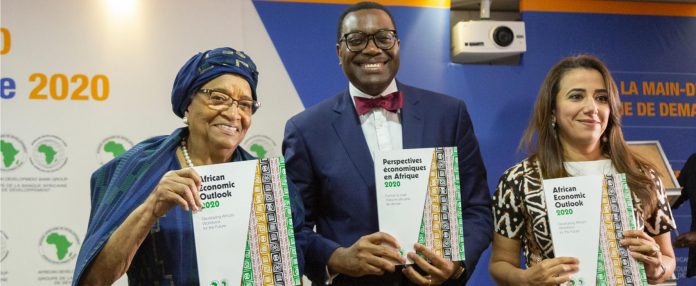
African Economic Outlook 2020: Africa’s economy forecast to grow despite external shocks


Africa’s economic growth remained stable in 2019 at 3.4 per cent and is on course to pick up to 3.9 per cent in 2020 and 4.1 per cent in 2021, the African Development Bank’s 2020 African Economic Outlook (AEO) revealed Thursday.

The slower than expected growth is partly due to the moderate expansion of the continent’s “big five” — Algeria, Egypt, Morocco, Nigeria, and South Africa, whose whose joint growth was an average rate of 3.1 per cent, compared with the average of 4.0 per cent for the rest of the continent.

The Bank’s flagship publication, published annually since 2003, provides headline numbers on Africa’s economic performance and outlook.

In 2019, for the first time in a decade, investment expenditure, rather than consumption, accounted for over 50 per cent of GDP growth. This shift can help sustain and potentially accelerate future growth in Africa, increase the continent’s current and future productive base, while improving productivity of the workforce.

Overall, the forecast described the continent’s growth fundamentals as improved, driven by a gradual shift toward investments and net exports, and away from private consumption.

East Africa region leads pace for growth

East Africa maintained its lead as the continent’s fastest-growing region, with average growth estimated at 5.0 percent in 2019; North Africa was the second fastest, at 4.1 per cent, while West Africa’s growth rose to 3.7 per cent in 2019, up from 3.4 per cent the year before.

Central Africa grew at 3.2 per cent in 2019, up from 2.7 per cent in 2018, while Southern Africa’s growth slowed considerably over the same period, from 1.2 per cent to 0.7 per cent, dragged down by the devastating cyclones Idai and Kenneth.

Urgent call to address Africa’s education, skills mismatch

The 2020 AEO, themed Developing Africa’s workforce for the future, calls for swift action to address human capital development in African countries, where the quantity and quality of human capital is much lower than in other regions of the world.

The report also noted the urgent need for capacity building and offers several policy recommendations, which include that states invest more in education and infrastructure to reap the highest returns in long-term GDP growth. Developing a demand-driven productive workforce to meet industry needs, is another essential requirement.

“Africa needs to build skills in information and communication technology and in science, technology, engineering, and mathematics. The Fourth Industrial Revolution will place increasing demands on educational systems that are producing graduates versed in these skills,” the report noted.

To keep the current level of unemployment constant, Africa needs to create 12 million jobs every year, according to the report. With rapid technological change expected to disrupt labour markets further, it is urgent that countries address fundamental bottlenecks to creating human capital, the report said.

“Youth unemployment must be given top priority. With 12 million graduates entering the labour market each year and only 3 million of them getting jobs, the mountain of youth unemployment is rising annually,” said Akinwumi Adesina, African Development Bank President.

“Let’s look at the real lives beyond the statistics. Let’s hear their voices, let’s feel their aspirations.”

Although many countries experienced strong growth indicators, relatively few posted significant declines in extreme poverty and inequality, which remain higher than in other regions of the world.

Essentially, inclusive growth — registering faster average consumption for the poor and lower inequality between different population segments — occurred in only 18 of 48 African countries with data.

“As we enter a new decade, the African Development Bank looks to our people. Africa is blessed with resources but its future lies in its people…education is the great equaliser. Only by developing our workforce will we make a dent in poverty, close the income gap between rich and poor, and adopt new technologies to create jobs in knowledge-intensive sectors,” said Hanan Morsy, Director of the Macroeconomic Policy, Forecasting and Research Department at the Bank.

The AEO provides compelling up-to-date evidence and analytics to inform and support African decision makers. The publication has built a strong profile as a tool for economic intelligence, policy dialogue and operational effectiveness.


Stories Continues after ad

Leaders call for more education partnerships at the Global Education Forum

Solomon Swerwanja


By Solomon Sserwanja


At the center of this year’s conversation by global leaders, educationists and policy makers at the Education World Forum in London was the call for co-operation, partnerships and collaborations between government entities and the private sector as a vehicle to tackle the education crisis.

Uganda was well represented by a delegation led by our First lady and Education Minister Janet Kataaha Museveni, who discussed with fellow delegates the achievements and challenges taking place in Uganda’s education system.

Among the achievements that our Education Ministry boasts about is the increased primary enrollment under the Universal Primary Education program. Even though enrollment grew from 3.1 million children in 1996, to 8.4 million in 2017, the World Bank reports that there are still 700,000 out of school children in Uganda. Enrollment is just one half the equation the other half is making sure than once enrolled children are learning. This is the real challenge faced by not only Uganda but education systems more generally in sub Saharan Africa.

Government’s responsibility to educate children is a large and complex one to be met adequately without participation of diverse partners. This is why it is important for government to explore broader ways of partnerships and collaborations with the private sector to achieve the Standard Development Goal 4.

One such partner is Bridge Schools that arrived in Uganda in 2015. Since it opened its doors, it has educated thousands of children in our countries most impoverished districts with the initial support and collaboration of the Ugandan Investment Authority (UIA) and subsequently the Ministry of Education and Sports (MOE&S).

For three consecutive years, the approach – which combines ongoing teacher training and support with technology – has been seen to bear fruit. Bridge has been producing some of the country’s best performing pupils in the Primary Leaving Exam (PLE), most of who hail from our most impoverished districts. The 2019 national results, recently released by the MOE&S show that this pattern continues. In the Eastern region,  67 per cent of children at Bridge achieved marks in the sought after Division one and two categories whereas only 43 per cent of Ugandan children in the region achieved scores in these divisions. Overall, 57 per cent of Bridge’s top performers achieving Division one marks came from the eastern region. The story is the same, if not even more impressive, in the Northern region; where 78 per cent of Bridge pupils achieved scored Division one or two marks, compared to only 46 per cent of children nationally. 100 per cent of Bridge pupils from Mayuge achieving Division one or two scores. In Arua, 100 per cent of boys and in Bugiri, 100 per cent of girls achieved these marks.

Many of these children are the parents of casual farmers and roadside stall owners. The only hope that they have of living a better life than their parents is education. The PLE shows that Bridge like other social enterprises in the country is supporting the government’s efforts in promoting quality education in Uganda.

Bridge is already partnering with government else where in Africa including Kenya, Nigeria, India, Liberia.  The use of technology in the classroom coupled with innovative ways of delivering lessons is the improved learning outcomes being shown by independent evidence behind the increasing evidence. In neighbouring Kenya, Bridge has now entered students for the Kenyan Certificate of Primary Education (KCPE) fives times. Results now show that Bridge pupils in Kenya benefit from an extra two days learning a week.

The Education World Forum is a key time for ministers and policy makers to come together in dialogue. They can discuss what is working in their countries and what is not. With partnerships producing results like the ones we have seen in this years PLE, Uganda and indeed Africa can go a long way from just tinkering around the edges of education transformation, and act on the evidence accumulated over several years to provide every child with a future anchored in quality learning.


Stories Continues after ad