Stanbic Bank
Stanbic Bank
17.9 C
Kampala
Stanbic Bank
Stanbic Bank
Home Blog Page 1116

University Football League confirms new venue for 2019 final

university football league

The University Football League (UFL) organising committee has confirmed a new date and venue for the 2019 final between Uganda Christian University (UCU) and St. Lawrence University.

KCCA FC’s home ground, StarTimes stadium in Lugogo will host this year’s final on Sunday, 10th November.

Uganda Christian University eliminated Bugema University in the semifinals to win 4-2 on penalties after both sides had settled for a 3-3 draw over two legs.

On the other hand, St. Lawrence University also had to eject 2017 champions Uganda Martyrs University with 3-2 on penalties having settled for a 2-2 aggregate over two legs.

The third place play-off match between Bugema University and Uganda Martyrs University (UMU) will be the first to be played at the same venue to determine who finishes third and fourth respectively.

The games were earlier scheduled for Sunday 3rd November at the Mandela National Stadium but were postponed due to the heavy rains that left it in a poor state after the Masaza Cup final.

Namboole stadium management embarked on the refurbishment of the pitch and it has been rested for two weeks for it to be in perfect shape when the Cranes host Malawi in the 2021 Afcon qualifiers on 17th November.

2019 Pepsi Uganda University Football League

Sunday, 10th November

Third Place Playoff: Bugema University vs Uganda Martyrs – 12:30pm

Final: UCU vs St. Lawrence – 3pm

Stories Continues after ad

Stanbic PMI shows rise in business activity supported by employment growth

Mr Benoni Okwenje, the new Chairman of the ACI Financial Markets Association of Uganda

The Stanbic Purchase Managers Index (PMI) for October indicates a general improvement in the business environment in Uganda.

The survey sponsored by Stanbic Bank and produced by IHS Markit, posted 56.3 in October, up slightly from 55.7 in September and above the series average. The headline PMI shows that Ugandan companies continued to secure greater volumes of new business in October, expanding production with the help of increased staffing levels in response.

The report which contains the latest analysis of data collected from the monthly survey of business conditions in the Ugandan private sector shows that purchasing activity increased for the twentieth successive month in October amid higher new orders, with inventories also expanding.

Growth of both output and new orders was recorded across each of the five broad sectors covered by the survey.

Benoni Okwenje, Stanbic Bank Uganda’s fixed income manager while commenting on the findings said new orders expanded for the thirty-third month running, with panellists linking the rise to increased customer numbers, marketing and competitive pricing.

“Companies responded to higher new orders by increasing their business activity, aided by a further expansion in staffing levels. The rise in employment helped firms keep on top of workloads, with backlogs of work declining again,” he explains.

Meanwhile, input costs rose again, leading to ongoing output price inflation.

Input costs increased in October, amid rises in purchase prices, staff costs and utility rates. According to respondents, inflation of purchase costs reflected higher prices for items including foodstuffs, cement, fuel and iron bars.

Okwenje explains that with input costs rising, companies in Uganda increased their output prices accordingly.

Some panellists reported that improving customer demand enabled them to raise their selling prices. Charge inflation was recorded in all monitored sectors, except for agriculture which saw no change in output prices.

According to the report findings, further improvements in demand are expected over the coming year, contributing to confidence among companies regarding the 12-month outlook for business activity.

Jibran Qureishi, Regional Economist E.A., Global Markets at Stanbic Bank commented: “The short rains seem to have started early this season which should thus bode well for agricultural productivity in H1:2020. In fact, we still expect the government continue investing in oil related infrastructure which will probably continue to anchor GDP growth to remain more or less around the 5.8-6.0 percent level over the coming year.

PMI provides an early indication of operating conditions in Uganda. The PMI is a composite index, calculated as a weighted average of five individual sub-components: New Orders (30 percent), Output (25 percent), Employment (20 percent), Suppliers’ Delivery Times (15 percent) and Stocks of Purchases (10 percent).

Stanbic Bank Uganda is a member of the Standard Bank Group, Africa’s largest bank by assets. Standard Bank Group reported total assets of R2.1 trillion ($148 billion) as at 31 December 2018, while its market capitalization was at R289 billion ($20 billion).

The group has direct, on-the-ground representation in 20 African countries. Standard Bank Group has 1,221 branches and 8,815 ATMs in Africa, making it one of the largest banking networks on the continent. It provides global connections backed by deep insights into the countries where it operates.

Stanbic Bank Uganda provides the full spectrum of financial services. Its Corporate & Investment Banking division serves a wide range of requirements for banking, finance, trading, investment, risk management and advisory services. Corporate & Investment Banking delivers this comprehensive range of products and services relating to: investment banking; global markets; and global transactional products and services.

Stanbic Bank Uganda personal and business banking unit offers banking and other financial services to individuals and small-to-medium enterprises. This unit serves the increasing need among Africa’s small business and individual customers for banking products that can meet their shifting expectations and growing wealth.

Stories Continues after ad

Stanbic Bank contributes Shs250m for 2019 MTN Kampala Marathon

Stanbic Chief Executive Patrick Mweheire hands over a cheque worth UGX 250M to MTN CEO Wim Vanhelleputte as contribution towards the MTN Marathon 2019

Stanbic Bank has handed over Shs250 million to MTN Uganda as its contribution towards the 2019 MTN Kampala Marathon.

The Bank has been a key long-term partner and supporter of the Marathon since its inception 16 years ago.

This year, the event will take place on November 24, 2019 and proceeds will go towards improving maternal health in the country.

While handing over the cheque, Patrick Mweheire, Stanbic Bank’s Chief Executive said, “We are pleased one again to be an annual partner in the MTN Marathon, a remarkable event that reaches out to thousands of Ugandans through initiatives that aim to transform lives in our communities.”

According to the United Nations International Children’s Emergency Fund (UNICEF), Uganda’s Maternal Mortality Rate (MMR) has consistently been one of the highest in the world with 440 deaths per 100,000 live births. This means one woman out of every 49 will die of a maternal complication related to pregnancy or delivery. “We believe corporate partnerships like this will go a long way in providing lasting solutions for such tragedies and loss of human life.”

He added: “Our objective as a bank is to build on the 16 years of success not only through our financial support but through the participation of our staff. Notably, we contribute the largest number of runners from a single company with over 200 staff members participating annually.”

Stanbic Chief Executive Patrick Mweheire and MTN CEO Wim Vanhelleputte show off the kit for this years MTN Marathon 2019

MTN CEO Wim Vanhelleputte thanked Stanbic Bank for the continued support over the years. He said, “The success of the MTN Kampala Marathon wouldn’t be where it is today without the support of key partners like Stanbic. Together, we have continued to encourage thousands of Ugandans to contribute towards needy communities every year. Maternal health is an area that requires improvement especially in terms of seeking, reaching and receiving adequate and appropriate care. Through s\uch partnerships, we will be able to improve these conditions to ensure safe childbirth for women.”

In 2018, Shs 633 million raised from the MTN Kampala Marathon and Regional Runs with another top up of Shs 400 million from the MTN Foundation, all together totaling Shs1.33 billion has been invested towards improving maternal health in Bulambuli, Pakwach, Ntoroko, Kalangala and Kawempe Health Centre IV facilities.

The MTN Foundation is working with the Ministry of Health and UNFPA as the implementing partner on the completion of these projects which will be commissioned by the end of 2019.

Stories Continues after ad

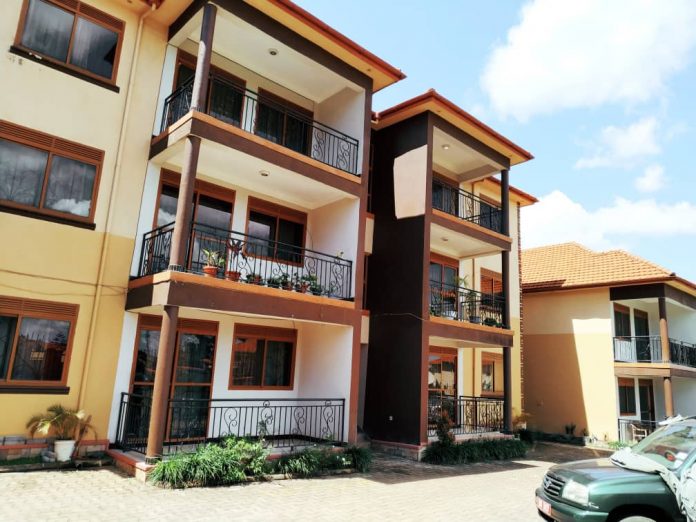
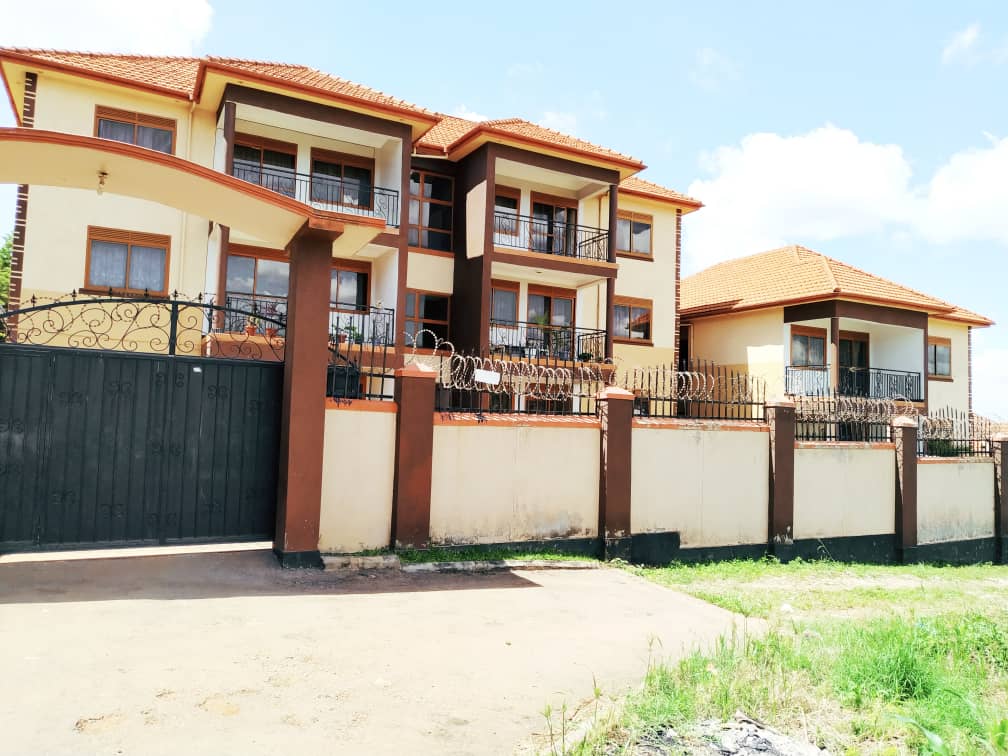
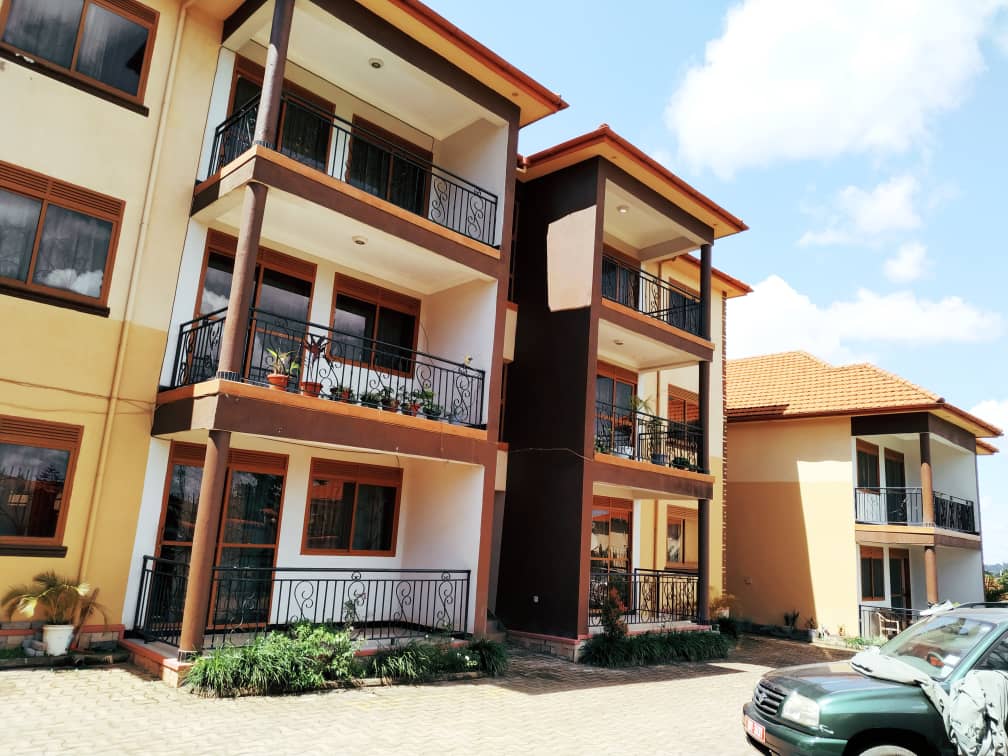
Apartments for sale in Kiwatule

Six units of apartments containing two bedrooms, two units of three bedrooms in Kiwatule are up for sale and asking price is Shs1.4 billion.

More details contact Pesh Real Estates Agency-0703814235


Stories Continues after ad

NPLs decline 5.2 percent in June 2019 as Stanbic Bank, Standard Chartered Bank are cited as key banks in Uganda

Customers inside the banking hall of KCB in Kampala

There was a reduction of 5.2 percent in the banking industry’s stock of non-performing loans (NPLs) to Shs514.9 billion as at end of June 2019, from 542.8 billion registered in the same period of the previous year, according to the latest financial stability report released on Tuesday by the industry regulator, the Bank of Uganda (BOU).

The report says that as the ratio of non-performing loans to gross loans reduced over the year ended June 2019, the asset quality improved to 3.8 percent in June 2019 from 4.4 percent in June 2018. While the gross loans, the denominator in the NPL ratio indicator, increased by 11.2 percent.

The “big five” sectors – agriculture; manufacturing; trade; building, construction and real estate; and personal and household – accounted for 85.1 percent of total NPLs (and 84.4 percent of the banking industry gross loans) as at end June 2019, up from 83.9 percent of NPLs (and 83.6 percent of gross loans) as at end June 2018.

However, according to BOU, the asset quality under the agriculture sector remains a concern, in spite of the sector accounting for just 12.6 percent of the banking industry gross loans. Notwithstanding the improvement in the sector’s NPL ratio from 11.0 percent to 9.1 percent over the year, the sector still accounted for the highest proportion of the banking industry NPLs, at 30.4 percent, similar to June 2018 contribution (30.3 percent).

Also, the manufacturing sector’s deteriorating asset quality trend persisted, having started in December 2017. The sector registered a 20.5 percent increase in NPLs over the year ended June 2019, deterioration from the 9.8 percent growth over the prior year ended June 2018. Indeed, its contribution to the banking industry total NPLs rose from 4.1 percent to 10.1 percent over the year.

As a positive for financial stability, asset quality under the main beneficiary sectors of credit – building, construction and real estate; and trade and commerce – improved, with their NPL ratio reducing from 3.4 percent and 5.2 percent to 3.0 percent and 3.2 percent respectively. Furthermore, there was improvement in asset quality attributed to personal and household lending, indicating lower distress and improving capacity for households to service credit obligations.

Consistent with the reduction in the proportion of foreign currency denominated loans, the share of foreign currency denominated NPLs in total NPLs reduced from 39.8 percent to 27.0 percent over the year, with foreign currency NPLs estimated at Shs139.0 billion as at end June 2019. Consequently, the aggregate foreign currency NPL ratio decreased from 4.6 percent to 2.8 percent over the year, with the improvement reflected across most of the sectors.

Notable though was the high share of NPLs of 51.1 percent attributed to the agriculture sector, in spite of its 15.1 percent share in gross foreign currency loans, representing the highest sectoral foreign currency NPL ratio of 9.5 percent.

The stable and accommodative interest rates regime, improvement in the performance of the economy and government’s settlement of domestic arrears supported improvement in asset quality. Through FY2018/19, the monthly lending rates on shilling and foreign currency loans averaged 20.0 percent and 7.5 percent, down from 20.3 percent and 7.7 percent in FY2017/18, respectively.

Earnings and Profitability

The aggregate profitability of the banking industry improved. However, the persistently loss-making trend of the smaller banks remains a concern, says the report. The banking sector’s aggregate net-after-tax profit increased by 5.3 percent to Shs776.7 billion in FY 2018/19 from Shs737.7 billion (FY2017/18), largely driven by interest income on advances and treasury securities that increased by 9.3 percent and 8.3 percent respectively.

The improvement in asset quality also contributed to improved profitability through a lower increase in provisions of 5.6 percent in spite of the 11.2 percent growth in lending. However, the aggregate net interest margin (NIM) declined, as highlighted in the figure above, due to a lower growth in net interest income, by 9.6 percent, in spite of the earning assets registering a greater increase, of 16.1 percent.

The lower growth in net interest income was attributed to the mostly muted interest rate regime, relative to the prior year. The year ended June 2019 saw a marginal reduction in interest rates on shillings loans, which constitute most of the earning assets, while interest rates on treasury securities only increased marginally.

Also, the industry’s return on assets (ROA) and return on Equity (ROE) reduced from 2.8 percent and 16.7 percent in June 2018 to 2.7 percent and 15.9 percent respectively, in June 2019. This was attributed to a higher increase in total assets, of 10.5 percent, and shareholders’ equity, of 10.8 percent, compared to the 5.3 percent increase in net-after-tax profits.

The aggregate industry retail deposits increased by 8.8 percent over the year ended June 2019, to Shs21 trillion. However, as noted by BOU, the growth was slower compared to a 12.5 percent increase registered over the prior year ended June 2018. Shilling deposits grew at a faster rate of 13.0 percent, than foreign currency deposits, at 8.0 percent, over the year under review.

Foreign currency deposits to total deposits reduced

Consequently, the proportion of foreign currency deposits to total deposits reduced from 38.4 percent to 38.2 percent. With the proportion of foreign currency denominated loans in total loans similarly falling and reducing banks’ exposure to foreign exchange rate risk.

Furthermore, the ratio of foreign currency loans to foreign currency deposits reduced from 62.9 percent (June 2018) to 61.8 percent (June 2019). This indicates increased funding for foreign currency loans, and points to a reduction in the associated liquidity risk in the event of increased credit and foreign exchange risk.

The cost of deposits to banks reduced

The cost of deposits to banks reduced from 2.5 percent FY2017/18 to 2.3 percent for FY2018/19.

Banks’ access to wholesale funding improved, amidst stable interest rates in the money markets, with the main sources being the domestic interbank market and the foreign currency swaps market. While the overnight and 7-day interbank rates averaged 8.6 percent and 10.2 percent in FY2018/19, up from 7.9 percent and 9.7 percent in FY2017/18, respectively, the interbank transacted amount increased from Shs25.0 trillion to Shs26.3 trillion.

Turnover in the swaps market also increased, to Shs37.9 trillion in FY2018/19 from Shs31.1 trillion in FY2017/18, with banks transacting with both resident and non-resident financial institutions.

Liquidity

Liquidity risk in the banking system remained low, as banks maintained liquidity buffers well above the prudential minimum requirements. However, stress tests indicated that banks’ resilience to liquidity shocks somewhat waned as their excess liquidity buffers reduced.

While deposits increased by 8.8 percent, liquid assets increased at a slower pace of 6.3 percent due to a shift towards both longer-term and less liquid assets. “Notably, the stronger growth in banks’ lending to the private sector, of 11.2 percent, claimed an increasing proportion of deposits, of 64.7 percent as at end of June 2019.”

Furthermore, the faster growth, of 14.7 percent, in banks’ investment in government securities was skewed to more long-term government securities, which are less liquid. Consequently, the liquid assets-to-total deposits ratio declined from 46.6 percent in June 2018 to 45.5 percent in June 2019. However, this is more than double the regulatory minimum requirement of 20 percent. Similarly, the liquid assets ratio dropped to 31.6 percent.

Liquidity coverage ratio for the aggregate industry balance sheet reduced

The Liquidity coverage ratio (LCR) for the aggregate industry balance sheet reduced from 372.4 percent to 211.4 percent over the year, but remained well above the prudential minimum, of 100 percent. All banks, but one, held sufficient high quality liquid assets (HQLA) to sustain them through a 30-day stress scenario, for all currencies. “Stress tests conducted on the banking system’s resilience to liquidity shocks, indicated reduced banks’ capacity to withstand shocks, over the year ended June 2019.”

Capital adequacy

BOU reports that capital buffers and adequacy improved, reinforcing the banking system’s resilience to shocks. During FY2018/19, all commercial banks maintained capital adequacy ratios (CAR) well above the minimum requirement of 10 percent for core capital to total risk weighted assets and 12 percent for total capital to total risk weighted assets.

The aggregate industry core capital and total capital increased by 11.5 percent and 10.2 percent respectively to USh.4.3 trillion and USh.4.6 trillion, over the year to June 2019, largely attributed to an increase in retained earnings and share premium….this represented relatively superior growth in capital buffers compared to the growth in banks’ exposure to risky assets – which the buffers are meant to cushion. While total assets and off-balance sheet items grew by 10.5 percent and 14.3 percent respectively, the associated risk was lower, leading to lower growth in associated Risk-weighted Assets (RWA), by 8.4 percent.

Core capital-to-RWA and Total capital-to-RWA ratios improved

Core capital-to-RWA and Total capital-to-RWA ratios improved from 19.7 percent and 21.8 percent as at end June 2018 to 20.3 percent and 22.1 percent as at end June 2019 respectively. The leverage ratio (ratio of regulatory tier one capital to total assets plus off-balance sheet items), which is another indicator of banks’ capital adequacy, remained stable at 11.1 percent.

Banks had capital buffers

Stress tests conducted on the banking sector to determine the adequacy of capital buffers showed that on aggregate, most banks including all domestic systemically important banks (D-SIBs) had sufficient capital buffers to withstand credit risk shocks, says the report.

The ratio of foreign currency loans to foreign currency deposits reduced from 62.9 percent to 61.8 percent over the year under review, well below the 80 percent limit stipulated by the BOU Foreign Currency Business Guidelines (2010).

Performance of Domestic Systemically Important Banks (D-SIBs)

Four commercial banks were identified as Domestic Systemically Important Banks (D-SIBs) as at the end of December 2018; Stanbic Bank, Standard Chartered Bank, Centenary Bank and Barclays Bank.

The four banks constituted 50.8 percent of the commercial banking total assets at the end June 2019, a marginal gain in share from 49.3 percent as at end of June 2018. They also jointly held 49.7 percent of the industry aggregate deposits. D-SIBs face enhanced supervisory oversight, cognizant of their systemic importance.

The D-SIBs’ exposure to credit risk reduced, demonstrated in the improving asset quality, with the proportion of non-performing loans relative to their gross loans consistently reducing, to a level lower than the industry median.

Further, D-SIBs profitability outperformed the industry’s median fostering their organic accumulation of capital. Notably, the indicators also showed that DSIBs held adequate capital and liquidity buffers that exceeded the industry’s median ratios. All stress tests conducted indicated that the D-SIBs were resilient to shocks emanating from both credit and liquidity risks.

Stories Continues after ad

Commercial banks’ assets rise 10.5 percent in June 2019, says BOU

Late Emmanuel Tumusiime-Mutebile

As at end June 2019, commercial banks in the country accounted for 95.2 percent of the banking sector total assets of Shs31.8 trillion as the banking industry aggregate assets increased by 10.5 percent to Shs30.3 trillion from Shs 27.4 trillion in June 2018, according to the latest financial stability report for June 2019 as released by the Bank of Uganda (BOU).

According to the report released Tuesday, loans and advances, investment in government securities, balances with Bank of Uganda (BOU), and placements with non-resident banks respectively accounted for the largest proportions of the industry total assets.

Gross loans and advances increased by 11.2 percent, which was higher than the 11.0 percent increase in the year ended June 2018. As banks sought to diversify risk exposure associated with private sector credit, they increased investment in government securities more rapidly, by 14.7 percent, up from 12.2 percent growth in the year to June 2018.

As the shilling remained stable against the major foreign currencies, banks’ deposits with non-resident banks reduced by Shs439.0 billion to Shs.2, 243.3 billion, which had increased by Shs1, 017.9 billion in the year, ended June 2018; hence minimizing the banks’ assets exposure to foreign shocks, the report says.

Meanwhile, the foreign currency denominated proportion of total assets reduced from 33.1 percent to 29.4 percent over the year ended June 2019, reducing susceptibility of the balance sheet to foreign exchange rate risk, in spite of the concurrent marginal increase in proportion of foreign currency denominated liabilities to total liabilities, from 39.9 percent to 40.2 percent.

The commercial banking industry remains highly concentrated in spite of continued growth

The five largest banks out of 24 banks that comprise the commercial banking domain, accounted for 60.4 percent of the aggregate assets as at end June 2019, up from 60.3 percent in June 2018. The individual market share of the other 19 banks ranged from 0.2 percent to 5.9 percent. “Indeed, the Herfindhal-Hirschman index (HHI) also exhibited increased concentration (Chart 25). However, the trend in the HHI for assets (and loans, as a sub-category) moved in tandem with the HHI for deposits, the main funding source, suggesting matched concentration on both the assets and liabilities side of the balance sheets,” the report says.

Credit growth, risk, and sectoral allocation

According to the report, credit continued to expand, but generally remained below its historical average growth rate of 16 percent during the last ten years. However, a pickup in exposure to foreign currency denominated loans was noted which raises potential credit risk in the event of subsequent depreciation of the shilling. Over the year ended June 2019, total loans grew by 11.2 percent to USh.13.6 trillion, up from 11.0 percent growth over the year ended June 2018.

Foreign currency loans rise 6.3 percent

The report says foreign currency loans increased by 6.3 percent to the equivalent of Shs.4,949.2 billion, over the year, up from 0.5 percent growth in the year ended June 2018. Discounting foreign exchange valuation effects, foreign currency denominated loans increased by 11.6 percent over the year, significantly reversing a 7.0 percent drop over the earlier year. On the other hand, shilling loans increased at a slower rate, 14.2 percent, as compared to the 18.6 percent increase in the year ended June 2018.

However, in terms of composition, the proportion of foreign currency denominated loans to total loans reduced from 38.1 percent (June 2018) to 36.4 percent (June 2019), consequently reducing exposure of banks’ balance sheets to credit and market risk that can potentially be propagated by foreign exchange rate risk.

Credit risk reduces

BoU reports that credit risk in the banking sector reduced, with asset quality improving further. Credit risk within the banking sector eased, as measured by the two core financial soundness indicators (FSIs) – ratio of non-performing loans to gross loans and sectoral distribution of loans to total loans – as detailed below.

In addition, banks considerably provided for non-performing loans, with the ratio of specific provisions to non-performing loans closing at 49.4 percent.

Sectoral concentration of loans eased marginally

Sectoral allocation of credit remained consistent with past trends, with no extraordinary shift in the sectoral distribution of banks’ stock of loans over the year to June 2019. The three largest sectors – building, construction & real estate; trade & commerce; and personal & household – jointly accounted for 57.5 percent of banks’ gross loans and advances, down from 58.2 percent as at end June 2018. “Given that the 10-year quarterly average share of the largest three sectors in gross loans was 58.4 percent, the sectoral distribution of credit remained largely consistent with the recently observed distribution, allaying financial stability concerns of extraordinary growth or concentration in particular sectors,” the report says.

Lending to building, mortgages, construction and real estate sector, which accounted for the largest proportion (20.1 percent) of banks’ lending, increased by 11.0 percent (USh.270.5 billion), a more rapid growth compared to 8.7 percent growth in the prior year ended June 2018; with shilling denominated loans accounting for 99.4 percent of the increase. Over the year ended June 2019, credit expansion to this sector was in line with the observed improvement in property prices.

For instance, the report says, the Residential Property Price Index (RPPI) indicates that property prices in the Greater Kampala Metropolitan Area generally increased by 2.5 percent over the year ended June 2019. In terms of currency composition, the proportion of foreign currency denominated loans to building, mortgages, construction and real estate reduced further from 50.2 percent to 45.2 percent over the year ended June 2019, partly a consequence of the macro-prudential policy intervention that set a ceiling for the loan to value ratio (LTV).

While the loans extended for land purchase account for a mere 0.6 percent of gross banks’ loans, the macro-prudential policy, of a 70 percent cap on LTV for foreign currency denominated lending for land purchase, has been effective. The proportion of foreign currency denominated loans in total loans for land purchase has reduced to 18.7 percent as at end June 2019, from 43.0 percent as at end of April 2016 – prior to the policy coming into effect.

Trade and commerce sector, which accounted for 20.1 percent of gross loans, grew at 10.7 percent, a slower pace relative to 12.5 percent growth registered in FY2017/18. Similarly, growth in personal and household loans slowed to just 7.7 percent, slower than the 13.8 percent rise in FY2017/18.

Analysis of the sectoral distribution of foreign currency lending shows that the major tradable sectors – manufacturing, trade and commerce – accounted for 43.8 percent of the industry foreign currency loans, up from 39.3 percent share as at end of June 2018; with the largest proportion of the increase in foreign currency lending associated with these sectors.

Conversely, the share of the building, mortgages, construction and real estate sector in foreign currency lending dropped from 26.5 percent to 24.9 percent over the same period. Also consistent with prudential regulation, the stock of foreign currency denominated loans to households reduced by 4.3 percent, and accounted for only 2.7 percent of the gross lending to households.

Stories Continues after ad

Newly developed lower secondary school curriculum to be implemented next year

students

The Ministry of Education and Sports has said that the implementation of the newly developed lower secondary school curriculum will start in February 2020.

Over the past 30 years, Uganda’s lower secondary curriculum has only been changed by adding content. In spite of new subjects and new content being added, important major areas remain excluded. For example earth sciences has no mention in the curriculum.

According to national curriculum development centre, the re-conceptualized curriculum will develop the learning skills needed to ensure that all graduating students can think critically and study effectively, that they possess the range of generic skills to be successful in their personal and social lives, in making a living, and rendering them employable in the widest sense.

The new curriculum is competence-based and will see a school teach 12 subjects at Senior One and Two, of which 11 will be compulsory while one will be from an elective menu (optional).

Under the new curriculum teachers will compile the learners’ achievements under the formative assessment in the four-year cycle, find an average score and submit it to the UNEB to contribute at least 20 per cent in the final national examinations grading.

Reforms will also address the social and economic needs of Uganda helping it move towards a system where the needs of all learners are met and their full potential is realised.

Stories Continues after ad

Museveni’s Shs400m angers NRM leaders

Milly Babalanda Doka and President Museveni


The Shs402 million that National Resistance Movement party  chairman Yoweri Museveni gave to his officials to take down to his party members the gospel of mobilising them to participate in the recent verification of voters register by the independent Electoral Commission has sharply divided the ruling party.

The officials from the office of national chairman Kyambogo led by President Museveni’s Personal Assistant Milly Babalanda Doka on receiving the Shs402 million from the president allegedly decided to only give each district executive committee of NRM  Shs1 million leaving out the party structures at the sub county, parish and village levels.

But Sub County NRM chairpersons from Kamuli have not let it go. The angered party leaders convened a meeting at Dawson Hotel in Kamuli town last week and expressed dissatisfaction at the manner in which they were discriminated and excluded from the program “yet we are the ones in direct contact with party members at the grassroots and people are asking us about this money.”

Led by their publicity and chairman of Nabwigulu Sub County, Charles Magaya, the party leaders want the Kyambogo ONC to account for the balance of Shs274million which they remained with after giving each of the about 128 districts only Shs1 million.

“Sir Mr president and our national party chairman, I want to report to you that these guys you gave Shs402 million did not put it to the intended use. They only ate the money in lodges and returned to Kampala. There is impact and value for that money,” says Magaya in a recorded audio that has gone viral.

“Us at the grassroots who can ably do that work [of mobilising NRM members for the verification exercise] were neither involved nor contacted,” adds another NRM chairman in the audio.

The party leaders are even more enraged by the fact that the Kampala team spent on fuel, per diem and accommodation fees to only deliver Shs1 million.

“Couldn’t that money be wired to our district chairperson or the administrative secretaries and have that work done very well. These are the people we put in office to coordinate and monitor party activities. So why does the party pay them every month if really they cannot handle an activity of one million shillings? Those who are hijacking the duties of other people are the ones killing our party,” they said.

But in the West Nile region it was even worse. Leaders from the region complained on the ONC whatsapp group that they never even received the shillings 1 million.

“I understand the president gave Shs402 million . They are giving each district 1m so the remaining Shs280 million is just theirs being spent on their own fuel, hotel and per diem.

“Sincerely where is the value for money in this exercise when we can’t reach the actual people who should have done the verification on behalf of the party. The Sub County, Parish and village Chairpersons of NRM,” wondered Hajjat Madina a national NRM mobiliser hailing from West Nile.

Our efforts to get an official comment on this story failed as the contacts for the party spokesman, Rogers Mulindwa were not going through by the time of filing.

Stories Continues after ad

EAC banks raise total assets to US$70.6b in March 2019

East African Development Bank

The banking sector in the EAC region registered strong growth as at end March 2019 where total assets for commercial banks had grown by 9.7 percent to US$70.6 billion, compared to an increase of 5.4 percent in the year to March 2018, according to the Bank of Uganda Financial Stability Report for June 2019 which quotes EAC Monetary Affairs Committee as the source of the data.

The report released on Tuesday attributes the growth in assets to improved macroeconomic performance and accommodative monetary policy in the region.

The regional banking sector was profitable on the whole, owing mostly to increased lending activity. The average return-on-assets ratio rose from 2.1 percent to 2.5 percent between March 2018 and March 2019.

In addition to boosting profit buffers, the sector remained well capitalised during this period, supported by robust Macroprudential regulation and supervision. As at end March 2019, the average core capital adequacy ratio for the region stood at 18.6 percent, which is well above the regulatory minimum requirement of 10 percent.

Credit growth improves

Credit growth improved across the region, mainly on account of eased supply-side constraints and increased aggregate demand. On average, credit to the private sector grew by 11.3 percent in the year to March 2019, compared to 6.2 percent in the previous year.

Credit risk, as measured by the ratio of non-performing loans to gross loans (NPL ratio), was moderate in the region during the period under review. Changes in the sector’s asset quality were mainly attributable to delayed government payments to suppliers and inadequate credit underwriting.

NPLs decline

The average NPL ratio for the region reduced from 10.3 percent in March 2018 to 8.6 percent in March 2019. However, Kenya’s banking system registered a significant rise in credit risk as the NPL ratio increased from 11.8 percent to 12.8 percent, despite the low interest rate environment and recovery in lending activity.

Credit risk, as measured by the ratio of non-performing loans to gross loans (NPL ratio), was moderate in the region during the period under review.

Changes in the sector’s asset quality were mainly attributable to delayed government payments to suppliers and inadequate credit underwriting. The average NPL ratio for the region reduced from 10.3 percent in March 2018 to 8.6 percent in March 2019.

However, Kenya’s banking system registered a significant rise in credit risk as the NPL ratio increased from 11.8 percent to 12.8 percent, despite the low interest rate environment and recovery in lending activity.

Stories Continues after ad

UK urges Kagame to release ailing political prisoners

Rwanda president Paul Kagame

The House of Lords in the United Kingdom, has petitioned the president of Rwanda, Paul Kagame over the continued detention of Col .Tom Byabagamba and retired Brig. Gen. Frank Rusagara.

The two were arrested in 2014 and charged with spreading rumors and tarnishing the image of the country and government. Col. Byabagamba was also leveled with charges of concealing evidence and undermining the national flag.

According to the House of Lords, the charges came after criticisms the two made of the ruling government. Despite Rusagara being a civilian, the two were jointly tried in Kanombe military High Court in Kigali on March 31, 2016.

They were convicted on all charges and sentenced to 21 and 30 years in prison. They appeal their sentences however the process didn’t begin until early this year and is still ongoing.

“We commended Rwanda’s progress over the last three decades particularly the strides it has made in creating a more inclusive society that had drawn in marginalized population. However we are troubled that Rwanda has imposed disproportionate sentences on individuals who are suffering from serious health issues in poor conditions,” the petition reads in part.

Kagame has always been accused of wit hunting his opponents who he fought with in 1994

The House of Lords said Humanitarian factor call for Byabagamba and Rusagara’s release, both men have been in detention for over five years and are reportedly in poor health. “Rusagara is suffering from an enlarged prostate and Byabagamba has two artificial discs after having major surgery on his back. Unfortunately Mr Rusagara wife passed away and he was in prison and his children have been without parents and don’t want to see their father suffer any longer,” they said.

“Releasing the two will demonstrate to United Kingdom and the entire world that Rwanda is compassionate to ill prisoners who have already served longer sentences,” they said.

The House of Lords, also known as the House of Peers and domestically usually referred to simply as the Lords, is the upper house of the Parliament of the United Kingdom.

Stories Continues after ad