Stanbic Bank
Stanbic Bank
24.8 C
Kampala
Stanbic Bank
Stanbic Bank
Home Blog Page 1117

CAF Awards 2019: Top 3 contenders for all categories announced

caf awards 2019

With barely three weeks to go to the annual CAF Awards the top three contenders for all award categories were revealed today.

The shortlist of top three nominees for each award category was reached following votes from a CAF Technical & Development Committee and a panel of media experts with emphasis on the nominees’ performance during the year under review, 2019.

It also included votes from a select panel of CAF Legends, made up of former winners of the prestigious African Player of the Year award. The legends took part in the voting process for the Player of the Year (Men & Women).

The final phase of voting for the men’s and women’s African Player of the Year, as well as the male and female Coach of the Year, will be selected by Head Coaches/Technical Directors and Captains of senior national teams from CAF Member Associations.

Meanwhile, the Interclubs Player of the Year will be decided upon by the Head Coaches and Captains of the group phase of the current season of CAF Interclubs competitions.

The award winners for each category will be announced during the CAF Awards ceremony on Tuesday, 7 January 2020, at the Albatros Citadel Sahl Hasheesh, Hurghada, Egypt.

The event will celebrate African footballers and officials who have distinguished themselves during 2019. There will also be several new award categories in recognition of exceptional contributions to African football and inspiring individuals.

The top three (3) contenders for all the categories are as follows:


African Player of the Year

Mohamed Salah (Egypt & Liverpool)

Riyad Mahrez (Algeria & Manchester City)

Sadio Mane (Senegal & Liverpool)


African Women’s Player of the Year

Ajara Nchout (Cameroon & Valerenga)

Asisat Oshoala (Nigeria & Barcelona)

Thembi Kgatlana (South Africa & Beijing Phoenix FC)


African Interclubs Player of the Year

Anice Badri (Tunisia & Esperance)

Tarek Hamed (Egypt & Zamalek)

Youcef Belaïli (Algeria & Esperance / Ahli Jeddah)


African Youth Player of the Year

Achraf Hakimi (Morocco & Borussia Dortmund)

Samuel Chukwueze (Nigeria & Villarreal)

Victor Osimhen (Nigeria & Lille)


African Men’s Coach of the Year

Aliou Cisse (Senegal – Senegal)

Djamel Belmadi (Algeria – Algeria)

Moïne Chaâbani (Tunisia – Esperance)


African Women’s Coach of the Year

Alain Djeumfa (Cameroon)

Desiree Ellis (South Africa)

Thomas Dennerby (Nigeria)


African Men’s National Team of the Year

Algeria

Madagascar

Senegal


African Women’s National Team of the Year

Cameroon

Nigeria

South Africa

Stories Continues after ad

Majid Al Futtaim opens first carrefour store in Uganda

Carrefour Uganda store

Majid Al Futtaim, the leading shopping mall, across the Middle East, Africa and Asia has today opened the first Carrefour Store in Uganda.

Carrefour is one of the largest hypermarket and supermarket chains in the world. The brand was launched in the region in 1995 by Majid Al Futtaim, which is the exclusive franchise to operate Carrefour in over 30 countries across the Middle East, Africa, and Asia. Today, Majid Al Futtaim operates almost 300 Carrefour stores, serving more than 750,000 customers daily and employing over 37,000 colleagues.

Located at the popular Oasis Mall, the store covers over 2800 square meters selling area and offers shoppers great value and choice, through a combination of offers and promotions while delivering on its promise of creating great moments for everyone every day.

The store stocks more than 20,000 high quality products from international and local brands all certified by relevant government agencies, applying international hygiene standards in order to guarantee food safety to customers, while ensuring unbeatable price and its renowned customer service,

In addition, Carrefour announced that it is committed to customers that if they buy a product at Carrefour and found it cheaper elsewhere, Carrefour will refund the customer 10 times the difference.

Majid Al Futtaim Hypermarket in Uganda has so far recruited 130 Ugandan employees and has contracted 60 more from external local companies. The company has also engaged 230 Ugandan suppliers to stock the Carrefour store in Uganda.

It operates different store formats, as well as multiple online offerings to meet the growing needs of its diversified customer base. In line with the brand’s commitment to provide the widest range of quality products and value for money, Carrefour offers an unrivalled choice of more than 100,000 food and non-food products, and an exemplary customer experience to create great moments for everyone every day.

Stories Continues after ad

Climate change,education, and technology to fuel more inequalities- UNDP report

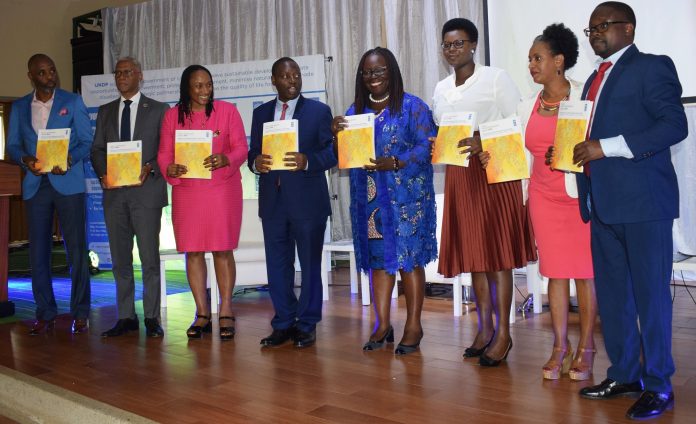
The newly released United Nations Development Programme (UNDP) Human Development Report the in Uganda, indicates that new dimensions of inequalities are opening up around education, technology and climate change pushing the wealthiest ahead, undermining further progress and making it harder for those left behind to catch up.

According to the report, the new face of inequality is not beyond solutions and warns that climate change will affect the poor and widen existing inequalities.

These inequalities extend to essential services like education and health, 42 percent of adults in low human development countries have primary education compared with 94 percent in very high human development countries.  Similarly, “Only 3.2 percent of adults in low human development countries have a tertiary education compared with 29 percent in developed countries.

The report also shows that in most cases, inequality begins before birth, grow and may be passed across generations. To that end, it recommends that measures to address inequalities must start at or before birth from pre-natal care, to education, to the labour market and retirement.

“Between 2030 and 2050 climate change is expected to cause an additional 250,000 deaths a year from malnutrition, malaria, diarrhea and heat stress. Hundreds of millions more people could be exposed to deadly heat by 2050, and the geographical range for disease vectors such as mosquitoes that transmit malaria or dengue will likely shift and expand.” reads in part of the report Launched by David Bahati, the State Minister for Planning today at the Golf Course Hotel

The report adds that, Climate change will hit the tropics harder first, and many developing countries are tropical.

In agreement with the report findings, Ms. Elsie Attafuah, the Resident Representative UNDP said, “What is clear is that inequalities, once they exist among people, regions and several divides, tend to be intergenerational and extremely difficult to break. The poor have higher chances of remaining poor. Once ill-educated, with poor health standards, the off- springs and their descendants will most likely follow the same path.”

She said the report gives us a message of hope; that inequalities can be addressed if action is taken now before imbalances in economic power become entrenched.

According to the report, Africa has experienced one of the most significant improvements in human development as measured by Human Development Index (HDI). Between 1990 and 2018 life expectancy increased by more than 11 years.

For the first time this year, an African country, Seychelles –has moved into the very high human development group. Four countries  Botswana, Gabon, Mauritius and South Africa are also now in the high human development group, while 12 countries  Angola, Cabo Verde, Cameroon, Congo, Equatorial Guinea, Eswatini, Ghana, Kenya, Namibia, Sao Tome and Principe, Zambia, and Zimbabwe  are in the medium human development group. Botswana enjoys the region’s highest increase in HDI rank between 2013 and 2018, rising 11 places in the rankings.

While poverty rates have declined across the continent, progress has been uneven. If current trends continue, the report asserts that, nearly 9 of 10 people in extreme poverty more than 300 million will be in Sub-Saharan Africa in 2030.

And among countries that are off track to achieve the SDGs by 2030, most are in Africa. South Africa experiences the highest rate of income inequality in the world with over half the country’s income is held by the richest 10 percent.

The report puts Uganda’s HDI value for 2018 to 0.528 which places it in the low human development category positioning it at 159 out of 189 countries and territories. The rank is shared with Tanzania. Between 1990 and 2018, Uganda’s HDI value increased from 0.312 to 0.528, an increase of 69.1 percent.

Uganda’s 2018 HDI of 0.528 is above the average of 0.507 for countries in the low human development group and below the average of 0.541 for countries in Sub-Saharan Africa. From Sub-Saharan Africa, countries which are close to Uganda in 2018 HDI rank and to some extent in population size are Madagascar and Tanzania, which have HDIs ranked 162 and 159 respectively.

In terms of HDI indicators, between 1990 and 2018, Uganda’s life expectancy at birth increased by 17.1 years, mean years of schooling increased by 3.3 years and expected years of schooling increased by 5.6 years. Uganda’s GNI per capita increased by about 131.0 percent between 1990 and 2018.

The publication also reports on the performance of nations in Gender Inequality Index (GII), which reflects gender-based inequalities in three dimensions reproductive health, empowerment, and economic activity. Reproductive health is measured by maternal mortality and adolescent birth rates; empowerment is measured by the share of parliamentary seats held by women and attainment in secondary and higher education by each gender while economic activity is measured by the labour market participation rate for women and men.

According to the report, Uganda has a GII value of 0.531, ranking it 127 out of 162 countries in the 2018 index. The report says that 34.3 percent of parliamentary seats in Uganda are held by women, and 27.4 percent of adult women have reached at least a secondary level of education compared to 34.7 percent of their male counterparts.

On the other hand, for every 100,000 live births, 343.0women die from pregnancy related causes; and the adolescent birth rate is 118.8 births per 1,000 women of ages 15-19. Female participation in the labour market is 67.2 percent compared to 75.0 for men.

The report also goes beyond income and reports on the deprivations that people face using a

Multidimensional Poverty Index (MPI) which identifies deprivations suffered by individuals in health, education and standard of living and 10 indicators. The report shows that 55.1 percent of the Ugandan population are multidimensionally poor while 24.9 percent are vulnerable to multidimensional poverty.

If the deprivation score is 33.3 percent or greater, the household (and everyone in it) is classified as multidimensional poor. Individuals with a deprivation score greater than or equal to 20 percent but less than 33.3 percent are classified as vulnerable to multidimensional poverty.

Prof. Pamela Mbabazi, the Chairperson National Planning Authority said that most of the report findings align with observations made in Uganda’s national planning frameworks and its prescription of areas for redress align with development priorities identified in Uganda’s third National Development Plan now in its final stages of design.

These include improving the quality of education, jobs creation, reducing dependency on subsistence economy, combatting climate change cover, enhancing value addition in key growth opportunities, digitization of the economy and reducing vulnerabilities.

Stories Continues after ad

Kenyan community funds Makerere students to riot against Ruto

DP-William Ruto

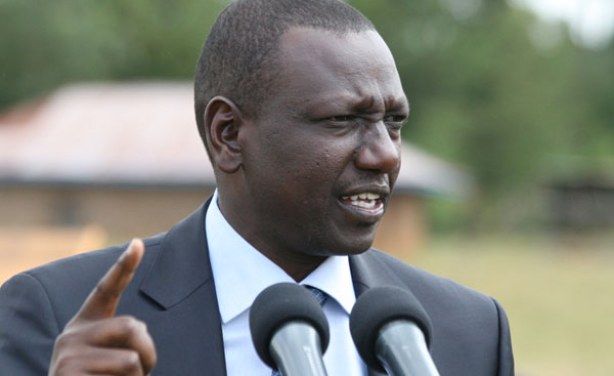
A section of Kenyan community in Uganda who don’t agree with Kenya’s Deputy President William S. Ruto are allegedly behind Makerere University students who want to disrupt the groundbreaking ceremony for the William Ruto S. Ruto on African Studies Saturday in the morning.

The Kenyan group alleges that Ruto is corrupt and is not in good books with his boss President Uhuru Kenyatta.

Ruto was among Kenyans indicted by the ICC on allegations of leading crimes against humanity in the 2007-8 general elections in Kenya where over 1000 people lost their lives due to violence.

The goals of the institute are; to draw on the core strengths of diversity of disciplines and experience to develop and refine methodologies for the study of Africa; develop innovative approaches to teaching and learning about Africa; collaborate with similar Institutes in Africa and globally to deepen the understanding of Africa in all its complexity and evolve common perspectives on global issues; strengthen relationships between academic and indigenous intellectuals as the basis for reclaiming indigenous knowledge, and integrate this into local communities.

Others are to establish an environment for flourishing study and debate on African languages, arts, philosophies, social and political systems; enhance and enrich intellectual and cultural life and contribute to the discussion, analysis and resolution of critical developmental challenges facing African Societies through research and extension work.

Who is William S. Ruto

William Kipchirchir Samoei Arap Ruto, on December 21, 1966, is the Deputy President of Kenya since 2013. He served as the Acting President of Kenya between 5 and 8 October 2014 when President Uhuru Kenyatta was at the Hague to answer questions related to political violence in 2007/2008.

He previously served in various ministerial positions, including the Ministry of Home Affairs, the Ministry of Agriculture, and the Ministry of Higher Education Science and Technology. He was Secretary General of KANU, the former ruling political party, and the MP for Eldoret North Constituency between December 1997 and January 2013.

He won the seat in the 1997 Kenyan election after defeating Reuben Chesire. He was appointed to the position of Assistant Minister in the Office of the President by President Daniel arap Moi in 1998.

He was promoted to be Minister for Home Affairs in August 2002. Ruto also previously served as the Chairman of the Parliamentary Select Committee on Constitutional Reform in the 9th Parliament.

On 4 March 2013, he became the first Deputy President of Kenya, when he and Uhuru Kenyatta were declared winners of the hotly contested presidential election. The duo won on a Jubilee Coalition ticket.

Ruto was among the list of people who were indicted to stand trial at the International Criminal Court (ICC) for their involvement in Kenya’s 2007–08 political violence. However, the ICC case was faced with challenges especially concerning withdrawal of key prosecution witnesses. In April 2016, the International Criminal Court dropped the charges against Ruto.

Stories Continues after ad
Arteta appointed Arsenal head coach

arteta

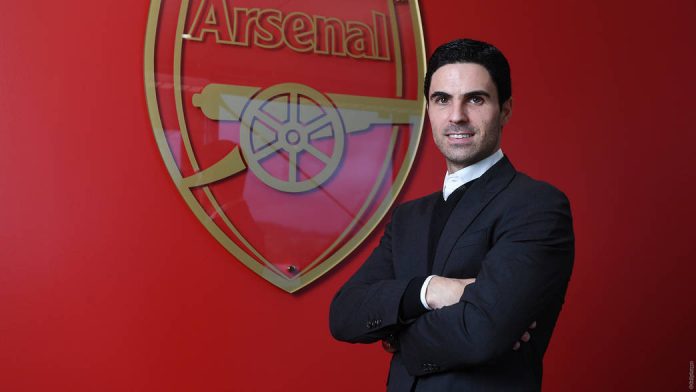
Arsenal have confirmed the appointment of Mikel Arteta as their new head coach.

The former Arsenal midfielder takes up his first job in management, leaving his role as assistant coach under Pep Guardiola at Manchester City.

The 37-year-old succeeds Unai Emery, who left Emirates Stadium last month, on a three-and-a-half-year deal.

“This is a huge honour,” Arteta told the club’s official website. “Arsenal is one of the biggest clubs in the world.

“We need to be competing for the top trophies in the game and that’s been made very clear to me in my discussions with Stan and Josh Kroenke, and the senior people from the club.

“We all know there is a lot of work to be done to achieve that but I am confident we’ll do it. I’m realistic enough to know it won’t happen overnight but the current squad has plenty of talent and there is a great pipeline of young players coming through from the academy.”

Interim head coach Freddie Ljungberg picked up four points from the last four matches, leaving the Gunners in 10th, seven points adrift of Chelsea in fourth.

Arteta made 119 Premier League appearances for Arsenal, having joined the north Londoners from Everton in August 2011.

The club say Arteta will take charge from Sunday in preparation for the trip to AFC Bournemouth, after their match away to Everton, who he spent seven years with as a player, on Saturday.

Stories Continues after ad
URSB exposes AG William Byaruhanga in the Nakasero Primary School land saga

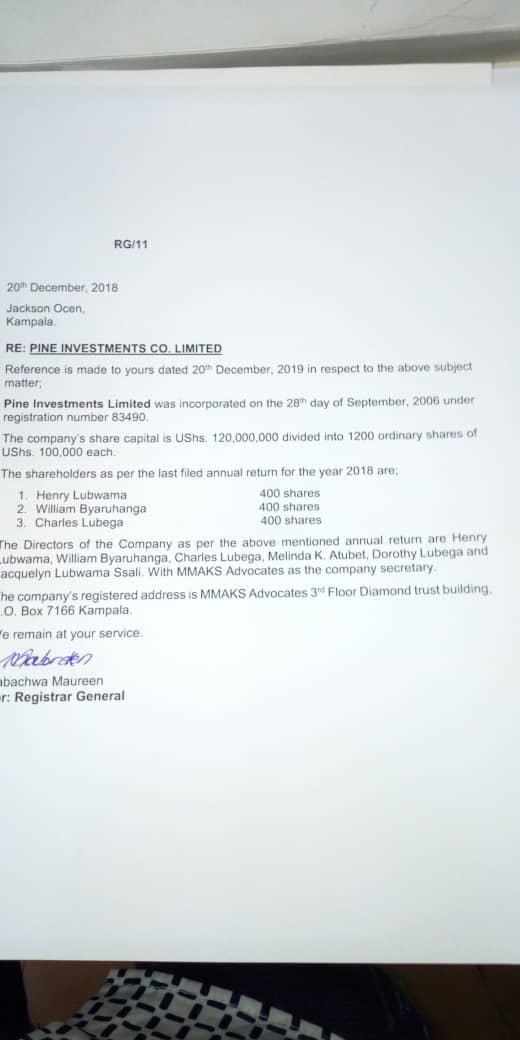
A leaked document has revealed the real owners of Pine Investments Co. Limited, confirming that the Attorney General (AG) William Byaruhanga owns 400 shares. Other shareholders are Charles Lubega and Henry Lubwama, also taking 400 shares each.

The company’s other directors are; Melinda K. Atubet, Dorothy Lubega and Jacquelyn. MMAKS Advocates act as Company Secretary.

The company’s share capital is Shs120 million, divided into 1200 ordinary shares of Shs100, 000 each.

The company is alleged to have acquired land formerly belonging  to Nakasero Primary School through unclear circumstances. The school is owned by  the  government.

Prime Minister, Dr. Ruhakana Rugunda days ago told MPs that the government would probe circumstances under which Pine Investments Co. Limited acquired the school’s land. The company wants to sell the same land back to the government.

“Government is going to investigate these allegations. In the next sitting, the government will provide a preliminary report about this matter, we take allegations being made seriously especially ownership of the land,” he said on Wednesday while responding to MP Latiff Ssebaggala who warned that Ugandan taxpayers were bound to lose billions of shillings if government proceeds to buy the land from the company.

 “We are likely to lose taxpayers’ money, the land which they are putting pressure that Government buys was part of Nakasero Primary School land and it was taken under unclear circumstances and they are selling it back to Government,” Ssebaggala said.

A whistleblower petitioned Speaker Rebecca Kadaga on grounds that Pine Investments Co, was being fronted to win the contract to sell three acres of land to the Ministry of Finance to construct headquarters of Afro Exim bank in Uganda.

This was after officials of Afro Exim Bank approached President Yoweri Museveni with a proposal to build a bank in Uganda, a proposal the president welcomed with a conditionality for the bank to establish its headquarters in Uganda.

Four companies are said to have expressed interest in selling land including; Pine Investments Co which offered 2.2 acres near Nakasero Primary School at US$4 million (about Shs14.676 billion) per acre, Vara Enterprise offered 2.4 acres in Bugolobi with the company settling for US$3.1 million (about Shs11.366 billion). SGL proposed three acres at Kololo Lugogo bypass at $2.7 million (about Shs 9.896 billion).

Kadaga asked the Prime Minister to assure the country that government won’t be duped into buying the land whose ownership is under contention.

“That is a serious allegation if it is true if the land being sold is actually government land at an exorbitant price and possibly involving a member of your cabinet cost. Can you undertake that nothing shall happen, that government will not be forced to buy that land before you come back to this house,” Kadaga said.

Stories Continues after ad
She Cranes finish 6th in 2019 World Netball rankings

she cranes players

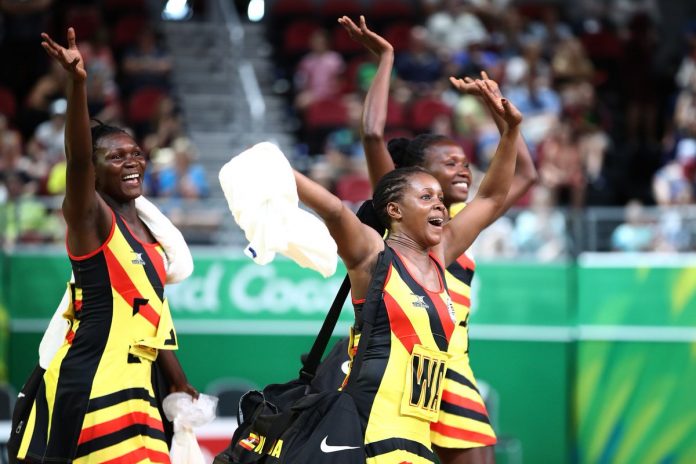
After a busy year of netball, the Uganda National Netball Team, known as ‘She Cranes’ finish sixth in the 2019 International Netball Federation (INF) World Rankings.

The She Cranes complete the year with a total of 3,928 points and a rating of 123.

Uganda remain the second in Africa behind South Africa (5th). Malawi (7th), Zimbabwe (13th) and Zambia (15th) complete the continent’s top five.

The Africa Netball Cup allowed Zimbabwe to move up to 13th, while Zambia retained their place at 15th and Kenya enter the world rankings at 39th.

After the M1 Nations Cup, Namibia move up by 3 places to 30th, Botswana move to 24th while Ireland move down to 26th and Papua New Guinea move down to 31st.

The overall rankings reflect the games played up to 2nd of December 2019 which include the Netball Europe Open Championship, the Canada – America test series, the Constellation Cup, the Africa Netball Cup, Battle of the Saints, the M1 Nations Cup, the Southeast Asian Games and the South Africa test series against England.

The world rankings see no change within the top 5, with Australia retaining their place in 1st after their performance at the Constellation Cup. New Zealand consolidate their place in 2nd, England remain 3rd followed by Jamaica in 4th and South Africa.

After a strong performance at the Netball Europe Open Championship, Wales move into the top 10 in 9th place, followed by Trinidad and Tobago who move up from 11th to 10th, with Northern Ireland moving down two places to 11th.

Following the Battle of the Saints, St Kitts and Nevis re-enter the rankings at 27th, Antigua and Barbuda move to 36th, Cayman Islands rise 7 places to 28th, and St Maarten move down to 44th.

Stories Continues after ad

A “Meeting of Minds” Report identifies five main challenges facing African banks

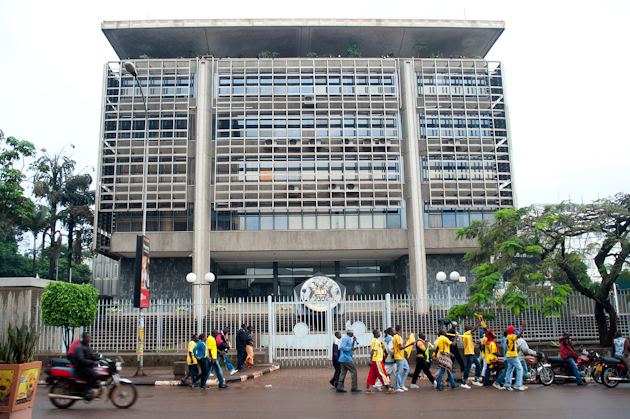
Bank of Uganda regulates all commercial banks in the country

In October 2019, during the tenth Africa Forward Together (AFT) forum in Mauritius and spearheaded by Mauritius Commercial Bank (MCB) a special workshop aptly called “Meeting of Minds” session leveraged the insight and brainpower of over 35 C-level and senior banking leaders across the African region and beyond.

The aim of the session was to identify and prioritise the main challenges faced by their banks in five distinct but interlinked areas that were purposefully scoped to look beyond numbers:, Expertise, people, operational efficiency, risk and corporate Sustainability

Further to the “Meeting of Minds” workshop, a report probing into discussions has been published this week by MCB. It identifies five main challenges facing African banks and financial institutions, as follows: Lack of technical expertise amidst the increased cybersecurity risk, Know Your Corporate (KYC) issues hampering financial inclusion, talent management, retention and development, customers’ education and staff skills gap, IT & digitalisation and transformation programme and expertise

In the editorial of the report, MCB Group CEO, Pierre-Guy Noël speaks of an alignment of African banks and institutions on the key issues they have to face. “Considering the relative heterogeneity of African markets in terms of distinct characteristics and level of maturity in consumer behaviour, there was a remarkable alignment on the challenges facing the region’s financial institutions,” he said.

On the main threat posed by cybesecurity, MCB Group CEO observed : “Additionally, there is a lack of appropriate risk assessment and framework that caters for the exigencies arising from the use and adoption of new digital solutions. The rise of cybersecurity attacks and other cyber frauds were therefore highlighted as the most significant challenge, compounded by the lack of technical expertise and familiarity at senior levels in these fields (…) In parallel across the rest of most institutions, is the significant shortage of technical expertise and know-how in IT, digitalisation and related transformation programmes…”

The lack of KYC and other compliance frameworks “to facilitate the on-boarding of unbanked segments remain a key obstacle for regional banks to further financial inclusion. This challenge emerged in many discussions”, added Mr. Noël, who also stresses upon the challenge of developing solutions from customer segments that are distinct and sometimes unrelated (urban customers with high digital literacy vs rural unbanked segments requiring traditional supports and channels).

Last but not least, sustainable development and the necessity to embed its principles into corporate DNA are also issues highlighted by Mr. Noël. “The alignment of long-term value to stakeholders with corporate sustainability requires a considerable strategic push, a deep adjustment of corporate culture and a more measured risk-management mindset. This adjustment will have to take place sooner than later, because a trusted bank with a wider positive impact is increasingly being upheld as the minimum standard vis-à-vis stakeholders ranging from our own customers and central banks, to providers of lines of credit”.

MCB’s CEO insists on the fact that the insights of the report can help prioritise strategies for the future and promote awareness “that collaboration and partnership within the region has potential to address many of the common challenges facing African banking and financial services today”.

Based in Mauritius, MCB Group is currently ranked 1st in East Africa, 19th in Africa and 613th among the Top 1000 Banks in terms of Tier 1 capital. The Group is investment grade- rated by Moody’s and Fitch, and currently ranks 31st in Africa in terms of assets (Jeune Afrique Top 200 Banks, The Africa Report, September 2019) and 81st on the African continent in terms of market capitalisation (African Business Top 250 Companies, May 2019).

Stories Continues after ad

Ugandan gets MBE honour

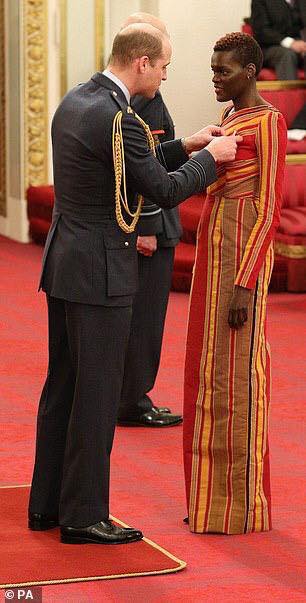
Atim being honoured by Prince William

Ugandan-born stage actress Sheila Atim has received a prestigious MBE (Member of the British Empire) honor from Prince William (Grandson of Queen Elizabeth).

Atim, 28, is best known for her role as Marianne in the original production of Girl from the North Country and was given the honour by the Duke of Cambridge. She went to the UK from Uganda at only five months old.

She has also played Emilia opposite Mark Rylance’s Iago in Othello, at the Globe, in 2018.

Stories Continues after ad

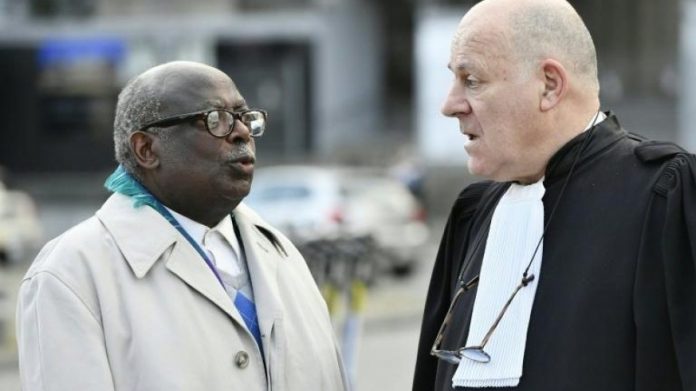
Rwandan national could face 30 years in jail over genocide

Fabien Neretse (left)

Belgian prosecutors have urged court to impose a 30-year jail term on a former Rwandan official convicted of genocide for his part in his country’s 1994 killing of minority Tutsis.

Fabien Neretse was arrested in France in 2011 and was found guilty of genocide and war crimes on Thursday after a trial in the Brussels high court.

Neretse, who protested his innocence throughout the trial, is the first person to be convicted in Belgium on a genocide charge.

He was also convicted of war crimes for 11 murders in Rwanda, under Belgium’s code of universal jurisdiction for the most serious offences.

Neretse remained silent in the dock as the verdict was being delivered on Thursday, but many have a chance to speak during Friday’s sentencing hearing.

Stories Continues after ad