Stanbic Bank
Stanbic Bank
18.3 C
Kampala
Stanbic Bank
Stanbic Bank
Home Blog Page 1120

EAC and USAID launch new programme for Conservation and Management of region’s natural capital

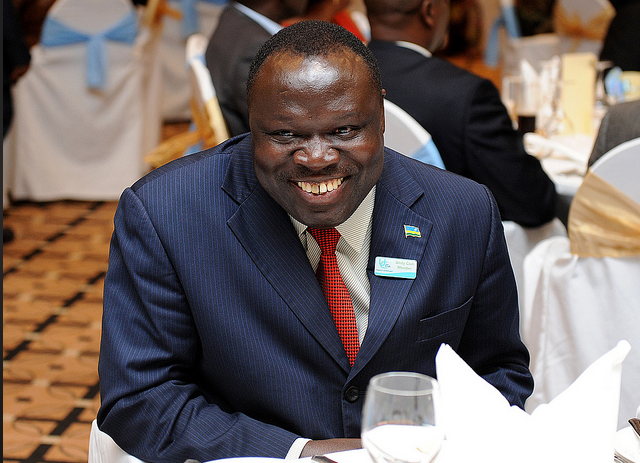
Christophe Bazivamo


The East African Community (EAC) in collaboration with the US Agency for International Development Kenya/East Africa (USAID/KEA) have launched a new programme for the conservation and sustainable use of East Africa’s natural capital.

The Conservation and Management of the Region’s Natural Capital Programme is an initiative that seeks to improve the collaborative management and conservation of trans-boundary natural resources, reduce wildlife poaching and trafficking, and increase the perceived value of living wildlife.

The three-year project, which runs from June 2019 to June 2022 and has a budget component of approximately US $2.3 million from USAID/KEA, was launched in Nairobi, Kenya.

The EAC Secretariat will lead the programme implementation process with technical and analytical support from the International Union for Conservation of Nature and Environment Incentives. This will be done through a new working approach requiring the active involvement of host communities of natural protected biodiversity species areas.

In East Africa, biodiversity-rich areas are critical to the region’s nature-based tourism industry, which contributes 7.5-10 percent of East Africa’s gross domestic product. At the local level, rural communities across the region depend on wildlife and wildlife habitats for their livelihoods. Iconic wildlife, and the landscapes on which it roams, has significant value.

Also in response to rapid economic development and population growth, East Africa’s infrastructure is expanding. This expansion is putting pressure on East Africa’s “natural capital” — resources that are essential for socio-economic growth and development of East African countries and people. The new Conservation and Management of Natural Capital Programme will help strengthen the EAC’s capacity to protect this vital resource.

Speaking at the launch, Christophe Bazivamo, the EAC Deputy Secretary General in charge of Productive and Social Sectors, said that the programme was crucial as it would, among other things, enhance collaborative management and conservation of transboundary natural resources in the region, increase perceived value of wildlife and reduce wildlife poaching and trafficking.

“This sustained support will go a long way to strengthen national and regional efforts in conservation and management of East Africa’s rich biodiversity and natural resources,” said Bazivamo.

Representing USAID KEA at the event was Ms. Aurelia Micko, the Director of the Environment Office.

Under the EAC Treaty, in particular Chapters 19 and 20, EAC Partner States agree amongst other things, to take concerted measures to foster co-operation in the joint and efficient management and sustainable utilization of natural resources within the community for their mutual benefit. Partner States also recognize that conserving natural capital across boundaries requires strong collaboration and harmonization of national and regional plans and policies to support transboundary management.

In this line, EAC and USAID designed a three years Programme on Improving Collaborative Conservation and Management of Transboundary Natural Resources in EAC.


Stories Continues after ad

Bowing to Foreign pressure: UPDF arrests military commander who okayed brutality of Makerere students

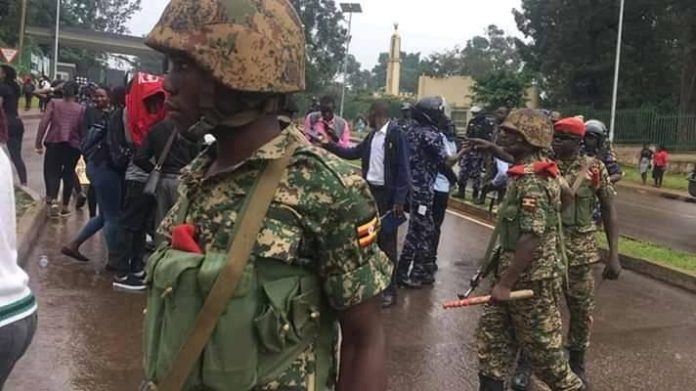
Soldier confronts students

Following pressure and condemnation from the United States of America and the European Union (EU), Delegation in Uganda, the Uganda people’s Defence forces (UPDF), has arrested the military police commander who commanded the solders as they unleashed terror on striking Makerere University students.

According to army spokesperson Brig. Richard Karemire, the military officer identified as Capt. Ronald Lubeera is currently detained at Makindye Military Barracks.

“A board of inquiry led by Lt. Col. Richard Ochen Okum has been set up to establish details of what happened and findings will guide the next course of action,” he said.

The strike that commenced on Tuesday last week was sparked off by the unpopular 15 percent cumulative tuition policy. They were spearheaded by Mollie Siperia, the Guild Representative Councilor for School of psychology and one Frank Bwambale who were later nabbed and suspended by the university vice chancellor Prof. Barnabas Nawangwe.

Unconfirmed reports indicate that Siperia who was brutally assaulted is currently hospitalized at unknown medical facility in Kampala.

On Tuesday, the university suspended more nine students and warned several others for reportedly indulging in strikes.

Last week, Police other security organs broke into students halls of residence such as Mary Stuart and others in the latest reign of terror at the university where even disabled students were battered by the police and the army officers.

Reports indicate that Students’ Guild President, Julius Kateregga, was kidnapped by unknown people moments after he had just left NBS TV where he was discussing issues affecting the university alongside, Dr Muhammad Kiggundu, Manager Communications and international relations of the university. The kidnapping reports were confirmed by his deputy Judith Nalukwago and his where about has not been established.

The EU on Friday wrote: “We support the analysis of the events made by the Uganda Human Rights Commission and call upon all parties particularly the Uganda Police Force and Uganda People’s Defence Forces to refrain from acts of violence and to respect freedom of assembly and expression. Any possible misconduct by their members should be investigated and acted upon.”

The EU at the same time has condemned the military and the police for torturing and arresting some journalists who were covering the demonstration at Makerere. Some are nursing injuries in hospitals. As a result the journalists have boycotted covering police events and related activities.

Stories Continues after ad

New study calls for Integrated Pest Management techniques to fight fall armyworm

Fall Armyworm in Maize

Centre for Agriculture and Bioscience International (CABI) scientists are recommending the use of more environmentally sustainable biological controls, as part of an Integrated Pest Management (IPM) strategy, to fight the fall armyworm (FAW) instead of favouring more harmful pesticides.

In a new paper published in the International Journal of Pest Management, Dr Justice Tambo led a team of researchers who suggest that policy should be geared towards educating farmers about the pest and appropriate control practices that do not over rely on synthetic products.

Tambo, who used survey data from 123 farm households in Ghana and 342 in Zambia that had experienced a FAW attack on their maize plots during the 2016/2017 cropping season, said farmers need to be advised on the rational use of pesticides – where they need to be used as part of IPM – including their impacts on human health and the environment.

However, ultimately, Dr Tambo and the scientists, recommend that other control options using biological agents should be explored to fight the pest which is threatening the food security of more than 200 million people worldwide.

Tambo said, “Our study showed that 51 percent of households sampled in Ghana and 49 percent in Zambia, respectively, used pesticides to control fall armyworm. However, chemical pesticides are costly and their effectiveness and impact on human health and the environment requires further research.

“Furthermore, while 39 percent and 42 percent of households, respectively, received information on FAW from neighbours and extension officers, we recommend that policy efforts should focus on widespread communication campaigns and training programmes with a stronger focus on biological controls.”

Dr Tambo added that more farmers also need to be educated and advised on other IPM techniques to managed FAW including constant weeding to remove alternative host plants; rotation and intercropping of maize with non-host plants; and uprooting and burning of infected plants to destroy larvae and pupae.

“In order to convince farmers that IPM strategies which lean more towards more sustainable biological controls are a viable option, we must demonstrate that the cost is less than the value of the yield saved,” he said.

Last year CABI scientist Dr Melanie Bateman published a paper in the Journal of Applied Entomology, ‘Assessment of potential biopesticide options for managing fall armyworm (Spodoptera frugiperda) in Africa’ – the first major study of 50 potential biological controls that could be used to fight FAW.

Current CABI research on a variety of safe non-toxic FAW management techniques are ongoing. These include the possibility of the parasitoid Telenomus remus – which was recently confirmed in Africa – could be employed to fight FAW.

Dr Marc Kenis, who is leading the research on Telenomus remus, said, “In Latin America, field releases of Telenomus remus in maize can result in 80-100 percent parasitism, providing full control of fall armyworm.

“The main challenge for a wider utilisation is to provide a product that is financially affordable for African farmers. Mass production on its natural hosts is costly but rearing systems on factitious hosts can be developed.”

Stories Continues after ad

Access to justice for all is not yet a reality – but there are ways forward

Patricia Scotland

By Patricia Scotland

Access to justice for everyone in all communities is an important right and requirement for building fair and peaceful societies – yet this objective has been achieved in few if any nations, and the consequences are damaging for social, economic and political progress and stability.

Studies indicate that of the 1.4 billion people who for whatever reason in the past two years felt the need for recourse to law, less than half have had their justice needs met. Barriers such as cost, complexity and corruption cause people either not to seek redress, or to be defeated by the process.

The 53 countries of the Commonwealth are committed to taking action to right this wrong. Each member country is committed through our Commonwealth Charter to: ‘an independent, effective and competent legal system’ which ‘is integral to upholding the rule of law, engendering public confidence and dispensing justice’.

That is the basis on which discussions on innovative and united action towards access to justice and related priorities will take place over coming days at the Commonwealth Law Ministers Meeting which convenes in Sri Lanka, 5-7 November 2019.

While many are fortunate to have a system that can be relied upon to give a fair hearing and resolution, for millions of people around the world, this is sadly not the case. Problems with access to justice can seriously affect people’s lives through physical and stress-related ill health, loss of income and damage to relationships. Vulnerable groups in many jurisdictions tend to be those that justice systems ought to do most to protect.

Our priority has to be to answer the needs of all people, and particularly those such as the poor and unemployed, victims of domestic violence, refugees and disabled or first nation people, whose experience far too often is to feel marginalised or ill-served by judicial processes.

Poverty affects access to justice in many ways, and discriminatory laws perpetuate and exacerbate disadvantage. Income, gender, sexuality and location can all be factors in people being denied equitable access to justice. Sometimes several of these factors combine severely to the detriment of victims or offenders from already vulnerable groups.

Indigenous women, for example, particularly those who have faced addiction, poverty or domestic violence, are often already marginalised, and then suffer the further blow of being unsupported in their search for justice, diminishing yet further the prospects for themselves, their families, and the communities in which they live.

Even where equal and progressive laws exist, swingeing cuts to legal aid, or lack of legal aid altogether, can impair access to justice, particularly for the most vulnerable. Lack of access to justice then leads to further injustice – with people denied their rights or a voice, unable to fight discrimination and prevented from holding public bodies to account.

The result is that progress towards sustainable development at national, community or personal levels is limited, and opportunities for inclusive growth and prosperity are lost. At worst, injustice can be the root of conflict and violence – even though people are generally not seeking revenge and retribution, but recompense and restoration. Systems should ensure these avenues to resolution are available because, without them, anger and resentment can fester.

Innovation and technology open up new horizons and possibilities. Digital resources such as e-courts, video advocacy and interactive information services are helping to improve inclusivity. Yet even with such innovative approaches and mechanisms, those same vulnerable groups may continue to experience obstacles to affordable and equitable access.

So we need to be aware that the promising solutions technology offers can also prolong existing problems or present new ones. This means that just as lawbreakers find ever more sophisticated ways of using technology for crime, lawmakers must leverage what technology can do to keep ahead or abreast of such threats.

Our related systems of governance and administration, and the widespread use in our jurisdictions of the Common Law, make the Commonwealth ideally placed as a community to think, plan and act together towards fairer and more inclusive access to justice with improved outcomes.

Working together in mutual support, and by learning and gaining encouragement from one another, our member countries are able to accelerate progress towards creating and delivering fair and effective national laws. They are helped in this by Commonwealth toolkits that guide on matters such as policy-making and legislative drafting.

The beneficial impact of this cooperation is enhanced through the expert technical assistance provided to member countries by the Commonwealth Secretariat. Examples of this include the legal issues associated with tackling violence against women and girls, gender discrimination, corruption and climate change.

By combining to work towards all our people having proper access to genuine justice, and by sharing good practice to strengthen the foundations on which the rule of law are built, the Commonwealth shines as a beacon for multilateral cooperation, and opens up pathways towards more peaceful and prosperous societies, and a fairer and more secure future for all.

Stories Continues after ad

Quarter of world pig population could be wiped out this year alone, expert warns

Pigs

The president of the World Organization for Animal Health has warned that a quarter of the world’s pigs are expected to die from African swine fever this year, compounding fears of possible food shortages and soaring pork prices.

Dr. Mark Schipp said it is “the biggest threat to any commercial livestock of our generation.”

In its current form, African swine fever is virtually 100 percent fatal to pig herds, but poses no immediate threat to humans (barring any unforeseen mutations).

China, which has half the world’s pigs, has been the hardest hit, and authorities have destroyed about 1.2 million pigs there since August 2018, with the price of pork almost doubling since the nationwide outbreak began. US pork sales to China have doubled, despite the now somewhat-cooled trade war, while European pork prices have reached six-year highs.

Rabobank estimates that this year alone, China could lose between 20 and 70 percent of its swine herd or roughly 350 million pigs.

China is not alone, however, as some 50 countries have witnessed outbreaks of African swine fever including Poland, Russia, South Korea and the Philippines. The multiple outbreaks have created knock-on effect on the prices of other sources of protein as well as feed prices, in addition to downstream products made using pork materials, such as the blood-thinner heparin.

While progress has been made in developing a vaccine, it has been slow, given that the virus itself is large and has a complex structure, though scientists announced last week that they had finally unravelled it.

Meanwhile, reports of Chinese swine farmers breeding polar bear-sized pigs that evolve up to 500 kilograms (around 1,100 pounds) are growing, as the situation goes from bad to worse and the industry attempts to counteract the devastation wreaked by the currently incurable virus.

Stories Continues after ad

57 percent of Ugandans satisfied with road network but want gov’t to work on potholes and narrow roads – new survey

road

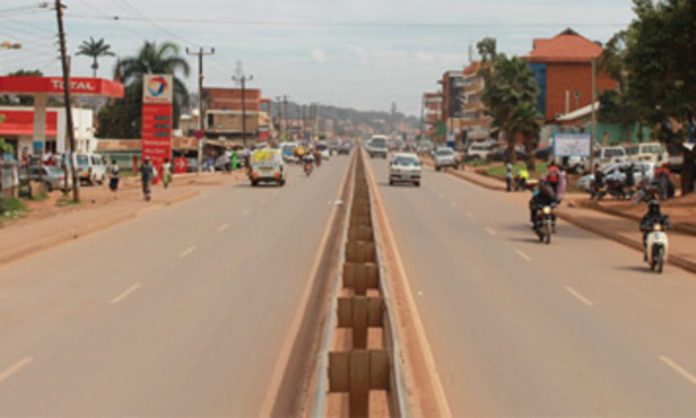
About 57 percent of road users in Uganda are satisfied with the road network in 2019 compared to 27 percent in the last survey two years ago, according to the latest survey carried out by the Uganda Road Fund, the agency mandated to finance routine and periodic maintenance of all public roads.

The improvement in road user experience was attributed mainly to better road maintenance and rehabilitation. Other contributing factors were road widening; quicker journey times and perceived improvement in road safety.

The highest satisfaction scores were observed in Western region followed by Eastern and central regions respectively. Northern region and Kampala had the lowest levels of satisfaction.

National roads had the highest satisfaction levels followed by KCCA roads. Roads under districts, municipalities and town councils had the least satisfaction scores.

The major reasons for dissatisfaction with Uganda’s roads in 2019 were the same from previous years, namely: narrow road widths, potholes, inadequate road maintenance, poor drainage and dust.

The 2019 Road User Satisfaction Survey is the seventh of its kind in Uganda and the third to be undertaken by URF. The survey involves randomly selecting and interviewing road users at predetermined points on all categories of public roads including national roads which are managed by UNRA, city roads managed by KCCA, district roads managed by the various districts and Urban roads managed by Town Councils and municipal authorities.

The sample for the 2019 survey included 2,800 road users constituting pedestrians, cyclists, passengers, motorcar drivers, bus drivers, taxi drivers, and truck drivers.

Data collection for the survey was undertaken in February and March 2019 with the reference period being the 12 months before the date of data collection. Topics of interest included general satisfaction with the road network, rating of performance of road agencies on various aspects, rating of availability of roadside services and amenities, road users’ perceptions about road safety, driver behavior, and opinions on cross cutting issues in the sector among others.

Availability of road related amenities and services

Road users considered eateries, fuel stations and police posts as satisfactorily available on most roads. They however decried the unavailability of public toilets and roadside parking facilities.

KCCA roads were rated as having the most readily available facilities. District and Urban roads were found to be the most lacking especially for public toilets where about 70 percent of the road users rated their availability as unsatisfactory.

It should be noted that the above services might not always be directly under management of road agencies. However, one of the poorly performing services directly under management of road agencies was incident management (post-accident cleanup) which road users deemed wanting on all the different categories of public roads.

Road Safety

The percentage of road users who felt safe on Uganda’s roads increased to 58% compared to 37% in 2017.

Road users perceived the roads in western region as the safest with over 74% of road users in western region reporting that they felt safe on roads in the region followed by eastern region (60%) and Kampala (56%). Central and Northern regions had the lowest safety scores with less than 50% of respondents feeling safe on the roads in the 2 regions.

Similar to previous years, pedestrians felt the most vulnerable of the road user groups with only 53% feeling safe on Uganda’s roads.

UNRA roads were considered the safest roads in 2019 followed by KCCA roads. Roads users felt that district, urban and community access roads were the least safe road category.

Driver training by a licensed driving instructor was at about 57% among drivers and only 11% among motorcyclists.

Similarly, driving permit ownership was over 90% among drivers and only 18% for motorcyclists.

The reasons advanced for not feeling safe on Uganda’s roads included narrow roads (26%), potholes (20%), dust (15%), reckless driving (11%) and poor signage (6%) respectively.

Public opinion on other roads related issues

Road users still have challenges in identifying the correct government entity (UNRA vs Local Government authority) that is responsible for a particular road or the agencies’ mandates regarding roads.

User perceptions about the Government’s commitment towards reducing road accidents and repairing roads remained positive with about 90% of respondents being of the view that the Central Government is indeed committed towards improving the public road network.

Road users however felt that road agencies do not attend to road repairs in time nor to appropriate quality.

Similarly, many of the respondents (about 40%) felt that the road designs do not meet the needs of special interest groups such as pedestrians, school going children and persons with disabilities.

Priorities for implementation

Road users want government to prioritise road maintenance, paving unpaved roads and widening of roads respectively.

The report of the survey urges The Ministry of Works and Transport (MoWT) to ensure that the issues identified by road users are incorporated in the sector’s long and medium term plans such as the Road Sector Development Plan and strategic plans of associated agencies. Of concern are issues of road safety, roadside facilities, green/eco-friendly vehicles, and provision of utility corridors among others.

“Concerted efforts should be undertaken to improve road safety by all concerned agencies including the MoWT, UPF, Transport Licensing Board and National Road Safety Council,” it says.

Of particular concern should be: Enforcement of driving standards and regulations among all drivers especially motorcyclists; strengthening road safety awareness programmes targeting behavioural change among road users, particularly on the critical role that human factors play in road accidents and ensuring that road designs cater for needs of special interest road user groups. To this end, MoWT needs to enforce the NMT Policy to ensure that ‘Universal Design’ principles are included in all new and refurbished NMT infrastructures. Similarly, existing non-compliant NMT infrastructure should be retrofitted to ‘Universal Design’ principles.

Among others, the report says road agencies should continue engaging the general public in their activities as a means of increasing public awareness of the roles of road agencies. Similarly, the public should be educated on their responsibility towards preserving the roads asset including road furniture. Finally, road agencies should endeavour to always make available information on ongoing road projects such as source of funding; contractors; scope of works; and start and estimated completion dates as means to manage road users’ expectations.

Stories Continues after ad

UNBS warns supermarkets to stop selling uncertified products

super market goods

The Uganda National Bureau of Standards (UNBS) has reiterated its call to supermarkets to stop selling uncertified products.

The “Use of UNBS Distinctive Mark, 2018” requires that all products covered by compulsory standards must be certified and issued with UNBS Distinctive Mark before they are allowed on the Market.

Speaking at a stakeholder engagement meeting with owners of supermarkets on 30th October, the UNBS Deputy Executive Director in Charge of Compliance, John Paul Musimami, said: “It’s an offence to sell products that do not bear the UNBS distinctive mark”.

“I would like to ask you to remain vigilant and stock products that have been certified by UNBS. It the duty of each one of us to protect consumers from using products that are likely to harm their health,” he added.

Musimami stressed that anyone working contrary to the UNBS distinctive mark regulation is liable to a fine of 1000 currency points (Shs20 million) or a jail term of not less than three years.

He further revealed that the engagement is aimed at stopping the ‘we didn’t know’ excuse during UNBS enforcements.

The supermarket owners were urged to; ensure hygiene of their supermarket premises most especially the fridges that store meat, ensure that expired products are off the shelf and avoid mixing expired products with non-expired products and also ensure that food stuffs are not mixed with soaps or perfumes when displaying products on shelves

The supermarkets have been urged to deal in only certified products, have quality personnel at their supermarkets and UNBS will train them at no cost and form an association to ease communication between all supermarket owners and UNBS to ensure compliance.

The supermarket owners were grateful to UNBS for first engaging them before enforcement and they promised to take action to comply with the issues raised during the engagement.

UNBS is a statutory body responsible for developing and promoting standards, quality products and services to facilitate fair trade, promote local industries and protect consumers.

Stories Continues after ad
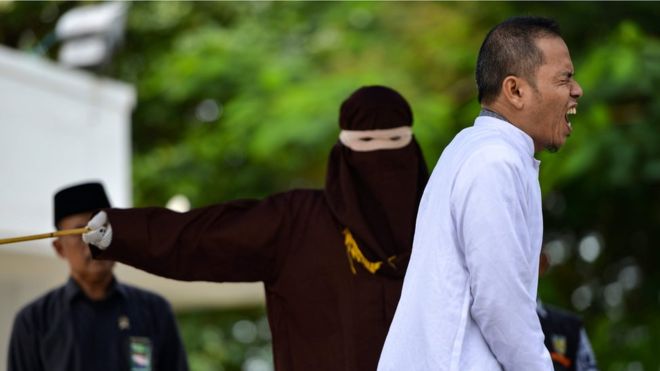
Indonesian man who helped set strict adultery laws flogged for adultery

Aceh Ulema Council member Mukhlis reacts as he is punished in public

An Indonesian man – who worked for an organisation that helped draft strict adultery laws – has been publicly whipped after being caught having an affair with a married woman.

Mukhlis bin Muhammad of the Aceh Ulema Council (MPU) was flogged 28 times.

The woman he had the affair with was caned 23 times.

Mukhlis is from the deeply conservative Aceh region, the only place in Indonesia which practises the strict Islamic law, Sharia.

Gay sex and gambling are also punishable by public caning in Aceh.

“This is God’s law. Anyone must be flogged if proven guilty, even if he is a member of the MPU,” Husaini Wahab, the deputy mayor of Aceh Besar district, where Mukhlis lives, told BBC News Indonesia.

The couple were caught by officials in September, apparently in a car parked near a tourist beach.

The caning happened on Thursday. Mr Husaini added that Mukhlis would be expelled from the MPU.

The 46-year-old is also an Islamic religious leader. He is the first religious leader to be publicly caned in Aceh since Sharia law came into force in 2005.

The MPU advises the local government and legislature on drafting and implementing Sharia law in Aceh.

Aceh was granted special rights to introduce its own stricter Islamic laws more than a decade ago.

Laws against homosexuality were passed in 2014 and came into effect the following year.

Extra-marital sex, gambling, and the consumption, production and distribution of alcohol are all illegal under Sharia law.

In 2017, two men were caned 83 times each in Aceh after they were caught having sex.

Canes are typically made from ratan. Those carrying out the caning have all their body parts, except their eyes, covered to stop them from being identified.

The caning must take place publicly on an open air platform, though children are barred from watching.

Sharia law applies to Muslims and non-Muslims alike in Aceh.

Stories Continues after ad
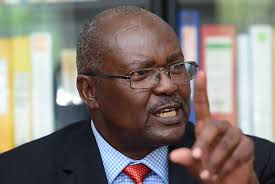
Justice Wangutusi urges district leaders to embrace mediation in dispute resolution

Justice David Wangutusi

The head of the Commercial Division of the High Court, Justice David K. Wangutusi, has urged Mubende and Mityana district Leaders to embrace mediation as a cost effective, speedy and efficient alternative dispute resolution mechanism.

The judge made the call on Thursday at the opening function for meditation skills training for Mubende High Court Circuit on at Enro Hotel, Mityana.

 “Mediation does not only reduce the huge case backlog in the Courts of Judicature but also maintains relationships of the parties,” he said.

He encouraged the leaders to embrace small claims procedure as it provides greater access to justice. This is a civil claim whose subject matter value does not exceed Shs10 million. For example, the small claims procedure (SCP) can be used for matters arising out of the supply of goods, debts and rent.

The participants included district chairpersons, resident district commissioners, community development and probation officers, religious leaders, opinion leaders and advocates of Mubende, Kassanda, Mityana and Kiboga districts.

Mubende district chairperson Kibuuka Bazigatirawo Amooti disclosed that though he had been doing mediation in his district he did not have the necessary skills and thanked the judiciary for providing an opportunity to the leaders to acquire mediation skills.

The course coordinator his worship, Kisawuzi Elias Omar the Registrar in charge of mediation express the need for mediation which could help parties settle their disputes out of court.

He encouraged the leaders in the region to sensitize the communities about mediation using all avenues like radio stations promised that more mediation skills training will be extended to other parts of the country in the future.

Stories Continues after ad

From Refugee to CEO: Mayen’s Journey to Success!

Lual Mayen

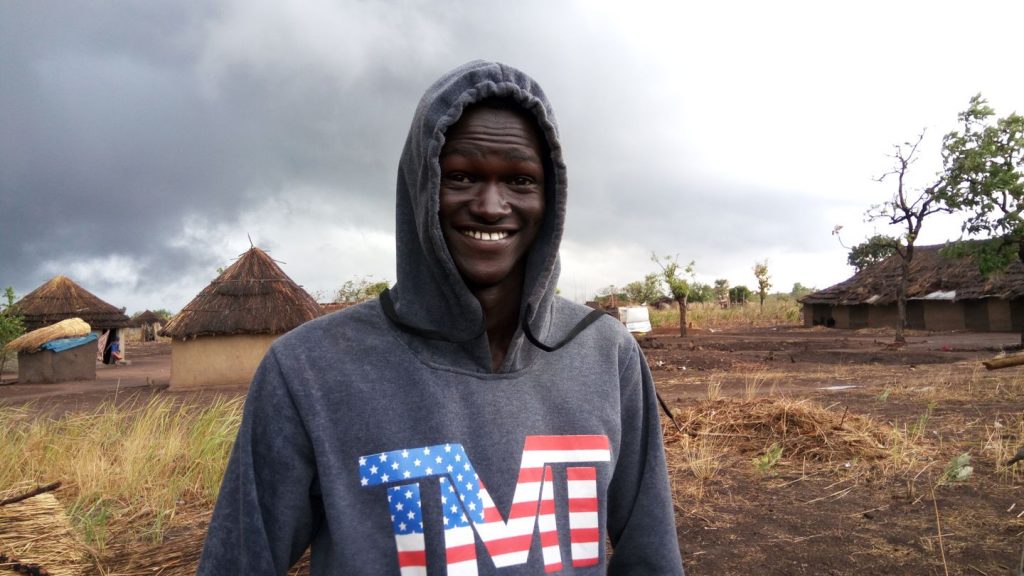
Lual Mayen, 24, was born in a refugee camp in Northern Uganda and for 22 years of his life that is all he could remember. As all refugee stories go, life in a camp was far from ideal as his family tried to make ends meet in a time of scarcity while keeping out of the cross fires as they avoided enemy raids and bomb blasts from South Sudan known as ‘antelopes.’

At that time if someone had told Mayen that one day he would be the first East African to head a gaming company in the United States of America he would have laughed in their face, immediately dismissing such a thought.

With time, conditions in the camp became unbearable and limited him from the outside world due to various restrictions such as poverty and illiteracy. Nonetheless this did not stop Mayen from dreaming of a bigger and better life; not only did he teach himself English but also how to use a computer. In fact the first time he set his eyes upon a laptop in the refugee camp he was only 12, with the faith and innocence of a child he asked his struggling mother for one.

Although she initially laughed at his request, like all mothers, she sacrificed what she could, worked tirelessly until she could buy one at US$300. Mayen cried when he received it, little did he know that this laptop would set him on a path that would deliver not only him, but the rest of his family as well.

“I never knew he was going to be who he was today,” said Nyantet Daruka, his mother. “I was just being a mom to him. I was just working hard for him. Because life changes. Life changes sometimes.”

Lual Mayen

Fast forward and this former refugee now sits in a plush office in the heart of Washington DC, a CEO of his very own company, Junub Games. Although he designed his first game whilst still a refugee, Mayen has gone on to develop his brain child called ‘Salam’ which means peace in Kiswahili and is a video game that aims at creating awareness around peace keeping missions and the various impacts they have around the world.

This has managed to get him a lot of attention as the game was voted ‘The most social impacting game’ of the year. Besides making guest appearances around the world, Mayen was also invited to the United States on G passport as one of the World Bank’s advisers.

 “That’s the thing in life, If you’re going through something hard and you survive, the next thing is, how do you come out of that? How do you utilize that opportunity to make your life better?” says Mayen as he reminisces the struggles he had to endure with his family.

With a new chapter in his life and his parents safely only their way to Canada, Mayen can finally put all that suffering behind him and focus on a new life with the finer things in life, beginning with the launch of his company through key partnerships and sponsorships including South Sudanese NBA player Luol Deng.

Stories Continues after ad