Stanbic Bank
Stanbic Bank
24.5 C
Kampala
Stanbic Bank
Stanbic Bank
Home Blog Page 1121

Ugandan referee selected for U23 Afcon finals

dick okello

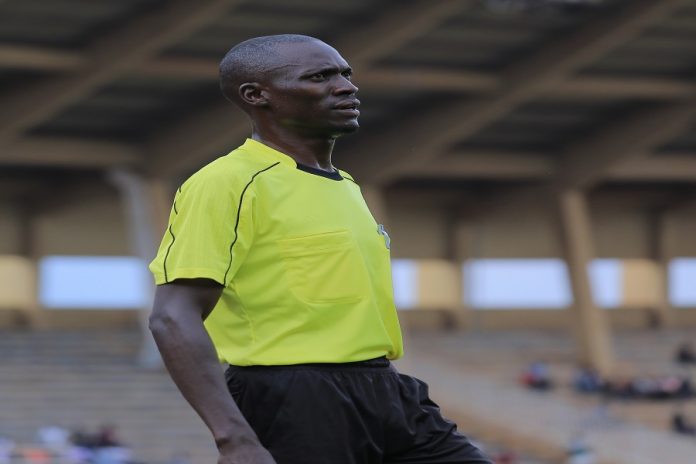
Ugandan assistant referee Dick Okello has been selected by Caf to officiate at the Total U-23 Africa Cup of Nations in Egypt.

Okello is one of the thirteen assistant referees on the final list for the tournament that kicks off on 8th November.

The 28 year old was also part of the match officials that officiated at the U-20 Afcon in Niger that took place in February 2019.

The final list also consists of twelve centre referees making it a total of twenty five officials for the tournament.

For the second time, the CAF Referees Committee has appointed female match officials for a men’s tournament – the upcoming Total U-23 Africa Cup of Nations Egypt 2019.

The appointments build on CAF’s commitment to include more female match officials in its competitions, which began with the appointment of three female match officials for the Total U-17 Africa Cup of Nations in Tanzania last April, a first in the history of male CAF competitions.

At the U-23 AFCON scheduled for 8-22 November in Cairo, Rwandan referee Salma Mukasanga will lead the female match official trio, joined by assistant referees Diana Chikotesha and Fathia Jermoumi of Zambia and Morocco respectively.

The tournament will see hosts Egypt in Group A with Mali, Cameroon and Ghana against title holders Nigeria, Cote d’Ivoire, South Africa and Zambia will complete the pack in Group B.

The two venues for the U-23 AFCON are Cairo International Stadium and Al Salam Stadium.

The teams to finish in the top three will qualify to represent Africa at next year’s Olympic games in Tokyo.

Referees: Lahlou Benbraham (Algeria), Houngnandande Djindo Louis (Benin), Adelaide Ali Mohamed (Comoros), Mohamed Maarouf Eid Mansour (Egypt), Rakotojaona Andofetra (Madagascar), Daouda Gueye (Senegal), Slim Belkouas (Tunisia), Boubou Traore (Mali), Pierre Ghislain Atcho (Gabon), Souleiman Ahmed Djama (Djibouti), Geogre Gatogato (Burundi), Salma Mukansanga (Rwanda).

Assistant Referees: Dick Okello (Uganda), Sanou Habib Judicael Oumar (Burkina Faso), Jawo Abdul Aziz Bollel (Gambia), Ivanildo Meirelles De O Sanche (Angola), James Fredrick Emile (Seychelles), Samuel Pwadutakam (Nigeria), Hassani Khalil (Tunisia), Abdoul Aziz Moctar Saley (Niger), Firmino Bassafim (Guinea Bisau), Dos Reis Montenegro Miro (Sao T. & Prin.), Wahid Youssef Elbosaty Youssef (Egypt), Chikotesha Diana (Zambia), Jermoumi Fathia (Morocco).

Stories Continues after ad

Azuri GrowFast solar irrigation pump finalist in Global LEAP Award

Azuri solar irrigation pump

GrowFast solar irrigation system from Azuri Technologies has been named a finalist in the 2019 Global LEAP Awards, highlighting the world’s best off-grid appliances.

Since launching in 2012, Azuri has become one of the leading providers of life changing pay-as-you-go solar power lighting and TV systems, operating in Kenya, Tanzania, Uganda, Zambia and Nigeria.

The Azuri GrowFast solar irrigation system is the latest product instalment from the award-winning solar innovators. Azuri is currently piloting the irrigation system in Uganda before rolling the product out across Sub-Saharan Africa.

“Energy-efficient and affordable solar water pumps have the potential to be a critical enabler of economic growth and security for smallholder farmers across Africa,” explains Simon Bransfield-Garth, CEO of Azuri Technologies.

“With around 95% of farmed land in sub-Saharan relying solely on unpredictable seasonal rainfall to meet water needs, solar water solutions like Azuri GrowFast can play a vital role in delivering a sustainable water supply in an increasingly climate-sensitive world.”

The Global LEAP Awards – an initiative of the Efficiency for Access Coalition with support from UKaid and Power Africa – is an international competition that identifies and promotes the world’s best, most energy-efficient off-grid appliances and equipment.

Azuri GrowFast comprises of submersible pump, 2 x 100W folding solar panels, flexible hose and sprinkler, plus control unit with Bluetooth connection to Azuri smartphone and GrowFast app.

Azuri GrowFast customers also benefit from regular visits and expert advice from agronomists who help inform and educate farmers on modern farming techniques that will help improve harvests and yields.

Stories Continues after ad

Makerere student suspended over wrangles with junior staff

Frank Bwambale

Makerere University on Wednesday evening announced a list of suspended students who had actively participated in the demonstration of the 15% tuition increment as other twenty six students stood pending.

The list featured Frank Bwambale, a fourth year student pursuing Bachelors in Journalism and Communication. He is sponsored by MasterCard Foundation. The MasterCard Foundation has released a statement condemning the violent crackdown on Makerere students.

Bwambale says he was shocked after reading his name in the suspension letter yet he had actually not participated in the demonstration.

Bwambale says his name was added due to the wrangles with the university’s junior staff namely; the public relations officer, Mathias Semanda and Gordon Murangira, the vice chancellor’s personal assistant. Murangira is among the university’s staff accused of torturing students and is under investigation by a select committee.

During his career as a freelancer, Bwambale did a story on how MasterCard students’ tuition was swindled by some university management authorities. The story was published in the Observer Newspaper.

After the story was published, he says he received a phone call from Semanda who threatened him. Bwambale says he even has the phone call recordings as he seeks legal redress.

“I have the phone call recordings with me as I seek legal redress on this issue. Semanda remained me of how I am at campus because of the vice chancellor’s mercy and blah blah and concluded with ‘take care mtcheew’ comment.” Bwambale wrote on Whatsapp.

On August 22 when the strike sprung up, Bwambale says he was in class. “I was in class with Dr. Fred Kakooza as the strike boomed outside class. My colleagues also read that story by Damalie Muhakye of Daily Monitor showing my suspension. I kept away from campus for a week as the strike hit even outside campus,” he says.

The student says he was shocked when he read in the Daily Monitor that he was one of the suspended students involved in the strike.

Last year when he was defeated in Guild Representative Council elections, he swore never to participate in Makerere politics.

“I will never participate again in Makerere politics, I have played my role as a student and I now have to concentrate on my studies,” he said last year.

Stories Continues after ad

Trump impeachment effort passes first test of support in Congress

LAS KAMM/AFP/Getty Images)

The U.S. House of Representatives took a major step in the impeachment effort against U.S. President Donald Trump on Thursday when lawmakers approved rules for the next stage of the Democratic-led inquiry into the president’s attempt to have Ukraine investigate a domestic political rival.

The Democratic-controlled House voted by 232 to 196 to

establish how to hold public hearings in Congress, which could be damaging for Trump ahead of the 2020 presidential election.

It was the first formal test of support for the impeachment probe and showed that Democrats have enough backing in the House to later bring formal charges, known as articles of impeachment, against Trump if they feel they have enough evidence.

House Democrats say Trump has abused his office for personal gain and jeopardized national security by asking Ukrainian President Volodymr Zelenskiy to investigate Trump’s Democratic political rival Joe Biden, a former U.S. vice president, and his son Hunter, who had served as a director for Ukrainian energy company Burisma.

Biden is a leading candidate in the Democratic presidential nomination race to face Trump in the November 2020 election.

“It’s a sad day. No one comes to Congress to impeach a president,” House Speaker Nancy Pelosi said before the vote.

Republicans have largely stuck by Trump, blasting the effort as a partisan exercise that has given them little input.

“This is Soviet-style rules,” said Representative Steve Scalise, the chamber’s No. 2 Republican, as he stood next to a poster depicting the famous onion domes of Moscow’s St. Basil’s Cathedral.

The vote largely broke along party lines. Only two Democrats voted against and no Republicans backed it.

Trump has denied wrongdoing and called the inquiry a sham.

If the House eventually votes to impeach Trump, that would set up a trial in the Republican-controlled Senate. Trump would not be removed from office unless votes to convict him by a two-thirds margin.

Stories Continues after ad

NSSF cautions members to beware of fraudsters

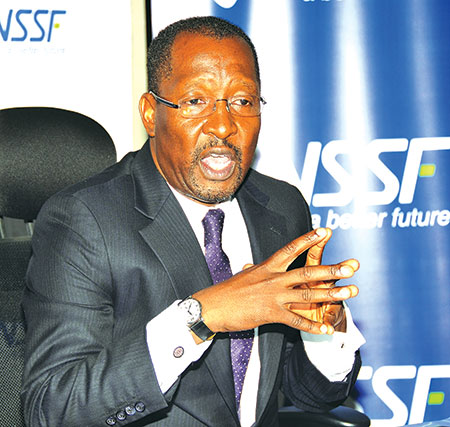
NSSF MD Richard Byarugaba

The National Social Security Fund (NSSF) has come out to warn its members to be careful about fraudsters who have started targeting them as they prepare to get their retirement benefits that come in form of cash.

Last week, there were media reports about some members of NSSF being robbed by malevolent individuals who claimed they could assist them access their money from NSSF.

A lady who declined to disclose her identity appeared on one of the city television stations in grief lamenting that she had been robbed by a third party who had undertook to process her benefits on her behalf and unfortunately this was not successful.

“The fund would like to caution its members against reliance on third parties to process their benefits. Members are further advised that their benefits are protected by the law from being assigned or charged (Section 34(4) National Social Security Fund Act, 1985,” said Richard Byarugaba, the managing director NSSF.

Meanwhile some members who have received their benefits under different fund provisions such as Age, Withdrawal Survivors, Exempted Employment, Invalidity and Emigration benefits have all dismissed the idea of using a third part to process member’s benefits citing issues of illegalities. These have recommended the current law and the quick automated system used in processing for their benefits.

A third party may only apply in instances when a member is very physically incapacitated or when the member is has passed away. In such instances the Administrator of the member or the next of kin will be guided by the fund on the required documentation to support processing of the benefits.

“The Fund therefore, would like to inform all its esteemed members that processing for their retirement benefits is unequivocally free and the fund will not be held liable for any actions arising from the member’s engrossment with third parties in processing their benefits.”

Stories Continues after ad

New WHO report to bolster efforts to tackle leading causes of urban deaths

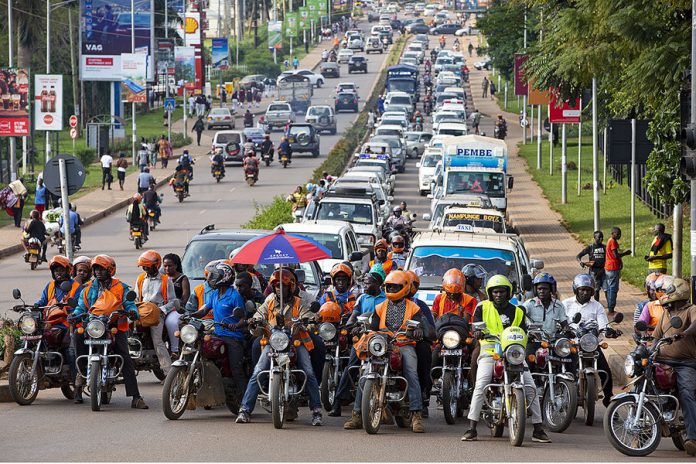
Busy road in Kampala

A new report by the World Health Organization (WHO) offers guidance and tools for urban leaders to tackle some of the leading causes of death in cities.

Non-communicable diseases (NCDs) – like heart disease, stroke, cancer and diabetes – kill 41 million people worldwide every year, and road traffic crashes kill 1.35 million.

“Over half the world’s people live in cities, and the numbers are rising,” said Dr Tedros Adhanom Ghebreyesus, WHO Director-General.

“City leaders take decisions that impact on the health of billions, and for cities to thrive, everyone needs access to services that will improve their health – public transport, safe, clean and attractive outdoor spaces, healthy food, and, of course, affordable health services.”

The report, titled ‘The Power of Cities: Tackling Non-Communicable Diseases and Road Traffic Injuries’ is geared towards mayors, local government officials and city policy planners.

Funded by Bloomberg Philanthropies, it highlights key areas where city leaders can tackle the drivers of NCDs, including tobacco use, air pollution, poor diets and lack of exercise, and improve road safety.

“By replicating the most effective measures on a global scale, we can save millions of lives,” said WHO Global Ambassador for NCDs and injuries, and three-term New York City Mayor, Michael R. Bloomberg.

“We’re working to raise awareness among city leaders and policy makers about the real gains that can be achieved when effective programs are in place.”

From anti-tobacco actions in Beijing and Bogor, to road safety initiatives in Accra and Bangkok, a bike sharing scheme in Fortaleza, and actions to create walkable streets for seniors that have reduced elderly pedestrian deaths by 16 percent in New York City, the report aims to share knowledge between urban policy planners.

Of the 19 case studies cited, 15 are from developing countries, where 85 percent of premature adult deaths through NCDs take place, and over 90 percent of road traffic fatalities are recorded.

Over 90 percent of future urban population growth will be in low or middle-income countries, and seven of the world’s 10 largest cities are in developing countries.

The initiatives cited in the report are similar to those implemented under the Partnership for Healthy Cities initiative, a joint WHO, Bloomberg Philanthropies and Vital Strategies initiative that brings over 50 cities together to share policies and plans on tackling NCDs and injuries.

The network, led by Mr Bloomberg, has helped ensure 216 million people are covered by at least one intervention to protect them from NCDs and road traffic injury since 2017.

Some 193 countries have committed to reducing premature deaths from NCDs by a third by 2030, and halving road traffic deaths and injuries by 2020, through the Sustainable Development Goals.

Stories Continues after ad

Husband of URA official says has no complaint against her boss Saka over sexual relationship

Diana Musoke Balaba

The husband of URA staff Diana Musoke Balaba says he has no any complainants against Commissioner Domestic Taxes Henry Martin Saka over alleged sexual relationship.

In the morning someone purporting to be Diana’s husband (Paul Steven Balaba) said Saka was having a sex relationship with her as well as other female workers at URA.

He alleged that Saka has been favouring females with trips abroad with the purpose of sleeping with them while there. He claimed Saka has sired children with some of the women.

“I hear he promises them these trips abroad which are fully funded by the tax payers’ money by the way as bait.  I also heard her say she has been lined up for a promotion as supervisor budget. I think she is travelling to pay for this promotion. I am informed that all supervisory position in domestic taxes requires PODITRA/ITRAT however, for this specific position it was waived,” the purported husband of Diana wrote.

Writing to the Commissioner General Doris Akol on Thursday, Balaba said his wife is faithful in their marriage. “Diana Musoke Balaba has never given me any reason to doubt her faithfulness to her marriage,” he said. He has apologies to Saka and URA in general.

In the morning the purported husband wrote: “The Commissioner domestic taxes have long been known for sleeping around with his staff and even siring kids. I have been following his relationship with my wife Diana closely and noticed that he is having a sexual relationship with her. I brought this to the attention of the Commissioner General recently when they travelled to Mombasa on an organized retreat with other people. I was however not helped as the Internal Audit Commissioner told me he was tired of that man’s issues with female staff! I have therefore been left with no option but to run to the media for audience! Mr. President weyayu?”

He added:  “My wife Diana Balaba Musoke is again scheduled to travel with this man to Penang Malaysia next week Friday 8th November. Why is this behavior being condoned by URA! especially where I have raised a red flag!,”

“I hear he promises them these trips abroad which are fully funded by the tax payers’ money by the way as bait.  I also heard her say she has been lined up for a promotion as supervisor budget. I think she is travelling to pay for this promotion. I am informed that all supervisory position in domestic taxes requires PODITRA/ITRAT however, for this specific position it was waived.”

“This man is always chatting with my wife on his international Whatsapp number and I have managed to access some of the chats that I will share shortly. I need help because this man is failing my marriage,” the alleged imposter said.

Stories Continues after ad

Warehouse: A foundation for economic growth

Geoffrey White

By Geoffrey White

Nigeria, Benin, Togo and Ghana are collectively a close knit, English speaking, trade block with a population that exceeds 250 million people, 40% of which are below 30 years old.

The economic development of this important region in West Africa is being driven by a range of positive macro trends:

  • A renewed impetus in energy sector resources is enabling improved power availability and less dependency on imported energy. Ghana’s oil production is forecasted to rise to 500,000 bpd by 2030 and the Atuabo gas plant is expanding output to 220 million standard cubic feet of gas per day (mmscfd) by 2024.
  • In Nigeria the gas sector is expanding significantly combined with a new focus on domestic infrastructure, a move away from imports, as well as the world’s largest refinery – USD 14 billion Dangote refinery in Lekki – coming online in 2021.
  • Ghana has overtaken South Africa in the volume of gold production and a new focus on improving domestic agricultural production, efficiencies and yields is reducing expensive imports and creating new employment.
  • Rural depopulation and the transition to increasing urbanization, combined with increasing local manufacturing are enabling local and regional markets while an expanding middle class are driving growth and prosperity.

However, the lack of the essential infrastructure to facilitate and support this growth is increasingly a constraint to progress.

Warehouses tend to be one of the most ignored elements of infrastructure and logistics, but are a fundamental part of the supply chain as they provide storage, distribution, packing, processing, assembling and light manufacturing of goods – all of which are the foundations of any economy, and support domestic and international trade, imports and exports.

To reach its true potential, Africa needs a fundamental warehousing transformation from low-quality makeshift warehouses that tend to lack basic security and safety features to facilities that meet international standards with consistent, reliable IT connectivity and power.

A warehousing transformation in Africa can make a difference in five key areas:

  1. Providing a platform for African manufacturing and the Fourth Industrial Revolution (4IR)

Many multinationals are hesitant to invest in African facilities because of the perceived risks. A warehouse park that is ready to move into, with de-risked land acquisition, reduces the capital required for companies to enter the African market, and helps businesses get to market faster.

With the 4IR under way, tech innovations like 3D printing and real-time connectivity are stimulating local manufacturing, increasing the need for secure, environmentally responsible warehousing platforms.

  1. Enhancing agricultural value chains and reducing food losses

According to the UN’s Food and Agriculture Organization (FAO), roughly one-third of food produced for human consumption gets lost or wasted globally.In Africa, wastage is particularly high at the agricultural production and post-harvest handling and storage stages.

Modern warehouses with security and pest and temperature control could radically reduce this loss. Consolidated warehousing for commodities and agriculture – allowing for local processing and packaging to take place under the same roof as storage – reduces wastage, and allows far more value to be captured in-country.

  1. Enabling the growth of African SMEs

Seventy-five percent of growth in Africa will come from small and medium-sized enterprises, according to McKinsey, that struggle to get access to finance for infrastructure. Flexible warehousing models that allow for lower upfront payments give SMEs easy entry to quality warehouses that meet the standards required by international customers.

For example, a Ghanaian entrepreneur was struggling to expand her food processing business to supply the formal sector because the loan costs to set up a processing and packaging facility were prohibitively high. By leasing warehouse space in Agility’s Ghana warehouse park, she could use her capital to grow her business instead of having to buy land and build a facility.

  1. Accelerating e-commerce

African e-commerce is booming, with projected annual sales of $75 billion by 2025. In April, African e-commerce company Jumia listed on the New York Stock Exchange. Shares soared 75% on the first day of trading, valuing the company at more than $1.9 billion.

E-commerce fulfilment requires four times the warehouse capacity in the destination market compared to the traditional logistics model. The expansion of e-commerce relies on the availability of international standard warehousing fulfillment centers, allowing for the automation and racking.

  1. Driving economic growth, regional trade and skilled job creation

Large-scale warehouse parks allow for logistics and manufacturing clusters to form across Africa as an interconnected network, enabling more intra-regional trade. Currently, intra-regional trade accounts for just 17% of Africa’s exports, compared to 59% in Asia and 69% in Europe. The AfCFTA will create the world’s largest single market, of 1.2 billion people.

International standard warehousing will also create a wide variety of jobs, building skills and prosperity and adding to the continent’s competitiveness as it develops its export potential for global markets.

The writer is CEO, Agility Africa.

Stories Continues after ad

Standard Chartered Bank, KCCA ready Ugandan youth for work

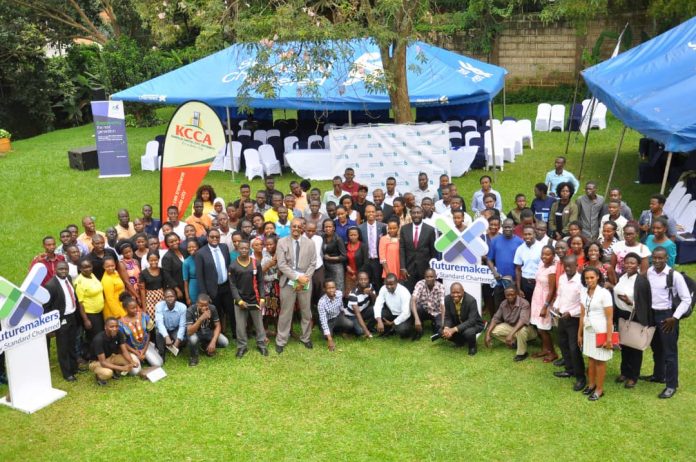
Standard Chartered and KCCA officials with the youth

Standard Chartered Bank in partnership with Kampala Capital City Authority (KCCA) on Wednesday held a work readiness initiative under its Futuremakers programme for over 200 youth at the Authority’s Employee Services Bureau in Kampala.

The initiative falls under the pillar of Empowering Youth and the Bank says it has undertaken such initiatives consistently over the years in each and every one of its sustainability initiatives.

That was the second of such initiatives the Bank has undertaken to empower the youth in partnership with KCCA, the inaugural one was successfully held mid-2018.

Several speakers shared their career journeys but also advised the youth in various areas of personal development. The Standard Chartered Bank speakers included; Edward Barlow – Country Head, Operational Risk , Charles Katongole – Head, Financial Markets, Hilary Ndugutse – Head, HR and Regina Mukiri – Head Corporate Affairs, Brand and Marketing.

The Bank also had a motivational speaker, Ethan Musolini speak to the youth while KCCA had representatives who included; Josephine Lubwama – Deputy Director Gender, Social Services and Community Development and James Lwanga – Manager Employability.

 Edward Barlow said: “As a Bank we seek to foster economic growth, development and opportunity among the youth in Uganda and to demonstrate our ‘human’ values. We recognize that the security, prosperity and stability of our financial system, communities and economies depend on well educated, financially capable young people and entrepreneurs. I am confident that the information we are sharing will influence and prepare you for the dynamic work space that you are aspiring to penetrate”

 On his part, Ethan Musolini while addressing the youth spoke about Success tips advising the youth to attend networking events, make contacts and grow their networks, maximize their potential.

He also talked about the importance of respecting and greeting people,  being honest and hardworking , effectively utilizing opportunities whenever they arise, speaking up and selling themselves, discovering their gifts or talents as it’s what will help them excel.

He urged the youth to never seek permission to serve and that they should endevour to claim opportunities that come by.

He further addressed the young people on: “Goal setting and visioning, time keeping,  not using their pasts as an excuse to hold them back, paying attention, being aggressive, minding their appearances especially their dress code as part of their packaging, being curious and excited, not angry when they meet someone better than them.”

He shared several practical examples like that of Eliud Kipchoge who used pacesetters class to support him succeed in completing a marathon in less than two hours. He also advised the youth to be steadfast and committed to their cause e.g. “If one is seeking a job then they need to make looking for a job their number one job.”

He also spoke about the importance of; coaching, setting goals, reading, the importance of everyone learning sales and marketing, consistency, self-esteem and productivity. He emphasized the need to know and reflect on what they are going to talk about as well as do and the need to use case studies, stories or facts as back up.

The KCCA team led by Ms Lubwama told the youth of free services relating to; labour market information to job seekers and the general public, they undertake job marching and recommend youth to various places of work and they are currently running a youth volunteer programme called “I Serve” where they offer hands on training for 6 months.

They also mentioned they offer free training in computer and are equipping youth with technical skills at their Kabalagala  one-stop-youth-center, some of the trainings they offer over a 4 month period relate to; hair dressing , electrical installation and brick making.

They appreciated the Bank for their continued partnership in supporting the youth and proposed the need to join hands in supporting entrepreneurship training by ensuring youth access start-up capital.

 The Bank thanked the management of KCCA for the longstanding partnership and cordial relationship vested in improving our communities and society at large.

Stories Continues after ad
Honey standard to improve trade and production of quality products

Honey kept in tins

Uganda national Bureau of Standard (UNBS), has said trade and production of quality honey in the country is set to improve upon revision and development of the draft Standard for table honey (DEAS 36-1: 2019) Honey Specification.

The East Africa Standards Committee on Apiary and apiary product (EASC/TC 011) developed and revised the Draft East African standards in line with EAC principles and procedures of harmonization of standards.

The standard’s body called upon the public to comment on the suitability of the standard. “The public is called upon to comment on the draft standard starting 23rd October to 22nd December 2019.”

The request letter available on the UNBS Website guides on how and where the comment form should be submitted.

The Draft East African Standard specifies the requirements, sampling and test methods for honey produced by honeybees for human consumption.

The Honey shall not have added food ingredient, including food additives, nor shall any other additions be made other than honey, not have any objectionable matter, flavour, aroma, or taint absorbed from foreign matter during its processing and storage.

According to UNBS honey will not have pollen or constituent particular to honey removed except where this is unavoidable in the removal of foreign inorganic or organic matter, not be heated to such an extent that its essential composition and /or its quality is impaired.

“It will not be chemically or biochemically treated to influence honey crystallization, have the colour varying from near colourless to dark brown (amber) depending on the botanical source and have the consistency of fluid, viscous, partly or entirely crystallized.” Reads part of the statement.

The honey will have the flavour and aroma derived from plant origin and be free from visible mould and as far as practicable, be free from inorganic or organic matter foreign to its composition, such as insects, insect debris, brood or grains of sand, or soil, when the honey is offered for sale or is used in any product for human consumption.

It will be packaged in a food grade material that protects the integrity and safety of the product.

Stories Continues after ad