Stanbic Bank
Stanbic Bank
23 C
Kampala
Stanbic Bank
Stanbic Bank
Home Blog Page 1123

Makerere suspends nine students as sporadic protests continue to take center stage

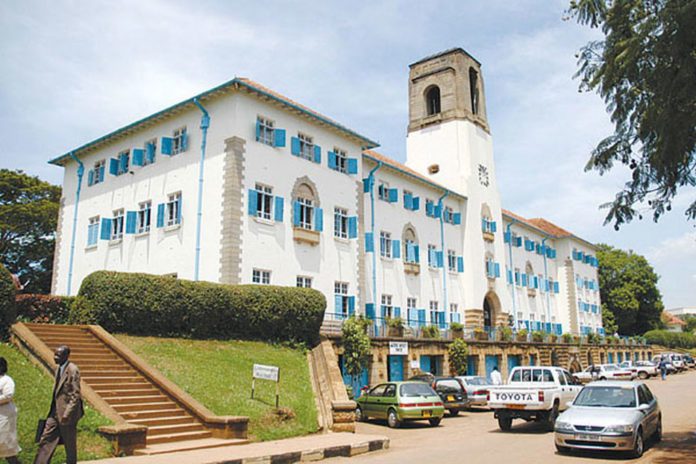
Makerere University Administration Building.

Makerere University has suspended nine students and warned several others as they continued with sporadic protests on Wednesday against the unpopular 15 percent cumulative tuition policy.

The protests that commenced on Tuesday last week were spearheaded by Mollie Siperia, the Guild Representative Councilor for School of psychology and one Frank Bwambale who were later nabbed and suspended by the university vice chancellor Prof. Barnabas Nawangwe.

Unconfirmed reports indicate that Siperia who was brutally assaulted is currently hospitalized at unknown medical facility in Kampala.

Earlier today, the Students’ Guild President, Julius Kateregga, was reportedly kidnapped by unknown people moments after he had just left NBS TV where he was discussing issues pertaining the university alongside, Dr Muhammad Kiggundu, Manager Communications and international relations of the university. The kidnapping reports were confirmed by his deputy Judith Nalukwago.

Among the key issues, Kateregga blamed the University for blocking students without Identify cards into the university yet it failed to process them to over 70 percent of them.

“If Prof Hisali and Gordon Mulangira are brought to book, we shall know the rest of the people instigating violence. Our concern is with the tuition increment. We feel the government officials are failing to listen to reality. We all know the country’s growth rate is measured at five percent , why then would you give us a 15 percent  increment?” He said on the show before being kidnapped

The suspended students include

  1. Mr. Frank Bwambale

Reg. No: 16/U/4500/PS

Bachelor Journalism and Communication

School of Languages, Literature and Communication

College of Humanities and Social Sciences

  1. Ms. Saasiraabo Siperia

Reg. No: 17/U/9897/EVE

Bachelor of Industrial and Organizational Psychology

School of Pyschology

College of Humanities and Social Sciences

  1. Mr. Rogers Mbajjo Ssebiraalo

Reg. No: 13/U/13785/EVE

Bachelor of Quantitative Economics

School of Statistics and Planning

College of Business and Management Sciences

  1. Mr. Derrick Ojambo Wabwire

Reg. No: 16/U/0825/EVE

Bachelor of Records and Archives Management

East African School of Library and Information Science

College of Computing and Information Sciences

  1. Mr. Musiri David

Reg. No: 17/U/6676/EXT

Bachelor Commerce (External)

School of Distance and Lifelong Learning

College of Education and External Studies

  1. Mr. Kyeyune Ivan

Reg. No: 15/U/6923/EVE

Bachelor Arts (Social Sciences)

School of Social Sciences

College of Humanities and Social Sciences

  1.   Mr. Mutatina Seiz

Reg. No: 18/U/12706/EVE

Bachelor of Commerce

School of Business

College of Business and Management Sciences

  1. Mr. Dhabona Job

Reg. No: 16/U/20548/EVE

Bachelor of Community Psychology

School of Psychology

College of Humanities and Social Sciences

  1. Mr. Ssenoga Simon

Reg. No: 11/U/7531/PS

Bachelor of Industrial and Organizational Psychology

School of Psychology

College of Humanities and Social Sciences

WARNED STUDENTS

  1. Ms. Kirabo Marion

Reg. No: 16/U/6085/PS

Bachelor of Laws

School of Law

  1. Ms. Namiiro Sarah Aminah

Reg.No: 16/U/891

Bachelor of Conservation Forestry and Product Technology

School of Forestry, Environmental and Geographical Sciences

College of Agricultural and Environmental Sciences

  1. Ms. Mariam Kyomugasho Mugisha

Reg. No: 17/U/6327/PS

Bachelor of Science in Petroleum Geoscience and Production

School of Physical Sciences

College of Natural Sciences

  1. Ms. Annah Ashaba

Reg. No: 17/U/2983/PS

Bachelor of Arts with Education

School of Education

College of Education and External Studies

  1. Mr. Rodney Kiggundu

Reg. No: 17/U/5111/PS

Bachelor of Science in Computer Science

School of Computing and Information Technology

College of Computing and Information Sciences

  1. Ms. Omunyokol Lydia

Reg. No: 19/U/17795/PS

Bachelor of Arts with Education

School of Education

College of Education and External Studies

  1. Ms. Judith Nalukwago

Reg. No: 16/U/860

Bachelor of Dental Surgery

School of Health Sciences

College of Health Sciences

  1. Ms. Musiimenta Anitah

Reg. No: 17/U/6653/EVE

Bachelor of Industrial and Organizational Psychology

School of Psychology

College of Humanities and Social Sciences

  1. Ms. Mwesigwa Peninnah Balambi

Reg. No: 16/U/7948/PS

Bachelor of Environmental and Geographical Sciences

School of Forestry, Environmental and Geographical Sciences

College of Agricultural and Environmental Sciences

  1. Ms. Nyangoma Pamerah

Reg. No: 18/U/24171/PS

Bachelor of Arts with Education

School of Education

College of Education and External Studies

  1. Ms. Elith Nabimanya

Reg. No: 16/U/774

Bachelor of Science (Electrical Engineering)

School of Engineering

College of Engineering, Design, Art and Technology

  1. Mr. Benjamin Ahikiriza

Reg.No: 15/U/2881/PS

Bachelor of Laws

School of Law

  1. Mr. Sserwadda Isaiah

Reg. No: 17/U/10299/PS

Bachelor of Commerce

School of Business

College of Business and Management Sciences

  1. Mr. Nyinamanyonyi Marvin

Reg. No: 16/U/10655/PS

Bachelor of Industrial and Fine Arts

Margaret Trowel School of Industrial and Fine Arts

College of Engineering, Design, Art and Technology

  1. Mr. Kayondo Vicent

Reg. No: 18/U/636

Bachelor of Science – Biological

School of Bio-Sciences

College of Natural Sciences

  1. Mr. Ouma Epaphrus

Reg. No: 18/U/19742/PS

Bachelor of Arts (Social Sciences)

School of Social Sciences

College of Humanities and Social Sciences

  1. Mr. Tumusiime Joseph

Reg. No: 16/U/12009/EVE

Bachelor of Arts (Social Sciences)

School of Social Sciences

College of Humanities and Social Sciences

  1. Mr. Babirye Nicky Namisi

Reg. No: 18/U/22925/PS

Bachelor of Library and Information Sciences

College of Computing and Information Sciences

  1. Mr. Mutangana Tyson

Reg. No: 17/U/1826

Bachelor of Industrial and Organizational Psychology

School of Psychology

College of Humanities and Social Sciences

  1. Mr. Mutagubya Allan

Reg. No: 2018/HD13/1875U

Master of Science in Zoology

School of Bio-Sciences

College of Natural Sciences

  1. Mr. Agaba Derrick

Reg. No: 16/U/2817/PS

Bachelor of Arts in Development Economics

School of Economics

College of Business and Management Sciences

  1. Mr. Oreret Erasmus

Reg. No: 17/U/1035

Bachelor of Science in Wildlife Health and Management

School of Veterinary Medicine, Animal Resources and BioSecurity

College of Vet Medicine, Animal Resources and BioSecurity

  1. Mr. Omoit Elvis

Reg. No: 16/U/1044

Bachelor of Conservation Forestry and Production Technology

School of Forestry, Environmental and Geographical Sciences

College of Agricultural and Environmental Sciences

  1. Mr. Ayebazibwe Edgar

Reg. No: 19/U/16266/PS

Bachelor of Development Studies

School of Liberal and Performing Arts

College of Humanities and Social Sciences

  1. Mr. Waswa Ronald

Reg. No: 16/U/1883

Bachelor of Science in Medical Radiography

School of Medicine

College of Health Sciences

  1. Mr. Bukenya Lukman

Reg. No: 2019/HD05/25263U

Master of Science in Data Communication and Software Engineering

School of Computing and Information Technology

College of Computing and Information Sciences

Stories Continues after ad

The Global informal economy: Large but on the decline

Informal traders

By Thomas F. Alexander

The informal economy, which is economic activity that falls outside the regulated economy and tax system, such as street vending or unregistered taxi drivers, is hard to measure.

People and companies engaged in the informal economy usually operate on a small scale. This means there are no official statistics on the informal or shadow economy, as it’s sometimes called, so economists need to estimate its size. Some common techniques include surveys or indirect indicators such as the demand for currency.

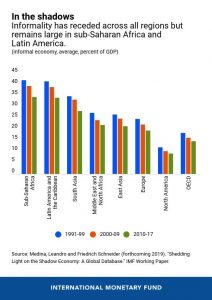
Our chart of the week, based on an updated version of earlier IMF research, shows that the size of the informal economy—measured as a share of GDP—has fallen gradually across all regions. While reforms to reduce informality, such as reducing the hurdles to registering a business, are working, the shift from informal to formal takes time.

The regions with the highest share of informality during 2010–17 are sub-Saharan Africa and Latin America and the Caribbean—both at 34 percent of GDP. This compares with 9 percent of GDP for North America. In the Organisation for Economic Co-operation and Development, the informal sector is equivalent to nearly 15 percent of GDP.

The informal economy is generally associated with low productivity, poverty, high unemployment, and slower economic growth. It is also more prevalent in low-income countries because as countries develop, the easier it is for workers to transition to the formal sector. At the same time, it provides employment and income to people who would otherwise not find employment, or it supplements their income from employment in the formal, regulated sector.

The challenge for policymakers is to create an environment where the formal sector can thrive while creating opportunities for people working in the informal sector to maintain or improve their living standards. Some of these measures include reducing the costs of doing business, tackling corruption, and improving access to finance and services.

This year’s topic of the seventh IMF Statistical Forum—Measuring the Informal Economy—will review the definition of “informal” and explore new technologies, such as using night lights from satellite images, to capture the true size of the informal economy. This will help policymakers better address the challenges of persistent informality.

Stories Continues after ad

Former Kalaki county MP Ross Euku dead

Simon Ross Euku

Former Kalaki County legislator Simon Ross Euku is dead.

Eagle Online has learnt Euku passed on this morning from Nansana. He suffered a brain infection and he reportedly had tumors. reports indicate he was supposed to undergo a review of his condition today but he unfortunately passed on before.

Euku, a staunch member of Uganda Peoples’ Congress (UPC) party. He represent Kalaki in Kaberamaido district  in the 7th and 8th parliament.

Stories Continues after ad

Gov’t, NWSC partner to boost water supply in Nakaseke district

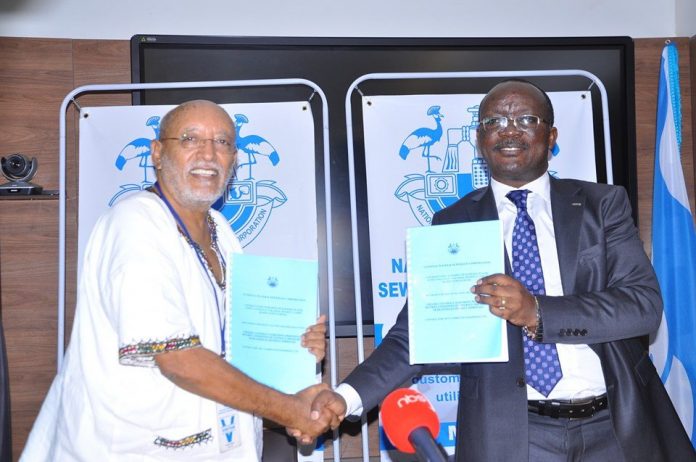
NWSC MD Dr. Eng. Mugisha and Vambeco CEO Haile Haile Banteyehun after signing the agreement

The Government and National Water and Sewerage Corporation (NWSC) on one sign have signed an agreement with VAMBECO ltd worth Shs9 billion for the upgrading of the water system in Kapeeka. This comes at a time when the residents of Kapeeka in Nakaseke district complained about the inadequate supply of water to their areas.

According to NWSC Managing Director D Dr. Eng. Silver Mugisha, the current water treatment plant in Kapeeka produces 2million litres of water per day which is not sufficient to meet the water supply needs of the community and the business park.

“The upgrade works when completed will boost water production to 7.5 million litres per day in support of the Government’s efforts to provide safe water for human consumption and economic development,” said Mugisha.

Although the government has a number of projects that are ongoing, this particular upgrade is unique because unlike other projects that have received funding from well-wishers and foreign governments, the kapeeka water project will solely be funded by the Ugandan Government. This marks another step towards the self-sustainability of Uganda and its progress towards middle income status.

The VAMBECO construction company is also another indigenous contractor that has been working within the East African region for over 15 years, with major projects put up within Kenya and some parts of Tanzania.

The newly commissioned project will see the volume of water supplied to residents of Kapeeka raised to 7.5 million litres per day from 2 million litres per day, said Mugisha.

“That is a timely. That place is one of the highly water stressed areas in Uganda. Last year I did a hydrological survey for an irrigation project, and could hardly find water…indeed, the people were less interested in water for agriculture, and instead asked H20 for drinking,” an official added.

NWSC Deputy MD Technical services Eng Johnson Amayo shared that the contractor Vambeco Ltd who completed phase 1 of the same project has experience of the local conditions and will complete the works within 18 months.

He added that the corporation is working to boost water supply in all business parks across the country namely; Kasese, Fort Portal, Soroti, Mbale among others.

Director Engineering services Eng. Alex Gisagara shared that the upgrade works will include;

  • Upgrade of the raw pumping main.
    •Expand the existing plant from the current 2 million liters per day capacity to 7.5 million litres per day.
    •Installation of standby Generators
    •Upgrade of existing pumps
    •Laying of 7.8 km bulk transmission main to Kapeeka industrial park
    •Construction of a new 60,000 litres reservoir
    •Upgrade of the intake
    •Development of borehole water supply system among other works.

“Currently we serve Singo army barracks, Kapeeka town, and the surrounding areas. Upon completion, we shall extend a new line to Semuto,Bukomero, Kakinga, Natooke, Masiriba, Kituuma and the surrounding areas.” Vambeco CEO Haile Haile Banteyehun pledged to complete the works on time.

“We have worked on a number of water treatment plants in Uganda and promise to deliver the project on time,” he said

Stories Continues after ad

You have no justification to ask Shs47b compensation over Meera Investment properties-Mutebile tells Dfcu

The Late BoU Governor Emmanuel Tumusiime-Mutebile


After losing interest in the Meera Investment Limited properties it paid at Shs10 billion, Dfcu bank is demanding for Shs47 billion compensation from the Bank of Uganda (BoU).

However, it has emerged that Dfcu bank has failed to justify the Shs47 billion after being asked by BoU to do so. For starters, BoU never valued any properties which they had gotten from Meera Investment during the closure of Crane Bank Limited.

Dfcu having been lured into the Crane bank deal by conflicted city law firms of MMAKS and Bowmans and Mpanga Advocates on one side and on other side having BoU Deputy Governor Dr. Louis Kasekende and Justine Bagyenda misled them into buying Meera Investments only at Shs10 billion without any property valuation.

However, it has now emerged that Dfcu Bank wants BoU to pay them Shs47 billion as a result of the decision to exit properties and they are basing that claim on the Purchase of Assets and Assumption of Liabilities Agreement signed between the bank and BoU on January 25, 2017.

The valuation of Meera investment properties was Shs47 billion as Dfcu bank took over CBL. Yet Dfcu bank paid BoU only Shs10 billion for the properties and has used them for almost now three years without paying rent, leading Meera Investments Limited to sue them.

The latest scenario now shows Dfcu Bank underdeclared the value of the properties as they did the valuing which BoU based on to accept Shs10 billion. Dfcu Bank should have paid more in stamp duty based on the value of the properties, which amounts to tax evasion and criminality.

Dfcu bank is demanding for the money after realising BoU is unlikely to recover the money as sighted in the agreement.

Sources say BoU Governor Emmanuel Mutebile is not willing to meet Dfcu Bank officials to resolve the matter after it transferred 48 lease titles of former Crane Bank Limited back to BoU

In August this year it emerged that the bank was misled by city Law firm Sebalu & Lule Advocates to illegally transfer title properties into its name yet the properties belong to Meera Investments Ltd even though it had leased them to Crane Bank Limited.

Sebalu & Lule Advocates who have been barred by court from representing the same bank against city tycoon Sudhir Ruparelia for being conflicted. The law firm misled Dfcu Bank to transfer freehold titles from Crane Bank Ltd during the controversial takeover in January 2017.

Also following court ruling in late August 2019 that Crane Bank (In Receivership) has no right to sue Meera Investments and Sudhir Ruparelia for Shs379 billion allegedly swindled, Dfcu bank Limited in a letter dated September 12, 2019 informed BoU of its decision to exercise its option to rescind its interest in purchasing the 48 properties pursuant to clause 8.7 of the Agreement.

As part of the rescinding of the purchase, Dfcu will return to Bank of Uganda certificates of title for Meera Investments Limited ‘and requires Bank of Uganda to pay dfcu the new book value of properties or Shs47 billion recorded in the assets and inventory compilation as October 20, 2016. But the bank interestingly had valued the properties at Shs10 billion.

Dfcu bank acquired some assets of CBL at Shs200 billion, paid in installments, without any interest on top.

Some analysts have urged that BoU gave Dfcu bank CBL assets for free even as the bank now wants to be paid Shs47 billion by BoU which depends on the taxpayer.

Dfcu’s Crane Bank take-over made it to become the second largest commercial bank in the country, with an asset base of Shs3.37 trillion, just behind the market leader Stanbic Bank that boasted of Shs3.73 trillion in assets then. It also at the same time saw an increase in the branch network from 45 to 66 branches countrywide.

“We believe that the acquisition which placed Dfcu bank amongst the top three banks in the market in terms of total assets puts the group firmly on the path to transforming from a niche bank to a universal bank,” the notice reads in part, “Overall we expect the transaction to result in enhanced value to our shareholders through superior financial performance,” Dfcu bank said in a financial statement released on August 15, 2017.

However, the latest development means Dfcu bank’s asset value has gone down given that they have given up on those wrongly acquired from CBL /Meera Investments Limited.


Stories Continues after ad

Singer Angella Katatumba charged with criminal trespass and fraud

Angella Katatumba.


Veteran musician and heiress to the family Angela Katatumba has been charged with criminal trespass and fraud and is to be brought to Chief Magistrate Court Makindye on November 4, 2019.

According to charge sheet, Ms Katatumba is needed to answer the above charges which police preferred on her.

The Katatumbas have had trouble with city businessman man Mukesh Shukla popular known as Shumuk over the ownership of city properties.

However, Eagle Online has learnt that Ms Katatumba’s prosecution is a private prosecution since it a joint one involving three parties. The three main complaints are Mr Mukesh, Barclays and the Pakistan Association-Uganda.

How her troubles started

The High Commission for the Islamic Republic of Pakistan based in Nairobi last year dismissed Angelina Katatumba as the Consular in Uganda describing her as fake.
In a public notice, the Commission said ever since Bonny Katatumba died, their government had never appointed any representative to Uganda as a Consulate and thereafter, the Pakistan government replaced her with former Minister Lukia Nakadama.

“The High Commission for the Islamic Republic of Pakistan in Nairobi presents its complaints to the Ministry of Foreign Affairs, Uganda and all the Diplomatic Mission/Consulates/Honorary Consulates in Uganda and has the honour to refer to the latter’s Note verbal of even number dated October 25, 2017. The so-called Honorary Consulate of the Islamic Republic of Pakistan in Uganda is still operating illegally in Uganda. It had actually been ceased to function with the demise of our Honorary Consul Mr Bonny Katatumba , Government of Pakistan has not yet appointed a new Honorary Consul in Uganda.” The complaint to Ministry of Foreign Affairs Uganda reads.

The High Commission further warns the Ugandan authorities especially Immigration officials not to honour any documents purportedly issued in the name of the Consulate.
“This High Commission has further honour to inform the Honorary Consulate of Pakistan currently operating in Uganda under Angelina Katatumba is fake and fictitious and has no legal authority at all”


Stories Continues after ad

Crested Cranes squad for 2019 CECAFA tournament named

Crested Cranes team

Uganda Crested Cranes head coach Faridah Bulega has named a provisional squad to start preparations for the 2019 CECAFA senior Women’s Challenge Cup.

There are 35 players summoned and non-residential training will commence on Thursday, 31st October 2019 at Luzira for five days before the team enters residential camp at FUFA Technical Centre, Njeru.

The Crested Cranes were drawn with Kenya, Ethiopia and Djibouti in group B.

The regional tournament is slated for November 14th to 23rd, and will be played at the Chamanzi Stadium in Dar es Salaam, Tanzania.

By 12th November 2019, the final team will be named to travel to Dar es Salaam.

Goalkeeper Ruth Aturo will be captain and the assistant captain will be confirmed in due course.

Crested Cranes Squad

Goalkeepers: Daisy Nakaziro (Lady Doves), Ruth Aturo (UCU Lady Cardinals), Irene Atumango (Lady Doves), Vannesa Karungi (She Corporate)

Defenders: Viola Namuddu (Makerere University), Shadia Nankya (UCU Lady Cardinals), Bridget Nabisaalu (She Corporate), Mercy Nabulobi (UCU Lady Cardinals), Margret Birabirwa (Muteesa I Royal University), Marion Amangat (Olila High School), Brendah Nandagire (Uganda Martyrs),  Stella Musibika (Kawempe Muslim), Eunice Ariokot (Olila High School), Grace Aluka (Maroons Women Football Club), Aisha Namukisa (Kawempe Queens)

Midfielders: Asia Nakibuuka (Kawempe Muslim), Sarah Nakuya (Nkumba University), Norah Alupo (Saviors), Zaina Nandede (She Kataka), Riticia Nabbosa (Lady Doves), Esther Beatrice Adokole (She Kataka), Teddy Najjuma (UCU Lady Cardinals), Harriet Nakuba (Kampala Queens), Phiona Nabumba (She Corporate), Amina Nababi (Makerere University), Fauzia Najjemba (Kampala Queens)

Forwards: Hasifa Nassuna (UCU Lady Cardinals), Juliet Nalukenge (Kawempe Muslim), Margret Kunihira (Kawempe Muslim), Rashidah Nankya (Uganda Martyrs), Resty Nanziri (Kampala Queens), Zainah Namuleme (Kampala Queens), Fazila Ikwaput (Lady Doves), Shamirah Nalugya (Kawempe Muslim), Mable Kusasira (Kampala Queens)

Stories Continues after ad

Five steps to successful problem solving for a business

Martin Zwilling

By Martin Zwilling

Perhaps sparked by the now forgotten recession, I’m seeing a new era of the entrepreneur, with startups springing up all around. Based on my own mentoring and investing experience, the best entrepreneurs are pragmatic problem solvers. They have an uncanny ability to find elegant, easy, and fast solutions to pain points in the marketplace, as well as their own challenges.

The real question is whether problem solving is a skill you have to be born with, or is there any hope for the rest of us to become successful entrepreneurs. After some review of available resources, I’m convinced that problem solving is a learnable trait, rather than just a birthright.

For example, I remember a classic book by Penina Rybak, “The NICE Reboot,” that does a great job of outlining problem solving steps, honed from working with special needs youngsters. While her book is aimed primarily at aspiring female entrepreneurs, my adaptation of the five steps of her problem-solving hierarchy should work equally well for entrepreneurs of any gender:

  1. Acknowledge that a problem exists, and react appropriately.Problems will occur in every startup, simply because you are stepping into uncharted territory. Good entrepreneurs anticipate these, and celebrate each resolution as a positive step toward success, rather than responding with anger and frustration and counting failures.
  2. Verbalize the problem to fully understand it and why it’s occurring. Every business problem has a context that is critical, and it’s easy to be too close to see the forest for the trees. If you can explain the problem to a mentor, or even write it down, you will more likely get to the root cause quickly, and avoid emotional and blame-infused responses.
  3. Explore solutions, outcomes, and options calmly. You can’t think clearly while riding high on emotions, so calm down first. Then outline the possible outcomes and alternatives. Good problem solving requires making informed decisions, relying on logic. This is where I say “two heads are better than one.” Work with a partner you can trust.
  4. Use negotiation to come to an agreement or compromise. Whether you are charting new territory for pricing models or technology, there is rarely a perfect solution. Every approach is a compromise between cost, time, and return, so forget your perfectionist tendencies. Listen to your customers to arrive at acceptable and marketable solutions.
  5. Resolve conflict, accept outcomes, and rebuild communications. In startups, conflict is constructive in steering through the maze of innovation that is part of every successful business. Don’t let it make your startup dysfunctional in resolving future challenges. Real entrepreneurs always look ahead and learn from problems resolved.

The best way for a first time entrepreneur to learn problem solving is to find a partner who has “been there and done that.” A good alternative is to enlist the help of a business mentor you can trust. The best mentor is sensitive, knowledgeable across a broad spectrum, but is probably not your best friend. A mentor has to tell you what you need to hear, not what you want to hear. When the message is the same from both, you don’t need the mentor anymore.

As mentioned earlier, one of the most difficult traits to overcome for effective problem solving is perfectionism. A few years ago, Amanda Neville wrote an incisive article for Forbes online entitled “Perfectionism is the Enemy of Everything.” In it, she lists three types of perfectionism that are equally toxic to entrepreneurs and mentors:

  • Self-oriented perfectionism, in which individuals impose high standards on themselves.
  • socially prescribed perfectionism, where individuals feel that others expect them to be perfect.
  • Other-oriented perfectionism, in which individuals place high standards on others.

Perfectionism quashes the desire to ask for help, see others’ viewpoints and empathize, and promote teamwork. For more help on this one, I recommend Esther Crain’s old article “Five Ways to Blast Perfectionism and Get Your Work Done.”

With all these incentives, maybe it’s time for you to reboot your career and join the new era of the entrepreneur. Problem solving may be a required skill, but it’s definitely one that can be learned, and perfectionism can be un-learned, independent of your IQ or book smarts (there may even be an inverse relationship here).

The best part of the entrepreneur problem-solving lifestyle is that it can bring satisfaction and happiness to your work. According to a summary of recent research, those running their own businesses are happier and healthier than employees, regardless of how much money they make. As I have said many times, life is too short to go to work unhappy every day.

The writer is a veteran startup mentor, executive, blogger, author, tech professional, professor, and investor. Published on Forbes, Entrepreneur, Inc, Huffington Post, etc.


Stories Continues after ad

Bishop Sentamu warns of ‘environmental genocide’ in Nigeria

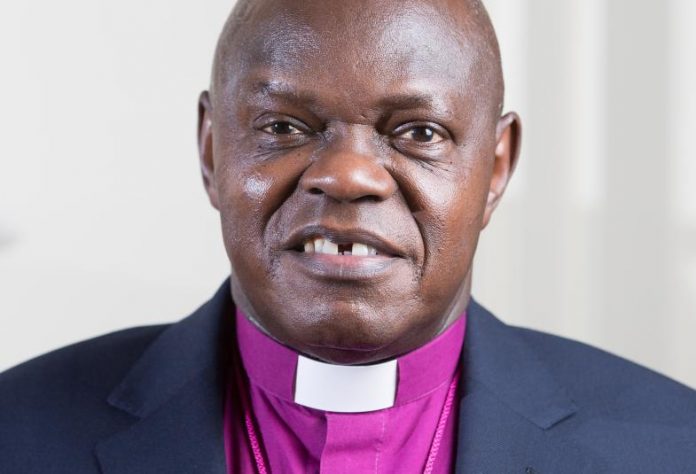
Bishop Sentamu

Ugandan- born leading Anglican cleric in the UK has said that oil exploration in Nigeria is causing an “environmental genocide”.

The Archbishop of York, John Sentamu, who is leading a commission investigating the impact of multinational oil companies in Nigeria’s southern Bayelsa state, said the poor condition of facilities would not be tolerated anywhere else, and the companies were ultimately responsible for any spills from their installations.

Dr Sentamu also accused the Nigerian government of abdicating its responsibility to protect Bayelsa’s diverse ecosystem.

He added:

Quote Message: People talk about environmental degradation. I think that’s too weak a phrase. For me, really, as I’ve looked at the environment and as I’ve looked at people’s lives, I’ve come to the conclusion that this is a very slow environmental genocide really, in the end.”

People talk about environmental degradation. I think that’s too weak a phrase. For me, really, as I’ve looked at the environment and as I’ve looked at people’s lives, I’ve come to the conclusion that this is a very slow environmental genocide really, in the end.”

He said the situation was not just a local issue:

Quote Message: I may have come from Uganda, I may now be living in the United Kingdom, but we live in a global village. These are my neighbours. I’m absolutely concerned about their wellbeing. And when you see the poverty, a country that produces so much oil and you look [at] the conditions which they’re living, it’s just shocking.”

I may have come from Uganda, I may now be living in the United Kingdom, but we live in a global village. These are my neighbours. I’m absolutely concerned about their wellbeing. And when you see the poverty, a country that produces so much oil and you look [at] the conditions which they’re living, it’s just shocking.”

Stories Continues after ad

Makerere Guild President Kateregga reportedly kidnapped by unknown people

Julius Kateregga

Makerere University Students’ Guild President, Julius Kateregga is reported to have been kidnapped by unknown people, according to his deputy Judith Nalukwago. The kidnap/arrest came after he appeared on NBSTv Morning Breeze programme on Wednesday.

Katerega has been for a week leading students to demonstrate against 15 percent tuition increment.

While appearing on NBStv, Katerega among others wondered why 15 percent tuition increment was approved when the economic growth is growing at a lower rate. “We all know the country’s growth rate is measured at 5 percent. Why then would you give us a 15 percent increment?” He asked.

Meanwhile students have burnt property belonging to former Guild President Salim Papa Were, accusing him of being among those that spearheaded the passing of the 15% tuition increment approved by the council in July 2018.

Yesterday First Lady Janet Kataaha Museveni who doubles as Minister of Education and Sports while responding to the students’ strike said that the tuition increment in 2018 was also approved by the students’ leaders in 2018.

“It is important to understand that Makerere University Management took the trouble to ensure that students were fully involved and consulted in the process of establishing an acceptable tuition fee structure for the Institution, through a series of consultations with the student leadership, and the outcomes were agreed upon by both parties, as well as bench-marking with other similar universities. How then do students turn around, afterwards, and accuse the University management of imposing “high costs” on the students?” She asked yesterday.

Despite President Yoweri Museveni ordering the military out of the university, cases of violence are being reported, with the police firing teargas at students who have refused to go for lectures.

Meanwhile the University Council has halted the proposed fees increment but also revoked suspension and warning letters given to students in relation to the current demonstration.

Stories Continues after ad