Stanbic Bank
Stanbic Bank
20.8 C
Kampala
Stanbic Bank
Stanbic Bank
Home Blog Page 1124

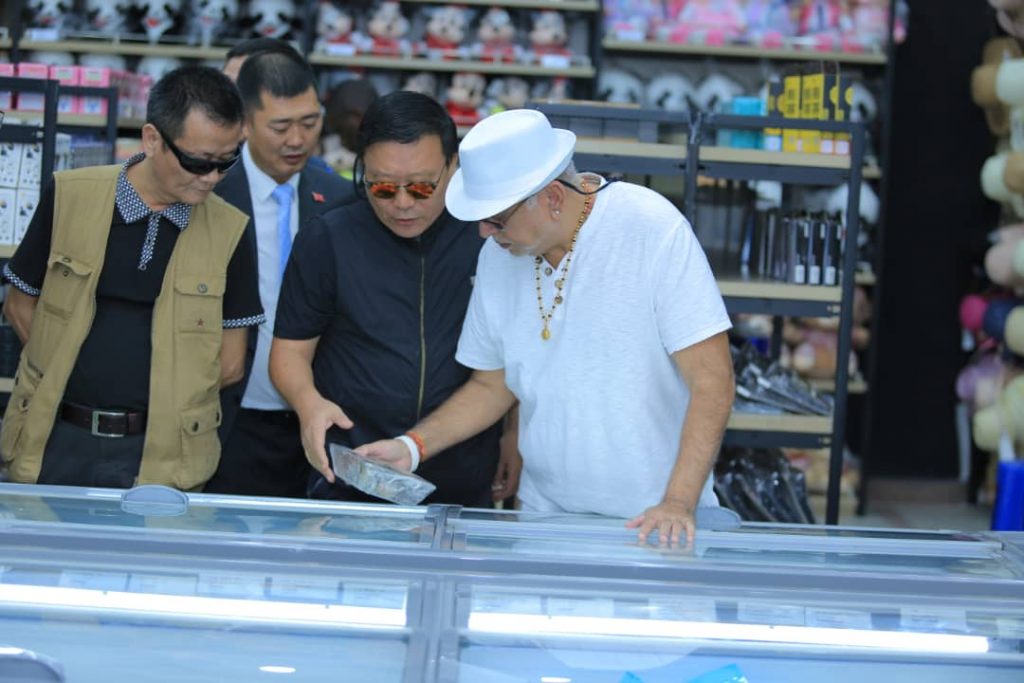
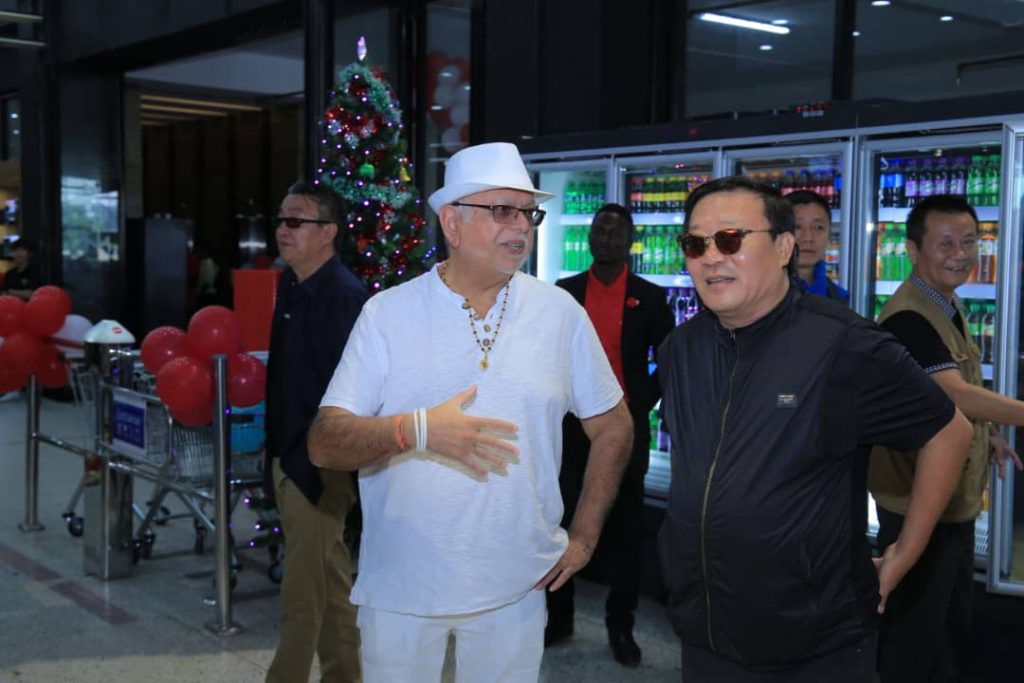
Union Supermarket opens at Kingdom Mall as Sudhir praises Museveni on investors

Businessman Sudir Rupaleria has commended the government and more so President Museveni for his continued support towards encouraging foreign investors to come and invest in Uganda.

Sudir was speaking while commissioning shopping union supermarket, established by Chinese investor at Kingdom Mall Kampala.

He noted this enterprise will serve all people in the country and it coming to Kingdom Mall Kampala is a big achievement in terms of attracting more business.

Chen xido zu, the proprietor of the shopping union supermarket, says the facility will serve not only Chinese people but all people from different continents.

She says, her main focus will be offering good and quality services to all kinds of people at affordable prices.

President Museveni has been at the forefront of attracting foreign investors to invest in Uganda given that the country still has untapped resources. The investors have in turn employed Ugandans and some also tap into the local resources for those in the manufacturing sector.

Stories Continues after ad

Kenya and Tanzania: Over 3 million people to benefit from African Development Bank’s €345 million road construction support

Roads are key for development

Over three million people in Tanzania and Kenya will benefit from a €345 million financing package for road construction support, approved by the African Development Bank on Thursday.

The Bank’s support for the Mombasa-Lunga Lunga/Horohoro and Tanga-Pangani-Bagamoyo roads Phase I, is in the form of African Development Bank and African Development Fund loans and represents 78.5% of the total €399.7 million project cost.  The European Union contributed a grant of €30 million, 7.7% of the total project cost, to the government of Kenya.

The road is a key component of the East African transport corridors network, connecting Kenya and Tanzania. Producers, manufacturers and traders will be able to move goods more quickly and cheaply. In addition, farmers and fishermen will benefit from improved access to local and regional markets and amenities, including better schools and health centres.

“The project will have spillover benefits for hinterland countries such as the Democratic Republic of the Congo, Burundi, Rwanda, Uganda and South Sudan that depend on Mombasa as gateway to global markets,” said Hussein Iman, the Bank’s Regional Sector Manager for infrastructure, private sector, and industrialization.

The Bank’s support will also provide roadside trading facilitates for sellers, half of them women who currently operate in disorganized and unsafe conditions.

The road crosses regions with high rates of youth unemployment. In light of this, the project includes a vocational training component for 500 unemployed youth (half of them women) to acquire marketable skill and improve their economic prospects.

The Bank anticipates that the intervention will boost regional integration by reducing transit times, facilitating trade and the cross-border movement of people, opening access to tourist attractions. The project will also link the ports of Dar es Salaam, Tanga and Mombasa, and stimulate the blue economy in coastal areas.

This first phase involves the construction of 175 km of road sections:  the 121 km Mkanga-Pangani road section in Tanzania and the 54 km Mombasa-Kilifi road section in Kenya.

The intervention is a priority item in the Bank’s Eastern Africa Regional Integration Strategy (EA-RISP), the Country Strategy Papers (CSPs) of both countries and aligns with two of the Bank’s High 5 priorities – Integrate Africa and Improve the quality of life for the people of Africa.

Regional integration is a priority for Kenya, and Tanzania. However, poor infrastructure has been a major constraint.

This week, the Bank witnessed the signing of a $440 million agreement between Japan International Cooperation Agency (JICA) and the government of Kenya for the first phase construction of a bridge connecting Mombasa island and Likoni, a major international port area of East Africa.

The Mombasa Gate Bridge will be the longest cable-stayed bridge in Africa, providing a critical link over the Indian Ocean along the just approved Mombasa – Lunga Lunga/Horohoro and Tanga – Pangani – Bagamoyo corridor phase I.

The total amount of co-financing is expected to be more than $ 1.2 billion when subsequent phases of the project are concluded – the largest co-financing agreement between the Bank and JICA.

“We are confident that we can all work together to accomplish this important task and other projects in the future,” Nnenna Nwabufo, the Bank’s Acting Director General for the East Africa Region, said at the signing.

As at the end of November 2019, the Bank’s portfolio in Kenya comprises 27 public and 7 private operations with a total commitment of 2.7 billion euros.

The Bank’s portfolio in Tanzania as at the end of November 2019 comprises 21 public and 2 private operations with a total commitment of 1.82 billion Euros.

Stories Continues after ad

Museveni receives his counterpart Mbasogo of Equatorial Guinea

President of Equatoria Guinea Mbasogo (Left) at Entebbe State House with President Museveni

President Yoweri Museveni hours ago received his counter-part President Teodoro Obiang Nguema Mbasogo of Equatorial Guinea who arrived in the country this afternoon on a three day official visit.

President Mbasogo’s visit comes shortly after United Nations High Commission for Refugees (UNHCR) welcomed Equatorial Guinea’s accession to the Kampala Convention on internally displaced people (IDPs), becoming the 29th African Union (AU) member state to do so according to the UNHCR.

The Kampala Convention is the world’s first and only regional legally binding instrument for the protection and assistance of IDPs, who often face heightened risks, violations and sexual violence because of their displacement, while they struggle to access their rights and basic protection.

Equatorial Guinea deposited its instrument of ratification of the Kampala Convention at the AU headquarters in Addis Ababa, Ethiopia in October this year. With this development, 29 of the AU’s 55 member states have now acceded to the Kampala Convention.

The move by Equatorial Guinea is particularly opportune as the Kampala Convention is marking its 10th anniversary this year with activities organized by the AU with support from UNHCR and other partners.

President Mbasogo who is the official AU champion of 2019 on finding solutions to forced displacement in Africa and will represent the AU at the Global Refugee Forum in Geneva had a tete-a-tete meeting with President Yoweri Museveni.

Tomorrow he will tour Kiryandongo Refugee Settlement center, Panyandoli Health Centre 111 and Panyandoli vocation school to have a first hand experience on how Uganda has successfully handled the refugee situation.

Over one million refugees have fled to Uganda in the last two and a half years, making Uganda the third largest refugee-hosting country in the world after Turkey and Pakistan1 , with 1.36 million refugees by June 2018.

Wars, violence and persecution in the Horn of Africa and Great Lakes Region were the main drivers of forced displacement into Uganda, led by South Sudan’s conflict, insecurity and ethnic violence in the Democratic Republic of the Congo (DRC) and political instability and human rights violations in Burundi.

Stories Continues after ad

Gen. Tumwiine scolds Lt. Gen. Angina, orders junior to stop abusing UPDF

Gen. Tumwine

The Minister of Security, Gen. Elly Tumwiine in a video clip circulating on the social media, has lashed-out to the deputy coordinator of Operation Wealth Creation (OWC), Lt. Gen. Charles Angina over his involvement in the recent Muyenga land wrangle where city tycoon who doubles as the chairman of Bagagga Kwagalana group, Godfrey Kirumira was wrestled by soldiers.

Few weeks back, Kirumira battled out Uganda Peoples Defence forces (UPDF) officers deployed by Lt. Gen. Angina to guard a one Dr. Ben Khing who was carrying out road expansion works in the neighbourhood.

kirumira in shorts trying to defend himself

It is said the construction work was being done on part of Kirumira’s land without his consent and guidance from Kampala capital city Authority (KCCA).

In civilian attire, Gen. Tumwine said he has land wrangles with a lot of people but he does not use the UPDF soldiers to beat and mistreat his nemeses.

“Don’t abuse our forces. We all have wrangles but we don’t use the force like this. We have worked to build the image of our force.  Have you heard?” Tumwine said.

He urged Angina to take proper measures and if there is a dispute on the land. He said KCCA should be left to enforce the law and not the army.

Stories Continues after ad

Divisive Johnson, improbable Corbyn as trade talks beckon, pound to stay strong

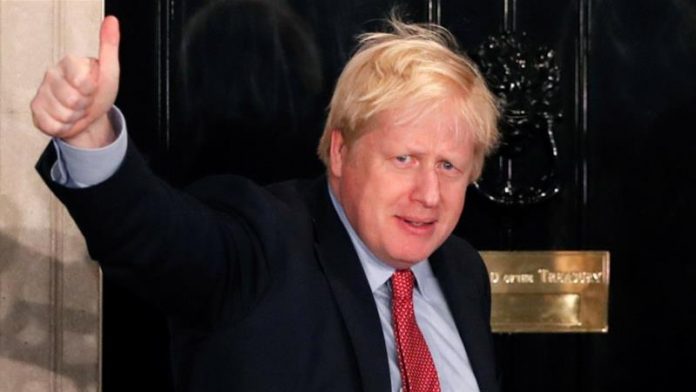
Boris Johnson

By David Marsh

Britain will leave the European Union at breakneck speed, unleashing months of difficult trade negotiations with Europe, following a sweeping Conservative victory in yesterday’s election, ending three and a half years of Brexit deadlock.

Prime Minister Boris Johnson – just weeks after suffering a series of apparently career-blighting parliamentary setbacks – becomes the Conservatives’ most dominant prime minister since Margaret Thatcher in the 1980s. In the 650-seat House of Commons, Johnson’s party finished more than 160 seats ahead of opposition Labour, which slumped to its worst result since 1935.

On the brink of initiating pre-Christmas legislative changes in parliament to allow the UK to leave the EU by 31 January, Johnson said he had the chance ‘to respect the democratic will of the people’ and ‘unlock Britain’s potential’. President Donald Trump, congratulating Johnson, said a new US trade deal could be more lucrative than any with the EU.

Johnson, a frequently divisive figure, had the good fortune of pitting his trademark mix of flexibility, bonhomie and opportunism against the improbable Jeremy Corbyn, the leftwing Labour leader whom few voters considered prime ministerial material. The outcome was seldom in doubt during the six-week campaign, with pollsters’ findings of a stable 10-11 percentage point Conservative lead vindicated at the ballot box.

The outcome comfortably avoids the semi-paralysed ‘hung parliament’ that has bedevilled UK decision-making in the past two years. Johnson can seek to implement his attempts at inclusive Conservatism in a country seeking post-EU direction. At the helm for the next five years, Johnson can claim near-unfettered leadership status. By contrast, opposite numbers in nearly every other major industrialised country face substantial short-term electoral challenges.

He will be able to stamp his mark on government changes including appointing a new governor of the Bank of England, possibly before Christmas, to replace Mark Carney, who will step down on 31 January. The size of his majority and the strength of sterling – likely to persist – give Johnson leeway to make an unconventional choice (just as Carney was seven years ago) from the diverse contenders.

Johnson was able to profit from three distinct advantages. UK voters – who opted 52% to 48% to leave the EU in the June 2016 referendum – wished to resolve Brexit uncertainty without a further plebiscite and more political prevarication. They were suspicious of socialist ideology favoured by Corbyn and other Labour leftwingers, who failed to engineer a resurgence of popular support achieved in the 2017 election against Theresa May, Johnson’s luckless predecessor. Further, Johnson, a former mayor of London whose dishevelled demeanour belies considerable organisational skills, fought a disciplined campaign, making only a few characteristic gaffes.

An important task will be to quell anti-Brexit resentment and head off another independence referendum (following the previous vote in 2014) in pro-EU Scotland. The Scottish National Party won 48 of the country’s 59 seats – 13 more than it won in 2017. The UK agreed concessions on Northern Ireland’s status under an exit deal agreed with Britain’s EU partners in October, which failed to get full parliamentary ratification, leading to yesterday’s election. The UK agreement, in reality little changed from the divorce agreement May reached a year ago but failed to push through parliament, could spur the emboldened SNP again to seek separation from the rest of the UK. Johnson’s Conservatives reject any idea of Westminster sanctioning another Scottish vote.

Labour yesterday suffered a spectacular series of losses to the Conservatives in traditional working class, Leave-voting heartlands in northern England and Wales. The UK opposition party now joins a melancholy group of long-established leftwing parties in Germany, France and Italy, all swept from pivotal positions in the last decade. The decisive Conservative win prompted relief in Brussels and around Europe, as EU decision-makers welcomed an end to Brexit delay. ‘France’s position for months has been a request for clarity,’ Amélie de Montchalin, France’s Europe minister, said. ‘This clarification appears to have arrived.’

David Marsh is Chairman of OMFIF.

Stories Continues after ad

Simon Aliira wins Shs30m as NSSF Friends with Benefits Season 3 comes to successful end

Aliira the winner of NSSF Friends with Benefits Season 3

Simon Aliira is the winner of Shs30 million prize as the National Social Security Fund (NSSF) Friends with Benefits Season 3 (NSSFWB3) came to an end yesterday.

Aliira worked for Kinyara Sugar Works Limited from 1993 to 2012 and retired into sugarcane plantation farming in Kinyara, Masindi district after he received Shs85 million as his NSSF retirement benefits in 2013. His business has gone to create jobs for those within his community.

Other winners

Martin Owako: First runner up used his NSSF benefits to set up a poultry farm, re-invest in his rental property as well as launch a successful tour and travel company.

Martin Owako receiving his cheque

Edson Mwine the second runner up and he walked away with Shs 10 million. He used his NSSF Exempted Benefit of less than Shs 700,000 to start a welding business.

Mwine receiving his cheque

Sarah Mubiru walked away with a cheque of Shs 5 million having emerged as the Judges’ choice for NSSFFWB3. Sara used her NSSF Withdrawal Benefit to make honey made sweets.

Sarah receives her cheque

NSSF received over 477 submissions for consideration in this year’s Friends with Benefits TV show which saw three contestants winning contestants walk away with a total of Shs 55 million cash prize to further improve their lives.

NSSFFWB campaign, now in its third year, is a TV show designed to encourage a savings culture in Uganda as well impart financial literacy among savers, by showcasing stories of NSSF beneficiaries who received their savings and did something lie changing.

The show profiles former NSSF members who received and invested or used their NSSF benefits to improve their lives, those of their families and even the communities they live in.

The submissions included success stories ranging from investments in agriculture, hospitality, tours and travel, business, tourism, real estate, education among others.

Apart from yesterday’s winners, there has been a 29 percent increase in the amount of money paid in benefits to qualifying members from Shs 278 billion in 2017 to Shs360 billion in 2018. The number of beneficiaries also increased from 19,027 to 23,665.

The stories submitted touched most of the benefits the Fund offers which are; the Age benefit given to a member who has reached 55 years; Survivors Benefit, Withdrawal Benefit, Invalidity Benefit, Exempted Employment paid to members that join employment categories that are exempted from NSSF contributions; and Emigration Grant paid to a contributing member who has been working in Uganda and is leaving the country permanently.

The Friends with Benefits TV show started airing in October 2019. Winners were selected through voting by the public and an expert panel of judges.

Stories Continues after ad

Widow Julie Angume and parents shocked as new fiance sends photo at introduction ceremony

Julie Angume

A widow to the deceased singer, Martin Angume, has been puzzled after her fiancé, Samuel  Sekajugo, failed to show up for the introduction ceremony at her ancestral home in Kiboga.

Held at her father’s home Mr. Ronald Ssemugga, the colorful function was attended by hundreds of people who were warming to have a glance at Julie Angume’s husband.

To their dismay, Sekajugo did not show up and this created a room for speculations with elders lamenting that the misfortune is indicating that darkness is lying ahead of daughter’s marriage. Julie lost her husband in 2013 and had since never gotten married.

Before the introduction ceremony, Julie dumped her matrimonial name ‘Angume’ and acquired ‘the heartbeat’ as preparations geared.

As the function took shape, the in-laws arrived with expensive gifts and they were accorded cordial welcome. However at the time of showing the groom, people looked disappointed when they were showed a picture of Samuel Sekajugo other than the man himself.

“Sekajugo did not turn up because his employers declined to let him back to Uganda though they cleared him to leave his working place in Netherlands.” She said

Julie said her family members knew about it however the function had to proceed since all preparations had been made.  She believes that her man will be available on the wedding day.

Stories Continues after ad

Equatorial Guinea President Mbasogo arrives Friday for two-day official visit to Uganda

President-Mbasogo-visietd-Ugannda-recently

President Teodoro Obiang Nguema Mbasogo of Equatorial Guinea arrives in Uganda this Friday for a two-day official visit at the invitation of President Yoweri Museveni.

President Mbasogo’s visit comes shortly after United Nations High Commission for Refugees (UNHCR) welcomed Equatorial Guinea’s accession to the Kampala Convention on internally displaced people (IDPs), becoming the 29th African Union (AU) member state to do so according to the UNHCR.

The Kampala Convention is the world’s first and only regional legally binding instrument for the protection and assistance of IDPs, who often face heightened risks, violations and sexual violence because of their displacement, while they struggle to access their rights and basic protection.

Equatorial Guinea deposited its instrument of ratification of the Kampala Convention at the AU headquarters in Addis Ababa, Ethiopia in October this year. With this development, 29 of the AU’s 55 member states have now acceded to the Kampala Convention.

The move by Equatorial Guinea is particularly opportune as the Kampala Convention is marking its 10th anniversary this year with activities organized by the AU with support from UNHCR and other partners.

President Mbasogo who is the official AU champion of 2019 on finding solutions to forced displacement in Africa and will represent the AU at the Global Refugee Forum in Geneva will have a tete-a-tete meeting with President Yoweri Museveni before undertaking an upcountry tour.

Mbasogo will tour Kiryandongo Refugee Settlement center, Panyandoli Health Centre 111, Panyandoli vocation school and Kiryandongo Hospital to have a firsthand experience on how Uganda has successfully handled the refugee situation.

Over one million refugees have fled to Uganda in the last two and a half years, making the Pearl of Africa the third largest refugee-hosting country in the world after Turkey and Pakistan, with 1.36 million refugees by June 2018. Wars, violence and persecution in the Horn of Africa and Great Lakes Region were the main drivers of forced displacement into Uganda, led by South Sudan’s conflict, insecurity and ethnic violence in the Democratic Republic of the Congo (DRC) and political instability and human rights violations in Burundi.

Stories Continues after ad

AfDB and AU to roll-out continent-wide electricity market Masterplan

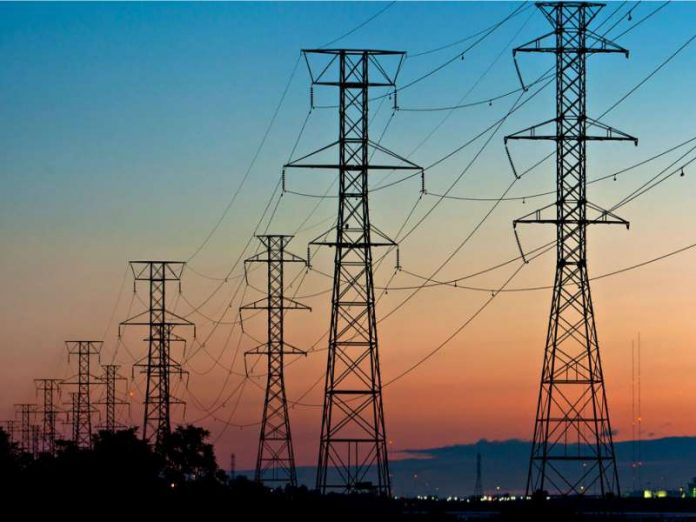
Electricity transmission lines

The African Development Bank (AfDB) and the African Union Development Agency (AUDA-NEPAD) have agreed to jointly develop a blueprint for a pan-continental electricity network and market.

The agreement to set up a Continental Power System Master Plan between the Bank and AUDA-NEPAD was unveiled recently in a three-day workshop on the sidelines of Programme for Infrastructure Development (PIDA) Week held in Cairo. The workshop also produced the Masterplan’s terms of reference.

“The Continental Power System Master Plan will ensure that competitive electricity markets are developed at regional and continental levels, creating unique opportunities to optimally utilize Africa’s vast energy resources for the benefit of Africa,” said Professor Mosad Elmissiry, a Senior Energy Advisor to AUDA-NEPAD’s CEO.

The workshop was aimed at advancing the launch of an Integrated Continental Transmission Network (ICTN) to link national power utilities into regional power pools and, ultimately, into a continent-wide transmission network. Plans also include setting up a market for electricity trading.

The Masterplan also will inform the energy component of a PIDA Action Plan, which focuses on key regional integration projects.

Development of a unified electricity transmission network and market for electricity trading are viewed as a critical priority to improve the lives of people across the continent.

“Most state-owned electric utilities in Africa today are unable to secure the financial resources needed to implement required segments of regional interconnectors and associated national feeder lines,” said Angela Nalikka, the Bank’s manager for National and Regional Power Systems, to explain the impetus for the partnership. “The Bank plans to encourage private sector participation in transmission projects in the continent.”

Stories Continues after ad

Malware variety grows by 13.7 percent in 2019 due to web skimmers

Hackers use web skimmers to steal credit card data

In 2019, the number of unique malicious objects detected by Kaspersky’s web antivirus solution rose by an eighth, compared to last year — reaching 24,610,126. This growth was mainly influenced by a 187% rise in web skimmer files. Other threats, such as backdoors and banking Trojans detected in-lab, also grew, while the presence of miners dropped by more than a half. These trends have demonstrated a shift in the type of threats used by attackers on the web who search for more effective ways to target users, according to the Kaspersky Security Bulletin: Statistics of the Year report.

In 2018, unique malicious objects (including scripts, exploits and executable files) detected by Kaspersky’s web antivirus solution totaled 21,643,946, rising to 24,610,126 this year. The growth accounts for an increase in the number and variety of HTML pages and scripts with hidden data loading – usually used by unscrupulous advertisers. Yet, most notably, the growth was also partially caused by online skimmers (sometimes referred to as sniffers) – where scripts are embedded by attackers in online stores and used to steal users’ credit card data from websites.

The growth of online skimmers’ unique files (scripts and HTML) detected by Kaspersky web antivirus equaled 187%, reaching 510,000. At the same time the number of threats detected by web antivirus have risen five-fold (by 523%), totaling 2,660,000 in 2019. Web skimmers also entered the top 20 malicious objects detected online, taking 10th place in the overall ranking. The share of new Backdoors and banking Trojan files, among all types of threats detected in-lab, also grew by 134% and 61% to reach 7,644,402 and 739,551 respectively.

Nevertheless, the number of unique malicious URLs detected by Kaspersky web antivirus halved in comparison to 2018 (50.5%) – from 554,159,621 to 273,782,113. This shift was largely caused by significant decrease of hidden web miners, even though several detections related to them (including Trojan.Script.Miner.gen, Trojan.BAT.Miner.gen, Trojan.JS.Miner.m), can still be seen in the top 20 web malware threats.

The presence of programs that secretly generate cryptocurrency on users’ computers (called ‘local’ miners) has also been steadily declining over the year: the number of users’ computers affected by attempts to install miners dropped by 59%, from 5,638,828 to 2,259,038.

85% of web threats were detected as malicious URL – this detection name is used to identify links from Kaspersky’s black list. It includes links to web pages containing redirects to exploits, sites with exploits and other malicious programs, botnet command and control centers, extortion websites, and others.

“The volume of online attacks has been growing for years, but in 2019 we saw a clear shift from certain types of attacks that are becoming ineffective, to the ones focused on gaining clear profit from users. This is partly due to users becoming more aware of the threats and how to avoid them, and organisations steadily becoming more responsible. A good example is miners, which have lost their popularity due to lower profitability and cryptocurrencies’ fight against covert mining. This year we also witnessed growth in zero-day exploits, showing products remain vulnerable and are used by attackers for sophisticated attacks, and this trend is likely to continue in the future,” says Vyacheslav Zakorzhevsky, Head of Anti-Malware Research at Kaspersky.

The number of new malicious files processed by Kaspersky’s in-lab detection technologies amounted to 342,102 – which is 1.05% less than the previous year.

Read more about annual threat statistics on Securelist.com.

In order to stay protected, Kaspersky recommends the following:

Pay close attention to and don’t open any suspicious files or attachments received from unknown sources

Do not download and install applications from untrusted sources

Do not click on any links received from unknown sources and suspicious online advertisements

Create strong passwords and don’t forget to change them regularly

Always install updates. Some of them may contain critical security issues fixes

Ignore messages asking to disable security systems for office software or antivirus software

Use a robust security solution appropriate to your system type and devices, such as Kaspersky Internet Security or Kaspersky Security

Stories Continues after ad