Stanbic Bank
Stanbic Bank
23 C
Kampala
Stanbic Bank
Stanbic Bank
Home Blog Page 1124

Crested Cranes squad for 2019 CECAFA tournament named

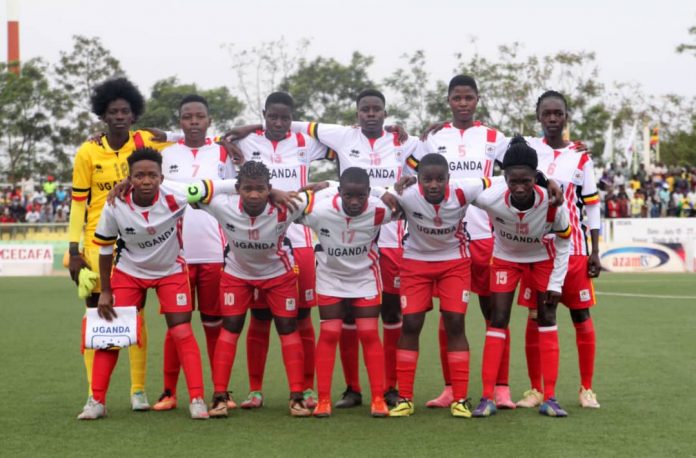
Crested Cranes team

Uganda Crested Cranes head coach Faridah Bulega has named a provisional squad to start preparations for the 2019 CECAFA senior Women’s Challenge Cup.

There are 35 players summoned and non-residential training will commence on Thursday, 31st October 2019 at Luzira for five days before the team enters residential camp at FUFA Technical Centre, Njeru.

The Crested Cranes were drawn with Kenya, Ethiopia and Djibouti in group B.

The regional tournament is slated for November 14th to 23rd, and will be played at the Chamanzi Stadium in Dar es Salaam, Tanzania.

By 12th November 2019, the final team will be named to travel to Dar es Salaam.

Goalkeeper Ruth Aturo will be captain and the assistant captain will be confirmed in due course.

Crested Cranes Squad

Goalkeepers: Daisy Nakaziro (Lady Doves), Ruth Aturo (UCU Lady Cardinals), Irene Atumango (Lady Doves), Vannesa Karungi (She Corporate)

Defenders: Viola Namuddu (Makerere University), Shadia Nankya (UCU Lady Cardinals), Bridget Nabisaalu (She Corporate), Mercy Nabulobi (UCU Lady Cardinals), Margret Birabirwa (Muteesa I Royal University), Marion Amangat (Olila High School), Brendah Nandagire (Uganda Martyrs),  Stella Musibika (Kawempe Muslim), Eunice Ariokot (Olila High School), Grace Aluka (Maroons Women Football Club), Aisha Namukisa (Kawempe Queens)

Midfielders: Asia Nakibuuka (Kawempe Muslim), Sarah Nakuya (Nkumba University), Norah Alupo (Saviors), Zaina Nandede (She Kataka), Riticia Nabbosa (Lady Doves), Esther Beatrice Adokole (She Kataka), Teddy Najjuma (UCU Lady Cardinals), Harriet Nakuba (Kampala Queens), Phiona Nabumba (She Corporate), Amina Nababi (Makerere University), Fauzia Najjemba (Kampala Queens)

Forwards: Hasifa Nassuna (UCU Lady Cardinals), Juliet Nalukenge (Kawempe Muslim), Margret Kunihira (Kawempe Muslim), Rashidah Nankya (Uganda Martyrs), Resty Nanziri (Kampala Queens), Zainah Namuleme (Kampala Queens), Fazila Ikwaput (Lady Doves), Shamirah Nalugya (Kawempe Muslim), Mable Kusasira (Kampala Queens)

Stories Continues after ad

Five steps to successful problem solving for a business

Martin Zwilling

By Martin Zwilling

Perhaps sparked by the now forgotten recession, I’m seeing a new era of the entrepreneur, with startups springing up all around. Based on my own mentoring and investing experience, the best entrepreneurs are pragmatic problem solvers. They have an uncanny ability to find elegant, easy, and fast solutions to pain points in the marketplace, as well as their own challenges.

The real question is whether problem solving is a skill you have to be born with, or is there any hope for the rest of us to become successful entrepreneurs. After some review of available resources, I’m convinced that problem solving is a learnable trait, rather than just a birthright.

For example, I remember a classic book by Penina Rybak, “The NICE Reboot,” that does a great job of outlining problem solving steps, honed from working with special needs youngsters. While her book is aimed primarily at aspiring female entrepreneurs, my adaptation of the five steps of her problem-solving hierarchy should work equally well for entrepreneurs of any gender:

  1. Acknowledge that a problem exists, and react appropriately.Problems will occur in every startup, simply because you are stepping into uncharted territory. Good entrepreneurs anticipate these, and celebrate each resolution as a positive step toward success, rather than responding with anger and frustration and counting failures.
  2. Verbalize the problem to fully understand it and why it’s occurring. Every business problem has a context that is critical, and it’s easy to be too close to see the forest for the trees. If you can explain the problem to a mentor, or even write it down, you will more likely get to the root cause quickly, and avoid emotional and blame-infused responses.
  3. Explore solutions, outcomes, and options calmly. You can’t think clearly while riding high on emotions, so calm down first. Then outline the possible outcomes and alternatives. Good problem solving requires making informed decisions, relying on logic. This is where I say “two heads are better than one.” Work with a partner you can trust.
  4. Use negotiation to come to an agreement or compromise. Whether you are charting new territory for pricing models or technology, there is rarely a perfect solution. Every approach is a compromise between cost, time, and return, so forget your perfectionist tendencies. Listen to your customers to arrive at acceptable and marketable solutions.
  5. Resolve conflict, accept outcomes, and rebuild communications. In startups, conflict is constructive in steering through the maze of innovation that is part of every successful business. Don’t let it make your startup dysfunctional in resolving future challenges. Real entrepreneurs always look ahead and learn from problems resolved.

The best way for a first time entrepreneur to learn problem solving is to find a partner who has “been there and done that.” A good alternative is to enlist the help of a business mentor you can trust. The best mentor is sensitive, knowledgeable across a broad spectrum, but is probably not your best friend. A mentor has to tell you what you need to hear, not what you want to hear. When the message is the same from both, you don’t need the mentor anymore.

As mentioned earlier, one of the most difficult traits to overcome for effective problem solving is perfectionism. A few years ago, Amanda Neville wrote an incisive article for Forbes online entitled “Perfectionism is the Enemy of Everything.” In it, she lists three types of perfectionism that are equally toxic to entrepreneurs and mentors:

  • Self-oriented perfectionism, in which individuals impose high standards on themselves.
  • socially prescribed perfectionism, where individuals feel that others expect them to be perfect.
  • Other-oriented perfectionism, in which individuals place high standards on others.

Perfectionism quashes the desire to ask for help, see others’ viewpoints and empathize, and promote teamwork. For more help on this one, I recommend Esther Crain’s old article “Five Ways to Blast Perfectionism and Get Your Work Done.”

With all these incentives, maybe it’s time for you to reboot your career and join the new era of the entrepreneur. Problem solving may be a required skill, but it’s definitely one that can be learned, and perfectionism can be un-learned, independent of your IQ or book smarts (there may even be an inverse relationship here).

The best part of the entrepreneur problem-solving lifestyle is that it can bring satisfaction and happiness to your work. According to a summary of recent research, those running their own businesses are happier and healthier than employees, regardless of how much money they make. As I have said many times, life is too short to go to work unhappy every day.

The writer is a veteran startup mentor, executive, blogger, author, tech professional, professor, and investor. Published on Forbes, Entrepreneur, Inc, Huffington Post, etc.


Stories Continues after ad

Bishop Sentamu warns of ‘environmental genocide’ in Nigeria

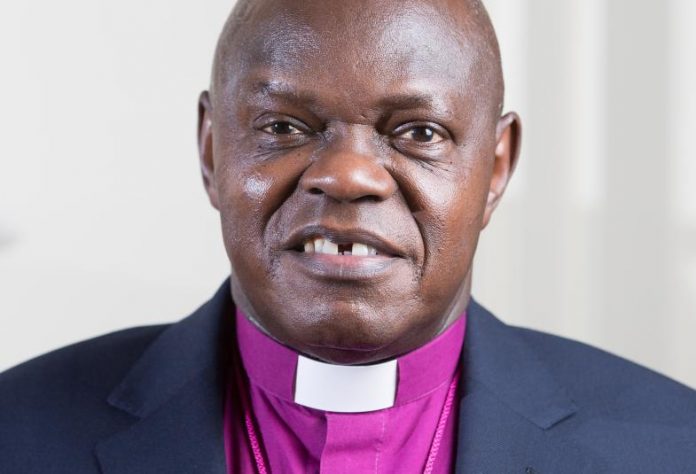
Bishop Sentamu

Ugandan- born leading Anglican cleric in the UK has said that oil exploration in Nigeria is causing an “environmental genocide”.

The Archbishop of York, John Sentamu, who is leading a commission investigating the impact of multinational oil companies in Nigeria’s southern Bayelsa state, said the poor condition of facilities would not be tolerated anywhere else, and the companies were ultimately responsible for any spills from their installations.

Dr Sentamu also accused the Nigerian government of abdicating its responsibility to protect Bayelsa’s diverse ecosystem.

He added:

Quote Message: People talk about environmental degradation. I think that’s too weak a phrase. For me, really, as I’ve looked at the environment and as I’ve looked at people’s lives, I’ve come to the conclusion that this is a very slow environmental genocide really, in the end.”

People talk about environmental degradation. I think that’s too weak a phrase. For me, really, as I’ve looked at the environment and as I’ve looked at people’s lives, I’ve come to the conclusion that this is a very slow environmental genocide really, in the end.”

He said the situation was not just a local issue:

Quote Message: I may have come from Uganda, I may now be living in the United Kingdom, but we live in a global village. These are my neighbours. I’m absolutely concerned about their wellbeing. And when you see the poverty, a country that produces so much oil and you look [at] the conditions which they’re living, it’s just shocking.”

I may have come from Uganda, I may now be living in the United Kingdom, but we live in a global village. These are my neighbours. I’m absolutely concerned about their wellbeing. And when you see the poverty, a country that produces so much oil and you look [at] the conditions which they’re living, it’s just shocking.”

Stories Continues after ad

Makerere Guild President Kateregga reportedly kidnapped by unknown people

Julius Kateregga

Makerere University Students’ Guild President, Julius Kateregga is reported to have been kidnapped by unknown people, according to his deputy Judith Nalukwago. The kidnap/arrest came after he appeared on NBSTv Morning Breeze programme on Wednesday.

Katerega has been for a week leading students to demonstrate against 15 percent tuition increment.

While appearing on NBStv, Katerega among others wondered why 15 percent tuition increment was approved when the economic growth is growing at a lower rate. “We all know the country’s growth rate is measured at 5 percent. Why then would you give us a 15 percent increment?” He asked.

Meanwhile students have burnt property belonging to former Guild President Salim Papa Were, accusing him of being among those that spearheaded the passing of the 15% tuition increment approved by the council in July 2018.

Yesterday First Lady Janet Kataaha Museveni who doubles as Minister of Education and Sports while responding to the students’ strike said that the tuition increment in 2018 was also approved by the students’ leaders in 2018.

“It is important to understand that Makerere University Management took the trouble to ensure that students were fully involved and consulted in the process of establishing an acceptable tuition fee structure for the Institution, through a series of consultations with the student leadership, and the outcomes were agreed upon by both parties, as well as bench-marking with other similar universities. How then do students turn around, afterwards, and accuse the University management of imposing “high costs” on the students?” She asked yesterday.

Despite President Yoweri Museveni ordering the military out of the university, cases of violence are being reported, with the police firing teargas at students who have refused to go for lectures.

Meanwhile the University Council has halted the proposed fees increment but also revoked suspension and warning letters given to students in relation to the current demonstration.

Stories Continues after ad

McKinstry names Cranes squad for 2021 Afcon qualifiers

McKinstry (R) in the press conference

Uganda Cranes Head Coach Jonathan McKinstry has named the provisional squad to face Burkina Faso (away) and Malawi at home against on the 13th and 17th of November 2019 respectively in the 2021 Afcon qualifiers.

McKinstry addressed the media during the weekly press conference at FUFA House on Wednesday, 30th October 2019.

He was joined by the Acting Fufa President Justus Mugisha and the first vice president Darius Mugoye.

McKinstry also released the training program before the team will depart for Burkina Faso using a chartered flight aboard Uganda Airlines.

The summoned squad has three goalkeepers, nine defenders, six midfielders and seven strikers.

Five of the summoned players are locally based; Charles Lukwago, Nicholas Kasozi and Allan Okello (KCCA FC), Halid Lwaliwa and Bayo Fahad (Vipers).

Mugisha confirmed the entire backroom staff for McKinstry that has Abdallah Mubiru and Livingstone Mbabazi as the first and second assistants respectively.

Fred Kajoba has been maintained as the goalkeeping coach, Ayub Balyejusa is the equipment manager while Geoffrey Massa is the team coordinator.

The early bird tickets for the home game on 17th November 2019 will go to the market on 2nd November 2019.

The full training programme will be released by Fufa in due course.

Summoned squad:

Goalkeepers: Denis Onyango (Mamelodi Sundowns, South Africa), Robert Odongkara (Horoya AC, Guinea), Charles Lukwago (KCCA, Uganda)

Defenders: Ronald Mukiibi (Ostersunds FK, Sweden), Nico Wakiro Wadada (Azam, Tanzania), Bevis Mugabi (Motherwell, Scotland), Murushid Jjuuko (Wydad Casablanca, Morocco), Timothy Denis Awany (Sport Club Ironi Ashdod, Israel), Hassan Wasswa Mawanda (Jeddah, Saudi Arabia), Halid Lwaliwa (Vipers, Uganda), Isaac Muleme (Viktoria Zizkov, Czech Republic), Joseph Ochaya (TP Mazembe, Democratic Republic of Congo)

Midfielders: Michael Azira (Chicago Fire, USA), Khalid Aucho (Misr Lel Makasa, Egypt), Tadeo Lwanga (Tanta, Egypt), Nicholas Kasozi (KCCA, Uganda), Allan Okello (KCCA, Uganda), Allan Kyambadde (El Gouna, Egypt)

Forwards: Emmanuel Arnold Okwi (Ittihad Alexandria, Egypt), Patrick Henry Kaddu (RS Berkane, Morocco), Alexis Bbakka (Carlstad United BK, Sweden), Fahad Bayo (Vipers, Uganda), Farouk Miya (Konyaspor, Turkey), Abdu Lumala (Pyramids, Egypt), William Kizito Luwagga (Shakhter Karaganda, Kazahstan)

Stories Continues after ad

Ugandans reach finals of WorldRemit and Arsenal Coaching Programme

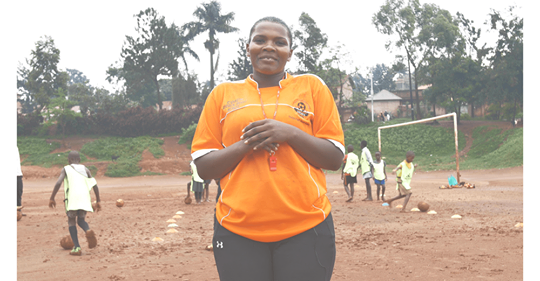
Joan Nabisenke

A panel of judges from Arsenal and its official online money transfer partner, WorldRemit have selected eight coaches as finalists for their Future Stars coaching programme.

The eight finalists will now compete in a public vote on www.FutureStars.WorldRemit.com for the chance to attend a personalised training programme with Arsenal Football Development coaches in London – sponsored by WorldRemit.

Two Ugandans, Joan Nabisenke from Kampala and Isaac Agogo Bakit from Gulu qualified to attend the high-level training programme in London sponsored by World Remit.

Bakit began volunteering as a football coach in 2005 and is a firm believer in the power of football to create harmony among young people and help them overcome conflict.

He coaches at Watato Sports Academy in Gulu and has worked with children whose families were affected by the insurgency in Northern Uganda.

If he were to win Future Stars, he would use the opportunity to establish a children’s football league in Gulu and neighbouring South Sudan.

Another Ugandan finalist in the female category is Joan Nabisenke who coaches girls aged six to fifteen living in the rural areas outside Kampala.

Many of the girls she trains are orphans, and she is committed to helping them with their education and supporting them with food and housing through funds donated to the academy.

If she were to win Future Stars, she would use the opportunity to highlight the benefits of getting more women and girls involved in football.

The Future Stars programme was developed by WorldRemit and Arsenal to celebrate the positive impact that grassroots youth football coaches have on their communities, helping the children they train to develop life skills both on and off the pitch.

Now in its second edition, the Future Stars programme received over 1,400 online applications this year from across Africa and the Americas.

From these entries, a panel of judges selected 20 semi-finalists to receive Arsenal shirts for their youth team as recognition of their hard work within their communities.

The judging panel then narrowed these 20 semi-finalists down to eight finalist coaches – four male and four female.

Male Future Stars finalists

Bakit Isaac Agogo from Gulu, Uganda

Feisal Abdi Hassan from Nairobi, Kenya

Luis Alejandro Castañeda Vargas from Bogotá, Colombia

Samuel Taylor from Accra, Ghana

Female Future Stars finalists

Beldine Lilian Achieng Odemba from Nairobi, Kenya

Chinasa Ukandu from Lagos State, Nigeria

Joan Nabisenke from Kampala, Uganda

Vivian Johana Pirateque Garzón from Bogotá, Colombia

Two winners – one male and one female – will be chosen by a public vote to fly to London for a personalised training programme with Arsenal Football Development coaches.

Voting is now open on www.FutureStars.WorldRemit.com until 23:59 GMT on 11th November.

Andrew Stewart, Managing Director Middle East & Africa at WorldRemit said: “Our business is all about making it easier for our customers to send money home to support their communities.

“Together with Arsenal, we set up the Future Stars programme to recognise football coaches within these communities who are dedicated to supporting and lifting up others.

“Our eight finalists’ stories are a testament to the transformative impact that football can have on young people. We are delighted to celebrate their success and wish them all the best in the public vote!”

Simon McManus, Head Coach at Arsenal Football Development, said: “Through our community initiatives in London and abroad, we work hard to promote greater diversity in football and positively impact the lives of young people through sport.

“When developing this year’s Future Stars programme with WorldRemit, it was important for us to highlight the benefits of encouraging more women into the sport, both as players and as coaches. The eight finalists we have chosen all stood out to us due to their passion and commitment to using football to bring young people from all walks of life together.”

Stories Continues after ad

2019 FUFA Women’s Super League Kicks off Saturday

UCU Lady Cardinals

The fixtures for the first round of the newly created FUFA Women Super League have been released.  The eight team league to be played over three rounds kicks off on 2nd November 2019.

Reigning League champions UCU Lady Cardinals will open their campaign with a match against She Corporate in Mukono while Kampala Queens play host to Olila High School at IUIU Kabojja Campus.

No playoffs will be considered this season. The team that accumulated the highest points after the three rounds (21 games per club) will be declared Champion.

The bottom two teams get relegated to the FUFA Women Elite League.

Fixtures

Match Day 1

Saturday 2nd Nov 2019

Kampala Queens Vs Olila High School IUIU Kabojja 4:00PM

UCU Lady Cardinals Vs She Corporates UCU Mukono 4:00PM

Sunday 3 rd Nov 2019

Muteesa 1 Royal Vs Lady Doves FC IUIU Kabojja 4:00PM

Kawempe Muslim Vs Uganda Martyrs H/S Kawempe Muslim 4:00PM


Match Day 2

Saturday 9th Nov 2019

Muteesa 1 Royal Vs Kawempe Muslim IUIU Kabojja 4:00PM

Uganda Martyrs H/S Vs Kampala Queens FC UMHS-Lubaga 4:00PM

Lady Doves FC Vs She Corporate FC Katusabe Dove Grd 4:00PM


Match Day 3

Saturday 16th Nov 2019

Olila High School vs Muteesa 1 Royal Olila Ground 4:00PM

Kampala Queens FC Vs UCU Lady Cardinals IUIU Kabojja 4:00PM

Sunday 17th Nov 2019

Kawempe Muslim Vs Lady Doves FC Kawempe Muslim 4:00PM

She Corporate FC Vs Uganda Martyrs H/S Namboole 4:00PM


Match Day 4

Saturday 23rd Nov 2019

Olila High School Vs She Corporate FC Olila Ground 4:00PM

Uganda Martyrs H/S Vs Lady Doves FC UMHS-Lubaga 4:00PM

Sunday 24th Nov 2019

Kampala Queens FC Vs Kawempe Muslim IUIU Kabojja 4:00PM

UCU Lady Cardinals Vs Muteesa 1 Royal UCU Mukono 4:00PM


Match Day 5

Saturday 1st Dec 2019

Lady Doves FC Vs Olila High School Katusabe Dove Grd 4:00PM

She Corporate FC Vs Kampala Queens FC Namboole 4:00PM

Sunday 2nd Dec 2019

Muteesa 1 Royal Vs Uganda Martyrs H/S IUIU Kabojja 4:00PM

Kawempe Muslim Vs UCU Lady Cardinals Kawempe Muslim 4:00PM


Match Day 6

Saturday 7th Dec 2019

Olila High School vs Kawempe Muslim Olila Ground 4:00PM

Uganda Martyrs H/S vs UCU Lady Cardinals FC UMHS-Lubaga 4:00PM

Sunday 8TH Dec 2019

Muteesa 1 Royal vs She Corporate FC IUIU Kabojja 4:00PM

Sunday 8TH Dec 2019 Lady Doves FC vs Kampala Queens FC Katusabe Dove Grd 4:00PM


Match Day 7

Sunday 14th Dec 2019

Uganda Martyrs H/S vs Olila High School FC UMHS-Lubaga 4:00PM

She Corporate FC vs Kawempe Muslim FC Namboole 4:00PM

Sunday 14th Dec 2019

UCU Lady Cardinals vs Lady Doves FC UCU Mukono 4:00PM

Kampala Queens FC vs Muteesa 1 Royal WFC IUIU Kabojja 4:00PM

Saturday 21st Dec 2019

UCU Lady Cardinals vs Olila High School UCU Mukono 4:00PM

Stories Continues after ad

Makerere concedes, reviews tuition policy and appoints committee to investigate police torture of students

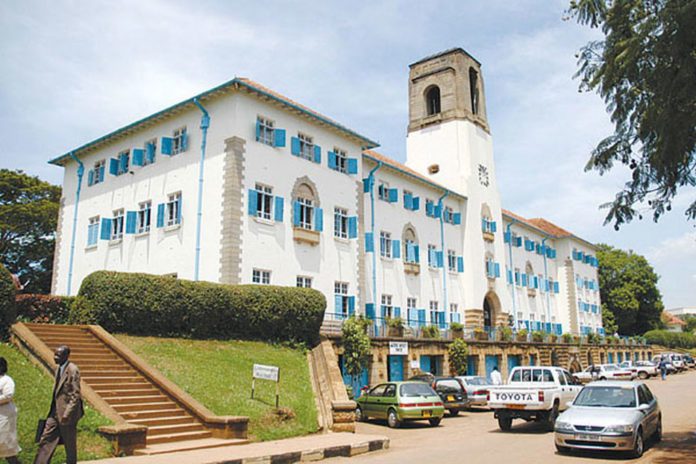
Makerere University Administration Building.

Makerere University Council, the administrative arm of the university, has bitterly agreed to make changes in the implementation of the 15 percent cumulative tuition policy in a bid to resolve a students’ demonstration that lasted for a week, forcing some lecturers to abandon teaching.

In an emergency meeting held with student leaders on Tuesday, the university council resolved to scrap the 15 percent increment from functional fees for the next three years.

“The 15 percent adjustment in fees shall not apply to functional fees for the remaining period of implementation of fees structure adopted in July 2018. Functional fees shall be capped at the rate applied on the admission cohort for 2019/2020 academic year for the next three years,” reads part of the statement signed by the council chairperson Ms Lorna Magara and the council secretary Mr Yufuf Kiranda.

However, the university council maintained that the 15 percent fees adjustment shall continue to be applied on tuition fees for the remaining period of three years.

Justifying the fees adjustments, the university council noted that it was conscious of the financial requirements to run the university alongside the economic circumstances in the country.

Further, the council said Makerere had not increased fees for 13 years before the current fees structure was passed.

Yesterday President Yoweri Museveni ordered the university administrators hold meetings with students’ leaders to solve the standoff. He also ordered the removal of the military from the university.

Meanwhile the council also ordered for investigations into the alleged involvement of two top university officials; Gordon Murangira, the Personal Assistant to the Vice-Chancellor and Prof. Eria Hisali, the Principal of College of Business and Management Sciences, in sanctioning military raids and brutalization of students at the institution and some are nursing injuries.

“That the allegations of threatening and battering students are taken seriously and need to be investigated. The chairperson of the council needs to communicate the matters of alleged threatening and battering of students to the vice-chancellor,” the council’s statement reads further.

A four-member select committee of council was formed to investigate the two officials and allegations of threatening and battering students.

Stories Continues after ad

Volkswagen and Siemens launch joint electric mobility pilot project in Rwanda

VW's electric car launched in Rwanda

In a first for the African continent, the Volkswagen Brand has launched a pilot project in partnership with Siemens to test the feasibility of electric mobility in an African country.

The pilot project, which will form part of Volkswagen’s operations in Rwanda, was officially announced today by Thomas Schäfer, CEO of Volkswagen Group South Africa and responsible for the Sub-Sahara Africa Region, in the presence of the Prime Minister of the Republic of Rwanda, Right Honourable Dr. Edouard Ngirente.

During the pilot phase, four e-Golfs and one charging station will be introduced in the capital of Rwanda, Kigali. Volkswagen has signed a joint development agreement with Siemens to provide the charging infrastructure for the electric cars.

With the launch of the pilot project, Rwanda becomes the first African country to introduce a Volkswagen electric car.

Thomas Schäfer said: “The success of our innovative and pioneering mobility solutions business has shown us that Rwanda has the potential to leapfrog the internal combustion engines into electric cars. Rwanda has a young and progressive population that appreciates individual and modern mobility. Together with our development partner Siemens and with the support from the Government of Rwanda, Volkswagen wants to make the e-Golf pilot project in Rwanda a blueprint for electric mobility in Africa.”

Sabine Dall’Omo, CEO for Siemens Southern and Eastern Africa said: “Our partnership with Volkswagen on this project solidifies our commitment not only to Rwanda but to the East Africa region.  By contributing towards shaping the African market for intelligent, adaptive infrastructure, while addressing skills challenges in this sector, Siemens is helping to build a more sustainable future for the people of Rwanda.”

The pilot e-Golfs will be added into the Volkswagen Mobility Solutions Rwanda fleet to provide customized mobility service.

The plan is to increase the number of the electric cars to 50 units and 15 charging stations, depending on the outcomes of the pilot project.

The drivers and technicians who will be working with the electric cars have received specialized training in preparation for launch of the pilot project.

“Africa’s youth need sustainable jobs and better prospects for a future in their home countries. Therefore, German development cooperation supports innovative ideas for vocational education and environmentally friendly mobility concepts for African cities. In this respect, initiatives such as Moving Rwanda are yet another step towards implementing the Marshall Plan with Africa,” said Dr. Gerd Müller, German Federal Minister for Economic Cooperation and Development.

The electric mobility project was developed within the Moving Rwanda initiative, a cooperation between Volkswagen, Siemens, SAP and Inros Lackner and the Deutsche Gesellschaft für Internationale Zusammenarbeit (GIZ) GmbH. GIZ supported the e-mobility project by bringing together relevant partners from the private and public sector and by advising on the development benefits of the project.

The Moving Rwanda Initiative was established as the result of Volkswagen’s initial investment in Rwanda, which saw the launch of Africa’s first Integrated Mobility Solutions business in June 2018.

Volkswagen Mobility Solutions Rwanda offers mobility solutions services such as ride-hailing and corporate car sharing. The services are offered on the Move App, an innovative IT mobility solution which was developed by a local IT start-up company, Awesomity Lab.

The services are offered using a fleet of vehicles assembled at Volkswagen Rwanda’s assembly facility in Kigali. By the end of 2019, Volkswagen Mobility Solutions Rwanda will have a fleet of more than 200 vehicles consisting of Polo, Amarok, Teramont and Passat.

Move App has about 27 000 registered users. Over 59 500 rides have been completed in the ride-hailing service since the beginning of 2019.

Thomas Schäfer commented: “The integrated mobility solutions business in Rwanda is our lighthouse project. In the past year, our operations in Kigali have provided us with valuable lessons and business intelligence which we plan to utilise in our growth strategy into other African markets like Ghana and Ethiopia.”

Sub-Sahara Africa expansion strategy gaining momentum

Africa is the last frontier for the automotive industry. Volkswagen’s long term goal is to play a leading and pioneering role in the development of the automotive industry in the continent. As such, Volkswagen has significantly expanded its engagement in Africa with the establishment of assembly facilities and marketing activities in Kenya, Rwanda and Nigeria. Ghana and Ethiopia are planned as the next locations.

Stories Continues after ad

Commonwealth gold medalist Stella Chesang receives Mitsubishi pick-up from Museveni

Stella Chesang (L)

President Museveni has awarded athlete Stella Chesang with a brand new vehicle to appreciate her for delivering gold medal for Uganda during the April 2018 Commonwealth games in Australia.

The vehicle, a Mitsubishi double cabin pickup truck L200, was handed to Chesang by the State House Assistant Private Secretary for Sports, Ms. Norah Nassimbwa at State House Nakasero.

Speaking at the handover over ceremony, Ms. Nassimbwa once again congratulated the gold medalist and tipped her to use the car as motivation for better results.

“This car is a result of your hard work on track and field. It is a token for represented Uganda so well. Keep working hard for better results and I hope this car does not cause you to relax but motivate you to push for greater things in life,” Ms. Nassimbwa said.

Chesang on her part she was grateful to President Museveni for ‘the blessing”.

“I am lost for words but so happy and grateful to President Museveni for this wonderful gift. I thank him for supporting Ugandan sports and I promise never to let him down,” Chesang said.

The 21-year old raced to gold in the 10,000m finals at the Gold Coast event in Australia in April 2018 to become the second-ever Ugandan champion in women’s events after Dorcus Inzikuru’s steeplechase gold medal in Melbourne in 2006.

Chesang’s gold medal was the second and final at the event, following Joshua Cheptegei who had won gold for Uganda in the men’s 5000m final.

However, while President Museveni gave a double cabin pick-up truck to Cheptegei upon his request, he saw it fit to award Uganda’s other winner (Chesang) with the same.

Stories Continues after ad