Stanbic Bank
Stanbic Bank
17.8 C
Kampala
Stanbic Bank
Stanbic Bank
Home Blog Page 1128

EAC to host global summit on manufacturing and industrialisation

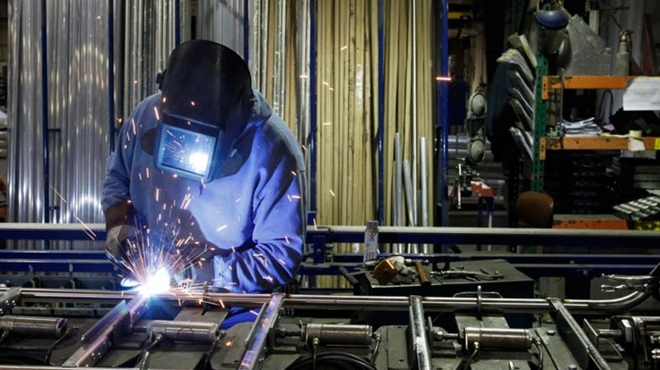
Work in factory

The East African Community (EAC) Secretariat is set to host the Global Manufacturing and Industrialization Summit (GMIS) Connect Roadshow from November 14-15, 2019 in Arusha, Tanzania.

Organisers say the objective of the GMIS is to explore in detail the implications of the Fourth Industrial Revolution (4IR) on the region’s manufacturing, industrialization and investment prospects.

The two–day roadshow will focus on showcasing the importance of the 4IR for industry development in Eastern Africa and provide examples on how its adoption can be further accelerated.

The roadshow will also identify opportunities to promote investments into the 4IR and craft policies to foster it’s absorption as well as explore opportunities for the development of, and linking to, national and regional projects that could foster industrial transformation.

The roadshow will introduce policy-makers and private sector representatives to an analysis, based on statistical indicators, on progress that countries and sectors have made in the adoption of advanced technologies and use the information for evidence-based policy-making.

Further, the roadshow will promote GMIS 2020 Hannover among important stakeholders in industrial development in East Africa, showcasing the types of partnerships and linkages to key players in the industry.

The GMIS roadshow, organised in partnership with the United Nations Industrial Development Organization (UNIDO), brings together representatives of East African industrial and manufacturing companies including SMEs and start-ups; business associations; representatives of African Governments (industry and related); academia; think tanks; training and education institutions; UN organizations and civil society organizations, including representatives of youth and women.

The GMIS roadshow is expected to create a greater awareness about the opportunities and challenges arising from the Fourth Industrial Revolution for the regional industrial sector and the associated decision makers as well as other stakeholders.

A joint initiative by the United Nations Industrial Development Organization (UNIDO) and the Government of the United Arab Emirates, the Global Manufacturing and Industrialization Summit (GMIS) is a multi-stakeholder platform that brings together partners in advanced manufacturing to harness the Fourth Industrial Revolution (4IR) for inclusive and sustainable industrial development

The GMIS Connect Roadshow in Arusha is part of GMIS Connect programme that prepares for the large GMIS 2020 Conference to be held Hannover, Messe in Germany.

Stories Continues after ad

Dominic Ongwen’s judgement day in offing as ICC trial nears end

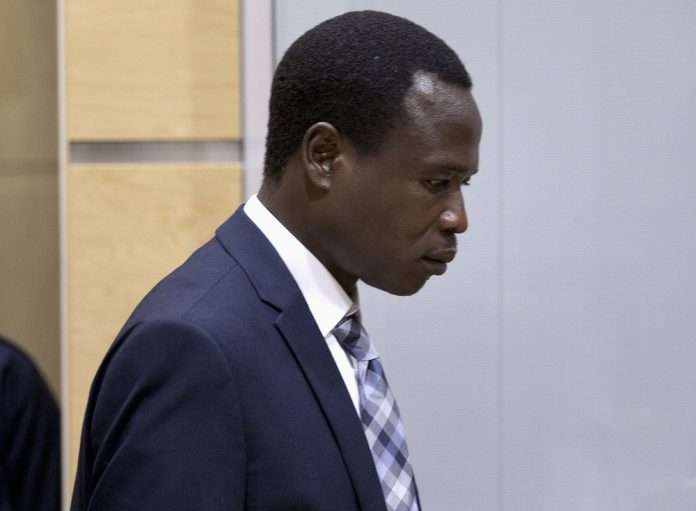
Dominic Ongwen

The International Criminal Court (ICC) will deliver its judgment in the case against former Lord’s Resistance Army (LRA) commander, Dominic Ongwen in 2020 or early 20121, according to the court’s Kampala Field Outreach office.

Ongwen is accused of commanding LRA rebels who attacked four camps for displaced people in Pajule in Pader District, Abok, Lukodi, Odek in Gulu and Oyam districts killing, raping and looting among other crimes committed by the insurgents.

While addressing journalists on Friday at Hotel Africana, Beti Hohler, an Associate Trial Lawyer said the defence team would conclude their case with five witnesses by November.

“The prosecution is expected to present one more witness, a psychiatrist as a rebuttal and by December, the prosecution will have concluded, said Hohler.

The officials said the psychiatrist will help disprove evidence by defence lawyers that Ongwen committed the crimes against humanity because he was mentally ill.

By February, 26, 2020 parties are expected to have filed final written submissions and on March 10, both sides will present their closing statements. The panel of judges will then sit and deliver judgment between 6 and 10 months from then.

Ongwen was charged with 70 counts of war crimes and crimes against humanity that occurred during the LRA insurgency commanded by rebel leader Joseph Kony.

The accused is expected to rely on 69 witnesses and of these, 51 have already testified in Ongwen’s defence.

Dahirou Sant-Anna, the International Cooperation Adviser in the Office of the Prosecutor, said Ongwen relied on witnesses including local leaders in Northern Uganda, former LRA fighters, former Kony wives, former UPDF soldiers, witch doctors and former LDU members to defend him in the court.

He said Ongwen in his defence, told judges that he committed the crimes under duress and therefore cannot be held liable for the crimes.

His lawyers say Ogwen must be acquitted because he himself was a brutalised former child soldier in LRA. His attorneys told the court in The Hague that Ongwen cannot be held responsible as he was kidnapped by the LRA at the age of nine and “spent nearly 27 years in the grip of the LRA” as a “slave”. “Dominic Ongwen was a victim rather than a perpetrator. Once a victim, always a victim,” his lawyer Krispus Ayena Odongo told the court last year.

But Hohle said: “We have adduced enough evidence to the court that we think can lead to a conviction. For the claims that he was under duress have not been satisfied because Ongwen was not under any threat as he alleges.”

Hohle said the evidence presented that included radio communication interceptions indicate that Ongwen was operating far away from LRA commander, Joseph Kony and had chances to escape but he never did it.

“He was the most senior commander in the LRA and very remote from Kony. He, therefore, had opportunities to escape but he didn’t.”

The Ugandan government in 2005 referred five top LRA leaders headed by Joseph Kony. Others included Vincent Otti, Raska Lukwiya, Dominic Ongwen and Odhiambo Okot to the ICC for war crimes and crimes against humanity in northern Uganda.

Stories Continues after ad

New report urges gov’t to develop clear vision and long-term financing strategy for social protection

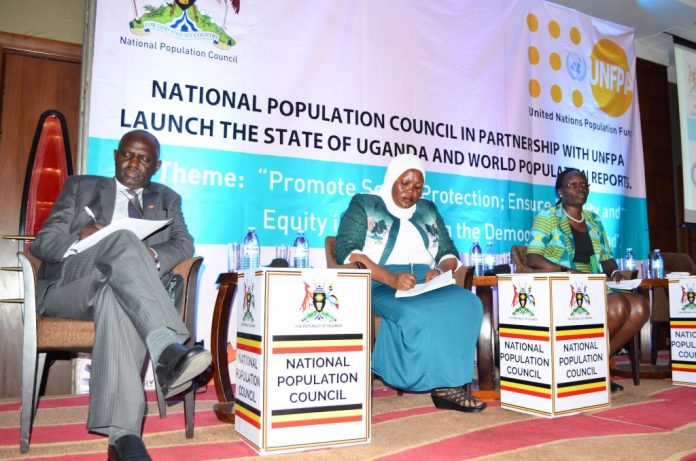
Stephen Kasaija, Head of the Programme Management Unit at the Expanding Social Protection Programme, Ms Zamina Malole, a member of the Equal Opportunities Commission and Ms. Juliet Akello of Uganda Debt Network at the launch of the State of Uganda Population Report in Kampala last Wednesday

The National Population Council which tracks population issues wants government to develop a clear vision and long-term financing strategy for social protection in Uganda. This is part of the recommendations outlined in the latest State of Uganda Population report 2019.

The report titled, “Promote Social Protection: Ensure Equity and Equality in harnessing the Demographic Dividend”, elaborately explores the role of social protection in achieving Uganda’s development agenda through turning the current demographic structure of a largely young population into an opportunity.

“In order to enhance political will and funding for increasing investment in social protection, Government should clearly lay out the costs and strategy for financing the proposals in the social protection vision (section 4.6.5) as part of the next 10-Year Perspective Plan and Third National Development Plan (NDP III) and the social development sector plan,” reads part of the report.

Social protection financing remains one of the core challenges for increasing coverage in Uganda. Despite a clearly laid out vision in the National Social Protection Policy (2015), the limited funding has seen its implementation restricted to a few components especially those that have attracted development partner support. At an estimated 4.5% of the population covered by some form of social protection, the levels of vulnerability are still very high. Currently, the Government of Uganda invests around 0.78% of GDP in social protection.

The report further recommends building a comprehensive social security system that covers everyone both in the formal and informal sector workers.

“Most countries that have achieved widespread social security coverage have done so through a multitiered approach that offers: (1) a guaranteed, adequate level of support for the vast majority of the population who are on low incomes and most of whom work in the informal economy, (2) mandatory, higher-level contributory social security benefits for those on higher incomes, and, (3) voluntary insurance for those who can afford additional protection,” reads the report

Such a system, the report says, if well designed, enables a smooth transition for people with lower incomes to begin to access a fully functioning contributory system as their incomes rise as part of an inclusive growth agenda.

The report also calls for fast-tracking of the reforms to convert the Public Service Pension Scheme into a contributory scheme and amendments to the NSSF Act.

“The payment of lump-sum benefits by the NSSF is, in effect, a transfer of the financial market risk to the individual; particularly in the absence of a well-developed annuities market. Government should therefore consider the option of converting the NSSF into a defined benefit social insurance pension scheme as a strategy to minimise the risk to individual members and enhance the value and range of individual pension benefits,” says the report.

Still, on the NSSF reforms, the report says that it might be a cheaper option for the context of Uganda, to provide a broader and adequate range of benefits through a pooled arrangement; while providing incentives to attract more contributors to the scheme.

The State of Uganda Population Report 2019 shows the potential of social protection systems to promote inclusive development that leaves no one behind—to prevent poverty, reduce inequality and promote social inclusion. It highlights that some groups of the population are unduly deprived of social protection and examines the barriers that these groups face.

As UPFSP’s Advocacy advisor, Flavia Kabahenda Rwabuhoro, argues, the focus on social protection by the National Population Council is an important milestone that underscores the interest in placing people at the core of Uganda’s national development.

“We need to start appreciating, as the report illustrates, that social protection cannot be approached as projects but rather a system. Different stages in the human lifecycle have specific challenges and opportunities and interventions have to be able to run not just a part of, but, the entire lifecycle,” she says.

Stories Continues after ad

Tourists should stop taking gorillas selfies, scientists warn

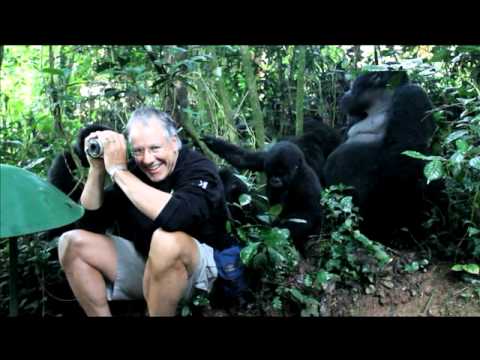
Tourist in close range with gorillas

Tourists should take only pictures and leave only footprints, scientists say. For the mountain gorilla, however, something else is being left behind; deadly diseases.

Ecotourists are ignoring the rules and straying too close to the endangered primates, transmitting human infections, a study of trip photos on Instagram reveals.

Searching the social media site, UK researchers found nearly 643 images showing people getting closer than 23 feet to the gorillas — and even touching them.

This proximity allows for the transfer of coughs, colds and respiratory infections which, if left untreated, have potential to kill gorillas.

Incidents of infections are on the rise in the gorilla populations, with a recent outbreak of human metapneumovirus in Rwanda infecting 11 apes, leaving two dead.

Mountain gorillas inhabit forests in Uganda, the Democratic Republic of the Congo (DRC) and Rwanda. They are endangered, numbering at around only 1,000.

Tourists excursions to see the primates are permitted in all three countries — with the caveat that people are supposed to stay 23 feet (7 metres) from the gorillas.

Additionally, visitors in the DRC are supposed to wear face masks on the trips, a rule that Uganda is also set to soon begin enforcing.

To see if the rules were being followed, primate conservationist Gaspard van Hamme and colleagues at of Oxford Brookes University reviewed Instagram photos of people on gorilla treks that had been posted after 2013.

In each possible case, the team estimated the distance between the tourists and the gorillas they had come to see.

The researchers found that of 643 such images, people had come within less than 23 feet of the gorillas — in violation of the regulations.

Furthermore, 20 images showed people going further, touching the wild animals, while only two-thirds of tourists pictured in the DRC wore the required face masks.

The team noted that close encounters often appear to be initiated by young gorillas.

‘Juvenile primates tend to be more inquisitive,’ explained Mr van Hamme.

He added that the study findings don’t necessarily show that the rules are always being broken, as people could be preferentially posting images where the animals are up close.

‘The goal was not to say that it happens in this proportion of the total – but that it does happen very often,’ Mr van Hamme told the New Scientist.

Similarly, tourists in the DRC could be wearing the mandated masks during most of their excursions, taking them off only for their photographs.

‘But that still presents a risk,’ Mr van Hamme cautioned.

‘Social media is making the problem worse, for sure,’ Gladys Kalema-Zikusoka at the Ugandan charity Conservation Through Public Health told the New Scientist, noting that visitors want to have the same up-close experiences they see online.

Tourism needs to continue, however, she added, noting that such helps fund conservation programmes while encouraging locals to protect the primates.

‘Otherwise, if a gorilla comes into their garden they would kill it.’

‘But the gorillas might be the reason their child has a job.’

Instead, veterinarian Fabian Leendertz of Berlin’s Robert Koch Institute argued to the New Scientist, responsibility must fall to tour operators to better enforce the rules.

‘There’s big variability among the guides,’ he said.

‘People are more likely to give a guide a tip if they get a good selfie.’

The researchers believe that, if the rationale for the rules were better explained, people who care about gorillas would be wiling to keep their distance and wear masks.

‘I don’t think the experience would be less enjoyable,’ said van Hamme.

‘But the pictures may get less likes on Instagram.’

Stories Continues after ad

UNBS seals off unhygienic bakery in Namugongo

bakery products

Uganda National Bureau of Standards (UNBS) sealed off Daddy’s Pride Bakery in Jjanda Namugongo, for baking and selling uncertified bread and Mandazi, and operating in poor hygienic conditions, contrary to the UNBS Act.

The packaging of bread found at the premises had different brand names; Litarian Bakers and Kampala Sweet Bread.

Daddy’s Pride bakery is owned by Jotena Company Limited, whose directors were summoned to UNBS offices for legal action.

UNBS officers, following a tip-off from Kakensa Media, a local media platform famous for its online social media posts, inspected another bakery in the same area, Queen’s bakery.

The bakery was found not in operation, but under very poor hygienic conditions. Some of the packaging found at the premises had brand names; Litarian bakery, Living bakery and Savana cakes.

UNBS officials recommended a suspension of the bakery activities and summoned the owners to UNBS offices for legal action.

UNBS was commended for the quick response in a social media post by Francis Odipiyo McFranck; ‘It’s really great to see a gvt agency act swiftly and very fast after someone whistleblows. Keep up UNBS. Such acts make the public trust you and do more reporting.’

Stories Continues after ad

Police kills one thug in a foiled Kasangati robbery

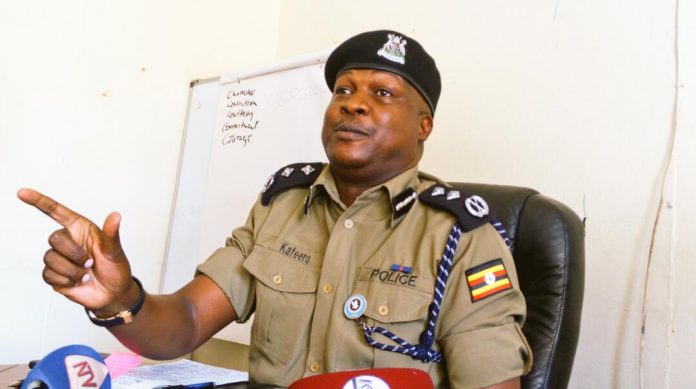
no nonsense CP Moses Kafeero is reported to have issued warns to his commanders in the KMP area to decisively deal with thugs.


Police under the Kampala Metropolitan have foiled a robbery in Lusanja-Kitezi village in Kasangati Town Council Wakiso District and managed to put one thug out of action.

Attempted Robbery vide kitezi CRB 256/2019. This morning at about 0300hrs, at Lusanja_Kitezi village, Kasangati town council in wakiso district, where three (3) thugs, armed with pangas and other house breaking tools, attacked the home of one Bosco Sserwada  aged 38.

However, as the thug met resistance from the guard know as Robbins Mumbere from Ultimate security group on duty who fought who fought them but was later over powered and tired on ropes.

“The thugs then embarked on cutting of the main door to the residential house. But before they could enter, the owner noticed and alerted the police of kitezi police station who responded immediately and found when the thugs were still struggling with the door. Police then shot at them killing one instantly. The other two thugs escaped with injuries. The body of the killed who has been taken to city mortuary pending post mortem,has not yet been identified” a resident of the area told Eagle Online.

The scene of crime has been visited by senior officers from Kasangati including the District Police Commander, Division CID.

Accordingly police has notified nearby hospitals and clinics about any person who may come to them with bullet wounds for treatment.

Kasangati has come under spotlight over incidents of attacks and robbery.

Stories Continues after ad

Makerere don declines to teach, accuses security operatives of raping, molesting and assaulting students

Prof Ben Twinomugisha

Makerere University School of Law lecturer, Prof. Ben Twinomugisha has vowed not teach all day in protest of military raid of Students halls of residence, saying that some female students were raped and molested by the police and military deployed there to bring down the on-going demonstration by students as they oppose the 15 percent fees increment.

I will not step at Makerere today. I must rebel individually in protest against the vulgar, indespicable, horrendous mistreatment of students.

“Imagine your son or daughter in a room. Military thugs forcefully open the door, pull him or her out amidst beatings. Your daughter being raped, molested or assaulted! Ladies and gentlemen, this militarization of all institutions, including the Ivory Tower, the citadel of higher learning, must be condemned by all people of good conscience,” he posted on social media

He said what happened in Lumumba Hall was reminiscent of Amin soldiers’ brutal treatment of students and lecturers. “Anyone pretending that the situation is normal is like the proverbial ostrich hiding his or her head under the sand.”

“Thus, I have decided, as a matter of conscience, to stay away from the ‘torture chambers’ of Makerere University today. My heart, body and soul are bleeding. I have no mental health to teach,” he said.

The security operatives have been blamed by the highhanded in try to cool down the demonstration that was initially peaceful as it started early this week. Several students are said to be in various clinics around Kampala lying unconscious.

One of the students hospitalised

Journalists who have been covering the demo have not been spared from the wrath of the police, with some being teargassed and their tools taken.

The Leader of Opposition in Parliament (Lop) Betty Aol Ocan yesterday castigated the university’s Vice Chancellor Prof. Barnabas Nawangwe for exhibiting dictatorial tendencies while running the institution.

“The iron hand with which the Management of Prof. Barnabas Nawangwe is handling the matter is worrying for an academic institution of the magnitude of Makerere University,” she said.

Meanwhile the government spokesperson said that any soldier or policeman that might have handled students brutally outside the guidelines of their commanders must be handled as individuals.

Stories Continues after ad

Pictorial: Kampala Parents’ School swears in new prefects

KPS new prefects pose for a group photo with Minister Kiyingi and Director Rajiv.

Kampala Parents’ School has this morning sworn in new prefects for academic year 2019/2020.

The ceremony was presided over by State Minister for Youth, Florence Nakiwala Kiyingi and school Managing Director Rajiv Ruparelia. Minister Kiyingi at the same occasion appointed singer Patrick Senyonjo aka Fresh Kid who is also a student at the KPS under the Ruparelia Foundation to Ambassador in charging of stopping street kids.

City tycoon Sudhir Ruparelia’s family gave the seven year old musician Fresh Kid scholarship at KPS after realising the hardship the young musician was going through since both parents had no meaningful ways of earning a living.


According to Rajiv,  the award of the scholarship to the young musician is in line with Ruparelia Foundation and boost the young man’s education path.

The function attracted parents and religious leaders that sworn in the new school leaders while cautioning them to be faithful and uphold the oath they undertook.

The school’s Principal Daphine Kato praised the outgoing team for good discipline exhibited during their term in office and encouraged the incoming team to emulate their predecessors.

Stories Continues after ad

Minister steps down after accusations of bribing voters with melons

Melons

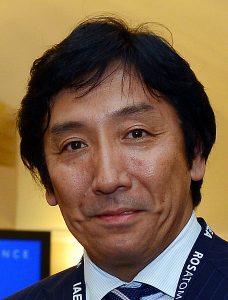
Japanese Economy and Trade Minister Isshu Sugawara has been forced to resign after being accused of bribing voters in his district with seafood and fruit.

“I feel deeply ashamed of myself to resign in the middle of the tenure amid many pending issues. I apologize,” the politician said on Friday after he announced that he would be stepping down.

Prime Minister Shinzo Abe accepted Sugawara’s resignation, saying “the responsibility lies with me for having appointed him.”

Japan’s strict election laws ban officials from offering gifts and donations to their constituents. Tabloids Shukan Bunshun and Maichini Shimbun reported that Sugawara’s office sent seafood and fruit to the voters at least 239 times in the 2000s. The gifts included melons, crab, mandarin oranges, cod roe and salmon roe.

Minister Isshu Sugawara

Shukan Bunshun also published a photo allegedly showing Sugawara’s secretary giving an envelope of 20,000 yen ($180) in condolence money to the family of his deceased supporter. The politician’s office also sent funeral flowers – typically white orchards – to the families in his district.

Sugawara did not admit to violating the election law and said that he resigned to prevent the scandal from damaging the government.

A similar scandal broke out in 2014, when Justice Minister Midori Matsushima was forced to resign after the media called her out for distributing paper fans with her name on them to voters at a festival. One of Sugawara’s predecessors as economy and trade minister, Yuko Obuchi, also resigned the same year following allegations of violating campaign finance laws.

Stories Continues after ad

Fly Emirates offers special packages ahead of festive season

Fly Emirates plane

Middle East domiciled airliner, Fly Emirates, has unveiled special and exciting packages to all its customers travelling to and from Dubai during and after the forthcoming festive season.

Special offers include; See more for less with My Emirates Pass, Dubai Shopping Festival 2020 and Fly Emirates-Fly Better started this month and will end on 31 march 2020.

According to Emirates’ Vice President, and Commercial Products, Mohammad Al Hashimi, Passengers flying to and through Dubai can access unbeatable offers through My Emirates Pass and the Dubai Shopping Festival 2020. “We look forward to continue working closely with our partners and to ensure we always provide our customers the best Dubai has to offer.” He said

He said See more for less with My Emirates Pass, is a seasonal pass that turns an Emirates boarding pass into an exclusive membership package allowing customers to redeem discounts and special benefits in over 500 locations across the UAE.

He revealed that travellers flying to and through Dubai between 1 January and 31 March 2020 can avail the offer and enjoy up to 30 per cent off on retail outlets and up to 50 per cent off on leisure activities by simply presenting their boarding pass and a valid form of identification.

“Fly Emirates and spend less on luxurious spa treatments, indulge in five-star culinary experiences and embark on an adventurous outdoor activity. Families can also take advantage and enjoy thrilling waterparks across the city.’ He said.

“Dubai Shopping Festival 2020, which Splurge on world-class shopping across the city’s many impressive malls including The Dubai Mall one of the world’s largest shopping complexes. Visitors travelling to Dubai from 26 December 2019 until 1 February 2020 will take advantage of the Dubai Shopping Festival 2020. The highly anticipated five week festival offers customers extraordinary discounts and rewards in various shopping outlets including unbeatable deals on fashion, jewellery, electronic items and much more.”

The other offer dubbed Fly better on Emirates to Dubai consists of over 4,500 channels of entertainment on ice the airline’s award-winning inflight entertainment system. Passengers across all classes will enjoy regionally inspired meals, complimentary beverages and up to 20 MB of free Wi-Fi

Economy Class passengers will enjoy up to 35 kgs, while Business Class passengers can enjoy up to 40 kgs and First Class passengers can enjoy up to 50 kgs.  Emirates customers who go on a shopping extravaganza during their visit to Dubai can also enjoy additional baggage allowance on their return journey. The offer is valid on return Economy Class tickets purchased to Dubai between 15 October 2019 and 1 February 2020.

Customers travelling back from Dubai to Emirates destinations within North America, Central America, South America or Africa will take advantage of one extra piece of baggage. Passengers travelling to other destinations within the Emirates network can also take advantage of an additional 10kgs of excess baggage and the offer is applicable for travel between December 26, 2019 and February 5, 2020.

Stories Continues after ad