Stanbic Bank
Stanbic Bank
22.9 C
Kampala
Stanbic Bank
Stanbic Bank
Home Blog Page 1128

NRM boycotts handover ceremony of IPOD leadership to FDC

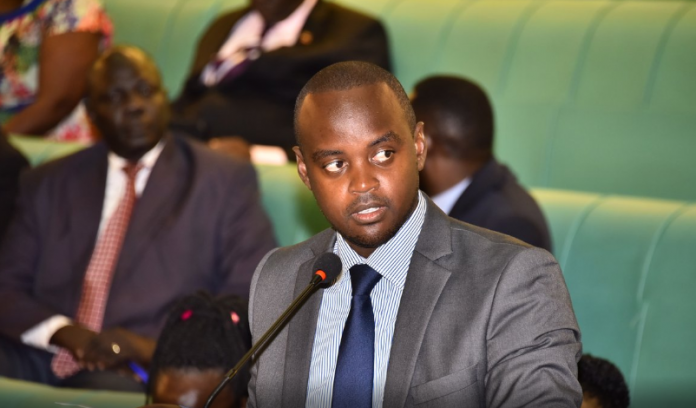
DP SG Siranda addressing members of IPOD

The ruling political party, National Resistance Movement (NRM), has boycotted the ongoing handover of the Inter Party Organisation for Dialogue (IPOD) leadership from the Democratic Party (DP) to the main opposition party, Forum for Democratic Change (FDC).

The handover is currently taking place at Fairway Hotel in Kampala where FDC is expected to receive reports summarizing major events and decisions taken during the leadership of DP.

Both DP party President, Norbert Mao and party secretary, Dr. Gerald Siranda who are currently in attendance, are expected to handover leadership. The DP took over IPOD on March 25, 2019.

According to the MOU, IPOD leadership rotates every after six months. The FDC therefore is currently both the chair of the IPOD Summit and IPOD Council. The Summit is composed of leaders of political parties and the Council is composed of the Secretary Generals and other four representatives. The Government and Opposition Whip are also members of the Council.

The FDC party will aim at pushing for the ratification of decisions that were made Munyonyo where IPOD Council deliberated on the management of public rallies. They were supposed to be ratified by the Summit.

President Yoweri Museveni declined to sign on the agreed regulations before not fully constituted Summit. The president said he had given different instructions to his security chiefs and he needed to convene a meeting of the National Security Council to discuss the IPOD regulations.

To date, Museveni has not convened the National Security Council to reverse his draconian orders as a result, our rallies and meetings are still being interfered with.

The FDC considers access to the population a major issue in the political processes of our country. Removing the military and Police from our politics if achieved, will be the single most important thing IPOD has ever done. Negotiating an end to the life presidency will be another milestone. This is what the IPOD must strive to achieve.

Currently, IPOD houses for four parties which include; Democratic Party (DP), Forum for Democratic Change (FDC), Uganda People’s Congress (UPC) and National Resistance Movement (NRM).

IPOD is facilitated by the Netherlands Institute for Multiparty Democracy (NIMD) and was formed to initiate dialogue and exchange of ideas among political parties in the country with a view of improving electoral democracy.

Stories Continues after ad

Lawyers petition Speaker Kadaga over COSASE inquest into Asians’ properties

Simon Peter M. Kinobe

Lawyers under the Uganda Law Society (ULS) have petitioned the Speaker of Parliament Rebecca Kadaga to reign on parliament’s committee on Commissions, State Authorities and State Enterprises (COSASE) after the committee invited some lawyers to give evidence on the alleged repossession and disposal of expropriated properties.

ULS President, Simon Peter M. Kinobe says that the request for advocates to appear before COSASE puts members in conflict with the laws and regulations governing professional conduct of Advocates, particularly Evidence Act and the Advocates (Professional Conduct) Regulations.

Kinobe adds: “The Supreme Court of Uganda in the case of Uganda Development Bank versus Kasirye Byaruhanga…confirmed that Advocates cannot or be forced to divulge or disclose client information in the course of acting as an Advocate.”

He says that some of his members have informed him that some of the properties under inquiry are ongoing court matters and therefore subject of the Subjudice Rule. Worse still he argues that COSASE has not given specific properties and names of clients for which the request is made.

Kinobe contends that given the circumstance above the request for lawyers to appear before COSASE is irregular and wants Kadaga to advise to committee.

COSASE has been investigating mess in Departed Asians Properties Custodian Board (DAPCB).

There are also claims that Indians claiming properties under DAPCB could have been compensated by Uganda since it the Indian government the money for compensation.

In June 1997, the then Minister of Justice/Attorney General Bart M. Katureebe wrote to the then Minister of State for Finance the late Basoga Nsadhu explaining that the government of Uganda under the international law sent money to the Indian government to compensate Indians who lost their properties after being expelled by president Idi Amin.

“The Indian government had a duty to pass on the compensation to its nationals since it not only negotiated on their behalf but received on their behalf,” Katureebe at the time explained to Nsadhu who had sought legal opinion on Indian properties under DAPCB.

Stories Continues after ad

“Women are an excellent investment”: Finance leaders call for increased support for in women in business

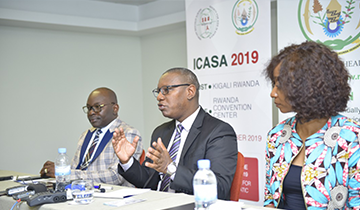
Officials at summit in Kigali

Leaders from multilateral development banks, financial institutions and the private sector called on peers to dispel myths about women being too “high risk” for financing – and to offer more financial services for women in business to close the gender finance gap.

“We know that women are a good bet. We know they pay back. We know they run excellent businesses – and yet they are not getting financed,” said Dr Jennifer Blanke, African Development Bank Vice President for Agriculture, Human and Social Development.

An important step is for multilateral development banks to offer credit guarantees to commercial banks to invest in women entrepreneurs, Blanke said.

“We know that if we provide those guarantees, then the banks are going to be lending to a lot more women, and they are going to discover that women are an excellent bet – and are an excellent investment.”

Blanke and other leaders were speaking at the “Using Innovative Financing Mechanisms to Accelerate Finance for Women in Business” plenary panel session at the Global Gender Summit on Tuesday.

The international gathering of gender champions from government, finance institutions, multilateral development banks, civil society and private industry, runs from 25 – 27 November in Kigali, Rwanda.

Panelists acknowledged that strides have been taken to bring gender equity to financing. However, according to World Economic Forum data, at current rates of progress it will take at least 200 years to close the global pay gap between men and women.

Asian Development Bank’s Gender Lead, Sakiko Tanaka, noted this 2019 Global Gender Summit has seen increased awareness of the need for women’s financial inclusion to achieve gender equality.

“There’s more money coming in for gender equality. However, there are still major gaps globally and as well as in each region,” said Tanaka, who also serves as chairperson of the multilateral development bank working group on gender.

Women face unique constraints such as poorer access to collateral and land, running smaller business compared to male entrepreneurs and blurred lines between women’s personal and professional finance spend.

Wendy Teleki, Head of the We-Fi (Women Entrepreneurs Finance Initiative) Secretariat and the panel moderator, led the six panelists in exploring how financial institutions and multilateral development banks are innovating to expand women’s access to finance. Aside from risk-sharing interventions like credit guarantees to lenders, panelists said increasing women’s financial literacy was also key to closing the gender gap.

“It’s not about corporate social responsibility or charity,” said panelist Barbara Rambousek, Director for Gender and Economic Inclusion at the European Bank for Reconstruction and Development. “It is about developing that business case and developing a proper set of financial and non-financial services.”

In Africa, 70% of women are excluded financially and there is a $42 billion financing gap between men and women. Yet panelist Solomon Lartey, Managing Director and CEO of Activa International Insurance Ghana sees opportunity, particularly in West Africa, home to what he says is the world’s highest rate of women entrepreneurs.

“To get women where they want to be, we had to walk with them. The first thing is training them [about financial services], then granting them access to legal assistance and to financial education – we have to do all those things,” Lartey said.

The panel also discussed innovations related to financial technology, alternative credit information, and online tools for financial services as a way to grow businesses.

In some developing regions of the world, women face challenges getting basic documents like a birth certificate, required by commercial bank applications.

Tesi Rusagara, the head of Kigali Innovation City, said the more services for documentation and financing tools are brought online, the more value will be created for women.

John Wilson, CEO of Equity Bank, added that it is important to not only use data and technology in financial services, but to also have a physical presence where clients are, to make a human connection.

Stories Continues after ad

Central Bank accountability, independence and transparency

Bank of Uganda

By Tobias Adrian and Ashraf Khan

In August 1694, the Bank of England opened for business with a staff of 19. The original Royal Charter, granted by King William and Queen Mary, tasked the Bank to “promote the public Good and Benefit of our People.” As a private company, its independence from the government was not then contemplated. Though it would eventually come—some 300 years later—when, in May 1997, the British government gave the Bank operational independence over monetary policy, to take effect a year later.

In the grand scheme, central bank independence is relatively new—the idea gained steam in the 1970s—but has proven a valuable, stabilizing force for countries seeking politics-free monetary policy decisions. But a decade after central bankers became pivotal actors in the global financial crisis, central banks around the world are striving to fulfill their mandates under difficult circumstances. From Europe to the Americas, from Africa to Asia, restive voters and their governments demand greater accountability and some now question central banks’ once-sacrosanct independence.

Legal basis

Numerous studies have validated the importance of central banks’ independence. Indeed, research based on the IMF’s database of central bank legislation shows that most nations’ central bank laws contain “anchors,” in one form or another, for central bank independence.

Generally, the laws tend to recognize that if politicians manipulate monetary policy to bolster their pre-election popularity, their prioritization of short-term political gains could invite long-term pain for the economy, in the form of higher inflation or even hyper-inflation. This political interference could undermine central banks’ goals—such as stable inflation over time and, in some countries, maximum employment—and potentially create long-term risks to economic and financial stability.

Former Federal Reserve Chair Janet Yellen cautioned that “sometimes central banks need to do things that are not immediately popular for the health of the economy. We’ve really seen terrible economic outcomes in countries where central banks have been subject to political pressure.”

The Struggle of Central Banks

Since the global financial crisis, many central banks pursued strategies that led to significant expansions of their balance sheets. In some cases, governments tasked them with new or additional financial stability functions on top of their mandate of price stability. In some quarters, concerns about the expanded activities of central banks led to skepticism about the necessity or the appropriate degree of central bank independence.

Indeed, the overall direction and composition of IMF work with country monetary authorities confirms the struggle. In one-fourth of IMF staff visits to provide technical assistance to central bank staff, the discussions include issues related to central bank independence, in one form or another.

And most of that attention has been focused on strengthening their independence in the context of ensuring effective monetary policy and modernizing their operations. This underscores the clear priority that central banks worldwide now place on protecting against threats to their independence.

Independence and Accountability: Two Sides of the Same Coin

The continuing discussions about central bank independence, in light of post-crisis realities, highlight the fact that central banks do not and should not operate in a vacuum. As public institutions, central banks should be held properly accountable to lawmakers and to society.

Transparency is a key element of this social accountability. Examples of appropriate transparency include the publication of minutes of meetings, responsiveness to lawmakers’ inquiries, the publication of detailed technical reports, meetings with Ministers of Finance, and convening press conferences.

The graphic below highlights the important connections among the key concepts that make up central bank governance. Bridging independence and accountability is the notion of transparency, a vital component allowing independent central banks to prove their effectiveness and public accountability. Or, in the words of South African Reserve Bank Governor, and Chair of the International Monetary and Financial Committee (the Fund’s policy steering committee) Lesetja Kganyago: “For society to appreciate our roles, we… have got to take society along with us, such that when central banks come under attack, it is not just going to be us defending our independence.”

Earlier this year, the IMF proposed a new Central Bank Transparency Code. The Code is expected to facilitate greater transparency of central banks on their governance arrangements, policies, operations, outcomes of operations, and interaction with key stakeholders. This should help central banks adapt to their changed environment, as well as provide a continued raison-d’être for their independence. The proposal makes clear that modern central banks are expected to explain and justify their actions and give account of the decisions made in the execution of their responsibilities.

Independence and accountability are also needed to ensure good governance and the prevention of institutional decay over the long term. Poor governance and corruption not only harm the economy through short-term disruption, but also take an insidious toll on institutions, weakening their effectiveness. Central banks are not immune.

Guarding independence

Independence surely remains a key principle in ensuring the sound operation of central banks—in particular, from the perspective of their price-stability objective. However, central banks will need to step up their game. Transparency about their multifaceted decisions and actions needs to be strengthened and clear communication with the public is paramount.

Only by simultaneously enhancing central banks’ governance, transparency, and accountability can their long-term independence be assured. This is the surest step to help rebuild public confidence in central banks as reliable defenders of non-inflationary, job-creating economic policies.

Stories Continues after ad

Contempt of court: Minister Baryomunsi to pay Shs80m to tycoon Garuga

Minister Baryomunsi

State Minister for Housing, Dr. Chris Baryomunsi and two others have no choice but to pay about Shs80.6 million to businessman James Musinguzi Garuga and his company Kinkizi Development Co. Limited after he successfully argued in court that the minister, a Tumwebaze Karabenda Godfrey and Kanungu FM  disrespected a court order restraining them, their servants and agents from publishing further libel against him and his company or make further slanderous statements or any other defamatory statements against him.

In 2016 Musinguzi sued Baryomunsi and his accomplices in in Civil Suit No. 619 of 2016 where Justice Stephen Musota awarded Musinguzi Shs50 million as exemplary damages as well as Shs32.6 million interest at court rate.

But Baryomonsi wanted to seek leave for the application to challenge the award which the Head of Civil Division, Justice Andrew Bashaija dismissed on November 26, 2019, agreeing with Musinguzi’s Pathway Lawyers, that Baryomunsi’s application for leave to appeal was improper, defective and devoid of merit.

Court has further awarded Musinguzi costs of Baryomunsi’s defeated application for leave to appeal. The businessman says he has instructed his lawyers to ensure that the minister and his accomplices pay him the money as decided by court.

Initially Musinguzi had wanted Dr. Baryomunsi and the other two respodents in the case to pay him exemplary damages to the tune of Shs800 million and that the minister further be fined 500, million as a sanction for contemptuous conduct.

Stories Continues after ad

Former NBS producer demands Shs30m for unlawful dismissal

Next Media Services boss Kin Karrisa

A former worker of Next Media Services, Moses Alsayed Lubega, wants his former employers to pay him Shs30 million as terminal benefits after alleged unlawful dismissal that happened only a few days ago.

Lubega lodged his complaint through his lawyers of Kaggwa & Kaggwa Advocates who have warned Next Media Services that the money should be paid within a period of seven days and it that it must come with 10 percent interest as legal fees.

Through his lawyers, Lubega contends that he was unlawfully dismissed contrary to Section 66 of the Employed Act. “The purported disciplinary hearing was contrary to the S.66 of the Employment Act,” Lubega’s lawyers say.

“The purpose of this letter is to request you to pay our client’s dues and also to give him a Certificate of service as required by the law and retract the publication issued on various platforms you control since he was not given a fair hearing.

Next media Services which owns several media outlets recently sacked Lubega after producing a news story that misinterpreted facts about the side effects of Measles-Rubella after the vaccine was administered to children to protect them from the disease. The story ran on NBSTv which is part of Next Media Services, majorly owned by businessman Kin Karrisa.

Stories Continues after ad

Leader of Opposition Betty Aol Ocan bitter as policeman kills village publicist on duty

LoP Betty Aol Ocan

The Leader of Opposition in Parliament and Gulu Woman MP Betty Aol Ocan has castigated the Uganda Police after one of the force’s officers on Tuesday morning shot dead a journalist and village publicist on duty at Sembule area in Lubaga Division.

“The state of tyranny is excessively worrying. I have learnt with deep sadness of the murder of David Kibuuka, a journalist while on duty covering a protest in Kabowa, Kampala by a senior Police Officer,” she posted on her Facebook page.

Only recently, the Uganda Journalist Association petitioned the Inspector General of Police against Police high-handedness and brutality towards journalists, in light of the Makerere University tuition increment protests and other activities around the country, she said.

The politician wants the responsible officer  held for murder. “We in the strongest terms demand that the culprits of this heinous murder be brought to book and condemn all attempts at gagging Media Freedoms in Uganda,” she said, adding that today is yet another sad day for media freedom in Uganda.

Kibuuka, also a village publicist is said to have been gunned down by the policeman as he was covering a demo in which protestors were attempting to force their way onto the premises of Shreeji Stationers 2009 whose owners they blamed for blocking roads and drainage systems which leads to flooding.

According to ASP Luke Owoyesigyire, Justice Bwire, the officer who commanded others has been arrested and is being held at Old Kampala Police Division as investigation into the killing of Kibuuka continue.

His body was rushed to Mulago Hospital for a postmortem, even though Owoyesigyire claims he had been rushed to the facility while alive and was only pronounced dead on arrival.

Owoyesigyire says the police fired live bullets into the crowd holding a demo, he says was illegal. It is not clear whether police is allowed to shoot live bullets in crowds/ demonstrators in effort to disperse them for illegal assembly.

Stories Continues after ad

Hacker attacks Nile Breweries’ website, demands for release of formulae for classified beers

hacker

Panic has engulfed Nile Breweries Limited, the leading beer production company in Uganda, after a fraudster hacked into its website, demanding for the formulae that the company uses to make its beer.

According to the video, seen by this website, the hacker demands that the company should release the beer formulae within 24 hours.

“This a message to Nile breweries, I have gone through your saver, I have discovered that you have been sitting on a beer formulae, so here is my demand produce this beer immediately or the formulae goes public, you have 24 hours,” the hacker said.

Nile Breweries has however responded to the video and said they are taking this matter seriously and moving quickly to establish the details.

“Would like to confirm that we have seen the video circulating on social media at our head office Luzira and we are taking this matter seriously” reads in part of the statement released by legal and corporate affairs director of the company, Anapito Ekomoloit.

He said the company has mobilized a response team and will provide further updates as soon as the information we receive can be verified.

All information on company’s website https://nilebreweries.com/ has been deleted and it is currently displaying a video of a hacker ‘https: //nilebreweries.com/Hacked/index.html’.

Stories Continues after ad

Proposed PEPFAR budget cuts have been helpful, says US global AIDS coordinator

U.S. Global AIDS Coordinator Deborah Birx

U.S. Global AIDS Coordinator Deborah Birx said yesterday that President Donald Trump’s repeated proposals to cut funding for the President’s Emergency Plan for AIDS Relief (PEPFAR) have been helpful in pushing partner governments to be more effective.

“That has actually helped me in communication with governments to talk about how the expectation of this administration is that our programs become more and more impactful with the dollars we have,” Birx said at a State Department briefing.

She noted that PEPFAR has been “fully funded” during the past three years. That outcome reflects the U.S. Congress’s repeated dismissal of White House budget requests that have proposed cutting the flagship global health initiative’s budget by $800 million — nearly 20%. Even with strong congressional support, PEPFAR’s funding has remained mostly flat since 2009, Birx said, noting that the 2019 congressional appropriation was roughly $6 billion, and roughly $1.4 billion of that went to the Global Fund to Fight AIDS, Tuberculosis and Malaria.

Birx said that despite the flat budget, the initiative is delivering stronger results.

“In 2009, I think we had 4 to 5 million people on treatment. We now have 15.7 [million]. That doesn’t happen without developing amazing efficiencies and effectiveness,” she said. “So that message allows me to talk to governments about how we improve our programming to be more cost-effective.”

HIV advocates have condemned the Trump administration’s proposals to slash funding at a critical moment in the fight against the epidemic, when it could either be brought under control or allowed to persist and spread among populations that have proven more difficult to reach with prevention and treatment.

In 2017, the ONE Campaign argued that if Trump’s budget proposal was put into effect, it “would force PEPFAR to implement a strategy that could result in nearly 300,000 deaths and more than 1.75 million new infections each year.”

Birx made her remarks ahead of World AIDS Day on Dec. 1, and as PEPFAR delivers its annual progress report to Congress. In addition to providing antiretroviral treatment for 15.7 million people, Birx announced that PEPFAR has now supported 23 million voluntary male circumcisions, which can lead to a 65% lower incidence of HIV, she said.

Birx also announced new results from PEPFAR’s DREAMS initiative — which stands for “Determined, Resilient, Empowered, AIDS-free, Mentored, and Safe,” and aims to provide an integrated, community-based approach to preventing HIV in adolescent girls and young women.

For the first time since the initiative started three years ago, all 86 districts in 10 countries where DREAMS operates registered a “uniform decline” in HIV diagnosis among adolescent girls and young women, and a majority of districts have shown a greater than 25% decline in just three years, Birx said.

“From the very beginning, PEPFAR was a bipartisan program, and now through three presidents and nine congresses, we’ve had continuous and unrelenting support,” she said.

Stories Continues after ad

Uganda Premier League coaches to share technical sessions during Cranes training

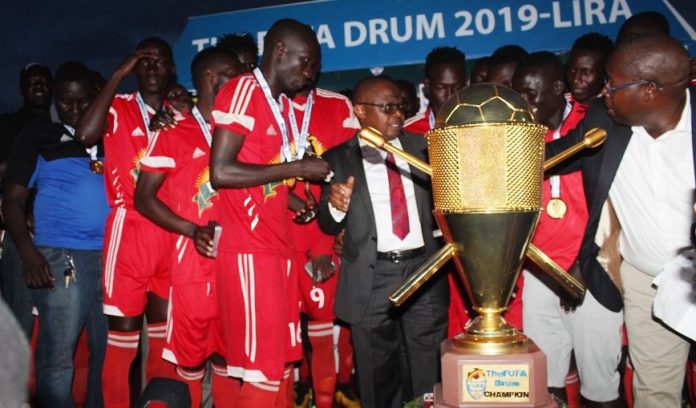
KCCA FC

FUFA, through the Uganda Cranes Head Coach Johnathan McKinstry has made an arrangement for the StarTimes Uganda Premier League coaches to attend the National Team’s training sessions ahead of the 2019 CECAFA Senior Challenge Cup as a step forward in sharing coaching skills with UEFA Pro Licensed McKinstry.

The basic aim is for the local coaches to acquire collective tactical knowledge regarding football tactics at the pitch mainly during training.

“One of the things that I spoke with members of the Association when I joined FUFA was creating a successful Uganda Cranes Team and also help to develop a legacy  for high-quality football coaching and development” said McKinstry.

“We have been looking for opportunities to engage with the local coaches in Uganda both in the Uganda Premier League and the FUFA Big League to help them take the next step in their careers” added McKinstry

“The CECAFA training sessions will be open to all UPL Coaches.  We shall provide them with our training plans that will show details of how to  structure the training sessions” noted the Cranes tactician.

Coaches that will attend Cranes training sessions will have the chance to discuss with the National team technical staff on how training sessions are planned. The group sessions that will involve Questions and answers, will be held at the end of the training session.

This opportunity lands at a time when most of the UPL Clubs have covered all their first-round games exclusive of KCCAFC and Proline FC who had Continental Clubs Competition engagements.

The training will start on Wednesday 27th November 2019 10am at the StarTimes Stadium Lugogo.

Stories Continues after ad