Stanbic Bank
Stanbic Bank
17.7 C
Kampala
Stanbic Bank
Stanbic Bank
Home Blog Page 1130

Uganda on blink of becoming failed state – Besigye

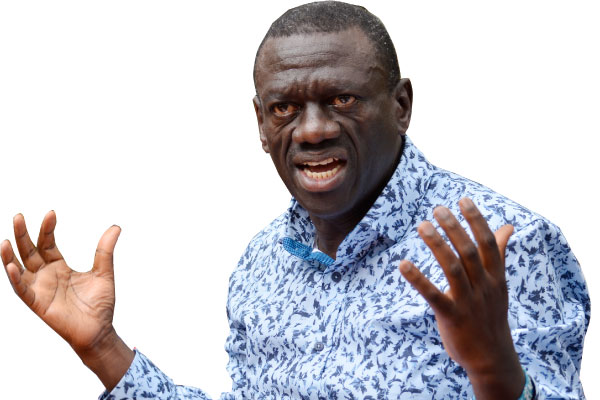
Dr. Kiiza Besigye, the former FDC president

The former presidential candidate, Rtd. Col. Dr. Kizza Besigye, has said Uganda is currently on the brink of becoming a failed state, having one of the worst human rights records in the world.

According to 2019 human rights watch report, security forces of police, Uganda people’s Defence forces (UPDF) have been key in the gross violation of human rights. Giving specific examples of the battering of Associated Press journalist James Akena, brutal arrests of MPs during the expunging of presidential age limit, lack of accountability for torture, the reports indicate that Uganda has a long way to go in the observation of human rights.

Speaking on Thursday at Forum for Democratic Change (FDC) offices along Katonga road in Kampala, Besigye said Rule of law, Constitutionalism, Social Justice and respect for human dignity, have ceased to be treasured values by the current government.

“The Junta that usurped the people’s sovereign authority has jettisoned and abrogated the Constitution with reckless abandon consequent whereof pushing the country onto the cliff.”

“The state structure is without doubt in shambles, with a rubber stamp parliament, a defanged Judiciary, dysfunctional executive and a personalized state security apparatus. This dire state of affairs has inevitably occasioned a governance crisis characterised by despotism, impunity, intransigence, authoritarianism, oppression, repression, greed, exploitation and exclusion,” he said

Besigye alleged that the current NRM regime has institutionalised a reign of terror, committing crimes against humanity, subjecting the citizens to inhuman and degrading treatment, gross abuse of rights and freedoms, massacres, murders, kidnaps, illegal arrests and detentions, torture.

In the same vain, the nation is grappling with an escalating spate of mysterious killings, with no accountability or serious measures to address the same, the hefty budgetary allocations to security notwithstanding.

He said that the state security organs’ primary focus is regime protection and as a result, the majority of Ugandans have been abandoned in the wilderness. According to the Police Crime Reports, on average, 21 people are reported killed every day.

Records show that the over 6,000 armed LDUs who were deployed in Kampala, Wakiso and Mukono are posing a very serious security threat, for they arrest, torture, rob and sometimes, have been accused of murdering people. Crimes attributed to these militias and Paramilitary outfits, are on the rise across the country.

Stories Continues after ad

UNBS impounds trucks with uncertified products

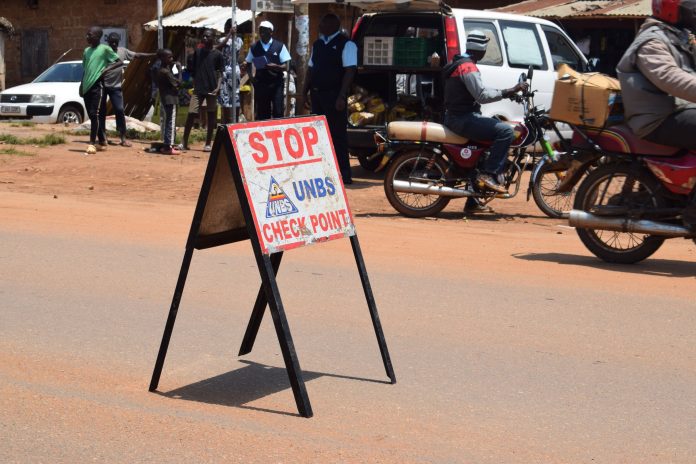
UNBS sign post used to apprehend culprits

Uganda National Bureau of Standards (UNBS) has impounded several trucks distributing uncertified products on the local market.

The truckers were supplying the said goods contrary to the UNBS Use of Distinctive Mark Regulation, 2018. The regulation requires that all products covered by compulsory standards must be certified by UNBS and issued with its Distinctive Mark before they are allowed on the market.

The trucks impounded belong to the following companies; Dembe Trading Co. Ltd truck registration number UAE 213B, Imperial Paints truck registration number UBF 186C, Life care products Ltd truck registration number UBE 750T, GP Lubricants truck registration number UBE 946R and Sipro Energy Tea truck registration number UAE 502C

UNBS also impounded trucks transporting products whose certification permits had expired and these are; Rose Foam truck registration number UAZ 740U, Jonisa Investment Truck registration number UAZ 791X and Maganjo grain millers truck registration number UAX 243S.

A Personal truck registration number UAF 608C was also found carrying imported Diapers that had no Certificate of Conformity.

The owners of the impounded vehicles will be required to take necessary measures to comply with the relevant regulations before their vehicles can be released.

UNBS calls upon manufacturers to ensure that products comply with the requirements of the standards set by UNBS.

The Uganda National Bureau of Standards (UNBS) is a statutory body responsible for enforcing standards in protection of public health and safety and the environment against dangerous and sub-standard products.

Stories Continues after ad

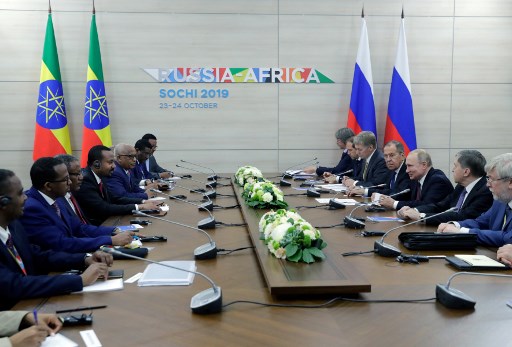
Egypt, Ethiopia leaders discuss Nile dam in Russia in bid to cool tensions

Russian President Vladimir Putin (3R) meets with Ethiopia's Prime Minister Abiy Ahmed (4L) on the sidelines of the 2019 Russia-Africa Summit in Sochi on October 23, 2019. (Photo by Mikhail METZEL / SPUTNIK / AFP)

The leaders of Ethiopia and Egypt on Thursday met on the sidelines of Russia’s Africa summit to discuss a disputed Nile dam that has seen tensions between the two countries rise in the past months.

According to a source, Egyptian President Abdel Fattah al-Sisi delivered a message to Ethiopia’s Prime Minister Abiy Ahmed about the soon-to-be-finished dam on the Blue Nile.

The meeting lasted around 45 minutes and took place “in a positive atmosphere,” the source added, without providing details.

Egypt fears that the building of the dam, a US$4 billion dam will reduce the flow of the Nile, on which it depends for 90 percent of its water supply.

Discussions between the two countries and with Sudan, through which the river also passes, have been blocked for nine years.

Russia, which is hosting a two-day Africa Summit in its Black Sea resort of Sochi in an attempt to revive its Soviet-era influence on the continent, has said it is ready to play a role in resolving the conflict.

Stories Continues after ad

African scientists gather for 15th Grand Challenges Annual Meeting in Addis Ababa

Addis Ababa

The 15th Grand Challenges Annual Meeting will take place on October 27– 30, 2019 in Addis Ababa, Ethiopia, jointly hosted by the African Union, Ethiopia’s Ministry of Health, the African Academy of Sciences, Grand Challenges Canada, the United States Agency for International Development, Wellcome and the Bill & Melinda Gates Foundation.

As the world rallies to reach the Sustainable Development Goals (SDGs) by 2030, this year’s Grand Challenges will bring together African and global partners to celebrate innovations from the last decade and galvanize Africa’s scientific and political communities for the next.

The three-day event will be joined by government officials and leaders in science including Amir Aman, Minister of Health for Ethiopia and Jennifer Blanke, African Development Bank-Agriculture, Human and Social Development. Researchers, innovators and global partners will share their work, learn about cutting-edge advances, build collaborations and discuss areas of mutual interest in plenary sessions, spotlight conversations, scientific tracks, keynote remarks, roundtables, as well as formal and informal side meetings.

The sessions will place an emphasis on the importance of scientific collaborations in improving lives and creating sustainable economic growth and provide an opportunity to put science and innovation at the top of domestic agendas and secure the political and financial commitments needed to give everyone a chance at a healthy, productive life.

The Grand Challenges family of initiatives seeks to engage innovators from around the world to solve science, technology and innovation, health and developmental challenges. Grand Challenges initiatives are united by their focus on fostering innovation, directing research to where it will have the most impact, and serving those most in need.

Stories Continues after ad

A milestone for humanity: Two strains of polio are now eradicated

Child receiving polio drops

In an historic announcement on World Polio Day, an independent commission of experts concluded that wild poliovirus type 3 (WPV3) has been eradicated worldwide, says the World Health Organisation (WHO). Following the eradication of smallpox and wild poliovirus type 2, this news represents a historic achievement for humanity.

“The achievement of polio eradication will be a milestone for global health. Commitment from partners and countries, coupled with innovation, means of the three wild polio serotypes, only type one remains,” said Dr Tedros Adhanom Ghebreyesus, Director-General of WHO and Chair of the Global Polio Eradication Initiative (GPEI) Polio Oversight Board “We remain fully committed to ensuring that all necessary resources are made available to eradicate all poliovirus strains. We urge all our other stakeholders and partners to also stay the course until final success is achieved,” he added.

There are three individual and immunologically-distinct wild poliovirus strains: wild poliovirus type 1 (WPV1), wild poliovirus type 2 (WPV2) and wild poliovirus type 3 (WPV3). Symptomatically, all three strains are identical, in that they cause irreversible paralysis or even death. But there are genetic and virologic differences which make these three strains three separate viruses that must each be eradicated individually.

WPV3 is the second strain of the poliovirus to be wiped out, following the certification of the eradication of WPV2 in 2015. The last case of WPV3 was detected in northern Nigeria in 2012. Since then, the strength and reach of the eradication programme’s global surveillance system has been critical to verify that this strain is truly gone. Investments in skilled workers, innovative tools and a global network of laboratories have helped determine that no WPV3 exists anywhere in the world, apart from specimens locked in secure containment.

At a celebration event at the headquarters of the World Health Organization in Geneva, Switzerland, Professor David Salisbury, chair of the independent Global Commission for the Certification of Poliomyelitis Eradication, presented the official certificate of WPV3 eradication to Dr Adhanom Ghebreyesus. “Wild poliovirus type 3 is globally eradicated,” said Professor Salisbury.  “This this is a significant achievement that should reinvigorate the eradication process and provides motivation for the final step – the eradication of wild poliovirus type 1.

This virus remains in circulation in just two countries: Afghanistan and Pakistan. We cannot stop our efforts now: we must eradicate all remaining strains of all polioviruses.  We do have good news from Africa:  no wild poliovirus type 1 has been detected anywhere on the continent since 2016 in the face of ever improving surveillance. Although the region is affected by circulating vaccine-derived polio-viruses, which must urgently be stopped, it does appear as if the continent is free of all wild polio viruses, a tremendous achievement.”

The polio eradication efforts have saved the world more than US$27 billion in health costs since 1988. A sustained polio-free world will generate further US$14 billion in savings by 2050, compared to the cost countries would incur for controlling the virus indefinitely.

Stories Continues after ad

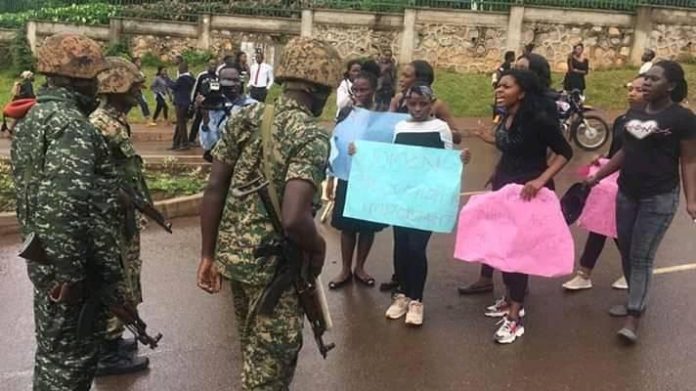
Mak Guild President: ‘Strikes will continue even tomorrow if Prof. Nawangwe fails to tell Museveni that we rejected tuition increment’

Soldiers confronting Makerere students who were holding a peaceful demonstration

The jailed Makerere University Students’ Guild President, Julius Kateregga, has commended students for staging a peacefully demonstration calling for halting of the cumulative 15 percent tuition increment.

It has also emerged that students are demanding for the immediate degazzeting of the Guild Electoral Reforms and improvement of the sanitation in the smelly halls of residence.

Kateregga and other students’ leaders are among the scores currently detained at Wandegeya Police Station as sporadic protests continue to take center stage at the university and various hostels outside the university such as JJ and Douglas villa in Makerere Kikoni.

Currently, police in engaging in running battles with students.

The protests that commenced on Tuesday, were spearheaded by Mollie Siperia, the Guild Representative Councilor for School of psychology and one Frank Bwambale who were later nabbed and suspended by the university vice chancellor Barnabas Nawangwe. Unconfirmed reports claim Siperia has been brutally assaulted by unknown people.

In statement released by the Guild President, he commended students for standing up even when they are faced with blackmail and intimidation of suspensions from Prof. Barnabas Nawangwe.

“If you dearly feel that the demand for affordable Education is a fundamental right for you or anyone that you know of: your friends, your neighbors, your family, both current and future generations then you have reason to rise up tomorrow,” he wrote.

“I’m informed that plain clothed security operatives continue to torment students in their rooms, and that some have been brutally tortured and admitted to medical facilities. From now on, stay calm, but be intelligent. Self-defence is no offence.”

He said Prof. Nawangwe clearly stated that it was President Yoweri Museveni who instructed him to exorbitantly hike tuition fees. Let him return to President Museveni and inform him that we reject the increment and demand its immediate halt. Why does it have to bother him and not the President when we demonstrate against the increment if he was only a messenger? Why doesn’t he leave way for the President to intervene in the matter?

“There shall be no negotiations with colleagues on suspension and some in detention,” he said.

Stories Continues after ad

Oil: CSOs ask French court to order Total to disclose environmental steps in Uganda

TOTAL

Six French and Ugandan campaign groups have asked a French court to order energy company Total to disclose how it is addressing the human and environmental impact of a Ugandan oil field, according to Friends of the Earth.

Despite the complaints by the group Total says it is working in Uganda in compliance with national and international standards.

Under French law, large French companies are required to publish annual plans that address any adverse impact of their activities, and those of subsidiaries and suppliers, on people and the environment.

In their legal application, the six campaign groups, which included Friends of the Earth, say Total had not met that obligation.

In a June 24 notification to Total, the campaign groups alleged Total intimidated and failed to properly compensate local land-owners affected by work on its Tilenga project in Uganda.

They also claimed Total had failed to develop adequate environmental safeguards to protect the surrounding national park through which the Nile River flows.

Crude reserves were discovered in Uganda more than 10 years ago but production has been repeatedly delayed by disagreements over taxes, while a lack of infrastructure such as a pipeline and a refining facility, has also limited work progress.

In a Sept 30 2019, statement, Total said there was no legal requirement for it to publish reports on each of its projects, adding it had put measures in place to mitigate impacts from its Tilenga project, and was working in consultation with local people who had to be re-located because of it.

Total plans to drill more than 400 oil wells with the objective of producing 200,000 barrels per day in the Lake Albert area, which marks part of the border between Uganda and Congo.

According to critics of Friends of the Earth, which was based on months of field research, Total’s oil project will have serious consequences for the environment, as well as for the almost six million people in the region who depend on agriculture and fishing for their livelihood.

The consequences could extend to the entire African Great Lakes region 

Friends of the Earth who conducted the survey in the Lake Albert area with her Ugandan partners (AFIEGO, CRED and NAPE), pointed out the general nature of the danger associated with the implementation of Total’s project. “Even the populations that will not be expropriated in the vicinity of the lake will be directly affected by the pollution generated by oil activity: pollution of the air, soil and water is inevitable in such projects,” said Juliette Renaud.

The investigation also points to the consequences of an oil spill in the Lake Albert area. For experts, such an event will be catastrophic for the entire African Great Lakes region. “Lake Albert is, of course, concerned, but also the Nile. Since we are on one of the source points of the Nile with a whole network of planned pipelines, which must pass under the Nile. Horizontal drilling opportunities are also planned under Lake Albert with high risks of water contamination,” explained Juliette Renaud.

As from the date of filing of the formal notice, Total S.A. had a maximum period of three months to comply with the requests of Friends of the Earth and its Ugandan partners.

The approach taken by these organisations is guaranteed by the new law on the “duty of vigilance of multinationals”, promulgated in March 2017 in France. This is the first time this law has been used to address the consequences of the activities of a subsidiary of a major French group abroad.

Stories Continues after ad

EU provides €40m to boost sustainable fisheries and aquaculture in Africa, the Caribbean and the Pacific

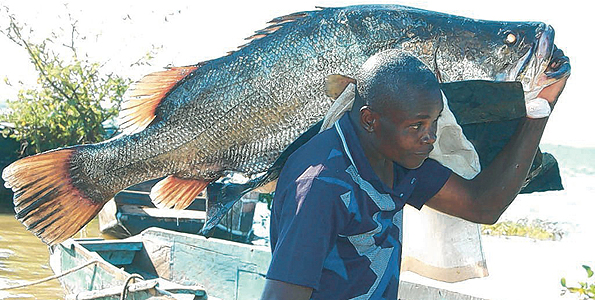
Man carrying Nile Perch fish

The EU, the African, Caribbean and Pacific Group of States (ACP) and the Food and Agriculture Organization of the United Nations (FAO) signed a €40 million, five-year programme (FISH4ACP) to boost the development of sustainable fisheries and aquaculture in Africa, the Caribbean and the Pacific.

FISH4ACP is an innovative EU-funded programme, devised with ACP and to be implemented by FAO. It will invest in value chains to stimulate inclusive growth, bolster food security and minimise impacts on the marine environment.

The signing took place in Oslo, at the Our Ocean 2019 conference. Representatives from governments, business, civil society and research institutions are attending this global event to promote action for a clean, healthy and productive ocean.

Welcoming the initiative, European Commissioner for Maritime Affairs and Fisheries, Karmenu Vella, said: “The focus on all three aspects of sustainability – the economic, the environmental and the social – sets this programme apart. It will enable us to strike a balance between production and protection, to contribute towards fair income distribution; to promote decent working conditions, sound fisheries management and social inclusiveness; and to champion sustainable aquaculture practices.”

FAO Director-General Qu Dongyu said: “We welcome this new, comprehensive value chain approach to the development of fisheries and aquaculture that takes into account all players, at all stages – from net to plate. This is an innovative approach that will boost economic returns and social equity, and reduce negative impacts on the marine environment.”

“Within the ACP countries, there is a sense of urgency to boost our fisheries and aquaculture sectors because they greatly contribute to economic growth, decent jobs and food and nutrition security. We are happy to have our partners on board and launch this much-needed initiative, which will unlock the potential of fisheries and aquaculture in ACP regions,” said ACP Secretary General Dr Patrick Gomes.

New markets and thriving fish stocks

FISH4ACP will work with 10 value chains in 10 different ACP countries, aiming to maximise their economic returns and social benefits, while minimising the detrimental effects on natural habitats and marine wildlife. It will pay special attention to small-scale fisheries because of their potential to deliver economic and social benefits, particularly for women.

In Africa, the programme will support both aquaculture and fisheries value chains. They include inland and marine fisheries, involving catfish, small pelagics, oyster, shrimp and tilapia value chains from Nigeria to Zimbabwe, and from Lake Tanganyika to São Tomé and Príncipe and the continent’s Atlantic shores.

In the Caribbean, FISH4ACP will concentrate on stocks of mahi-mahi and seabob shrimp in the Dominican Republic and Guyana respectively; in the Pacific, it will focus on tuna fisheries around the Marshall Islands, a sector with high potential on both European and American markets.

Key facts and figures

Capture fishery production in ACP countries nearly doubled from 4.6 million tonnes in 1990 to 8.5 million tonnes in 2016.

Aquaculture production in ACP countries jumped from 50000 tonnes in 1990 to 790000 in 2016, but still represents less than 1% of global production.

In 12 ACP Island States, fish exports accounted for more than half the value of all food merchandise exports in 2016.

The EU is a key market for ACP fish products. In 2016, exports to the EU accounted for 50%, 15% and 50% of exports from Africa, the Caribbean and the Pacific respectively.

Background

Fisheries and aquaculture in most of the 79 ACP countries have grown significantly over the last 20 years. However, to ensure sustainable development of aquatic resources for the benefit of communities that rely on them for their livelihoods and food security, many challenges, including market access, value addition, working conditions and the risk of over-exploitation, remain to be addressed.

Over the next five years, FISH4ACP will be yielding multiple environmental, economic and social benefits for the people and the fisheries resources in Africa, the Caribbean and the Pacific, contributing to the UN’s 2030 Agenda for Sustainable Development, and in particular Sustainable Development Goal 14 on conservation and sustainable use of the ocean, seas and marine resources.

FISH4ACP is set to kick off in early 2020 with value chain assessments aimed at pinpointing the main challenges in each of the value chains and helping them explore new markets, reduce waste and losses, improve fishers’ working conditions and manage fish stocks at sustainable levels.

Stories Continues after ad

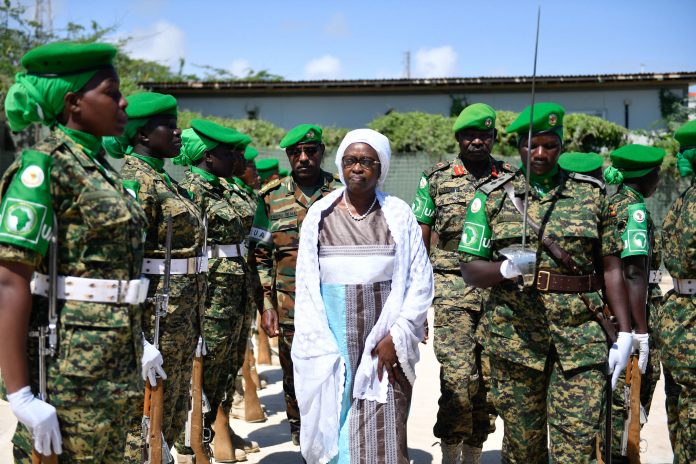
AU Special Envoy Bineta Diop advocates for more women participation in Somali peace process

AU Special Envoy Bineta Diop advocates for wants more Somali women to participate in peace processes

The African Union Special Envoy on Women, Peace, and Security, Ms.Bineta Diop, wants women in Somalia to increasingly play an active role in ongoing efforts to restore peace and security in the country.

Diop on Wednesday completed a one-day visit to Somalia, with the Deputy Secretary-General of the United Nations, Ms. Amina Mohammed. The visit to Somalia was part of a broader, joint UN-AU solidarity mission to the Horn of Africa countries including Ethiopia, Sudan, Djibouti, and Eritrea. 

The two high ranking women also met the Prime Minister of Somalia, Hassan Ali Khaire, at his office in Mogadishu and held discussions on the upcoming landmark one-person, one-vote elections slated for 2020/2021, the constitutional review process, and the participation of women in politics.

The AU envoy also visited the AMISOM Force Headquarters, where she laid a wreath in honour of AMISOM troops and the Somali security forces who died in the pursuit of peace for Somalia.

AMISOM officials briefed the AU envoy on the contributions and progress of female peacekeepers. Ms. Diop, along with the Deputy Secretary-General of the UN, Amina Mohammed, also met with Somali women and female youth civic leaders.

Since the establishment of AMISOM in 2007, the number of women deployed under the mission has, over the years increased with several women taking up frontline and active roles in driving combat vehicles like the tankers and Armoured Personnel Carriers, and positioned in the Forward Operating Bases (FOBs).

Ms. Diop, whose role is to promote the protection and advancement of the rights of women and children affected by conflict in Africa, commended the female AMISOM troops for their active participation and contribution to restoring of peace and security in Somalia.

“I salute the women of AMISOM who, along with the men, are defeating terrorists. Thank you for defending the lives of Africans,” Diop noted.

The Special Representative of the Chairperson of the African Union Commission (SRCC) for Somalia, Ambassador Francisco Madeira, hailed Ms. Diop for championing the cause of women on the continent.

“We are happy to have you among us because of your clear vision and commitment  to championing policies on issues relating to women, peace and security, the protection of children, and women’s rights,” Madeira said.

Stories Continues after ad

Business leaders share insights on how companies can drive social impact while driving profit

Jane Mwangi, Managing Director of KCB Foundation

Executives of businesses operating in Rwanda will gather in Kigali on 31 October 2019 for an in-depth discussion about how they can lead their companies to solve social problems while driving profits.

Research has shown that businesses focusing on economic growth and social purpose can outperform competitors. The meeting, titled “Shared Value in Africa: join the conversation”, will enable business leaders to share insights on effective ways to drive the adoption of Shared Value, a business model that enables business to create economic value and value for society.

The event is co-hosted by the Shared Value Africa Initiative (SVAI), the Pan-African business network that is the regional partner of the global Shared Value Initiative. The Rwanda Convention Bureau (RCB) and the Private Sector Federation (PSF) are also co-hosting the event.

“Shared Value thinking – the ability to see the business opportunity in driving the creation of a better world through the achievement of the UN Sustainable Development Goals – is key to Africa becoming the economic powerhouse of the twenty-first century,” says SVAI CEO Tiekie Barnard. “Creating Shared Value is a choice that leadership make to increase their competitiveness, grow their organisations and use their strategies to address social issues.”

Delegates will learn from the successes of Water Access Rwanda and KCB Group, whose leaders have driven succeful Shared Value strategies. To close the event, a panel discussion will feature Christelle Kwizera, CEO of Water Access Rwanda; Jane Mwangi, Managing Director of KCB Foundation; John Bee, Regional Head of Regulatory and Scientific Affairs at Nestlé; and Tiekie Barnard, CEO of SVAI. The discussion will be chaired by Makeda Mahadeo, CNBC Africa Anchor.

The aim is for all delegates at the event to learn to identify business opportunities solving social and environmental problems. Shared Value, the particularly powerful business management strategy identified by Michael Porter and Mark Kramer of Harvard University, is assisting companies worldwide to follow this route.

Using this approach, a company starts by identifying a key social or environmental issue to focus on that is in line with their business operations, finding a possible solution and collaborating with partner, planning the relevant business activities involved, and modelling anticipated business and social benefits relative to projected costs.

“Rwanda has taught many countries in the rest of the world that it is possible to achieve one of the highest rates of economic growth globally, while also making significant improvement in social conditions of its people,” says Barnard. “Rwanda’s rate of economic growth has averaged 8% since 2001, according to the World Bank. In social terms, poverty rates have fallen while healthcare has improved. It is important to discuss how businesses can contribute to building on this success.”

Stories Continues after ad