A Makerere university student drowned in the swimming pool this Sunday evening
James Uwmpuhwe from Rwanda died late this evening at the pool near the guild canteen when he had difficulties while in water.
“James had no experience in swimming, but he jumped into the water” a friend said.
The friend added that they shouted when they did not see James return on top.
Vice Chancellor Prof. Nawangwe on his Facebook page said, “i have received with much shock news the death of James, a second year student of Arts in Arts who has drowned in the swimming pool this evening. “
He added, “ I send condolences to the family and the entire community. May his soul rest in peace. “
He was pulled out of water and rushed to wandegeya at Abii clinic.
The police said that James died immediately after they had reached Mulago hospital’s emergency unit where he had been rushed for rescue.
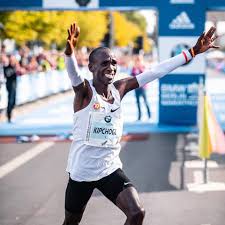
Eliud Kipchoge has become the first athlete to run a marathon in under two hours, beating the mark by 20 seconds.
The Kenyan, 34, covered the 26.2 miles (42.2km) in one hour 59 minutes 40 seconds in the Ineos 1:59 Challenge in Vienna, Austria on Saturday.
It will not be recognised as the official marathon world record because it was not in open competition and he used a team of rotating pacemakers.
“This shows no-one is limited,” said Kipchoge.
“Now I’ve done it, I am expecting more people to do it after me.”
The Olympic champion missed out by 25 seconds in a previous attempt at the Italian Grand Prix circuit at Monza in 2017.
Knowing he was about to make history on the home straight, the pacemakers dropped back to let Kipchoge sprint over the line alone, roared on by a large crowd in the Austrian capital.
The four-time London Marathon winner embraced his wife Grace, grabbed a Kenyan flag and was mobbed by his pacemakers, including many of the world’s best middle and long-distance runners.
Kipchoge, who compared the feat to being the first man on the moon in build-up to the event, said he had made history just as Britain’s Sir Roger Bannister did in running the first sub four-minute mile in 1954.
“I’m feeling good. After Roger Bannister made history, it took me another 65 years. I’ve tried but I’ve done it,” said the Kenyan.
“This shows the positivity of sport. I want to make it a clean and interesting sport. Together when we run, we can make it a beautiful world.”
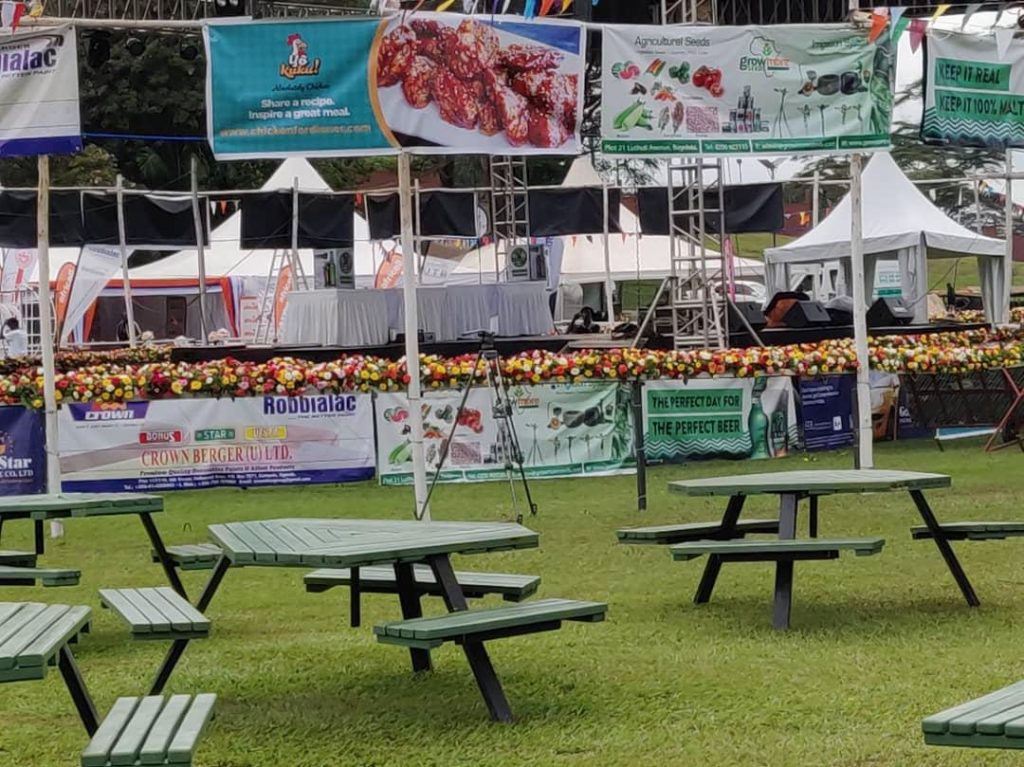
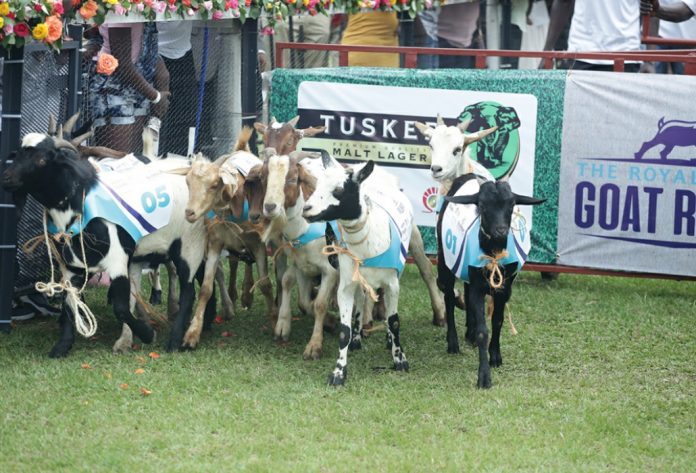
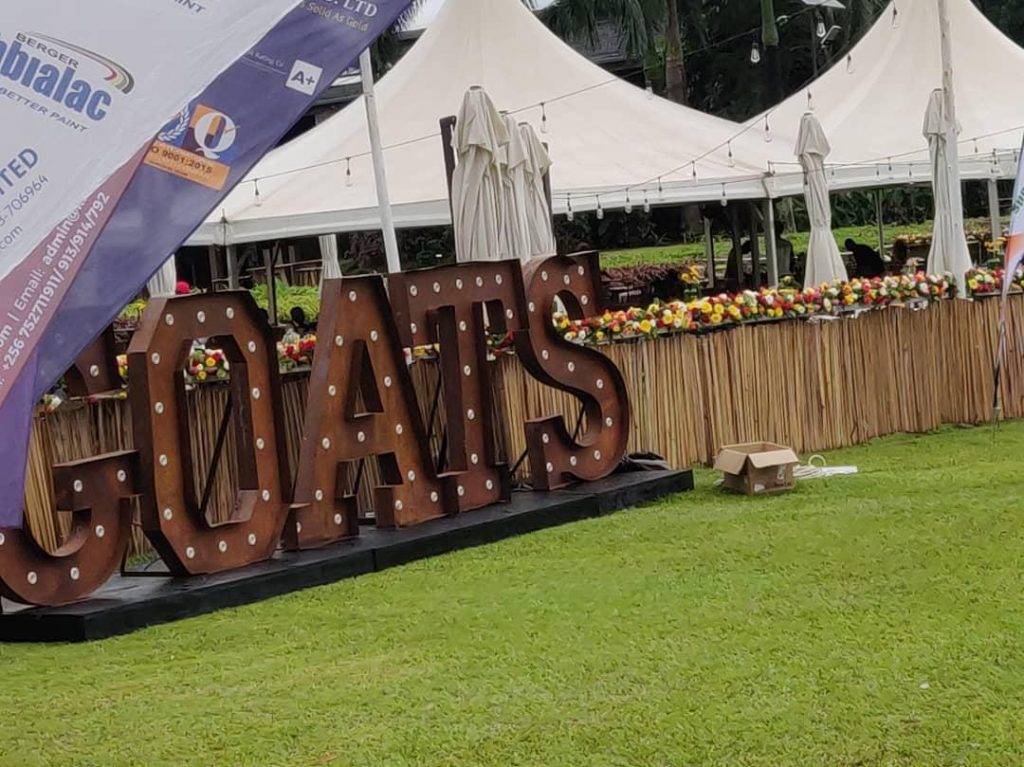
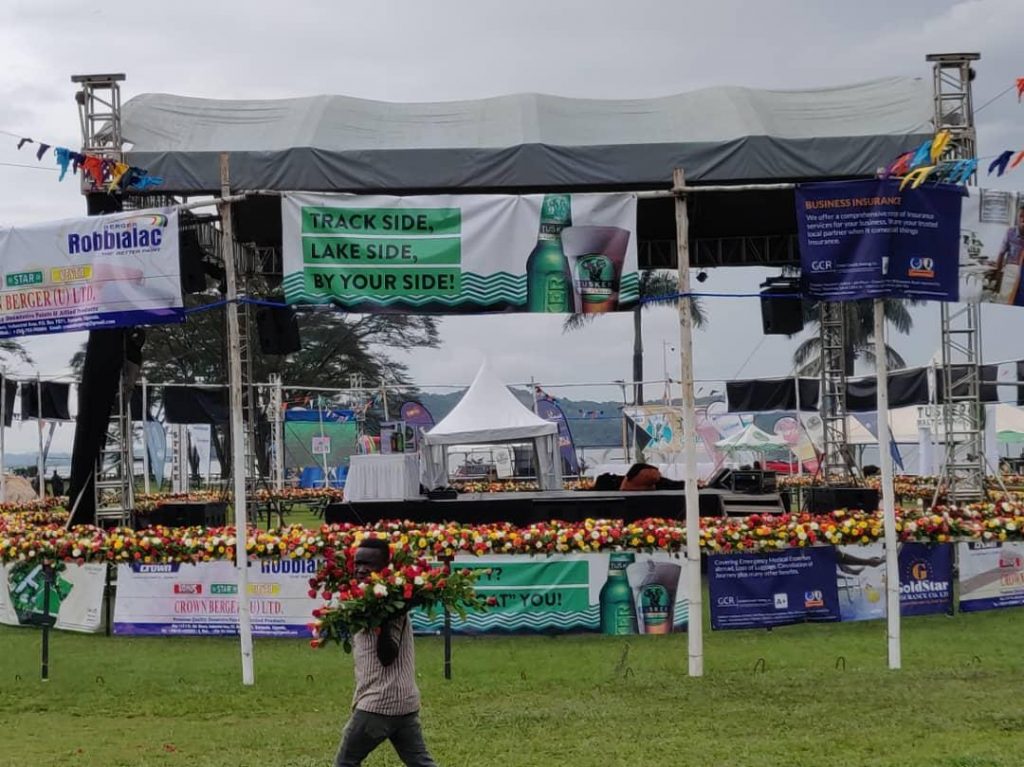
Despite the morning pour, nothing has stopped the goats race at Speke Resort Munyonyo.
An annual tradition, the goat races have grown to be more than just an entertainment event as proceeds go to charity; this year the money will go to building proper sanitary toilets for those living in impoverished communities within Kamwokya’s ghettos.
The main attraction will consist of eight course races that will feature various racers (goats) sponsored by different individuals and institutions.
Anyone can take part in the races and goats can be bought starting from Shs6 million upwards.
When a Mexican airline buys Brazilian airplanes, it’s likely to finance the purchase with a US dollar loan obtained from a non-US bank. That’s just one example of the dollar’s outsize role in international financial transactions between non-US counterparts.
What happens if non-US banks suddenly find themselves short of dollars? That was the case during the global financial crisis of 2007-2008, when US financial firms were reluctant to lend dollars to their foreign counterparts. To prevent the collapse of the global financial system, the Federal Reserve provided more than $500 billion in emergency funds to overseas central banks, which could then on-lend the money to their dollar-starved home-country banks.
As we explain in Chapter 5 of the latest Global Financial Stability Report, non-US banks continue to play a key role in dollar lending around the world. Indeed, their dollar assets rose to $12.4 trillion by mid-2018 from $9.7 trillion in 2012 and remain comparable to pre-crisis levels relative to their total assets.
Although the reforms introduced after the crisis have strengthened banking systems throughout the world, our analysis shows that non-US banks remain vulnerable to a dollar disruption that could transmit shocks to their home economies and to the countries that borrow from them. The first step to address the problem is to properly measure it; we have developed a set of indicators to help policymakers do that.
How do non-US banks get the dollars they need to finance assets such as loans to Mexican buyers of Brazilian airplanes? In contrast to US banks, they have limited access to a stable base of dollar deposits. So they must rely heavily on short-term and potentially more volatile sources of funding, such as commercial paper and loans from other banks. If those sources are insufficient, non-US banks turn to instruments known as foreign currency swaps, which are more expensive and can be unreliable in times of stress.
We used three measures to analyze non-US banks’ exposure to dollar funding and their vulnerability to a potential disruption. One measure shows that the gap between dollar denominated assets and liabilities has widened to about $1.4 trillion, or 13 percent of assets, from $1 trillion, or 10 percent of assets, in mid-2008. This so-called cross-currency funding gap reflects the amount of financing that must be filled by using instruments like foreign currency swaps, making banks more vulnerable.
Another measure we developed focuses on highly liquid dollar assets, which can be sold quickly in times of stress to make up for a sudden withdrawal of dollar funding. This measure shows that dollar liquidity has improved since the crisis but remains lower than the overall liquidity of the banks’ balance sheets.
A third measure reflects banks’ ability to fund their dollar assets over a long time horizon using stable sources. This gauge, which we call the US dollar stable funding ratio, has improved only moderately since 2008.
Graph to be fixed in text
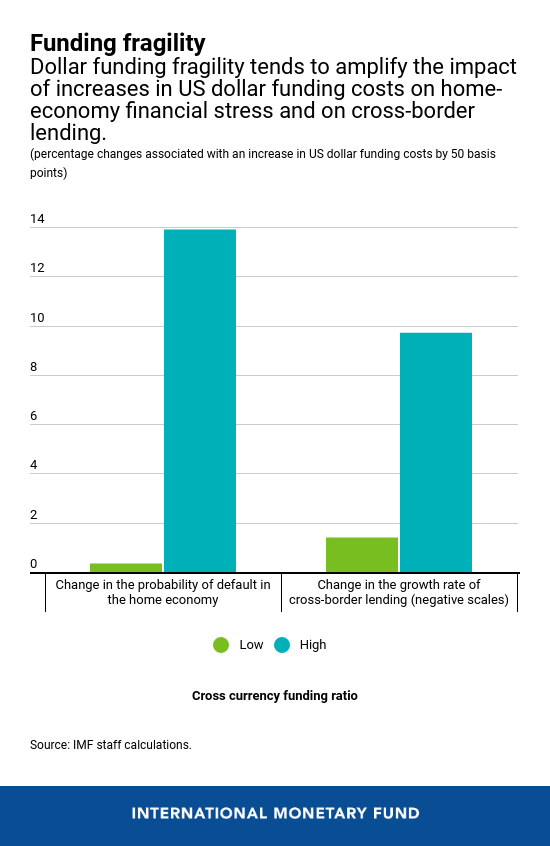
As the crisis showed, an increase in dollar funding costs can reverberate across the global financial system. Our analysis finds that higher costs boost the odds of bank defaults in the home economies of non-US banks that rely on dollar funding. What is more, they increase stress in third countries that receive loans from non-US banks, with emerging-market borrowers being most vulnerable because they cannot easily find alternative sources of funding. We also find that US dollar funding fragility can act as an amplifier, as these negative effects are especially pronounced when any of the measures developed in the chapter points to heightened vulnerability.
On the positive side, our study showed that several factors, some directly related to policy, can act as mitigators, so policy makers have ways to protect their economies in case of a dollar disruption. Ensuring overall health of the banking system, with more profitable, better capitalized banks is one way to provide a cushion. Larger reserve holdings by central banks can also be used to fill the gap if dollar liquidity dries up. Finally, central bank swap arrangements that provide access to US dollars during periods of stress can play in important role, as they did during the crisis.
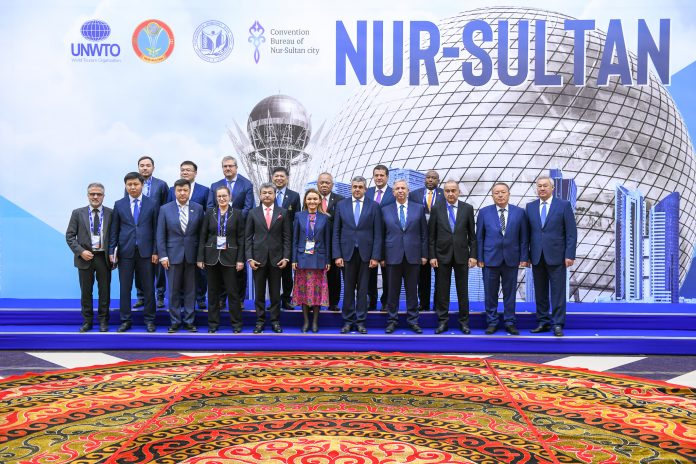
City leaders from around the world have met in the Kazakh capital of Nur-Sultan for the World Tourism Organization (UNWTO) Global Urban Tourism Summit. The Summit enjoyed the highest level of political support, with the President of Kazakhstan Kassym-Jomart Tokayev meeting with the Secretary-General of UNWTO Zurab Pololikashvili ahead of the official opening which was led by Prime Minister Askar Mamin and the Mayor of Nursultan Altay Kulginov
In line with the United Nations New Urban Agenda and the Sustainable Development Goals, the 8th edition of the UNWTO Global Urban Tourism Summit focused on the concept of “Smart Cities, Smart Destinations”. Representatives from more than 80 countries, including 10 mayors, deputy-mayors as well as ministers of tourism and representatives of the private sector, explored how developing smart city destinations can contribute to addressing complex urban tourism challenges faced today across the world.
Across two days, discussions focused on the ‘five pillars’ of smart destinations – innovation, technology, accessibility, sustainability and governance. Building on this, national and city representatives at the Summit officially adopted the Nur-Sultan Declaration on ‘Smart Cities, Smart Destinations’. The Declaration recognizes the growing popularity of cities as tourist destinations and their potential to drive socio-economic development and promote and preserve unique culture.
By adopting the Declaration, destinations also agree to work towards enhancing the contribution of tourism to Goal 11 of the UN Sustainable Development Agenda – to ‘make cities and human settlements inclusive, safe, resilient and sustainable’. The Declaration also aligns with UNWTO’s Global Convention on Tourism Ethics, the first-ever convention of its kind which was adopted at the recent UNWTO General Assembly in St Petersburg.
Opening the Summit UNWTO General-Secretary Mr Pololikashvili said: “Smart cities have enormous potential to make a positive impact not just on residents’ lives, but on tourists’ experiences too, and city leaders are best-placed to make decisions that make a difference. This Summit offered a unique opportunity to pool our knowledge to identify the challenges cities face as tourist numbers continue to rise around the world, and to explore solutions so that this growth can be properly managed and used to drive positive change for all.”
Against the backdrop of the summit, Mr Pololikashvili met with President Tokayev for high-level discussions on Kazakh tourism, which is emerging as one of the fastest-growing sectors in the Central Asian region. Further demonstrating Kazakhstan’s support of both the event and UNWTO’s wider mandate, Mr Pololikashvili additionally met with Prime Minister Askar Mamin, the Minister of Culture and Sports, Ms Aktoty Raimkulova, and the Minister of Healthcare, Mr Yelzhan Birtanov.
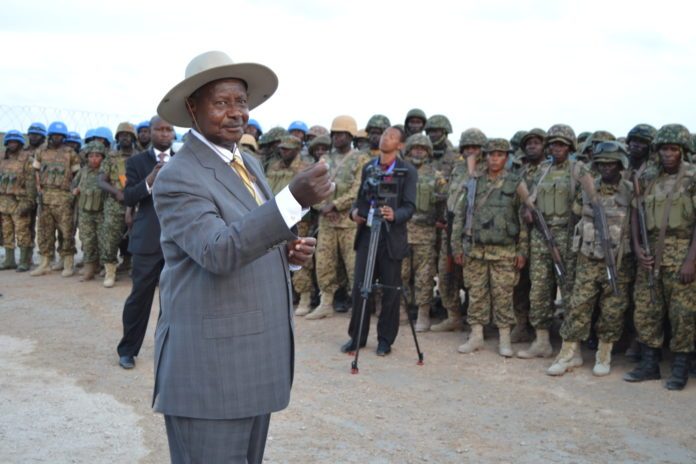
President Yoweri addressing UPDF officers in Somalia.
The African Union Mission in Somalia (AMISOM) has recognised Uganda’s contribution to ensuring peace and security on the continent.
The salutation of Uganda came as the country marked its 57th independence on Wednesday.Deputy Special Representative of the Chairperson of the African Union Commission (DSRCC) for Somalia, Simon Mulongo, officiated Uganda’s Independence Day celebrations in Mogadishu, Somalia.
On the theme ‘Consolidation of national unity, security, freedom, and prosperity’, guests included expats working with Somalia and senior AMISOM officials.
Ugandan troops were deployed in Somalia under AMISOM in 2007, and have since been serving alongside other forces from Burundi, Djibouti, Ethiopia, and Kenya. AMISOM troops are supporting the Somali Security Forces to defeat terrorists groups and restore peace in Somalia.
Mulongo said that by deploying its forces to Somalia, Uganda has proved to be a reliable partner in supporting the African Union’s aspirations of continental peace and security.
“AMISOM is our flagship mission, and Ugandan troops have made a difference towards the success of the policy of peace enforcement in Africa,” he said.
Uganda’s Ambassador to Somalia, Prof. Sam Turyamuhika, noted that Uganda had emerged from years of conflict and is now contributing to regional peace efforts. He called for deeper integration and unity of Africa if the African Union member states are to overcome the political and economic challenges.
“There is no country in the world that can stand on its own,” noted Ambassador Turyamuhika, “We are all interdependent, and particularly in Africa, we need regional integration.”
The AMISOM Deputy Force Commander, Maj. Gen. Lakara, noted that Uganda continues to contribute to regional and international efforts to end conflicts.
The AMISOM Police Operations Coordinator, ACP Gwambal, lauded AMISOM military for creating conditions that enabled the AU to deploy police to support the rebuilding of the Somali Police Force.
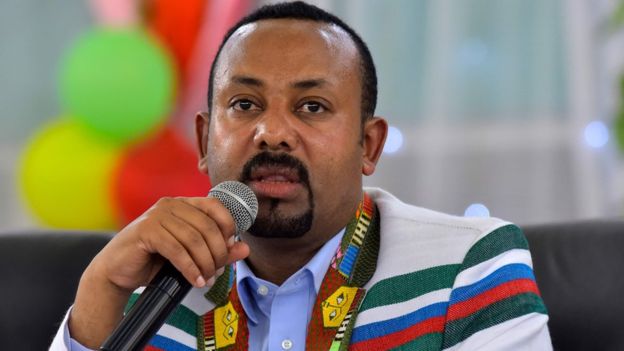
Following the announcement, Mr Abiy said he was “humbled and thrilled”.
“Thank you very much. It is a prize given to Africa, given to Ethiopia and I can imagine how the rest of Africa’s leaders will take it positively to work on [the] peace-building process on our continent,” he added in a phone call with the secretary of the Norwegian Nobel Committee.
A total of 301 candidates had been nominated for the prestigious award, including 223 individuals and 78 organisations.
There had been great speculation over who would win the prize, with climate activist Greta Thunberg widely tipped as the favourite. Under the Nobel Foundation’s rules, nomination shortlists are not allowed to be published for 50 years, and the organisation says any speculation ahead of the announcement is “sheer guesswork”.
What has Abiy Ahmed done?
After becoming prime minister in April 2018, Mr Abiy introduced massive liberalising reforms to Ethiopia, shaking up what was a tightly controlled nation.
He freed thousands of opposition activists from jail and allowed exiled dissidents to return home. Under him, several women have also been appointed to prominent positions.
Most importantly, he signed the peace deal with Eritrea.
But his reforms also lifted the lid on Ethiopia’s ethnic tensions, and the resulting violence forced some 2.5 million people from their homes.
Why did he win?
Mr Abiy, 43, was honoured for his “decisive initiative to resolve the border conflict with neighbouring Eritrea”, the Norwegian Nobel Committee said.
“The prize is also meant to recognise all the stakeholders working for peace and reconciliation in Ethiopia and in the East and Northeast African regions,” they said.
“Peace does not arise from the actions of one party alone. When Prime Minister Abiy reached out his hand, President Afwerki grasped it, and helped to formalise the peace process between the two countries. The Norwegian Nobel Committee hopes the peace agreement will help to bring about positive change for the entire populations of Ethiopia and Eritrea.”
Since the Eritrea deal, Mr Abiy – the youngest head of government in Africa – has also been involved in peace processes in other African countries, the committee said. This has included helping to broker an agreement between Sudan’s military leaders and civilian opposition after months of protests.
Mr Abiy’s office said the award was testimony “to the ideals of unity, cooperation and mutual coexistence that the prime minister has been consistently championing”.
Another triumph for Abiy Ahmed
Analysis by Emmanuel Igunza, BBC Africa
Since coming into office just over a year ago, Abiy Ahmed has made history and turned Ethiopian politics on its head.
Few had given him any chance of ascending to the prime minister’s office and even less had anticipated the sweeping reforms he would bring to a country that for years had been led by the iron fist of the Ethiopian People’s Revolutionary Democratic Front.
His most significant achievement was ending a bitter border dispute with Eritrea. He even went to the Eritrean capital, Asmara, receiving a rock star’s welcome – a sign of his popularity with the population weary of the two decades of hostilities between the two countries.
But also significant is the role he has played in bringing peace to the Horn of Africa region, from Sudan to Somalia and Djibouti, all which at some time have had border disputes.
Throughout he’s preached a message of Medemer – meaning togetherness or inclusiveness.
His Nobel win is yet another feather in the cap of this former intelligence chief.
What has the reaction been?
African leaders were among those to congratulate Mr Abiy following his win.
Somalia’s President Mohamed Farmaajo described Mr Abiy as a “deserving winner” as he congratulated him on Twitter. “I have enjoyed working with him on strengthening regional co-operation,” he wrote.
Liberia’s President George Weah expressed his “warmest felicitations for this noble feat”, while Ghana’s President Nana Akufo-Addo said the award was “a reminder to us all that peace is one of the most critical ingredients needed to make Africa successful”.
The head of the Norwegian Refugee Council, Jan Egeland, congratulated Mr Abiy but said he must now “make resolving ethnic tensions within Ethiopia a priority”.
Human rights group Amnesty International welcomed Mr Abiy’s reforms and efforts towards peace, but said his work was “far from done”.
“He must urgently ensure that his government addresses the ongoing ethnic tensions that threaten instability and further human rights abuses,” it added.
Bisrat Hadte, a 45-year-old businessman in Ethiopia’s capital Addis Ababa, told Reuters news agency that Mr Abiy also needed to “improve the economy and drive down the cost of living”.
What is his background?
Mr Abiy was born in Ethiopia in 1976 to a Muslim father and Christian mother.
He has several degrees, including a doctorate degree in peace and security issues and a master’s degree in transformational leadership.
As a teenager, he joined the armed struggle against the former Derg regime – a Communist military junta that ruled Ethiopia from 1974 to 1987.
He later served as a UN peacekeeper in Rwanda.
During the 1998-2000 border dispute with Eritrea, he led a spy team on a reconnaissance mission into areas held by the Eritrean Defence Forces.
He joined politics in 2010, becoming a member of the Oromo People’s Democratic Organization, before being elected as a member of parliament.
His time as an MP coincided with clashes between Muslims and Christians. He devised a lasting solution to the problem by setting up a “Religious Forum for Peace”.
Who are the previous Nobel Peace Prize winners?
Former US President Barack Obama won the Nobel Peace Prize in 2009, for “his extraordinary efforts to strengthen international diplomacy and co-operation between peoples”.
Other notable Nobel Peace Prize winners include former US President Jimmy Carter (2002), child education activist Malala Yousafzai (shared 2014), the European Union (2012), the United Nations and its then-general-secretary, Kofi Annan, (shared 2001) and Mother Teresa (1979).
The recipient of each Nobel prize receives three things:
a Nobel diploma, each of which is a unique work of art
a Nobel medal, which has differing designs
a cash prize of 9m Swedish krona – which is split between winners when there is more than one. They have to deliver a lecture to receive the money
The prizes are presented at ceremonies on 10 December in Stockholm and Oslo.
The Criminal Investigations Directorate (CID) has today summoned Makindye West Member of Parliament Allan Ssewanyana over Moses Magogo’s case of fraudulently selling the 2014 World Cup tickets.
This comes after FIFA suspended Magogo for two months and fined him Swiss franc CHF 10,000 (approximately 37M Ugshs) after investigations found him guilty.
Ssewanyana petitioned to Fifa in 2017 accusing Magogo of selling an unspecified number of 2014 world cup tickets meant for Ugandans to foreigners.
The Makindye West MP today reported to the CID offices with his lawyer and recorded a statement.
“I have this afternoon together with my lawyer Mr Mulindwa Allan met the Deputy Director C.I.D Mr. Obwona Joseph after being summoned to his office over cases of theft, Bribery and corruption by The former Fufa PRESIDENT,” Sewanyana posted on his Facebook.
Sewanyana also wants government to take action and borrow a leaf from Fifa’s decision and prosecute Magogo. He also wants a final say on his position as the FUFA president because Magogo committed fraud using his position.
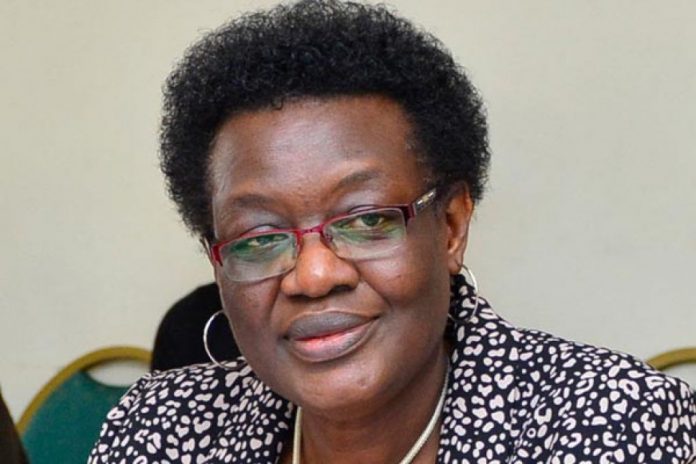
The out-going Inspector General of Government (IGG), Justice Irene Mulyagonja, has appeared before parliament’s House Committee on Appointments for vetting.
Committee chaired by the speaker of parliament Rebecca Kadaga and her deputy Jacob Oulanya, is scheduled to either endorse or discard Mulyagonja and other judges appointed to the bench by President Yoweri Museveni.
On October 4, 2019, Museveni appointed Justice Irene Mulyagonja and Monica Mugenyi Kalyegira to the Court of Appeal.
The president also appointed Vincent Emmy Mugabo, Immaculate Busingye, Jane Okuo, Isaac Muwata, Jesse Rugyema Byaruhanga, Isah Serunkuma, Jeanne Rwakakoko and Suzan Abinyo, Esther Nambayo, Victoria Nakintu Nkwanga Katumba,Boniface Wamala and Philip Odoki as justices of the High Court.
In 2008, at the age of 45 years, Mulyagonja was appointed to the High Court of Uganda. She was assigned to the Jinja circuit for the first two and one half years. She was then re-assigned to the commercial division of the high court, rising to the position of deputy head of the Commercial Division of the High Court, by the time she was appointed as Inspector General of Government, in 2012
Some of the goats that took part in the races last year.
The long anticipated Royal Ascot goat races are finally upon us, taking place this weekend on the October 12,2019 at the Speke Commonwealth Resort Munyonyo where loads of fun packed activities are lined up for the day including a kids section that will also cater for the little ones.
An annual tradition, the goat races have grown to be more than just an entertainment event as proceeds go to charity; this year the money will go to building proper sanitary toilets for those living in impoverished communities within Kamwokya’s ghettos.
The main attraction will consist of eight course races that will feature various racers (goats) sponsored by different individuals and institutions. Anyone can take part in the races and goats can be bought starting from Shs6 million upwards.
The event that will kick off at 10am is set to attract thousands of revelers as many Ugandans look forward to the colorful spectacle that will take place by the lake side. “The Goat Races are more than just another event in Uganda, it’s a place where people can come and network and mix along with business, pleasure and have a fun humorous time with good food and drinks all day long.” Rajiv Ruparelia-Managing Director.
The event will further be highlighted by guest star performances as well as several displays of entertainment including a firework finale that will usher the guests into the night. For those looking for a family getaway this weekend then look no further; all roads will lead to Speke resort Munyonyo.
Tickets will be sold at only Shs50,000 although early birds can get one at Speke Resort Munyonyo, kabira Country Club for just Shs30,000.






 Anyone can take part in the races and goats can be bought starting from Shs6 million upwards.