Stanbic Bank
Stanbic Bank
25.7 C
Kampala
Stanbic Bank
Stanbic Bank
Home Blog Page 1161

Gov’t finally accept to engage pastors in formulation of policy to guide religious activities 

Fr Simon Lokodo


The minister of Ethics and Integrity, Fr. Simon Lokodo has bowed to pressure and called on religious organisations to participate in the formulation of the National Policy on Religious and Faith-Based Organisations (R&FBOs) in Uganda.

In 2016 government embarked on formulating the policy to guide the religious leaders following public outcries as some pastors fleeced their followers of money as well as engaging in acts seen to be against the Christian faith.

The policy was in the advanced stages of formulation and cabinet was ready to discuss it to pave the way for the enactment of the law, when pastors came out to denounce it due to lack of their input.

One of the proposals in the policy is that religious leaders must acquire formal theological training from a recognized institution before establishing a church.

The policy has been  however criticized by various pastors alleging that it came from a malicious source and thoughts intended to crash the Church.

In a prayer conference organised by the pastors last month, led by the founder and Senior Pastor of Rubaga Miracle Centre, Robert Kayanja, the Pentecostal preachers reechoed their voice, calling for their participation in the drafting of the policy. President Yoweri Museveni also attended a meeting organised by the pastors where he promised to address their concerns on the policy.

Speaking in Kampala earlier today, Father Lokodo said a highly consultative and analytical approach was adapted in the development of this policy. “Countrywide and regional consultative meetings involving key stakeholders who practice faith and religion in this country were conducted.”

Key stakeholder groups such as the Inter-Religious Council of Uganda, Born Again Faith, National Fellowship of Born Again & Pentecostal churches, Evangelical fellowship of Uganda, Miracle Centre churches, Full Gospel Churches of Uganda; Anglican Church, Catholic Church, Muslim faith, Seventh Day Adventist, Orthodox church and other independent faith groups.

“Whereas Article 29(1) (c) of the Constitution gives Ugandans freedom to practice any religion which includes right to belong &participate in the practice of any religious body or organization, government has never put in place a regulatory framework,” he said.

“As a result, members of the public are facing a lot of challenges from some faith/religious organisations. These challenges include; manipulation, exploitation of followers, loss of property, promotion of witchcraft instability in society,” he said.

He said the state has no mechanism of vetting, monitoring and identifying the unethical faith practitioners in order to protect citizens from the harmful effects of these unethical religious practices.

Stories Continues after ad

Controversy as Dfcu Bank demands Shs47b from BoU as tax evasion is sighted in transaction

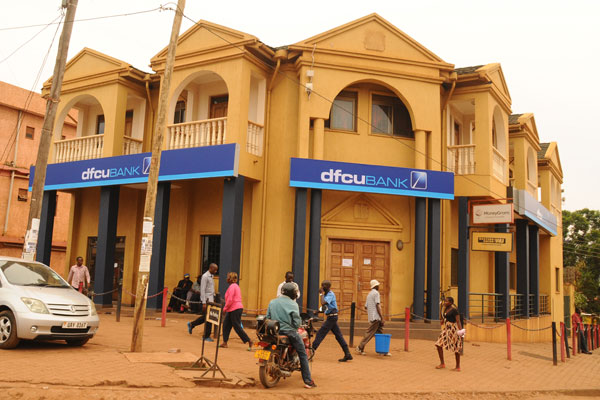
dfcu bank


The Bank of Uganda in the latest report confirmed that Dfcu Bank is in preparations to leave 48 Meera Investment Limited properties some of which were being used by the defunct Crane Bank Limited (CBL) branches before it was taken over by its rival.

However, it has now emerged that Dfcu Bank wants BoU to pay them Shs47 billion as a result of the decision to exit properties and they are basing that claim on the Purchase of Assets and Assumption of Liabilities Agreement signed between the bank and BoU on January 25, 2017.

The valuation of Meera investment properties was Shs47 billion as dfcu Bank took over CBL. Yet Dfcu Bank paid BoU only Shs10 billion for the properties and has used them for almost now three years without paying rent, leading Meera Investments Limited to sue them.

The latest scenario now shows Dfcu Bank underdeclared the value of the properties as they did the valuing which BoU based on to accept Shs10 billion. Dfcu Bank should have paid more in stamp duty based on the value of the properties, which amounts to tax evasion and criminality.

Dfcu bank is demanding for the money after realising BoU is unlikely to recover the money as sighted in the agreement.

“Following court’s dismissal of HCCS No.493 of 2017 on 26th August 2019, it is unclear how long it will take BoU to recover the reversion from MIL. This state of affairs creates uncertainty for the Bank which is prejudicial to its business interests. In line with its strategic interest and risk management framework, the Board has resolved that it is in the best interest of the Bank to exercise its option to rescind the purchase of the MIL properties,” DFCU Bank in a letter dated September 12, 2019 and signed by CEO Mathias Katamba and others says.

However, the demand by Dfcu Bank per the agreement with BoU means taxpayers will incur loss of Shs37 billion.

“Following the Court’s ruling … Dfcu Bank Limited in a letter dated September 12, 2019 communicated to BOU its decision to exercise its option to rescind its interest in purchasing the 48 properties pursuant to clause 8.7 of the Agreement,” BoU says in its latest annual report, even though BoU failed to announce in the report that Dfcu Bank demands them those billions.

The BoU says that as part of the rescinding of this purchase, dfcu will return to Bank of Uganda Certificates of title for Meera Investments Limited ‘and requires Bank of Uganda to pay dfcu the new  book value of properties recorded in the assets and inventory compilation as October 20, 2016.’

Under the agreement, BoU as the receiver of CBL undertook to recover the reversionary interest relating to 48 leasehold properties acquired by DFCU Bank. The money was to be recovered in 24 months from the date of the agreement but BoU failed.

Former Dfcu Managing Director, Juma Kisaame who was in charge of the transactions.

Dfcu Bank says that after BoU realised that it could not recover the money within the 24 months as stated in the agreement, it asked for an extension of the contract timelines under certain conditions, even though DFCU says they have not reached an agreement with BoU over the same especially when BoU/Crane Bank in receivership lost a case against Sudhir and Meera Investments Limited.

On August 26, 2019, Court ruled on Miscellaneous Application No.320 of 2019 in favor of Sudhir Ruparelia and Meera Investments Limited dismissing Suit No.493 of 2017 where Crane Bank (receivership) had sued Sudhir Ruparelia and Meera Investments Limited to recover Shs397 billion allegedly swindled. Sudhir and Meera investments Limited (MIL) has argued that Crane Bank in Receivership had no right to sue them.

Court ruled that costs of the application be paid by the Bank of Uganda on the basis that Crane Bank (in receivership) is non-existent and does not have locus standi to put forth any claim against Sudhir and Meera Investments Limited.

A recent leaked document showed Dfcu Bank calling for bids from companies that want to provide consultancy services at it seeks to relocate its branches to new areas in various districts and towns across Uganda.

In August this year it emerged that the bank was misled by city Law firm Sebalu & Lule Advocates to illegally transfer title properties into its name yet the properties belong to Meera Investments Ltd even though it had leased them to Crane Bank Limited.


Stories Continues after ad

Gen. Sabiiti lays strategy for wiping out criminal gangs in Kampala

Maj. Gen. Sabiiti-Muzeei on the left


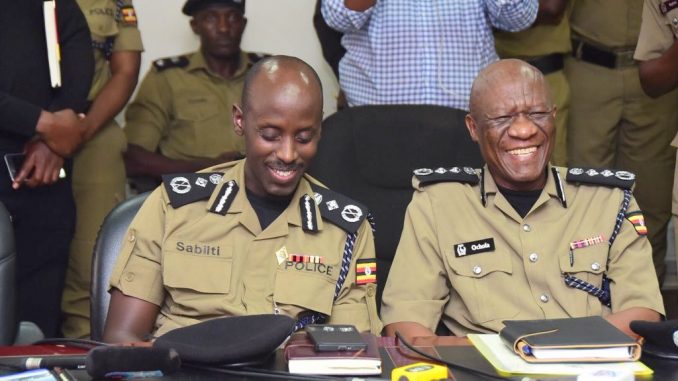
The Deputy Inspector General of Police (IGP), Brig. Muzeeyi Sabiiti has released a strategic plan aimed at combating criminal gangs committing atrocities against people in Kampala metropolitan area.

On Monday President Yoweri Museveni ordered Sabiiti to come up with a plan of combating the gangs who seem to be on rampage even as government has installed CCTV cameras at key spots in the city and surrounding suburbs.

“I have given two days to Commander Sabiiti of the Police to come out with a plan to combat these gangs. The IGP is away in Peru for a meeting. I will look at that plan, comment on it and it will, then, be communicated to all of you,” he said in his brief message posted on social media platforms.

Remarking at police headquarters, Brig Sabiiti, said proper and effective use of the CCTV cameras, finger printing of all guns, personal and premise security including linking the police contacts to all members of the public are key strategies aimed at wiping out criminality in the country.

Alluding to the plan, police said response rate to distress calls will be enhanced by linking calls to alert squads and patrollers.  Suggestion boxes at all LC 1 offices and useful WhatsApp info to 0707144144 in the DIGP’s office.

“We shall ensure a thorough and effective investigations and multiple offenders will be handled through the judicial system.” He said adding that they will discuss with the directorate of public prosecution (DPP) for modalities on how to handle matters for speedy trial.

“This multidimensional security plan will be implemented first in KMP and will then be rolled out to other parts of the country facing related security problems.  Media houses are encouraged to display security contacts to the public to ease reporting of incidents and suspicions.’

He warned police commanders saying action will be taken against them for failure to implement the program.

Stories Continues after ad

New Absa-OMFIF report: African countries progressing towards investment-supportive financial market

New financial products, regulatory improvements and more responsive economic policies have enhanced the performance of countries in the Absa Africa Financial Markets Index 2019, produced by OMFIF. Now in its third year, the index evaluates financial market development in 20 countries across the continent.

South Africa retains the top position due to its sizeable lead in Pillar 1, ‘market depth’. While it is likely to remain an outlier in this pillar, the creation of new bourses and key mergers between existing ones will improve the standing of other countries in coming years. This year, Botswana, Kenya and Namibia join the ranks of countries that score more than 50 in Pillar 1, indicating a deepening of individual markets.

Other countries are catching up in the rest of the index. Egypt has the highest score in ‘macroeconomic opportunity’, while Mauritius and Kenya claim the two top spots in ‘legality and enforceability of standard financial markets master agreements’. Ethiopia, although lagging behind, has significant potential for improvement in the coming year. It has announced plans to establish a stock exchange in 2020.

‘The steady improvement across African countries is partly a testament to the impact of our index across the continent,’ says George Asante, head of global markets for Absa regional operations.

‘There has been a concerted effort among African policy-makers to react to the findings. This can be seen in the vast improvements in Pillar 6, ‘legality and enforceability of standard financial markets master agreements’, where countries have responded to past findings in order to align with best practice. The index is becoming a powerful barometer for policy-makers and playing a role in building an Africa which is able to fund itself.’

‘As a business with strong pan-African aspirations, we are constantly trying to find ways to facilitate and encourage progress in the region. We are excited about the impact the index is having on African financial markets. We believe in the power of thought leadership and insights to help strengthen the region and build stronger and more robust financial markets,’ says Charles Russon, chief executive officer at Absa Corporate and Investment Banking.

The improvements outlined in the third Absa Africa Financial Markets Index underline significant progress across Africa’s financial markets. The first edition in 2017 shed light on the disadvantages of rigid foreign exchange regimes, which handicapped investors and constrained countries’ ability to deal with global developments. Subsequently, many countries have moved to more flexible exchange rates, improving their policy responsiveness and shock absorption capability. Similar positive changes can be seen in growing consciousness of the importance of local investors and improvements in the transparency and availability of market data.

‘We welcome these vital signs of improvement in several African countries,’ says David Marsh, chairman of OMFIF. ‘New products like the world’s first sovereign blue bond issued by the Seychelles, or regulatory improvements in Mauritius and Ghana, prove that the African continent is moving in the right direction. The index is now a piece of important evidence for tracking progress in the region.’

‘The Africa Financial Markets Index has helped our country design its reform plans with a view to promoting macroeconomic stability,’ says Akiules Neto, executive director and board member at the Angola Securities Exchange.

The 20 countries covered by the index are Angola, Botswana, Cameroon, Egypt, Ethiopia, Ghana, Ivory Coast, Kenya, Mauritius, Morocco, Mozambique, Namibia, Nigeria, Rwanda, Senegal, the Seychelles, South Africa, Tanzania, Uganda and Zambia. The index evaluates countries across six pillars: market depth; access to foreign exchange; market transparency tax and regulatory environment and market transparency; capacity of local investors; macroeconomic opportunity; and legality and enforceability of standard financial markets master agreements.

In addition to quantitative analysis, OMFIF gained further insights by surveying more than 40 policy-makers and top executives from financial institutions operating across the 20 countries, including banks, investors, securities exchanges, central banks, regulators, audit and accounting firms and international financial and development institutions.

Stories Continues after ad

Spanish El Clasico postponed over safety fears amid major protests in Catalonia

El Clasico


This month’s El Clasico between Barcelona and Real Madrid has been postponed because of fears of civil unrest.

The match was scheduled for 26 October but there have been days of protest in Barcelona after nine Catalan separatist leaders were jailed on Monday.

Both Barcelona and Real Madrid disagreed with calls to switch the game to Madrid.

The clubs must agree a new date by Monday.

Manager Ernesto Valverde had said the Barcelona were against switching the game to Madrid as they play away to Slavia Prague in the Champions League on 23 October, three days before El Clasico had been scheduled.

La Liga made the postponement request because of “exceptional circumstances beyond our control” as more protests are expected in Barcelona on the day of the match.

Protests have continued into a fifth day in Spain’s Catalonia region with protesters clashing with riot police.

Hundreds of thousands of people waving pro-independence flags and chanting “freedom for political prisoners” took part in marches across Catalonia on Friday

At least 96 people have been hurt across the region.

Catalonia is a semi-autonomous region in north-east Spain and in a referendum on 1 October 2017, declared illegal by Spain’s Constitutional Court, about 90% of Catalan votes cast backed independence. Turnout was 43%.

The nine separatist leaders were convicted of sedition over their role in the referendum and handed jail sentences of between nine and 13 years by Spain’s Supreme Court.

Stories Continues after ad

Kadaga in move to bolster relations with Nile Basin Member States

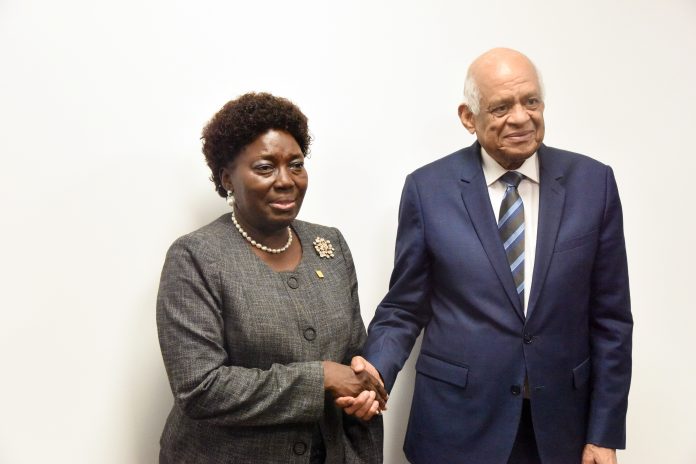
Speaker Rebecca Kadaga and Egypt Speaker Ali abdel-Aal pose for a photo after a bilateral meeting held on the side-lines of the IPU in Serbia.


The Speaker of Parliament, Rebecca Kadaga, has allayed concerns raised by the Speaker of the House of Representatives of Egypt, Ali Abdel-Aal, on the use of the River Nile, whose basin is situated in Uganda, on Lake Victoria.

 Kadaga assured the Egyptian Speaker that Uganda had not taken any action that could affect the use of the Nile waters by Egypt, noting that the waterbody was their major source of livelihood.

“I have discussed this issue with President Yoweri Museveni and I want to bring the reassurance of my Government that nothing will happen unless all stakeholders have a consensus,” said Kadaga.

The Speaker, in a bilateral meeting with the delegation from Egypt, on the sidelines of the 141st Inter Parliamentary Union in Belgrade, Serbia, also highlighted the need to revive the Nile Basin Association to improve cordial relations among the Nile Basin Member States.

“Here at the IPU Assembly, we have been talking about the need for parliamentary diplomacy; resuscitating this Association that was introduced about 10 years ago, should be a highlight of our Parliamentary work,” Kadaga added.

Speaker Ali Abdel-Aal noted that the Nile was a major contributor to the Egyptian national economy, noting that the proposed construction of the Reconnaissance Dam in Ethiopia could affect them, thus the need for Uganda’s support.

“Egypt is entitled to 55.5 billion gallons of water according to an international treaty signed in 1929 where the population was only 20 million people. We now have a population of 104 million people but we still get the same amount of water,” noted Ali Abdel-Aal.

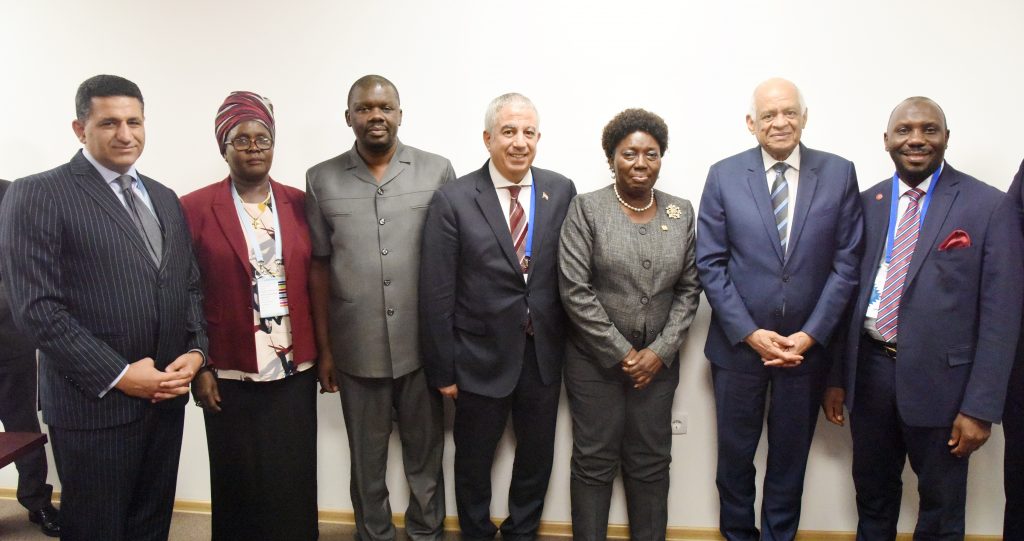
Third from right Speaker Rebecca Kadaga, second from right Egypt Speaker Ali abdel-Aal pose for a photo with MPs, and Ambassadors of Uganda and Egypt to Serbia

He added that it would only be prudent for the Reconnaissance Dam in Ethiopia to be built over a period of 7 years to allow sufficient flow of water on to Egypt.

Kadaga also commended Egypt’s support to Uganda through its companies like the Arab Contractors among others, adding that Uganda had a lot to learn from Egypt with regards construction.

“I have told Parliament severally that we need to encourage more of these companies to come and set up base in Uganda so that we can create more employment opportunities for our people,” said Kadaga.

She also held a bilateral meeting with the Speaker of the Grand National Assembly of Turkey Türkiye Büyük Millet Meclisi Baskanı, where she called for better trade relations.

“Mr. Speaker, our Ugandans who are doing trade with Turkey have often faced double taxation. We need your support on this matter, and also to encourage more exports from Uganda to Turkey so that we can benefit mutually,” said Kadaga.

Millet Meclisi commended Kadaga for her work in fighting for the rights women, girls and youth in Uganda, and also committed to follow up a Memorandum of Understanding to improve legislative practices between the two countries.


Stories Continues after ad

BoU confirms dfcu Bank is exiting Meera Investment properties

The Former Crane Bank Ntinda branch, which DFCU took over and illegally rebranded in its name, was ordered by the court to vacate and compensate Meera Investments because the property belongs to Meera.

The Bank of Uganda (BoU) in its 2018/ 2019 Annual Report has confirmed that dfcu Bank is in preparations to leave 48 properties that the defunct Crane Bank Limited (CBL) was operating its branches before it was taken over by its rival in January 2017 in a Shs200 billion transaction.

“Following the Court’s ruling … dfcu Bank Limited in a letter dated September 12, 2019 communicated to BOU its decision to exercise its option to rescind its interest in purchasing the 48 properties pursuant to clause 8.7 of the Agreement,” BoU says in its latest annual report.

The report adds that as part of the rescinding of this purchase, dfcu will return to Bank of Uganda Certificates of title for Meera Investments Limited ‘and requires Bank of Uganda to pay dfcu the new book value of properties recorded in the assets and inventory compilation as October 20, 2016.’

On August 26, 2019, Court ruled on Miscellaneous Application No.320 of 2019 in favor of Sudhir Ruparelia and Meera Investments Limited dismissing Suit No.493 of 2017 where Crane Bank (receivership) had sued Sudhir Ruparelia and Meera Investments Limited to recover Shs397 billion allegedly swindled.

Court ruled that costs of the application be paid by the Bank of Uganda on the basis that Crane Bank (in receivership) is non-existent and does not have locus standi to put forth any claim against Sudhir and Meera Investments Limited.

A recent leaked document showed dfcu Bank calling for bids from companies that want to provide consultancy services at it seeks to relocate its branches to new areas in various districts and towns across Uganda.

Dfcu Bank has been operating its business in buildings/properties belonging to Meera Investments Limited since it acquired CBL over two years ago.

In August this year it emerged that the bank was misled by city Law firm Sebalu & Lule Advocates to illegally transfer title properties into its name yet the properties belong to Meera Investments Ltd even though it had leased them to Crane Bank Limited.

According to a leaked dossier, the Sebalu & Lule Advocates who have been barred by court from representing the same bank against city tycoon Sudhir Ruparelia for being conflicted. The law firm misled dfcu Bank to transfer freehold titles from Crane Bank Ltd during the controversial takeover.

Stories Continues after ad

Over seven million people receive record levels of lifesaving TB treatment , 3m still miss out

WHO


More people received life-saving treatment for tuberculosis (TB) in 2018 than ever before, largely due to improved detection and diagnosis. Globally, 7 million people were diagnosed and treated for TB – up from 6.4 million in 2017 – enabling the world to meet one of the milestones towards the United Nations political declaration targets on TB.

WHO’s latest Global TB Report says that 2018 also saw a reduction in the number of TB deaths: 1.5 million people died from TB in 2018, down from 1.6 million in 2017.  The number of new cases of TB has been declining steadily in recent years. However, the burden remains high among low-income and marginalized populations: around 10 million people developed TB in 2018.

“Today we mark the passing of the first milestone in the effort to reach people who’ve been missing out on services to prevent and treat TB,” said Dr Tedros Adhanom Ghebreyesus, WHO Director-General.

“This is proof that we can reach global targets if we join forces together, as we have done through the Find.Treat.All.EndTB joint initiative of WHO, Stop TB Partnership and the Global Fund to Fight AIDS, TB and Malaria”.

WHO’s latest Global TB Report, released today, highlights that the world must accelerate progress if it is to reach the Sustainable Development Goal of ending TB by 2030. The report also notes that an estimated 3 million of those with TB still are not getting the care they need.

In many countries today, fragile health infrastructure and workforce shortages make it difficult to provide timely diagnosis and the right treatments for TB. Weak reporting systems are another problem: health providers may treat people but fail to report cases to national authorities, leaving an incomplete picture of national epidemics and service needs. Further, up to 80 per cent of TB patients in high burden countries spend more than 20 per cent of their annual household income on treating the disease.

Dr Tedros added: “Sustained progress on TB will require strong health systems and better access to services. That means a renewed investment in primary health care and a commitment to universal health coverage.”

Last month heads of state agreed a political declaration on Universal Health Coverage at the United Nations in New York, highlighting the importance of expanding service coverage and committing specifically to strengthen efforts to address communicable diseases like HIV, TB, and malaria.

One way to improve coverage is to adopt more people-centered comprehensive approaches. Better integrated HIV and TB programmes already mean that two thirds of people diagnosed with TB now know their HIV status. In addition, more people living with HIV are taking treatment.

But child health programmes still do not always focus adequately on TB: half of children with TB do not access quality care and only a quarter of children under the age of 5 in TB-affected households currently receive preventive treatment.

Drug resistance remains another impediment to ending TB. In 2018, there were an estimated half a million new cases of drug-resistant TB. Only one in three of these people was enrolled in treatment.

New WHO guidance aims to improve treatment of multidrug resistant TB, by shifting to fully oral regimens that are safer and more effective. The guidance is part of a larger package of steps released on 24 March 2019 — World TB Day — to help countries speed up efforts to end the disease.

“WHO is working closely with countries, partners and civil society to accelerate the TB response,” said Dr Tereza Kasaeva, Director of WHO’s Global TB Programme. “Working across different sectors is key if we are to finally get the better of this terrible disease and save lives.”

The fight against TB remains chronically underfunded. WHO estimates the shortfall for TB prevention and care in 2019 at US$3.3 billion. International funding (which is critical for many low- and middle-income countries) amounts to US$0.9 billion in 2019, with 73% coming through the Global Fund. Last week’s successful replenishment of the Global Fund will be critical to strengthen international financing.

The largest bilateral donor is the US government, which provides almost 50% of total international donor funding for TB when combined with funds channeled through and allocated by the Global Fund.

There is an urgent need for funding of TB research and development, with an annual shortfall of US$1.2 billion. Priority needs include a new vaccine or effective preventive drug treatment; rapid point-of-care diagnostic tests; and safer, simpler, shorter drug regimens to treat TB.

“To accelerate TB research and innovation, WHO is developing a global strategy,” adds Kasaeva. “We are collaborating with academia, research networks such as the BRICS TB Research network, and partners including the Bill & Melinda Gates Foundation, UNITAID and others in a quest to bring innovations into practice to break the trajectory of the TB epidemic”.

Stories Continues after ad

High Net-Worth Investors driving Hospitality Sector in Francophone Africa

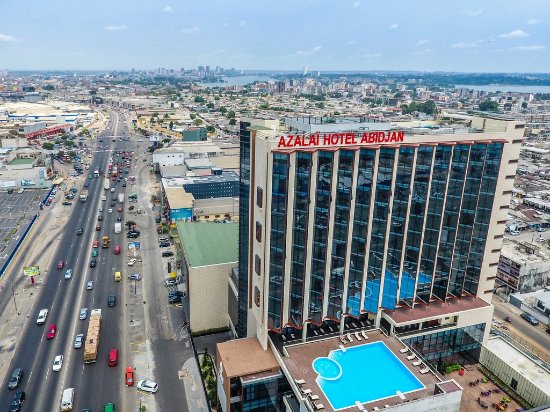
Azalai Hotel Abidjan


Francophone Africa’s burgeoning hospitality market continues to be a critical opportunity for “global hospitality brands and investors,” says the host of the second annual bilingual Franco Real Property Investment Forum, Kfir Rusin.

Taking place in Abidjan, Ivory Coast on October 29-30,  2019, the Summit is hosted by the continent’s leading pan-African real estate networking and conferencing company, African Property Investment (API) Events

According to regional hospitality analysts and advisor, Clemence Derycke of Horwath HTL, Francophone Africa’s hospitality sector is attractive to a broad spectrum of High Net-Worth Individuals (HNWIs), Private Equity, Institutional, French and Anglophone African Investors due to the lack of branded supply, and its stable CFA currency and strong demand drivers.

“Proparco has invested in Azalaï hotel and Teyliom (Mangalis Hotel Group), and at the same time, Grit Real Income Group has just acquired the Club Med Cap Skirring property in Senegal,” says Derycke.

According to Derycycke, the market is very active with global and regional brands “targeting hotel openings in the majority of the region’s major cities.”

“Accor has been very active in Francophone Africa. It has more hotels and its pipeline remains robust, while the Radisson Hotel Group (RHG) has recently been very dynamic with opening flagship hotels in most capital cities. They are now looking for new development in the resort or the midscale segments,” says Derycyke.

While these brands are currently leading development in the region, other international brands, including the Marriott and the Sheraton Four points are also expanding into what is Africa’s hottest hospitality market.

According to RHG Development Director for Francophone and Lusophone Africa, Erwan Garnier, the region is a primary focus for the group with the international brand aiming to add significantly to its portfolio over the next five years.

As one of the Francoreal’s Forum’s numerous international and returning industry speakers, the two-day conference is “a great networking opportunity” he says.

As Garnier adds, “We currently have 16 hotels and over 3, 000 rooms in operation and a further 13 hotels and almost 2,000 rooms under development in Francophone Africa.”

FRANCOPHONE STRATEGY

To fuel its growth strategy, the group has created a specialized French-speaking development team which can align to the group’s Africa development strategy of focusing on capital cities, financial hubs and resort destinations.

Being fluent in the language and local market dynamics, helps the Radisson Hotel Group to be focused and “competitive in the market,” says Garnier.

“We have identified seven pro-active cities in which we are focusing our efforts for scaled expansion. The two primary focus cities are Abidjan and Dakar, followed by Douala, Yaoundé, Kinshasa, Mauritius and Seychelles,” he says.

Adding that the group has opened two new hotels in Algeria and Niger, with the group employing a development strategy that is focused on the business segment for hotels, resorts, serviced apartments and mixed-use developments.

The Radisson Blu Hotel & Conference Center Niamey, Niger is the first five-star hotel to be built in the country and ‘made development history, for good measure”, says Garnier.

“The hotel was the first five-star hotel to be completed from design to construction in 11 months,” says Garnier.

With two more hotels set to open in 2019, including a second hotel in Morocco (Casablanca), the market provides value for the hospitality group, and is very attractive for real estate investors, particularly “High Net-worth Individuals (HNWIS) investors,” many of whom are the biggest sources of current investment, says Garnier.

For Rusin, the value of the conference is to highlight the opportunities for investors in one of Africa’s most exciting markets across the ecosystem. “Hotels provide significant opportunities for global brands and investors, but beyond this sector, we look forward to exploring opportunities in retail, logistics, housing and more.”


Stories Continues after ad

Gov’t takes over water supply in refugee camp

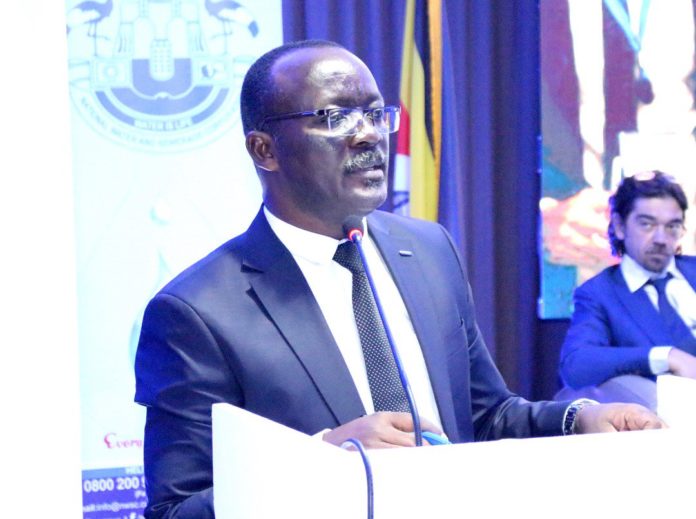
NWSC MD, Dr. Silver Mugisha .


National Water and Sewerage Corporation (NWSC) and the UN High Commissioner for Refugees (UNHCR) signed today a landmark agreement that will ensure reliable water provision for more than 84,000 refugees and local Ugandans in the south-west of the country.

Under the Memorandum of Understanding, the NWSC will take over the management of the water distribution system and assets from UNHCR and the Office of the Prime Minister (OPM) in Rwamwanja refugee settlement, Uganda’s Kamwenge district. The system has been managed and maintained by UNHCR and OPM since 2012, when the settlement was reopened to receive new refugee arrivals from the Democratic Republic of the Congo (DRC).

In Rwamwanja settlement, water is currently supplied through six motorized boreholes (five solar-generator hybrid and one fuel-driven), 82 manual boreholes and shallow wells and six protected springs, which now will be integrated into the national water supply system.

While this is the first pilot of this kind in Uganda, refugee and local communities in and around the settlement will receive an average of 20 litres per person per day (l/p/d) once the scheme becomes fully operational, up from the current supply of 17.5 l/p/d. As part of the initiative, the existing water network will be further extended, bringing water closer to the communities and reducing the waiting time at water collection points.

“We are grateful for the ongoing efforts of the Government of Uganda to integrate refugees in government service delivery systems,” said Joel Boutroue, UNHCR Representative in Uganda. “This is in line with the spirit of the Comprehensive Refugee Response Framework (CRRF) and the need to leverage government institutions in providing more sustainable solutions for refugees and their hosts,” said Boutroue adding that the support from development partners is critical to take initiatives like this to scale.

“We are happy to be able to provide water to this vulnerable section of our population. We will provide safe clean water and guarantee efficient and reliable service. NWSC is committed to providing water for all,” said Dr. Eng. Silver Mugisha, Managing Director of NWSC adding that this initiative is in line with NWSC’s current Service Coverage Acceleration Project (SCAP100), seeking to connect water to 12,000 villages by the end of 2020

Uganda is currently home to approximately 1.34 million refugees, with more than 79,000 new arrivals since January this year. The government launched the CRRF in March 2017, calling for a whole-of-society approach to better manage refugee influxes and find long-term solutions to address the needs of refugees and the communities that host them.

Stories Continues after ad