Stanbic Bank
Stanbic Bank
28.3 C
Kampala
Stanbic Bank
Stanbic Bank
Home Blog Page 1160

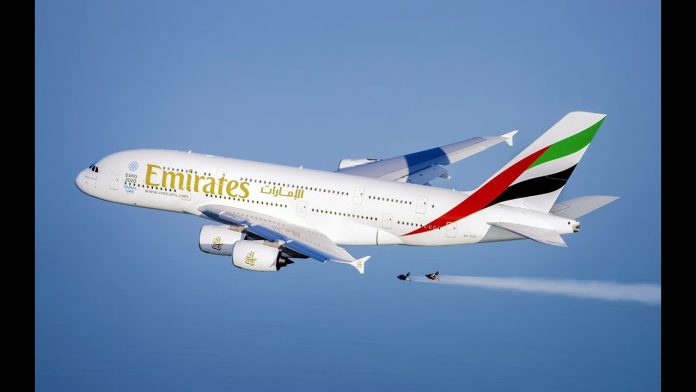
Fly Emirates registers 8 percent profit and 7.9 percent passengers increase

Fly Emirates plane

The Emirates Group has announced its half-year results for its 2019-20 financial year registering 8 percent profit, 7.9 per cent in increase passengers.

Group revenue was US$ 14.5 billion for the first six months of 2019-20, down two per cent from US$ 14.8 billion during the same period last year. This slight revenue decline is allude to to planned capacity reductions during the 45-day Southern Runway closure at Dubai International airport (DXB), and unfavourable currency movements in Europe, Australia, South Africa, India, and Pakistan.

Profitability was up 8% compared to the same period last year, with the Group reporting a 2019-20 half-year net profit of US$ 320 million. The profit improvement is alluded to the decline in fuel prices of 9% compared to the same period last year, however the gain from lower fuel costs were partially offset by negative currency movements.

The Group’s cash position on 30th September 2019 stood at US$ 6.3 billion, compared to US$ 6.0 billion as at 31st March 2019.

“The Emirates Group delivered a steady and positive performance in the first half of 2019-20, by adapting our strategies to navigate the tough trading conditions and social-political uncertainty in many markets around the world. Both Emirates and dnata worked hard to minimise the impact of the planned runway renovations at DXB on our business and on our customers. We also kept a tight rein on controllable costs and continued to drive efficiency improvement, while ensuring that our resources were deployed nimbly to capitalise on areas of opportunity.” His Highness (HH) Sheikh Ahmed bin Saeed Al Maktoum, Chairman and Chief Executive, Emirates Airline and Group explained.

“The lower fuel cost was a welcome respite as we saw our fuel bill drop by compared to the same period last year. However, unfavourable currency movements wiped off approximately AED 1.2 billion (US$ 327 million) from our profits.” He said

“The global outlook is difficult to predict, but we expect the airline and travel industry to continue facing headwinds over the next six months with stiff competition adding downward pressure on margins. As a Group we remain focussed on developing our business, and we will continue to invest in new capabilities that empower our people, and enable us to offer even better products, services, and experiences for our customers,” he said.

The Emirates Group’s employee base remained unchanged compared to 31 March 2019, at an overall average staff count of 105,315. This is in line with the company’s planned capacity and business activities, and also reflects the various internal programmes to improve efficiency through the implementation of new technology and workflows.

During the first six months of 2019-20, Emirates received three Airbus A380s, with three more new aircraft scheduled to be delivered before the end of the 2019-20 financial year. It also retired six older aircraft from its fleet with a further two to be returned by 31 March 2020.

The airline’s long-standing strategy to invest in the most advanced wide-body aircraft enables it to improve overall efficiency, minimise its emissions footprint, and provide high quality customer experiences.

In the first six months of its financial year, Emirates added two new passenger routes: Dubai-Bangkok-Phnom Penh, and Dubai-Porto (Portugal). As of 30 September, Emirates’ global network spanned 158 destinations in 84 countries. Its fleet stood at 267 aircraft including freighters.

Emirates also further developed its partnership with flydubai. Both airlines continued to leverage their complementary networks to optimise flight schedules and offer new city-pair connections through Dubai, as well as open new routes including Naples (Italy) and Tashkent (Uzbekistan) in the first half of 2019-20.

Customers also enjoy even more benefits with a single loyalty programme under Emirates Skywards, and passengers connecting between Emirates and flydubai can experience seamless transits with 22 flydubai flights now operating from Emirates Terminal 3 at DXB.

Overall capacity during the first six months of the year declined by seven percent to 29.7 billion Available Tonne Kilometres (ATKM) mainly due to the DXB runway closure and reduction in fleet during this 45-day period. Capacity measured in Available Seat Kilometres (ASKM), shrunk by five per cent, whilst passenger traffic carried measured in Revenue Passenger Kilometres (RPKM) was down by two per cent with average Passenger Seat Factor rising to 81.1 per cent, compared with last year’s 78.8 per cent.

Emirates carried 29.6 million passengers between 1 April and 30 September 2019, down two per cent from the same period last year, however, passenger yield increased by one per cent period-on-period. The volume of cargo uplifted at 1.2 million tonnes has decreased by eight per cent while yield declined by three per cent. This reflects the tough business environment for air freight in the context of global trade tensions and unrest in some key cargo markets.

In the first half of the 2019-20 financial year, Emirates net profit was US$ 235 million, up 282 per cent, compared to last year. Emirates revenue, including other operating income, of US$ 12.9 billion was down three per cent compared with the US$ 13.3 billion recorded during the same period last year. This result was driven by increased agility in capacity deployment, with healthy customer demand for Emirates’ products driving improved seat load factors and better margins.

Emirates operating costs shrunk by eight per cent against the overall capacity decrease of seven per cent. On average, fuel costs were 13 per cent lower compared to the same period last year, this was largely due to a decrease in oil prices, as well as a lower fuel uplift due to reduced capacity during 45-day runway closure at DXB. Fuel remained the largest component of the airline’s cost, accounting for 32 per cent of operating costs compared with 33 per cent in the first six months of last year.

Stories Continues after ad

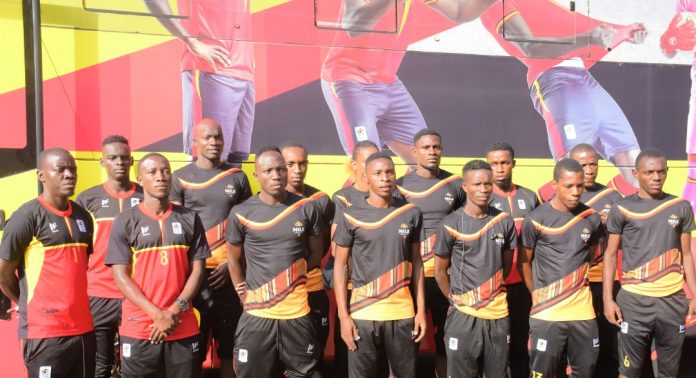
Cranes depart for Katakwi ahead of North Eastern regional tour

Some of the players pose for a group photo before departing for Katakwi

Uganda Cranes team has set off from Kampala to the North East region ahead of a tour match in Katakwi on Saturday.

The team departed from FUFA Headquarters in Mengo, Kampala on Friday morning led by the head coach Johnathan McKinstry who will be on the touchline for the very first time under the regional tours arrangement.

Allan Okello, Samuel Kato, Hassan Senyonjo, Vianne Sekajugo and Edrisa Lubega are the players who miss out from the travelling squad from the initial summoned squad.

The tour is in line with the preparations for the upcoming Uganda Cranes participation in the 2020 CHAN tournament in Cameroon and also taking the Uganda Cranes brand to the masses.

Some of the players will be selected for the senior team when Uganda take on Burkina Faso on Wednesday, 13th November before hosting Malawi on Sunday, 17th November at the Mandela National Stadium in the 2021 Afcon qualifiers.

Previously the Cranes have also visited the Western Region (Mbarara), North East (Soroti), Northern (Gulu), Kitara (Masindi), West Nile (Arua), Buganda region (Masaka) and the Eastern Region (Mbale).

Squad

Goalkeepers: Charles Lukwago (KCCA FC), James Alitho (URA FC)

Outfield Players: Paul Willa (Vipers SC),  Halid Lwaliwa (Vipers SC), Mustafa Kizza (KCCA FC), John Revita (KCCA FC),  Paul Mbowa (URA FC), Nicolas Kasozi (KCCA FC), Shafiq Kagimu (URA FC), Muzamiru Mutyaba (KCCA FC), Bright Anukani (Proline FC), Joachim Ojera (URA FC),  Allan Kayiwa (Vipers SC), Joel Madondo (Busoga United), Fahad Bayo (Vipers  SC), Ashraf Mandela (URA FC).

Uganda Cranes Regional Tour

9th November 2019

North Eastern Select vs Uganda Cranes

Katakwi Ground – 4 pm

Stories Continues after ad

Stop chasing the president for cash handouts 

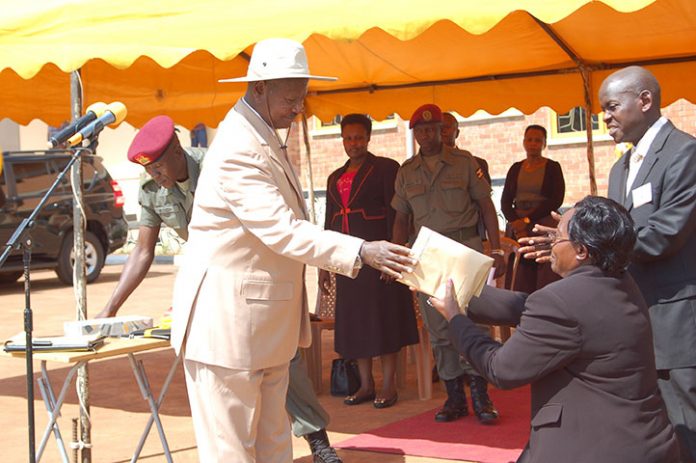
President-Museveni-hands-over-a-cash-envelope-to-Wakissha-chairperson


The ever increasing presidential cash handouts also known as presidential handshakes are becoming a thought provoking ritual. Our President has a prerogative to render financial help from his well-nourished State House budget on donations, however it is concerning that the boundaries of this prerogative might be going beyond the limits of the cosmos. And it doesn’t really matter whether it is the people chasing the presidency for handshakes or vice versa. The effect is the same since the devil is always in the detail.

Without inquiring into the legal structure or absence thereof, criteria and good intentions of the handshakes, I want to think that the giving and receiving of these cash handouts will only deliver unintended negative consequences to the country. We are already feeling the effects of the presidential handshake in ways we had never imagined as it has reinforced an expectation of other types of handshakes in the country. Since most people cannot access the President, they are now demanding for the Speakers handshake, Ministers handshakes, Members of Parliament handshakes, Presidential Advisors handshake, and other private handshakes which i cannot find space to name. This however, is not in the league of money that we are in the good nature of contributing to the education, marriage celebration, medical care or bereavement cost for a relative, dependent, friend or other financial support we may give to a good cause.

Uganda is already burdened by a very high age dependency ratio which at 96 per cent is ranked 7th in the World by the World Bank as of 2018. We share the high dependency stage with countries like Niger, Chad, DR-Congo, Burundi etc. This does not make for an impressive statistic. The high age dependency means that the Ugandan working class has to live through a life of struggle where they scrounge to barely meet their needs with most ending up with no saving for their old age. It also means that Ugandan industry and businesses have to suffer low labour productivity because of the negative conditioning of mindsets which continue to feed on the chronic dependency syndrome in the country.

So when the President comes to town with his money bags, people in positions of responsibility in the private sector have nowhere to hide because the cash handouts are sending a wrong signal to our youthful and unemployed population to believe that it is permissible to expect, receive and survive on cash handouts in the real world. In my view, Presidential handshakes and the other variety of handshakes that I have mentioned above can only serve to exacerbate our economic challenges.

Some people may come up in defence of the Presidential handshakes and claim that they can benefit recipients engaged in gainful economic activity. This may be possible but it should not be taken for granted that success is automatically assured with an injection of this kind of free money. You don’t need to be a genius to have encountered the irony of people who tend to act irrationally when they are gifted with free money, even when it is for business. In reality, they may not care well enough for the money in the business and lose it to consumptive behaviour since they did not labour to get it and are not obliged to pay back.

I need to emphasize here that cash handouts rarely motivate productivity. I doubt that anyone can accumulate wealth and secure his future in this fashion. Free money or goodies which are not given in exchange for a known value tend to smother all human endeavour to progress. That is why no country has ever developed with free money or aid. The exception which is not a country maybe with the religious institutions (i am referring to the genuine ones), but even they don’t receive free money from their flock. They receive donations from believers and regular offertory from the faithfuls, not for free but for a service they offer. Their service is specific and measurable on a spiritual scale and it does not frolic anywhere near the negative consequences of cash handouts. Moreover many institutionalized religions workup the money they receive by investing it in productive economic ventures to regenerate it. This should make the case for more well-structured investment in the key areas of the economy and less cash handouts.

Presidential handshakes just undermine the impetus of the people to work hard and fend for themselves especially when the handshakes are packaged to look like a business promotion. These cash handouts are not a human right whose protection is guaranteed by the Constitution. Therefore the President or any other persons who find themselves in this fox hole have no legal obligation to continue with this frenzy except for the venerable causes which should benefit under a framework governed by proper policy.

Whereas presidential handshakes do not kill people, they actually teach them nothing about how to live in the real world where every legitimate penny earned requires sweat and untiring effort. Ultimately, the recipients of the cash handouts suffer the most because when the cash runs out as it often does, they have to return to a hard life with worse coping abilities. So people are advised not to chase the president looking for cash handouts because this may rob them of a productive and creative life.

Presidential handshakes should not make a serious feature in any presidential repertoire. They therefore do not merit further discussion lest we glorify them instead. What requires further discussion and glorification is the need for the presidency to find other constitutional means of endearing itself to the political support base in ways that do not hurt us in the long run.

Fred Muwema
Managing Partner
Muwema & Co. Advocates
8th November 2019

Stories Continues after ad

EAC SG declines to meet Mufti Mubaje and others, locks himself in office

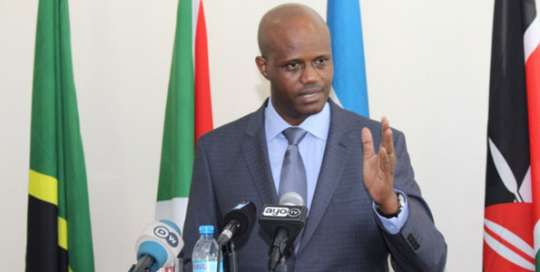
Librat Mfumukeko

The African Council of Religious Leaders (ACRL) has expressed its disappointment over the conduct and behaviour of the East African Community (EAC) Secretary General, Ambassador Librat Mfumukeko.

Mfumukeko locked himself in his office and declined to meet a delegation of the religious leaders despite officially inviting them for a meeting.

The council was led by its Co-Chair His Eminence Sheikh Shaban Mubaje, the Mufti of Uganda and other religious leaders from Burundi, Kenya, Tanzania, Rwanda and Uganda together with ACRL staff.

The council had been invited to present a paper on: ‘Political Democratization in East Africa: Progress and Pitfalls 1990 -2020’. The Paper had been shared in advance and to update the EAC on its other regional peace activities including the campaign to lobby African states to sign and ratify the Treaty on the Prohibition of Nuclear Weapons (TPNW).

“This is most embarrassing and quite unprofessional. How does the EAC (Secretariat) expect the members and citizens from the region to engage with its processes if this is the kind of treatment the Secretary General shows to invited guests! This is completely un-African and quite abnormal” Sheikh Mubaje wondered.

The team, that was kept waiting from 9.30 am to 2pm at the EAC Headquarters reception area, had to abandon its mission to meet the SG of the regional body.

“Religious leaders condemn this act of impunity by Mfumukeko. We will definitely write a complaint letter to the Chairman of the EAC, His Excellency President Paul Kagame and the member states to protest this mistreatment and lack of respect,” said Dr Francis Kuria, Secretary General, of the council.

The leaders ­insisted they will not shirk or be discouraged from their moral obligation to engage in regional peace and integration issues particularly partnering with member states through the EAC despite the mistreatment.

The peaceful co-existence of over 150 Million citizens from the East Africa Region requires an inclusive Mfumukeko betrays this trust from faith communities.

Stories Continues after ad

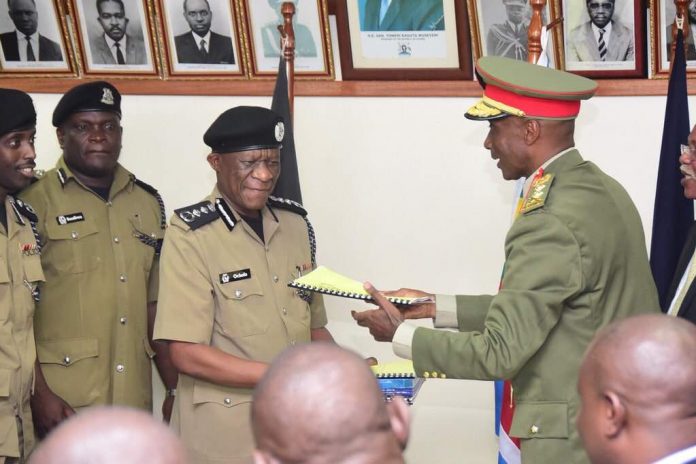
Twenty months later, IGP Okoth Ochola’s police no different from his predecessor Gen. Kale Kayihura’s paramilitary boys 


When President Yoweri Museveni appointed Martin Okoth Ochola twenty months ago to replace the embattled Gen. Kale Kayihura, many Ugandans jubilated thinking that the force now led by a civilian would be civil, as Kayihura’s had abused and tortured many, especially those in the opposition, journalists and students at higher institutions of learning.

Since Ochola took over from Kayihura, the police force has remained the same as it is militaristic in nature when it comes to field operations. It has failed to delink itself from politics, and appears to be totally against those opposed to the current government. The impartiality of the force is therefore questionable when the constitutional provisions on politics in the country are considered.

For instance, Museveni’s number political rival, Rtd. Col. Dr. Kizza Besigye, today continues to face the wrath of the police just like he did during the Kayihura era. Of course other opposition leaders also continue to face the same wrath expressed in teargas, live bullets, water cannons, pepper spray and flocking among others.

Further the journalists who report on political events in the country are also victims of IGP Ochola’s men in uniform. The torture that they faced under Kayihura has been replicated by the policemen serving under Ochola. The professionals who bring information to the public, have been brutalised by way of being beaten, clobbered, flocked on roads, teargassed and threatened to be shot by the notorious policemen.

Ochola’s police which seems to have assigned itself the duty of the custodian of freedoms of expression and assembly is also anti- students’ peaceful demonstrations. They also don’t want any peaceful demonstration by other dissatisfied groups in Uganda. One would say Kayihura’s did better when it came to students.  At least top officers like the late AIGP Felix Kaweesi and Kayihura himself engaged students on some occasions.

The latest attacks on Makerere students will for many years haunt Ochola, as his men tortured, broke into students’ halls and of course were accused of molesting female students, beating up disabled students and were as well as accused of destroying students’ properties including electronics. If we didn’t have social media today, the force would have denied the accusations. Thanks Facebook, Whatsapp, Twitter and Instagram.  Congratulations Mr. Ochola and hope you will retire thanking your men for torturing Ugandans after all you have not come out to condemn torture of students and Besigye.

But remember the EU and USA urged you to bring your men to order after tainting the image of the country and the East African region at large. Ugandans are waiting for reports.

More, just like Kayihura’s police, some of Ochola’s police officers continue to be involved in corruption, highway robbery, murders, theft, land grabbing and aiding land grabbing. It seems the officers beat up journalists on their duty because they have exposed them to the public. Otherwise why would a policeman beat up a journalist on duty? Why would a journalist’s camera and notebook be destroyed? Why would a police officer shield his face from the journalist’s camera if he is doing the right thing? It happened only days ago as policemen tortured Dr. Besigye again. It happened as they tortured Makerere students.

When it comes to bribes, traffic police in Ochola’s era is no better. They continue to ask for bribes from motorists. One could say this kind of corruption has come down in Kampala area but it becomes worse as one moves to upcountry towns and rural districts. Sniffer dogs are supposed to be a free service but citizens have to pay for this service. All this is happening under the watchful eye of Mr. Ochola who promised to change the force after the unceremonious departure of Kayihura. But no big changes so far realised.

In conclusion one would say leadership in the police changed faces but the characteristics of the force, epitomized by brutality, remain the same. IGP Ochola has failed and will retire without introducing any fundamental changes in the Uganda Police Force. Question is whether those officers deserve to wear the national uniform of what is supposed to be a pro-people force.


Stories Continues after ad

Commonwealth law ministers resolve to take action on access to justice

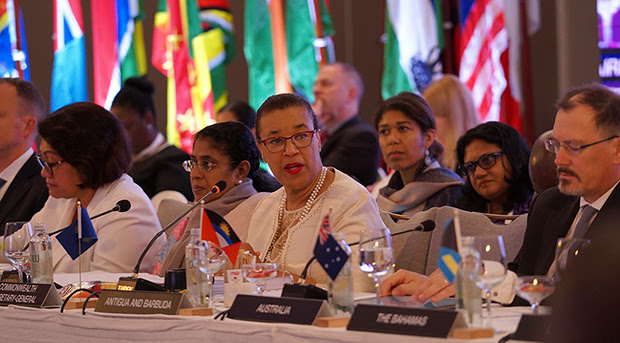
Commonwealth ministers and officials

Commonwealth law ministers have unanimously resolved to remove barriers to access to justice in their respective countries, and to deliver Sustainable Development Goal 16 on peace, justice and strong institutions by 2030.

The biennial Commonwealth Law Ministers Meeting concluded today with a set of proposed actions to be taken at the national and Commonwealth level.

Ministers agreed to address the justice needs of vulnerable persons, including by expanding specialised justice services and targeting root causes of legal problems.

Commonwealth Secretary-General Patricia Scotland said: “The Commonwealth Law Ministers Meeting is a powerful platform for mutual support and collaborative action to help all our member countries deliver on the values of our Commonwealth Charter, and towards achieving the Sustainable Development Goals.

“The active circulation of ideas and solutions amongst such a diverse group of nations, and the resultant outcomes, are all testament to the value of the Commonwealth and its networks in supporting good governance and the rule of law.”

Minister of Justice and Prison Reforms of Sri Lanka Thalatha Atukorale, who chaired the sessions, said: “Equal access to justice is integral to achieving the Sustainable Development Goals, and fundamental to defending human rights and democracy.

“However, new challenges require a trans-national and trans-institutional effort with international coordinated action. In this context, the Commonwealth is one of the most suitable platforms to work together on the same mission.”

Innovations in access to justice

Ministers considered a major study on international commercial arbitration in the Commonwealth. They agreed this method of resolving cross-border disputes could be especially helpful for small and medium-sized enterprises.

Countries were encouraged to consider signing the New York Convention on international commercial arbitration and adopt compatible national laws.

Ministers also welcomed a package of anti-corruption benchmarks, drafted by the Secretariat, designed to help governments and public sector bodies measure their anti-corruption activities, and make improvements if needed.

The benchmarks cover 25 areas, including corruption offences and public procurement. They will be submitted for final approval to Commonwealth Heads of Government at their biennial meeting in June 2020.

Ministers debated the transformative impact of technology in the delivery of justice, including ethical considerations. They agreed to explore the creation of Commonwealth guidelines on the use of artificial intelligence in the legal sphere.

Countries agreed to support each other in adopting new technologies to ensure timely, convenient and equal access to justice, in a low-cost and people-friendly manner.

Finally, ministers called for a study on restorative justice in the Commonwealth – reconciling offender, victim and community to resolve disputes – taking note of indigenous, traditional and customary justice systems. The findings may be developed into Commonwealth good practices on the issue.

They commended the legal work of the Secretariat, including on virtual currencies, legislative drafting and cyber issues.

The outcomes of the law ministers meeting will be tabled at the Commonwealth Heads of Government at their next meeting in Rwanda, in June 2020.

Stories Continues after ad

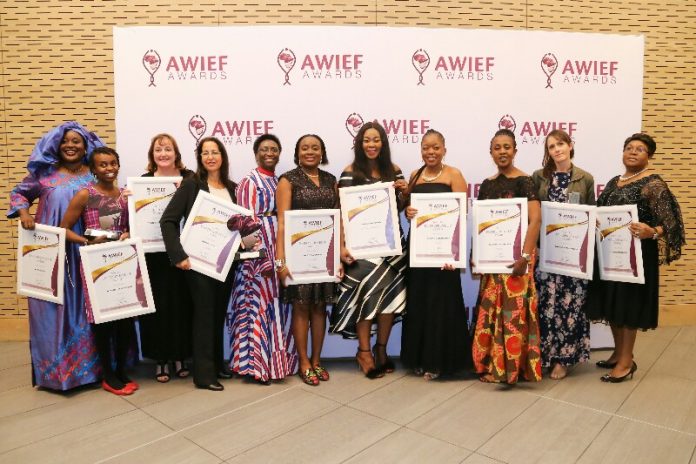
AWIEF Awards celebrate women entrepreneurs in Africa

AWIEF Awards celebrate women entrepreneurs in Africa

The Africa women Innovation and Entrepreneurship Forum (AWIEF) annual Awards recently honoured and celebrated the achievements of women entrepreneurs and innovators across the African continent. Twenty-two women founders and entrepreneurs were selected as finalists, from 10 different African countries, across eight different categories.

The 2019 AWIEF Awards, which took place at the Cape Town International Convention Centre (CTICC), showcased a diverse representation of finalist entrepreneurs from across the continent, including from Cameroon, Ethiopia, Ghana, Kenya, Mali, Nigeria, South Africa, Tanzania, Uganda and Zambia.

“We are happy to celebrate with our trailblazers and congratulate them for their achievements,” said Irene Ochem, AWIEF founder and chief executive officer.

Promoting excellence in entrepreneurship and innovation amongst women-owned businesses in all sectors and across all 54 African countries is the aim of AWIEF, which celebrated the five-year anniversary of its benchmarking annual Conference and Expo this year, October 29-30, 2019, in Cape Town.

The AWIEF Awards’ panel of judges is made up of high-calibre industry experts and thought leaders spread across the continent.

Young Entrepreneur Award
Winner:
Lola Alli, Lagos Executive Cardiovascular Clinic (Nigeria)
Runners-up:
Ola (Orekunrin) Brown, Flying Doctors (Nigeria)
Beatrice Haule, AfriAgric Products (Tanzania)

Tech Entrepreneur Award
Winner:
Caroline Corbett, SmartBlade (South Africa)
Runners-up: 
Rebecca Enonchong, AppsTech (Cameroon)
Diane Temogne, Engineering Consulting and Services (Cameroon)

Social Entrepreneur Award
Winner:
Sizani Ngubane, Rural Women’s Movement (South Africa)
Runners-up:
Laurence Esteve, Zip Zap (South Africa)
Efua Asibon, Dislabelled (Ghana)

Global Brand Award
Winner: 
Shantelle Booysen, Elim Spa Products (South Africa)

Agri Entrepreneur Award
Winner:
Caroline Pomeyie, ProFish (Ghana)
Runners-up:
Affiong Williams, ReelFruit (Nigeria)
Evelyn Namara, Vouch Digital (Uganda)

Empowerment Award
Winner:
Charlot Magayi, Mukuru Clean Stoves (Kenya)
Runners-up:
Mary Inzofu, Njia Empowerment Organisation (Kenya)
Nambula Kachumi, WeCreate (Zambia)

Creative Industry Award
Winner:
Genet Kebede, Paradise Fashion (Ethiopia)
Runners-up:
Kapasa Musonda, Mangishi Doll Co. (Zambia)
Abby Ikomi, House of Irawo (Nigeria)

Lifetime Achievement Award
Winner:
Kristine Pearson, Lifeline Energy (South Africa)
Runners-up:
Oumou Sangaré, Festival International du Wassulu (Mali)
Joke Silva, LUFODO Group (Nigeria)

AWIEF Awards 2019 featured also the inaugural APO Group African Women in Media Award and the TIA Women in Innovation Awards.

Stories Continues after ad

Tullow Oil says too early for new FID date on oil project as Energy Minister reveals govt has solution

Tullow Oil

Tullow Oil has said it is still too early to give a new timeline on a final green light for investment in Uganda’s first oilfields, Tullow Oil Chief Executive Paul McDade said on Wednesday, reiterating the company’s plan to sell down its stake to TOTAL and CNOOC in US$900 million transaction that still hangs in balance over tax issues.

“We will not make an FID (final investment decision) on the project at the current equity,” McDade told news agencies. “To get the right conditions to sell down more of the project, we need more certainty over the progress towards FID.”

Tullow’s plan to sell another stake in its 230,000 barrel per day project in Uganda to France’s Total and China’s CNOOC, already partners in the fields, was called off in August due to a tax dispute with the Government of Uganda which wants to earn more tax revenue than what companies are willing to give.

Energy Minister Eng. Irene Muloni said on Wednesday she was optimistic the government can resolve a tax dispute with oil companies in time to get first oil flowing by 2023.

Muloni said yesterday in South Africa that she expected a final investment decision (FID) from oil companies Tullow, France’s Total and China’s CNOOC by the end of the first quarter next year on an oil export pipeline through neighbouring Tanzania.

Muloni said the government had offered a solution. “We have engaged with the companies. We have offered to them a solution,” Muloni said at the Africa Oil Week conference in Cape Town.

“We are hopeful that between now and the end of the year they will re-engage to try to find a solution,” she said, adding that it would enable first oil through the pipeline by 2023.

Tullow’s plan to sell a stake in the project to partners Total and CNOOC was called off in August after the firms failed to reach agreement with Ugandan tax authorities on the tax relief on money Total and CNOOC would have paid to Tullow.

Once pipeline construction begins, Muloni said it would take about three years to complete.

Meanwhile Muloni has invited bidding on five blocks, speaking at an African oil conference in Cape Town.

Muloni added that she was keenly awaiting companies to take a final investment decision regarding the construction of an oil export pipeline through neighbouring Tanzania.

In January 2017, Tullow announced that it had agreed a substantial farm-down of its assets in Uganda to Total. Under the Sale and Purchase Agreement, Tullow agreed to transfer 21.57 percent of its 33.33 percent interest in Exploration Areas 1, 1A, 2 and 3A in Uganda to Total for a total consideration of US$900 million.

CNOOC Uganda Limited (CNOOC) subsequently exercised its pre-emption rights under the joint operating agreements to acquire 50 percent of the interests being transferred to Total on the same terms and conditions.

In August 2019, Tullow announced that this farm-down was terminated, following the expiry of the Sale and Purchase Agreements (SPAs). The termination of the transaction was a result of being unable to agree all aspects of the tax treatment of the transaction with the Government of Uganda.

Technical work on the development and the upstream pipeline is well advanced and the Joint Venture Partners had been targeting reaching FID by the end of 2019, but the termination of the farm-down agreement with Total and CNOOC, has created uncertainty to the extent that some suppliers who had invested expecting to get contracts are now worried.

Stories Continues after ad

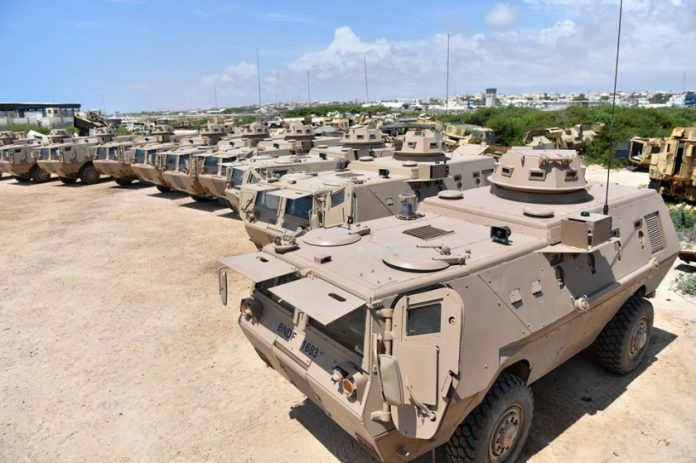
Burundi boosts AMISOM operations with combat vehicles

Burundi's combat vehicles delivered in Somalia

The Burundian contingent under the African Union Mission in Somalia (AMISOM) has acquired a fleet of armoured personnel carriers to reinforce ongoing counter-terror operations in Somalia.

The Government of the Republic of Burundi delivered at least 20 combat vehicles as contingent-owned equipment to its troops serving under AMISOM.

The high rate of wear and tear of equipment due to the harsh operating environment requires AMISOM troop-contributing countries to replace equipment periodically to ensure the efficiency of operations.

Burundian troops alongside other forces from Djibouti, Ethiopia, Kenya, and Uganda, are deployed in Somalia under a UN Security Council mandate to support the Somali security forces to defeat terrorist groups.

On Tuesday, the Special Representative of the Chairperson of the African Union Commission (SRCC) for Somalia, Ambassador Francisco Madeira, inspected the new equipment in Mogadishu.

Also presented was the Deputy AMISOM Force Commander in-charge of Logistics and Support, Maj. Gen. George Owinow, and the Commander of the Burundian troops under AMISOM, Brig. Gen. Richard Banyankimbona.

Madeira, who is also the Head of AMISOM, noted that the military hardware would boost AMISOM’s capacity to combat terrorism while ensuring safety of the soldiers.

“Our soldiers are valiant and brave however they need protection while fighting. So, these armoured personnel carriers will protect them as they fight the enemy,” said Ambassador Madeira.

“They are force enablers and force multipliers, no doubt and I thank the Burundi President for providing this essential equipment,” he added.

The AMISOM Burundi contingent commander, Banyankimbona said the carriers would enhance his troops’ movement, protection of civilians, UN and AMISOM personnel. The Burundian troops under AMISOM secure Middle Shabelle region.

“We are deploying them to support the implementation of AMISOM mandate,” said Banyankimbona.

Stories Continues after ad

China gifts EAC 12 cars worth US$400,000 for capacity building programmes

Political Counselor at the Chinese Embassy in Dar es Salaam Mr. Liang Lin and EAC SG Liberat Mfumukeko

The People’s Republic of China has made a commitment to give the East African Community (EAC) Secretariat 12 cars worth US$400,000 to be used in various capacity building programmes at the Community.

Making the announcement,  Mr. Liang Lin, the Political Counselor at the Chinese Embassy in Dar es Salaam, Tanzania, said that China was keen on working with the EAC in, among other fields, education, infrastructure development, trade, prevention of Ebola, peace and security, and capacity building initiatives.

Lin, who paid a courtesy call on the EAC Secretary General, Amb. Liberat Mfumukeko, at the EAC headquarters in Arusha, Tanzania, disclosed that China was working on infrastructure projects that would promote connectivity across the entire African continent including road and railway networks, adding that other areas were developing hydropower, power transmission and expansion of seaports.

He further said that China would also assist in building industrial parks in the EAC Partner States, and is looking forward to more discussions on the EAC initiative on Bamboo farming in the region.

He revealed that plans were underway to implement infrastructure development projects worth US$16 billion to be implemented over a three year period on the entire African continent courtesy of the 2018 Beijing Summit of the Forum on China-Africa Cooperation.

On capacity building, Lin said China would be providing 50,000 scholarships to African countries and urged EAC to tap into these study opportunities.

Lin, who represented the Chinese Ambassador to Tanzania and the EAC, further presented a donation of US$200,000 from China’s Ministry of Foreign Affairs to the Secretary General, monies which will go towards capacity building programmes in the EAC.

EAC Secretary General, Amb. Liberat Mfumukeko on his part expressed his appreciation to the People’s Republic of China for its generous donation towards the Community’s capacity building programmes.

Mfumukeko informed Mr. Lin that the EAC integration process was well on course with consistent implementation of the EAC Customs Union, Common Market and Monetary Union Protocols.

Mfumukeko said that EAC Partner States had agreed to harmonise cross-border rules and procedures and to open their borders thereby increasing intra-regional trade.

On the free movement of persons, the Secretary General said that there were no visa fee requirements for East Africans traveling across the region with some Partner States allowing the use of national identity cards as traveling documents, adding that the countries were issuing the International East African e-Passport which enables travel within the region and beyond.

On infrastructure development, Mfumukeko informed the Chinese envoy that the EAC Partner States were jointly implementing regional infrastructure projects that had been agreed upon by the biennial infrastructure development retreats by the Summit of EAC Heads of State.

He urged China to upscale multilateral financing for development projects in East Africa to complement the current bilateral financing for the same.

On the EAC Political Federation, the Secretary General informed Lin that the Community’s ultimate goal was to become a Federation and that it would launch the national stakeholders’ consultations on the Draft Constitution for the EAC Political Confederation before the end of the month, adding that Partner States had provided a budget for the process.

Mfumukeko said that each EAC Partner State had nominated two Constitution Making Experts and one Legal Draftsman to assist in drafting a basic law for the proposed Political Confederation which is a transitional model to the Political Federation.

Stories Continues after ad