Stanbic Bank
Stanbic Bank
20.1 C
Kampala
Stanbic Bank
Stanbic Bank
Home Blog Page 1187

From Stablecoins to Central Bank Digital Currencies

By Tobias Adrian and Tommaso Mancini-Griffoli


As privately issued stablecoins continue to encroach on more traditional forms of money—like cash and bank deposits—policymakers will not simply look on from the sidelines. They will arbitrate. Their rules and actions will determine how we will eventually pay for everyday items like a cup of coffee, and, more importantly, will affect the structure and risks of our financial sector.

Our last blog introduced stablecoins—cryptographic tokens that can be easily exchanged, benefitting from minimal price volatility relative to cash. Consumers might quickly adopt these new, cheaper, faster, and more user-friendly services integrated into their social media platforms. However, these also come with notable risks that require prompt regulatory action.

One possible regulatory path forward is to give stablecoin providers access to central bank reserves. This also offers a blueprint for how central banks could partner with the private sector to offer the digital cash of tomorrow—called synthetic central bank digital currency (sCBDC)—as discussed in the IMF’s first Fintech Note .

The regulatory imperative

Whether stablecoins are indeed stable is questionable. Stablecoin providers must privately generate trust in their liabilities—the very coins they issue. Many do so by backing coins one-for-one with assets of the same denomination. So if a stablecoin owner wanted to redeem her 10 euro coin for a 10 euro note, the stablecoin provider could sell the assets for cash to be pay out on the spot.

Or could it? Much depends on the safety and liquidity of the underlying assets, and on whether they fully back the coins in circulation. It also depends on whether assets are protected from other creditors if the stablecoin provider goes bankrupt.

Will the stablecoin owner get her money back any time she wants? Even if her peers attempt to sell their coins all at once, in a panic?

Regulation must eliminate these risks. One option is to require that stablecoin providers hold safe and liquid assets, as well as sufficient equity to protect coin-holders from losses. In essence, the call would be to regulate stablecoin providers despite them not being traditional banks; not an easy task we have found out.

Central bank backing

Another approach is to require stablecoin providers to fully back coins with central bank reserves—the safest and most liquid assets available.

The solution is not novel. The People’s Bank of China, for instance, requires giant payment providers AliPay and WeChat Pay to do so, and central banks around the world are considering giving fintech companies access to their reserves—though only after satisfying a number of requirements related to anti-money laundering, connectivity between different coin platforms, security, and data protection among others.

Clearly, doing so would enhance the attractiveness of stablecoins as a store of value. It would essentially transform stablecoin providers into narrow banks—institutions that do not lend, but only hold central bank reserves. Competition with commercial banks for customer deposits would grow stronger, raising questions about the social price tag.

But there are also clearer-cut advantages. Chief among these is stability, as backing is in perfectly safe and liquid assets. Another is regulatory clarity, as narrow banks would fit neatly into existing regulatory frameworks. Moreover, different stablecoins could be seamlessly exchanged thanks to the central bank settling all transactions. This would enhance competition among stablecoin providers. Additional benefits include support for domestic payment solutions in the face of foreign-currency stablecoins offered by monopolies that are hard to regulate; and better monetary policy transmission if pressure on currency substitution were alleviated, and interest rates were paid on reserves held by stablecoin providers—however distant the prospect.

Next step: a central bank digital currency?

If stablecoin providers held client assets at the central bank, clients would indirectly be able to hold, and transact in, central bank liabilities—the essence, after all, of a “central bank digital currency.” In practice, the coins would remain the liability of private issuers, and client assets would have to be protected against the bankruptcy of the stablecoin provider.

This synthetic central bank digital currency—or “sCBDC” for short—offers significant advantages over its full-fledged cousin, which requires getting involved in many of the steps of the payments chain. This can be costly—and risky—for central banks, as it would push them into unfamiliar territory of brand management, app development, technology selection, and customer interaction.

In the sCBDC model, which is a public-private partnership, central banks would focus on their core function: providing trust and efficiency. The private sector, as providers of stablecoins, would be left to satisfy the remaining steps under appropriate supervision and oversight, and to do what they do best: innovate and interact with customers.

Whether central banks jump on board at all is another matter. Each central bank would weigh the pros and cons related to payment system stability, financial inclusion, and cost efficiency as discussed in a recent IMF staff paper. To the extent that central banks wish to offer a digital alternative to cash, they should consider sCBDC as a potentially attractive option.

Will sCBDC turn out to be the central-bank money of the future? One thing is sure: the world of fiat money is in flux, and innovation will transform the landscape of banking and money. You can bet your bottom dollar on it.

This blog is the second in a two-part series on IMFBlog covering digital currencies.

Stories Continues after ad
KCCA eager to qualify for CAF Champions League group stages

KCCA- FC team


Ugandan league champions KCCA FC are aiming to qualify for the CAF Champions League group stages for their second time in history when they host Angolan side Petro de Luanda on Friday 27th September at the StarTimes stadium in Lugogo.

The two sides played out a goalless draw in the first leg in Luanda, Angola a fortnight ago.

KCCA will need a only win to qualify while a draw involving goals will see them knocked out on away goals rule. A goalless draw in normal time will take the game to spot kicks.

Simon Serunkuma will be in line to feature for the club while Erisa Sekisambu, Revita John and John Egbuonu Odumegwu or Keziron Kizito will have to wait until the team makes the group stages for them to feature.

Mike Mutebi will rely on Allan Okello, Mike Mutyaba and Kizza Mustafa for the goals plus the experience of Muzamiru Mutyaba to overcome a tricky match against a hard opposition.

Ahmed Imtehaz Heeralall from Mauritius will be the center referee and will be assisted by his compatriots Pithia Jean Marc and Ram Babajee as the first and second assistant referees.

He was the man in charge when KCCA defeated Club Africain 2-1 at Lugogo back in May 2017.

Ganesh Chutooree will be the fourth official while Burundian Aimable Habimana will the Match Commissioner.

The Kasasiro Boys have good memories of their last match against Angolan opponents, after they knocked out CD Primeiro de Agosto in 2017 in the Caf Confederations Cup.

The winner will advance to the group stage, while the loser will enter the Confederation Cup play-off round.

A win for KCCA FC will see them qualify to the CAF champions league group stages for the second time since 2015.

Caf Champions League

Friday 27th September 2019

KCCA vs Petro de Luanda (first leg: 0-0)

StarTimes stadium, Lugogo (4pm)

Stories Continues after ad
Coca-Cola contributes to improved access to clean drinking water in Rubaga division

Mr. Conrad van Niekerk, Managing Director of Century and Rwenzori Bottling Companies and Ms Ssebugwowo at the event.


Coca-Cola Beverages Africa in Uganda, through Century and Rwenzori Bottling Companies, has launched a collaboration with Nyonta Relief to provide increased access to safe water for vulnerable households in Ndeeba, in Kampala.

Supporting the project “Nyonta Tree For Life”, Coca-Cola Beverages Africa will supply 100 ‘Nyonta Kits’ to families in Ndeeba, which will give them clean drinking water for use in their households for drinking, cooking and other uses.

The Nyonta Kit uses gravity to purify over 100 LPD of any water from a fresh water source making it safe for human consumption. The contribution is valued at Shs33 million and will go to 500 people in the Ndeeba community.

Conrad van Niekerk, Managing Director of Century and Rwenzori Bottling Companies, said the company support to the vulnerable communities in Ndeeba was underpinned by the belief that all people around the world deserved a chance to access safe water for life.

“It is therefore critical for us, as part of the world’s leading beverage company, to use water responsibly in our operations and also lead in giving it back. We work to protect local water resources and provide safe, clean drinking water to communities in need,” he said.

He said Water was a key issue for the Coca-Cola system around the world and pledged that the company would continue using water responsibly to ensure that the bottling operations in Uganda reduced water use and supported the provision on safe, clean drinking water to communities.

Explaining the project, Nyonta Relief Patron, Ms. Joyce Nabosa Ssebugwawo, said that In Uganda, it is estimated that 33 children die every day due to diarrhea from contaminated drinking water.

“That is why we launched the ‘Anti33’ campaign; to bring together people and organisations who feel the moral obligation to help reduce the number of children dying of preventable drinking water diseases. We are happy that Coca-Cola Beverages Africa has joined us today,” she said.

Lubaga division Mayor, Nabbosa Ssebugwawo, said that since mothers are the custodians of household health, ensuring the availability of drinking water in homes is their direct responsibility. She encouraged all women to join the campaign.

“Having access to clean drinking water is key to a healthy life. Additionally, availability of clean drinking water has the power to encourage gender equality, stable education for children in a home and income generation for mothers who will have ample time since sickness in a home is eliminated.” She said

It is worth noting that millions of people across the world are deprived of this essential need. The issue is particularly problematic in Southern Africa. According to UNICEF, in Uganda it is estimated that 60 per cent of the population has no access to potable water, leading to the death of 33 children every day.

The Ministry of Water and Environment in July this year presented Coca-Cola Beverages Africa with an award for Water Usage Efficiencies at the Mbarara Plant, after a sector audit covering 24 companies in Uganda.


Stories Continues after ad

Dfcu Bank recognized for enabling financial literacy at the 2019 Digital Impact Awards Africa.

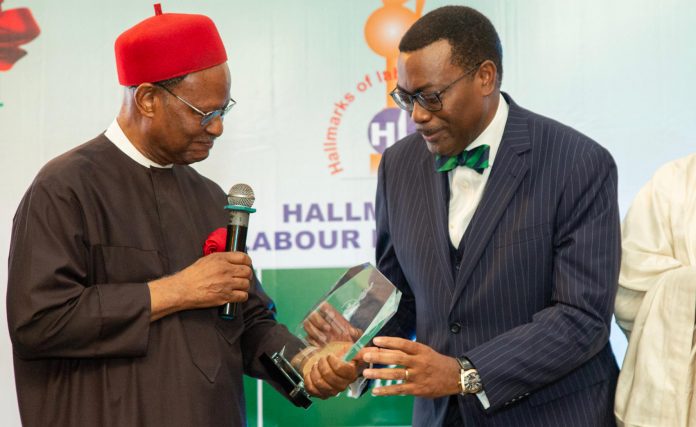
Dfcu Bank's Edgar Ntwali (L) and Lloyd Jonathan Busuulwa at the 2019 Digital Impact Awards Africa gala


Dfcu Bank has won the Digital Awareness Initiative award at the just concluded Digital Impact Awards Africa (DIAA) that took place at the Mestil Hotel, Kampala.

The bank has been spearheading the use of digital technology to drive financial literacy and inclusion in Uganda. Dfcu Bank received the award for its ‘Dfcu Battle for Cash’ campaign which is a regional activity that teaches people on saving and financial literacy. Some of the topics covered in the training included; Why and how to save, where to invest money so it can grow, things to think about when thinking of investing and so much more.

The Digital Impact Awards Africa bring together tens of C-Level Executives, Senior Digital and IT executives each year, in series of events that recognize and celebrate strategic trends and technologies which are shaping the Digital, IT and business worlds.

The awards were held under the theme “Include Everyone”, calling for various stakeholders and industry players in the country’s digital landscape to put in place and enforce solutions, approaches and innovations that will enable financial inclusion across Uganda.

Speaking at the awards gala, Dfcu Bank’s Ag. Head Alternative Channels, Lloyd Jonathan Busuulwa noted that the recognition reflected the bank’s tremendous efforts towards enabling financial literacy in Uganda.

“As a market leader in the area of financial literacy, we are determined to utilize our products, services, initiatives and partnerships to make both financial literacy and inclusivity a reality countrywide,” he said.

In the pic; Dfcu Bank’s Edgar Ntwali (L) and Lloyd Jonathan Busuulwa at the 2019 Digital Impact Awards Africa gala


Stories Continues after ad

Police defends transfer of Hoima police commander hours before by-election

Police Spokesperson Fred Enanga


Police has defended the transfer of Hoima District Police Commander (DPC), Christopher Katumba, a few hours to  to the hotly contested Woman Member of Parliament by-election now underway in that district.

According to police spokesperson, Fred Enanga, Katumba was transferred to the Environmental Protection Police Unit and replaced by  DPC of Mubende District, Martin Okoyo.
“Mr. Katumba was not transferred due to political influence rather by institution’s policy framework in place that allows for transfers and postings of police officers to various posts.”

He said it was a placement committee’s decision, whose end goal is to appraise and monitor the performance of all officers, whether competent or incompetent, was set up, to ensure all transfers and postings, are transparent and merit based.

“The committee works independently and looks at features such as civil service values and code of ethics and conduct. Therefore, those who are attempting to bring propaganda in matters of our transfer and postings, must know that it is a prerogative of the placement committee, which should not be circumvented citing political influence,” he said.

Enanga said that bye elections taking place in Hoima and Kabong are isolated policing events, out of the wider initiatives in place. They are being policed, based on a policing plan and not tagged to an individual. So far, the polling exercise is progressing well in both electoral areas, without any significant crime and safety concerns.

“The appraisal and monitoring of all officers, is a key tool in our service delivery and development mandate. It also promotes clear linkages between the command and tactical levels and helps us build on our achievements and also address shortcomings,” he said.

The by-election is peddled at filling the vacancy left behind by the former district woman MP Kaahwa Tophace Byagiira who crossed to represent the newly created Kikuube district. The stiff competition is between NRM flag-bearer Harriet Businge Mugenyi and FDC’s Asinansi Nyakato, the joint opposition candidate for the Hoima Woman MP.

Recently, the opposition led by Dr. Kizza Besigye, Kyadondo east MP Robert Kyagulanyi and national resistance movement (NRM) led by its chairman who double as the president of the country Yoweri Museveni camped in the area to canvas support for their respective candidates.

Stories Continues after ad

Kyabazinga tasks commonwealth MPs on climate, gender equality and culture

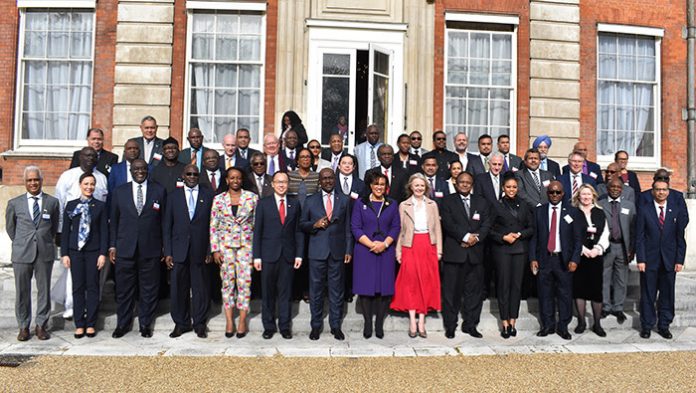
The Kyabazinga of Busoga posing for a photo with CPC delegates in Jinja.


Kyabazinga, William Gabula Nadiope IV has tasked participants of the ongoing 64th Commonwealth Parliamentary Conference to prioritize climate change and gender equality.

Holding a Banquet for his over 300 guests at Nile Resort Hotel, Jinja, and the monarch noted that planting of trees throughout the commonwealth should be top on the agenda.

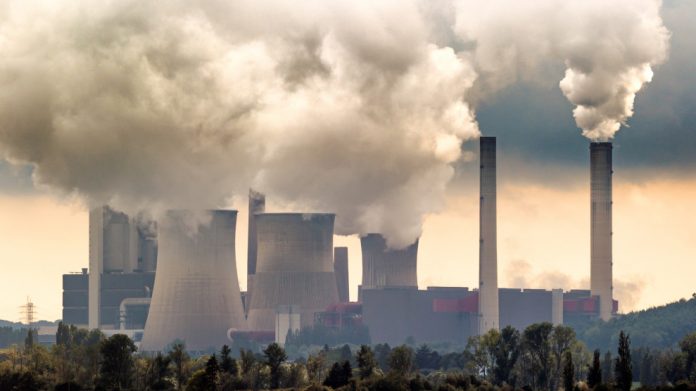
“We meet here today at a time when the world is grappling with climate change issues. It is real and it is happening right before our eyes. I am happy that you realize its dangers and you have planted trees in Kagulu at the Hill. That was great. But let’s do more,” the Kyabazinga noted asking delegates to pass resolutions as CPA and legislations and policies back in their respective countries that will reduce Carbon emissions.

“As a way of action, I challenge CPA, starting from this meeting in Uganda to launch a program to plant one million trees in every CPA host country going forward; as CPA’s practical approach to mitigate the negative effects of climate change,” said.

The King, appreciated CPA for bringing together members to work out achievable targets and plans to help member states of the commonwealth in terms of democracy, development and equality with respect for diversity, revealed that it’s important to appreciate the peculiarity of the different cultures and norms that different societies of the Commonwealth hold dear to them.

“It should and I hope it is the responsibility of the CPA to help all member parliaments and countries achieve development without them losing their moral fabric. Without them being forced to adopt practices that simply break their social cultural norms and history”, he emphasized adding that a society and a people without a cultural and moral history to refer to is a society built on sand.

Understanding, respecting and preserving those cultures and norms that the respective societies hold dear, especially those that seek inclusiveness, equality and equity for the two genders, the Commonwealth will achieve all it set out to achieve without a single member feeling superior over the other and without the problems that come with the one cap fits all approach to policies.

“We meet here at a time when the debate for equal pay for equal work done is loud. The gender equality debate should now move from just having women in positions of leadership. They should earn the same as their male counterparts and where it is also affecting the men, the men should earn the same as their female counterparts. The same should happen in sports if we want to inspire our girls and women to join the game”

The reigning 4th King of Busoga emphasized the need to promote technological innovation on the agenda for the young people, the same as relevant quality education for all.

“When that and more is achieved, I am sure you will be advancing the values of the Commonwealth and the aspirations of the people you represent”.

He called upon legislators to make choices and pass resolutions and plans on the side of love not hate; on the side of inclusion not exclusion; tolerance not intolerance.

Over 10 speakers from different countries, 250 delegates, Leader of opposition, Cecilia Ogwal, Elijah Okupa, Isabalangira of Busoga, Jinja LCV boss, George William Mutyabule, Permanent Secretary of the Kingdom, Butembe Hereditary Chief attended the luncheon that was characterised by cultural and traditional dances.

Earlier, the delegates toured and climbed Kagulu hill, source of the Nile before returning to Kampala

Stories Continues after ad

CPC: Museveni warns  leaders against interfering with internal democratic systems of others

President Museveni addressing CPC.


President Yoweri Museveni, has urged Commonwealth countries to respect  governance systems that exist in each of the members states as they work together.

Museveni made the call during the official opening of the 64th Commonwealth Parliamentary Conference (CPC) taking place at Commonwealth Resort Munyonyo.

“I am advising members of the Commonwealth using a proverb, ‘When the dog’s puppies are young, feed them equally because you don’t know which one will be a hunter when they grow up’ It is wiser for world leaders to respect other countries,” said.

“If our practices are correct, they will thrive and spread, if they are wrong they will collapse, it’s not necessary to generate crisis on account of differences in ideology, let there be peaceful competition among different idea,” he told delegated

The president said, the world has witnesses bad systems collapsing by their own dynamics without external pressure for example the collapse of the Emperor of Ethiopia and the communist system in Eastern Europe were not caused by wars from outside but by internal weaknesses.

He said Commonwealth countries are democratic, albeit in different forms. This is an achievement. They should use their numbers (about 2.5 billion people) to promote investment, security, culture and trade.

“Africa, like other areas, shook off colonialism with South Africa being the last one to gain independence. Now that colonialism has been defeated, egocentrism, greed and bigotry should be banished.” he said adding that greed continues to obstruct the mutually beneficial interaction within the different portions of the human race and to block the optimum use of scientific knowledge for the universal benefit of man.

The speaker of parliament, Rebecca Kadaga who double as the host of the 64th CPC, said we are faced by many threats which do not know the color of our skin, political affiliations and urged parliamentarians to act as bridges between the government and the people.

She said the issue of people with disabilities should be discussed in various parliaments, as well as sexual harassment.

“A lot of work has gone on in Uganda to organize the 64th CPC. I thank you, President Museveni and security agencies for the security and safety initiatives during the 64th Commonwealth Parliamentary Conference and all the communities that have brought us together today,” she said.


Below is the speech in full

H.E. Vice President, Edward Ssekandi;

Rt. Hon. Speaker of the Parliament of Uganda and President-designate of the Commonwealth Parliamentary Conference;

Secretary General of the Commonwealth;

Secretary General of the Commonwealth Parliamentary Association (CPA);

Distinguished Rt. Hon. Speakers and Heads of delegations from all CPA regions;

The Vice Chairman of the NRM Party;

All Parliamentarians here;

Invited guests;

Ladies and gentlemen.

On the behalf of the people of Uganda, I welcome you, the members of the CPA, again, to Uganda.   You are most welcome.  I say that I welcome you to Uganda, again, because I was very much here when you were here last, 52 years ago.  I was not in the meetings themselves.  I was, however, 23 years old that time, a first year student in the University of Dar-es-salaam and already a very active student leader, leading the University Students African Revolutionary Front (USARF).  The meeting must have taken place during the short holiday because I remember I was in Uganda and not in Dar-es-Salaam.

I normally, tell my young Party/Movement comrades that what they call history, I call current Affairs.  Hence, while for many of you the meeting that took place here 52 years ago is history, for me it is current affairs.

I would like to recognize the support of Her Majesty, Queen Elizabeth the Second, the Queen of United Kingdom, who is the patron of the Commonwealth Parliamentary Conference (CPC).

Let me appreciate the CPA Chairperson, Hon. Emilia Monjowa Lifaka and the CPA Secretary-General Mr. Akbar Khan. I thank you all for the invitation to speak to you today.

The host Speaker of the Parliament of Uganda, Rt. Hon. Rebecca Kadaga, has been doing a lot in our country and through the Commonwealth Parliamentary Association networks over the years. These efforts must be the reason we are hosting the CPC in Kampala today. I congratulate her, the Members of Parliament and the Uganda Secretariat of the CPA for successfully organizing this conference and appreciate their hard work.


The newspapers in Uganda have been reminding us that the two controversial issues of that time were: the regime of Ian Smith in Rhodesia and the United Kingdom (UK) joining the European Union (EU) and abandoning the Commonwealth special economic arrangements.

Since that time, the issue of Rhodesia was unilaterally resolved by Africa through the war of liberation executed by Zanu and Zapu, supported by Africa and the socialist countries. It is good that the British government, under Margaret Thatcher, came in, last minute, to facilitate the transition with Lord Soames and those other arrangements.

The issue of the UK membership in the EU is, of course, back in the news, with Brexit.  The people of the UK, through internal processes, have the capacity to direct the destiny of that country.

When I met Her Majesty, the Queen in 1987, I told her that the Commonwealth was an Association of great potential.  With a population of 2.4billion people, it is the only international organization that I attend and I do not have to put up with the inconvenience of translation with ear appliances.

We can communicate directly through the use of the English language.  This is a phenomenon of great potential if it is properly used. We could cooperate in security, investments, culture and governance. Can we revive the preferential trade arrangements?  Here in Africa, we are now committed to the CFTA, to COMESA and EAC. What preferential commercial arrangement could Africa have with the UK, with France or with Portugal? Of course, we have some arrangements with the EU that includes France. Maybe we could have arrangements with the UK, even when they are out of the EU, as well as with the other Commonwealth countries such as India, Canada, Australia, Pakistan, etc.; but as the Continental Free Trade Area (CFTA) ─ the whole of Africa, not portions of it.

However, unfortunately, much of this potential is clouded by ideological disorientation, bigotry, ego-centrism and myopia.  A lot of time and energy is spent on the enterprise of some groups trying to control the destiny of other people. This is wrong and unnecessary. History is our good teacher on this.

Man has been here for the last 41/2 million years, eversince we evolved as wise primates known as homo sapien sapien, from the earlier species. Right from the beginning, the problems facing man were two:  oppression of man by nature and oppression of man by fellow men.  Oppression of man by nature involved: floods, drought, disease, landslides, wild beasts, darkness, cold, etc., etc.  Oppression of man by man involved: slavery, colonialism, neo-colonialism, fascism, etc.  In a recent speech in Japan, I pointed out that for much of the human history, man could not ably tame nature on account of the limited knowledge by man as far as the scientific laws were concerned. Gradually, however, man invented fire around 1.5 million years ago; started domesticating crops around 10,000BC; started domesticating livestock around the same time; and invented iron tools, around 1200BC.

Nevertheless, even with those advances, man continued to rely on human muscle and the muscle of beasts. Human muscle involved the use of the hand-hoe, blacksmithing, carpentry, clay-work (okunogoora, kubuumba), etc.; and beast muscle involved the use of donkeys, camels, horses, etc.

This use of human and beast muscle meant low quantities of production and low speeds in terms of activity. However, in the year 1438, Johannes Gutenburg invented the Printing Press. In the year 1698, Thomas Savery invented the steam engine for pumping water and in the year 1823, George Stevenson converted the steam engine to the task of pulling railway engines. This constituted the First Industrial Revolution. Since that time, portions of humanity have been through the second and the third Industrial Revolutions. On account of some historical events, mainly precipitated by the internal weaknesses of Africa and also on account of external greed during the period when some portions of humanity were being emancipated from the reliance on human and beast muscle power, Africa was in the throes of the slave trade, colonialism and neo-colonialism. Therefore, Africa, largely, missed out. Nevertheless, by a combination of factors, Africa, along with other colonized peoples in India, Indonesia, Indo-China, Pakistan, etc., shook off the shackles of colonialism and regained their freedom, the last being South Africa in 1994.

Now that colonialism has been defeated, our advice to friends is that ego-centrism, greed and bigotry should be banished so that we use the enhanced scientific knowledge of man to cause the universal wellbeing of the whole of humanity without exception.  Unfortunately, greed continues to obstruct the mutually beneficial interaction within the different portions of the human race and to block the optimum use of scientific knowledge for the universal benefit of man as a whole.  Artificial conflicts, propelled by greed or ignorance, always cause avoidable losses and waste time.  This greed and ignorance, obscure the facts and impede human co-operation.

The other night, on the 24th of September, at the reception of the Chinese, I pointed out that Karl Marx, in 1848, pointed out that up to that time, in the 41/2 million years of human existence here on earth, man had gone through 4 social systems: the primitive communalism system (some of it still being practiced by some forest dwelling groups in Africa and the Amazon); the slave state (like ancient Rome); feudalism; and capitalism.  Of the four social systems witnessed by man up to that time, the only rational ones were the primitive communal system and the capitalist system.  The slave system and the feudal systems were restrictive, exploitative and irrational.

Capitalism, by emphasizing the minimization of costs in order to maximize profits, brought rationalization into the production process. Also by rewarding initiatives, it unleashed the productivity of society.  In recent times, you have seen how people like Bill gates of Microsoft and Zuckerberg of Facebook, through introducing new technologies, have both built up a lot of wealth but also empowered society more.  This has been the story of capitalism in the last 300 years in some parts of the Globe ─ innovation, specialization and exchange.  By 1929, however, an irrationality had already been detected in capitalism. Maximization of profits meant minimization of costs, which, at that time, included minimization of wages. Low wages meant also low purchasing power. Low purchasing power, meant low demand for the products of capitalism.  The capitalist efficiency in the production of goods and services had to be balanced with the commensurate purchasing power; otherwise, the system would collapse.

That is how some economists like Maynard Keynes came up with the socialist idea of the Welfare State, where the State would give free money to the citizens to enable them to buy the products of the capitalist factories.

By that hybridization, the challenge to capitalism of the disequilibrium between the productive capacity of the capitalism and the aggregate demand of the market, was transcended.  Countries like China have further pushed forward the strategy of market socialism.  As a consequence of this hybridization, the world has seen greater prosperity than in 1929 when capitalism faced the challenge of the disequilibrium between production and consumption.

I am quoting this example so as to advise the members of the commonwealth using one of our proverbs:  It says “Oyorora zoona, tomanya erahigye.”  The translation is: “When the dog puppies are young, you should feed all of them equally because you do not know which puppy will become a better hunter when the puppies are old”.  It is wiser for the World leaders to respect the internal systems of each country and influence others by example.  It says in the Book of Mathew: Chapter 5 verses 15-16: “Let your light so shine before men, that they see your good deeds and praise your Father in heaven”. If our practices are correct, they will thrive and spread.  If they are wrong, they will collapse. It is not necessary to generate crisis on account of differences in ideology. Let there be peaceful competition among different ideas.

The right one will emerge. When Karl Marx wrote his communist manifesto in 1848, there was not a single socialist country in the world.  However, he pointed out that “socialism” was in “womb of capitalism”. In 1917, a Socialist – Communist Revolution took place in the Soviet Union.  In 1949, in China.  In 1959, in Cuba.  In the 1930s and, thereafter, the capitalist societies of Western Europe borrowed the socialist tools of the welfare State, where free money was given by the State to lubricate the wheels of capitalism by bolstering the purchasing power of society.

As members of the Commonwealth, we all share the principles of democracy according to the principles of the Harare Declaration on Democracy of October, 1991.  Nevertheless, the forms of democracy are also different although the substance must be the same: one person, one vote, by secret ballot at regular intervals. Those are the principles of the Commonwealth. How, then, should the Common- wealth members deal with the other countries that are not members of the commonwealth and who may have different social and political systems ─ Communist, Islamicist, etc.?  My advice is what I have already said above. “Let our light so shine before men, that they see our good deeds and praise our Father in heaven”.

We should not create crises in attempts to coerce those people that have different ideas to be like us.  The Berlin Wall Blockade of June, 1948 – May, 1949, the Korean war, the Vietnam war, the Cuban missile crisis of 1962, the Hungarian uprising of 1956 and its crushing by the Soviet forces, the Czechoslovak uprising of 1968 and its crushing by the Soviet forces, the Soviet invasion of Afghanistan of 1979 and the counter-intervention by the Western countries by supporting the Mujahideen, the proxy wars in Angola, etc., etc., led to a lot of wastage of resources and life.  Many of them ended with unintended consequences.  Yet, we have seen bad systems collapsing by their own dynamics, without external pressure.  The collapse of the Shah of Iran, the collapse of the Emperor of Ethiopia, the collapse of the communist system of Eastern Europe, etc., were not caused by wars from outside, but by internal weaknesses. When capitalism was challenging feudalism, one of the European leaders, Metternich, tried to use war, if I remember right; but ended up bringing ruin to Austria ─ Hungary.

On the other hand, we can see today that China is still a communist country with a governance system different from the one we use in the commonwealth countries. The countries of the world by working peacefully with China, our social and political system being different notwithstanding, have done a lot of good to China and to the World.  I have quoted these historical examples because I have noticed absence of serious scrutiny of historical phenomena and learning for them. Recently, I met a British lady in South Africa and she said that she was heading an OECD Think Tank.  I joked with her by asking: “How can we have no thinking with so many Think Tanks in the World?”  I invited her to come to Uganda and see whether we can jointly attempt to think. We had the commonwealth Think Tank in London, the Smart Partnership hub, led by Dr. Michaela Smith. It did not get enough support from the commonwealth.  Uganda struggled to support the hub alone.  I have not got the latest on that effort.

In conclusion, therefore, my view is that the commonwealth countries, in substance, are democratic countries, albeit with variations in form; and this is a great achievement.

Secondly, the commonwealth countries could use their numbers to mutually promote investments, work together on security, work on cultural exchanges and also examine the options on trade without disturbing the CFTA arrangements in Africa.  Thirdly, peacefully work with all countries of the World irrespective of their internal social-systems for mutual advantage and on the basis of respecting the sovereignty of each country. Fourthly, promote the spread of the benefits of scientific innovation because, like in all ages, the advances in science and technology have always been the primers of change in society for good or for evil; but this time insisting that those advances are only for good and never for evil.  Fifthly, the protection of the environment must remain, not only a core point of our commitment but also a basis of our agreed point of action. The oppression of man by nature can be solved by the use of science throughout the whole round. The oppression of man by man is always better resolved by the affected communities, in some extreme situations supported by appropriate external solidarity. This is what we did with apartheid and colonialism.

I thank you. It is now my honour to open the Conference and to wish you fruitful deliberations.

26th September, 2019-Commonwealth Resort, Munyonyo

Stories Continues after ad

Kenya adds 1.1 million mobile subscribers in Q4

Mobile phone evolution


Net additions to the mobile subscriber base stood at 1.1 million in the fourth quarter ended 30 June, said the Communications Authority of Kenya (CA). Cumulatively, there were 6.6 million net additions during the 2018/19 financial year. The number of active SIM cards was 52.2 million, up from 51.0 million SIMs at the end of March, translating to a SIM penetration of 109.2 per cent.

During the period under review, Safaricom had the highest market share at 63.5 per cent in mobile subscriptions and Mobile Pay had the smallest at 0.2 per cent. Telkom Kenya and Finserve Africa each gained 0.2 percentage points and reached 8.1 per cent and 3.6 per cent respectively.

Total local voice traffic originating from mobile networks dropped by 1.3 per cent to 16.2 billion minutes from 16.4 billion minutes in the quarter to March. The ratio between on-net and off-net local mobile voice traffic was 9:1 in Q4. However, total local mobile traffic for the 2018/19 financial year grew by 24.4 per cent to 61.7 billion from 49.6 billion minutes the year before.

The volume of local voice traffic originating from Safaricom fell to 9.19 billion minutes in Q4 from 9.8 billion in the previous quarter. Its market share dropped to 56.8 per cent from 59.9 per cent. However, cumulative voice traffic for the financial year 2018/19 increased to 37.4 billion from 34.6 billion minutes in the previous financial year.

The originating voice traffic for Airtel increased by 7.7 percent to 6.3 billion minutes. The operator gained 3.2 percentage points to record a market share of 39.0 per cent. The operator’s total voice traffic grew by 73.6 per cent during the financial year to 21.4 billion minutes.

Outgoing traffic for Telkom Kenya declined from 671.8 million recorded last quarter to 647.3 million minutes during the period under review. Its market share declined by 0.1 percentage points to 4.0 percent. Its total traffic for the 2018/19 financial year was 2.6 billion minutes, up by 14.3 percent from the previous year.

Finserve Africa recorded 30.9 million minutes during the Fourth Quarter of the 2018/19 financial year down from 33.2 million minutes recorded in last quarter. The market share remained unchanged from last quarter at 0.2 per cent.

Stories Continues after ad

22 athletes to represent Uganda at IAAF World Championships

Uganda has confirmed 22 athletes for the 17th edition of the IAAF World Athletics Championships in Doha at the multi-purpose Khalifa International Stadium.

This marks the biggest team ever presented by Uganda in the history of the World Championships after the 2017 London event which registered 21.

Team Uganda’s 22 athletes are within the IAAF target number of 478 athletes earmarked for the championships on account of having passed through the qualification system and entry standards approved by the international body.

The contingent was flagged off by the National Council of Sports (NCS) on Tuesday, September 24 for the championships scheduled to take place from September 27th to October 6th, 2019 in the city of Doha, Qatar.

Uganda will have the London 2017 silver medalist and Aarhus, World Cross Country Champion; Cheptegei Joshua as part of the chief driving force in the championships which promises to feature one of the greatest showdowns in the World Championships history.

The training camp was held in the Kapchorwa hills landscape, and it delivered a well prepared team when Uganda turns to Qatar for the prized 10-day event.

Females: Shida leni (400m), Halimah nakayi (800m), Nanyondo Winnie (800&1500), Chebet esther (1500m), Chemutai Peruth (3000m), Chelengat Sarah (5000m), Chekwel Juliet (10,000m), Chebet Rachel zena (10,000m), Chesang Stella (10,000m) and Chebet linnet (Marathon)

Males: Ronald musagala (1500m), Chemutai Albert (3000mSC), Kiplagat benjamin (3000mSC), Sikowo abel (3000mSc), Kissa Stephen (5000 m), Chelimo Oscar (5000 m), Cheptegei Joshua, Kiplimo jacob and Mande Abdallah (10,000m), Kiprotich Stephen, Musubo fred and Mutai solomon (Marathon)

Stories Continues after ad

World Bank and Germany launch fund to curb forest loss, build resilient landscapes

World Bank, IMF to hold 2021 Annual Meetings in Marrakech, Morocco.

The World Bank and Germany today announced the launch of PROGREEN, a new global partnership to boost efforts to stop deforestation; restore degraded lands; improve livelihoods in poor, rural communities; and reduce greenhouse gas emissions.

PROGREEN will bolster efforts by countries to tackle declining biodiversity, loss of forests, deteriorating land fertility and increasing risks such as uncontrolled forest fires, which are exacerbated by a changing climate. PROGREEN will help countries meet their national and global Sustainable Development Goals and commitments, including poverty reduction, in a cost-effective manner.

“The green lungs of our planet are burning. Deforestation is threatening the climate and destroying wildlife and human habitats. We must put an end to that. We must use our planet’s natural resources sustainably to preserve them for the future. PROGREEN will make an important contribution to this.” said German Development Minister Gerd Müller.

PROGREEN is an innovative way to create more sustainable and resilient landscapes and natural habitats,” said World Bank Group President David Malpass. “The program brings together sectors that rarely coordinate in order to reduce deforestation and the degradation of forests and land. It aims for impact at scale, by supporting the shift from transactional project approaches to performance-based approaches focused on improving national policies. We are grateful to have committed partners such as Germany to help us achieve solutions for these pressing problems.”

Forests and land-based ecosystems provide food, clean water, climate regulation, jobs and economic growth. However, the world’s remaining forests and natural habitats are under increasing pressure, often with dire consequences for rural communities who depend on these resources for their livelihoods and food. About one-third of total global land area is degraded, with an estimated annual cost of US$300 billion.

PROGREEN will bring together the sectors that typically drive deforestation and changes in land use – including agriculture, infrastructure, and mining – to work jointly to better plan and manage land use to improve the livelihoods of the rural poor. PROGREEN will do this through technical assistance, building government capacity, and providing financing to help reorient policies to create incentives for responsible commodity value chains, sustainable land management, and nature-based solutions for infrastructure.

PROGREEN will build on existing initiatives related to landscapes, forests, biodiversity, drylands, and climate change, to bridge technical and financial gaps to accelerate countries’ progress toward their goals. PROGREEN will prioritize participation of communities and vulnerable groups in projects, plus partner with the private sector to green their value chains and mobilize additional resources.

Germany, the seed funder for PROGREEN, is contributing 200 million Euros to kickstart the program. This commitment underscores Germany’s strong focus on forests, landscape restoration, and biodiversity more generally. The goal is to ultimately raise about US$1 billion for PROGREEN

Stories Continues after ad