Stanbic Bank
Stanbic Bank
18.1 C
Kampala
Stanbic Bank
Stanbic Bank
Home Blog Page 1221

Fufa switches focus to 2026 World Cup after 2019 Afcon 

Magogo during the press conference


The Federation of Uganda Football Association (FUFA) has wound up the ‘Cameroon 2019 project’ they set and have now ushered another for the FIFA World Cup 2026 during the press conference at FUFA House in Mengo on Wednesday, 10th July 2019.

This press conference was graced by the FUFA President Eng. Moses Magogo, flanked by the second Vice President Darius Mugoye as well as three FUFA Executive Committee members Ronnie Kalema, Rogers Byamukama and Hamid Juma.

Originally set five years ago in 2014, the AFCON 2019 project placed the bar upon which the federation targeted and geared all its energies towards the accomplishment of Project Cameroon 2019.

The Uganda Cranes qualified for the AFCON finals hosted by Gabon in 2017, but the prime target remained qualification for AFCON 2019 which was eventually achieved as well as reaching the knockout stage for the time since 1978.

Now FUFA has set it eyes on the FIFA World Cup 2026 that will be hosted jointly by Canada, Mexico and USA.

“Today marks the end of the Project Cameroon project that we launched on 24th November 2014.  It has been a realistic project with many positives and definitely crucial learning experiences. We are also launching the FIFA World Cup 2026 Project.” Eng. Moses Magogo said in the press conference.

The Fufa president also promised that the team will continue competing in the continental tournaments between now and 2026.

“We shall remain competing in the qualifiers for all the Junior and senior team competitions in between as we prepare the team for the set goal. To be more specific, we are looking at CHAN 2020, 2022, 2024 and 2026, AFCON 2021, 2023 and 2025.” Magogo added.

Eng. Magogo in a special way appreciated the different stakeholders who have worked as a unit to help achieve the set targets collectively.

In particular, he also lauded the President of the Republic of Uganda HE Yoweri Kaguta Museveni, First Lady Mama Janet Museveni, the Government of Uganda for the financial and moral support, FUFA Executive, FUFA Delegates, Clubs, Sponsors and partners, FUFA administration, Media and the gallant fans.g


Stories Continues after ad
Uncle kibwe, the new web series


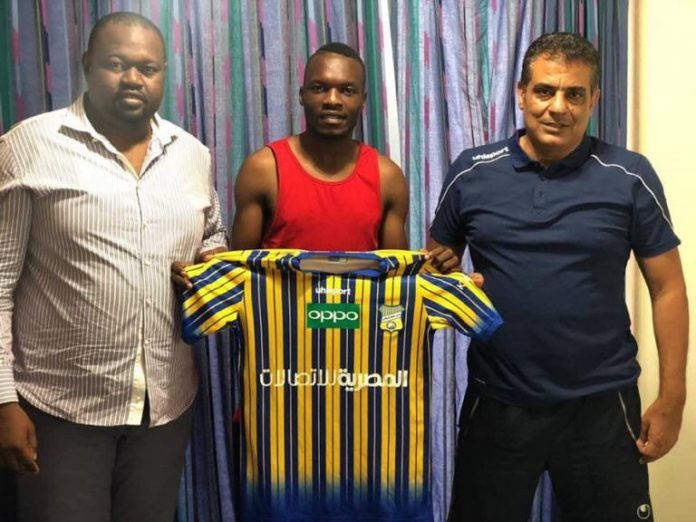
Moses Devoss the director of the movie “the rise of kibwetere” released on March 25, 2019  is a director/writer of the mini documentary title dreaming camera and has released out a new web series titled Uncle Kibwe, Uncle Kibwe is an online comedy series showing every Friday on Uganda Yogera social media platforms. It is a comedy mini series featuring Moses Devoss, Lwembawo Rogers, Shafiq Devoss who also featured in “the rise of kibwetere” Fancy kiruhi a Kenya journalist, Pepe de Bible a musician from Guru, Uganda  and Martha Zion a Kenyan videographer.

A little information about Moses Devoss,

Moses Devoss is a Ugandan photographer/writer/director and actor born in Kampala Uganda, started the filmography career after college when he joined GTI  Limited, a videography company in Uganda, when at GTI Limited, he worked for several video companies partly, that’s to say, Oscar Ntegge photography, bridge films a partner of blush media. And partly worked for nbs as videographer with Moses Alsayed Lubega, He has been partly doing gospel music,

Devoss also worked with Muhammad Katende photography, where Katende was his former teacher. Moses Devoss is currently based in Kisumu, Kenya In a photo and video studio.

Uncle kibwe is being produced basing on the day to day life style. And written from the concept of “the rise of kibwetere” but in a funny version.

Stories Continues after ad

Shs100b earmarked for free veterinary drugs as gov’t fights fake supplies

Farmers across the nation recently cried out to government against its limited involvement in regulating the drugs and veterinary sector that had been compromised by a large number of fake drugs in circulation. The various concoctions being sold proved inefficient and sometimes hazardous to both the vegetation and livestock, in addition to posing a threat to the environment.

The vehement outcry from concerned parties compelled President Yoweri Museveni into action; giving a directive to the state Minister of Animal Husbandry Joy Kabatsi to have the sources investigated and fake drugs withdrawn from the market. He directed that an additional Shs100 billion be availed to facilitate the fight against fake bogus animal drugs but also provide legitimate veterinary products that will freely be dispersed to farmers starting this month.

The supply of fake veterinary drugs on the Ugandan market comes at the time when the effects of global warming are posing challenges to the country’s agricultural sector with crops and animals dying of due to long dry spells as well as flooding. Analysts say such challenges affect farm’s agricultural productivity and production.

Formerly known as the ‘food basket’ of Africa, Uganda has long been regarded as one of the biggest exporters of agricultural products throughout the region, although recent studies now show other countries such as Kenya are exporting to Uganda agricultural products.

Museveni, a farming enthusiast, has taken the onus upon himself to promote agriculture and all its benefits amongst the population of Uganda through various projects such as Operation Wealth Creation and even his personal forums, where he continues to share various anecdotes for productive farming practices.

“We have just gotten a directive from the President to take these drugs off the market and we shall also be travelling around the country providing the right drugs and services to these farmers as well as sensitizing them on the various fake drugs on the market. Farmers should also know that these veterinary drugs and services are free and no one should be asked to pay even a single shilling…” said Ms Kabatsi.

The campaign to fight these bogus veterinary drugs kicked off yesterday in Lyantonde and will continue until all regions are covered, hopefully bringing an end to the sale of these counterfeits as well as putting a control on the market for these products.

This is also not the first time Museveni has personally involved himself with the Ministry of Agriculture and its undertakings; only last year, when the western part of Uganda was unexpectedly hit with the foot and mouth outbreak, he assigned then new Minister Kabatsi with the task of eradicating the deadly disease from the area and Uganda in general.

 In less than a month vaccination points were promptly set up and free vaccines efficiently given out to farmers whose animals had been diagnosed and quarantined. Indeed Uganda continues to outperform its neighbors when it comes to containing sudden outbreaks whether it is the Ebola or Anthrax; however there still remain gaps that continue to affect the productivity of farmers but with the introduction of policies and regulations, these areas too, can also be monitored and controlled.

Stories Continues after ad

Uganda Cranes: Abdallah Mubiru appointed Interim Manager

Abdallah Mubiru


Uganda Police FC head coach Abdallah Mubiru has been appointed the interim manager and will handle the Uganda Cranes team at the 2020 African Nations Championship (CHAN) qualifiers while Fufa continues its hunt for a permanent head coach.

Mubiru will be assisted by Onduparaka head coach Charles Livingstone Mbabazi as his assistant, former Cranes skipper Geoffrey Massa will be the team manager and Sadiq Wasswa will be the goalkeeping coach. This was confirmed by Fufa President Eng. Moses Magogo in the press conference at Fufa House in Mengo.

Uganda Cranes will play Somalia in the first round of qualifiers in a two-legged contest.

The first leg will be played between 26th to 28th July 2019 in Mogadishu with the second leg happening between 2nd-4th August 2019 in Kampala.

The aggregate winner over the two legs will face the winner between Burundi and South Sudan in the second round.

The CHAN tournament is designed exclusively for footballers playing in their domestic leagues.

Uganda Cranes are seeking for their fifth appearance at the 16-team tournament, having played at four CHAN champions in 2011 (Sudan), 2014 (South Africa), 2016 (Rwanda) and lately 2018 (Morocco).

Mubiru and his staff handled the team that consisted of mainly locally based players at the 2019 Cosafa tournament in South Africa where they played two games, losing both in penalty shootouts.

The CHAN tournament will be hosted between January and February 2020 in Cameroon. It is held after every two years.

CHAN 2020 Qualifiers (First Round)

Uganda Cranes Vs Somalia

1st Leg: 26th – 28th July 2019 – Mogadishu

2nd Leg: 2nd – 4th August 2019 – Kampala

Attachments area

Stories Continues after ad

Masindi residents commend NWSC for quality service delivery in financial year 2018/19

MD Dr. Silver Mugisha (middle) and other officials who addressed participants


The National Water and Sewerage Corporation (NWSC) has hosted Masindi area stakeholders for a meeting to evaluate the corporation’s performance in the area.

The meeting is part of the utilities’ accountability structures aimed at providing service delivery transparency to its customers and stakeholders.

Masindi area manager, Racheal Ann Alokit, shared progress of NWSC works done in the area in the last financial year. These include: Laying 58kms of water mains, coverage of in 68 villages out of 83 villages in the municipality, extended services to seven villages outside the municipality, constructed 125 public stand pipes, connected 588 new customers and installed standby generators for Kiyanja water works.

Other achievements are; improvement and water expansion project of Kiyanja water treatment plant from 1.5 million litres per day to three million litres per day, construction of 100,000 litres capacity tank to serve Kyema and the surrounding areas, upgraded Hoima-Kinyara road to boost supply to Kihande, Kinogozi and surrounding areas and construction of twin tanks in Kikwanana to serve Kamurasi-Biizi and the surrounding areas.

Ms Alokit went ahead to share plans for the 2019/2020 F/Y aimed at boosting access to clean water and sanitation in the area.

Masindi deputy mayor Zaina Byenkya appreciated NWSC Managing Director, Dr. Eng. Silver Mugisha, for the unique leadership style.
“It is rare for institution leaders to often meet with their customers and stakeholders. In Masindi, we are happy to meet you often,” she said.

She further appreciated NWSC accountability structures that give customers and stakeholders progress reports at the end of each financial year.

Masindi LC.5 chairman Cosmas Byaruhanga appreciated the service improvements in the area.
“Our people are happy that the challenges we experienced last financial year have been addressed. I urge our people to protect our environment and also use the water to improve their lives.”

Dr. Mugisha, appreciated the customers and stakeholders for the feedback. He encouraged them to always challenge the institution to serve them better.

Speaking at the meeting, Mugisha encouraged NWSC managers to look at problems as opportunities to make a difference in the community.
“Feedback from our customers helps us to improve and do better,” he said.

Using the price of other commodities, he made direct comparisons with the NWSC tariff to sensitize customers on bill payment.

“A jerrycan of water at NWSC lowest tariff is Shs25. If you compare this with a kilo of meat, airtime of Shs2000, a bottle of beer at Shs3000, sms message at Shs60 among others, the price of water is very cheap. At Shs68 per jerrycan (domestic rate), one who consumes a beer at Shs3000 has taken over 40 jerrycans of water. Water is the cheapest commodity in the country,” he said.

Mugisha shared the corporation’s expansion plans, strategic direction and financial position to improve water supply reliability.

He encouraged the residents to join NWSC in the quest towards 100 percent service coverage. “In some areas, the residents trench for themselves and we lay the main lines. Let’s work together and build our nation. Equity benefits the vigilant,” he said.

He encouraged managers to understand the interests of local leaders and work with them to serve the people better.

He warned the area NWSC managers against keeping pipes at their offices, saying they are not decorations. He emphasised that pipes should be used in serving people with water. He urged managers to be result oriented and do away with lamentations but instead solve problems that face clients.

Masindi RDC, Godfrey Nyakahuma, applauded NWSC service delivery models.
“NWSC is very exceptional compared to other government departments and agencies. It is very important to listen to the people who consume your services, “he said.

Nyakahuma commended Mugisha, saying he is an exemplary leader: “This is not the first time I am attending such a meeting. I attended a similar one day when I was RDC Hoima and Dr. Silver was there. He is not a desk officer like many other lazy leaders.”

He thanked the corporation for helping the government fight against water- borne diseases such as Cholera, Dysentery and Typhoid through the provision of safe clean water, as well as getting involved in tree planting initiatives to green the environment.


Stories Continues after ad

Partnership formed to fight violence against women and children

Crispin Kiweewa Junju and Prof. David Serwadda (fourth left) during the signing ceremony


Nnabagereka Development Foundation and Rakai Health Sciences Program have entered into partnership to see how both parties can stamp out forms of violence against women and children.

The partnership that is being consolidated through the Nnabagereka Development Foundation, aims at ending gender based violence to stop the spread of HIV/AIDS, girls dropping out of school and elimination of poverty, which aligns well with the Buganda Kingdom’s strategic view of elevating it to the top.

While commissioning this partnership on behalf of Nnabagereka Development Foundation, Prince Cryspin Jjunju Kiweewa, said the Kingdom is very much aware of the challenges that violence brings in terms of impeding social development. It is for this reason that the Kingdom shall partner with all likeminded organization to stamp out all forms of violence women and children.

Prince Jjunju recalled Kabaka’s message he delivered during this year’s women convention that we need to speak against violence and report those that are perpetuating violence.

He pledged on behalf of the Kingdom, that in all the counties of Buddu, Kooki, Mawogola and Gomba where this programme is going to be implemented, do all that is within the Kingdom’s means to stop the spread of HIV, ensure that all school going age children especially girls are in school and household livelihoods improved.

The CEO of Rakai Health Sciences Program, Professor David Serwadda stressed the importance of bringing down the number of girls dropping out of schools as the matter is getting worse especially in Buddu, Kooki, Gomba and other parts of Buganda.

In support of this initiative, Rakai Health Sciences Program have donated eight motorcycles and eleven laptops topped with five hundred twenty eight million Shillings for a period of five months.


Stories Continues after ad

Kadaga launches construction of cancer bunkers at Nsambya Hospital

Speaker Kadaga


The Speaker of Parliament, Rebecca Kadaga, has officiated at the ground breaking ceremony for the construction of bunkers for linear accelerator machines necessary for the treatment of cancer.

Kadaga also launched the eighth edition of the Rotary Cancer Run said that the run has had an impact on the prevention and treatment of cancer in Uganda. The event was held at Rotary-Centenary Bank Cancer Centre at Nsambya Hospital.

“We have just laid foundation for the construction of bunkers needed for linear accelerators for that facility which will have a capacity of 36 beds,” she said.

She lauded members of the 10th Parliament who have individually contributed to the cause Shs1 million over the past two years totaling over Shs900 million, “This year we shall contribute as an institution; we shall discuss with the Clerk and Director Finance on what more we can do to support this campaign. I encourage all of us to contribute as cancer does not discriminate,” she said.

The Managing Director of Centenary Bank, Fabian Kasi, pledged to continue the support towards the Cancer Run,  “As Centenary Bank, we acknowledge the relationship we have had with Rotary Uganda for the last eight years. This year, we shall contribute Shs165 million and we believe this will go a long way in helping with the organisation of this year’s run,” he added.

Past Rotary District Governor, Stephen Mwanje said that what started as a dream is now a reality. “With friends you have helped our dream come true. We now have a fully-fledged cancer centre and this new project is to build a physiotherapy centre which we are embarking on,” he said.

“I do thank you madam Speaker for always responding to our call even on short notice. I do appreciate your support towards this cause of building a magnificent cancer facility and you are the top contributors in this project that we are working on,” he said.

This year’s run will be held on Sunday, 25 August 2019 at Kololo Independence grounds and in 40 other towns across the country.


Stories Continues after ad

Partners to host 17th edition of Basketball without Borders Africa in Senegal


The National Basketball Association (NBA), the International Basketball Federation (FIBA) and the Senegalese Basketball Federation have announced that Basketball Without Borders (BWB) Africa 2019 will take place  July 28 –31 in Senegal.  The 17th edition of BWB Africa will be held at The NBA Academy Africa in Saly and at the Dakar Arena in Dakar.

BWB Africa 2019 will bring together the top male and female players ages 17 and under from throughout Africa to learn directly from current and former NBA and FIBA players, coaches and legends and to compete against the best young players from the continent.  BWB Africa will also include NBA Cares and Jr. NBA outreach efforts in partnership with local community organizations.

“Bringing the 17th edition of the Basketball Without Borders Africa camp to Senegal speaks to our commitment to expanding our footprint across the continent,” said NBA Africa Managing Director and Basketball Africa League President, Amadou Gallo Fall.  “With grassroots basketball development remaining at the core of our strategy to grow the game across Africa, BWB remains our flagship development and community outreach initiative where Africa’s most talented youth have an opportunity to develop as players and learn important life skills they will carry with them for the rest of their lives.”

“FIBA and the NBA have teamed up for several years to organize activities to boost the development of youth basketball in Africa. Those initiatives are very important for the continent,” said FIBA Africa Executive Director, Alphonse Bilé.  “I hope that some of the participants in this BWB camp will one day play in the new jointly created Basketball Africa League and benefit from this fantastic opportunity to showcase their talents in this continental league.”

“We are excited to host this year’s Basketball Without Borders Africa camp and welcome FIBA and the NBA back to Senegal,” said Senegal Basketball Federation President, Babacar Ndiaye.  “We look forward to the great week of basketball and to showcasing our city and the state-of-the-art Dakar Arena.”

BWB Africa has previously been held in South Africa (2003-2009; 2011-2015; 2017-2018), Senegal (2010) and Angola (2016).  More than 1,100 players from more than 30 African countries have participated in the NBA and FIBA’s global basketball development and community outreach program, with 10 former BWB Africa campers drafted into the NBA, including 2019 NBA Champion Pascal Siakam (Toronto Raptors; Cameroon; BWB Africa 2012), two-time NBA All-Star Joel Embiid (Philadelphia 76ers; Cameroon; BWB Africa 2011), Luc Mbah a Moute (formerly of the LA Clippers; Cameroon, BWB Africa 2003) and Gorgui Dieng (Minnesota Timberwolves; Senegal; BWB Africa 2009).

NIKE, a global partner of BWB since 2002, will outfit the campers and coaches with NIKE apparel and footwear.

The NBA and FIBA have staged 59 BWB camps in 38 cities in 30 countries on six continents.  BWB has hosted more than 3,500 participants from 129 countries and territories.  More than 290 current and former NBA and WNBA players have joined more than 240 NBA team personnel from all 30 NBA teams, with 68 former BWB campers drafted into the NBA or signed as free agents.

In February, the NBA and FIBA announced their plan to launch the Basketball Africa League, a new professional league featuring 12 club teams from across Africa scheduled to begin play next year.

The NBA has a long history in Africa and opened its African headquarters in Johannesburg, South Africa in 2010.  Opening-night rosters for the 2018-19 season featured 13 African-born players, and there are more than 80 current and former NBA players from Africa or with direct family ties to the continent, including Naismith Memorial Basketball Hall of Famers Hakeem Olajuwon (Nigeria) and Dikembe Mutombo (Democratic Republic of the Congo).

This year, the NBA plans to reach more than 2.5 million boys and girls ages 16 and under through Jr. NBA programs in 21 African countries.  Since The NBA Academy Africa opened in May 2017, 25 elite male prospects ages 14-20 have received scholarships and training after scouting programs conducted with local federations across the continent.  Four NBA Academy Africa graduates have gone on to commit to NCAA Division 1 schools.

The NBA has held three sold-out Africa Games, in Johannesburg in 2015 and 2017 and in Pretoria in 2018, in support of charities including UNICEF, the Nelson Mandela Foundation and SOS Children’s Villages South Africa (SOSCVSA).  Through NBA Cares, the NBA has created 89 places for children and families to live, learn and play in nine African countries.

Follow BWB using the hashtag #BWBAfrica on Facebook and Twitter.


Stories Continues after ad

A Global Picture of Public Wealth

Government assets and liabilities
 

By Jason HarrisAbdelhak Senhadji, and Alexander F. Tieman

Our new data on government assets shows that when governments know what they own, they can make better use of the assets for the well-being of all their citizens.  We make these data free and publicly available for all to use because we believe transparency can help create better public policy.

The chart shows that advanced economies have larger balance sheets compared to emerging markets and low-income developing countries. This reflects the size of their public sectors, which generally provide more infrastructure and services. But advanced economies also have larger liabilities and, on average, lower net worth.

We wrote about countries’ assets back in October in the Fiscal Monitor and in our blog about what countries own and owe, and now we have the full data set.

New countries, new numbers

The database covers 38 countries’ public assets and liabilities and includes low-income, emerging market, and advanced economies. It expands coverage from the October Fiscal Monitor by adding seven countries: Mexico, Malta, North Macedonia, Senegal, Armenia, Uzbekistan, and Lithuania. The countries in the database now cover almost 63 per cent of global GDP. For 17 countries we have time series data at the public sector level.

We provide granular data on what assets countries hold, like land, buildings, cash, and equity, as well as the liabilities, such as debt, loans, and pensions. We provide the data by level of government and include both financial and nonfinancial corporations.

The total public sector assets in the countries covered are worth $103 trillion, or 216 per cent of GDP. These assets consist of public infrastructure such as bridges and roads, financial assets such as bank deposits, as well as natural resource reserves in the ground.

Total liabilities stand at $93 trillion. This comprises some US $44 trillion of general government debt, but also includes $22 trillion of current pension obligations and the debt of state-owned enterprises.

Net worth—assets minus liabilities—comes to $10 trillion or 21 per cent of GDP for this group of countries.

The goal of knowing more about what you own and owe is to better assess fiscal risks and evaluate government policies.

The Fiscal Monitor shows that having large assets does not necessarily reduce how vulnerable a country is to large debts; this will depend on the nature of the assets. The Fiscal Monitorincludes a fiscal stress test for the United States, analysis of public investment plans financed by a domestic revenue mobilization effort in Indonesia, and the crossholdings within the public sector in Japan, to name a few.

These data on public sector balance sheets also help governments actively manage their balance sheets. Better management of government assets could earn 3 percent of GDP in extra revenues each year—that is more than the interest payments advanced countries pay to cover their debt. There are a range of examples of countries doing just this: the United Kingdom spent several years compiling data and is currently undertaking a balance sheet review. Australia and New Zealand have also looked at the balance sheet effects of policies for years.

More recently, the IMF has used the public sector balance sheet approach in consultations with member countries, for instance in some of the Nordic countries. And investors and financial market experts have shown an interest in both the data and the tools, like fiscal stress tests, that use these data.

We have made it free and available to all to also encourage more research.  Academics and research institutions can use it to better understand the state of a government’s finances and their evolution over time; to compare developments across similar countries; to explore key questions around balance sheets and macroeconomic links; and to enable a more meaningful debate around returns on public assets.


Stories Continues after ad

Public divided over shooting of Kampala businessman by askari

Mr. Arnold Mugisha
 

Ugandans in the public sphere as well as on social media platforms like Facebook, Whatsapp and Twitter continue to be divided over the private security guard who on Tuesday shot dead a young entrepreneur at Quality Shopping Village in Naalya, Kampala.

Some of the eye witnesses that happened to be at the scene of crime said Aine Arnold Mugisha, one of the propitiators of Hickory Bar and Restaurant in Kololo was shot dead after intentionally crushing the leg of the guard, Aweza Babu at the supermarket’s car parking lot.

It is said the late Mugisha disrespected the security man after the latter informed him that his car had scratched another person’s car and that he needed to wait for the owner to resolve the issue. It is said Mugisha was impatient to wait and went on to ignite the car engine, crushing Babu’s leg.

It is said the deceased came to do shopping with his colleagues, they entered an argument with Moses Angoria after they left they set a shopping trolley rolling into another person’s car in parking.

Witness recounted that the deceased was so arrogant to the extent that Mugisha claimed the askari couldn’t do anything except taking the nearby trolley back inside the supermarket.

This prompted the guard to pull out his gun and released the bullet that went through passenger windscreen, shuttering Mugisha’s face. He reportedly breathed his last as they tried to take him to Independent Hospital in Ntinda.

The guard was in rescued from the angry mob that almost took him life after the gruesome killing of Mugisha. He is currently receiving treatment at Mulago hospital as Mugisha’s family await for postmortem report from city mortuary.

His death has resulted into mixed reactions from within the public:

“Why everyone blaming the Askari’s over this guy’s death! Is failing to understand that security guards are human beings too like any of us. They deserve respect, and they also lose the nuts like the fellow who pushed the trolley too with disrespect. It’s very absurd that a very young life has been lost. It should have been avoided. But on the contrary, some people have pushed others to the wall,” says Suzanne Edith Suzanna on her Facebook Page.

If the source who said this guy crushed Askari’s leg is indeed right, then its really bad. Security guards or Askari’s as u all wish to call them, are human beings who deserve respect, she adds.

“I know of people who treat guards like street dogs because they assume they have made it in life.

It was a simple issue, take the trolley away, wait for the Askari to leave and reverse well other than run over a poor Askari’s leg because u think u have all it takes for u to get away with it,” she says.

Keith Agaba says: “We dont kill but if at he managed to be humble from the start nothing like this was to happen.”

Danny M. Ssematimba:  “One moment in time I did post about giving respect to everyone Guards inclusive. I wish Aine Mugisha respected the Naalya Quality Supermarket Guard, his life wouldn’t have perished!! RIP brother.”

Wanda Jonathan Fortunate says, “Me I feel nothing for such ninjas they think they have arrived now they dead and we will move on.”

Joanna Jojo Jasper says wrote, “Oppressed majority over arrogant citizens.”

Recently on of the well connected man caused chaos in the bar and pouring alcohol on people not until his father called in to save revelers from commotion.


Stories Continues after ad