|
In response to the devastating floods and landslides that hit the Mount Elgon region in eastern Uganda, the European Union (EU) has provided €80,000 (Shs 334.3 million) in humanitarian funding to assist the families in need of aid. The EU funding will support the Uganda Red Cross Society (URCS) to deliver urgently needed assistance for families in the affected districts of Bududa, Sironko, Mbale and Butaleja. The aid provided includes tents to families without a shelter, basic essential items such as blankets and mosquito nets, healthcare services, access to safe water and awareness raising on preventing waterborne diseases. The Uganda Red Cross will also offer psychosocial support to the families in need, many of whom had to leave their homes. As many as 2,840 people will directly benefit from this assistance. Over 125 000 people in the communities at large will indirectly benefit from the hygiene promotion activities aimed at preventing diseases. This funding is part of the EU’s overall contribution to the Disaster Relief Emergency Fund (DREF) of the International Federation of Red Cross and Red Crescent Societies (IFRC). The flash floods and landslides were caused by torrential rainfall that poured in the Mount Elgon region at the beginning of June, killing 6 people, injuring 27 and directly affecting over 2 800 people. These people lost their homes, essential belongings, and cropland. Their means of earning a living was also disrupted. The mudslides and floodwaters destroyed safe water and hygiene sources, exposing communities to the risk of waterborne diseases. There is currently a cholera outbreak in Bududa, with one registered cholera-related death and twenty-eight suspected or confirmed cases in health facilities. Background The European Union and its Member States are the world’s leading donor of humanitarian aid. Relief assistance is an expression of European solidarity with people in need all around the world. It aims to save lives, prevent and alleviate human suffering, and safeguard the integrity and human dignity of populations affected by natural disasters and man-made crises. Through the European Commission’s Civil Protection and Humanitarian Aid Operations department, the European Union helps millions of victims of conflict and disasters every year. With headquarters in Brussels and a global network of field offices, the EU provides assistance to the most vulnerable people on the basis of humanitarian needs. The EU is signatory to a €3 million humanitarian delegation agreement with the International Federation of Red Cross and Red Crescent Societies (IFRC) to support the Federation’s Disaster Relief Emergency Fund (DREF). Funds from the DREF are mainly allocated to “small-scale” disasters – those that do not give rise to a formal international appeal. The Disaster Relief Emergency Fund was established in 1985 and is supported by contributions from donors. Each time a National Red Cross or Red Crescent Society needs immediate financial support to respond to a disaster, it can request funds from the DREF. For small-scale disasters, the IFRC allocates grants from the Fund, which can then be replenished by the donors. The delegation agreement between the IFRC and ECHO enables the latter to replenish the DREF for agreed operations (that fit in with its humanitarian mandate) up to a total of €3 million.
|
EU gives Shs334.3m relief to victims of floods and landslides in Uganda
We are still investigating our own robber ASP Bright Amutuhaire-Police
Uganda Police authorities are investigating circumstances under which one of their own, attached to Kajjansi Police Station was arrested on July 7, 2019 for an illegal traffic stop, with intention to extort money from a fish dealer, Fred Enanga, the force’s spokesperson said Tuesday in a press statement.
The officer, ASP Bright Amutuhaire, together with an accomplice, Richard Musinguzi, while driving motor vehicle, Toyota Mark II, registration number, UAW 714B, intercepted Tom Kisuka in his car reg. no. UBD 328J, at Abaita Ababiri, along Entebbe road at around 10.00pm, with an intention of extorting money from him.
“We want to commend the LDU Commander, Entebbe and the police response teams, which arrested the suspects while at the scene, for their swift response,” Enanga said.
He added: “It is however, not true that there was a gun fire exchange during the arrest of the suspects, because they were unarmed. Although, there was no violence, it is believed the officer used his uniform and authority to intimidate the victim, with the intention of extorting money from him. The officer is being charged with discreditable conduct and together with the civilian for demanding by menaces.”
He said the task team was looking into allegations of previous misconduct and illegal transactions against the officer, and if proved, he will definitely be held accountable for his actions. “In this vey instance, it is alleged they took advantage of the loopholes in the victims dealings in the fish business.
We urge any other members who could have been victimized by the officer to register their complaints with the Regional CID officer, Kampala Metropolitan South, Headquarters at Katwe,” he said.
Enanga lauded the public and the media for taking keen interest in the way police officers use their authority. “We want to thank all stakeholders and in particular the media and members of the public for taking keen interest, on how officers use their authority. Exposing such officers is critical to ridding the force of bad officers,” he said, adding, “The public should however, know that the majority of our officers are doing a great job of keeping communities safe, upholding the law as well as resisting the temptation of abusing their positions. We commend them for their good work.”
“We do further want to reassure them, that management is doing its very best, to ensure all ranks are cleared of all forms of corrupt practices and that all officers involved in any illegal activity, are brought to justice,” he said.
Museveni assents to Uganda Wildlife Act 2017, poachers to pay fine of Shs20b
|
President Yoweri Museveni has assented to Uganda Wildlife Act 2017 that was passed by parliament early this year. When caught poachers involved in killing endangered species will face life imprisonment or pay fine of Shs20 billion or both. The law entails wildlife User Rights: hunting, farming, ranching, trading, and educational and research and general extraction use rights. This program is based on the principle that economic benefits from wildlife can lead to better custodianship of wildlife resources. The law reforms revenue sharing program into conditional grants to communities. The law provides for the conservation and sustainable management of wild life, strengthen wild life conservation and management, and streamline roles and responsibilities for institutions in wildlife conservation and management. The law provides for compensation where a person is killed, suffers bodily injury or suffers damage to his or her crops or livestock by the wild animals listed under the Fourth Schedule of the law. The listed wild animals include elephants, lions, leopards, crocodiles, buffaloes, hyenas, hippopotamus, gorillas and chimpanzees. The new law comes with significant reforms transforming wildlife conservation in Uganda. The act provides for Community participation in wildlife management strengthened through Community Wildlife Committees for each Protected Area. It also provides for Promotion commercialization of wildlife on private land through sustainable utilisation. According to Uganda Wildlife Authority (UWA), Wildlife management was once the responsibility of government however concerns grew about how wildlife management would be achieved without support from district authorities, communities and the private sector and there was the need to involve other stakeholders through the act.
|
Money laundering: Works engineer, Wobulenzi Town Council officer charged over Shs6.2b
The Anti-Corruption court in Kololo has charged an engineer of the Uganda Roads Authority (UNRA) and a Community Development Officer of Luwero Town Council for amassing wealth that is not commensurate with their monthly earnings.
Umar Katongole, a Principal Engineer with the Ministry of Works and Hawah Ssengendo, a Senior Community Development Officer with Wobulenzi Town Council in Luweero district were Tuesday afternoon arraigned before Anti- Corruption Grade One Magistrate, Moses Nabende and charged with illicit enrichment contrary to section 31(1) (b) and section 31(2) of the Anti-Corruption Act 2009.
The two officials were arrested yesterday by the inspectorate of government.
The two officials were also charged with money laundering contrary to section 3(a), 116 and 136(1) (a) of the Anti-Money Laundering Act as amended in 2017.
The officials were however not allowed to take plea as the magistrate’s court does not have powers to try cases involving such huge sums of money.
According to state prosecutor, investigations into the matter are ongoing. The magistrate has adjourned the matter up to July 24.
Charges
Prosecution alleges that in 2015, being a station engineer for UNRA, Katongole was found in possession and control of property including plots of land and other untitled land in various parts of Kampala including Makindye, Mengo, Kabowa and Kyadondo whose total value was established to be at shs6.2 billion which was disproportionate to his income.
According to the state, the total amount of money earned as income by Katongole for four years was only shs300 million.
Prosecution also alleges that for purposes of disguising the illicit origin of these properties, the ownership of the shs6.2 billion was transferred to the names of Darkins Uganda Limited.
The state also avers that Katongole and Ssengendo between April 2011 and August 2015 deposited shs2.8 billion on an account number in Tropical bank as one of the ways to conceal the illicit wealth that had been amassed.
It is also alleged that the duo on June 27, 2015, they withdrew shs380 million from a bank account they jointly owned and deposited it onto another account that Ssengendo owns in Tropical Bank.
Ssengendo is also accused of depositing shs466 million onto her account in a bid to conceal that it had been got through illicit ways.
The duo was arrested by the office of Inspector General of Government early this week.
The charge sheet shows Ssengendo earns about Shs5 million monthly totaling to shs300 million in five years which raise eyebrows on how he had acquired shs6.2 billion wealth.
The suspects are expected to defend themselves against six counts on which they will be charged as highlighted by the document.
count 1v – money laundering, contrary to Sections 3(a), 116 and 136 (1) (a) of the Anti Money Laundering Act (as amended in 2017): Katongole Umar and Sengendo Hawa alias Kawa S. Bitone between 4th April 2011 to 6th August 2015 at Tropical Bank Ltd. main branch in Kampala district deposited a total sum of Shs.2,849,545,000/= (Uganda Shillings two billion, eight hundred forty nine million, five hundred forty five thousand) on account No.0010102561 for purpose of concealing or disguising the illicit origin of funds, knowing or having reasons to believe that the said funds were proceeds of crime.
COUNT V – MONEY LAUNDERING, contrary to Sections 3(b), 116 and 136 (1) (a) of the Anti Money Laundering Act (as amended in 2017): Sengendo Hawa alias Kawa S. Bitone on the 27th of June 2015 at Tropical Bank Ltd. Main Branch in Kampala for purposes of disguising or concealing the origin of funds in the sum of Shs.380,000,000/= (Three Hundred Eighty Million) which Umar Katongole withdrew from Account No. No.0010102561 that he jointly operated with her banked it onto account No. 0100017148 that she is solely operating at Tropical Bank, Main Branch, knowing or having reasons to believe that the said funds were proceeds of crime.
COUNT VI – MONEY LAUNDERING, contrary to Sections 3(a), 116 and 136 (1) (a) of the Anti-Money Laundering Act (as amended in 2017): Sengendo Hawa alias Kawa S. Bitone on 13th July 2015 at Tropical Bank Ltd. main branch in Kampala district deposited a total sum of Shs.466,000,000/= (Uganda Shillings four hundred sixty six Million) on account No.0100017148 for purpose of concealing or disguising the illicit origin of funds, knowing or having reasons to believe that the said funds are proceeds of crime.
Printronix announces partnership with Tri-Continental to distribute printers in Central, East and West Africa
|
Printronix, pioneer of line matrix technology, has recently signed a distribution agreement with Tri-Continental Ltd. Under the agreement, Tri-Continental, one of the largest and most prominent IT distributors in the African market, will distribute Printronix and TallyGenicom line matrix printers as well as its desktop serial dot matrix models, the S809 and S828. Through this partnership, Tri-Continental and Printronix will broaden their reseller base and strengthen their presence and market penetration in this important region. Based in West London, Tri-Continental has expanded its operation to span 36 countries in Central, East and West Africa, and has been IBM’s strongest performing channel partner there for almost 30 years. The company has a strong reputation for providing the right solutions for its customers and adding value to the supply chain. It has been working with global brands such as IBM, NetApp, Epson and Canon. Joseph Musisi, Tri-Continental Director and General Manager, says he is confident that the expanding range of reliable quality printers from Printronix is ideal for Africa’s many applications, its demanding environments and multiple vertical markets. “Printronix is well known for its reliable quality printers. The devices are globally recognised for their unrivalled performance in mission critical applications where downtime is not an option and cost effectiveness is a priority. Printronix is a trusted supplier with a long list of high profile global customers, many of whom have a presence in Africa. We can add new local customers to that list, as well as expand the usage of Printronix printers across all the countries where we are present,” explains Musisi. With over 40 years of success to build on, Printronix offers a wide range of printing solutions and applications for various industries, as well as ongoing support, sales training, and service to its channel partners. Regional Sales Manager for Sub-Sahara and South Africa at Printronix, Lareen Kohler says: “Tri-Continental is firmly positioned as a leading Pan-African distributor of world-class technology products, and, as an additional partner in the region, it will help us expand our channel base and reach end customers in Africa that we are not currently engaged with. This is an important market for Printronix so Tri-Continental is an ideal choice to contribute to our business growth plans for the region.” Rosemarie Zito, Printronix Vice-President of EMEA Sales & Marketing, adds: “Printronix is looking forward to working with Tri-Continental. Its team has a great track record for building reseller channels throughout Africa, which will greatly support our solutions. Printronix is the OEM supplier of former IBM 6400 and 6500 line printers and, as such, we are partnering with Tri-Continental as it has such extensive knowledge of the corporate IBM customers in the region. We are sure that Tri-Continental will help us better serve them and upgrade legacy line and serial dot matrix printers. In addition, we believe Tri-Continental is complementary to our existing distribution channel in the region.” Reliable line matrix and serial dot matrix printers The Printronix P8000 and TallyGenicom 6800 line matrix series with Pedestal, Zero Tear and Enclosed Cabinet models, and the S809/S828 serial dot matrix printers, deliver flexible design, adaptable functionality and manageable savings. Line and serial dot matrix printers are designed for users in manufacturing, distribution and logistics, government, banking and food & beverage. They can be used to print invoices, shipment and transportation documentation, bank and customer statements and product labels. Users can expect maximum uptime, low cost of ownership, and maximum reliability in demanding environments.
|
Uganda to celebrate second National Day of Physical Activity
The Ministry of Health is set to mark the second National Day of Physical Activity (NDPA) which is part of government’s efforts to prevent and control non-communicable diseases (NCDs) among Ugandans.
NDPA was launched last year and it is anticipated to be celebrated in all the following years. This year’s celebrations will be held on July 14, at Kololo Independence Grounds under the theme: ‘My health, my responsibility.’
Speaking in Kampala, the Minister of Health, Dr. Jane Ruth Aceng, said the day is aimed at informing the population about the importance of physical activity, its relevance in prevention Non-Communicable Diseases (NCDs) and premature mortality from lifestyle diseases.
“The prevalence of NCDs is anticipated to increase if individuals do NOT change to an active lifestyle. Despite global commitments by all World health organisation (WHO) member states to reduce physical inactivity by 10 per cent by 2025.” She said
Physical inactivity is reported as the fourth leading risk factor for death globally; causing 6 per cent of deaths worldwide. It is estimated that one in every four adults globally is not physically active enough.
WHO recommends 250 minutes of moderate intensity or 75 minutes of vigorous physical activity per week or 30 minutes of moderate activity daily among adults? Children and adolescents require a minimum of one hour per day of physical exercises.
The recommended time can be met through work, travel or leisure related physical activities. It is important that individuals engage in physical activity that they enjoy for example dancing, jogging, gardening, cycling, and sports such as football, netball, athletics, and baseball.
Results from Uganda NCD survey of 2914 indicates that Ugandans are becoming physically inactive. High physical inactivity was note in urban areas where eight percent adults were considered inactive considered to 3.5 per cent among rural population.
As Uganda commemorates the second National Physical Activity day, she reminded the population about the importance of physical activity and urging Ugandans to adopt healthier life style and consuming diet foods.
She said her ministry is developing the National Physical Activity guidelines and supporting the promotion of physical education in schools as part of the efforts to increase physical activity among the population.
2019 Afcon quarter-final fixtures out
After completion of the Round of 16 matches, the 2019 Africa Cup of Nations quarter-finals line-up in Egypt is complete.
There will be a new winner at the Africa Cup of Nations Egypt 2019 after defending champions Cameroon were sent packing by Nigeria Super Eagles who beat them 3-2 in a five-goal thriller.
South Africa’s Bafana Bafana beat hosts Egypt 1-0 to reach the quarterfinals. Thembikosi Lorch scored what proved to be the game’s lone goal five minutes from time to produce one of the Africa Cup of Nations all time surprises.
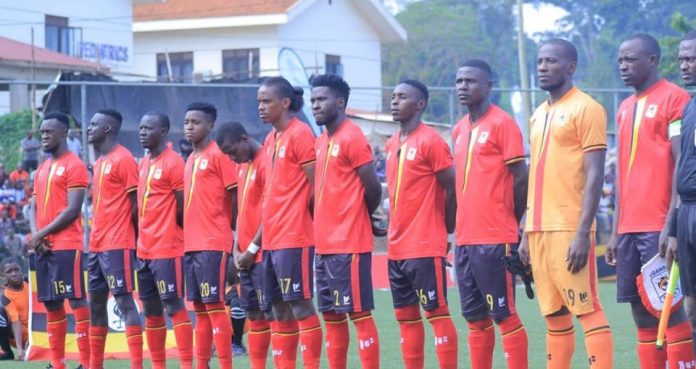
Sadio Mane’s lone goal inspired the Teranga Lions of Senegal into the quarter-final defeating the Uganda Cranes.
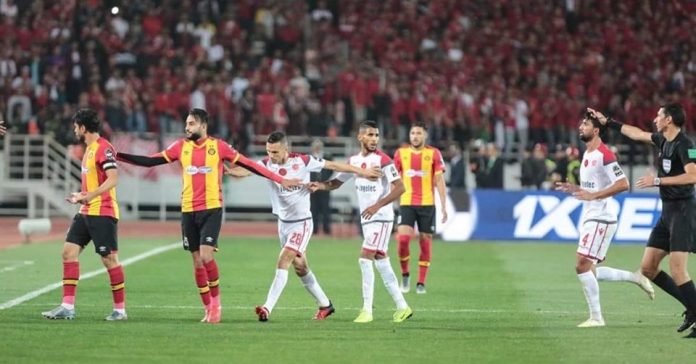
Benin accomplished one of their best achievement in their footballing history after eliminating favorites Morocco with a 4-1 win in post-match penalties.
Wilfried Zaha’s strike for Ivory Coast in the 76th minute was enough to seal victory in a West African duel dominated by Mali.
Madagascar beat two time Afcon champions DR Congo 4-2 on penalties to storm the quarterfinals of the continental showpiece in their first appearance after a 2-2 draw in normal time.
Algeria’s Les Fennecs put up a flawless performance to thrash Guinea 3-0 in a round of 16 match to set up a quarter-final stellar tie with Ivory Coast.
Tunisia’s Carthage Eagles flew over Ghana’s Black Stars to progress to the quarter finals with a 5-4 post-match penalties victory after a one-all draw in normal time.
The 74,100-capacity Cairo International Stadium will host the final on Friday, 19 July 2019.
Quarter-final fixtures
Wednesday, July 10
Benin v Senegal – 30 June stadium, 7pm
Nigeria v South Africa – Cairo International Stadium, 10pm
Thursday, July 11
Algeria v Ivory Coast – Suez Stadium, 7pm
Madagascar v Tunisia – Al Salam Stadium, Cairo, 10pm
Business – Africa: Sports as a business and a brand
By Victor Oladokun
At the ongoing Africa Cup of Nations in Egypt, the visual imagery of almost empty stadiums is a powerful narrative. But not the kind that African sports, African football, or corporate sponsors deserve.
The empty seat syndrome in suggests that football fans are voting with their feet, or better still with their backsides. Fans are choosing not to watch live football events, and instead are opting in increasing numbers for the ‘intimacy’ of their crystal clear digital flat TV screens, or not all.
Before Egypt’s stunning 0-1 loss to South Africa in the round of 16, the host country was the only team able to attract 70,000 fans. Other than when Mo Salah and the Pharaohs have been on the field, most stadia across Egypt have at best attracted an average of 5,000 to 7,000 fans.
Official broadcast camera crews have done a creative job minimizing the visual gaps of empty seats. But wide camera angles reveal the obvious … a lack of attendance and public enthusiasm, in spite of the presence of some of the biggest names in world football on the field.
In European football leagues, where many of the stars in Egypt ply their trade, fans pay mega bucks to see the likes of John Mikel Obi, Ahmed Musa, Sadio Mane, Ryahd Mahrez, Nicolas Pépé, Wilfred, Zaha, and Kalidou Koulibaly.
Which is why the empty seats in Egypt are both stunning.
Admittedly, Egypt bailed CAF out and should receive well-deserved credit for coming to the rescue and hosting the African Cup of Nations, with barely 6 months notice, when the original hosts were sanctioned due to shoddy preparations.
Nevertheless, the lack of attendance in Egypt speaks volumes high ticket costs; the timing of matches bang in the middle of work days; the difficulties faced by national team supporters in obtaining entry visas to Egypt; and challenges with the Confederation of African Football’s complicated online ticket purchasing system.
It should not be so. This after all, is the most important event in Africa’s sports calendar. At least, it used to be before England’s Premier League, Spain’s La Liga, Italy’s Serie A, and Germany’s Bundesliga captured our collective imaginations.
The end result is that where once 30,000 to 70,000 fans a week watched highly competitive domestic football leagues across Africa, the empty seat syndrome has been the norm for almost two decades. It is not unusual to have less than a thousand fans in a stadium that seats 30,000.
The lack of fan attendance has obvious economic and financial implications across the sports value chain for team owners, sports federations and confederations, players, sponsors, advertising and marketing agencies, merchandisers, vendors, and local communities who once counted on fan attendance to boost fledgling economies.
What’s responsible for the increasing slide in fan attendance?
1. Poor facilities
2. High ticket costs
3. A lack of reliable transportation to and from venues. As well as sufficient and secure parking.
4. Increasingly crude behavior and violence at event locations.
5. Technology. Mobile phones and Apps that carry events live as well as a plethora of entertainment alternatives. In other words, once big events are no longer the main gigs in town.
So, what can be done to reverse the trend? Here are 5 quick suggestions.
1. It can no longer be business as usual. Africa must run sports as a professional business. This includes the right infrastructure, training facilities, attractive pay scales for professional athletes who now consider anything less than a European league appearance, a professional failure.
Regrettably, as with Africa’s overall propensity to simply export raw materials instead of adding value to what we produce, we are doing the same with football and many other sports. Africa has a tremendous abundance of potential talent that for the most part (with the exception of South Africa, Kenya and Ethiopia) we add little or no value to. Instead, millions of genetically blessed athletes are simply waiting or begging to be ‘found’ on the cheap by European and American sports teams. Why? Simply because we fail to see diamonds in the rough and because we are unable to add value to the potential of what for now seems to be rough stones.
2. Modern and professionally maintained facilities: In sizzling hot Africa, we must invest in covered stadia. When I can sit in front of my big screen TV in my air conditioned living room, why would I want to subject myself to temperatures that I swear have gone up a number of notches in recent years?
3. Sport is a spectacle. This includes everything including pre-event and half time entertainment to keep fans with short attention spans upbeat and engaged.
4. Give back to the fans: Essentially, engagement in the 21st century must change. Its time to give something back to fans rather than fleecing them at every opportunity with sub-standard services and products. It would seem to me that sports teams could offer something as simple as raffle draws that reward fans with extra game tickets, signed player jerseys, visits with select players, or products from local sponsors. Professional marketing firms can come up with an endless list.
5. Make sports big and make it a win-win proposition.
Real Madrid F.C. and Barcelona F.C. for example, are not owned by a few rich individuals. Instead, they are owned and supported by thousands of shareholders known as ‘socios.’ Across Africa, it’s time to change the numbers game – in ownership, money, and attendance – by giving fans a seat at the table.
These are just a few quick ideas. However, the running of sports in general and football in particular as a business and a brand proposition, will require honest analysis, political and financial will, and a collective approach.
It must be if Africa is to unlock potential and turn millions into billions.
The writer is the Director of Communication and External Relations at the African Development Bank
|
|
Siemens partners with Plan International to deliver humanitarian aid initiatives in Sudan
German multinational conglomerate company, Siemens and Plan International Germany have signed a Memorandum of Understanding (MOU) to collaborate on future humanitarian projects to assist marginalized populations across Africa, with initial emphasis on Sudan, specifically displaced communities affected by conflict in neighboring South Sudan.
The partnership will start by addressing educational and infrastructure needs of communities in the White Nile state, including hybrid solar solutions in areas where access to decentralized energy is urgently required to enable sustainable development; Plan International is a child-centered community development organization that assists the most vulnerable in more than 50 countries, including Sudan
Siemens has signed a Memorandum of Understanding (MOU) with Plan International Germany that will see the two organisations working together to provide education, aid and infrastructure to marginalized communities in Africa. Initial focus is on remote regions in Sudan, where Siemens and Plan International will provide aid in the educational and training sector, starting in White Nile state. Plan International is a child-centered organization that aligns with Siemens’ goal to support sustainable growth in the region.
With this agreement, Siemens further solidifies its commitment to significant humanitarian efforts in Sudan to address basic human needs and essential infrastructure. Siemens follows a clear business-to-society model in all countries and communities where it operates, and the goal is to directly impact the quality of life of the citizens of Sudan. Siemens and Plan International will focus on the renovation and modernization of 2 schools in the White Nile region incorporating a hybrid electrification solution for the schools and surrounding community.
According to 2018 data collected by Plan International, Sudan continues to receive ongoing significant influxes of refugees into areas such as the White Nile State. The majority of refugees are women and children (88%), who arrive in poor health after traveling many days to reach Sudan, often by foot, and who are in urgent need of protection, nutrition, shelter and health support.
There are over 170,000 refugees living across 8 camps in White Nile. Over-congestion remains a serious concern, with all camps currently hosting populations beyond initial capacity.
According to Sabine Dall’Omo, CEO of Siemens Southern and Eastern Africa, “This area is in desperate need of sustainable solutions. While short-term aid is welcome and much needed, our aim is to provide self-sustaining solutions in education, skills development and training as well as a hybrid energy solution to state benefit the marginalized populations in areas struggling to keep up with the influx of refugees.”
As a technology company with a footprint across Africa, Siemens has a keen understanding of the impact energy infrastructure has in marginalized areas. Access to electricity is the catalyst that enables access to education, food security, healthcare and sustainable growth.
Priorities maintenance, repair and operations (MRO) strategy to manage costs for your company
|
By Brian Andrew
It does not matter if times are good or bad – waste is never welcome at any proactive business. Business is primarily driven by profit and efficiency, and waste is an attack on both. But many businesses, particularly among manufacturers, overlook a major cost hidden among their operations: that of MRO (maintenance, repair and operations) procurement. MRO or indirect procurement concerns those many small parts needed to keep equipment running. It’s fundamentally a supply chain/procurement discipline, but not often considered as a cost centre. Individual MRO items – small parts in big machines such as light bulbs, safety switches, connectors, push buttons, power supplies etc. – tend to be inexpensive and not attract much attention. Yet as a pool, MRO procurement can represent a significant purchase base for companies. The days of MRO being overlooked are numbered. According to a survey conducted by RS Components and UK-based CIPS (the Chartered Institute of Procurement and Supply), the focus is on to reduce MRO spend. Over half cited pressure on operation budgets or reducing inventory costs, followed by asset performance (42%) and continuous improvement (38%) as motivations. This message is less apparent in the South African market, but given the current tough economic conditions, it’s well worth discussing. What can local businesses do to curb their MRO spend? Taming MRO What causes such a poor ratio? It may be because too much time is being spent on finding the cheapest product, or using the wrong strategies for example category management and contracts negotiated on price alone to manage unplanned indirect spend. This may negate any actual savings made as extra processes and delays accrue costs. Another reason is that MRO purchases often happen under the radar and tend to ignore official procurement channels. It may seem faster for an engineer on the floor to quickly acquire a spare part and get operations running again, using a convenient supplier. But amplify this over many instances and the purchases can compound into astounding inefficiencies. Every company can meet this challenge with a good MRO strategy. It requires a new way of thinking and saving: a successful MRO strategy relies on all stakeholders involved in indirect procurement to collaborate. It must focus on improving the whole process of buying parts, involving stakeholders such as engineering, operations and finance functions, with buy-in at the c-suite level. The strategy itself should aim for several objectives, which may include: · Consolidating suppliers so procurers can make quick decisions without having to consider the bigger MRO picture. · Procurement teams must communicate with users to understand what they need – this ensures suppliers with appropriate catalogues are chosen. · Deploying an integrated eProcurement system to streamline ordering processes, which in turn will help users change their own procurement habits. · Reducing items held in storage by only keeping critical spares and the items that will be used on a regular basis and then using suppliers that deliver on demand. This frees up working capital and space in your premises. Without MRO, production can grind to a halt. A small part can stop everything for practical, health & safety, compliance or many other reasons. But sometimes the can-do attitude to keep lines going can result in inefficient MRO procurement choices. Don’t disturb that spirit on the work floor that keeps your business moving. Instead, establish an MRO strategy that compliments proactive workforce attitudes while establishing a framework which pursues efficiency and significant cost savings. Partner with a supplier who can develop these solutions with you and support you on the journey of taming your MRO procurement. The writer is the Managing Director South and Sub-Saharan Africa at RS Components.
|