Stanbic Bank
Stanbic Bank
18.2 C
Kampala
Stanbic Bank
Stanbic Bank
Home Blog Page 1231

Tullow Oil’s Ugandan project timeline slips as Shs3.3trn deal hangs in balance

Tullow Oil

UK’s Tullow Oil is yet to seal a tax deal in Uganda that is needed for the progress of its plans there with another oil dealer Total, it said days ago.

In April the company said the Uganda talks were expected to conclude shortly. But progress is also slower than expected. A tax deal needed to close the US $900 million (about Shs3.3 trillion) sale of a stake in its Ugandan fields to Total is pending.

“We continue to work constructively with our Joint Venture Partners and the government of Uganda to agree a way forward and the consequent timing of FID. Nevertheless, although negotiations continue, Tullow is currently considering all options in pursuing the sale of its interests in Uganda,” it said.

Barclays recently said the likelihood of a final decision on Uganda to come in as planned this year was declining.

“Tullow’s comment… indicates the potential for a fresh approach/structure to the deal that can be acceptable to all stakeholders, but increases uncertainty around the timing of the development,” said Barclays.

Tullow Oil in January 2017 announced plans to farm down its interest in Uganda’s Albertine Oil Project to Total for US$900 million.

Tullow Oil said in a statement issued then, “A Sale and Purchase Agreement with an effective date of 1 January 2017 has been signed in which Tullow has agreed to transfer 21.57 per cent of its 33.33per cent interests in Exploration Areas 1, 1A, 2 and 3A in Uganda to Total for a total consideration of $900 million.”

Tullow, Total and China’s CNOOC have hitherto all had equal stake of 33.3 per cent of the three exploration areas of Uganda’s Albertine Oil Project. It will be remembered that in line with the terms of its exploration MoU with the Government of Uganda, in March 2011, Tullow sold two-thirds of its exploration interest- one third each to Total and CNOOC at a combined value of US$2.9 billion.

The sale of the 21.57 per cent of share means that Tullow still retains an 11.76 per cent interest in the upstream and pipeline, which is expected to reduce to 10 per cent when the Government of Uganda formally exercises its right to back-in. Tullow intends to have a non-operated interest in the venture, that is, it will not have a management role.
Total on the other hand with a new accumulated 54.6 per cent shareholding will take the role of lead

Tullow Oil has also delayed the final investment decision (FID) for its Kenya project to 2020 and The company had aimed to give the final go-ahead by the end of 2019 for its onshore Kenyan oilfields, which are expected to produce up to 100,000 barrels per day.

The Kenya delay was a result of authorities asking for additional community consultations which Tullow expects to be submitted in the second half of the year – later than anticipated, it said in a trading statement.

“The Partners and the Government of Kenya are reviewing the most likely timeline to FID which Tullow now expects in 2020,” said Tullow.

Days ago, Tullow and its partners Total and Africa Oil signed commercial agreements with the Kenyan government, but it still needs to lock in financing for a US$1.1 billion pipeline to bring the oil to the coast.

Tullow expects its first-half gross profit to be $500 million, yielding pre-dividend free cash flow of about $100 million that would rise to $450 million for the full year, excluding $200 million due to be paid on closure of the Uganda deal.

Tullow’s much-watched net debt is expected to be at $3 billion in June compared with US$3.1 billion in December.

Stories Continues after ad

African academy piloting seed funding for early-career researchers

Lillian Mutengu, Community and Public Engagement Manager

The African Academy of Sciences (AAS) is piloting seed funding for early-career researchers of up to £600,000 (US$760,500) – supported by the Wellcome Trust and the UK’s Department for International Development (DFID), which urges researchers and health innovators to use “people-centred” approaches in their research work.

According to Ms Lillian Mutengu, AAS’s public and community engagement manager, the implementers of research want societies and communities in Africa to appreciate the value of science and research.

“We want society to value science and research and its role in improving health and transforming lives,” said Mutengu, adding that, “We can only achieve these outcomes if we, through mutually beneficial conversations, seek perspectives from communities and wider publics where research and science gains its relevance.”

Ms Mutengu said many researchers have engaged and consulted with communities to improve recruitment and retention into research studies and in order to disseminate research results. However, she added the AAS wants to expand this practice to ensure that researchers encourage and engage research communities and wider lay publics, purposely seeking their experiences and perspectives about research and science, and using them to enrich research questions, design and outcomes.

“When people know their perspectives and concerns are being considered and respected by researchers, they begin to build trust in researchers and the research which translates into utilisation of research outcomes,” she said.

Now a new funding model, according to organisers, will prioritise community and public engagement and make it almost mandatory for higher education and other researchers on the African continent to consult the public before they get grants from the AAS.

The announcement was recently made at a meeting of Training Health Researchers into Vocational Excellence (THRiVE) held in Kampala. The AAS funds researchers at more than 50 lead and partner institutions of higher learning across the African continent to do cutting-edge research. It is now pushing the community and public engagement agenda in a deliberate move to improve application of research findings on the continent.

Ms Mutengu urged researchers on the African continent to consult with the public at the very initial stages when they are conceptualising their (research) ideas because then the research is likely to be more relevant and its findings adopted by the communities.”

“Our priority is research that has potential to positively impact society and research findings that can be consumed,” she said.

The new model will override the old where higher education and PhD researchers focused on media and policy engagement, not necessarily paying much attention to communities and the public.

Nelson Sewankambo, a researcher and professor of medicine at Makerere University Medical School of Public Health, welcomed the move by the AAS, saying that there had been a gap between researchers and communities on the continent.

“We have had this disconnect for so long,” said Sewankambo, adding that to get the impact they want, researchers needed to engage policy makers early when formulating research ideas.

The professor said the use of research findings on the African continent was low despite significant amounts of research taking place. He hoped the new funding model would help reverse the trend and make communities feel part of and appreciate research.

The issue was highlighted at the THRiVE meeting attended by African health researchers and innovators, centred on “building scientists for the future”, but extended to the urgent need for the researchers to engage communities if they are to generate “impact” research.

Outlining the benefits of engaging communities during THRiVE meeting in Kampala, Dr Annettee Nakimuli, lecturer in the Department of Obstetrics and Gynaecology at the College of Health Sciences at Makerere University, said: “They [communities] are more likely to welcome research findings and to adopt them when they are consulted and made to feel they are part of the process.”

Abraham Mamela from the University of Botswana, and founder of knowledge management company the Infers Group, vouched for the need for community engagement in research and said the directorate of research in the Southern African country required researchers to seek local chiefs’ consent when they moved into communities to draw research samples.

Stories Continues after ad

Boeing 787 Dreamliner dragged into 737 MAX probe

Boeing 787 Dreamliner

US Department of Justice is expanding its Boeing inquiry, probing the charges that the 787 Dreamliner’s production was plagued with the same incompetence that dogged the doomed 737 MAX and resulted in hundreds of deaths.

The federal prosecutors have requested records related to 787 Dreamliner production at Boeing’s South Carolina plant, where two sources who spoke to the Seattle Times said there have been allegations of “shoddy work.” A third source confirmed individual employees at the Charleston plant had received subpoenas earlier this month from the “same group” of prosecutors conducting the ongoing probe into the 737 MAX.

Boeing is in the hot seat over alleged poor quality workmanship and cutting corners at the South Carolina plant. Prosecutors are likely concerned with whether “broad cultural problems” pervade the entire company, including pressure to OK shoddy work in order to deliver planes on time, one source told the Seattle Times. The South Carolina plant manufactured 45 percent of Boeing’s 787s last year, but its supersize -10 model is built exclusively there.

Prosecutors are on the hunt for “hallmarks of classic fraud,” the source said, such as lying or misrepresentation to customers and regulators. Whistleblowers in the Charleston factory who pointed to debris and even tools left in the engine, near wiring, and in other sensitive locations likely to cause operating issues told the New York Times they were punished by management, and managers reported they had been pushed to churn planes out faster and cover up delays.

The 737 MAX, too, was reportedly rushed to market amid much corner-cutting in order to beat competitor Airbus’ hot new model. Worse, the Federal Aviation Administration allegedly let Boeing conduct many of the critical safety checks itself, and other countries’ regulators took the US safety certification as proof they did not need to conduct their own checks, culminating in the Lion Air and Ethiopian Airlines tragedies in October and March.

A critical fire-fighting system on the Dreamliner was discovered to be dysfunctional earlier this month, leading Boeing to issue a warning that the switch designed to extinguish engine fires had failed in “some cases.” While the FAA warned that “the potential exists for an airline fire to be uncontrollable,” they opted not to ground the 787s, instead ordering airlines to check that the switch was functional every 30 days.

The DoJ and Department of Transportation’s Inspector General opened their investigation into the Boeing 737 MAX after the first of the two planes crashed in Indonesia in October, killing everyone on board; the FBI joined the investigation in March after the second plane went down in Ethiopia under similar circumstances. Calling the launch of the probe after one crash “highly unusual,” one of the Seattle Times’ sources suggested someone with inside information had come forward with evidence about the cause of the crash, which has since been traced to flaws in the plane’s onboard MCAS computer system.

Boeing has not yet been charged with a crime regarding either crash, but lawsuits against the company, including one class-action suit by over 400 pilots alleging the company covered up the flaws in its MCAS system, are piling up and orders of its planes have dropped to near zero as airlines around the world have grounded the 737 MAX for the last three months. Earlier this month, the FAA found even more “potential risks” that must be addressed before the 737 MAX can return to flying.

Stories Continues after ad

Police in Masaka arrest robbery suspects, one confirmed dead

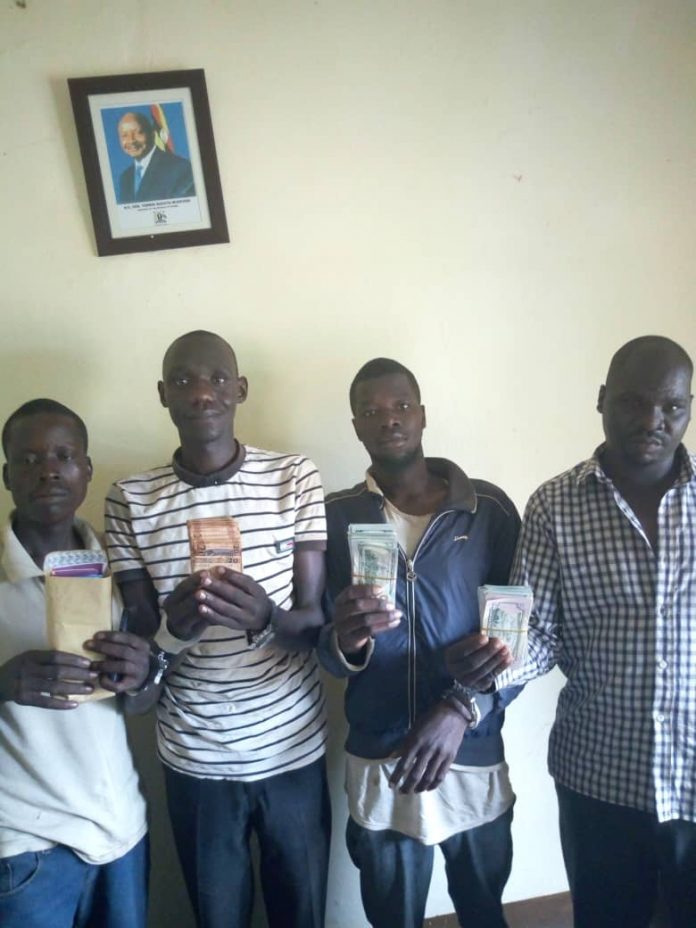
Recovered toy gun and military attire

The territorial Police in Bukomansimbi responded to a case of armed robbery, which occurred last night in Buyoga Village Kibinge Sub County Bukomansimbi district, according to ASP Paul Kangave, the Greater Masaka Region Public Relations Officer.

The preliminary facts reveal that a gang of three robbers armed with a toy gun, attacked Joseph Kalanda, a businessman, at his home in Kibinge Sub County, and robbed him of Shs4 million and a mobile phone.

The area residents upon realizing what was taking place made an alarm, which attracted members of the public. Two suspects were intercepted by the residents. They include, Pius Juuko who was arrested and transferred to police custody. The second suspect who was badly beaten was pronounced dead on arrival at Masaka Regional Referral Hospital and was identified as Ronald Mugerwa.

The police is on the hunt for the third suspect a one Julius Musimuka who is on the run. We call upon anyone with information regarding his whereabouts to alert the nearest police.

We want to commend the public in Kibinge Sub County for their level of vigilance and we encourage them to continue working the police to fight crime.

Stories Continues after ad

BoU saga: Senior staff Mutebile recruited had no required qualifications and experience

Bank of Uganda

The Bank of Uganda (BoU) Governor Prof. Emmanuel Tumusiime-Mutebile is on record now for recruiting senior staff without consulting the board or senior staff on the management team. Now an inquiry has established that most of the staff he recruited externally did not meet the required qualifications and experience.

A confidential Report of the Presidential Tripartite Committee, based on Investigation of allegations that Tumusiime-Mutebile violated BoU’s policy on recruitment has detailed the affected officials with their qualifications and whether they are suitable for the jobs they hold at BoU. Eagle Online presents the committee’ findings on the recruited senior staff as announced by the governor on February 7, 2018:

Dr. Twinemanzi Tumubweinee, Executive Director Supervision

The committee found that Dr. Twinemanzi Tumubweine holds: PhD in Economics from the University of Texas in Dallas, United States of America (December 2009), Master of Science degree in Economics from the University of Texas in Dallas, United States of America(December 2009), Master of Science Degree in Management and Administrative Sciences from the University of Texas in Dallas, United States of America (May 2004) and Bachelor of Science Degree in Statistics and Applied Economics from Makerere University in Kampala, Uganda (January 1996).

However, when Dr. Tumubweine’s academic qualifications were considered alongside the prescribed requirements stipulated by policy in the Administration Manual, it was found that his first degree was a pass degree. It therefore fell below the standard requirement of 1st Class and Upper Second Honours and also below the standard set for exceptional circumstances which is Lower Second Honours degree. “It is also pertinent to note that Dr. Twinemanzi lacked experience in commercial banking as stipulated in the job description for Executive Director Supervision. There was no mention of any working experience relevant to commercial banking in his personal records at the Bank,” the committee noted.

Mr. Valentine Ojangole, Director Banking

The committee established that was determined from Mr. Valentine Ojangole holds: personal records that his academic qualifications were as follows:

Master of Business Administration (MBA) from ESAMI – October 2009, Bachelor of Commerce (BCom) Accounting from Makerere University in Kampala, Uganda – June 2000. Ojangole’s transcript for the Bachelor’s degree revealed that he graduated with Upper Second Class Honours and therefore met the minimum requirement set in the Administration Manual for recruitment of Banking Officers.

Mr. Edward Mugerwa, Director IT Operations

The committee established that Mr. Edward Mugerwa is a holder of one degree being a Bachelor of Science (Bsc) in Electrical Engineering obtained from Makerere University in Kampala, Uganda in 2000. He passed with Upper Second Class Honours and as such fell within the minimum requirements for entering the Bank of Uganda. However with regard to the official Bank job description the committee found that that Mugerwa lacked the minimum requirement of a Masters degree in Computer Science/Engineering, Information Systems/Technology or closely related field. His personal records revealed that he only possessed a Bachelors degree.

Ms. Ruth Kande Sabiiti, Procurement Assurance Manager

When Ms. Sabiiti’s personal records were examined she was found to be a holder of one degree being a Bachelor of Arts in Social Sciences (Economics and Political Science) obtained in 1996 from Makerere University in Kampala, Uganda in 1996. It was determined from her degree transcript that she held a basic pass degree with no honours. This was clearly outside the minimum requirement of Upper Second Honours for normal recruitment and that of Lower Second Honours for recruitment under exceptional circumstances.

Dr. Natamba Bazinzi, Assistant Director Currency Administration

When Dr. Bazinzi’s personal records were examined he was found to hold the following academic qualifications: Doctor of Philosophy (Business Management – Finance) obtained from Moi University in Kenya – 2016, Master of Science (Msc) Accounting and Finance – Makerere University in Kampala, Uganda – 2010, Bachelor of Business Administration – Makerere University Kampala – 2006. Bazinzi’s academic transcript for his Bachelor’s degree showed that he graduated with Upper Second Honours and therefore met the minimum recruitment requirement for Banking Officers. However, close analysis of his working experience and the official job description for an Assistant Director Currency revealed a variation. “Whereas the job description called for at least 5 years working experience in a financial institution with at least 2 years in the management of currency operations or at least two years as Head of Section in Bank of Uganda, his personal records revealed no relevant experience in light of the position he was offered, the committee wrote of Bazinzi.

Stories Continues after ad

Police probes BoU’s Shs400b hidden in Masaka

ON THE FIRING LINE: Governor Mutebile and former deputy Louis Kasekende.

Uganda Police detectives are investigating Shs400 billion that the Bank of Uganda (BoU) officials transferred and stored in BoU Masaka Currency Centre in a room without CCTV cameras, meaning the money could be stolen without tracing it.

The huge money is said to have been transferred to Masaka on June 14, 2019, the time when investigators started probing BoU and other officials over the anomaly in the consignment of the 20 pallets packed with Uganda Shillings notes that were delivered at Entebbe International Airport by BoU chartered plane on April 26, even though, extra 5 pallets were onboard and their whereabouts is unknown.

A week ago, BoU Executive Director Operations Charles Malinga Akol was charged and released from the Anti-Corruption Court in Kololo on a cash bail of Shs40 million as part of the inquiry into the currency consignment scandal. Francis Kakeeto, a branch manager at Mbale and Fred Wanyama from the same branch were charged with abuse of office and in alternative corruption which they have both denied before magistrate Herbert Asiimwe. They were also released on Cash Bail of Shs 30 million and Shs25 million respectively.

Prosecution alleged that on April 26, 2019 between France, Belgium and Entebbe airport, the duo while on assignment by their employer to carry out a pre-shipment inspection of printed materials in France, in abuse of the authority to offices did an arbitrary act prejudicial to the interest of their employer and allowed the inclusion of unauthorised case on a cargo plane fully chartered by BoU.

And in the alternative, it’s alleged that they failed to refute and report the inclusion of unauthorised cargo on a plane fully chartered by BoU.

Meanwhile deputy governor, Dr. Louis Kasekende, insists there was no extra currency printed in Germany other than that approved by his boss Prof. Emmanuel Tumusiime-Mutebile.

Dr. Kasekende made the remarks on Thursday in Masaka during the At the Bank of Uganda Townhall Meeting held receive feedback from the public and discuss ways of improving the services that the institution renders to the country.

“…many of you have asked for clarification from the Bank of Uganda on the ongoing investigations by the Uganda Police and sister investigative agencies regarding the recent shipment of Uganda currency consignment. Unfortunately, the matter has progressed to court and any detailed discussion on the specific merits of the issue might be construed to be contempt of court processes…Let me also reiterate Governor Mutebile’s message, that there was no extra currency printed outside the amounts that he approved through the requisite processes,” he said.

He said currency printing like many of the work processes in BoU, is, “subject to very rigorous processes with inbuilt controls for checks and balances.” He said deliberate checks at various levels including the Currency Policy Committee headed by Mutebile himself, coupled with a strong and independent audit function, have overtime been robust enough to maintain the integrity of our currency operations.

He re-affirmed BoU’ commitment to cooperate with all arms of the state to fully investigate any breach of its operating procedures, either by the staff or procured partners. “The outcomes of these investigations shall be used to re-assess and further buttress our processes whose unquestionable integrity is central to the successful pursuit of BOU’s core mandate.

Investigators are trying to establish whether the extra money was printed without the knowledge of the top leaders of the bank. It is alleged about Shs190 billion was illegally printed and is hidden somewhere in the country.

Stories Continues after ad

Minister rolls out regional consultations on Vanilla growing and trade

The State Minister for Agriculture, Christopher Kibanzanga, has rolled up regional engagements for vanilla value chain players in Rwenzori sub-region.

The inaugural meetings and field tours are designed to further emphasize the guidelines for appropriate planting and harvesting of Vanilla to avoid reduction in profitability at farm level.

The engagements involved partners including Catholic Relief Services (CRS) which, according to Mr. Niek De Goeij, the Country Representative is supporting farming communities to improve their livelihoods and enabling farmers to meet with the right stakeholders including exporters and buyers of vanilla in such engagements.

Kibanzanga said government is committed to supporting the growth of vanilla-growing cooperatives and groups and increasing mobility of agricultural extension workers to support the sub sector.

The guidelines for vanilla were announced at the Uganda Media Center by Kibanzanga on the 21st of May 2019.

Vanilla is one of the high value crops grown in 25 Districts of Uganda, mainly in Central, Eastern and Western parts of the country and is used to add flavor to drinks, dairy products, sweet food, cosmetic products and may also be applied in pharmaceutical industries.

The Dairy sector is the largest consumer of vanilla and here, it is used in ice cream, yoghurt, chocolate and other flavored dairy products. Global consumption of vanilla ranges between 2,100MT to 2,400 MT per year over the last 10 years.

However, there is now increasing demand for all-natural and organic vanilla from major Global food companies.

In 2015 for instance, Nestle announced a major plan to go all-natural for all their products and eliminate artificial additives. This offers a major opportunity for Uganda which has the most conducive climate to increase the production of premium quality natural and organic vanilla.

In 2018, Uganda produced about 300,000Kg of vanilla and exported 23,000Kg of cured vanilla worth US $6.40 million.

In 2017 and 2018, the major importing countries for Ugandan vanilla included USA, France, United Kingdom, Germany, Japan, Canada, Denmark, Netherlands, Israel, South Africa, Turkey and Hungary. Madagascar is the largest producer (1500 to 1800 MT per year) while Uganda only accounts for about 5 per cent of the global production.

Prices for vanilla have been rising over the last few years due to increased demand against very low supply of quality beans.

In Uganda, prices reached Shs250,000 per kilogram in July 2018 for green vanilla beans at the farm-gate. It is not surprising to hear that vanilla is now referred to as the “Green Gold”.

This is because of the price fetched from cured vanilla which is higher than the value of one kilogram of silver.

s a country, Uganda has a window of opportunity to secure a growing long-term profitable vanilla sector. vanilla has proved to be a sustainable and profitable crop for farmers in Uganda that has potential to deliver the country into the medium income status.

Stories Continues after ad

MV Sigulu ferry ready for waters of Lake Victoria as works ministry unveils plans to construct Bukasa Port

MV Sigulu ready for the waters

The Uganda National Roads Authority (UNRA) has set afloat the MV Sigulu ferry onto the waters of Lake Victoria after seven months of construction at Masese landing site.

According to UNRA, the vessel will connect Namayingo district to the Islands of Lolwe and Sigulu, providing safe means of transport to the communities of Namayingo, Lolwe and Sigulu Islands at no cost

“It is expected to positively impact the communities through increased volumes of trade, tourism and increased access to social services that are not easily available on the islands.” Reads part of the statement.

The modern ferry which has a passenger capacity of 300 was constructed by Johs Gram-Hanssen (JGH), Western Marine Shipyard Limited Joint Venture. It has a Pay Load (Weight it can carry) 200 Tones, 15 Medium Vehicles and7 Knots (14 km/hr) Speed.

Key features include the hull, propulsion systems, wheelhouse, and sheltered passenger seating areas, crest rest room, a medical room and a cafeteria. It is however expected to be launched by president Museveni later next month.

Meanwhile, The Ministry of Works and Transport yesterday unveiled plans for the construction of Bukasa Port on shores of Lake Victoria.

According to the ministry, the port will provide reliable, effective and sustainable multi-modal transport system along the Central and Northern Corridor.

Expected to serve as trio-modal cargo handling facility for road, rail and water transport, the port will sit on 400 hectares on the shores of Lake Victoria.

Bukasa Port will serve as an International Transportation Logistic and Business Hub center for assembling, de-commissioning, storage & re-distribution of exports/imports.

“It will be an International Transportation Logistic and Business Hub center for assembling, de-commissioning, storage & re-distribution of exports/imports with regard to demand and supply chain along the Central Corridor Standard Gauge Railway, KLA-Jinja Express Highway and at Kampala Industrial Business Park- Namanve,” said the ministry.

According to the ministry, the Port will be constructed in three phases, which include:

Phase 1: covers preparation of Master Plan, Preliminary Design, and construction of start-up infrastructure, Dredging, Pilling and Swamp Surcharging. This Phase will be completed in April 2020.

Phase 2: covers construction of Bukasa Port to capacity of 2.3 million tons per year, construction of shipyard and floating dock. This Phase is expected to be completed by 2021.

Phase 3: covers future extension of the Port to the capacity of 5.2 million tons and to the maximum peak of 7.5 million tons. That Phase is expected to be completed by 2030.

Stories Continues after ad

Gen. Tumukunde storms Kampala for Mayoral campaigns

Gen. Tumukunde talking to his supporters

Former Security Minister, Lt.Gen. Henry Tumukunde has has kick started campaigns in his bid to become the next Lord Mayor of Kampala.

Gen. Tumukunde, this Saturday evening stormed Katanga slum in Kampala where he addressed his supporters. He is credited for raiding the criminals especially the ‘Kifeesi’ out of the city during his short stint as Minister for Security but also for weeding out the Allied Democratic Forces (ADF) urban hit squad that had invaded the city in the 1990s and early 2000s when he was chief of Military Intelligence.

He donated a bull to a team united which donned red T-shirts

Gen. Tumukunde joins a list of politicians interested in contesting for the Lord Mayor of Kampala come 2021 general elections, Eagle Online can confirm.

Sources say Tumukunde is yet to decide whether he will run on a party ticket or as an independent candidate.

Kawempe North MP Latiff SSebagala is also interested in the same seat come 2021 and Musician Jose Chameleon.

Sources say the current Mayor Erias Lukwago intends to give up the seat and instead contest for the President of the Democratic Party (DP), which position is currently occupied by Nobert Mao.

Henry Tumukunde Profile

Henry Tumukunde is a retired senior military officer of the Uganda People’s Defence Forces (UPDF). He was the Minister of National Security in the Cabinet of Uganda. He was appointed to that position on 6 June 2016. On 4 March 2018, he was relieved of his duties in an unexpected cabinet reshuffle following his public outburst with the then IGP Gen. Kale Kayihura.

Tumukunde is also a qualified lawyer. He has served as the UPDF’s chief of personnel and administration, chief of military intelligence as well as serving as the commanding officer of the UPDF Fourth Division, based in Gulu in the Northern Region of Uganda. He has also previously served as the director general of the Internal Security Organisation (ISO). Tumukunde was also a Member of Parliament representing the Army in the Parliament of Uganda between 1995 and 2005.[5]

Background and education

He was born on February 28, 1959 in Rukungiri District in the Western Region of Uganda. He attended Bishop Stuart College Demonstration School for his primary schooling. He studied at Kigezi College Butobere (Siniya) and Kibuli Secondary School for his O-Level and A-Level education, respectively. Tumukunde graduated from Makerere University with a Bachelor of Laws degree in 1981. He obtained a Diploma in Legal Practice awarded by the Law Development Centre in 2010. He also holds an Executive Masters in Oil and Gas Management, awarded by the Graduate Institute of Geneva in 2013.

Joining The NRA guerillas

During his time at Makerere, Tumukunde was involved in anti-government politics, which subsequently led to his joining of then rebels, the National Resistance Army, led by President Yoweri Museveni. Tumukunde was hounded by the government security services during his last year at the university and on completion, decided to join the struggle, along with two of his friends at the time, Major General Mugisha Muntu and Colonel Jet Mwebaze.

Obote’s security services at the time caught wind of their impending departure for the bush and mounted an attack on the NRA’s transit house (shop) in Kampala. It is said that Tumukunde alongside Muntu posed as shopkeepers, surviving what would have been sure torture and death. In the early stages of the war, Tumukunde was a machine gunner and eventually went on to become one of the senior officers in NRA, indicated by his senior number RA 0111.

Getting shot

In 1985, during one of the bigger battles with the Uganda National Liberation Front in Luweero District, Tumukunde was shot multiple times in his legs. The wounds were so major that it was thought he would not survive. He was, however, smuggled out of the country to Nairobi and eventually to London where he was operated on.

Post-Bush

On capturing power, Tumukunde was promoted to the rank of major and appointed first secretary and military attache at the Ugandan Embassy in the United Kingdom. Subsequently, Tumukunde was sent on a Command and Staff Course at the Armed Forces Command and Staff College, Jaji, in Kaduna, Nigeria from where he emerged as one of the best students. He later on returned to Uganda where he became the Army’s director of planning. Tumukunde served in this role for many years and was very instrumental in the setup of formal military structures in the UPDF, which had until then been a rebel army.

In 1994, Uganda held elections for the Constituent Assembly and Tumukunde sought to represent his home county Rubaabo. His main competitor was Prof. Mondo Kagonyera. Tumukunde, who was in early thirties at the time, was thought to be the underdog in the race; however, Tumukunde was a very good mobiliser and won by a landslide margin. Tumukunde then joined the CA, which formulated the current 1995 Ugandan Constitution. Tumukunde was known to be a regular and astute contributor to the sessions and debates that preceded the formation of the Constitution.

Following the set-up of the constitution, Uganda held elections and Tumukunde subsequently became a Member of Parliament representing the Army as a special interest group. He went on to serve as an MP until 2005. In addition to this, Tumukunde was promoted to the rank of lieutenant colonel and appointed chief of personnel and administration. In 1998, Tumukunde was again promoted to the rank of colonel and appointed chief of military intelligence and security. His tenure was arguably the most successful by any officer as it is during this time that Al-Qaeda’s plan to bomb the American Embassy was thwarted. There was also a time where bombings were rampant within the capital Kampala, and once again Tumukunde formed several intelligence committees within the city and the problem was managed. Tumukunde also built an amicable rapport with the Muslim community, which many had accused of spearheading the attacks, so much so that key intelligence information was forwarded to him with ease. Arguably, it was during his reign that the Ugandan intelligence apparatus was at its most efficient.

Tumukunde was then promoted to brigadier general and transferred to command the UPDF Fourth Division based in Gulu. At the time, the war with the LRA was ongoing and Tumukunde made significant headway during his time as division commanding officer in diminishing the threat of the LRA.

Tumukunde was then appointed director general of the ISO, Uganda’s civil intelligence body. During his time at ISO, Tumukunde set up structures that returned ISO to being the country’s foremost Intelligence gathering body, just as he had done with CMI. The Internal Security Organisation became renowned for its efficient and effective approach towards intelligence and counter-terrorism.

The fall out.

Tumukunde’s fast rise to the upper echelons of both the political and military scene in Uganda marked him out as one of Uganda’s most popular and well known figures and ultimately, this, alongside his very strong minded and unrelenting dedication to his country, brought him into the sights of the very institutions he helped to consolidate.[7]

At a political retreat in 2003, Tumukunde, in the presence of the president and his cabinet, argued against the impending removal of term limits that would give President Museveni the right to stand for re-election on an infinite basis. Tumukunde stated that this would be in direct contravention of the rights that they fought to establish and that he was not willing to take part in what he considered to be grossly unconstitutional behaviour. Predictably, this put him at loggerheads with the establishment and more so the president.

Arrest and detention

Tumukunde was charged with the offences of abuse of office and spreading harmful propaganda. The abuse of office charges were eventually dropped in a manner suggesting that they had been politically motivated in the first instance. What followed was, however, a surprise to many. Tumukunde was on 28 May 2005 forced to resign from Parliament and subsequently arrested on the orders of the president.[9]

His home was surrounded by at least 50 soldiers commanded by Brig. Kale Kayihura and Brig. Joshua Masaba who proceeded to arrest him. Gen. Tumukunde was then driven in a tightly guarded convoy to an officers mess turned detention center, where he was incarcerated for nearly 2 years, during which he had limited and tightly controlled contact with the outside world. His extrajudicial detention coupled with a series of controversial and uncertain court martial hearings seemed to backfire leading to irreversible pressure culminating in his release in 2007.
His arrest followed his opposing views to the proposed “third term” project that suggested a revision to the Ugandan constitution enabling one to serve more than two terms as president as was the case at the time.

On 18 April 2013, the UPDF General Court Martial sat to bring an end to the process that had lasted 8 years and summed up its deliberations. The charge of spreading harmful propaganda was dropped while the joint charge of military misconduct was upheld and Tumukunde was subsequently sentenced to a severe reprimand.

Promotion and retirement

In September 2015, Tumukunde had been was promoted to the rank of Lieutenant General and then retired from the Army.

Appointment to cabinet

On June 6, 2016, he was appointed to the Cabinet as the Minister of National Security. He was relieved of his cabinet responsibilities on the evening of Sunday, 4 March 2018, in a presidential tweet, in which his nemesis, General Kale Kayihura, the former Inspector General of Police was also fired. Tumukunde however, still subscribes to the ruling party the National Resistance Movement.

Stories Continues after ad

BoU scandals: Board members disown Mutebile over irregular appointment of staff

BoU Governor Emmanuel Tumusiime-Mutebile.

A confidential Report of the Presidential Tripartite Committee that was formed by President Yoweri Museveni to investigate the Bank of Uganda (BoU) Governor Prof. Emmanuel Tumusiime-Mutebile over his unilateral decision to recruit and make staff changes as announced on February 7, 2018, says the board members interviewed disassociated themselves from that decision and said Mutebile violated the Bank of Uganda Act when he took the decision without involving all members of the board and senior management.

“When the Committee interfaced with both current and former members of the Board of Directors and from the interactions the Committee noted a number of proposals and observations relevant to the situation prevailing at the Central Bank. It was noted that none of the current board members were aware of the Governor’s decision prior to the communication made on 7th February, 2018,” the report notes.

The committee appointed by Museveni included to do the investigation; MP Abdu Katuntu (MP) – Chairperson, Anita Among – Member, MP Michael Tusiime – Member, MP Elijah Okupa – Member, Lady Justice Irene Mulyagonja Kakooza (IGG) – Member, David Makumbi (IG Staff) – Member, Justus Kareebi (IG Staff) – Member, Sarah Birungi (IG Staff) – Committee Secretary, Judy Obitre-Gama (BOU Board) – Member and Keith Muhakanizi (BOU Board) – Member.

According to the report, in one board member’s opinion, Mutebile had acted in violation of the BoU Act when he acted unilaterally to recruit new members of staff. “There was also concern that the Governor had irregularly transferred the Chief Internal Auditor which was a preserve of the Audit and Governance Committee of the Board,” report says.

The board members, according to the report, blamed Mutebile for appointing and transferring various staff to positions that did not officially exist in the bank’s structure. Further, the report says the Human Resource and Remuneration Committee of the Board disowned Mutebile, saying they had no input at all in the staff changes.

The report further notes that one board member observed that the Governor had premised the changes communicated in his memo on the policy on staff rotation which was misleading. This was because the actual changes also involved recruitment.

3.29 Another board member, the report notes, was of the view that there was a culture of not adhering to procedures at the Bank and that this had led to a loss of confidence of the staff in the senior leadership. “It was observed as being distrustful of internal grievance mechanisms. It was further opined that the recruitments conducted by the Governor were in error, against policy and outside of the existing structure,” it says.

The report further says that board members disregarded the requirement by the Governor that new appointees take over office immediately, saying it was uncalled for especially with regard to the position of the former Executive Director Supervision Justine Bagyenda who was already due to retire before she was replace by Dr. Twinemanzi Tumubweine who didn’t meet the experience required of that job.

“Another Board member expressed the view that the Governor’s reliance on a board resolution made in 2012 with regard to delegation of the functions of the Board to the Governor was misguided. This was because the resolution in question was framed in the context of the expiry of a particular board’s term and not in perpetuity.”

It was opined that the role and powers of the Governor and Deputy Governor were not stated in the existing laws and that there was a need for an additional slot of Deputy Governor. However, “a board member defended the Succession Policy at the bank as relevant in as much as it served as a talent management pool and helped with the effective filling of gaps created upon retirement or other departure of staff.”

The board members interviewed apart from Mutebile were; Dr. Louis Kasekende-Deputy Governor/Deputy Chairperson, Mr. Keith Muhakanizi- Member , Ms. Judy Obitre-Gama- Member, Dr. William Kalema-Member, Mr. James Kahooza- Member, Ms. Josephine Okwi Ossiya-Member and Mrs. Susan W. Kanyemibwa, Bank Secretary/Board Secretary.

The Committee also interviewed former Board members who expressed some views as follows:

That the current legal regime whereby the Governor is also the Chairman of the Board of Directors is problematic as it raises conflict of interest issues. They called for the creation of an extra position of Deputy Governor to allow for at least one Deputy to be exclusively tasked with operational matters in the Bank while the Governor and the other Deputy concentrate on monetary policy and other core functions.

“The creation of an extra slot of Deputy Governor also ensures that there is no time where senior staff below the rank of Deputy Governor get involved in the duties of the Governor or the Deputies,” they argued, according to the report.

The report says the former board members did not approve of Tumubweine replacing Bagyenda, arguing that Bank supervision requires persons who are highly experienced preferably with experience in commercial banking. Mutebile handpicked Tumubweine from the Uganda Communication Commission where he was working as he served as the Director of Industry Affairs and Content (Economic Affairs).

The reports says Mutebile justified his decision to recruit and promote staff on the grounds that he was acting with the authority of the Board delegated to him as Chairperson of the Board by virtue of a resolution of the Board of Directors at its 311st Meeting held on May 30, 2012. The Governor explained that according to that resolution he had delegated authority in the absence of a fully constituted Board to approve all matters that required Board consideration and approval. However board members dismissed this argument.

The former BoU board members, according to the report, called for the formation of a regular consultative forum where former Governors and Deputy Governors are able to meet with current office holders to discuss current affairs and to exchange ideas on how best to ensure optimal performance of the central bank.

Former board members interviewed were; Mr. Leo Kibirango-Governor , Dr. Ezra Suruma-Deputy Governor, Mr. Perez Bukumunhe- Deputy Governor , Mr. Robert Elangot-Deputy Governor and Mr. Opio Okello- Acting Deputy Governor

“The majority of the senior staff members interviewed tended to agree that there were factions or cliques in the Bank polarized around the positions of the Governor and the Deputy Governor,” says the report.

On concerns about the existence of cliques, one staff went further to characterize the cliques as potentially religious-based. In the words of the staff in question, “There is a risk of divisions according to religion in that Bank. Catholics and Anglicans have their own groups. They have meetings and each has its own power.”

Yet all the 60 staff interviewed indicated that the changes made by the Governor were a complete surprise. “Staff indicated a loss of confidence on account of unclear implementation or disregard of human resource policies especially with regard to succession. It was felt that policy is applied selectively,” says the report.

According to the report, all the staff by the committee interviewed indicated that the changes made by the Governor were a complete surprise.

Stories Continues after ad