|
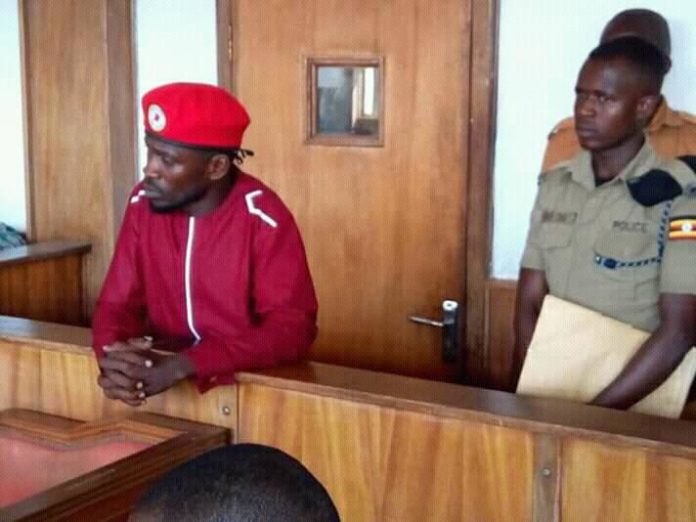
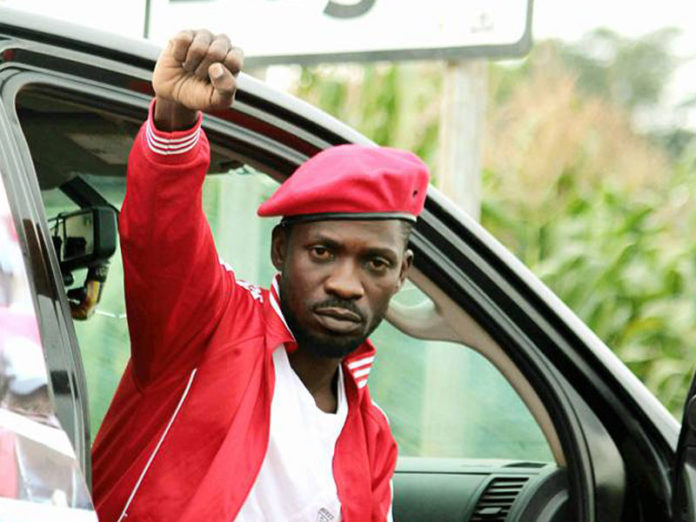
The Ugandan government has denied allegations made in a report in the Wall Street Journal that it worked with technicians from the telecoms company Huawei to crack the encrypted communications of popular musician-turned-politician Robert Kyagulanyi also known as Bobi Wine. There was no evidence in the report that Huawei executives in China were aware of what was happening in Africa. Huawei described the allegations as “unfounded and inaccurate”. Government spokesman Ofowno Opondo told BBC Focus on Africa TV that they were “false”. “In Uganda we run a transparent democratic system. The opposition politicians speak their mind openly… there is no need to use underhand methods to find out what they are saying.” When challenged that Uganda had been accused of spying on opponents in the past, Mr Opondo said, “There will always be bad apples in the system.” In 2015, the BBC reported that the Ugandan government used surveillance technology which was deployed to crush and potentially blackmail opponents. The report was denied by the government at the time. Bobi Wine has been representing Kyandondo East Constituency as MP for two years and portrays himself as a champion of the poor, and sings about social justice and democracy. He intends to run against President Yoweri Museveni in the 2021 presidential election, even though he does not subscribe to any political party, apart from heading his popular political pressure group, People Power. Museveni has been in power since 1986, and is seeking a sixth term.
|
Uganda gov’t denies spying on Bobi Wine, says has open democratic system
Rwandan opposition politician goes missing for 30 days
The wife of a Rwandan opposition party member who disappeared 30 days ago has told the BBC she has lost hope of finding her husband.
Joselyne Mwiseneza said she does not know whether her husband, Eugène Ndereyimana, is dead or alive.
The politician, who represented the opposition FDU-Inkingi party in the east of the country, went missing on 15 July.
Mrs Mwiseneza said the authorities have not given her any news about him.
“The children are too sad, they don’t know what’s going on, they keep asking me where dad is gone. It is too hard for me,” Mrs Mwiseneza said.
Victoire Ingabire, leader of FDU-Inkingi, says that Habarugira Jean Damascène who held the same position as Mr Ndereyimana, also went missing in 2016. His body was later discovered.
Mrs Ingabire, a vocal critic of the Rwandan government, has previously condemned the killing of opposition members.
Her personal assistant, Anselme Mutuyimana, went missing on his way home in March 2019. His body was later found in a forest.
The Rwandan government has previously denied accusations that they have been persecuting the opposition.
Tackling greenhouse gas emissions: AfDB welcomes $20m investment from Clean Technology Fund
The Clean Technology Fund (CTF) one of two multi-donor trust funds within the Climate Investment Funds (CIF) on August 8, 2019 approved US $20 million for the Facility for Energy Inclusion (FEI), a facility sponsored by the African Development Bank to provide sustainable financing for small-scale renewables in Africa.
FEI is a $500 million financing platform whose objective is to catalyze financial support for innovative energy access solutions. FEI On-grid, a targeted US $400 million fund, supports improved energy access through the development of small-scale renewable energy generation and mini-grids across Africa, while the Off-Grid Energy Access Fund (OGEF), a targeted US $100 million fund, supports off -grid energy distribution companies and boosts their long-term capacity to access capital markets at scale.
The CTF investment, composed of a US $4 million junior equity tranche and a US$6 million senior concessional loan, will be drawn from the Dedicated Private Sector Program III, designed to provide risk-appropriate capital to finance high-impact, large-scale private sector projects in clean technologies.
Stressing the difficulty rural areas have in attracting investment for affordable and productive electricity, Anthony Nyong, Director of Climate Change and Green Growth at the African Development Bank said the funds would contribute to economic and social growth and enhance its recipients’ resilience to the effects of negative climate change.
“Access to affordable and reliable energy has huge benefits at various levels of any society. Most of the 600 million people estimated to lack access to modern energy services in Sub-Saharan Africa are also among the most vulnerable to the disastrous consequences of climate change,” he said.
FEI is expected to contribute to the installation of around 600MW of renewable energy projects across different African countries and avoid over 30 million tons of CO2 equivalent of greenhouse gas emissions over a period of 20 years while yielding positive gender and social outcomes.
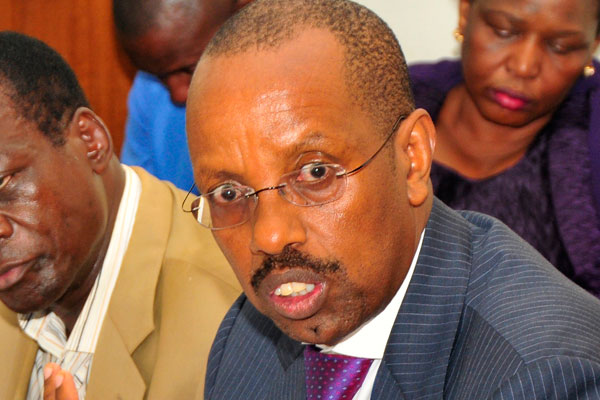
PS Keith Muhakanizi orders for deletion of absentee staff from public payroll
The Permanent Secretary in the Ministry of Finance, Planning and Econ/Secretary to the Treasury, Keith Muhakanizi has instructed accounting officers in central as well district local governments to delete names and stop paying staff who have abandoned their work stations or are away on long term study leave without the approval of the appointing authority.
“In accordance with Section 11 (3) (a) of the PFMA, 2015, this is, to direct you to delete public officers who have abandoned their stations and have not reported for duty for 3 months without giving clear reasons from the salary payroll, and also delete those who are away on long term study leave without the approval of the appointing authority,” Muhakanizi in a letter dated August 2019, ordered all Accounting Officers of central and local government votes.
Muhakanizi also warned the officials who include district service commission chairpersons, to desist from recruiting staff who don’t have required qualifications, adding that recruitment of staff without following laid-down procedures was unacceptable.
“You are further requested to desist from recruiting staff without following the right procedures within the existing laws and procedures as well, as ensuring that there is adequate budget before recruitment,” he warned.
Muhakanizi was bitter that some public officials have not returned to work even when their term of study leave ended but continue to pick salaries.
Muhakanizi said he would liaise with his counterpart in the Ministry of Public Service to ensure that the practice of public servants drawing salaries even when they are not working continuously for three months is stopped.
Uganda coffee exports rise 7% in June
|
A total of 341,628 60-kilo bags of coffee valued at US $31.91 million were exported in June 2019, according to Uganda Coffee Development Authority (UCDA). According to UCDA latest report, the coffee exports in June comprised 253,625 bags of Robusta worth US $22.63 million and 85,003 bags of Arabica worth US $9.28 million. “This was an increase of 7.08 per cent in quantity and a decrease of 4.65 per cent in value from the same month last year,” says UCDA report. By comparing quantity of coffee exported by type in the same month of last coffee year (May 2018 and 2019), Robusta registered a percentage increase in quantity by 1.23 per cent and a decrease of 10.57 per cent in value. Arabica exports registered a percentage increase in both quantity and value (29.74 per cent and 13.70 per cent) respectively. Meanwhile, coffee exports for nine months (October 2018 to June 2019) totaled to 3,137,118 bags worth US 310 million compared to 3,266,831 bags (US $357 million) the previous year a drop of 3.97 per cent and 13.17 per cent in quantity and value respectively. On the other hand, coffee exports for the last 12 months (Financial Year 2018/19) amounted to 4.18 million bags worth US $416 million compared to 4.45 million worth US $492 million the previous year, a 6 per cent and 15 per centreduction in both quantity and value respectively . Some of the factors that led to this were: low global prices on account of higher global coffee supply which affected export prices and the after effect of the dry weather in south of the equator in 2018. Uganda’s coffee Exports by destination According to UCDA report, coffee exports to Italy had the highest market share in the month of June with 33.01 per cent compared to 30.61 per cent in May, it was followed by Germany with 11.71 per cent compared to 13.11 per cent in May, USA had 9.76 per cent in June compared to 13.75 per cent in May, India had share of 9.61 per cent compared to (7.78 per cent in May and Sudan had 6.04 per cent compared to 9.74 per cent in May. Coffee exports to Africa amounted to 45,497 bags, a market share of 13.32 per cent compared to 50,569 (14.50 per cent) bags the previous month. The figures in brackets represent percentage market share held in May 2019. Europe remains the main destination for Uganda’s coffees. |
Sudhir petitions Speaker over COSASE’s inquiry into plot 24 Kampala Road
City tycoon, Sudhir Ruparelia has petitioned the Speaker of Parliament Rebecca Kadaga inquiry why parliament’s oversight committee, Committee on Commissions, Statutory Authorities and State Enterprises (COSASE) dragged his property on plot 24, Kampala Road among the disputed properties belonging to Custodian Board.
“We have followed part of the ongoing COSASE inquiry regarding Departed Asians properties Custodian through televised and print media. A property that belongs to Meera Investment Limited has been mentioned as part of the inquiry” Mr Sudhir asks in his August 14, 2019 letter to the Speaker.
He further continues “That property is plot 24 Kampala Road, Kampala (Freehold register volume 1062 Folio”.
Sudhir says inclusion of plot 24 Kampala Road is contempt of Court because the matter was conclusively handled.
“COSASE is now inquiring into a matter and ownership decided upon by the High Court in 2012. We are seeking clarification and guidance from you whether Parliament can inquire into a matter where a decision of court has been made or where a matter is in court. Then whenever matters in court come to an end, parties can come to parliament for another decision” Sudhir’s letter reads in part which was also copied to Chief Justice, Bart Katureebe.
Sudhir in his petition says he bought the said property in 1995 and thereafter went to court for judicial review under LD CR 16 0f 2012 to challenge the Custodian Board’s claim:
“High Court listened to us and listened to Custodian Board (represented by Attorney General) and made a decision on December 20, 2012 in our favour”
The select sub-committee COSASE is investigating circumstances under which properties that were compensated for by government have been grabbed. The Members of Parliament have since asked the government officials who handled the Departed Asians properties to table proof of compensation for each property. The select sub-committee is chaired by Makindye East MP Ibrahim Kasozi.
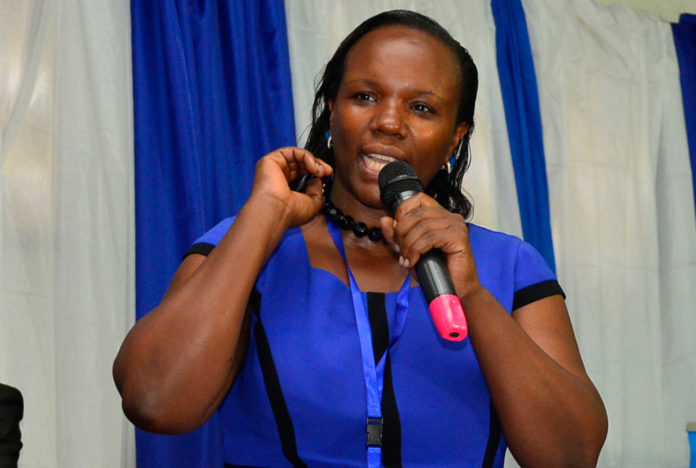
‘CCTV project is a tool to track us, hunt us and persecute us’ -FDC’s Ingrid Turinawe
|
The Government of Uganda has spent US$126 million on CCTV from Huawei Technologies Company Limited to help track criminals but Forum for Democratic Change (FDC) Secretary for National Mobilisation, Ingrid Turinawe has reservations on the installation of the cameras long Kampala’s streets. Turinawe told an international news agency Reuters that the cameras are being installed to track the opposition politicians. “The CCTV project is just a tool to track us, hunt us and persecute us,” Turinawe is quoted as saying. Turinawe’s fears could be believed by the sections of the Ugandan public because years ago she was brutalized by the officers of the Uganda Police Force. The High court in Kampala in March this year ordered government to pay her Shs170 million, following a case she filed for assault. Facial recognition technology has become increasingly pervasive around the world, raising concerns about potential abuses. Officials in San Francisco voted in May to ban its use by city personnel, Reuters reports. Huawei technicians have allegedly helped intelligence officials in Uganda and at least one other African country spy on their political opponents, according to an investigation published by the Wall Street Journal (WSJ) on Wednesday. In Uganda, WSJ alleges they helped crack the encrypted communications of popular musician turned politician Bobi Wine; police swarmed a concert that would have featured surprise opposition speakers and arrested him and dozens of supporters, the paper said. In Zambia, Huawei employees allegedly helped the government access the phones and Facebook pages of bloggers critical of the president so they could be tracked and arrested, the paper reported. Huawei rejected the Journal’s “unfounded and inaccurate allegations”, telling Reuters in an email: “Huawei’s code of business conduct prohibits any employees from undertaking any activities that would compromise the data or privacy of our customers or end users, or that would breach any laws.” Uganda’s cameras are part of Huawei’s Safe City initiative, which has been rolled out in more than 200 cities worldwide, including in China, Pakistan and Russia. In Africa, Huawei has sold CCTV systems to countries such as Kenya, Egypt and Zambia where activists have raised similar concerns over privacy and effectiveness. In Europe, France, Germany and Serbia have small projects with Huawei’s initiative. The U.S. government has restricted trade with Huawei and four other Chinese firms, accusing them of espionage and stealing intellectual property. It is also lobbying to persuade U.S. allies to keep Huawei out of next-generation 5G telecommunications infrastructure, citing concerns the company could spy on customers. Huawei has repeatedly denied it is controlled by the Chinese government, military or intelligence services. Reuters reports that surging crime in Uganda is fuelling public anger towards President Yoweri Museveni who has been in power since 1986 and will likely seek another five-year term. Police recorded 4,497 homicides last year, nearly double the number of five years ago. Kidnappings for ransom, once rare, rose to 202 cases in 2018, an eightfold jump from 2017. In one notorious case, the 28-year-old daughter of a wealthy businessman was kidnapped and killed despite her family paying kidnappers $200,000. Police investigations currently rely heavily on witness interviews, Charles Twine, a spokesman for the police Criminal Intelligence and Investigations Department, told Reuters. Twine declined to give statistics but said police manpower was “critically wanting.” The police website said in 2015 the force was 45,000-strong. That’s about half the United Nations-recommended ratio of one policeman per 500 citizens. A 2015 budget paper for the ministry of internal affairs said there were about 5,500 detectives. Twine said police must turn to civilian experts if they need DNA analysts, toxicologists or fiber experts. He hopes CCTV footage will be the answer, letting investigators “know who has committed the crime, how did he commit it, which route did he take, and which tools did he have.” About 2,500 out of a planned 3,200 cameras covering metropolitan Kampala have been installed. Huawei will eventually extend the system to all major towns in the country. But some current and former law enforcement officials are skeptical that high-tech aids such as CCTV or new forensic tools such as planned DNA and fingerprint databases will have an impact on crime. Uganda’s police are poorly paid and have little investigative training, said Herbert Karugaba, a Ugandan police investigator for 17 years before he joined the U.N. to probe genocide and war crimes in Rwanda and Cambodia. |
We did not spy on Bobi Wine- Chinese gov’t
The Chinese government through its Embassy in Uganda has today dismissed a story published by the US based Wall Street Journal Newspaper which claimed that the Chinese Telecom giant Huawei was helping African governments monitor and hack opposition leaders’ communications.
An unsigned statement on the embassy’s Twitter account dismissed the story as ‘fake news and totally groundless”
Yesterday, the business newspaper claimed that Huawei is helping Uganda government and other African governments to hack and listen in to communications made by opposition leaders.
In the article, WSJ journalists investigate a claim by Kyadondo East MP Robert Kyagulanyi commonly referred to as Bobi Wine that the government of Uganda is hacking his phone and listening in to his conversations.
“I cannot talk to you about sensitive stuff on my phone because our conversation is being listened to,” Bobi Wine claims in the WSJ video.
Quoting unidentified government officials, the report claims that the Telecom Giant, Huawei uses its infrastructure which includes most of the 3G and 4G cell towers in Kampala to enable these hacks.
“The issue of tapping communications is done by government security agencies and they work hand in hand with Huawei,” an unidentified government official testifies in the WSJ video.
In the report, Bobi Wine shared how he side-steps the alleged government hacks using tricks like sending his personal Mobile device to locations other than the one he wishes to go to.
However, the Chinese Embassy picked on a key anecdote in which involves an embassy staffer identified as Chu MaoMing, the story claims Mr MaoMing was an intermediary, and accompanied various Ugandan officials to meetings with the security agency in China, where they were shown the surveillance capabilities of the Chinese government in 2017.
The Embassy claims Mr Maoming did not leave Uganda at any point in 2017.
The embassy claims the story has an ulterior motive.
Statehouse in Uganda has already dismissed the hacking claims, with Senior Presidential Press Secretary Mr Don Wanyama saying this story is a continuation of America’s attack on Huawei amidst a trade war with China.
“You don’t need to hack a phone to know that the Busabaala concerts were political” He says.
Huawei is helping Uganda setup a surveillance system that involves CCTV Cameras to fight crime. This followed a spate of Gun killings in Kampala, including the assassination of high ranking government officials like the late Arua Municipality MP, Colonel Ibrahim Abiriga.
The Chinese telecom Giant Huawei also is facing opposition from some parts of the world most especially the United States of America which claims that the company uses its 5G technology to enable China to spy on other countries.
Huawei has denied any allegations of spying and also denied the claims by The WSJ.
Can’t Uganda raise only ten of her own spies?
By Nabendeh Wamoto S.P
I react to the bold front page headline in one of the Dailies, 15th/Aug/2019 and ask does Uganda need Chineses’ Huaei and Israelites to hook local hostile personalities among whom is purportedly is Robert Kyagulani a k a Bobi wine ?.
Those who are spearheading the People Power movement are ourselves in government and we have handed significant cost-free power dynamics, first by Parliament that is frequently making anti-population legislations, the Executive that is sanctioning, initiating or formulating many of the annoying laws and to a large extent the judiciary that is entertaining politically instigated cases hence playing in opposition’s much needed publicity and mass support.
Haven’t our own spy networks in the country up to now built capacity and attempted to link the current political anger (storm) to our own background of 1980-81 where we the youth of that time supported then Uganda Patriotic Movement (UPM)’s candidate Y.K Museveni as just as a bait for we had foreknowledge that the angry population and the international community, just like it is at the present time could not co-operate with Obote’s second coming (regime). We were de-campaigned by Apollo Milton Obote and group as bandits and thugs.
It is true that in the minds of we, UPM supporters, there was a waiting Luweero Triangle or any other location but in Buganda region (where anger was maximum) that would provide a salient option for bullet boxes instead of ballot boxes, the latter Obote was so brilliant to manipulate.
Is God annoyed with Uganda that there is not even 50, 45 or just 5 of our own spies to handle simple political animosities within our boundaries just as it was with Abraham at the time of Sodom and Gomorrah. Genesis 18:20 forward and the Lord said, because the cry of Sodom and Gomorrah is great, and because their sin is very grievous, I will go down now and see whether they have done altogether according to the cry of it which is come unto me, and if not I will know. And the men turned their faces from thence, and went toward Sodom but Abraham stood yet before the Lord. And Abraham drew near, and said Wilt thou also destroy the righteous with the wicked? Peradventure there be fifty righteous within the city: Wilt thou also destroy and not spare the place for fifty righteous that are there in?. That be far from thee to do after this manner, to slay the righteous with the wicked: and that the righteous should be as the wicked, that be far from thee, Shall not the judge of all the earth do right?. And the Lord said, if I find in Sodom fifty righteous within the city then I will spare all the place for their sakes.
First forward in verse 32 And he said oh let not the Lord be angry, and I will speak yet but this once peradventure 10 shall be found there. And he said, I will not destroy it for ten’s sake.
Verse 33 and the Lord went his way as soon as he had left communing with Abraham and Abraham returned unto his place.
Can’t Uganda raise only ten of her own spies to depend on Israel and China?
(0776-658433)
How to incorporate a company in Uganda, a case in point, a private company limited by shares.
In life, when we share knowledge, we lose nothing but instead, we gain.
A company is defined as a legal entity formed by a group of individuals to engage in and operate a business with a view of making profits.
Companies are generally organized to earn a profit from business activities, though some may be structured as nonprofit charities.
Among common questions people ask include, how long does it take to register a company and what are the requirements?
There are different types of companies. I will discuss one type, a private company limited by shares. This is the most preferred company type in Uganda.
Registering a company is a one day process unlike in the past where the process used to take weeks and months.
To register a private company limited by shares, the following are the processes and requirements:-
- Visit a lawyer for consultation
A company is regulated by laws, among which includes the Companies Act No. 1 of 2012, Laws of Uganda and Regulations made thereafter. Company law is very technical so you need a concrete piece of advice prior to incorporating a company. It is advisable to consult a lawyer to advise you on the process and requirements. Your lawyer will task you to avail him/her with some information such as:- - Your proposed company name(s);
ii. How many directors will you have?;
iii. Details of the directors and secretary i.e name, occupation and address;
iv. What will be the share capital;
v. Who will be shareholders and or subscribers;
vi. What percentage will each shareholder and or subscriber hold and or own;
vii. General nature of business your company intends to do;
viii. A few objectives for which you are opening a company;
ix. Your intended physical location for your business;
x. Which bank(s) you intend your company to open an account and who will be signatories to the bank account. This helps your lawyer to draft a bank account opening resolution. - Subscribers / Shareholders’ meeting
Upon consulting with your lawyer, as owners or subscribers of the company, have a discussion and get answers to those tasks or questions given to you by the lawyer, then return to him/her. - Instructing a lawyer
As stated earlier, it is advisable to hire a lawyer to do your company registration. Company law is very sensitive and technical. You need prior and concrete legal guidance. A lawyer plays so many roles such as giving proper and technical legal advice, drafting necessary documents, among others.
So agree on fees chargeable for his/her services. It is affordable. The law does not allow lawyers to over-charge or under charge a client. There is a written law on what a lawyer should charge you. Rule I, Third Schedule of The Advocates (Remuneration and Taxation of Costs) (Amendment) Regulations, 2018 states in details how much you are supposed to pay your lawyer as instruction fees. Do not be over charged and you too, do not under pay your lawyer. Over charging a client amounts to professional misconduct whereas under charging a client amounts to unprofessional conduct.
About choosing company name(s)
Think about the name you would like to call your company and give to your lawyer for instance, Africana Investment (U) Limited. It is advisable you propose to your lawyer more than one name. Availing your lawyer with names will help him/her to do name search and reservation with Uganda Registration Services Bureau (URSB). There is a test applied on names. Names can be rejected on some grounds. The name you choose should be different from other companies already in existence. Your name should also be desirable. A name like Sweet Sex Co. Limited may seem to the Registrar of Companies as immoral and undesirable, hence may be rejected.
Name search and reservation
Upon submitting your proposed names to your lawyer, he/she will apply for name search and reservation by filling Name Reservation Form and submit to URSB for a search. If searched and approved, you make payment of 20,000/= in the bank being name reservation fees. The name is reserved for 30 days within which you should register your company. Reservation does not mean you wait for 30 days to lapse then register your company as most people mistake it. You can reserve and register your company on the same day.
Documents required
On top of availing your lawyer with details he/she requested you when you first consulted him/her, you must avail him/her with a photocopy of the national IDs and one passport for the subscribers. These accompany Company Form S.18.
The drafting, form filling and signing process
Upon reservation and giving your lawyer the information and any other details he/she needs from you, your lawyer then drafts the necessary documents, the memorandum and articles of association and company bank account resolution.
In drafting, your lawyer is guided by the law for instance the Companies Act No. 1 of 2012. Therefore, it is recommended that you let a lawyer handle your company registration.
Your lawyer then obtains certain company forms such as A1, S.18 and 20 from URSB and guide you on how to fill in and sign.
Upon drafting the memorandum and resolution, your lawyer guides you on where to sign. He/She then ensures that they are witnessed by another lawyer.
- Payment of requisite fees
Your lawyer then visits URSB office to do assessment on registration fees payable and after assessment, visits the bank and makes payment as follows:- - Name reservation fee, twenty thousand (20.000shs) as stated earlier.
ii. Company Form 20, Twenty thousand (20,000shs)
iii. Bank Account opening resolution filing fee, twenty thousand (20,000shs)
iv. Stamp duty (depends on amount of share capital)
v. Company registration fees (depends on amount of share capital). The higher the share capital, the higher the amount chargeable, and vice versa. - Submitting documents for registration
Upon making the above payments in the bank, your lawyer is issued with slips showing proof of payment. For future records, get photocopies from your lawyer and keep. He/She then submits the following documents to URSB for registration.
i. One copy of Company Form A1 duly signed by one of the directors and commissioned.
ii. One copy of Company Form S.18 duly signed by the subscribers.
iii. Three copies of Form 20 duly signed by one of the directors and secretary.
iv. Three bound copies of memorandum and articles of association duly signed by the subscribers and witnessed by a lawyer.
v. A copy of national IDs for the Director(s), Secretary and subscribers/ shareholders.
vi. A pass port photo for the Director(s) and subscribers/shareholders.
vii. Original copy of bank slips showing proof of payment of registration fees.
Registration
The Registrar of Companies then peruses documents submitted. If they conform to the legal requirements, your documents are stamped and the company registered. If not in conformity, the documents are rejected and no registration takes place unless you make changes as directed by URSB office.
Documents issued upon registration.
Upon successful registration, you are issued with the following original documents:-
i. A certificate of incorporation.
ii. Two copies of memorandum and articles of association.
iii. Two copies of company form 20.
iv. Company Forms A1 and S.18 are retained by URSB.
Certification
Your lawyer will then make three photocopies of each of the above documents listed in paragraph 11 (i), (ii) and (iii) above. He/She then proceeds to the bank and pays Uganda shillings 20,000/= for three sets of each document. He/She then files the bank slip and the photocopies with URSB office to be certified by the Registrar of Companies as true copies of the original documents. Certification is very important. If you go to the bank to open a bank account, the bank won’t accept if you do not have certified copies. Secondly, in future, you will forever need your originals, so it is better to have as certified copies for other usages.
Acquiring a box number
Within 14 days from the date your company is registered, the law requires that you get a box number and physical address then notify the Registrar of Companies in writing.
After registration, your lawyer hands over the original and certified copies of the above documents to you. The company director(s) and secretary then proceed to any nearby Post Office branch to get a company box number at a fee. A box number is issued instantly. Upon getting a box number, you return to your lawyer with a card issued by Post Office and receipt showing proof of payment made. Your lawyer then obtains Company Form 18 and the Company Director fills in and sign.
Your lawyer then proceeds to the bank and pays 20,000/= for Company Form 18 and 20,000shs for its certification, plus bank charges. He/She then visits URSB office and submits the said Form 18 for filing and stamping. After stamping and signing by the Registrar of Companies, your lawyer then makes three photocopies to be certified by the Registrar of Companies.
After certification, your lawyer then hands over to you two original and three certified copies of Company Form 18. This form is very important. It shows your physical and postal address. Without a certified copy of Form 18, no bank will open for you a company account.
What next?
At this point, your lawyer has successfully registered your company. The transaction between you and him/her is complete. In most cases, some clients begin operating immediately.
However, it is advisable that you proceed with the following steps.
Account opening
You need a company bank account. Visit the bank and open a bank account in the name of your company. There are clients who cannot deal with your company unless you have a bank account, especially in terms of payment. So you need an account. Bank account opening is not free of charge. There are some fees you will pay, which vary from one bank to another. However, when going to the bank, carry your original company documents and certified copies of a certificate of incorporation; company form 20; form 18; bank account opening resolution; National ID for the proposed signatories to the account; and Passport photos of the proposed signatories to the account.
Acquire a trading license
You need a trading license. Some companies upon registration embark on operations without first getting a license. However, for your business, you will need a license, otherwise you will get in trouble with local authorities. A trading license can be obtained from the sub-county, division, municipal council or city council offices where your business is located. You pay the requisite fees and you are issued with an annual trading license in the name of your company. Fees vary depending on the nature of business. Getting a trading license is a quick process.
Acquire a company TIN
Some companies also choose to operate without getting a company TIN. However, it is very important to get one. Visit Uganda Revenue Authority (URA) and acquire a Tax Identification Number. It will help you a lot in future especially for purposes of filing returns. When bidding for contracts, tenders, projects and other opportunities, you may miss out for lack of a TIN. Getting a TIN is a very quick process. So, please get one.
Acquire a tax clearance certificate
This is very important before you start operations. Visit URA offices and be guided. It is a quick process.
Conclusion
A company serves so many purposes. Registering a company is a simple process if you land in right hands. When you instruct a person to incorporate for you a company, ensure that the process is completed and you are issued with all the above documents upon successful registration. Ensure that you facilitate the process. Some clients do not want to fully facilitate the process. Registering a company is now a one day process. Gone are the days when it took weeks and months. Therefore, open a company and do business in an organized and formal way.
The writer is a legal counsel
Email: oboniface555@gmail.com
Cell phone: +256772748146