Stanbic Bank
Stanbic Bank
18.5 C
Kampala
Stanbic Bank
Stanbic Bank
Home Blog Page 1233

Huawei previews EMUI10, to launch in September on P30

liverpool-super-cup-win

Huawei has unveiled the latest upgrade of its smartphone user interface, expected to feature on upcoming Android Q devices. Owners of the current P30 flagship series will be the first to try EMUI10, available in beta from September 8, 2019. New features include a ‘dark mode’ for easier reading and lower battery consumption and increased support for interoperability with other devices.

Huawei said the update will help connect its smartphones better with other devices. For example, smartphone users receiving a video call will be able to answer the call via a smart speaker. They can also share content on the smartphone screen with a computer, using drag and drop to take documents or apps to the PC screen. Any communication between the devices benefits from end-to-end data security, the company added.

EMUI10 will also come with a more uniform developers framework. This will allow developers to port apps more easily to different devices without major changes.

After the P30 series, EMUI10 will roll out to Huawei’s Mate20 smartphones, Huawei announced at its recent developers conference. The company has also confirmed that the Mate 20 Pro will receive Android Q. The next edition of the Mate series, expected to launch later this year, will come with EMUI10 installed, Huawei said.

Huawei said more than 500 million devices rely on its EMUI each day. Since the user interface was first launched in 2012, 79 percent of users have upgraded to EMUI8 and 84 percent to EMUI9. Huawei expects over 150 million users to upgrade to EMUI10.

Stories Continues after ad

The first TECHNO device running KaiOS is here: Meet the T901

3G smart feature phone T901


TECNO, the leading mobile phone brand in Africa, today announced the launch of the latest 3G smart feature phone T901, the first TECNO device running on KaiOS , the leading mobile operating system for smart feature phones. This is a significant step for both companies in closing the digital divide by bringing users–previously inhibited by device affordability–online for the first time. The T901 will be available in three color options: gold, blue and black.

“With the arrival of T901 powered by KaiOS, users gain access to apps such as WhatsApp, YouTube, Google Maps, and others on an affordable TECNO smart feature phone for the first time. The phone also supports GPS, Wi-Fi, and 3G, with significant network speed growth and better anti-signal interference performance as well as faster signal reception in call mode than those in 2G,”  says Stephen Ha, Managing Director of TECNO Mobile.

According to Ha, T901 also comes equipped with the Google Assistant, allowing users to operate the device with their voice. With all these features, TECNO is practicing our commitment to allowing the consumers to reach beyond their current limitations and uncover a world of possibilities.

“Launching with TECNO is a significant milestone for both our companies,” adds Sebastien Codeville, CEO of KaiOS Technologies. “The digital divide in Africa remains large, and we’re thrilled to be working side-by-side with TECNO to eliminate it. Visit any African city and you will understand how important TECNO is on the continent, with stores on nearly every corner; we can’t wait to see the KaiOS-enabled T901 show up in all of these outlets.”

T901 is equipped with a hybrid dual-SIM slot which can support two SIM cards and with 512MB +256MB memory for more spaces to save users precious memories. It boasts a 2.4-inch QVGA display with 240×320 pixels resolution, and a powerful 1900mAh battery which enables 25 days of standby time and up to 19 hours of non-stop calling

The new device comes embedded with both a front and a rear camera with built-in flash light, which enables clearer photos even at night and in other dark environments.

KaiOS enables a new category of affordable smart feature phones that require limited memory, while still offering a rich user experience. It supports 3G and 4G/LTE, Wi-Fi, GPS, and NFC. KaiOS-enabled phones come with popular apps and services like WhatsApp, the Google Assistant, Facebook, YouTube, and Google Maps, as well as a store for apps called the KaiStore.


Stories Continues after ad

Shafiq Bisaso steps down as Proline FC head coach

Shafiq Bisaso


Shafiq Bisaso has stepped aside as the Proline FC head coach for further coaching studies, the club confirmed.

“This is to inform the public that our team manager Bisaso Shafiq will be leaving the country for further studies to upgrade his coaching level. This is a program that was arranged for him and funded by the club a few months ago but has come to fruit now.” Reads part of the statement.

The statement cites the main reason to Bisaso’s unexpected departure is that he is headed for a year-long football coaching study stint in Sweden.

“We are very grateful and thank Shafik unreservedly for his tireless efforts in the past one year that have seen among others. Proline emerged as Big League and Uganda Cup champions, participate in our maiden CECAFA tournament and successfully navigate our first leg of the CAF Confederation competition under his stewardship.

“We shall be communicating about our immediate changes in our technical setup very soon. We wish Bisaso Shafiq the best in his studies and look forward to reuniting with us.”

Bisaso guided Proline to a domestic double, winning the FUFA Big League and the Stanbic Uganda Cup to earn a ticket to play at the CAF Confederation cup.

In their first game on the continent, Proline swept aside Malawi’s Masters’ Security 3-0 at the Star Times Stadium, Lugogo.

The former Express tactician and Ssingo Ssaza team head coach will have his coaching course at Swedish club Skelletea FF for a period of one year and expected to return to his role after the studies.


Stories Continues after ad

Another Y.Y bus knocks dead pedestrian in Kamonkoli

Y.Y Bus being towered after an accident days ago

YY Bus number plate UAY 066V has just knocked one person dead in Kamonkoli in town centre, Budaka district.

The dead man, yet to be identified was herbalist from Namanyonyi in Mbale district, according to eye witnesses
The bus was heading to Kampala from Mbale on Mbale-Tirinyi Road.

This follows a fatal accident in Iganga involving the same bus company earlier this week that left two lives dead and several nursing wounds.

Stories Continues after ad

Seven common causes of failure to communicate in business

Martin Zwilling
 

By Martin Zwilling


Most business mentors tell me that the single biggest problem they have to deal with in small companies is the lack of open, honest, and effective communication, both from the top down and from the bottom up. Some entrepreneurs forget that talking is not communicating. Fortunately these skills can be learned, and the barriers to communication can be overcome one by one.

Founders have to communicate their ideas and products to investors, business partners, and the rest of the team. Then, hopefully, come customers, distribution channels, and going public or merging with an attractive buy-out candidate. Communication is not just talking, but also listening, writing, body language, and “actions speak louder than words.”

According to a classic book on people management by Professor Derek Torrington, “Managing to Manage: The Essential Guide to People Management,” it is the listener who determines the extent to which a message is understood, and that is shaped largely by their own experience and background. From an entrepreneur perspective, here are the key barrier-to-understanding elements:

Unclear frame of reference. Whenever you discuss any startup matter, the receivers will view it from their particular frame of reference, including their values, their priorities, and their background. The responsibility is on you the entrepreneur to decipher the receiver reference, and do the “translation” of your message to them.

Stereotyping and biases. This is the other end of the spectrum, where the entrepreneur defaults to an extreme extrapolation of the listener reference base. Common problem stereotypes relate to age constraints, gender roles, and cultural performance implications. Effective communication requires compensating for language barriers, no stereotyping, and first focus on performance here and now.

Cognitive dissonance. Psychologists use this term to describe the genuine difficulty the people have in understanding, remembering, and taking action on inputs that they find irreconcilable with the current reality, or with strong existing beliefs. The message heard may be unintentionally distorted, and you must repeat and rephrase often to be effective.

Failure to build relationships. When people are listening to someone with confidence and trust, there is a predisposition to hear the message and agree. On the other hand, if the source is unknown or un-trusted, the message may be ignored or minimized. The solution is to work on relationships first, before attempting persuasive communication.

Technical semantics and jargon. Jargon only has meaning if the symbols are already understood. If an abbreviation or phrase is not commonly used outside a specific group, or experts, it becomes negative communication, with people reading it as presumptive, insulting, or an attempt to deceive. The remedy is to use clear and concise language.

Not paying attention and forgetting. We all have the human predilection to be selective in attention. Attention spans seem to be getting steadily shorter. Add the problem of noise, external and internal, which can blank out whole messages. Pick the right time and place for each message type, to maximize attention and retention.

Information withheld. Sometimes an entrepreneur or executive tries to communicate without full disclosure, perhaps to minimize impact, or due to company policy. This is readily recognized by most constituents, negates the message, and erodes trust. In startups, the best policy is transparent honest disclosure across all levels of the team.

It’s important to remember that communication only happens when the other person really hears what you mean to say. It’s not a one-way street, and there are often barriers on both sides. To be successful, the entrepreneur has the responsibility of overcoming all of these barriers to make the interaction effective. The alternative is a lose-lose situation for both sides.

A climate of open, two-way communication is also the only way to ensure that those who do not understand feel free to ask for clarification. No questions does not always mean that everyone heard the message. How often do you ask for feedback to make sure your communication has been effective?

The writer is CEO & Founder of Startup Professionals, Inc.; Advisory Board Member for multiple startups; Angels Selection Committee experience; Adjunct Professor at Embry-Riddle University and  published on Inc.ForbesEntrepreneur and Huffington Post.


Stories Continues after ad

Winnie Byanyima named UNAIDS Executive Director

UNAIDS Executive Director, Winnie Byanyima


The UN Secretary-General, António Guterres, has appointed Eng. Winnie Byanyima as the UNAIDS Executive Director and Under-Secretary-General “following a comprehensive selection process” that involved a search committee constituted by members of the UNAIDS Programme Coordinating Board.

“The UN programme dedicated to the elimination of AIDS as a public health threat by 2030, has warmly welcomed the appointment of Winnie Byanyima as its new Executive Director,” reads part of the statement released yesterday.

Accepting the appointment, Byanyima, the wife of Uganda’s opposition figure Dr. Warren Kizza Besigye said: “I am honoured to be joining UNAIDS as the Executive Director at such a critical time in the response to HIV.”

“The end of AIDS as a public health threat by 2030 is a goal that is within the world’s reach, but I do not underestimate the scale of the challenge ahead. Working with all its partners, UNAIDS must continue to speak up for the people left behind and champion human rights as the only way to end the epidemic,” she said.

Ms Byanyima began her career as a champion of marginalized communities and women 30 years ago as a member of parliament in the National Assembly of Uganda.

She became the Director of Women and Development at the African Union Commission, in 2004, working on the Protocol on the Rights of Women in Africa, an international human rights instrument that became an important tool for reducing the disproportionate effect of HIV on the lives of women in Africa.

The UN chief also extended his appreciation and gratitude to the UNAIDS Deputy Executive Director, Gunilla Carlsson, for her service as the Executive Director, following the departure of former head, Michel Sidibé, earlier this year.

Ms Byanyima’s competitor for the job included • Salim Abdool Karim, director of the Centre for the AIDS Program of Research in South Africa or CAPRISA.
• Sani Aliyu, director general of the Nigerian National Agency for the Control of AIDS or NACA.
• Chris Beyrer, professor at Johns Hopkins Bloomberg School of Public Health.
• Winnie Byanyima, executive director of Oxfam International.
• Bernard Haufiku, former minister of health and social services of Namibia.

She also a wife to Uganda’s opposition leader, Dr. Kizza Besigye who had stood against incumbent Yoweri Museveni.


Stories Continues after ad

No-deal Brexit not inevitable: Unpredictable saga could involve Queen

Charles Grant
 

By Charles Grant


UK Prime Minister Boris Johnson says he will not reopen Brexit negotiations unless the European Union (EU) agrees to scrap the Irish backstop. The EU says any deal with Britain must be based on the current withdrawal agreement, including the backstop. With neither side willing to blink, Britain seems set to leave the EU on 31 October.

That is the default option. To prevent Brexit on that date, the UK parliament must either: revoke Article 50, for which there is presently no secure majority; pass a deal, seemingly doubtful in the time available; or compel the government to seek an Article 50 extension, to which the EU must agree.

At the moment Johnson seems unlikely to soften his stance on the EU. But could he in the last resort do so? Some people close to Johnson seem to believe sincerely that the EU fears no deal and that it will cave in at the last minute. But that will not happen.

The EU is resigned to no deal and united in its support for the Irish and maintaining the backstop. Abandoning it would mean accepting a hard border in Ireland for the long term and thus – in the view of most EU governments – endangering peace on the island.

As the end of October approaches, Johnson will realise the EU is not going to budge. He’ll watch financial markets falling, shoppers panic-buying, foreign investors squealing, farmers threatening to slaughter livestock, tensions rising in Northern Ireland and Scottish nationalism surging. One idea floated by Johnson’s officials is to hold an election on 1 November – right after Brexit but before the border chaos becomes too serious. But Johnson should not count on the country functioning smoothly the day after Brexit.

It has become clichéd to say if Johnson goes into the next election without having delivered Brexit, the Conservatives are finished. But come October, the pros and cons of the choices available to him could look different than today.

If Johnson did ask the EU for a compromise, it would be willing to oblige. But if the parties dressed up former Prime Minister Theresa May’s package to make it look prettier, it would still struggle to pass the House of Commons.

If Johnson himself will not stop a no-deal exit, members of parliament will have to take it upon themselves. Though the anti-no-dealers have a clear majority in the Commons, they disagree on tactics. Many want to focus on amending legislation to take control of the parliamentary agenda. That would allow backbenchers to propose a bill requiring the government to seek an Article 50 extension. Two prominent backbenchers – Labour’s Yvette Cooper and the Conservatives’ Oliver Letwin – succeeded with a similar exercise in April, with a majority of one vote. The ranks of those willing to act against no deal have since swelled.

If MPs cannot find an opportunity to amend legislation, they will look to Standing Order 24, which enables the opposition to hold an emergency debate on a motion which may be amendable. An amendment can then enable MPs to take over parliament’s agenda on a specified date, leading to legislation on an extension. But if agenda-seizing methods fail, more MPs will focus on motions of no confidence. As the government has a majority of only one, it could easily be defeated.

The timing of the motion matters: if passed in early September, Johnson could find it difficult to postpone an election until after the UK had left the EU. But in early September opposition Labour leader Jeremy Corbyn could not be sure of winning a vote against Johnson. Some opposition MPs would not back a motion of no confidence: many Liberal Democrats and independent MPs detest Corbyn. More pro-EU Conservatives would be willing to vote for a motion of no confidence in October, once other options for preventing no deal had been exhausted.

Defeat for the government would not in itself prevent no deal. The Fixed-Term Parliaments Act 2011 specifies a two-week period before an election must be called. If another government emerges in those two weeks, with the confidence of house, an election need not happen.

As 31 October approaches, Remainers may start to work together more coherently. Corbyn appears to want both an election and to prevent a no-deal Brexit, so it may be hard for him to resist a short-lived ‘government of national unity’ that would deliver both objectives.

But even if there was a majority for such a government, what if Johnson refused to resign and set a date for an election after 31 October? His advisers have indicated he could do just that. The FTPA does not say explicitly that a prime minister who loses a confidence vote must resign. Instead, there is the unwritten convention (in Britain’s uncodified constitution) that they should do so. Johnson could argue he was entitled to hang on.

Even if no national unity government emerged, Johnson could set a date for an election with a longer-than-normal delay, to ensure it happened post-Brexit. Or he could attempt to prorogue parliament, so MPs could not seize the agenda. Anti-EU campaigner Andrew Roberts has urged Johnson to breach another convention: he should tell the Queen not to sign any bill passed by parliament that seeks to stop a no-deal Brexit.

One official who has worked with Buckingham palace says he thinks its top priority would be not to become involved. The Queen sees her role as unifying the country; taking sides on Brexit would split it. She wouldn’t want to go against the advice of her prime minister. However, her officials would do their best to avoid a difficult situation by nudging Johnson away from steps that would breach constitutional conventions.

Many of the above scenarios lead towards an election. But are the signals coming out of Downing Street – that the election should not be held until after Brexit on 31 October – entirely sincere? Would it not suit Johnson if parliament forced him to extend Article 50, so the election took place with Britain still inside the EU? Then he could blame MPs for delaying Brexit; a campaign focused on ‘The People v. Parliament’ would help him to repulse the Brexit Party. In this scenario Johnson would avoid a constitutional crisis and the Queen’s possible involvement. If he secured a majority he would be in a strong position to preside over a hard Brexit, or indeed to repackage the withdrawal agreement and push it through parliament.

But Johnson cannot be sure of victory. The Brexit Party will still siphon off votes from Conservative candidates across the country. The Conservatives will surely lose seats in Scotland to the Scottish National Party, in the South West and parts of Wales to the Lib Dems, and in London and elsewhere in the South to Labour and the Lib Dems. The Conservatives will have to win swathes of Leave-voting Labour seats in the North, Midlands and South Wales to surpass their current tally.

So, nobody can say with much confidence whether a no-deal Brexit can be stopped. The outcome of this saga will not depend on the EU’s actions, which are predictable; but on the decisions and views of Johnson and Corbyn, just possibly the Queen’s advisers, and quite probably the British people – none of which can be predicted with certainty.

Charles Grant is Director of the Centre for European Reform.


Stories Continues after ad

EADB holds training for public sector officials and lawyers in extractive industry

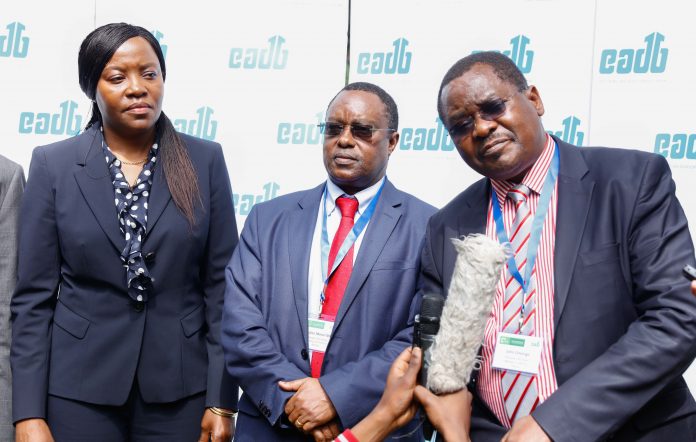
John Omenge, PS Ministry of Mining (right) flanked by Julius Muia, PS Treasury and Vivienne Yeda of East Africa Development Bank jointly address media during the opening of the East Africa Development Bank International negotiation skills workshop at Fair view hotel, Nairobi.


The East African Development Bank (EADB) this month hosted two events to develop the East African extractives industry in Nairobi, Kenya.

Phase one of the workshop started from August 2-3, 2019 where EADB hosted permanent secretaries and other senior government officials from across East Africa to train them in negotiating contracts better as pertains to natural resource management in the extractives industries. Lawyers from DLA Piper implemented the workshop.

From August 5-9, 2019, the EADB also hosted public sector lawyers and legal professionals in the extractive industry to boost them with greater negotiation skills.

The workshops were the seventh and eighth of their kind, hosted by the EADB, in partnership with law firm DLA Piper, as part of a series to develop natural resource management in East Africa to ensure that the region maximizes its benefits from the exploration, exploitation and extraction of its own resources.

Speaking at the opening of the event, EADB’s Director General Ms. Vivienne Yeda noted that ‘it is increasingly critical that host countries are able to derive tangible benefits from the exploitation of their natural resources.’

‘Natural resources are a public good that if well managed have the potential to drive economic development, and if well invested can actually reduce income inequality and spur meaningful job creation. If national governments benefit from royalties and taxes stemming from the mining sector, and if these dividends are well invested into human capital development and economic diversification, then the windfalls from natural resource discoveries can be used to catalyse socioeconomic development and to develop a strong economic base for East Africa to grow.’

Yeda further emphasized that ‘in addition to developing local value addition, export revenue and skilled job creation, both foreign and domestic mining companies should be compelled to operate according to strict environmental and social standards’, whilst ‘national governments must be compelled to invest to ensure that natural resource wealth is distributed evenly and that the benefits accrue to current and future generations, even after East Africa’s natural resources have been depleted’.

Principal Secretary to the National Treasury (Kenya), Dr. Julius Monzi Muia, was also present at the launch and expressed his delight at, and thanked EADB for, the initiative. In explaining the infamous resource curse, Dr. Muia explained that ‘well-structured government policy relating to natural resource exploration, exploitation and exportation can prevent an economy from experiencing the infamous resource curse and can instead leave an economy better off, with more resources to invest in healthcare, education, infrastructure and a diversified economic base, that will in turn promote job creation and cement the gains to sustainable economic growth.’

Dr. Muia further expressed that ‘it is critical that we, as civil servants, all work together to maximize the benefits accruing to our local economies and populations from natural resource rents’, noting that ‘mining agreements typically constitute substantial and long-term investments and are complex to structure, requiring specific attention to environmental and social issues, land issues, the protection of artisanal miners in the establishment of multinationals, taxation, royalties and value addition’ and that the finiteness of natural resources requires East African legal professionals and policymakers to ‘ensure that we fully utilize the potential benefits accruing from a onetime endowment from the onset.’

The training series is organised by EADB and facilitated by global law firm, DLA Piper. It has been designed for public sector lawyers and legal professionals involved in negotiating transactions and drafting agreements on behalf of Governments in extractive sectors and other large-scale projects. The latest trainings were the seventh and eighth in the series following from recent trainings in Dar es Salaam, Tanzania and in Kigali, Rwanda.


Stories Continues after ad

How closure of Crane Bank Limited became curse for BoU, Dfcu and city lawyers

ON THE FIRING LINE: Governor Mutebile and former deputy Louis Kasekende.

Bank of Uganda (BoU) closed seven commercial banks during the period 1993 to 2016, mainly on account of undercapitalization. But it was the closure of Crane Bank Limited (CBL) and its subsequent sale in January 2017 that would trigger an audit of BoU on closure of the same defunct banks whose owners now want financial compensation.

However, the controversial sale of CBL at only Shs200 billion to Dfcu bank was the highlight of the processes where BoU closed and sold off assets of the seven banks. CBL sale led to job losses, resignations, transfers and, reputation damage, to mention but just a few, in regards to BoU, Dfcu bank and law firms such as MMKAS Advocates,   AF Mpanga, Advocates and Sebalu & Lule Advocates.

The closure of CBL particularly affected certain individuals in BoU, Dfcu bank and the law firms in many ways that have changed public perception about them:

Emmanuel Tumusiime-Mutebile’s image tarnished, loses trust

Emmanuel Tumusiime-Mutebile was first appointed BoU Governor on January 1, 2001. In his tenures he has had issues with Members of Parliament where at one point, the MPs thought he had undermined their legislative role of oversight when he said he only fears God and President Museveni.

But the closure of CBL on October 20, 2016 will always remain the day to remember for Tumusiime-Mutebile as long as he lives. First he assured the public and the media that no employee of former CBL would lose their jobs as he transferred it to Dfcu bank. That assurance never came to pass as a Dfcu bank started laying off the employees a few months after the taking over its former rival. Former employees would later drag BoU and Dfcu bank to court for compensation. And that meant portrayed Tumusiime-Mutebile as a person could not be trusted.

The sale of CBL to Dfcu bank exposed Tumusiime-Mutebile as a bad manager, especially when he and his team claimed to have spent Shs478 billions of taxpayers’ money on CBL in receivership liquidity support yet he could transfer its assets at Only Shs200 billion, sadly BoU failed to account for all the money injected in CBL while in receivership yet at the same time wanted to recover it from CBL shareholders, a calculation MPs on COSASE saw as fraud.

Dr. Louis Kasekende unlikely to be promoted

An established economist and BoU Deputy Governor, Kasekende was expected to replace his boss Tumusiime-Mutebile who has a few months to retire. Now analysts close to the appointing authority say the anticipated promotion is unlikely to happen. This is because Kasekende and Tumusiime-Mutebile are majorly blamed for the mess in the closure of CBL and other banks. The two are accused of failing to supervise their juniors during the processes to close CBL and other banks. The issue became prominent when they could present all required documents to COSASE during the BoU probe over closed banks. It should be remembered that Kasekende worked hard to fail Auditor General’s probe of BoU until he was overruled by Speaker of Parliament Rebecca Kadaga.

Insiders say it is unlikely Kasekende will even remain in that capacity as Deputy Governor following the recent report that revealed that he and Tumusiime-Mutebile were leading cliques of staff in the performance of official duties. A new face is likely to replace outside of BoU Tumusiime-Mutebile.

MS Justine Bagyenda sacked before her official retirement

Justine Bagyenda, now enjoying her retirement, was the BoU executive director, bank supervision who played a big role in the closure of CBL. But her boss Tumusiime-Mutebile would later fire her as scandals in the closure of CBL kept emerging. She would rush to the IGG for help but not much was done for her as Tumusiime-Mutebile and IGG Justice Irene Mulyagonja went public bashing each other over Bagyenda’s sacking. She was replaced by Dr. Tumubweinee Twinemanzi who Tumusiime-Mutebile picked from Uganda Communications Commission, even though a recent report said he didn’t have any banking experience prior to being appointed to that job.

Ben Sekabira fails to replace Bagyenda

At the time of the closure and sale of CBL, Ben Sekabira, the current BoU Director Financial Markets Development Coordination, was director commercial banking and played a huge role in the sale of CBL as he worked hand in hand with his boss Bagyenda. He had hoped to succeed Bagyenda but his hopes were dashed away after CBL sale scandals emerged. He would later reveal during COSASE that CBL only needed Shs150 billion to remain afloat much as BoU injected Shs478 billion in the bank during receivership. Interestingly, Dfcu bank would post Shs114 billion for the first half 2017, up from Shs23 billion in the same period of the year 2016. The sharp increase was largely attributed to acquisition of CBL assets.

On the Dfcu bank side, the controversial acquisition of CBL created instabilities in its operational processes as shareholders disagreed on how that business was acquired. That would lead to the resignation of former MD Juma Kisaame following a series of revelations that showed he didn’t handle CBL transactions in the best way. He was replaced by Mathias Katamba on January 2, 2019.

Further, Agnes Tibayeyita Isharaza who had been serving as Dfcu’s Chief Legal officer and company secretary resigned and joined the National Social Security Fund (NSSF). With Dfcu embroiled in several legal battles following the controversial take-over of Crane Bank in January 2017, Isharaza’s position had become a hot seat for her to endure. Insiders say she blamed for offering poor legal advice in that transaction, that could see the bank lose billions of shillings in court battles with the Ruparelia Group that used to own defunct CBL.

Enter Jimmy Mugerwa’s recall to Tullow Oil plc in London

Jimmy Mugerwa, the former Managing Director of Tullow Oil Uganda who was days ago recalled to Tullow Oil plc headquarters in London, was also the Chairman of Dfcu bank and as such participated in the controversial acquisition of CBL in 2017. However, negative media reports on that transaction threatened the image of Tullow Oil plc, given that Mugerwa’s name in the local press kept emerging as CBL sale scandals continued. The solution was to recall Mugerwa to London and was replaced by Mariam Nampeera Mbowa who now is expected to look after the company’s interests in Uganda’s oil & gas sector, as it negotiates a farm down of its discovered oil blocks with the government of Uganda.

Conflicted law firms of MMAKS Advocates MMKAS Advocates, AF Mpanga, Advocates and Sebalu & Lule Advocates exposed

The three Kampala law firms were exposed and ordered by court not to ever represent any side in cases involving the Ruparelia Group, the three firms having worked for the same company. It should be noted that MMKAS Advocates were also hired by BoU as transaction advisors in the sale of CBL whereas Sebalu & Lule Advocates are accused of misguiding Dfcu bank in the transfer of Meera Investment Limited.’s leasehold properties that CBL was using as banking halls. The exposure of the three firms has tarnished their image and eroded their credibility.

The affected names aside, watchers are wondering whether the controversial closure of CBL has become a curse that is now haunting key players in the transaction now expected to be battled in court between CBL shareholders and BoU which is demanding about Shs397 billion from CBL shareholders who also want BoU to compensate them about Shs28 billion.

Stories Continues after ad

Criminals invade Buwaate, Kungu suburbs as residents are helpless

Patrick Onyanga, police Spokesperson for Kampala Metropolitan said the police will hunt the criminals down.


Hard core criminals have invaded Kampala outskirts of Buwaate and Kungu causing havoc on residents throughout the nights.

According to reports, several families have been attack around the fast growing suburb of Buwaate and these criminals start their activities as early as 4pm targeting residents who are returning from work.

They also target early dwellers especially women who go early for shopping in markets and those who drop children in schools around the two areas.

Eagle Online has established that since last Saturday in the village of Seeta in Buwaate side of Kasangati Town Council boarding Greenhill School, four people have been attacked. On Saturday, a lady reurning from a wedding reception is said to have been attacked at her gate the moment the boda-boda rider dropped her, they descended on her beating before taking her bag while another lady was attacked on Sunday morning on her way the market.

“We are not sleeping, we are living in fear as if there is no presence of government in our area, we fear moving late but again we can’t get out early. Our appeal is that government should come to our rescue otherwise this is going hinder our ways of living and work” Ms Norah Namuddu told Eagle Online. Adding “Even yesterday we didn’t sleep as gunshots were heard several times in Buwaate”

Another resident told this website that a man in his early 30s was hacked on Monday and is nursing wounds. It is said the man was attacked at around 11pm as he walked to his home from work.

When contacted by Eagle Online, Kampala Metropolitan Spokesperson Patrick Onyango said as police they hadn’t registered cases but promised that police would step in the hunt the criminals.


Stories Continues after ad