Stanbic Bank
Stanbic Bank
20 C
Kampala
Stanbic Bank
Stanbic Bank
Home Blog Page 1242

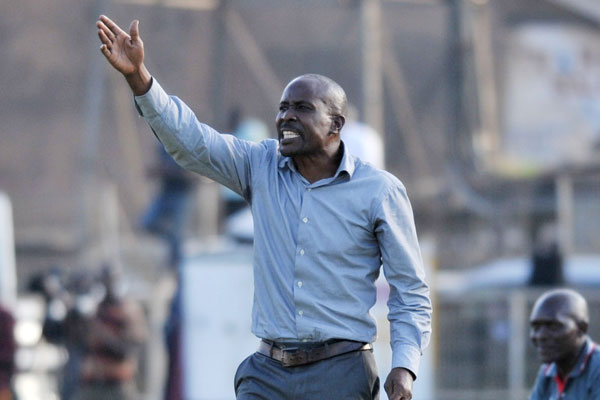
MP Odonga Otto reportedly assaults journalist while covering football match

Aruu South county legislator Samuel Odong Otto

Geoffrey Okot, a journalist working with Choice FM in Gulu district, was allegedly assaulted on June 16, 2019 by Aruu County Member of Parliament Odonga Otto.

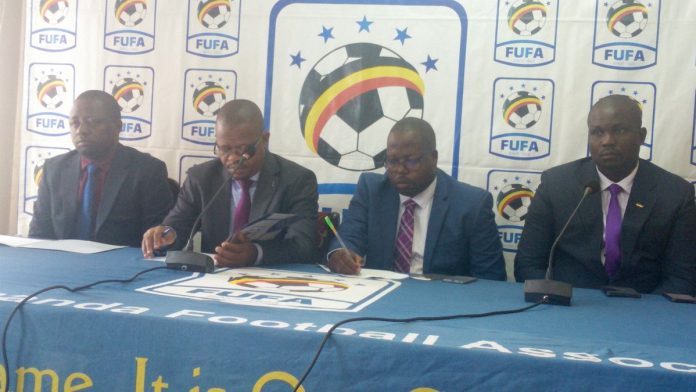
According to reports, Okot together with his fellow journalists were set to cover a football match between Acholi Province and West Nile Province organised by Federation of Uganda Football Associations (FUFA) at Pece War Memorial Stadium. The journalists had convened at a point reserved for them by the football authorities.

Reports say before the match could start, spectators moved close to the pitch prompting the area leaders that included Otto, Gilbert Olanya and Anthony Akol among others to push them away so as to create space.

Otto is said to have moved to the area where the journalists had convened and punched Okot on the back and around the neck. Okot tried to explain that he is a journalist but Otto could not stop punching him.

“I was squatting at the stadium with my fellow colleagues waiting for the match to begin. From nowhere, Odonga Otto punched me around the neck and the back until I knelt down. I explained to him that I am a journalist but he was arrogant. He said he doesn’t care because I am a journalist from a fake media house,” Okot told Human Rights Network for Journalists in Uganda (HRNJ-Uganda), adding that he is experiencing a lot of pain and is expected to meet an orthopedic at Gulu Referral Hospital for further management.

Okot’s narrative is corroborated by Willy Ochwoo, a fellow journalist who was at the scene, “we were about 20 journalists accredited by FUFA Drum organisers to cover the match. In the area where we were squatting, spectators had drone close to the pitch forcing the area members of parliament to push them backwards. Okot was squatting at the extreme end where the journalists had convened. From nowhere, Odonga Otto punched him on the back and the neck,” Chowoo told HRNJ-Uganda.

Okot has opened up an assault case at Gulu Central Police Station vide 50/16/06/2019 and is yet to record a statement.

When the Regional Spokesperson for Aswa Region, Jimmy Okema was contacted by HRNJ-Uganda about the incident, he said, “I have not got details about that concern because the Deputy IGP was around and we spent the whole of yesterday traversing the region. Am also getting concern from some journalists trying to inquire about the same incident. But if i get the details, I will let you know,” said, Okema.

‘It is so disheartening that an area Member of Parliament who is expected to be exemplary to the people he leads beat up a journalist. We condemn such actions in the strongest terms. We implore the Uganda Police to expeditiously handle the matter so that the journalist gets justice.” Said the HRNJ-Uganda Executive Director, Robert Ssempala.

Stories Continues after ad

No Ebola in Mbarara, Health ministry says

Health Minister, Dr. Jane Ruth Aceng

The Ministry of Health in a press release, says there no Ebola outbreak in Mbarara as some sections of the local media are reporting, even though a suspected case in the area is under observation by experts.

“Some sections of the media are awash with rumors of ‘Ebola in Mbarara District.’ The Ministry of Health would like to clarify that there is NO confirmed case of Ebola in Mbarara District. The Ebola Treatment Unit (ETU) in Mbarara Regional Referral Hospital does not have any patient admitted in the ETU at the moment,” the ministry said on Monday.

It added that as of today (Monday, Uganda has not registered any new confirmed Ebola case in Kasese District or any other part of Uganda since the last registered case four days ago. There are 2 new suspect cases who are under isolation at Bwera ETU. Blood samples were withdrawn from the suspect cases and sent to Uganda Virus Research Institute (UVRI) for testing and results are pending.

“Currently, 92 contacts to the confirmed Ebola cases in Kagando and Bwera are being followed up daily. Ring vaccination of contacts of the confirmed Ebola cases, as well as non-vaccinated frontline health and other workers, commenced on Saturday 15th June 2019. As of Monday 17th June, a total of 128 contacts and non-vaccinated Frontline and health have been vaccinated,” it said.

The ministry said there are three confirmed cases of Ebola who include; 5 year index case from Democratic Republic of Congo (DRC), his 50 year old grandmother both who passed on at Bwera ETU and the 3 year old boy, brother to the index case who tested positive for Ebola and was under isolation at Bwera ETU passed on in DRC.

On Monday, the World Health Organization (WHO) Director-General, Dr Tedros Adhanom Ghebreyesus held bilateral talks with President Yoweri Museveni on potential interventions to end the Ebola outbreak both in the Democratic Republic of Congo (DRC) and in Kasese District.

Dr. Tedros arrived in Uganda after visiting Butembo and Katwa- areas affected by the outbreak in North Kivu province in Eastern DRC. During his brief to President Museveni about the situation in Eastern DRC, Dr Tedros reiterated WHO’s ongoing support to the Government of Uganda to control the Ebola outbreak. “I am pledging our continued support, in order to control this outbreak as soon as possible” he said.

Dr Tedros praised the steps Uganda had taken to prepare for a potential outbreak. “We must invest in preparedness—this is the smartest investment we can make,” he stated. He expressed his confidence in Uganda’s strong and sustainable resilient systems to respond to the current Ebola outbreak in Kasese, western Uganda.

Museveni appreciated the response by the Ugandan health workers in their efforts in containing the outbreak and encouraged them to continue the good work they are doing. President Museveni also committed to support the efforts of WHO in the DRC and also reach out to the leaders in DRC.

Stories Continues after ad

Uganda qualifies for FIBA Africa Women’s U16 Championship

Junior Gazelles won zone 5 championships

The Uganda U16 national basketball team, Junior Gazelles, secured their slot for the FIBA U16 Women’s Africa Championship 2019 after being crowned champions at Zone 5 Qualifiers in Kigali, Rwanda.

This is the very first time that Uganda will be playing at the tournament that will attract the very best of the teams from the African continent, including record five-time African champions Mali.

Uganda opened their campaign with a 58-39 victory over neighbours Tanzania on Tuesday inspired by the captain Shilla Aber Lamunu who scored a game high 16 points.

In the second game, Uganda cruised past Rwanda 63-55 with Najjuma dropping an incredible 31 points and picking 36 rebounds to guide the team to a second straight win and an inch closer to qualification.

Going into the final game, Uganda needed one more win to book their slot when they took on Tanzania the second time in the two-legged competition. They won 78-36 in a very pronounced victory to seal a historic qualification to the continental showpiece.

The FUBA president Nasser Sserunjogi thanked the players for listening and following instructions. He said, “I am very impressed with them. I taught them new defence styles and they executed them 100%,” the fiba website quoted him.

“Now we have a big chance to rub shoulders with the big nations. We hope to put up a good fight there and learn a lot. I am going to see if I can get more time develop their weak areas.” He added

Lamunu was voted as the Most Valuable Player of the tournament for inspiring Uganda to the African showpiece where the Junior Gazelles will be competing for the very first time.

Uganda now join the 2017 African champions Mali, runners up Angola, Egypt and Mozambique who finished as semifinalists and have automatically qualified.

Stories Continues after ad

NSSF Friends with Benefits show returns as Shs360b is paid out

The National Social Security Fund (NSSF) has announced the return of the award winning Financial Literacy initiative dubbed NSSF Friends with Benefits for the third year.

The initiative that is a television reality show, promotes financial literacy amongst Ugandans by highlighting successful stories of people who received their NSSF savings and sustainably invested them or did something inspirational.

The show returns on the back of a 29 per cent increase in the amount of money paid in benefits to qualifying members from Shs278 billion in 2017 to Shs360 billion in 2018. The number of beneficiaries also increased from 19,027 to 23,665.

Speaking to journalists at Workers House in Kampala today, Barbra Teddy Arimi, the NSSF Head of Marketing and Communications said, “The Friends with Benefits show this year is unique as the Fund focuses more on imparting financial literacy knowledge to benefit not only our members or those close to retirement age but also our young people to make better and informed decisions when managing their personal finances.”

According to the findings of a recent survey conducted to establish the quality of life of NSSF members before and after retirement, majority of members started saving late in life at about 38 years with an average saving period of only 16.7 years resulting in an inadequate pool of funds at retirement.

“The Friends With Benefits show not only motivates the public to start saving by demonstrating its value but also shines a light on viable investment options from members who have set themselves up to thrive even during retirement,” Arimi said.

Beneficiaries will be required to submit a short and compelling story, stating how they utilized their NSSF savings and transformed their lives through the NSSF branches or by filling a form available on the NSSF website www.nssfug.org.

In addition, relatives and friends can also share stories of beneficiaries they know whose lives have been transformed because they put their benefits to excellent use.

The Top 16 successful stories will be aired in a compelling TV show where winners will be selected through voting by the public and an expert panel of judges. Three winners will then be rewarded with a total of Shs55 million to further improve their lives.

The Friends with Benefits show recently won a continental award as the best Corporate Image campaign during the Africa SABRE Campaigns awards held in Kigali in May 2019. It also won the 2017 International Social Security Association (ISSA) Financial Literacy initiative Good Practice Award.

The show is supported by FINCA Uganda, Housing Finance Bank, Commercial Bank of Africa and Price Water House Coopers, will air on NBS and other two TV stations.

Stories Continues after ad

BoU keeps key lending rate at 10%, sees faster GDP growth in 2019/20

Late Emmanuel Tumusiime-Mutebile

Uganda’s central bank –The Bank of Uganda (BoU), held its key lending rate or the central bank rate (CBR) at 10 per cent on Tuesday and predicated faster economic growth for the financial year 2019/20.

BoU Governor Emmanuel Tumusiime-Mutebile said the bank had held the CBR at 10.0 per cent, the fourth time it kept the rate unchanged.

He projected the economy to expand 6.3 per cent in 2019/20 (July-June), compared with 6.1 per cent in financial year 2018/19.

“Indicators of real economic activity and business and consumer confidence indicate favourable economic growth prospects in the near term,” said Tumusiime-Mutebile while reading the monetary policy statement for the month of June in at the ban’s head offices in Kampala.

Tumusiime-Mutebile said escalating global trade tensions, local unfavourable weather and delays in infrastructure projects could dampen economic activity. The risks were recently mentioned by the finance ministry, saying they would affect the performance of the Shs40.4 trillion budget read on June 13, 2019.

Headline inflation was 3.3 per cent in May from 3.5 per cent the previous month while annual core inflation, which the central bank tracks for monetary policy purposes, declined 4.6 per cent in May from 4.8 per cent a month earlier.

Razia Khan Managing Director, Chief Economist, Africa and Middle East, Standard Chartered Bank while commenting on the CBR said: Although Bank of Uganda has kept its CBR on hold at 10 per cent, its forecast for core inflation (seen peaking at 6.4 per cent in Q1 2021), and Uganda’s robust growth backdrop (a preliminary estimate of 6.1 per cent from UBOS for FY 19, supported by household consumption), suggests that future risks are likely to be tilted towards further tightening.”

He said that with inflation still well-behaved, the Ugandan shilling relatively stable, there is little pressure on the BoU to alter its monetary policy stance, for now.

Attachments area

Stories Continues after ad

Standard Chartered Bank courts middle class as it launches new Bancassurance products

Saltson (third right) and Corbit (third left) with other officilas launching the products

Standard Chartered Bank Uganda has commenced offering new insurance services to its middle class clientele in partnership with insurance firm, Sanlam that will underwrite the covers offered to clients who hold accounts in the bank.

The Bancassurance products launched include; home insurance, motor comprehensive and travel insurance, with more expected to be launched in due course.

Officials said some of the features of the motor insurance are, car hire benefits of up to 24 days while vehicles are being repaired, free valuation services of vehicles, where necessary and alternatives accommodation if clients get accidents far from home.

For the home/property insurance the partners are offering a personal accident cover of up to Shs8 million for the insured or a member of the insured family with a medical benefit of Shs2 million in case of accidental injury, in addition to Golfer’s extension that caters for golfing equipment, golfer’s legal liability and a hole in one benefit for the golfing client.

On the other hand, travel insurance will offer high limits of up to US$0.5 million in medical care, a personal accident benefit of up to US$15,000 as well as third party legal liability of up to US$200,000 in addition to medical expenses, the product will take care of a travel companion if required and the repatriation of children in case the insured person travelled with young children.

Speaking during the launch of the insurance business at the bank’s headquarters in Kampala on Tuesday, Standard Chartered CEO Albert Saltson said: Insurance is classified as one of the top five spend items for affluent and emerging affluent individuals in most parts of the world.” He said Bancassurance is a new distribution channel that must be embraced to boost the penetration of insurance which is still less than 1 percent in Uganda.

He said the insurance benefits are designed to suit the lifestyles of the bank’s clients, giving them, peace of mind through insurance packages that are, “reasonably priced, flexible and robust to meet their varied needs.”

Sanlam General Insurance CEO Gary Corbit, on his part said the partnership will further enhance uptake of insurance products in the country. “As a country’s disposable income increases, there is accumulation of wealth and inevitable need for access to financial services and risk management solutions, necessary for a balanced growth and financial stability, he said, adding that all the financial services will be available under one roof,” said Corbit.

Both Saltson and Corbit commended the Bank of Uganda and Insurance Regulatory Authority of Uganda for allowing local banks to provide insurance services, saying the move would increase competition and innovation in the sector.

Officials said that clients who don’t have enough funds on their accounts can borrow from the bank to pay for the insurance package of their choice.

Attachments area

Stories Continues after ad

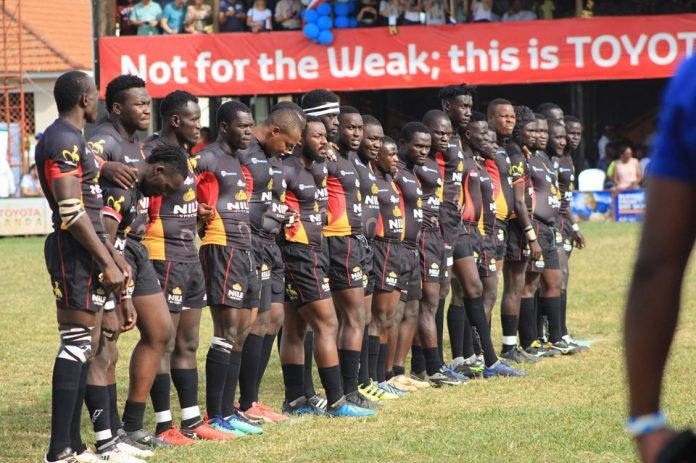
Rugby Cranes team for 2019 Elgon Cup named

Rugby Cranes

Uganda Rugby Union (URU) has selected the 23 Rugby cranes players to travel to Kenya for the first leg of the 2019 Elgon Cup.

For the first time in three years, Kenya will host the first leg of the Elgon Cup. It will be held on Saturday, June 22nd 2019 in Kisumu City.

The return leg will be played on 13th July 2019 in Kampala, Uganda and it won’t double as the Rugby Africa Gold Cup since the competition was cancelled.

Last year, the Kenya Simbas won the Elgon Cup 72-38 on aggregate. 34-16 at Legends, Kampala in the first leg and 38-22 in Nairobi.

The Elgon Cup is an annual Rugby tournament between the Kenyan and Ugandan senior men’s 15’s team that has been happening for many years. The women’s games generally serve as a curtain raiser to the men’s games.

It is competed on a home-and-away basis. The competition and the cups are named after Mount Elgon, a mountain on the border of the two countries.

Men’s team leaving for Elgon Cup

FRONT ROW

1. Santos Senteza (Heathens)

2. Saul Kivumbi (Impala)

3. Asuman Mugerwa (Kabras)

4. Collin Kimbowa (Kobs)

HOOKERS

5. Ronald Kanyanya (Heathens)

6. Joseph Kagimu (USIU)

LOCKS

7. Charles Uhuru (Heathens)

8. Robert Aziku (Kobs)

9. Simon Olet (Heathens)

BACK ROW

10. Desire Ayera (Pirates)

11. Brian Asaba (Kobs)

12. Eliphaz Emong (Kabras)

13. Byron Oketayot (Rhinos)

HALF BACKS

14. Aaron Ofoyrwoth (Harlequins)

15. Paul Epilo (Heathens)

16. Robert Masendi (Heathens)

CENTERS

17. Pius Ogena (Kobs)

18. Ian Munyani (Kobs)

19. Jordan Bongomin (Heathens)

BACK THREE

20. Paul Masendi (Heathens)

21. Daudi Semwami (Harlequins)

22. Adrian Kasito (Kobs)

23. Maxwell Ebonga (Hippos)

Stories Continues after ad

Protest letter to ERA against plans to build a hydropower dam at Murchison falls

Dickens Kamugisha

By Dickens Kamugisha

On behalf of the undersigned signatories and on my own behalf, I take this opportunity to thank you for the work the Electricity Regulatory Authority (ERA) is doing for the country and for the people of Uganda.

Among others, the undersigned civil society actors appreciate ERA’s efforts to involve the public in the regulation of the electricity sector. We believe that it is through the above efforts to promote public participation that ERA published a notice in the New Vision of June 7, 2019.

Through the notice, ERA invited directly affected communities, directly affected government agencies and interested parties to make comments on an application by Bonang Power and Energy (Pty) Ltd to be granted a license to establish a 360MW hydropower plant at Murchison Falls. The signatories to this letter from the Acholi and Bunyoro sub-regions where the planned dam will be located wish to inform you that we are strongly against the planned licensing.

It is unthinkable that at a time when tourism remains one of the biggest sources of government revenue and at a time when Murchison Falls and the entire Murchison landscape is being threatened by oil activities, ERA allowed companies to commence discussions to conduct feasibility studies that may inevitably lead to destruction of the Murchison Falls.

As you will recall, tourism remains the main sustainable source of government revenues. During reading of the 2019/2020 budget speech on June 13, 2019 at the Serena Conference Centre in Kampala, the Minister of Finance, Hon. Matia Kasaija, informed Ugandans that the services sector experienced the highest growth, at 7.2%, during the 2018/2019 financial year.

The minister informed the country that the good performance was largely driven by tourism and hospitality. The tourism sector is reported to have earned Uganda over USD 1.6 billion in the 2018/2019 financial year. Why would ERA want to destroy tourism through destroying one of the most iconic tourist attractions, the Murchison Falls, yet Uganda is producing excess power? As you are well aware, ERA has failed to sell the excess power from Isimba and other dams.

As such, Ugandans, including both power consumers and none consumers, are being forced by ERA and government to pay for redundant excess power through high power tariffs and through repayment of the national debt. Only 20.5% of Ugandans have access to electricity yet the electricity sector contributes to over 30% of the national debt.

In the 2019/2020 national budget, over 10.8% of the UGX 40 trillion budget will be spent on interest payments. This is a clear injustice as the Ugandans without power are forced to pay for debts accrued to construct dams whose electricity they are not enjoying. Worse yet, over 90% of all Ugandans still depend on firewood and charcoal to meet their energy needs.

Yet government claims that Uganda generates over 500mw of excess electricity. What is the relevance of electricity that cannot be afforded by the citizens? In addition, Ugandans are yet to realise the reported benefits such as industrialisation, job creation and poverty reduction that government promised would come with increased investment in the electricity sector.

Manufacturers continue to complain about power prices being too high, constraining industrialisation efforts and therefore the sector’s ability to offer sufficient and decent employment. It is not surprising then that the industrial parks which government said would consume electricity and offer jobs have produced only 22,000 jobs! Indeed, during the budget reading, Hon. Kasaija informed the country that at 50% and 35.6% respectively, the services and agricultural sectors are the predominant employers. Tourism belongs to the services sector.

For ERA to therefore propose to destroy Uganda’s most iconic falls and harm biodiversity that contribute to tourism is highly inadvisable and shameful. It is also a reminder of our country’s sad history of corruption, selfishness and wrong priorities by leaders. This is why the majority of Ugandan citizens remain trapped in misery and poverty amidst plenty.

Below, we outline why no dam should be built at the Murchison Falls to promote conservation and tourism. This letter was compiled following a civil society meeting held in Kiryandongo district on Wednesday June 12, 2019. The 14 signatories to this letter participated in the meeting.

Why Murchison falls should not be tampered with

(a) Oil threats to Murchison Falls landscape: Murchison Falls and the entire Murchison landscape is under massive pressure from oil threats. Over 70% of the 400 oil wells under Total E&P (U) Ltd’s Tilenga project are in Murchison Falls National Park. The well pads, pipelines, roads, oil workers’ camps, noise, dust, River Nile crossing and other oil infrastructure that will be developed under the Tilenga project will fundamentally affect both the park and falls. Before the above challenges are addressed, ERA is commencing the process of allowing the destruction of Murchison Falls through allowing a dam. Once a feasibility study is conducted, destruction of the falls will commence. Any proposal therefore to allow a feasibility study for the development of a dam at Murchison Falls must be rejected.

(b) Tourism: The tourism sector is one of the leading foreign exchange earners for the country. In the 2018/2019 financial year, tourism earned Uganda over USD 1.6 billion. Murchison falls in addition to Murchison Falls National Park (MFNP) are some of the major tourist attractions in the country contributing to the above high earnings. In fact, Murchison Falls was the most visited national park in 2018. The Murchison Falls which are some of most scenic, mesmerising and iconic falls in Uganda contribute to the tourist numbers. ERA should not destroy the falls all in the quest of constructing a power plant.

(c) Revenue sharing with communities: The 2012-2022 Murchison Falls Protection Area management plan says that because of meticulous planning and various interventions by Uganda Wildlife Authority (UWA), tourist numbers to the Murchison Falls Protection Area rose from 20,000 visitors in 2001 to about 60,000 visitors in 2012. The rising number of tourists meant that districts and therefore communities bordering MFNP received higher revenues from UWA under the revenue sharing arrangement that UWA has with communities neighbouring national parks.

Information from UWA shows that by 2012, over Shs 1.4 billion had been collected on the revenue sharing account for districts surrounding the MFPA. This income is invested in areas such as tourism training schools, classroom blocks and vocational schools such as those seen in Nwoya district so that communities are skilled to get employment. Why 4 would ERA want to destroy the fruits of the meticulous efforts by UWA that led to the recovery of MFNP? The park’s tourism potential had been destroyed by the unrest in Uganda in the 1970s and the Lord’s Resistance Army (LRA) war.

(d) Employment: In addition to the benefits arising from UWA’s revenue sharing arrangement with communities, MFNP offers direct employment to community members. Cultural performers, hotel owners, tourism operators, guides and others are some of those that the park offers direct employment to.

Meanwhile, the job opportunities that government promised would accrue from industrialisation that would arise from investment in dams still remain a dream. As earlier shown, while the services sector under which tourism belongs employs 50% of Uganda’s labourforce, the industry sector employs only 14.4%! Moreover, Ugandans will recall that manufacturers have time and time again said that instead of electricity being an enabler of their activities, it is a constraining factor because of high power tariffs.

(e) Excess power: Part of the reason power in Uganda is expensive is because the country is producing excess electricity that citizens cannot consume. During the 2017 State of the Nation address that was delivered by the president on June 14, 2017, the president boasted that Uganda was that Uganda was producing surplus power. Indeed, the peak demand for power stood at 500MW then and in 2018 against a total installed generation capacity of over 900MW in 2018. The power generated in Uganda is too expensive for citizens to afford such that you find that that Uganda’s population of over 40 million, industries and commercial consumers consume a mere 500MW during peak hours. The amount consumed during offpeak hours is less. It is treason-worthy therefore to destroy Murchison Falls to produce power that cannot be consumed.

(g) East African power pools: Moreover, hopes that Uganda will export its expensive excess power to neighbouring countries will be crushed under the East African Power Pool arrangement. Under that arrangement, East African states including Ethiopia that is generating cheaper power at three US cents (Shs116) per unit will pool their power resources together and sell to each other. A unit of power from Bujagali dam goes for 11 US cents. As economics dictates, it is likely that East African countries will be attracted to buy cheaper power from 5 other countries such as Ethiopia and Uganda’s expensive power will have little to no demand. It therefore does not make sense for Uganda to destroy Murchison Falls for power that will lack markets.

(f) Lack of diversity in energy mix: In addition, Uganda is continuing to invest heavily in hydropower at a time when countries are being advised to diversify their energy mix because climate change could negatively affect sustainable energy supply for countries relying on single energy sources. Information from ERA shows that as at April 2019, hydropower contributed 929.6MW to the energy mix while thermal, baggase and solar contributed 101.6MW, 96.2MW and 50.8MW respectively.

What is the rationale of investing in more dams at the expense of biodiversity and tourism yet Uganda should be aiming at tapping into other energy sources to diversify the country’s energy mix?

(g) Legal action and huge costs: Further, Ugandans have gone to court to challenge the ongoing failures in the Tilenga oil project. The main objective of the legal actions is to ensure that oil activities do not destroy biodiversity and livelihoods. It is likely that the plans to destroy Murchison Falls will also be challenged in court leading to huge costs on government and citizens.

(i) International shame: Uganda is a signatory of many international conservation agreements and conventions including the recent Paris Climate Change Accord that emphasise conservation. Destruction of Murchison Falls will make Uganda look like a country that has no respect for nature at a time when the impacts of climate change are undermining our national development agenda.

(k) Climate change: Uganda is also experiencing the impacts of climate change, to which fossil fuels such as oil are the biggest contributor, like never before. Flooding, landslides in the Elgon region leading to loss of life, prolonged dry weather conditions that harm agriculture and others are being seen. Uganda needs to promote environmental conservation by avoiding oil and development of electricity dams in protected areas at the very least.

Demands As part of our efforts to protect Murchison Falls and the entire Murchison landscape, we recommend the following:

(i) ERA should not approve the application to undertake studies for the development of a hydropower dam at the Murchison falls. The Murchison falls ecosystem is important in the survival of species such as the Nile crocodile, fish and others. Moreover, the falls and MFNP provide employment, foreign exchange and are a source of national pride. The above services cannot be replaced by electricity moreover which Ugandans cannot afford to consume.

(ii) Explore alternative energy sources. Uganda is richly endowed with alternative energy resources such as solar and wind. However, these resources remain largely unexploited mainly because Uganda is concentrating on hydropower. In line with aspirations under the Sustainable Development Goals (SDGs) and the Sustainable Energy for All (SEA4ALL) initiative, Uganda should invest more in other energy sources especially offgrid solar and avoid over reliance on grid-based hydropower.

In addition, in line with aspirations under the Paris Climate Change Agreement that Uganda is signatory to, government should promote investment in clean energy over oil and should avoid oil activities in protected and critical biodiversity areas including in MFNP.

(iii) UWA should not issue a permit for a dam at Murchison falls: Statistics from the Ministry of Tourism show that tourism arrivals in Uganda grew by 18% from 1.37 million in 2015/2016 to 1.54 million in 2018. In the same period, the foreign exchange revenue generated by the sector grew by 19% from USD 1.37 billion to USD 1.63 billion.

UWA should therefore concentrate on promoting tourism and should not issue a permit allowing activities for development of the dam to take place.

(iv) Citizens should say no to ERA and government’s proposal to destroy Murchison Falls: It is only the citizens of Uganda who have the power under Article 1 of the Constitution that can save the Murchison Falls. Only the citizens can stop the single biggest challenge facing our country today, the dominance of politics over governance institutions.

Key institutions such as the National Environment Management Authority (NEMA), UWA, National Forestry Authority (NFA), ERA and others that are entrusted with the responsibility of conservation and ensuring that developments benefit citizens without destroying the environment have been pushed on the sidelines by selfish and corrupt politicians. The institutions are being used by politicians to destroy the environment. This is why the country is in an environmental mess characterised by loss of forests, wildlife reserves, wetlands, river banks, lake shores and others. Citizens must campaign against the destruction of Murchison Falls and all critical biodiversity areas of Uganda.

We encourage companies like Bonang Power and Energy to desist from being part of destruction. Instead, they should invest in other clean energy sources such as off grid solar. (v) Civil society: Non-governmental organisations (NGOs) and other civil society groups should work with us to mobilise and empower Ugandans to stop environmental abuses in the country.

Only strong civic competence will compel government and institutions such as ERA to know that this country belongs to the people of Uganda and our biodiversity must be used in a manner that meets the needs of the present and future generations.

The writer is CEO, AFIEGO

Stories Continues after ad

MTN cuts sending rates as customers transact Shs30trn mobile money

Christopher Ssali

The MTN Mobile money (MoMo) service has close to 9 million customers and has transacted Shs30 trillion since its launch 10 years ago, according to Enid Edroma, General Manager Corporate Services.

“We have close to 9M subscribers using MTN mobile money and we have seen 30 trillion shillings transacted since inception. The service has also worked as the catalyzer for financial inclusion much to the delight of government,” Ms Edroma said today at Kampala Serena Hotel where the company announced that its customers will now send the money at half price in the promotion to run for two months.

“We are very pleased to announce an exciting new offer for our customers. Starting today, customers will send money at half-price,” she said.

“You can now send money at half price everywhere you go. People have been giving money to ‘Bodabodas’ in order to reduce the cost of sending money. But now from as low as 50shs, you will be able to send money using mobile money,” said Christopher Ssali, MTN’s Senior Manager Mobile Financial Services.

In the promotion, customers will have to be sending from MTN to MTN by simply dialing *165*1# to send money.

We have reduced the sending rates to appreciate our customers who have supported us through the years by using MTN MoMo, she said.

An analyst said the promotion will help clients save some money during the period as they have been paying 0.5 percent tax at withdraw since July 1, 2018 when government imposed the mobile money tax

Stories Continues after ad

UNBS gets ISOlution system and video conferencing facilities

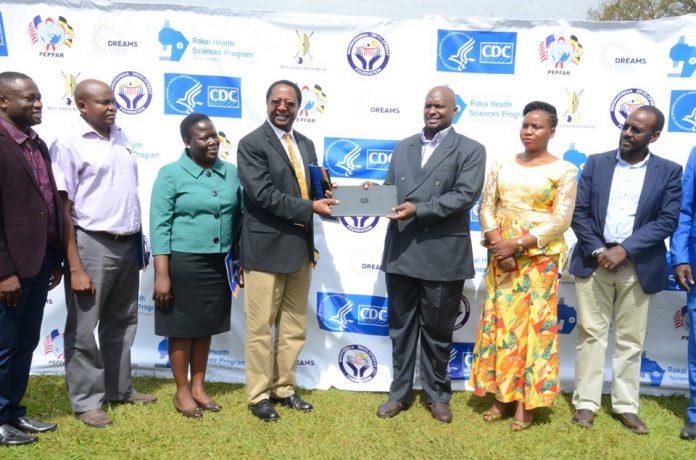
Eng. Dr. Ben Manyindo, Executive Director of UNBS, and Marc Shiman, Chief of Party of the USAID Hub, signed the paperwork to hand over the system and videoconference facility.

Uganda National Bureau of Standards (UNBS) has received an ISOlution and Video Conferencing facilities from the United States Agency for International Development (USAID) and the East Africa Investment Hub.

The facilities will help UNBS increase efficiency of the process of standards development by improving the public enquiry process, enhancing transparency, openness and awareness on new standards and to facilitate information and documents disseminations to national experts as well as reducing cost of participation in standardization at regional and international level.

UNBS secured the in-kind grant from USAID, through the East Africa trade and Investment Hub. The grant included; Payment of ISOlutions’ subscription fees to ISO/CS for the 1st year of ISOlutions acquisition, facilitation to the consultant from the ISO/Cs to travel to UNBS to undertake local system configuration and initial training, procurement and installation of ICT equipment including one unit of video conferencing facility and seven laptops and support towards training of the larger stakeholders (TC members) in ISOlutions application.

The ISOlution system and Video Conferencing facilities were received by the UNBS, Executive Director, Dr. Ben Manyindo.

While handing over the facilities, Marc Shiman, Chief of Party of the USAID Hub, said the facilities are part of the Uganda’s participation in the World’s standards development initiative. He also noted that the facilities will add value to the implementation of standards.

Speaking at the handover ceremony held at UNBS headquarters, Dr. Manyindo thanked USAID Uganda Mission and the East Africa Trade Hub for the support given towards the accomplishment of the project.

“UNBS would like to thank the American People for supporting the economic growth of Uganda through various initiatives. We also would like to thank the East Africa Trade Hub for the effective coordination that guaranteed the success of the project. We trust that the cooperation already established will continue to grow and look towards to many more engagements as we deliver services to the people of Uganda,” he said.

UNBS is committed to ensuring that the ISOlution system remain working to facilitate standards development process to deliver better quality standards.

The handover was officiated by officials from USAID and East Africa Development Hub.

ISOlution is a web-based global system used by International Standards Organization (ISO) members to develop standards that facilitate international trade. With access to the system and a videoconference facility, Uganda will be able to comment remotely on international standards that are up for revision or creation, saving the country money from travel expenses and increasing the ease and efficiency of its participation.

In addition, Uganda’s adoption of ISOlution opens the possibility of introducing a regional ISOlution platform. Uganda is the second EAC Partner State to use the system, following Kenya, and Rwanda is set to follow. With three countries using the system, the EAC can explore the benefits of establishing a regional platform that will encourage other Partner States to participate in international standards development and allow the submission of regional positions.

Since February 2015, with the signing of the U.S.-EAC Cooperation Agreement, the USAID Hub has worked hand-in-hand with EAC Partner States to build their capacity to meet international commitments on technical barriers to trade (TBTs) and sanitary and phytosanitary measures (SPS) in an effort to promote safe and transparent regional and international trade.

The USAID Hub’s partnership with UNBS, in particular, has been successful. Following a USAID Hub training in 2017 where UNBS staff learned how to use ISOlutions, UNBS made a commitment to implement ISOlutions in the country. The handover ceremony marked the achievement of this commitment.

Stories Continues after ad