Stanbic Bank
Stanbic Bank
17.4 C
Kampala
Stanbic Bank
Stanbic Bank
Home Blog Page 1244

Camps emerge at Bank of Uganda as probe into currency consignment starts to bite

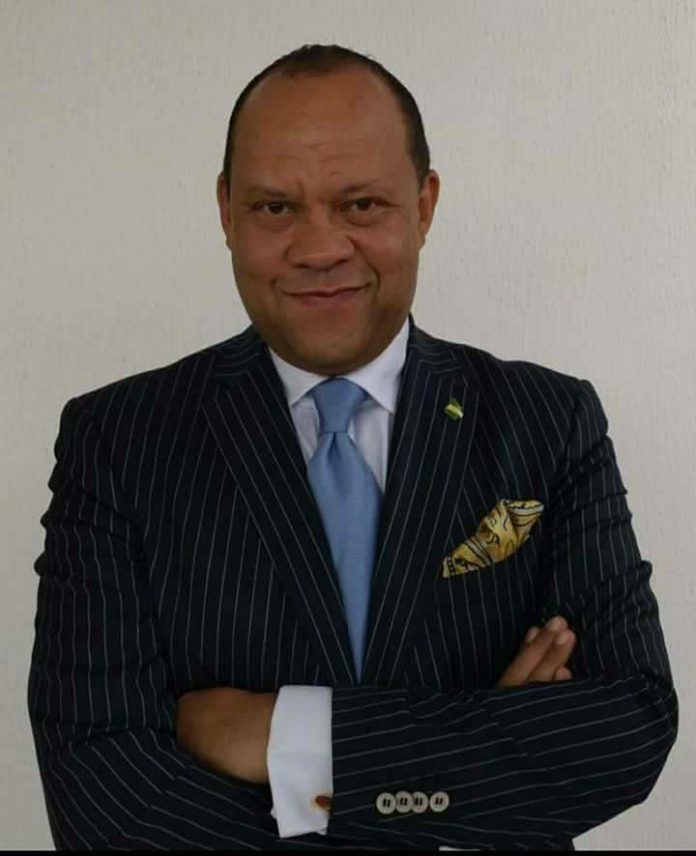
Former BoU Deputy Governor, Dr. Louis Kasekende.

Two camps opposed to each other have emerged at the central bank-the Bank of Uganda (BoU) as the investigation into the recent currency consignment scandal begin to fish out culprits responsible for the mess that has further tarnished the image of the institution that only months came out of COSASE probe bruised for the irregular closure of seven commercial banks.

According to inside sources, BoU Governor Prof. Emmanuel Tumusiime-Mutebile, is leading one camp that invited anti-corruption agencies to investigate the Shs90 billion lost to filthy BoU officials while his deputy, Dr Louis Kasekende, is opposed to the probe led by State House’s Anti-Corruption Unit (ACU), headed by Lt Col. Edith Nakalema and assisted by CID of the Uganda Police.

The inside sources say Mutebile is being supported Dr. Charles Malinga, BoU Director Operations who discovered the mess in the consignment while Kasekende is supported by a group of a few who believe that the investigations will touch them, especially that it is Kasekende who approved the consignment at the time when Mutebile was sick and out of office.

Two days ago Mutebile in a statement confirmed that Lt Col. Nakalema, assisted by others had begun investigations against BoU officials, an announcement that those in Kasekende’s camp felt was uncalled for, as they wanted the exercise to be kept away from the public domain, more especially that BoU still awaits what measures will be taken against those that caused the mess in the closure of seven commercial banks, parliament having handed over the COSASE report to the executive for action.

“Dr. Kasekende is scared of the investigations because he is the one that signed for that consignment. He has a few colleagues who think that the governor made a mistake by calling for the investigations on the matter,” a source told this website, adding that given the current scandal government and president Yoweri Museveni in particular is likely to use the COSASE report and intelligence information on the current scandal to carry out drastic changes at the central bank that seems to be producing scandal after scandal, despite being the custodian of the local macro-economy and the regulator of the local banking industry.

The source further said Nakalema and her team will on Tuesday or Wednesday interrogate Kasekende in relation to the controversial money, some of it is believed to be circulating in the economy.

On Friday evening, the Minister of Finance Matia Kasaija and his permanent Secretary Keith Muhakanizi were interviewed by the Head of Anti-Corruption Unit (ACU), Lt Col. Edith Nakalema, over the Shs90 billion scandal.

Sources say the two officials were quizzed because they supervise BoU and as such Nakalema’s team wanted to know whether they were aware of the money in question.

Another source has told this website that some of the Shs90 billion illegally printed and loaded on the consignment of the other notes that were supposed to be delivered to BoU, is being kept by two officials of the Civil Aviation Authority (CAA), The two officials are said to be male and female.

On Friday in this website broke the news of Nakalema and her team storming BoU on a mission to interface with the culprits and other officers there in regard to the billions of shillings notes that were illegally printed by the officials.

URA rebuffs BoU

The Uganda Revenue Authority (URA) Commissioner Customs, Dickson Kateshumbwa, has said even though some of their officials are under probe due to the same scandal, they did nothing wrong as far as the clearing process of the consignment is concerned.However, this contradicts the earlier statement which was given to the media by the same URA which stated that they had cleared the consignment. Could their change be targeting the arrested officers who are interrogation by both Col. Nakalema and police?

“URA has provided the details of the information required by the investigators and we are available to offer any clarification if required,” Kateshumbwa said.

“In April this year, URA Entebbe Customs was informed by BoU of an impending import of currency and requested to facilitate quick clearance. A private chartered plane arrived and as normal practice for sensitive cargo customs facilitated clearance of the currency at the tarmac in presence of BoU Officials, BoU security, aviation security, police and other security agencies. The consignment was offloaded, inspected and loaded on BoU vehicles and taken to Kampala under heavy security escort,” he said in the statement.

Kateshumbwa said the same plane contained other cargo which belonged to various individuals / companies / organizations. “As per normal customs clearance procedure, this cargo was offloaded into the licensed bonds at the airport and subsequently the owners made customs declarations, paid applicable taxes and Customs physically verified each consignment to ascertain accuracy and consistency with the declaration and released the goods to the owners,” he said.

He said each of the consignments had its individual airway bill. Customs was not party to the airline charter arrangements between BoU, the airline and the other owners of the goods.

However, this line of argument has been questioned why a chartered plane hired by BoU to carry out a specific mission ended up other consignment of other private individuals and organisations? How did these individuals and entities get to know that there was a hired plane hired from BoU heading to Uganda? where is the billing of lending that cleared the cargo and why are clearance forms cleared by Civil Aviation Authority and URA officials at Entebbe?

Another intrigue area of interest is how was money received and why did civilians access the runaway through the cargo section even before BoU bullion vans could get to the runaway? What was offloaded from the plane by people that used the cargo sections? These questions that remain unanswered by both URA and CAA.

“It is not the responsibility of customs to concern itself in logistical arrangements of importers or exporters. Our duty is to ensure that imported cargo through the airport is received and tallied with the cargo manifest, verified and is cleared in line with the Customs Laws as established under the East African Customs Management Act (EACCMA),” he said.

“In this particular consignment like all others, our customs staff followed the procedures to the dot and we can account for the cargo cleared fully,” he said.

Media spinn

Why are some individuals at BoU and now URA hiring media spin doctors to change the script before the conclusion of the investigation? Who is involved in the saga that some top BoU officials are trying to protect given that the whistleblower is the Governor?

Stories Continues after ad

How to tune business strategy for long-term success

By Martin Zwilling

The biggest challenge these days doesn’t seem to be in starting a new business, but sustaining it against the onslaught of market changes and new competitors that emerge every day. Yet, as an angel investor, I still see too many new business owners who are convinced that their biggest challenge is to get money to start, and once launched with some initial success, they can relax.

In my other role of business advisor, I see examples often of startups that may have taken success for granted too early. A recent high-profile one, Theranos, the blood-testing company, had no trouble getting customers, but promised more than their technology could deliver, Another, Shyp, an early on-demand delivery platform, blamed their demise on premature scaling.

The keys to sustainable success require you to retain that sense of urgency, focus, and vigilance after the launch that you felt during the development and early funding stages. That starts with initially building a solid business strategy, including a strong support system for scalability, long-term leadership, and adaptability. In my view, this strategy must include the following elements:

Define and communicate a purpose and destination. Your constituents can’t plot a journey if they aren’t sure where they are going or why. For a successful launch and scalable growth, they need to establish many checkpoints, with metrics to assess their progress and alignment with the vision. Don’t let that communication fade post-launch.

Build and nurture a team culture of trust and leadership. You and your business won’t be able to sustain a position of leadership without everyone on the customer-facing team being willing and able to emulate your lead. That requires trust and respect from all, as well as constant coaching and development to keep them committed to following you.

Demand continuous innovation to keep up with change. Change is the only constant in a successful business, to keep up with new competitors and new customer demands. Innovation must be applied to your business model, your processes, as well as your product offering. Aim to obsolete your own products with new, before competitors do it.

Make sustainability a key design objective for every step. You may start with prototype products, but you need rock-solid processes for successful growth and agility. Seek out the best practices in the industry, and improve them for your business. Recognize that every successful journey is long and hard, so don’t cut corners now.

Hire the best people and continually upgrade your team. A big mistake often made in the rush to scale is to shortcut the hiring and training processes, to get out there fast, assuming that the team can learn on the job. Look for team players who can collaborate with others, and make sure everyone has the training and tools to do the job.

Seek out strategic partnerships and collaboration. When you finally get that funding for scaling, it may be tempting to do everything yourself, to keep control and do it faster. The problem is that you may not have the experience or connections to jump into new customer segments, manufacturing, and distribution. Capitalize on what already exists.

Focus on existing customer retention and repeat business. For sustainable growth, don’t forget that, according to data from the field, it is five times as expensive to gain a new customer than retain an existing one, and a returning customer purchases 30 percent more items and brings in three to seven times more revenue per transaction.

Build your brand equity and relationships with customers. As a startup, you have no brand recognition, but long-term sustainability requires a powerful brand. These days, brand equity means relationships with more customers, and a more memorable overall experience. Your brand-loyal customer advocates can be your exponential marketing.

Never stop hunting for new opportunities and new markets. Initial success breeds complacency. While a laser focus is necessary to get your startup off the ground, long-term success requires a broad and ever-changing product line, target audience, and geographic focus. Don’t be a “one-trick pony” that fades into oblivion as time passes.

Congratulations are definitely appropriate for a successful new business launch, but it’s not the time to relax or take your eye off the ball. A sustainable business, with long-term success, is a different and never-ending challenge, requiring additional strategies as outlined here. Don’t wait for a business crisis to get started. As many have found out, recoveries are not always possible.

The writer is a veteran startup mentor, executive, blogger, author, tech professional, professor, and investor. Published on Forbes, Entrepreneur, Inc, Huffington Post.

Stories Continues after ad

Hong Kong shelves China extradition bill following mass outrage

Hong Kong’s pro-Beijing leader Carrie Lam has suspends plans to introduce a controversial extradition bill, caving to popular opposition that saw mass street protests and clashes with police.

Lam told a press conference on Saturday that she will suspend indefinitely all work on the bill. Her administration will now hold consultations with various parties before deciding how to proceed.

The bill would have allowed for the extradition to mainland China of Hong Kong, foreign, and Chinese nationals living and visiting the territory. However, it has faced months of criticism from legal and business bodies over fears it would threaten Hong Kong’s status as a financial hub.

Stories Continues after ad

Col. Nakalema quizzes finance minister Kasaija and PS Muhakanizi over BoU’s extra Shs90b printed in Germany

Bank of Uganda

The Minister of Finance Matia Kasaija and his permanent Secretary Keith Muhakanizi were yesterday evening interviewed by the Head of Anti-Corruption Unit (ACU), Lt Col. Edith Nakalema, over the Shs90 billion that was printed in Germany about two months ago by Bank of Uganda officials in for personal use, sources say.

Sources say the two officials were quizzed because they supervise BoU and as such Nakalema’s team wanted to know whether they were aware of the money that has caused another major scandal at Uganda’s central bank.

Another source has told this website that some of the Shs90 billion illegally printed and loaded on the consignment of the other notes that were supposed to be delivered to BoU, is being kept by two officials of the Civil Aviation Authority (CAA), The two officials are said to be male and female.

The source further said Afande Nakalema and her team will on Tuesday or Wednesday quiz BoU deputy governor Dr Louis Kasekende in relation to the controversial money, some of it is believed to be circulating in the economy.

Nakalema and BoU governor prof. Emmanuel Tumusiime Mutebile yesterday confirmed that the implicated BoU officials were being interrogated, with Mutebile saying the matter will be handled to its logical conclusion.

On Friday in this website broke the news of Nakalema and her team storming BoU on a mission to interface with the culprits and other officers there in regard to the billions of shillings notes that were illegally printed by the officials.

Stories Continues after ad

Uganda’s exports revenue to EAC hits Shs4.70trn

Uganda’s formal exports to EAC Partner States have been on the rise, increasing to Shs4.7 trillion from Shs1.6 trillion in just eight years, according to the Trade and Investment Report by the Ministry of Finance.

Uganda’s exports to the rest of the regional players was US$425.2 million in 2010, but jumped to US41.25 billion by the end of December 2018.

The report indicates that exports to Kenya and South Sudan registered the fastest growth. Exports with Kenya jumped from US$180 million in 2010 to US$580 million in 2018.

Trade with Burundi and Tanzania remained relatively low, below Shs380 billion while exports to Rwanda averaged at Shs800 billion.

The East African Community remains the leading destination for Uganda exports, which are largely composed of unprocessed agricultural products.

Stories Continues after ad

Spread of Ebola into Uganda not unexpected –WHO

The meeting of the Emergency Committee convened on Friday by the WHO Director-General Dr Tedros Adhanom Ghebreyesu, under the International Health Regulations (IHR) (2005) regarding Ebola virus disease in the Democratic Republic of the Congo (DRC), has said the spread of the disease into neighbouring Uganda where one person has so far died of the epidemic was not unexpected.

“The cluster of cases in Uganda is not unexpected; the rapid response and initial containment is a testament to the importance of preparedness in neighbouring countries. The Committee commends the communication and collaboration between DRC and Uganda,” WHO said in the press release yesterday.

It said the exportation of cases into Uganda, “is a reminder that, as long as this outbreak continues in DRC, there is a risk of spread to neighbouring countries, although the risk of spread to countries outside the region remains low.”

However the WHO committee commended the ‘heroic’ work of all responders, who continue to work under extremely challenging and stressful conditions.

Differing views were expressed, as the Committee acknowledged that recent cases in Uganda constitute international spread of disease.

One of the view of the Committee was that the outbreak is a health emergency in DRC and the region but does not meet all the three criteria for a Public Health Emergency of International Concern (PHEIC) under the IHR. While the outbreak is an extraordinary event, with risk of international spread, the ongoing response would not be enhanced by formal Temporary Recommendations under the IHR (2005).

As regards DRC, the WHO committee expressed its deep concern about the ongoing outbreak, which, despite some positive epidemiological trends, especially in the epicentres of Butembo and Katwa, shows that the extension and/or reinfection of disease in other areas like Mabalako, presents, once again, challenges around community acceptance and security. In addition, the response continues to be hampered by a lack of adequate funding and strained human resources.

The Committee provided the following public health advice, which it strongly urges countries and responding partners to heed:

  • At-risk countries should improve their preparedness for detecting and managing exported cases, as Uganda has done.
  • Cross-border screening in DRC should continue and its quality improved and sustained.
  • Continue to map population movements and sociological patterns that can predict risk of disease spread.
  • All priority countries should put in place approvals for investigational medicines and vaccines as an immediate priority for preparedness.
  • Optimal vaccine strategies that have maximum impact on curtailing the outbreak, as recommended by WHO’s Strategic Advisory Group of Experts (SAGE), should be implemented rapidly.
  • The Committee is deeply disappointed that WHO and the affected countries have not received the funding and resources needed for this outbreak. The international community must step up funding and support strengthening of preparedness and response in DRC and neighbouring countries.
  • Continue to strengthen community awareness, engagement, and participation. There has been a great deal of progress in community engagement activities. However, in border communities, where mobility is especially likely, community engagement needs to be more sharply targeted to identify the populations most at risk.
  • The implementation by the UN and partners of more coordinated measures to reduce security threats, mitigate security risks, and create an enabling environment for public health operations is welcomed and encouraged by the Committee as an essential platform for accelerating disease-control efforts.
  • The Committee strongly emphasizes its previous advice against the application of any international travel or trade restrictions.

The Committee does not consider entry screening at airports or other ports of entry to be necessary.

Stories Continues after ad

AfDB Annual Meetings conclude with consensus on regional integration

The African Development Bank (AfDB) on Friday concluded its Annual Meetings, amid growing consensus that regional integration is imperative to a new phase in African prosperity.

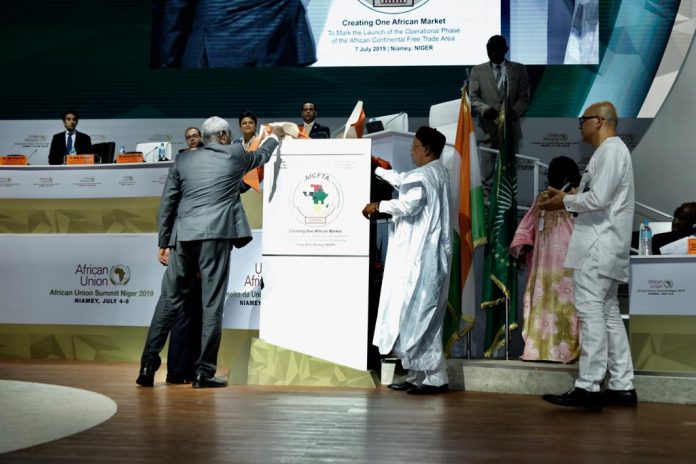
Around 2,000 delegates gathered in Malabo, Equatorial Guinea, to discuss ways to fast-track regional integration after the milestone African Continental Free Area (AfCFTA) was endorsed earlier this year.

“We have had an excellent exchange with all of our shareholders. They were extremely impressed by the work achieved by the Bank, particularly in terms of regional integration,” said African Development Bank President Akinwumi Adesina at the closing press conference of the Meetings.

“Our AAA rating is preserved and protected … Look at our income. It’s sky-high.”

The theme for the Malabo Meetings was “Regional Integration for Africa’s Economic Prosperity”. Cesar Mba Abogo, the country’s Minister of Finance, said the Annual Meetings had allowed its country to showcase its opportunities.

“This has been a great moment for us. It fits in with our development plan and our investment needs. This is a country that is open for business and open to everyone. We are extremely happy to showcase what we have to the world,” he said.

During the Meetings, the Board of Governors discussed the Bank’s performance, outlook and a proposed General Capital Increase (GCI). Adesina welcomed the “solid support” from the Bank’s shareholders, who gave the go-ahead for further discussions around a GCI. Responding to a question on the Bank’s support to fragile nations, Adesina said: “Every dollar that the Bank spent in GCI led to US$17 of benefit to low-income countries. So the GCI not just for rich countries, it lifts everybody up.”

Adesina said the Bank’s transition facility continued to assist countries emerging from conflict, while its investments played a strategic role in helping countries that find themselves in the “triangle of disaster” – unemployment, poverty and environmental degradation.

The four-day Annual Meetings were attended by ministers, government officials, African Union representatives, development partners and civil society leaders, who gathered to deliberate on the continent’s development agenda.

The next Annual Meetings will be held in Abidjan, Côte d’Ivoire, in May.

Stories Continues after ad

Sarri set to leave Chelsea, to be replaced by Lampard

lampard and sarri

Maurizio Sarri is set to return to Italy to take the vacant managerial role at Juventus and bring the curtain down on a fretful one-year stay at Chelsea.

Sarri met his targets by returning Chelsea to the Champions League via a third-placed finish in the Premier League and winning the Europa League, claiming his first major trophy as a coach in the process.

However, a failure to connect with the Chelsea support, public criticism of his players and a refusal to adapt his style of play meant Sarri was always unlikely to hang around for a second season at Stamford Bridge.

The 60-year-old former banker becomes the ninth full-time manager to leave Chelsea since Roman Abramovich took charge of the club in 2003.

Yet, for once the Russian didn’t wield the axe and waited instead until Juventus agreed to pay the compensation to free Sarri from the final two years of his contract on Thursday, according to reports in England and Italy.

The Italian champions are keen on the brand of football Sarri imposed during three years at Napoli when only Juventus’ remarkable consistency prevented the Neapolitans a first league title since the days when Diego Maradona graced the San Paolo pitch.

However, Sarri failed to transport that free-flowing football to Chelsea, despite making midfield playmaker Jorginho his first signing.

After a brilliant start to the season that saw Sarri’s men keep pace with Premier League champions Manchester City and Champions League winners Liverpool, Chelsea fans soon rebelled at a ponderous possession game with little cutting edge.

After a 2-0 defeat at Arsenal in January, Sarri labelled his players “very difficult to motivate”.

Worse was to come as a 4-0 thrashing at Bournemouth was followed by a 6-0 demolition by Manchester City — Chelsea’s heaviest defeat in 28 years.

The players soon started rebelling too. Goalkeeper Kepa Arrizabalaga refused to be substituted towards the end of the League Cup final to stay on the field for a penalty shootout, which Chelsea lost to City in February.

Supporters also voiced their frustration, calling for Sarri’s sacking, during a controversial 2-1 win at relegated Cardiff a month later.

Sarri, though, did manage to end on a high as Chelsea lost just one of their last eight Premier League games while the other contenders for a top-four finish stumbled towards the end of the season.

Eden Hazard then bade farewell in fitting fashion by scoring twice in a 4-1 rout of Arsenal in the Europa League final to ensure Chelsea again ended the season with a trophy despite the turmoil.

Yet, that will be an even tougher test for Sarri’s successor without Hazard, who joined Real Madrid earlier this week for a fee in excess of 100 million euros ($113 million).

Chelsea currently cannot recruit a replacement with the club serving a two-window transfer ban handed down by FIFA.

The club’s record goalscorer Frank Lampard is the favourite to return to Stamford Bridge after just one season in management at Derby County.

Lampard, 40, led the Rams to the Championship playoff final where they fell just short of a return to the Premier League.

The former England midfielder will not suffer any of the hostility encountered by Sarri in the Chelsea fan base.

But it represents a huge gamble both for Lampard so early in his managerial career to take the huge step up to a top-six job, and for a club in transition to back a rookie manager.

Stories Continues after ad

Court clears Rwenzururu king Mumbere to attend burial ceremony of his mother

The High Court has relaxed stringent bail conditions for the Rwenzururu king, Charles Wesley Mumbere and permitted him to go and attend the burial ceremony of his mother, Her Royal Highness Christine Biira Mukirania.

The Queen Mother died on Tuesday morning at Kilembe Hospital where she was admitted. She was first admitted in the Intensive Care Unit of Case Hospital in Kampala where registered improvement and was discharged. The queen mother has been battling cancer since early this year.

During 2016 clashes where the army invaded the kingdom, killing over 150 people, Rwenzururu king Charles Wesley Mumbere, his premier Thembo Kitsumbire and 202 suspects were arrested and tried in Jinja over allegations that they allied with the other forces from Democratic republic of Congo (DRC), seeking for the creation of the Yiira Republic.

He was in 2017 released on bail and slummed with restrictions on not step in Kasese, Bundibugyo and Kabarole till the disposal of the matter.

On Wednesday, through his layers led by Celeb Alaka and Samuel Muyizzi, Mumbere petitioned high Court seeking for relaxation of bail conditions to allow him attend the burial ceremony of his mother.

Justice Eva Luswata, Mumbere allowed Mumbere’s plea and allowed him to travel to the three districts that constitute the Kingdom and cultural practices for the sendoff of his mother.

The judge said since the state did not file against his application, “Court has granted you 14 days to go and perform cultural functions and burial of your mother.”

He was however been prohibited from attending meetings and inciting violence among other activities beyond burial ceremony.

Speaking after court proceedings, Mumbere, said, “I am happy with the judge’s judgement that has allowed me to travel to Kasese to attend the funeral of my beloved mum. I thank everyone that has supported me and may the soul of my mum rest in peace.”

Stories Continues after ad

Bank of Uganda confirms is under investigation by anti-corruption agencies

The Bank of Uganda Governor Prof Emmanuel Tumusiime-Mutebile has confirmed that the institution is under investigation as earlier today said by the Head of the Anti-corruption Unit of State House, Lt. Co. Edith Nakalema.

In a media statement, Mutebile says: “On April 27, 2019, the Bank of Uganda (BoU) received a consignment. During the verification process, BoU staff reported an anomaly in the inventory of the expected consignment. Therefore I requested the Anti-Corruption Unit (ACU) of State House to investigate the matter.   The AUC has started investigations and Bank of Uganda is fully cooperating with the process.”

He says Bank of Uganda is working with other authorities to conclude the investigations. “Bank of Uganda assures the public that we are committed to maintaining the integrity of its operations and are working with the relavant authorities to bring this matter to its logic conclusion,” he says.

Lt Col. Edith Nakalema earlier on confirmed that her department and that of Criminal Investigation Directorate of the Uganda Police, acting under Article 120 (3) (a) and in conjunction with Bank of Uganda are carrying out a special investigation on the bank’s procumbent and supply chain activities where officials are said to have illegally printed Shs90 billion and used it themselves.

“This investigation is being carried out following an invitation by the governor of the Bank of Uganda and in close cooperation with the governor’s office. The matter under investigation involves a recent procumbent consignment. A number of senior bank personnel, customs and civil aviation authority personnel are being questioned. The Bank of Uganda operations remain intact and uninterrupted .Further updates will be provided in the due course,” Nakalema said in a brief statement.

The BoU officials were two days ago apprehended by security agencies and were interrogated in regard to the allegations that they illegally printed Shs90 billion when they were sent to Germany to pick the local currency printed there.

According to sources, the BoU team travelled to German aboard a chartered airplane to ferry the printed cash to Uganda. The Uganda team was led by a one Dr. Barenzi who is the deputy director in charge of Operations and represented Charles Malinga Akol, BoU’s Executive Director Operations.

Eagle Online has been informed that upon getting to German, Dr. Barenzi and another officer allegedly printed money to a tune of Shs90 billion in excesses and they used some of the said Shs90 billion to purchase personal goods which were as well loaded into the chartered plane. However, upon landing at Entebbe International Airport where they were received by another team from BoU and the security team, the two officials ferried the pirates that contained the balance of the Shs90 billion into their own vehicles and drove to BoU.

Nevertheless, what is perturbing investigators is the fact that between Entebbe and Kampala, the balance of the extra Shs90 billion printed illegally never reached the coffers of BoU.
Sources say that what could have brought incident to light was the insistence by officials from Uganda Revenue Authority based at Entebbe International Airport who also insisted on verifying the bill of lading to verify whether the extra Shs90 billion and bought items had been had been cleared by the Germans before the airplane departed for Entebbe.

Upon receiving the complaint from URA, BoU is said to have initiated its internal investigations on how the flight from German to Entebbe was flown and who was aboard, the exact amount cleared by the printing firm and other items. As the investigation continued, it was revealed that extra cash had been printed and was inserted on to the plane after the billing of lading had been cleared by the agents and the plane authority.

However, according to interrogators, the airplane authority came out first and apologised acknowledging that they had been duped by the two officials to load extra cash and items despite the clearance from the German authorities.
However, it is at this time that Director Malinga who had been on leave got involved because his name had been dragged in, accordingly, Mr. Malinga is said to have informed the Governor Emmanuel Mutebile about the incident and thereafter, the two agreed to brief the President and State House Anti-Corruption Unit.

Upon briefing the president, it is said he was furious about the incident and immediately directed that Lt. Col. Edith Nakalema and head of Criminal Investigation Department, Assistant Inspector of Police Grace Akullo investigate deeper to find out where the said balance of the Shs90 billion is and also established the motive by the culprits.

on Tuesday, June 11, Col. Nakalema and Akullo resolved that the combined team of police, Special Forces soldier investigators storm BoU and arrest the suspects and indeed on Wednesday June 12, the team stormed BoU and picked five directors.

The said directors include Barenzi, three other gentlemen and a lady; they were driven to Entebbe Airport under tight security where CCTV footage of the said day was reviewed. They team established some vital information before the said team travelled back to Kampala for further interrogation.

Upon arrest and further interrogation, it has been established that top executives at BoU have been implicated in the scam that is likely to be the worst scandal to occur at BoU.

Investigators are also trying to establish how such big sums of money could be printed without the knowledge of the top leaders of the bank including both the Governor and his deputy. However, Eagle Online has learnt that by the time of the incident, Governor Mutebile had sought for leave as he was seeking medical treatment abroad. It is said his deputy Dr. Louis Kasekende was in-charge. Governor Mutebile is said to be undergoing treatment at his Kololo home as for the last one month, he hasn’t stepped in office.

Accordingly, Dr. Kasekende and other three directors have been lined up for questioning on how such magnitude of money could be printed without their knowledge and yet they are the final people to clear any printing of money.

The five directors have since Wednesday been quizzed by the combined team of investigators from both police and military and are currently held in incommunicado.
Another area of interest for the investigator is said to be the Shs478 billion that BoU claims to have used during the receivership of Crane Bank.

A probe by parliament’s Committee on Commissions State Authorities and State Enterprises (COSASE) established that BoU officials over the years closed seven commercial banks without following guidelines.

They are believed to have connived to dupe some of the banks of their money. For instance some banks like cooperative bank, Greenland Bank and International Credit Bank had their assets sold at over 90 per cent discount even though some had valid documentation like land titles.
It is also believed that BoU officials took part of the Shs478 billion supposedly injected in Crane Bank Limited (CBL) while in receivership as liquidity support. Yet the Auditor General John Muwanga while auditing the expenditure of the money found that Shs320 billion of the funds could not be accounted for.

One of the top officials at BoU, Benedict Sekabira, during the COSASE probe, told MPs that CBL needed only Shs150 billion to stay operating yet Shs478 billion was allegedly spent for that purpose. It became worse when BoU sold CBL assets at only Shs200 billion to its rival DFCU Bank, which is being paid in installments. That transaction has become questionable.

Dr Kasekende is on record to have requested Muwanga to do a second audit of Shs478 billion but the latter declined to do so on the grounds that he did the first one and that only parliament could order him to do another one. In the first audit, BoU failed to present all documents related to the spending of the money, saying some were missing from their files.

There is concern also that BoU officials are acting behind the scene to have a fresh probe of BoU and especially Shs478 billion which has become a thorn in their fresh.
The printing of extra money above the requisite by officials could confirm the held view by some sections of the public that BoU is fool of corrupt officials who for a long time have swindled public resources for their personal benefit.

Stories Continues after ad