Stanbic Bank
Stanbic Bank
28.6 C
Kampala
Stanbic Bank
Stanbic Bank
Home Blog Page 1264

AfDB Annual Meetings conclude with consensus on regional integration

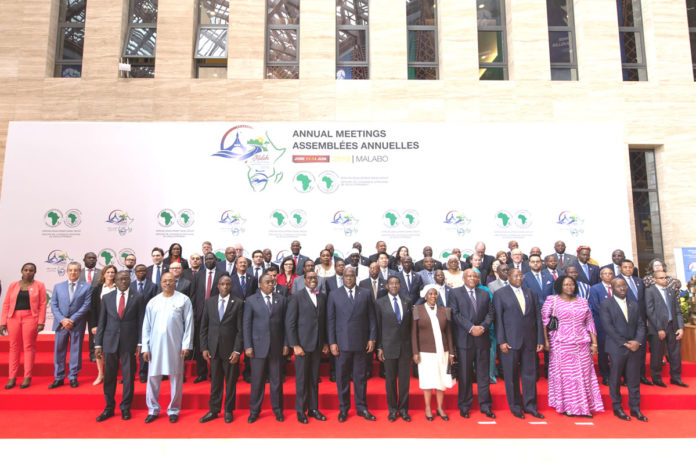
The African Development Bank (AfDB) on Friday concluded its Annual Meetings, amid growing consensus that regional integration is imperative to a new phase in African prosperity.

Around 2,000 delegates gathered in Malabo, Equatorial Guinea, to discuss ways to fast-track regional integration after the milestone African Continental Free Area (AfCFTA) was endorsed earlier this year.

“We have had an excellent exchange with all of our shareholders. They were extremely impressed by the work achieved by the Bank, particularly in terms of regional integration,” said African Development Bank President Akinwumi Adesina at the closing press conference of the Meetings.

“Our AAA rating is preserved and protected … Look at our income. It’s sky-high.”

The theme for the Malabo Meetings was “Regional Integration for Africa’s Economic Prosperity”. Cesar Mba Abogo, the country’s Minister of Finance, said the Annual Meetings had allowed its country to showcase its opportunities.

“This has been a great moment for us. It fits in with our development plan and our investment needs. This is a country that is open for business and open to everyone. We are extremely happy to showcase what we have to the world,” he said.

During the Meetings, the Board of Governors discussed the Bank’s performance, outlook and a proposed General Capital Increase (GCI). Adesina welcomed the “solid support” from the Bank’s shareholders, who gave the go-ahead for further discussions around a GCI. Responding to a question on the Bank’s support to fragile nations, Adesina said: “Every dollar that the Bank spent in GCI led to US$17 of benefit to low-income countries. So the GCI not just for rich countries, it lifts everybody up.”

Adesina said the Bank’s transition facility continued to assist countries emerging from conflict, while its investments played a strategic role in helping countries that find themselves in the “triangle of disaster” – unemployment, poverty and environmental degradation.

The four-day Annual Meetings were attended by ministers, government officials, African Union representatives, development partners and civil society leaders, who gathered to deliberate on the continent’s development agenda.

The next Annual Meetings will be held in Abidjan, Côte d’Ivoire, in May.

Stories Continues after ad

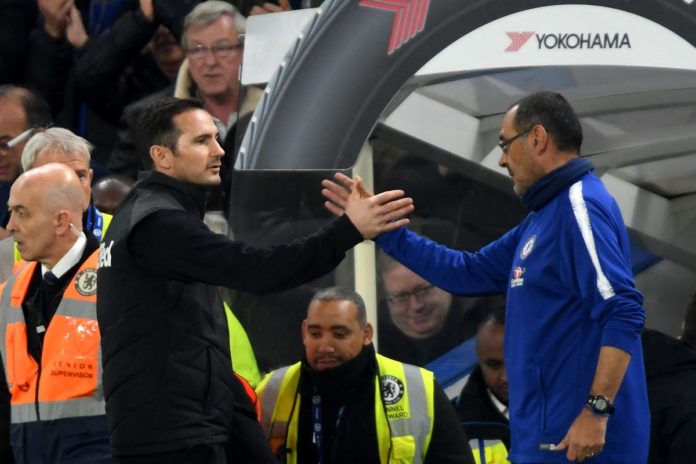
Sarri set to leave Chelsea, to be replaced by Lampard

lampard and sarri

Maurizio Sarri is set to return to Italy to take the vacant managerial role at Juventus and bring the curtain down on a fretful one-year stay at Chelsea.

Sarri met his targets by returning Chelsea to the Champions League via a third-placed finish in the Premier League and winning the Europa League, claiming his first major trophy as a coach in the process.

However, a failure to connect with the Chelsea support, public criticism of his players and a refusal to adapt his style of play meant Sarri was always unlikely to hang around for a second season at Stamford Bridge.

The 60-year-old former banker becomes the ninth full-time manager to leave Chelsea since Roman Abramovich took charge of the club in 2003.

Yet, for once the Russian didn’t wield the axe and waited instead until Juventus agreed to pay the compensation to free Sarri from the final two years of his contract on Thursday, according to reports in England and Italy.

The Italian champions are keen on the brand of football Sarri imposed during three years at Napoli when only Juventus’ remarkable consistency prevented the Neapolitans a first league title since the days when Diego Maradona graced the San Paolo pitch.

However, Sarri failed to transport that free-flowing football to Chelsea, despite making midfield playmaker Jorginho his first signing.

After a brilliant start to the season that saw Sarri’s men keep pace with Premier League champions Manchester City and Champions League winners Liverpool, Chelsea fans soon rebelled at a ponderous possession game with little cutting edge.

After a 2-0 defeat at Arsenal in January, Sarri labelled his players “very difficult to motivate”.

Worse was to come as a 4-0 thrashing at Bournemouth was followed by a 6-0 demolition by Manchester City — Chelsea’s heaviest defeat in 28 years.

The players soon started rebelling too. Goalkeeper Kepa Arrizabalaga refused to be substituted towards the end of the League Cup final to stay on the field for a penalty shootout, which Chelsea lost to City in February.

Supporters also voiced their frustration, calling for Sarri’s sacking, during a controversial 2-1 win at relegated Cardiff a month later.

Sarri, though, did manage to end on a high as Chelsea lost just one of their last eight Premier League games while the other contenders for a top-four finish stumbled towards the end of the season.

Eden Hazard then bade farewell in fitting fashion by scoring twice in a 4-1 rout of Arsenal in the Europa League final to ensure Chelsea again ended the season with a trophy despite the turmoil.

Yet, that will be an even tougher test for Sarri’s successor without Hazard, who joined Real Madrid earlier this week for a fee in excess of 100 million euros ($113 million).

Chelsea currently cannot recruit a replacement with the club serving a two-window transfer ban handed down by FIFA.

The club’s record goalscorer Frank Lampard is the favourite to return to Stamford Bridge after just one season in management at Derby County.

Lampard, 40, led the Rams to the Championship playoff final where they fell just short of a return to the Premier League.

The former England midfielder will not suffer any of the hostility encountered by Sarri in the Chelsea fan base.

But it represents a huge gamble both for Lampard so early in his managerial career to take the huge step up to a top-six job, and for a club in transition to back a rookie manager.

Stories Continues after ad

Court clears Rwenzururu king Mumbere to attend burial ceremony of his mother

The High Court has relaxed stringent bail conditions for the Rwenzururu king, Charles Wesley Mumbere and permitted him to go and attend the burial ceremony of his mother, Her Royal Highness Christine Biira Mukirania.

The Queen Mother died on Tuesday morning at Kilembe Hospital where she was admitted. She was first admitted in the Intensive Care Unit of Case Hospital in Kampala where registered improvement and was discharged. The queen mother has been battling cancer since early this year.

During 2016 clashes where the army invaded the kingdom, killing over 150 people, Rwenzururu king Charles Wesley Mumbere, his premier Thembo Kitsumbire and 202 suspects were arrested and tried in Jinja over allegations that they allied with the other forces from Democratic republic of Congo (DRC), seeking for the creation of the Yiira Republic.

He was in 2017 released on bail and slummed with restrictions on not step in Kasese, Bundibugyo and Kabarole till the disposal of the matter.

On Wednesday, through his layers led by Celeb Alaka and Samuel Muyizzi, Mumbere petitioned high Court seeking for relaxation of bail conditions to allow him attend the burial ceremony of his mother.

Justice Eva Luswata, Mumbere allowed Mumbere’s plea and allowed him to travel to the three districts that constitute the Kingdom and cultural practices for the sendoff of his mother.

The judge said since the state did not file against his application, “Court has granted you 14 days to go and perform cultural functions and burial of your mother.”

He was however been prohibited from attending meetings and inciting violence among other activities beyond burial ceremony.

Speaking after court proceedings, Mumbere, said, “I am happy with the judge’s judgement that has allowed me to travel to Kasese to attend the funeral of my beloved mum. I thank everyone that has supported me and may the soul of my mum rest in peace.”

Stories Continues after ad

Bank of Uganda confirms is under investigation by anti-corruption agencies

The Bank of Uganda Governor Prof Emmanuel Tumusiime-Mutebile has confirmed that the institution is under investigation as earlier today said by the Head of the Anti-corruption Unit of State House, Lt. Co. Edith Nakalema.

In a media statement, Mutebile says: “On April 27, 2019, the Bank of Uganda (BoU) received a consignment. During the verification process, BoU staff reported an anomaly in the inventory of the expected consignment. Therefore I requested the Anti-Corruption Unit (ACU) of State House to investigate the matter.   The AUC has started investigations and Bank of Uganda is fully cooperating with the process.”

He says Bank of Uganda is working with other authorities to conclude the investigations. “Bank of Uganda assures the public that we are committed to maintaining the integrity of its operations and are working with the relavant authorities to bring this matter to its logic conclusion,” he says.

Lt Col. Edith Nakalema earlier on confirmed that her department and that of Criminal Investigation Directorate of the Uganda Police, acting under Article 120 (3) (a) and in conjunction with Bank of Uganda are carrying out a special investigation on the bank’s procumbent and supply chain activities where officials are said to have illegally printed Shs90 billion and used it themselves.

“This investigation is being carried out following an invitation by the governor of the Bank of Uganda and in close cooperation with the governor’s office. The matter under investigation involves a recent procumbent consignment. A number of senior bank personnel, customs and civil aviation authority personnel are being questioned. The Bank of Uganda operations remain intact and uninterrupted .Further updates will be provided in the due course,” Nakalema said in a brief statement.

The BoU officials were two days ago apprehended by security agencies and were interrogated in regard to the allegations that they illegally printed Shs90 billion when they were sent to Germany to pick the local currency printed there.

According to sources, the BoU team travelled to German aboard a chartered airplane to ferry the printed cash to Uganda. The Uganda team was led by a one Dr. Barenzi who is the deputy director in charge of Operations and represented Charles Malinga Akol, BoU’s Executive Director Operations.

Eagle Online has been informed that upon getting to German, Dr. Barenzi and another officer allegedly printed money to a tune of Shs90 billion in excesses and they used some of the said Shs90 billion to purchase personal goods which were as well loaded into the chartered plane. However, upon landing at Entebbe International Airport where they were received by another team from BoU and the security team, the two officials ferried the pirates that contained the balance of the Shs90 billion into their own vehicles and drove to BoU.

Nevertheless, what is perturbing investigators is the fact that between Entebbe and Kampala, the balance of the extra Shs90 billion printed illegally never reached the coffers of BoU.
Sources say that what could have brought incident to light was the insistence by officials from Uganda Revenue Authority based at Entebbe International Airport who also insisted on verifying the bill of lading to verify whether the extra Shs90 billion and bought items had been had been cleared by the Germans before the airplane departed for Entebbe.

Upon receiving the complaint from URA, BoU is said to have initiated its internal investigations on how the flight from German to Entebbe was flown and who was aboard, the exact amount cleared by the printing firm and other items. As the investigation continued, it was revealed that extra cash had been printed and was inserted on to the plane after the billing of lading had been cleared by the agents and the plane authority.

However, according to interrogators, the airplane authority came out first and apologised acknowledging that they had been duped by the two officials to load extra cash and items despite the clearance from the German authorities.
However, it is at this time that Director Malinga who had been on leave got involved because his name had been dragged in, accordingly, Mr. Malinga is said to have informed the Governor Emmanuel Mutebile about the incident and thereafter, the two agreed to brief the President and State House Anti-Corruption Unit.

Upon briefing the president, it is said he was furious about the incident and immediately directed that Lt. Col. Edith Nakalema and head of Criminal Investigation Department, Assistant Inspector of Police Grace Akullo investigate deeper to find out where the said balance of the Shs90 billion is and also established the motive by the culprits.

on Tuesday, June 11, Col. Nakalema and Akullo resolved that the combined team of police, Special Forces soldier investigators storm BoU and arrest the suspects and indeed on Wednesday June 12, the team stormed BoU and picked five directors.

The said directors include Barenzi, three other gentlemen and a lady; they were driven to Entebbe Airport under tight security where CCTV footage of the said day was reviewed. They team established some vital information before the said team travelled back to Kampala for further interrogation.

Upon arrest and further interrogation, it has been established that top executives at BoU have been implicated in the scam that is likely to be the worst scandal to occur at BoU.

Investigators are also trying to establish how such big sums of money could be printed without the knowledge of the top leaders of the bank including both the Governor and his deputy. However, Eagle Online has learnt that by the time of the incident, Governor Mutebile had sought for leave as he was seeking medical treatment abroad. It is said his deputy Dr. Louis Kasekende was in-charge. Governor Mutebile is said to be undergoing treatment at his Kololo home as for the last one month, he hasn’t stepped in office.

Accordingly, Dr. Kasekende and other three directors have been lined up for questioning on how such magnitude of money could be printed without their knowledge and yet they are the final people to clear any printing of money.

The five directors have since Wednesday been quizzed by the combined team of investigators from both police and military and are currently held in incommunicado.
Another area of interest for the investigator is said to be the Shs478 billion that BoU claims to have used during the receivership of Crane Bank.

A probe by parliament’s Committee on Commissions State Authorities and State Enterprises (COSASE) established that BoU officials over the years closed seven commercial banks without following guidelines.

They are believed to have connived to dupe some of the banks of their money. For instance some banks like cooperative bank, Greenland Bank and International Credit Bank had their assets sold at over 90 per cent discount even though some had valid documentation like land titles.
It is also believed that BoU officials took part of the Shs478 billion supposedly injected in Crane Bank Limited (CBL) while in receivership as liquidity support. Yet the Auditor General John Muwanga while auditing the expenditure of the money found that Shs320 billion of the funds could not be accounted for.

One of the top officials at BoU, Benedict Sekabira, during the COSASE probe, told MPs that CBL needed only Shs150 billion to stay operating yet Shs478 billion was allegedly spent for that purpose. It became worse when BoU sold CBL assets at only Shs200 billion to its rival DFCU Bank, which is being paid in installments. That transaction has become questionable.

Dr Kasekende is on record to have requested Muwanga to do a second audit of Shs478 billion but the latter declined to do so on the grounds that he did the first one and that only parliament could order him to do another one. In the first audit, BoU failed to present all documents related to the spending of the money, saying some were missing from their files.

There is concern also that BoU officials are acting behind the scene to have a fresh probe of BoU and especially Shs478 billion which has become a thorn in their fresh.
The printing of extra money above the requisite by officials could confirm the held view by some sections of the public that BoU is fool of corrupt officials who for a long time have swindled public resources for their personal benefit.

Stories Continues after ad

We are investigating Bank of Uganda-Lt col. Edith Nakalema

BoU officials implicated in the report on closure of commercial banks.

The Head of the Anti-corruption Unit in State House, Lt Col. Edith Nakalema has confirmed that her unit alongside that of Criminal Investigation Directorate of the Uganda Police, acting under Article 120 (3) (a) and in conjunction with Bank of Uganda is carrying out a special investigation on the bank’s procurement and supply chain activities.

“This investigation is being carried out following an invitation by the governor of the Bank of Uganda and in close cooperation with the governor’s office. The matter under investigation involves a recent procumbent consignment. A number of senior bank personnel, customs and civil aviation authority personnel are being questioned. The Bank of Uganda operations remain intact and uninterrupted .Further updates will be provided in the due course.reads the press released signed by Col. Nakalema.

Earlier Eagle online had reported that te Head of Anti-corruption Unit in State House, Lt col. Nakalema, was set to address the media on the arrest of Bank of Uganda (BoU) top officials over illegal printing of billions of shillings in Germany, sources say.

The BoU officials were apprehended hours ago by security agencies and were interrogated in regard to the allegations that they illegally printed Shs90 billion when they were sent to Germany to pick the local currency printed there.

According to sources, the BoU team travelled to German aboard a chartered airplane to ferry the printed cash to Uganda. The Uganda team was led by a one Dr. Barenzi who is the deputy director in charge of Operations and represented Charles Malinga Akol, BoU’s Executive Director Operations.

Eagle Online has been informed that upon getting to German, Dr. Barenzi and another officer allegedly printed money to a tune of Shs90 billion in excesses and they used some of the said Shs90 billion to purchase personal goods which were as well loaded into the chartered plane. However, upon landing at Entebbe International Airport where they were received by another team from BoU and the security team, the two officials ferried the pirates that contained the balance of the Shs90 billion into their own vehicles and drove to BoU.

Nevertheless, what is perturbing investigators is the fact that between Entebbe and Kampala, the balance of the extra Shs90 billion printed illegally never reached the coffers of BoU.
Sources say that what could have brought incident to light was the insistence by officials from Uganda Revenue Authority based at Entebbe International Airport who also insisted on verifying the bill of lading to verify whether the extra Shs90 billion and bought items had been had been cleared by the Germans before the airplane departed for Entebbe.

Upon receiving the complaint from URA, BoU is said to have initiated its internal investigations on how the flight from German to Entebbe was flown and who was aboard, the exact amount cleared by the printing firm and other items. As the investigation continued, it was revealed that extra cash had been printed and was inserted on to the plane after the billing of lading had been cleared by the agents and the plane authority.

However, according to interrogators, the airplane authority came out first and apologised acknowledging that they had been duped by the two officials to load extra cash and items despite the clearance from the German authorities.
However, it is at this time that Director Malinga who had been on leave got involved because his name had been dragged in, accordingly, Mr. Malinga is said to have informed the Governor Emmanuel Mutebile about the incident and thereafter, the two agreed to brief the President and State House Anti-Corruption Unit.

Upon briefing the president, it is said he was furious about the incident and immediately directed that Lt. Col. Edith Nakalema and head of Criminal Investigation Department, Assistant Inspector of Police Grace Akullo investigate deeper to find out where the said balance of the Shs90 billion is and also established the motive by the culprits.

Storming Bank of Uganda
On Tuesday, June 11, Col. Nakalema and Akullo resolved that the combined team of police, Special Forces soldier investigators storm BoU and arrest the suspects and indeed on Wednesday June 12, the team stormed BoU and picked five directors.

The said directors include Barenzi, three other gentlemen and a lady; they were driven to Entebbe Airport under tight security where CCTV footage of the said day was reviewed. They team established some vital information before the said team travelled back to Kampala for further interrogation.

Eagle Online was reliably informed that upon arrest and further interrogation, it has been established that top executives at BoU have been implicated in the scam that is likely to be the worst scandal to occur at BoU.

Investigators are also trying to establish how such big sums of money could be printed without the knowledge of the top leaders of the bank including both the Governor and his deputy. However, Eagle Online has learnt that by the time of the incident, Governor Mutebile had sought for leave as he was seeking medical treatment abroad. It is said his deputy Dr. Louis Kasekende was in-charge. Governor Mutebile is said to be undergoing treatment at his Kololo home as for the last one month, he hasn’t stepped in office.

Accordingly, Dr. Kasekende and other three directors have been lined up for questioning on how such magnitude of money could be printed without their knowledge and yet they are the final people to clear any printing of money.

The five directors have since Wednesday been quizzed by the combined team of investigators from both police and military and are currently held in incommunicado.
Another area of interest for the investigator is said to be the Shs478 billion that BoU claims to have used during the receivership of Crane Bank.

A probe by parliament’s Committee on Commissions State Authorities and State Enterprises (COSASE) established that BoU officials over the years closed seven commercial banks without following guidelines.

They are believed to have connived to dupe some of the banks of their money. For instance some banks like cooperative bank, Greenland Bank and International Credit Bank had their assets sold at over 90 per cent discount even though some had valid documentation like land titles.
It is also believed that BoU officials took part of the Shs478 billion supposedly injected in Crane Bank Limited (CBL) while in receivership as liquidity support. Yet the Auditor General John Muwanga while auditing the expenditure of the money found that Shs320 billion of the funds could not be accounted for.

One of the top officials at BoU, Benedict Sekabira, during the COSASE probe, told MPs that CBL needed only Shs150 billion to stay operating yet Shs478 billion was allegedly spent for that purpose. It became worse when BoU sold CBL assets at only Shs200 billion to its rival DFCU Bank, which is being paid in installments. That transaction has become questionable.

Dr Kasekende is on record to have requested Muwanga to do a second audit of Shs478 billion but the latter declined to do so on the grounds that he did the first one and that only parliament could order him to do another one. In the first audit, BoU failed to present all documents related to the spending of the money, saying some were missing from their files.

There is concern also that BoU officials are acting behind the scene to have a fresh probe of BoU and especially Shs478 billion which has become a thorn in their fresh.
The printing of extra money above the requisite by officials could confirm the held view by some sections of the public that BoU is fool of corrupt officials who for a long time have swindled public resources for their personal benefit.

Stories Continues after ad

Uganda Red Cross trains volunteers to handle threat of Ebola

Uganda Red Cross (URC), with support from the International Federation of Red Cross (IFRC) and Red Crescent Societies (IFRC), has trained hundreds of community-based volunteers to handle the threat of Ebola.

The Volunteers have been trained in Ebola screening, as well as in risk communication and community engagement, community-based surveillance, and psychosocial support.

According to Robert Kwesiga, the Secretary General, URC, the outbreak is a worrying development, but they have been preparing for it. “We have been scaling up our efforts, in close coordination with government and other actors to help communities prepare for Ebola, and to contain its spread.”

He said Red Cross teams is on high alert following the confirmation of the first Ebola case in Uganda. According to the Ministry of Health, a five-year-old boy from Uganda returned from the Democratic Republic of the Congo (DR Congo). The child presented with Ebola symptoms and was transferred to an Ebola treatment unit in Bwera.

The Uganda border is close to the epicenter of the DR Congo outbreak, which is now the second largest Ebola outbreak ever recorded.

Kwesiga said his agency has procured equipment for safe and dignified burials and has provided training and technical support to Ministry of Health which will lead on the delivery of safe and dignified burials in Uganda.

IFRC Operations Coordinator, Andreas Sandin, said they are ready to adapt and expand our support, but we must take stock of the lessons we have learned from the response in DR Congo.

“Epidemics and pandemics start and end in the communities. We need to ensure this remains a community-led response to ensure we prevent Ebola’s further spread.”

IFRC is also supporting the National Red Cross Societies of Burundi, Rwanda and South Sudan to prepare for the potential spread of Ebola into their countries.

Stories Continues after ad
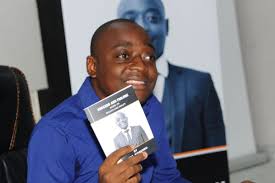
Hamis Kiggundu’s book approved for use in schools

Businessman Hamis Kiggundu

The National Curriculum Development Centre (NCDC) has approved businessman Hamis Kiggundu’s book titled ‘Success and Failure based on Reason and Reality’ to be used by students in secondary schools.

Ms. Grace Baguma, the NCDC director, said after reviewing and evaluating the text book, they found it relevant to be adopted in Uganda’s curriculum to inspire students into investing.

“We evaluated this book and found it useful to our children since it cuts across all the subjects. All schools should adopt it since it is an inspirational material that would inspire students, right from Senior One to be business-minded,” Ms. Baguma was quoted by Daily Monitor.

“Mr. Kiggundu’s book will help to inspire and change the mindset of students, right from the grassroots on how to save and invest,” she added

Before any book is adopted into the national curriculum, it has to go through evaluation processes by NCDC, which involve reviewing for language, relevance and message, among others.

Most schools have adopted a number of books written by foreigners and, therefore, it is time they adopted books written by Ugandans.

Hamis Kiggundu is a well-known businessman who not only trades in Uganda as Ham Enterprises Ltd, but also as Ham International UK Ltd in the UK, Ham International Ltd in the US and Skylight Investments in South Africa.

Eagle Online reviewed the Book: https://www.eagle.co.ug/2018/07/26/book-review-hamis-kiggundu-on-success-and-the-need-to-have-a-sense-of-purpose.html

Kiggundu directly employs more than 1,200 people. He had his primary, secondary, and university education in Uganda and holds a Bachelor’s degree in Law from Makerere University. He is commonly known as Ham.

In his book, Kiggundu says he’s purely a businessman and doesn’t often write books. But he did write this one due to the prevailing circumstances of many friends approaching him on how he managed to make it today.

With the help of his local and international business experience, he basically highlights and explains the areas that may help the reader widen his knowledge on how to manage a business.

He wrote the book in only six days without doing any research at all because it was his intention to pass on his unbiased personal opinion to the readers from a realistic and reasonable perspective. So the book is purely based on his personal realistic opinions.

Stories Continues after ad
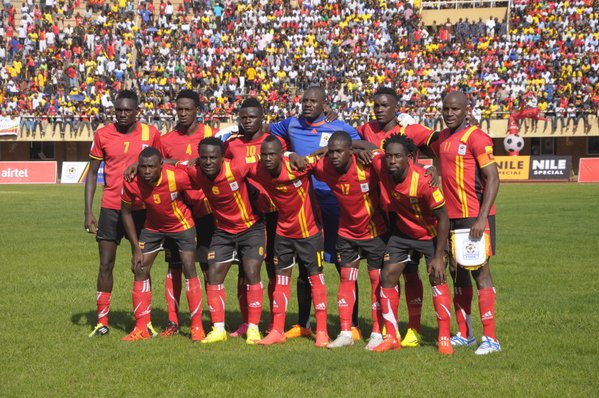
Uganda drop in Fifa rankings ahead of 2019 Afcon

Cranes team

Uganda Cranes have dropped by one slot in the latest Fifa rankings released today by the World’s football governing body, with just a week to kick off the 2019 Africa Cup of Nations in Egypt.

The Cranes moved down to 80th position in the world and 16th in Africa.

Uganda’s opponents in Afcon are Congo DR at 49th (5th on the continent), Egypt at 58th (8th on the continent) and Zimbabwe at 109th (26th on the continent).

In East Africa, Kenya improved by 3 slots to position 105, Tanzania remained unmoved at 131, closely followed by Burundi at 134 and Rwanda at 136.

The top five countries in Africa remained unchanged; Senegal (22), Tunisia (25), Nigeria (45), Morocco (47), and Congo DR (49).

Belgium (1st, unchanged) continue at the top, increasing their advantage over France (2nd, unchanged). Portugal up to 5th, (up 2), moved into the top five on the back of their UEFA Nations League triumph, while the Netherlands (14th, up 2) edged upwards after reaching the final of the same competition.

Belgium, France, Brazil, England, Portugal, Croatia, Spain, Uruguay, Switzerland and Denmark are the top ten ranked nations in the world.

The Biggest movers were Armenia, Hungary, and Malaysia (up 9 ranks each) to 97, 42 and 159 respectively while Greece dropped the hardest by down 9 ranks to 52.

Teams inactive for more than four years are not ranked.

The next FIFA/Coca-Cola World Ranking will be published on 25 July 2019.

Stories Continues after ad

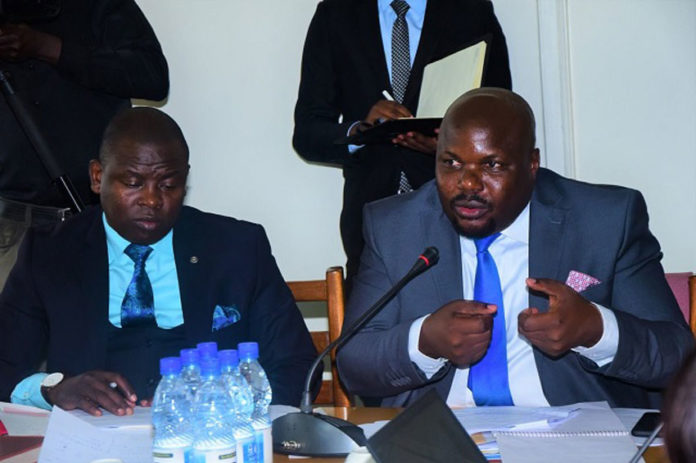
MPs Munyagwa and Kosozi clash over COSASE money

Munyagwa and his Makindye East colleague, Ibrahim Kasozi.

All is not well between the Chairperson of Parliament’s Committee on Commissions, State Authorities and State Enterprises (COSASE) Mubarak Munyagwa and his deputy Makindye East MP Ibrahim Kasozi, sources say.

Sources allege Munyagwa and Kasozi are fighting over money, which the former received from Rajiv Ruparelia and Bank of Uganda (BoU) Deputy Governor Dr Louis Kasekende to favour them respectively in regard to fresh probe of BoU over the closure of commercial banks which included defunct Crane Bank Limited (CBL) that was part of the Ruparelia Group.

It is said Kasekende gave Munyagwa the money to push for a fresh audit of BoU and especially on Shs478 billion allegedly injected in CBL while in receivership before it was sold its rival DFCU Bank at Shs200 billion. A fresh probe would help Kasekende and other top officials at BoU to clear their names after the first probe exposed in the irregular closure of banks and suspected corruption.

On the other hand, it is said Munyagwa received the money from Rajiv (one of the shareholders of (CBL) well knowing the probe would not go on while at the same time he appointed Kasozi to head a select subcommittee to carry out a fresh probe but which has been rejected by Speaker of Parliament Rebeca Kadaga, leaving Kasozi a disappointed man. Kadaga said a new probe is not only a duplication of work of the first probe but also a waste of time and resources, moreover violates the House rules of procedure.

Sources say Ruparelia Group is awaiting the implementation of recommendations forwarded to government as regards closure of CBL and other banks while a new probe would be a disadvantage to them.

Days ago MP Kasozi was on airwaves saying no matter what his select subcommittee would go with the fresh probe BoU, arguing that more people and institutions have presented petitions against BoU.

Stories Continues after ad

Despite challenges, Africa’s debt is still under control says African Development Bank

The African Development Bank (AfDB) remains strong with growing operating revenues and allocable income generated since 2010 reaching US$2.5 billion, the Bank Group’s Treasurer, Hassatou Diop N’sele, stated on Thursday.

In 2018, the Bank earned US$214 million in allocable income, 48 percent of which has been reinvested in the institution to reinforce reserves and its business growth capacity. The bullish numbers were revealed during the Bank’s Financial presentation Thursday, a highlight of the 2019 Annual Meetings of the Bank currently underway in Malabo, Equatorial Guinea.

The panel was led by N’sele and Simon Mizrahi, Director of Service Delivery, Performance Management and Results at the Bank.

During the presentation attended by delegates, Governors, Executive Directors and Bank staff, N’Sele noted that the Bank could chart a new path on account of its ability to raise funds on the capital markets. “The amount of infrastructure financing covered by private sector could double if African countries harness the full potential of their capital markets.”

According to N’sele, a number of African countries could save as much $1 billion on a 20-year loan, if they borrow from the African Development Bank, instead of from the Eurobond market, due to preferable lending rates.

Delegates were informed of the Bank’s successful issuance of the first-ever NOK social bond sold in Norway and sealed in 2018.

Despite challenges, Africa’s debt is still under control

On debt sustainability, Africa’s debt has increased in recent years “but not to unsustainable levels,” Mizrahi indicated but he pleaded for caution. “We need to continue to generate financing and spur growth without increasing debt.”

Sharing insights on Africa’s path forward, Mizrahi underscored the need to harness the continent’s incredible potential in renewable energy.

Africa is the most vulnerable continent and suffers the most from climate change but “with the right vision, investments and political commitments, Africa can lead a global energy revolution and leapfrog to renewable technologies. This is why the Bank is putting its money where its mouth is and investing more than any other development Bank in helping the continent transition towards more resilient and sustainable economies,” he concluded.

The African Continental Free Trade Agreement (AfTCA) ushering a new era in intra-African trade

According to Mizrahi, AfCTA paves the way to the world’s largest free trade area with an integrated market of 1.3 billion consumers.

“This is important because Africa will struggle to be competitive at the global scale, if it continues to operate as 54 fragmented economies. The continent needs to be more integrated, it needs larger economic spaces so that Africa can attract more investors, create more and better jobs, boost internal trade and create continent-wide value chains that are globally competitive.”

The panel moderated by the Victor Oladokun, the Bank’s Director of Communication, noted that AfCFTA is expected to boost cross-border infrastructure, drive competitiveness and make the continent a smaller place by integrating markets.

In her concluding remarks, N’sele expressed the Bank’s appreciation for Canada’s unwavering support to the institution with the recently announced $1.1 billion callable capital. “This will allow to continue to meet our financial ratio” before a decision is made on the 7th General Capital Increase,” she said.

We are, the continent’s only triple-A rated institution. Our rating means that our bonds are the absolute safest in the world. It gives confidence to investors across the globe that their investment in African Development Bank bonds is secured.”

The discussions included gender issues, especially the Bank’s flagship Affirmative Finance Action for Women in Africa (AFAWA) program, which seeks to mobilize $3 billion to close the financing gender gap for women entrepreneurs.

Attachments area

Stories Continues after ad