Stanbic Bank
Stanbic Bank
19 C
Kampala
Stanbic Bank
Stanbic Bank
Home Blog Page 1272

Court permits pregnant woman to give birth before she is hanged

Meriam Yehya Ibrahim, 27, who was born to a Muslim father but brought up a Christian by her mother.

An Islamic court in the Sudanese capital has said that a pregnant woman sentenced to hang for apostasy after she married a Christian man will be allowed to give birth before she is executed.

Meriam Yehya Ibrahim, 27, who was born to a Muslim father but brought up a Christian by her mother, was convicted on Sunday in Khartoum and given three days to recant her faith or face a possible death sentence.

“We gave you three days to recant but you insist on not returning to Islam. I sentence you to be hanged,” Judge Abbas Mohammed Al-Khalifa told Mrs Ibrahim, addressing her by her father’s name, Adraf Al-Hadi Mohammed Abdullah.

Mrs Ibrahim also faces a sentence of flogging for adultery on the grounds that her marriage to a Christian man from South Sudan is considered void under Islamic law. She will be given 100 lashes. Because her father was Muslim, she was considered by the court to be the same.

Mrs Ibrahim told the judge: “I am a Christian and I never committed apostasy.”

Her lawyer said that she intended to appeal against the decision.

Amnesty International said Mrs Ibrahim was eight months pregnant and in detention with her 20-month-old son. A spokesman said: “The fact that a woman could be sentenced to death for her religious choice and to flogging for being married to a man of an allegedly different religion is abhorrent and should never be even considered.”

The sentence has been condemned by the international community. In a joint statement, the embassies of Britain, the United States, Canada and the Netherlands expressed “deep concern” over her case.

“We call upon the government of Sudan to respect the right to freedom of religion, including one’s right to change one’s faith or beliefs,” they said.

Stories Continues after ad

Bank of Uganda gives Dfcu 24 extra months to cling to Meera Investment properties

The Former Crane Bank Ntinda branch, which DFCU took over and illegally rebranded in its name, was ordered by the court to vacate and compensate Meera Investments because the property belongs to Meera.

Despite a related case in court, the Bank of Uganda has decided to hand Dfcu bank extra 24 months to occupy freehold properties of Meera Investments after the initial 34 months ended.

Sources say the deal to give Dfcu bank extra time was signed by BoU Governor Emmanuel Tumusiime-Mutebile, Deputy Governor Dr Louis Kasekende as well as Head of Legal Margaret Kasule on one side while Dfcu top bosses appended signatures on behalf of the commercial bank.

In October 2016, BoU took over Crane Bank Limited on grounds of undercapitalization, placed it under receivership before transferring it to Dfcu bank in January, 2017. Dfcu bank which received some of the assets and liabilities of CBL would be allowed to operate in different CBL branches whose ownership belonged to Meera Investments, one of companies under Ruparelia Group.

The Chairman of Ruparelia Group Sudhir Ruparelia and Meera Investments in a recent in the application want the recovery, transfer and return of freehold property from CBL in receivership. “…I have been advised by lawyers, Kampala Associated Advocates, which advice I verily believe to be true, that under the Constitution and the Land Act, the Respondent cannot own and hold freehold property and is therefore, not capable of holding the suit property in its names,” the application continues.

Between 2012 and 2016, Meera Investments leased the 46 properties to now defunct CBL on different terms with the leases being duly registered as encumbrances on Meera’s freehold and mailo interest.

The lease titles were subsequently processed and issued to CBL which agreed to pay US$6,000 as ground rent for each of the properties effective on or before the January 1, of every year to the property owners (Meera Investments).

However, when BoU handed over CBL to Dfcu bank, which was the new tenant, it moved to take over the 46 properties, without the consent of the owners Meera Investments.

Through a subsequent search at the relevant land registries, Meera Investments discovered that; without it’s prior written consent, Dfcu bank in addition to taking possession of the suit properties, caused the leasehold interest to be transferred into its names and had been registered thereon as the proprietor of the leasehold interest.

They add that at the execution of the transfers in favour of Dfcu and at the time of causing the transfer of the leasehold interest into the names of Dfcu, the registration of Meera as the proprietor of the freehold and mailo was and is still intact.

Meera says Dfcu was aware of this fact or could have ascertained by way of a simple search.

Stories Continues after ad

French ‘serial killer doctor’ accused of poisoning over 50 patients to revive them and impress colleagues

Dr. Frederic Pechier

A French doctor has been arrested on suspicion of poisoning over 50 patients in order to impress his colleagues by stepping in at the last moment to “save” them, according to prosecutors who likened him to a “pyromaniac fireman.”

Anesthesiologist Frederic Pechier has been taken into custody regarding 42 “serious adverse events,” including 20 deaths, which happened on his watch during the 17 years he worked at clinics and hospitals in Besançon, in eastern France.

Pechier interfered with the anesthesia pouches used by colleagues in order to swoop in at the last minute and rescue the distressed patients, prosecutors claim, gaining him the respect of his fellow doctors and the admiration of his victims. And his alleged scheme appears to have worked – his peers reportedly considered him a “brilliant” anesthesiologist.

“If these cases of poisoning are proven, he would be one of the biggest serial killers in the history of France,” said Me Berna, lawyer for several of the victims.

Pechier is already under “judicial supervision,” having been charged in May 2017 with poisoning seven other patients, two of whom died, between 2008 and 2017. All of the victims were otherwise healthy before they mysteriously suffered cardiac arrest, and investigators later found potassium levels five times the lethal dose in their blood.

The scope of the investigation was expanded after the bodies of four more patients who died under suspicious circumstances during operations at a clinic where Pechier worked were exhumed in December to be tested for traces of potassium.

Despite his insistence he be allowed to continue practicing medicine as long as he stayed outside the operating theatre, he was banned from working pending trial.

Pechier maintains his innocence, and his lawyers have complained that the judge’s ban on practicing has placed him in a “complicated” financial situation.

Attachments area

Stories Continues after ad

Africa needs inclusive trade agreement: Continental free trade agreement gaining momentum

Continental-Free-Trade-Area-Infographic

By Jamie Macleod and David Luke

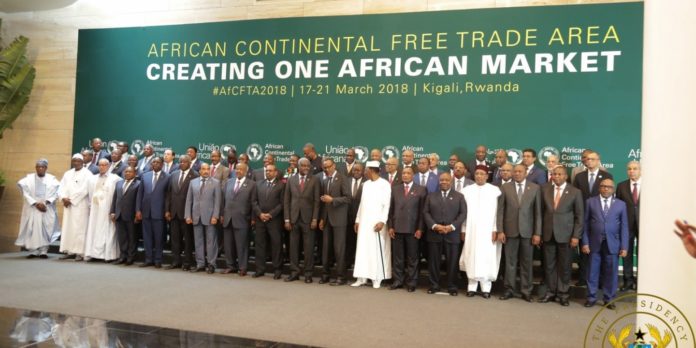
The African continental free trade area (AfCFTA) is among the most momentous of developments in trade. Signed by 52 African states, it is by number of participating countries the largest trade agreement since the formation of the World Trade Organisation. It occurs not just in an international climate of aversion to free trade, notably with stalemate at the WTO and bellicose US trade policy, but also in a climate in which trade agreements just don’t seem possible. Many negotiations have been drawn out and time consuming, often languishing without ever entering into force. These include – but are not limited to – the Regional Comprehensive Economic Partnership, Free Trade Area of the Americas, Transatlantic Trade and Investment Partnership, the European Union’s economic partnership agreements, and the tripartite free trade area.

The AfCFTA is different. Despite capacity constraints and the diversity of their countries, African negotiators have worked industriously and effectively. This is an important moment for Africa. The AfCFTA consolidates progressively 55 fragmented African countries into a market of 1.3 billion people with a combined GDP of $2.3 trillion, roughly the size of the India. Research at the United Nations Economic Commission for Africa forecasts it to have the potential to boost intra-African trade by between 50 per cent-100 per cent, depending on the extent to which non-tariff barriers are also reduced. It has been driven by firm political commitment. The threshold number of country ratifications required for the agreement was reached within one year, a pace of ratifications that is unprecedented in African Union history.

Yet it is not enough for the AfCFTA to be negotiated, concluded and ratified. It must change lives, reduce poverty, and contribute to economic development. It is increasingly recognised in the international trade discourse that trade must become more inclusive. There are a number of measures African policy-makers can take to ensure this, such as adopting simplified trading regimes and addressing the non-tariff barriers that prove most burdensome to small businesses.

In doing so, the policy-makers behind the AfCFTA can learn from integration efforts elsewhere in the world. In the past, the EU was the model most usually held up as exemplary. Yet, for Africa, the Association of Southeast Asian Nations may be more appropriate. Like Africa, it comprises a diverse range of countries, politically, socially and economically, and continues to face challenges with both between- and within-country inequality. As it has integrated, Asean, like Africa, has had to consider how to strategically align its partnerships with outside countries and determine how to share equitably the benefits of integration among its members. Many of the technical challenges to integration in Asean have African analogies; implementation of regional initiatives can be uneven, services trade liberalisation can lag and non-tariff barriers often persist. As Africa launches the AfCFTA, much can be learned by looking east.

Failure, too, is a famously great teacher. Africa can draw lessons from the failed FTAA initiative, which in trying to consolidate a mega-regional trade agreement over 34 countries at very different levels of development, ended ignominiously without agreement in 2005 after a decade of negotiations. There, it was recognised that the more advanced partners, such as the US, should take leadership roles. Yet, if they are perceived as seeking to concentrate most of the benefits on themselves, they can lose their legitimacy and unravel integration.

Inclusive Trade in Africa: The African Continental Free Trade Area in Comparative Perspective is the first book-length piece of analysis on the AfCFTA phenomenon. The breadth of expertise brought together by the contributing authors affords scope over an interesting range of perspectives, from East Asia to Latin America. It provides expanded analysis upon the above topics in considering how the remarkable AfCFTA momentum can be used to produce inclusive trade in Africa.

Jamie Macleod is a Trade Policy Expert and David Luke is Coordinator of the African Trade Policy Centre at the United Nations Economic Commission for Africa.

Attachments area

Stories Continues after ad

All is set as 34 corporate teams prepare to participate in Standard Chartered “SC Cup – Road to Anfield 2019” Tournament

Standard-Chartered-Bank-Uganda-CEO-Alber-Saltson

34 corporate teams in Uganda are ready to participate in the Standard Chartered Cup – Road to Anfield 2019 football tournament organised by Standards Chartered Bank. The draw for the competing teams was held yesterday at Kampala Sheraton Kampala Hotel.

The tournament is a one-day sports activity scheduled to take place on Saturday at the Mandela National Stadium named after South Africa’s first black president Nelson Mandela. It is a 10 minute, five-a-side football competition with two substitutes.

The teams have been divided into eight groups. Each group will therefore be made up of 4 teams with the exception of the first and eighth groups that will accommodate five teams each.

The tournament is designed in a Round Robin structure which is divided into (Group Stages, Round of 16, Quarter finals, Semi Finals and the Finals).

Dan Mubiru, the Edgars Youth Programme Lead technical support personnel while addressing the participants said;

“We have assembled a diligent, competent and dedicated technical team that will oversee the running of the tournament and ensure that set standards are perfectly met. The likes of Peter Makanga, Ali Kalyango and Saidi Segirinya along with other dedicated team members of Edgars Youth Programme will ensure the successful progression of the tournament.”

John Mwesigye the Chairman Organizing committee for the SC Cup said;

“This year the stakes are higher, we guarantee a better organized tournament which is flawless and fair. Team verification commenced ahead of the tournament with companies completing the registration process by sharing the supporting documents which included; List of players, Letter from the company’s Human resource confirming that the participants are employed by the company indicating NSSF numbers against respective participant’s name, Staff IDs, Group Photo of the Participants, Passport size photograph for each participant and Signed registration forms accepting the T&Cs. We anticipate a seamless competition.

The field layout will have 4 mini pitches of 40 x 30 metres and these shall be named after the current Liverpool Players: Pitch 1. Mohammed Salah, Pitch 2. Alisson Baker, Pitch 3. Virgil van Dijk, Pitch 4. Sadio Mane

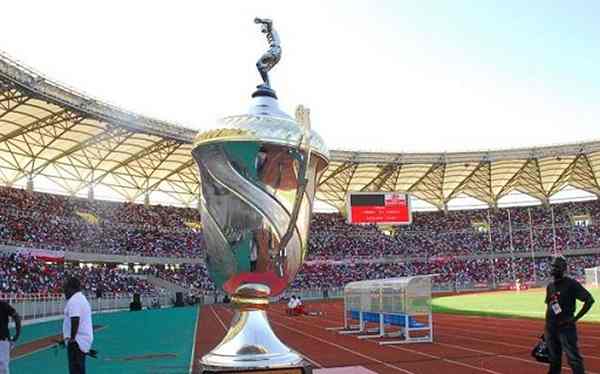
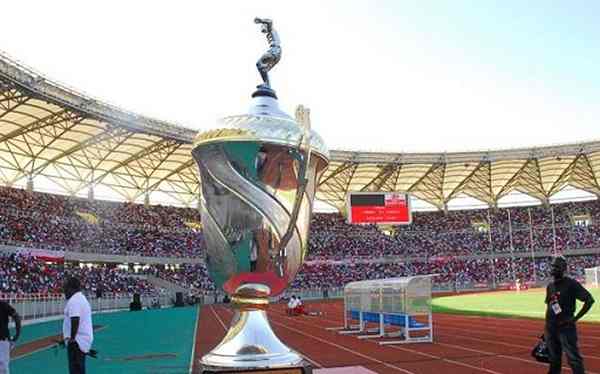
The Kick off time is scheduled for exactly 8:05am and expected to end at 4:30pm from which the winner will obtain a trophy and proceed to travel to UK – Anfield.

The teams

Group A: Uganda Baati Ltd., Baylor College of Medicine, Sanlam Insurance, Bukedde and Ntake Bakery.

Group B: Toyota Uganda (B), Uganda Batteries Ltd., Sheraton Kampala Hotel and NTV Uganda.

Group C: Malaria Consortium, NWSC, Roofing Rolling Mills Ltd. and Civil Aviation Authority Team A.

Group D: Harris International, Royalway Media, Seroma Limited and National Social Security Fund (NSSF).

Group E: Sports Outreach Ministry Uganda, Hardware World Ltd., Monitor Publications and Airtel Uganda.

Group F: Mengo Hospital, Toyota Uganda Team A, MTN Uganda and Roofings Limited.

Group G: Jessa Dairy Farm, Century Bottling Company Team B, Jubilee Insurance and Uganda Breweries Ltd.

Group H: New Vision, Letshego Uganda Limited, City Oil Uganda Limited, Century Bottling Company (A) and Civil Aviation Authority Team B.

Stories Continues after ad

Ugandan legislators urged to streamline e-passport use

The head of Uganda’s Mission in South Africa, Hon. Barbara Nekesa, with Ugandan MPs in Pretoria.

The head of Uganda’s Mission in South Africa, Hon. Barbara Nekesa, has appealed to Ugandan MPs to push government to streamline the move towards the use of electronic passports in order for the Mission to remain relevant to Ugandans living in the country.

Nekesa said that following the decision to introduce the e-passports, the Ministry of Internal Affairs wrote and instructed the missions to stop issuing and return the old passports to Kampala.

“Now we cannot issue any passports because we do not have passports; we refer people, who want new passports back home,” she said.

The High Commissioner was meeting a delegation of visiting parliamentarians from the committees of Legal and Parliamentary Affairs and Government Assurances, who paid a courtesy call on her at the High Commission in Pretoria, on Wednesday 15 May 2019.
The meeting was attended by the Deputy Head of Mission, Mr. Kintu Nyago and the Minister Counsel, Mr. Julius Kibula.

The MPs are in South Africa on a benchmarking visit to the Pan African Parliament in Midrand.
Nekesa said that there was need for an urgent meeting to be called by the Ministry of Internal Affairs and the missions permitted to issue passports to agree on how to roll out the issuance of the e-passports by those missions. She also said that the consular officer, who issues passports, would also require training before embarking on the process.

“We need the Ministry of Internal Affairs to come to our rescue such that we are helpful to our people. We have several Ugandans working here, and need to renew their passports,” she said.
Nekesa also said that they had contacted the Ministry of Internal Affairs advising to reduce the time taken to respond to online visa applicants and to make provision for online group visa applications to ease the application process.

She appealed for more funding, which she said has not increased despite the mission having been upgraded to a higher status with more staff.

MPs raised concern that Ugandans intending to travel to South Africa were finding it difficult to secure visas to the country and appealed to the Uganda Mission in South Africa to resolve the issue. They quoted recent media reports that showed that Ugandans, who wanted to take part in Africa’s Travel Indaba held in Durban, failed to obtain required visas in time.

“Ugandans are delayed when they apply for South African visas; can you raise it with the government here. It’s becoming increasingly difficult to secure visas to this country,” said Hon. Alex Byarugaba.

Stories Continues after ad

Mourinho explains why Man United have struggled this season

Jose Mourinho

Jose Mourinho says Manchester United’s problems are down to “the players, organisation and ambition” and also denied Paul Pogba was responsible for his dismissal.

Mourinho was sacked as United manager in December after overseeing the club’s worst start to a campaign in 28 years.

Fractures in his relationship with Pogba had begun to emerge in September, with the France World Cup winner stripped of the vice-captaincy before an animated disagreement between the pair at the club’s training ground.

But when asked if he was a victim of Pogba, Mourinho told French newspaper L’Equipe: “No, no. The problems are there, you can imagine that the problems are the players, the organisation and the ambition.

“I will only say that I cannot say ‘yes’ when you ask if Paul was the only one responsible.”

Ole Gunnar Solskjaer was appointed as Mourinho’s successor on a three-year deal in March after winning 14 of his 19 matches as interim manager, helping to propel United back into the race for a top-four finish.

But a dismal run towards the end of the campaign eventually saw United drop out of contention and finish in sixth, five points off fourth-place Tottenham.

Mourinho added: “On Manchester United, I only want to say two things. One is that time has spoken. Two, it’s the problems are still there.” According to Sky Sports News.

Mourinho had wanted to sign at least one new centre-back last summer, with Harry Maguire, Jerome Boateng, Toby Alderweireld and Diego Godin among his targets.

But United did not sign a new centre-back, with Mourinho made to settle for midfielder Fred, defender Diogo Dalot and back-up goalkeeper Lee Grant as his summer recruitment.

Stories Continues after ad

Fufa Big League play-offs: Four clubs fight for remaining UPL slot

The 2018/19 Fufa Big League playoffs for the last slot of joining the 2019/20 StarTimes Uganda Premier League get underway on Thursday 16th May at the StarTimes Stadium, Lugogo.

UPDF FC will take on Kansai Plascon while Kyetume FC will face Dove FC in the quest for who gets the chance of joining Wakiso Giants and Proline.

The final will be played on 18th May 2019 to determine the third team that makes it to the top flight this season.

The FUFA Big League was started in 2009 as the second tier of Ugandan football and three clubs are promoted each season to the Uganda Premier League.

Proline were promoted as the Rwenzori group winners while Wakiso Giants were promoted as the Elgon group leader.

The two will face off on Saturday at the StarTimes stadium to find out the overall winner of the Fufa Big League after the promotional play-off final.

The other four, those that finished second and third in both groups are engaged in a promotional play off.

Kyetume and UPDF finished second and third from the Elgon Group) while Kansai Plascon and Dove FC finished second and third from the Rwenzori group respectively.

Ndejje University FC, Nyamitobora FC and Paidha Black Angels SC are the three clubs that were relegated from the 2018/19 Uganda Premier League and will play in the Fufa Big League next season.

Thursday, 16th May 2019

Promotional play-offs

At StarTimes Stadium, Lugogo

Kyetume Fc vs Dove FC – 1pm

UPDF vs Kansai Plascon – 4pm

Saturday, 18 May 2019

Promotional play-off final – 2pm

Fufa Big League final

Wakiso Giants vs Proline – 4pm

Stories Continues after ad

Parliament to buy 5GB bundles for each MP monthly

As Ugandans struggle to pay over the top tax (OTT), Parliament has hired MTN Uganda to provide 5GB monthly bundles for each Member of Parliament (MP).

As part of widening the country’s tax base this financial year, government introduced social media and mobile money tax where Social media platforms such as WhatsApp, Twitter, Facebook, You Tube, Viber and Skype among others subjected to a daily levy of Shs200.

Since then, the tax sparked off protests with various activists including MPs, calling on government to scrap it, however their plea hit a snug.

 After the passing the law, State Minister of Finance, Planning and Economic Development, David Bahati, said, “ I don’t think Shs70, 000 a year for Social Media Tax is unreasonable.”

Obongi County MP, Kaps Fungaroo, called for Parliament to intervene after they failed to access social media platforms on their iPads due to rigidities from the service provider.

Upon that, Parliamentary Commission recently embarked on a bidding process to identify the best service provider to provide mobile data and OTT tax for mobile computing devices for MPs.

According to bide notice that was released on May 2, 2019, MTN outcompeted Airtel Uganda Limited and Africel Uganda Limited. The notice shows that MTN will provide 5GB monthly bundle at a cost of Shs30, 000 and Shs6000 OTT tax for every legislator’s internet devices.

Therefore a total of Shs 16,560,000 will be spent on mobile data and OTT tax payment for the 460 MPs for the 460 MPs iPad that were procured at a cost of US$563,000.

Stories Continues after ad

2019 Afcon ticket prices slashed

The African Cup of Nations’ organising committee on Wednesday reduced ticket prices after a backlash from Egyptian football fans last month over exorbitant costs.

Tickets for the Egyptian national team’s matches in the summer tournament, which will take place in the country, were initially priced at 200 Egyptian pounds (about Ugx 44,000) for the cheapest admission and graduated up to 600 pounds (About Ugx 132,000).

“The committee… has decided to reduce the price of general admission tickets for Egypt’s matches in the first round for the competition from 200 to 150 pounds (about Ugx 33,000),” it said on Twitter.

The reductions took place “to ease the burden off of Egyptian soccer fans”.

The average monthly salary in the North African country hovers around 200 euros, according to official figures.

Living costs have soared since Egypt devalued their currency and slashed subsidies in order to receive a $12 billion bailout from the International Monetary Fund in 2016.

Egypt will host the competition for the fifth time this June and July, with 24 teams participating for the first time in an expanded format.

Other games not involving the host nation are still set at a slightly lower price.

Local supporters were allowed to attend domestic league games regularly for the first time in three years only last season.

Heavy restrictions had been imposed due to repeated violent incidents between fans and security.

The tournament will take place in Egypt between June 21 to July 19 and will be played at six different stadiums, the Cairo International, 30 June, El-Salam, Alexandria, Suez, and Ismailia.

The ticket prices will go as follow:

For Egypt national team games: EGP 150 for category 3, EGP 400 for category 2, EGP 600 for category 1, EGP 500 for upper category 1, and finally EGP 2500 for the presidential box.

As for the other games: EGP 100 (about Ugx 22,000) for category 3, EGP 300 (about Ugx 66,000) for category 2 and EGP 500 (about Ugx 110,000) for category 1.

Stories Continues after ad