Stanbic Bank
Stanbic Bank
16.8 C
Kampala
Stanbic Bank
Stanbic Bank
Home Blog Page 1276

The 2018/19 Premier League in numbers

Manchester City

The 2018/19 English Premier League came to an end as Manchester City held off Liverpool to win the Premier League title on the final day.

Here, Press Association Sport takes a detailed statistical look back at the season…

98 – Points for champions City. It is the second highest points in the league. 100 points for Manchester City still the highest ever in the league.

14 – City’s winning run to close the season. They will begin next season just four short of their own record, set between August and December 2017.

97- Runners-up Liverpool finished with the Premier League’s highest points total without winning the title, beating Manchester United’s record of 89 set when they finished behind City on goal difference in 2011-12. It was also the third highest total in Premier League history, behind City this season and last.

1 – The winning margin was a solitary point for the fifth time in Premier League history, in addition to City’s goal difference success.

3 – Three players have shared the Golden Boot award after Arsenal’s Pierre-Emerick Aubameyang equalled Liverpool duo Mohamed Salah and Sadio Mane as the top scorers in the 2018/19 Premier League, on 22 goals each. It is the first time three players have shared the award since Jimmy Floyd Hasselbaink, Michael Owen and Dwight Yorke in 1998/99.

15- Chelsea’s Eden Hazard led the league in assists with 15.

Trent Alexander-Arnold with 12 assists shared third place on that list as Liverpool’s first-choice full-backs both reached double figures, with Andy Robertson on 11.

16 – Huddersfield were relegated with the third-lowest points tally in Premier League history with 16.

1,072 – There were a record number of goals for a 38-game Premier League season.

11 – City’s Sergio Aguero matched Alan Shearer’s record for Premier League hat-tricks, scoring three this season against Huddersfield, Arsenal and Chelsea.

100 – Mike Dean became the first referee to show a century of red cards in the Premier League.

6- There were only six in-season managerial changes – Fulham (twice), Southampton, Manchester United, Huddersfield and Leicester. That matched the 2009-10 season for the lowest total since the five in 2005-06.

Stories Continues after ad
Denis Onyango wins 6th league title in South Africa

Onyango with the absa PSL trophy

Uganda Cranes captain Denis Onyango won his sixth league title in South on the final PSL day as he helped his club Mamelodi Sundowns retain the title.

Onyango was voted Man of the Match for his heroics in their 1-0 away win over Free State Stars.

Phakamani Mahlambi scored the only goal that separated the two sides at the death of half time.

The result ensured the Brazilians won their record ninth Premier Soccer League title and the fourth under the era of current coach, Pitso Mosimane.

They have won the South African league in 1998, 1999,2000,2006,2007, 2014, 2016, 2018 and now 2019.

Onyango has now on the South African league six times. In 2007/8, 2008/9, 2009/10 at SuperSport United and 2013/14, 2015/16 and 2018/19 at Mamelodi Sundowns.

Orlando Pirates coached by former Cranes coach Micho Sredjovic cane second, finishing on 57 points, 2 below the champions Sundowns.

Elsewhere, Allan Kateregga’s Maritzburg United F.C secured a relegation playoff after drawing 1-1 against Baroka FC and still have a chance to play in South Africa’s top flight league next season.

Stories Continues after ad
Uganda’s road to genocide

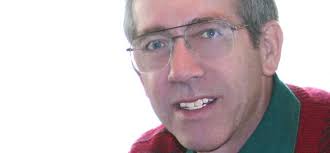
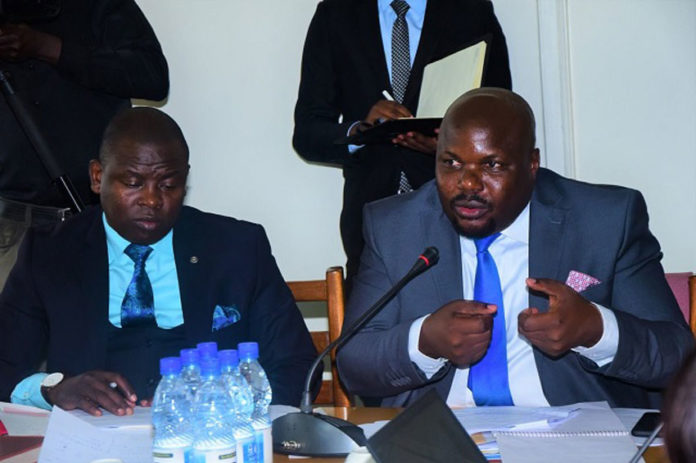
Mr. Kaboggoza

By Kaboggoza Kibudde

I recently watched a YouTube clip of Andrew Mwenda commenting on an opinion poll about Ugandan politics. First, Mwenda agreed with the poll results, which placed Museveni’s support under 40 per cent. He argued that Museveni merely wins elections because of low voter turnout. He then praised Bobi-Wine’s strategy, specifically, his “Get your National ID” campaign, which aims to increase voter turnout. Despite this, numerous Bobi-Wine supporters insulted, dehumanized, and threatened Mwenda with exile or death.

Mwenda is not alone. Political discourse in Uganda is becoming more uncivil, yet, a society of people with differing views only remains stable when we keep our worst tendencies at bay. In neighboring Rwanda, ordinary Hutus turned on their Tutsi brothers and sisters and slaughtered them, culminating in close to one million deaths within 100 days. However, like in other genocides, most perpetrators were not inherently evil people; they were everyday citizens just like ordinary Ugandans. So how did they get there?

Genocides occur gradually in four phases, which often coincide albeit in varying degrees. (1) Dichotomy: society splits along genetic (e.g., race) or ideological lines (e.g., religion or politics) into two groups: an in-group (us) and an out-group (them). (2) Vilification: the in-group spuriously blames the out-group for the ‘terrible state of society.’ On top of that, the former characterizes the out-group as inferior in some fundamental aspect. After a while, the in-group starts to view and treat the out-group as less human, in many cases, referring to the latter as some obnoxious animal (e.g., cockroaches, rats, snakes). If unchecked, this public expression of disdain towards the out-group becomes acceptable in mainstream culture. (3) Organization: the in-group is organized around a cause of ‘us’ against ‘them.’ (4) Extermination: finally, the in-group eliminates the out-group to solve the problem once and for all. What is frightening about this process is that it gets to a point where it proceeds on its own, and not even the heads of the in-group can stop it.

Previously, Uganda was hard to split into two groups due to her numerous tribes intertwined with several populous religions. However, a dichotomy is increasingly emerging along political lines. Extremists in the opposition have portrayed the NRM camp as the cause of Uganda’s ‘plight’ and the ‘enemy of the people.’ On social media, declaring support for the NRM is met with insults and ridicule forcing many NRM supporters to live closeted lives.

Dehumanization of NRM supporters is also ongoing. Radical elements in the opposition continue to characterize NRM supporters/sympathizers as inherently inferior; if they are not blind or heartless, they are stupid, or they were bribed (therefore, morally inferior). They summarily dismiss arguments raised by NRM-leaning persons with phrases such as “You are saying that because they paid you.” In so doing, the opposition unwittingly rallies people to hate the other group primarily because of their views. At the same time, the opposition believes that they are more moral, intelligent, and patriotic than their NRM counterparts, albeit without empirical evidence.

What is more worrying, however, is the increased tolerance towards the public expression of hatred towards NRM supporters, on and off social media. For example, one can now deny NRM MPs a right to speak at social functions without repercussion. Similarly, opposition-leaning supporters hurled chairs and urine-filled glass bottles at Bebe-Cool, an NRM-leaning artist, subsequently forcing him off the stage. Alarmingly, few people condemn this incivility.

If rational people (who constitute the majority on both sides of the political divide) sit back and allow this toxic mindset to take root in Uganda, extreme acts of evil will ensue as they did in Germany and Rwanda. The government must step in and enforce civility both in social and political spheres. One way of achieving this in political discourse is through the regulation of mass media (Subsequent papers will discuss more approaches).

In Uganda, media outlets are free to champion specific religions or ethnicities if they declare their biases. If an outlet identifies as neutral, it cannot advance a specific religious or ethnic sentiment as the incontrovertible truth. UCC should approach political discourse in the same way. Media outlets should declare their biases and be allowed to promote their preferred political agenda freely. Outlets that identify as neutral should desist from presenting specific political views as unequivocal. In other words, they should separate facts from opinion. The current propagation of specific political propaganda under the guise of neutrality is dangerous and must stop.

In conclusion, we should remain civil during disagreements, which are inevitable in society because millions of people cannot agree on everything. Secondly, moderates should stand-up to extremism because a small group of extremists can plunge society into chaos. Finally, UCC should enforce civility and enhance objectivity in mass-communication without infringing on freedom of the press.

The writer is a Clinical Pharmacologist and Social Commentator

Stories Continues after ad
Embrace modern production methods to tackle challenges of household income-Museveni to Omoro people

President Museveni being welcomed by Deputy Speaker Jacob Oulanyah and Ms Lamwaka.

Mr. Museveni urged the people of Omoro district to embrace modern production methods in order to tackle the challenge of household income so as to ensure that poverty is driven out of their homes.

Museveni made the remarks during victory celebrations of Catherine Lamwaka the Woman Member of Parliament who won elections after the creation of Omoro district from Gulu. The celebrations took place yesterday at Opit Primary School grounds in Opit Town Council.

During the celebrations, the Museveni handed over dummy cheques worth Shs1.6 billion to six Sub-Counties and one Municipality in support of the National Uganda Social Action Fund (NUSAF) development programmes in Omoro district. He also pledged Shs30 million to the Boda-boda SACCO.

Museveni assured them that all the schools that had been destroyed by a storm will be re-roofed and that the district hospital facility will be granted to the area. While assuring the residents that the road to Moroto is programmed for construction, he used the occasion to hit at the opposition leaders in the district for falsifying facts and for deliberately sidelining the truth.

He commended them for choosing good leaders like Catherine Lamwaka who support and steer government development programmes, “when you vote wrong leaders, you get wrong results,” he added.

Deputy Speaker of Parliament, Jacob Oulanyah who is also the Omoro legislator observed that it is God who worked through the Museveni for Omoro to achieve a district status. “This reciprocates the fruits of the people in this region who started supporting you politically, President Museveni, long time ago,” he said.

MP Catherine Lamwaka attributed her victory to the support that she got from Mr Museveni when he campaigned for her at two public rallies; one in Omoro County and another in Tochi County.

The celebrations were preceded by an inter-denominational service, led by the Rev. John Baptist Odama, Archbishop of Gulu Archdiocese, who emphasized forgiveness, reconciliation and unity of Ugandans. He condemned corruption and human trafficking.

Archbishop Odama commended MP Lamwaka for her dedication to the service of her constituents and further urged her to encourage them to relentlessly work for peace, reconciliation and unity.

Earlier, President Museveni visited the site where the Shs1.6 billion main administrative block for Omoro District, that is being built. The project is expected to be complete early next year.

Stories Continues after ad

Teachers’ wage bill to hit Shs21.7b next financial year

Minister of Education and Sports Janet Kataha Museveni

Salaried for Primary School teachers in Uganda have increased by Shs239.226 billion from Shs779.450 billion in Shs.702 billion in financial 2019/20, according to the latest report released by the Ministry of Education and Sports. The release of the figures above is part of the on-going NRM Manifesto Week 2016-21, where government agencies are showcasing their achievements, challenges and future plans.

According to the report, there has been no salary enhancement for primary school teachers in the last three years because the increment prior to financial year 2016/17 put them above the pay targets in the pay policy approved by Cabinet.

Currently, the entry monthly salary for a Primary School Head teacher is Shs588, 359 whereas a Grade-III teacher receives Shs469, 355 per month. “Before the enhancement, the average salary for a primary school teacher was Shs 280, 000,” reads part of the report.

According to the report, the ministry recruited a total of 4,520 teachers within the last 3 years. “We have also advertised for an additional 3,610 positions of Secondary School teachers of which 1,945 are for Sciences and 1,665 for Arts,” the report further says.

The financing of the Education and Sports Sector increased by Shs504.65 billion in financial year 2017/18 compared with 2016/17, the report says.

The report says that at the end of financial year 2017/18, using Schools Facility Grant (SFG), government constructed 256 new classrooms in 45 districts while an additional 92 classrooms in 16 districts were renovated.

In the report the ministry says it has expanded 145 primary schools that had less than three permanent classrooms by providing an additional 933 classrooms using the Global Partnership for Education (GPE) grant to the government of Uganda. Of these schools, 138 have been completed and await furniture.

Meanwhile the report says the review of the Lower Secondary Curriculum is complete and Shs 29 billion has been provided in the financial year 2019/20 to fund the roll-out activities for the first year.

Of significance is that the subject menu has been reduced from 44 subjects to 20; content made lighter, and obsolete content removed. “It integrates approaches that will increase learners’ motivation to pursue careers in Science, Technology, Engineering, and Mathematics (STEM). It introduces project-based and problem-based learning so that learners become oriented towards a culture of problem-solving and reasoning,” the report says.

Further, the Curriculum seeks to promote entrepreneurship so that our young people can become engaged in production and not just job-seeking. It is founded on competence-based learning to prepare the learner for the 21st Century world-of-work, the report says.

Government has projected to increase financing of the Sector in financial year 2019/20 by Shs1.135 Trillion to Shs3.286 Trillion compared with the allocation of Shs2.15 Trillion to the sector in 2016/17.

Stories Continues after ad

Court Martial finds Abdallah Kitatta, bodyguard guilty as it acquits others

Kitata escorted by military Police at court martial

The patron for Boda-Boda 2010 patron Abdallah Kitatta and his bodyguard Ngobi Sowali have been found guilty of two counts of unlawful possession of firearms contrary to the firearms act and have been convicted

Appearing before general Court martial, chaired by Lt Gen Andrew Guti, Kitatta and his body guard Sowali Ngobi were found guilty and their co- accused were acquitted of all charges that were leveled against them.

“Court finds Amon Twinomujuni, Joel Kibirige, Matia Ssenfuka, Hassan Ssebata and Johnson Kayondo, Hassan Ssengoba, John Ssebandeke, Hussein Mugema, Fred Bwanika and Ibrahim Sekajja innocent of all charges,” said Gen Guti.

According to court chairmen, their conviction is based on information obtained from 15 witnesses against Kitatta and other suspects.

The witnesses included; Sargent Allan Matsiko, one of Kitatta’s bodyguards, Private Kenneth Okello who was reportedly in charge of the Armory where the said guns were obtained and the Manager of Vine Hotel where Kitatta was allegedly nabbed from.

The two are scheduled to be sentenced later in the day.

The accused were in January 2017, arrested by a joint force of Uganda People’s Defence Forces (UPDF) and Internal Security Organization (ISO) and is currently facing five counts including failure to protect war material and being in unlawful possession of military stores contrary to the UPDF Act.

Stories Continues after ad

MPs’ insatiable appetite for higher salaries and allowances: The inside story reveals itching issues at hand

Chaos in Parliament of Uganda over age limit debate.

The Members of Parliament (MPs) voted increase their salaries by a considerable margin, leading to public outcry specially the legislators receiving condemnation from President Yoweri Museveni, the Church, public servants and the civil society organisations (CSOs) across the country.

Due to the increase, government now needs an extra Shs90 billion for 452 MPs who are set to raise their salaries more than 100 per cent to Shs24 million from Shs11 million.
The increment will raise the Parliament’s annual wage bill on only MPs’ basic salaries by 218 per cent to Shs129b from Shs39 billion.

Parliament wants an additional Shs90b to cater for MPs’ salaries at Shs24m every month.
The projected budget of the Parliamentary Commission for Financial Year 2018/19 is Shs459 billion and Shs86.9 billion will be for salaries of MPs and Parliament staff.

Despite public outcry the MPs reason that their need to increase salaries is intended to meet the cost of fuel whose price they claim has increased. The money, they say will be used to buy more fuel so as they able to tour their constituencies to ascertain development projects there.

But despite that argument, analysts have come in to show the public why the MPs seriously need their salaries increased, apart from the claim of increase in fuel prices at the filling stations around the country. They discuss other reasons as below;

President Museveni’s recent spending spree thorn in MPs flesh

A political analyst this website talked to said that President Yoweri Museveni’s recent spending spree on SACCOs as he moves around the country has awakened the MPs, including his own members of the National Resistance Movement (NRM), which he heads as Chairman. To some MPs it is a thorn in their flesh as he dishes money out yet for them they are redundant despite their urge to run in the next election. “President Museveni is indirectly campaigning for 2021 presidential general election as he dishes out billions of shillings to youth and women groups. MPs have realised this which has pushed them to look for ways of raising funds that can help them also start indirect campaigns. Raising their salaries and allowances is one of the strategies,” he says, adding that the period remaining is too short for MPs to raise enough funds for campaigns even as NRM-leaning MPs get some funds from the party for campaigns.

Alarming debts

A senior journalist who has been reporting from parliament a long time and has interacted with various MPs in their offices, says many have debts that came about as they campaigned to serve in the current term. “Many have bank loans, others acquired it from friends and money sharks who now need to be paid. Some MPs miss plenary because they fear court bailiffs who are looking for them,” he says, adding that raising their salaries therefore comes in handy to solve the debt issue.

Unfulfilled pledgees

A political Science academic from Makerere University opines that the MPs are worried of losing the next elections due to unfulfilled pledges they made to their constituencies. Remember some promised to build water springs, bridges, roads and schools among others. “Due to lack of enough money they have not done anything. MPs now think that by increasing their salaries and allowances, they will spare some portion to implement their promises to the voters who are bitter with them,” he said, adding that some want their salaries increased soon because they fear they might be voted out in the next election.

Best way to continue amassing wealth

Another political scientist from the same institution told this website that most MPs are into real estate building rentals but also running wholesale and supermarkets. According to him they want more money to sink in some of collapsing business, which they think that when revamped, will help them increase their wealth. “You know that some MPs have hotels, farms, schools and hospitals and they want to expand. So raising salaries helps them achieve this objective in the long run,” he said, urging Museveni not to okay their demand of increasing salaries but instead increase salaries of teachers, medical personnel and scientists. He also said more money should be put into agriculture, health, tourism and education sectors.

Raising demands from individual voters

“Have you ever visited your MP at his village home over the weekend?” An analyst asked this reporter, explaining that MPs receive individual voters in their homes and that these voters need help from them. “They want MPs to pay fees for their children, pay medical bills for their children, get jobs for their children, and feed their families. All this is money and for MPs to help, asking for an increase in their salaries is not surprising,” he said.

The increment in the wage bill for MPs will further affect the taxpayer as each MP has already received Shs200 million as part of the car grant from government.
Just last year, the legislators were paid Shs29 million each as facilitation to carry out consultations on the controversial Constitution Amendment Bill that led to the removal of presidential age limits from the constitution to allow President Museveni stand for re-election come 2021 and probably beyond if he so wishes.

Ugandan MPs are the second highest-paid in the East Africa after Kenya, according to 2016 study of salaries for legislators in the region’s five countries. Kenyan legislators earn US$13,740 each month, which amounts to about one and a half times the monthly salary of a Ugandan MP (US$8,715).

An MP in Uganda earns a basic salary of Shs11.18 million, which is taxed. However, they also take home a raft of untaxed allowances, which elevates their total pay package above the Shs20 million-mark.

Attachments area

Stories Continues after ad

Museveni receives credentials of seven new envoys to Uganda

Museveni with some of the envoys.

Seven newly appointed envoys from Ethiopia, the Vatican, Saharawi Republic, Poland, Brazil, Slovakia and Canada have presented their credentials to President Yoweri Museveni during a ceremony at State House, Entebbe.

The separate ceremonies that took place yesterday, were witnessed by State Minister for International Affairs, Henry Okello Oryem.

While receiving the letters of credence of the new Ethiopian Ambassador to Uganda, Ms. Alemtsehay Meseret Gelaw, President Museveni and the envoy discussed issues centering on constructing of a road that will link Uganda to Ethiopia from Moroto through Kotido, Kaabong, parts of North Western Kenya up to Southern Ethiopia.

Mr. Museveni warmly welcomed the Papal Nuncio, Archbishop Luigi Bianco, and congratulated him on his new posting. He commended the good relationship between Uganda and the Vatican. Archbishop Bianco, on his part, wished the people of Uganda continued peace and God’s blessings.

The new Saharawi envoy, Mohammed Bachir Elouali, also presented his letters of credence to the President who welcomed him to Uganda

Later, President Museveni received and welcomed the new Polish Ambassador, Jack Bazanski to Uganda and the two leaders discussed issues of economic development between Poland and Uganda.

Museveni and the new Brazilian envoy, Fernando Estellita Linsde Salvo Coimbra, reviewed matters of development cooperation between Uganda and Brazil; noting that the two countries share a lot in common and have enormous potential to develop their relationship in the sectors of agriculture, education and industry, among others.

The new Slovak Ambassador, Frantisek Dihopolcek, and Museveni discussed, among other areas, energy and Information Communication Technology (ICT).

Museveni asked the envoy to encourage Slovak companies to take advantage of the big markets on the African continent through working on increased investments on the continent.

Later, President Museveni received the credentials of the new Canadian High Commissioner, Lisa Stadelbauer, and congratulated her upon her new assignment in Uganda.

Attachments area

Stories Continues after ad

Five new oil blocks up for grab at Albertine Graben

Eng. Mulonigiving her keynote address at Mombasa.

At least five new blocks have been put for the second licencing round in the Albertine Graben
This announcement was made during the 9th East African Petroleum Conference and Exhibition in Mombasa _Kenya last recently by the energy and mineral development Minister Engineer Irene Muloni

The Minister said they were expecting many potential exploration companies for the blocks given since the current price of crude oil was high and very attractive for investment , adding that the cost of finding oil in Uganda has been very low of less than a dollar per barrel as compared to world average of two dollars per barrel

” I am very pleased to announce that my five new brides are ready ,they are very attractive and easy to find ,invite investors to come and take them up ” said Muloni

She also noted that the investment climate in Uganda was very conducive for investment singing out peace and security , infrastructural development , tax incentives and good human resource made of youthful and educated population

The five blocks are Avivi with area coverage of (1026km2) , Omuka (750km2) , Kasuruban (1285km2), Turaco (637km2) and Ngaji (1230km2) .

In regard to the announcement, the Ministry will issue a request for qualification inviting interested firms to submit application within a duration of six months there after the successful applicants will be issued with bidding documents comprising of modal of production sharing agreement and data sale regulations among others .

The bidding process will take five months and result in the negotiations and signing of production sharing agreement between government and the successful bidders , the licencing round is expected to be concluded with the award of petroleum exploration licenses for successful firms by December 2020.

Eng.Muloni led the Uganda delegation to the 9th East African Petroleum Conference and Exhibition which included Members of Parliament , Ministry Official , the petroleum authority of Uganda , Uganda National Oil Company , Uganda Chambers of Mines and Petroleum , Uganda Wild life Authority and the Media.

Stories Continues after ad

Senior State Attorney finally names tormentor who sexually harassed her, says he frustrated ambition for further studies

Mr. Christopher Gashirabake on the right who is being accused of sexual harassment. On the left is Mr Atoke, the Solicitor General.

The latest interaction with Ms Samantha Mwesigye, a Senior State Attorney who is making headlines in the media because of telling her ordeal of sexual harassment, has finally revealed her tormentor as Christopher Gashirabake, the Director of Legal Affairs in the Ministry of Justice and Constitutional Affairs.

She says t Gashirabake sexually harassed her for over 10 years even though he is the Chairman of the disciplinary committee at the ministry.

Sleeping with Christopher Gashirabake!

She denies sleeping with her Gashirabake as alleged by some of her associates, saying it is the reason why he has sexually harassed her for a decade. “People are trying to make it look like I slept with him and now that it has gone sour I have chosen to speak out,” she says, adding in an audio that she has become a subject of conversation in the public with some people supporting her while others disagreeing with her story.

She says Gashirabake put her into hell with his sexual advances that could latter affect her professional work as well as personal development. She says she has never been in a private space with Gashirabake or even had lunch with him despite his requests.

Pursuing Masters degree

Appointment letter

Ms Mwesigye who has been employed in the ministry since 2007 further reveals that Gashirabake who also worked in the Solicitor General’s office at one time had also gone ahead to frustrate her ambitions of gaining a Masters degree in Executive LLM in Public Procurement Law and Policy.

She had been admitted to the University of Nottingham the course commencing in September 2011.

She says it was the current Solicitor General Francis Atuke who enabled her to do her masters after being frustrated for one and half years, having been approved to get the funds to enable her study. “I got my masters when Mr Atoke was first appointed Solicitor General He found my request pending after having pursued it for one and half years and was being frustrated. I was even put aside for someone who was on probation and didn’t qualify,” she says.

She adds: “He called me and asked why I was sidelined and then approved my masters. It was the decision of the new Solicitor General as he was then who had never seen me before who approved it.”

After listening to Ms Mwesigye’s ordeal Atoke wrote to the university. “We are committed to paying her tuition charged at Seven Thousand Pounds … for the duration of the course. We would further request that you allow her commence the course while we process the payment which shall not be latter than the end of October. The delay is to allow us follow the mandatory procedures attached to spending government money,” -Atoke who was then the Acting Solicitor General said in a letter dated August 29, 2011 to the Postgraduate Admission Office of Nottingham University, UK.

Samantha Mwesigye

The official who she says she studies with his daughters at university also went ahead to frustrate her when she qualified for UNDP-sponsored course on procurement to the extent that she reached the Office of the Prime Minister for intervention.

Tormentor’s name on shortlist of judges

She says she learnt that her tormentor’s appears on a shortlist of judges to be interviewed for posting. In March the Judicial Service Commission advertises for Justice of the Court of Appeal and Judge in the High Court.

Her promotion to Senior State Attorney

In 2015 Ms Mwesigye was offered an appointment on promotion to Senior State Attorney by the Public Service Commission that sent Ms Mwesigye’s appointment letter through the Director Legal Services in the ministry who would in turn congratulate her and append his signature on that appointment letter. She denies she was wrongly promoted.

The letter of promotion was written by Mr Atoke on November 12, 2015 and copied also to Auditor General Audit Department, the Permanent Secretary Ministry of Public Service and the Secretary Public Service Commission under PSC minute No. 1654 of 2015.

Twist of events

Meanwhile, in the twist of events Ms Mwesigye told this website that her tormentor has turned around to say his enemies are using her to tarnish his image. I guess they are the ones who sent him the email using my email account!!!,” she says. “Have forgotten people offering to fund a polygraph either in Kenya or South Africa. If anyone can convince him to take it we shall put this to rest once and for all,” she says.

She says that she complained to various offices, starting with the ministry itself, Solicitor General, the IGG, Office of the President and the Office of the Prime Minister but all those offices failed to come to her rescue.

Understanding sexual harassment is

Experts define sexual Harassment at workplace is a direct or implicit demand or gesture to a worker for any form of sexual favor to get preferential treatment at workplace; or threaten the worker of detrimental treatment on present or future employment status of the worker. It also includes use of uncouth language such as verbal advances, sexist comments and jokes, unwarranted flirting and also extends to sending by text or other media platforms sex laden suggestive pictures, objects or written materials .It may also entails physical contact and unwanted touching and patting.

Need for sexual harassment committee
Experts further say that in an establishment with more than 25 workers the employer should put in place a sexual harassment committee in addition to issuing a policy statement on sexual harassment, which defines sexual harassment and states that the workplace is free of sexual harassment. Employer must take measure to ensure that workers are not subjected to sexual harassment and take appropriate disciplinary measures against the person involved in sexual harassment.

Employment Act prohibits Sexual harassment. The Penal Code has sanctions against perpetrators of sexual harassment. Any person who intends to insult the modesty of any woman or girl, utters any word, makes any sound or gesture or exhibits any object, intending that such word or sound shall be heard, or that such gesture or object shall be seen by such woman or girl, or intrudes upon the privacy of such woman or girl, commits a misdemeanour and is liable to imprisonment for one year.

In addition Employment act (Sexual Harassment) Regulations 2012 prescribes that those who contravene the sexual harassment related provisions commit an offence and are liable, on conviction, to a fine not exceeding six currency points or imprisonment not exceeding three months or both.

Sexual harassment affects ones esteem and productivity at a work place and it is prudent to report to relevant authorities, experts say.

Stories Continues after ad