Stanbic Bank
Stanbic Bank
22.6 C
Kampala
Stanbic Bank
Stanbic Bank
Home Blog Page 1357

It is time to resist General’s Kagame’s aggression-former Rwanda envoy to US

Theogene Rudasingwa

By Theogene Rudasingwa

Despite denials, Rwanda has now closed the border with Uganda and restricted the movement of Rwandans, signaling an escalation that could easily be sparked into a full border conflict. For those who pay only superficial attention to Rwanda-Uganda relations, it may come as a surprise little inconvenience. For General Yoweri Museveni and General Paul Kagame, and the African nations they rule with iron fists, the stakes are much higher and grievances much deeper.

In thinking aloud, I have pondered on three anecdotes that cast some light on the clash of outlooks, personalities and interests between the two generals.

In 2000, General Kagame sought to remove then President of Rwanda, Pasteur Bizimungu, and formally occupy the presidency that he had hitherto controlled from behind. He sent me as an envoy to explain the impending action to General Museveni. When I conveyed the message to General Museveni in the presence of the late James Wapakhabulo and Kale Kayihura, he was opposed to the idea. He asked me, ā€œif not Pasteur Bizimungu which other Hutu do you have to replace him, for you still need them?ā€

Being the loyal cadre of RPF I was at the time, I argued that General Kagame had enough credentials to become the President of Rwanda. When I reported back, General Kagame and the exclusively Tutsi military officers and RPF angrily charged that President Museveni wanted to control Rwanda.

During the Kisangani clashes (1999-2000) in the Democratic Republic of Congo between Rwanda Defence Forces (RDF) and Uganda Peoples Defence Forces (UPDF), President Mkapa of Tanzania tried to mediate between the two generals to find an amicable solution to the conflict. In one encounter, General Museveni explained to President Mkapa that enzigo lies at the heart of the conflict. President Mkapa lightly commented in Kiswahili that whatever it is, ā€œiyi mambo ya enzigoā€ is serious. I have no space to explain to non-Runyakole, non-Kinyarwanda speakers the deep meaning of enzigo or inzigo. Paraphrased, the term simply means that if you kill one of my own, there will be pay-back time.

In a few encounters I had as General Kagame’s envoy to General Museveni during and after the Kisangani crisis, I soon realized that neither had the patience to listen to each other points of view, and both reacted angrily when I (the messenger) delivered the message from the other side.

The three anecdotes by themselves may not mean much. In the context of convoluted life histories of both generals, a patient and engaged observer will note some striking differences and similarities.

Both generals are descended from humble beginnings among minority ethnic groups; came to power by force of arms; have overstayed in power by coercive means and manipulating constitutions and electoral processes; court Western allies (notably United States and United Kingdom) by offering the services of their militaries in the regional war on terror and peacekeeping; have overextended their reach beyond their national boundaries; and above all, they both possess big egos, and predominantly rely on military means to solve political problems.

General Kagame is very different from General Museveni in fundamental ways. There was a time in his early years before, during, and after capture of state power when General Museveni was the intellectual who inspired his followers. Rwandans like the late General Fred Rwigyema, General Paul Kagame, and many others who now dominate state structures in Uganda and Rwanda then found in him the revolutionary and visionary.

General Kagame despises ideology. Once in a while he may make Pan Africanist and nationalist pronouncements, but at every opportunity he has betrayed Rwanda’s and African interests. His maxim is ā€œthe end justifies the means, and I define the endsā€. He is the efficient operational man who hardly inspires, and executes his ambitions through fear and naked brutality. A high school drop-out, not because of lack of intellect but due to indiscipline, he has since channeled his coarse instincts into state control by violent and often criminal means. General Kagame has deep insecurity that he compensates through aggressive behavior and taking big and highly risky bets.

General Kagame came to power by killing the Presidents of Rwanda and Burundi, Juvenal Habyarimana and Cyprian Ntaryamira respectively, thus triggering the genocide that engulfed Tutsi, Hutu , and incalculable human suffering in the Democratic Republic of Congo. He has fought armies of former Zaire and toppled dictator Mobutu; he installed President Laurent Kabila in DRC and later had him assassinated; he has fought armies of Angola, Zimbabwe, and Namibia; he has fought Uganda’s UPDF in DRC; he has quarreled with Tanzania, Burundi, and South Africa; he has thrown temper tantrums at France, and even to his benefactors USA and United Kingdom when they shyly question his assassination of opponents, and absolute closure of political space. General Kagame and the all-Tutsi cast of military officers are proud of this record, and have cultivated an aura of invincibility, extreme arrogance, and a propensity to take ever-increasing and bigger risks.

General Kagame rules through the notorious Directorate of Military Intelligence (DMI) that he personally supervises and which sits at the apex of the entire security establishment and Rwandan society. It is an enterprise that has grown regional, continental and global through a seamless web of businesses, media outlets, financial networks, criminal webs, Diaspora citizen groups, prominent personalities like former President Bill Clinton, former UK Prime Minister Tony Blair, evangelicals like Pastor Rick Warren, shadowy consultants from an array of retired military and intelligence officers from across the world.

DMI is constantly in a state of flux, deploying formally and informally, absorbing and rejecting operatives, co-opting and killing many in its ranks. The whole of Rwandan society stands in awe and fear of DMI because DMI is General Kagame who has been its only constant since 1990.

Uganda is yet to fully grasp the full extent of DMI’s infiltration of Ugandan society. Until and unless it does, its interests will always be in harm’s way.

This is the machinery that General Kagame has deployed in Uganda for a long time, leading to the Kale Kayihura-MTN-border closure saga. From the much I know about General Kagame and Rwanda’s secrets, the closure of the Rwanda-Uganda border is a deliberate escalation to find pretext to execute a plan that exists in Kigali. The plan includes a surprise quick pre-emptive strike, capture of territory deep in Uganda to avoid fighting in Rwanda which lacks depth, creating and linking up with anti-Museveni forces, creating chaos in Uganda, and familiar extreme measures like assassinating prominent political leaders, including General Museveni himself.

The border-closure is also vintage General Kagame, trying to attract attention from his benefactors, to extract some concessions from regional and international stakeholders, and masking internal contradictions within Rwanda.

General Kagame’s allegation that he is fighting General Nyamwasa’s Rwanda National Congress (RNC) and its so-called P5 supported by Uganda, and FDLR (both allegedly supported by Burundi) is an absurdity, like flogging dead horses.

I co-created and led RNC from 2010, and later the P5, until I abandoned them in 2016 due to irreconcilable ideological differences General Kagame knows that RNC, P5, and FDLR do not pose any serious threat to his rule; they all are a lose amalgam of extremist individuals or groups full of militaristic wishful thinking, lacking ideological depth and coherence, with no operational capability even to remove him from power and replace him with another brutal dictatorship like his. General Kagame needs FDLR, RNC, and P5 as scapegoats to justify his aggression as he continues to keep Rwandan citizens as hostages under fear.

What is to be done?

Everything must be done to de-escalate the build-up of tension between the two countries. A war between the two countries, even one of limited objectives, will have unintended consequences of far reaching social, political, economic and military implications. The first victims of such a war may be the generals themselves.

Uganda should prepare but ignore General Kagame’s provocations, and deny him any pretext of starting a conflict that neither country will be able to stop.

Uganda and Rwanda should stop relying on the relationship between General Museveni and General Kagame as the defining element of the relationship between the Ugandan and Rwandan peoples. These nations and their peoples have always been there long before the generals were born, and will be there long after they are gone.

The East African Community is sailing in perilous waters, doomed to failure or useless existence when it is led by people like General Kagame, who serves neither interests of Rwandan citizens nor those of East Africans. The free movement of peoples, goods, and capital must be allowed without hindrance. Perhaps President Magufuli of Tanzania, and President Kenyatta of Kenya should take initiative to bring to the attention of the East African Community the matter of closing the Rwanda-Uganda border. The East African Community may seek the wisdom of elder statesmen like former Presidents Moi, Kibaki, Mwinyi, Mkapa, and Kikwete in de-escalating the Rwanda-Burundi, and Rwanda-Uganda tensions.

General Kagame’s aggressive external behavior is conditioned by his domestic dictatorial policies that deny basic freedoms to the Rwandan people, Ultimately, East Africa should only hope to have sustained peace and prosperity if it supports peaceful and democratic change in Rwanda. That will entail confronting General Kagame’s regional belligerence head-on as an indispensable component.

General Kagame, presiding over landlocked Rwanda, is endangering the lives of Rwandans and East Africans by projecting hostility towards all his East African neighbors of Burundi, Uganda, DRC, and Tanzania.

It is suicidal, foolishness, despair, and dangerous adventurism to cultivate your own encirclement. It is time for Rwandans, Ugandans, and East Africans to unite to prevent another catastrophic war in the Great Lakes region.

It is time to resist General’s Kagame’s aggression, violent schemes, and war-mongering in the interest of peace, security and prosperity for all East Africans.

Stories Continues after ad
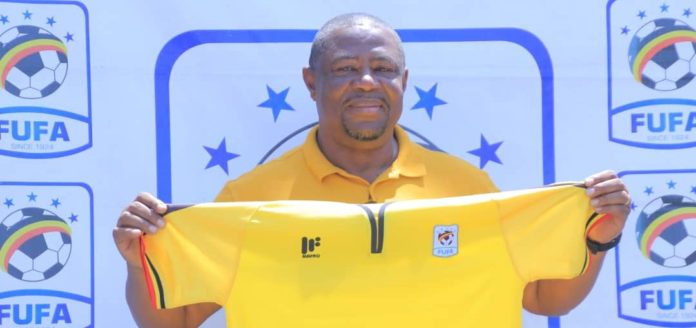
Bobi Wine is emerging leader of opposition – Abed Bwanika

Bobi Wine

The president of People’s Development Party (PDP), Dr Abedi Bwanika, has said Kyandondo East Member of Parliament Robert Kyagulanyi a.k.a is the emerging leader of the opposition in Uganda and that Dr Kizza Besigye should vacate give way for the young legislator.

Bwanika while appearing on NBS Morning Breeze programme on Tuesday said Dr Besigye has the problem of wanting to be a leader all the time.

He said for all the years Besigye has been leading the opposition he has failed to remove President Yoweri Museveni from power. ā€œWhat you have not done, you have not delivered victory to the people of Uganda,ā€ he said of Besigye. He has not delivered the desire of the people of Uganda. That is victory,ā€ he said.

Bwanika said Besigye has been serving as a defacto leader of the opposition in Uganda and that time has come to leave space for others to take over.

Bwanika said he can never work with Besigye because of the latter’s political activities such as leading political demonstrations.

Appearing alongside Bwanika on the same programme, Betty Nambosze, the Mukono Municipality Member of Parliament called for respect between those who support Bobi Wine’s People Power movement and those who support Besigye’s People’s Government.

Responding to Bwanika’s demand that Besigye leaves the political stage, Nambooze said Besigye is still relevant to Uganda’s politics since he still has a considerable number of supporters.

The legislator who subscribes to the Democratic Party (DP), dismissed Bwanika’s negative attitude towards Besigye’s opposition defacto leadership, saying that if Besigye was irrelevant Bwanika wouldn’t be wanting him to leave political leadership.

Meanwhile former Museveni’s press secretary Tamale Mirundi while on NBS Tuesday morning said it was wrong for hooligans to attempt to attack Besigye last weekend. ā€œIf Besigye has lost support, why do you beat him,ā€ he said.

Tamale said government must intervene and bring to book those who wanted to beat Besigye on that day as he leaving CBS radio after radio talk show programme.

Stories Continues after ad
Africa’s coffee exports jump 1.2% in January 2019

Coffee for export

Coffee exports from Africa rose by 1.2 percent to 948,870 bags in January 2019 and by 5.8 per cent to 4 million bags in the first four months of coffee year 2018/19, according to the International Coffee Organisation (ICO).

Uganda is the largest exporter in the region, though its shipments declined by 8.8 per cent to 1.47 million bags in October 2018 to January 2019. Uganda grows both Arabica and Robusta coffee types.

Ethiopia is the region’s largest producer, but second largest exporter due to significant domestic consumption of coffee.

In the first four months of 2018/19, its exports decreased by 8.9 per cent to 1 million bags. However, growth in exports from CĆ“te d’Ivoire and Tanzania have offset these declines.

Shipments from CĆ“te d’Ivoire more than doubled in the first four months of 2018/19, amounting to 502,623 bags.

Exports from Tanzania increased by 55.7 percent to 399,540 bags. Coffee production in Africa is estimated 1.8 per cent higher at 17.8 million bags in 2018/19.

Ethiopia’s production is estimated to remain stable at 7.5 million bags, while Uganda’s production is estimated to rise 2.2 percent to 4.9 million bags. Output from CĆ“te d’Ivoire and Tanzania is estimated at 1.6 million bags and 827,000 bags, respectively.

Meanwhile, in January 2019, world coffee exports amounted to 11.06 million bags, 2.6 per cent higher than in January 2018.

ICO says world shipments in the first four months of coffee year 2018/19 increased by 6.6 per cent to 41.96 million bags, reflecting the ample supply of coffee on the international market.

Stories Continues after ad

Continental free trade embarks on implementation plan

The African Continental Free Trade Area (AfCFTA) has moved closer to its implementation phase with expert’s discussion held in Gabon to review the guidelines for preparing implementations.

The AfCFTA, which was adopted by the African Union in Kigali, saw more than 50 member states signing the Kigali Declaration and the Free Movement Protocol exactly a year ago. Now, the number of countries that ratified the CFTA has reached 19, leaving the AU only with 3 countries to launch it.

The discussion in Gabon reviews current production and trade within a national and regional context, the identification and prioritization of opportunities for value chain development; a thorough analysis of constraints, including no tariff barriers and competitiveness issues faced by businesses and means to address them and the like.

The development of the plans is supported by the African Trade Policy Centre (ATPC) of the United Nations Economic Commission for Africa, UNCTAD and the European Union.

According to African Union’s report on the possibilities the CFTA carries, it says that, ā€œThe AfCFTA will bring together all 55 member states of the African Union covering a market of more than 1.2 billion people, including a growing middle class, and a combined gross domestic product (GDP) of more than USD 3.4 trillion. In terms of numbers of participating countries, the AfCFTA will be the world’s largest free trade area since the formation of the World Trade Organization.ā€

The CFTA is said to have the potential to boost both intra-African trade by 52.3 percent by eliminating import duties, and double this trade if non-tariff barriers are also reduced,

Stories Continues after ad

IGG invites public to verify wealth of BoU officials in bid to curb corruption

HOT SEAT: IGG Irene Mulyagonja

Ugandans will this year be involved in verifying the wealth and assets of government officials of Bank of Uganda (BoU), Ministries of Health and Finance and those of the Office of the Prime Minister (OPM), according to the Inspector General of Government (IGG), Justice Irene Mulyagonja.

Justice Mulyagonja explained that her institution is charged with fighting corruption and that they have been receiving complaints from the public that some public officials under declare their wealth.

She said while speaking yesterday in Kampala during the launch of the 2019 online declaration period, where she encouraged the leaders who are mandated to declare their assets and liabilities to do so in time and beat the March 31 deadline.

ā€œThis financial year, the Inspectorate of Government (IG) is verifying all leaders in Bank of Uganda, Ministry of Finance, OPM and Ministry of Health. Other ministries, institutions, Local Government and agencies will be brought on board later and we shall be involving the public in the exercise,ā€ she said.

She said her office wants to compare and see whether what the officials have declared is what is exactly what the locals in the areas of their respective residences know of what they won.

ā€œI would like, therefore, to call upon all leaders to make their declarations correctly and within the prescribed time to avoid being caught on the wrong side of the law,ā€ Justice Mulyagonja said.

She warned that those who will under declare their assets will be handled by the Leadership Code Tribunal that will soon be put in place.

Speaking at the same launch, the permanent secretary in the Ministry of ICT and National Guidance, Mr Vincent Bagiire, said government agencies are in the process of sharing data that will make it hard for the leaders to under declare their wealth.

ā€œThis is because you may under declare some assets such as land but when you purchase land, the Ministry of Lands captures that transaction, meaning if these government agencies shared data, it would be very hard for the leaders to under declare their wealth,ā€ Mr Bagiire explained.

Last year Mulyagonja said she was investigating the alleged illicit accumulation of the former BoU executive director of supervision Justine Bagyenda but has never released the report to the public.

Stories Continues after ad

Mudavadi challenges Uhuru to rein in on Ruto over corruption

Amani National Congress party leader, Musalia Mudavadi.

NAIROBI, Kenya, Mar 4 – The Amani National Congress party Musalia Mudavadi on Monday challenged President Uhuru Kenyatta to rein in on his Deputy William Ruto over Sh21 billion dam project scandal.

Ruto and a section of MPs from the Rift Valley region, among theM Kapseret MP Oscar Sudi, have openly come out to say that the scandal has been politicised and linked to the 2022 Presidential election.

However, speaking in Mombasa after a meeting with Lamu ANC leaders and residents at Royal Court Hotel, Mudavadi challenge President Uhuru Kenyatta to now act.

ā€œI personally call on the President Uhuru to call their (Ruto and the allied MPs) bluff. These are diversionary tactics, where some people who are used to impunity are beginning to intimidate the President,ā€ said Mudavadi.

Mudavadi questioned why Ruto and the MPs are so jittery about the Sh21 billion dam projects and have now started to threaten the Director of Criminal Investigation George Kinoti.

He said the actions by the MPs to threaten the DCI is a clear indication that they have moved a step further of trying to silence the President on the war on graft.

ā€œThey want to push him into the corner to make him look like a lame duck President, so that that they can continue with their ways of impunity. This is time for the President to strike so that this matter can be brought to an end.ā€

He said the reactions from Ruto and the MPs shows that they are jittery.

ā€œWhy are some people unduly worried. If you start behaving in a jittery manner, you are attracting suspicion unto yourself,ā€ said Mudavadi.

Mudavadi was accompanied by former Lamu Governor Issa Timmay, Sabatia MP Afred Agoi, ANC Secretary General Barack Muluka and ANC national chair Kelvin Lunani.

Stories Continues after ad

We have our own report, we won’t investigate MPs ISO tells IGG

Former COSASE chairman, Abdu Katuntu.

Internal Security Organisation is reported to have declined to a call by Inspector General of Government Irene Mulyagonja to investigate COSASE MPs saying, they have their own report on Bank of Uganda which they will give the consumer of intelligence.

Uganda’s security agencies are ready to launch investigations into transactions between the Bank of Uganda (BoU) and the buyers of some of the assets of the defunct commercial banks as parliament strengthens recommendations of the Committee of Commissions, State Authorities and State Enterprises (COSASE), Eagle Online can say.

According to the source that talked to Eagle Online, among the concerns that the security agencies want to investigate is the Shs478 billion BoU officials claim to have spent on Crane Bank Limited (CBL) but have failed to account for it all.

ā€œYou know very well that MPs have recommended that we take over the process after they make final recommendations and I promise you we shall do our work as expected. No one is above the law as far as government spending money is concerned,ā€ a financial intelligence detective told Eagle Online over the weekend.

It should be remembered that COSASE on December 20, 2018 directed the Auditor General John Muwanga to under the audit on the accountability of all the money injected in CBL after it emerged during the probe that BoU officials did not have all documents relating to the use of the money between October 20, 2016 and January 25, 2017 while CBL was in receivership.

Mr Muwanga among others specifically was to establish whether Shs466 billion injected in as liquidity support was used to settle obligations of bonafide customers that had sufficient account balances prior to transactions.

In his special audit report of Shs478 billion, Muwanga said Shs157.9 billion was recovered from Dfcu and CBL non-performing assets, leaving an outstanding balance of 320.8 billion.

During the COSASE probe, it was established that CBL needed Shs157 billion to remain operating normally much as BoU officials injected in Shs478 billion before selling the bank to its rival DFCU Bank at Shs200 billion, paid in installments.

Commenting on the above transaction, the MPs said BoU ā€˜lent’ Dfcu part of CBL’s loan book worth Shs570 billion. In the original agreement Dfcu Bank was supposed to take over all the loan book but BoU could later on transfer only Shs200 billion of CBL loan book to its rival interest-free yet the interest would be recovered by BoU from CBL shareholders who were not party to the agreement.

The above is part of the controversy that the detectives want to investigate given that BoU did not carry out valuation of the assets and liabilities of CBL but relied on the interim inventory report of December 12, 2016 and due diligence undertaken by DFCU Bank to transfer CBL’s loan book assets of Shs200 billion.

The source said investigators will also look into BoU’s relationship with MMKAs Advocates who acted as transaction advisors as BoU transferred CBL’s assets to Dfcu Bank. The law firm asked for about Shs4.2 billion for this exercise. MPs have recommended that MMKAs be scrapped from the list of BoU service providers.

According to the source, the detectives are also interested in the transfer of loans assets of Greenland Bank, International Credit Bank and Cooperative Bank as documents did not show the assets sold, selling price, period of sale, unsold assets, performing and non-performing loans from the time of closure up to-date.

Important to remember is that the total book value of the three banks totaling to about Shs135 billion was sold at 93 percent discount to Shs8.9 billion. The total value included secured loans worth Shs34.5 billion. BoU failed to give a convincing answers as to why this figure was added together with unsecured loans and others as they sold them to mysterious company Nile River Acquisition Company (NRAC).

The MPs also established that M/s JN Kirkland and Associates who were hired to implement exit strategy for the three banks by BoU ended up as a local agent for NRAC, with rights to run an account in Citi Bank in which all recoveries of the Shs8.9 billion portfolio are deposited.

NRAC was not registered in Uganda as a local or foreign company which is a violation of sections 369 and 370 (1) of the Companies Act. M/s Octavian which registered NRAC in Mauritius was also never registered in Uganda.

Yet the then Director Commercial Banking in BoU Ben Sekabira who was the agent of the liquidator/receiver pf the three defunct banks was also up to August 12, 2009 the agent of NRAC which created conflict of interest. The investigators are interested in Sekabira activities as well of those of former executive director of bank supervision Justine Bagyenda who allowed M/s Octavian to be the only bidders for the assets of the three defunct banks, some of whose former shareholders have since died.

The investigators, according to the source are waiting for MPs to furnish government with the final recommendations and expect to get instructions from Cabinet to investigate BoU top officials involved in the sale of banks.

Stories Continues after ad

FDC to investigate Mengo Besigye attack

Dr. Besigye is seen by many as the true opposition figure to the Kampala establishment.

Forum for Democratic Change (FDC) is set to investigate circumstances that led to the attacking of the former party president Dr. Kiiza Besigye.

Besigye was on Saturday attacked by a group of people averred to be affiliated to people power a political pressure group led by Kyadondo East MP Robert Kyagulanyi. They gathered outside CBS radio station and heckled Dr. Kizza Besigye as he left the studios after a political program.

They were conversely neutralized by Besigye Supporters as they tried to force their way to the retired Colonel. Besigye has since said that there needs to be a political discussion with the opposition parties and pressure groups to quench divisions and attacking each other rather than joining hands to take up leaderships.

Dr Besigye said opposition needs to discuss, if is resolved that he is the obstacle, he will step aside other than being attacked.

Speaking at FDC headquarters, party deputy spokesperson, John Kikonyogo, said the party shall investigate to establish the motives of those people, establish who they are working for, why they came at that specific time and act accordingly.

ā€œOur former party president Emeritus Dr. Kiiza Besigye was attacked by young men whose faces are familiar for some of us who has been in politics for some time. As FDC we condemn that fracas that occurred at Bulange,ā€ he said adding that they believe that political parties, organisations and pressure groups are founded to fight for power as they do and implement their manifestos.

ā€œDr. Besigye as a person, has gone through a lot and is now hardened person. We hard National Resistance Movement (NRM) Secretary General Kasule Lumumba shading crocodile tears calling police to arrest the attackers to appear as if the care about us,ā€ He revealed

MP Kyagulanyi has since vowed to action against the alleged people should they find that some of the people involved genuinely belong to People Power, we are yet to come to a conclusion after fully investigating the incident and we shall take measures to fully address this,ā€ he said.

ā€œWe continue to engage all forces of change, including Comrade Dr. Kizza Besigye on how to take the struggle to the winning phase. We shall not allow anything to distract us from this important mission. Dr. Kizza Besigye has been such a strong pillar for the forces of change- alongside other men and women who have made immense sacrifices for this struggle,ā€ he wrote on social media.

Stories Continues after ad

Court frees MP Zaake after spending 10 days in jail

Francis-Butebi-Zaake

Gulu High Court judge, Justice Stephen Mubiru , has released Mityana Municipality Member of Parliament, Francis Zaake on Shs5 million non-cash bail after spending 10 days in Gulu central prison.

Zaake was on February 12, picked at Clock Tower in Kampala and detained at central Police station (CPS) before being taken to Arua court over chaotic scenes that proceeded the conclusion of municipality by- election campaigns.

He was later produced before Gulu grade on Magistrate, Justice Lubowa Daniel, and charged with escaping from lawful custody however, through his layers led by Counsel Tony Kitara, he applied for bail. His application was granted and released on Shs50 million non cash bail as his sureties were bound to pay shs50 million non-cash.

Moments after being fled, Zaake was re-arrested and driven to Gulu magistrate, Isaac Kintu, who leveled him with charges of treason and malicious damage of president’s vehicle. He was subsequently remanded for three weeks in Gulu central prison.

However, through his layers led by Henry Komakech Kilama, Zaake petitioned High Court seeking for his release from prison.

Appearing before Justice Mubiru , this morning, counsel Kilama told Court that it is a constitutional right for his client to get bail as stipulated in Article 23 (6) of the 1995 Constitution of the Republic of Uganda.

He further told court that Mr Zaake is compliant to the law and has a fixed home in Mityana where he is found and will report to the honorary court whenever is required to.

He presented his wife, Bridget Namirembe, his brother Daniel Mugambwa and Butambala County Member of Parliament for Muhamad Muwanga Kivumbi who were bound to pay Non- cash bond of Shs 10 million and ordered to report to court on 14 March, 2019

The MP is among the group of the 34 suspects who were detained in Gulu police cells and was reportedly dumped at Rubaga hospital by unknown security officers following the deterioration of his health condition. President Museveni reportedly said he had escaped.

They were arrested on Augusts 13, hours after holding their conclusive rallies head of the Arua by-election that was won by Kassiano Wadri. He was nabbed along with Robert Kyagulanyi, Ntungamo Municipality MP Gerald Karuhanga, Jinja East MP Paul Mwiru, Kassiano Wadri, former MP Michael Mabikke, and 28 others grappling with charges of treason and malicious damage of president’s vehicle.

Stories Continues after ad

‘King’ Caesar donates Shs60m to St. Augustine Chapel

Caesar Mulenga (R), flanked by AMDA Chairman Dr Gaston Ampe and his wife and Ruhinda North MP Mr. Thomas Tayebwa hand over the money to Fr. Josephat Ddungu at St. Augustine Chapel, Makerere University On Sunday, March 3.

KAMPALAĀ – King Caesar Augustine Mulenga has on Sunday, March 3 delivers Shs60 million, a pledge he promised for the construction of the Mother Mary Groto at St. Augustine Chapel, Makerere University.

Delivering the cash during Sunday’s 11. a.m mass, King Caesar, a philanthropist and Counsel General of Vietnam in Uganda, urged Christians to always give back to God because he is the “owner of life and therefore all wealth”.

“God has given us the greatest gift of all, which is life, so all the wealth we have belongs to him. When you die, you leave this world with nothing and God redistributes that wealth. It doesn’t matter how much you have,” King Caesar told the congregation at Makerere.

King Caesar pledged the money for the construction of the Groto during Thomas and Anita Tayebwa’s Special Thanksgiving Mass for their 10th Wedding Anniversary on Valentine’s Day, February 14, presided over by the Archbishop of Mbarara Paul K. Bakyenga.
Ā 
King Caesar’s Shs60 million was delivered together withĀ  Mr. Tayebwa’s Shs10 million, making a total of Shs70 million.
Mr Tayebwa, the member of Parliament for Ruhinda North, in Mitooma district and a member of the Archdiocese of Mbarara Development Association (AMDA), had dedicated the proceeds from special thanksgiving mass to the project of building the Groto for which the St. Augustine community at Makerere University had been fundraising for since the year began.

But King Caesar said he realised that that the community’s majority was students who may not be able to fundraise in a short time.
“And yet, the House for the Mother of our Lord, the Mother of our Church is an urgent matter,” he said.

“As an alumni of the St. Augustine Community and Makere University, IĀ  am happy to contribute the full budget such that the Groto is built immediately,” King Caesar said.
King Caesar thanked Hon. Tayebwa and the AMDA Community for the great works they are doing for the church.Ā 

AMDA Chairman Dr. Gaston Ampe thanked King Caesar for being a great benefactor to the Church.
Makerere University Chaplain Fr. Josephat Ddungu thanked King Caesar for a great heart.
“God brings the right people at the right time. We thank you for the generous heart and pray that God blesses you always,” he said

Stories Continues after ad