Stanbic Bank
Stanbic Bank
28.7 C
Kampala
Stanbic Bank
Stanbic Bank
Home Blog Page 1395

Non-American should lead World Bank

Mark Sobel

By Mark Sobel

With the departure of Jim Yong Kim as World Bank president, the administration could promote its self-interest and enhance its global standing by ending the US hold over its leadership. At the same time, America would leverage the selection of a candidate who would pay heed to US views.

Since the creation of the International Monetary Fund and World Bank at the end of the second world war, an American has led the Bank (Kim is Korean-American) and a European the IMF. This convention was logical in the post-war decades when the major advanced economies dominated the global economy. Kim’s departure presents an opportunity to re-evaluate the convention.

It is time for a change

If emerging markets and developing countries wish seriously to challenge the convention, they will need to act swiftly to find a strong, credible and globally respected candidate and unite behind that person. Good candidates abound. They include, for example, Indonesian Finance Minister Sri Mulyani (a former World Bank managing director) or former Nigerian Finance Minister Ngozi Okonjo-Iweala (also a former Bank managing director).

Global economic weight has become more dispersed with the decline in the relative share of advanced economies. And the Bretton Woods institutions have become more universal following the collapse of the Soviet Union and as China’s economy has expanded.

The communique at the end of the April 2009 G20 leaders’ London summit stated, ‘We agree that the heads and senior leadership of the international financial institutions should be appointed through an open, transparent and merit-based selection process.’

To date, though, the duopoly has met no effective challenge. When Dominique Strauss-Kahn was forced to step down as IMF managing director in 2011, France acted quickly to nominate, and secure European backing for, Christine Lagarde, then a (deservedly) well-respected and liked French finance minister. This pre-empted any effective challenge. Months later when the Bank presidency came open, it was all but guaranteed an American would remain at the helm, though two former finance ministers also competed (Okonjo-Iweala from Nigeria and José Antonio Ocampo from Colombia).

The changing global economic landscape makes the convention outdated. There are many excellent potential candidates across the globe, just as there probably are in the US. In the past, the international financial institutions were closely associated with hegemonic US priorities. Yet this is far less the case today.

Choosing a president who is neither American nor European would enhance the global standing of the Fund and Bank. That would helpfully counter the drift toward regionalism, when opaque Chinese official lending is challenging the scale of, and standards for, multilateral finance – undermining debt sustainability in many countries.

Strong and effective leadership of the World Bank, no matter from where it comes, would serve US and European interests. The Bank presidency in US hands has at times been a mixed blessing. It was simply assumed that the Bank president represented US interests, even when the US position was not aligned with the Bank’s. In my experience on the IMF board, the ability of board members to work well with management or senior staff generally had little to do with the person’s nationality – and certainly not whether the person was American.

The rest of the world frets about the Donald Trump administration, perceived as hostile to international institutions. The administration knows that other countries will be highly skeptical of any US effort to maintain the Bank presidency. Were the administration to put forward a controversial candidate, it would run the risk of rejection and serious discord. On the other hand, a more mainstream and centrist US candidate might be greeted with suspicion in any case and have difficulties balancing US priorities in the Bank with the rest of the world’s agenda.

Furthermore, if the convention were preserved, Europe might insist on leading the Fund when Lagarde leaves. If, on the other hand, a non-American took over at the Bank, European leadership of the Fund would probably end.

From all points of view, the US could well enhance its self-interests by steering the rest of the world towards an overdue change at the helm of the two Bretton Woods institutions.

Mark Sobel is US Chairman of Official Monetary and Financial Institutions Forum (OMFIF).

Stories Continues after ad

Did Sudhir Ruparelia collapse his own Crane Bank as claimed by BoU?

PETITIONED: Sudhir Ruparelia,

The Bank of Uganda Governor Emmanuel Tumusiime-Mutebile during last year’s Uganda Bankers’ Association Annual Conference at the Kampala Serena Hotel, said they closed Crane Bank Limited (CBL) on account of being ‘massively insolvent’.

He explained: “After the BoU had intervened in Crane Bank and taken it over in October 2016, an inventory of its assets and liabilities was commissioned and carried out by a reputable accounting firm. This inventory found that Crane Bank was massively insolvent, with core capital of negative Shs240 billion, as a result of mismanagement and fraud. The notion that this bank could have been rehabilitated by its owners – the same people who were responsible for its failure – if only the BoU had provided more liquidity support and allowed the owners to remain in control, is not tenable. In reality the BoU had no other options, if it wished to minimise the losses incurred by the bank and protect the interests of its depositors, other than to take over Crane Bank and resolve it.”

The Governor further in his speech emphasized that while it is not possible for regulators to guarantee that no bank will ever fail, because that would require the elimination of risk-taking by banks – which would in turn hinder the very purpose of financial intermediation, Regulators can ensure that bank failures are the exception rather than the norm.

Mutebile’s speech as regards CBL closure seemed to point out that Sudhir Ruparelia, the majority owner and other shareholders intentionally collapsed CBL through own fraud. Ruparelia denies this accusation, the reason he is ready to face BoU in court more so to redeem his buildings handed over to Dfcu Bank and has never paid rent on them despite earning huge profits out of the Acquision of CBL.

Through his Ruparelia Group, Sudhir runs many companies in education, tourism and hospitality, real estate and horticulture. So why would a man with all these profitable enterprises work to bring down his own bank? At the time CBL was taken over by BoU owners say they had not closed the process of looking for creditors to invest in the bank even as BoU at the time said no investors were willing to put their money in CBL.

BoU would then rush to sell CBL to its competitor Dfcu Bank at a giveaway price of Shs200 billion paid in installments yet the central bank claimed to have invested Shs478.8 billion of taxpayers’ money during the statutory management of CBL. That expenditure is questionable given that CBL needed only Shs157 billion to stabilise. Further BoU has failed to account for Shs478 billion as it is not reflected anywhere on CBL accounts. Documentary evidence showing how this money was used is nowhere to be seen, something that has bothered Parliamentary Committee on Commissions, Statutory Authorities and State Enterprises (Cosase) which is about to conclude the probe of BoU over the controversial sale of seven commercial banks between 1993 and 2017 .

Now it appears it is not the mismanagement of CBL by owners but the carelessness of BoU staff that led to a rushed sale of CBL to Dfcu Bank. According to the Auditor General John Muwanga, BoU sold CBL basing on an inventory report done by a private firm PwC and due diligence done by Dfcu Bank. Why BoU failed to do the valuation of CBL assets is a big concern as it goes against the Financial Institutions Act. “In a meeting with the former executive director for bank supervision Justine Bagyenda told Mr. Muwanga on June 13, 2018 that BoU relied on the Inventory report and due diligence undertaken by Dfcu to arrive at the Perchance &Assumption of assets agreement with Dfcu Bank. In other words, BoU sold CBL based on a price set by the buyer Dfcu Bank.

Evidence has come out that the financial challenges of CBL presented BoU staff with an opportune to reap profits by selling it to Dfcu Bank. This is because BoU Staff Retirement Benefits Scheme owns 0.59 percent shares in Dfcu Bank. That is why BoU saw no wrong in selling CBL. Dfcu Bank is majorly owned by Arise BV (58.71 percent). The National Social Security Fund (NSSF) also owns 7.69 percent while CDC of the UK owns 9.97 percent.

Other investors of Dfcu Bank are; Kimberlite Frontier Africa Naster Fund, SSB-Conrad N. Hilton Foundation, Vanderbilt University, Vanderbilt University, Blakeney Management among others, including retail investors.

In other words BoU sold CBL to Dfcu well knowing its workers would benefit from the deal. Having acquired CBL, Dfcu Bank would see its net profits jump to Shs127.6 billion in the year ended 31 December 2017 from Shs46.2 billion registered in 2016. Much of the profits were realised from CBL acquisition.

Additionally BoU used MMAKS Advocates in the transaction of CBL business well knowing they were directors in other commercial banks that it is supposed to regulate. The two scenarios created conflict of interest as established by MPs on Cosase and conceded by Tumusiime-Mutebile.

“We take note of the committee’s concern of conflict of interest with respect to service providers and directors of supervised financial institutions. As previously mentioned, Bank of Uganda will review its policy on conflict of interest and its implementation,” he said in late December, 2018 as the committee wound up business before Christmas holiday break.

“Allow me mention that the staff changes, which were made in February, 2018 were intended to address some of the challenges that we knew but which have now become all too evident in the last few weeks. The interaction process with COSASE so far, has helped to expose some of the challenges to the natural medicine of air and light so that we can address them better. For that, Mr Chairman, we are grateful. Further changes and remedial action will be done in due course in order to restore the Bank’s image,” he added.

The above statement by the governor confirmed that all was not good at BoU. Mutebile sacked Ms Bagyenda in February following the CBL scandal and replaced her immediately. Bagyenda is said to have been at the forefront of transferring CBL to Dfcu Bank without following proper guidelines especially to bring CBL into compliance.

Section 89(5) of the FIA states that the central bank shall exercise statutory management over a financial institution for the minimum time necessary to bring the financial institution into compliance with prudential standards.

In achieving the above function, Mr. Muwanga, the Auditor General quotes Section 90(4) (c) of the FIA 2004 requires the statutory manager to evaluate the capital structure and management of the institution and recommend to the Central Bank any restructuring or re-organization which he or she considers necessary and which, subject to the provisions of any other written law may be implemented by him or her on behalf of the institution.

That BoU spent Shs478 billion as liquidity support as claimed but failed to adhere to the above guideline is an indication that it was not the intention of CBL owners to collapse their own bank especially that they needed Shs157 billion to stabilise but was denied the money and instead BoU senior staff splashed Shs478 billion in the guise of statutory management, yet they can’t account for it.

Stories Continues after ad

MPs quiz Bagyenda, BoU officials over missing bank documents

Embattled former Executive Director in charge of Supervision at Bank of Uganda Justine Bagyenda.

MPs on Parliamentary Committee on Commissions, Statutory Authorities and State Enterprises (Cosase) on Thursday continued to quiz for Bank of Uganda executive director for bank supervision Ms Justine Bagyenda and other officials over missing documents relating to the sale of seven commercial banks.

On Wednesday Ms Bagyenda when asked by the MPs denied she ever took out any documents related to the sale of banks from BoU offices even as CCTV cameras captured her aides carrying bags out of the bank into her vehicle sometime in March 2018. They also captured the trio entering the bank with bags carrying items inside.

Bagyenda said the bags had photos and personal documents related to her private engagements.

The MPs, including Abdu Katuntu who is the Cosase Chairman and MPs Beatrice Anywa, Elijah Okupa were on Thursday perturbed that Bagyenda did not give clear answers to their questions relating to the loss of documents. Bagyenda is said to have passed the BoU gate without being searched by security officers on duty as required by the central bank’s security guidelines.

Two BoU security assistants were charged and remanded to Luzira Prison on charges of neglect of duty. They included Beatrice Kyambadde and Charles Moro for allegedly failing to detect the illegal removal of and return of vital documents from the bank premise.

The two alleged they were intimated by Bagyenda’s body guard Ms Juliet Adikot (bodyguard) and her driver Mr. Job Turyahabwe. The two aides in early December were handed over to the CID after they gave contradicting testimonies to the committee in relation to Ms Bagyenda’s movements on February 10, the day three bags were returned to the central bank.

When asked on Thursday what the contents in the bags were, Ms Adikot told MPs she didn’t know, stating that she didn’t take keen interest in the materials. MP Anywa never liked Ms Adikot’s response.

Katuntu said the MPs are interested in the security matters of BoU because lack of records such as minutes of meetings of bank liquidation, valuation reports of sale banks like Greenland Bank, International Credit Bank and Cooperative Bank and others.

Director of Security at BoU Milton Opio told MPs that Bagyenda should tell where the missing documents are since she evaded security check at the premises. Katuntu has ordered Opio to bring unedited footages of Bagyenda’s movements at BoU to ascertain what really happened.

Bagyenda played an important role in the sale of Global Trust Bank and Crane Bank Limited (CBL) which were bought off by DFCU Bank where BoU staff have 0.59 stake as shareholders.

Stories Continues after ad

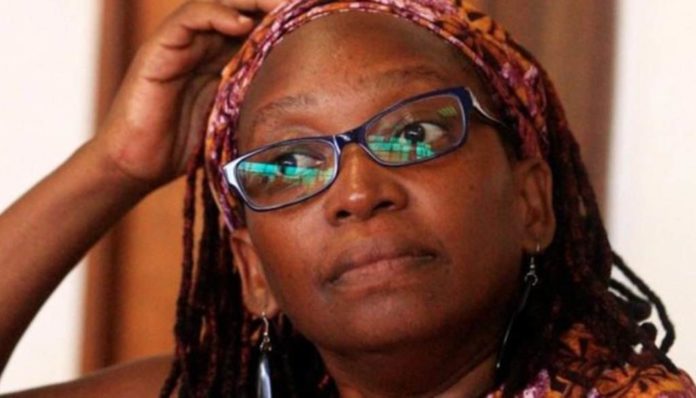
I suffered miscarriage in Luzira Prison -Stella Nyanzi tells court

Dr Stella Nyanzi, File photo.

Former Makerere Institute of Social Research (MISR) fellow and controversial activist Dr Stella Nyanzi on Wednesday told a High court judge that she recently suffered a miscarriage while at Luzira Prison.

Nyanzi, who said she suffers from hyper tension, was appearing before Justice Lydia Mugambe for the hearing of a case she filed against Makerere University for refusal to give her back her job.

Nyanzi told the judge that she had been admitted to the prison’s sick bay and was inept to get in touch with her lawyer Isaac Ssemakadde to swear a supporting affidavit in her case.

Counsel Ssemakadde then asked the judge to adjourn the case to February 19 for hearing.

Nyanzi has been on remand at Luzira prison since November last year on charges of cyber harassment and offensive communication.

In October last year, Makerere University’s appeal tribunal directed that Nyanzi be re-instated and be paid all her salary arrears.

The move would also have seen her promoted to the level of a research fellow with immediate effect after lifting her suspension.

Having failed to honour the orders, Nyanzi sued the university. But the university administrators have since dismissed her, saying that her contract ended.

Buganda Road Chief Magistrate’s Court in November remanded Nyanzi, to Luzira prison on charges in connection to harassing President Museveni when she allegedly insulted his late mother on her Facebook page.
Dr Nyanzi is charged with two counts; cyber harassment and offensive communication.

Stories Continues after ad

Aiteo CAF Awards 2018: Uganda Cranes Captain Onyango Named On FIFPro Team of the Year

Uganda Cranes goalkeeper and Captain Dennis Onyango was named on the FIFPro Africa CAF team of the year.

This was during the Aiteo CAF Awards 2018 held last night in Dakar, Senegal, attended by FIFA President Gianni Infantino, CAF President Ahmad Ahmad, President of Republic of Senegal Macky Sall and FUFA President Eng. Moses Magogo.

Onyango was once again inspirational for Uganda Cranes in the qualification to the 2019 Total Africa Cup of Nations, making it unbeaten with a game to spare and not conceding in as many as five matches.

The other players on the team include; the CAF footballer of the year 2018 Mohammed Salah, Aurier, Benatia, Bailly, Koulibaly, Keita, Partey, Mahad Mahrez, Aubameyang and Sadio Mane.

Onyango was present in Dakar to pick his award. The delegation from Uganda that had Cranes coach Sebastien Desabre, was led by Edgar Watson. FUFA President Eng. Moses Magogo was also in Dakar as CAF Executive Committee Member where he also attended the meeting that confirmed Egypt as this year’s hosts for the AFCON tournament.

Meanwhile, Mauritania was named the CAF national team of the year, coming ahead of Uganda Cranes and Madagascar, and the other nominated teams.

Full Awards:

CAF Male Player of the Year 2018

Mohamed Salah (Egypt and Liverpool)

Women’s Player of the Year 2018

Chrestinah Thembi Kgatlana (South Africa and Houston Dash)

Youth Player of the Year

Achraf Hakimi (Morocco and Borussia Dortmunmd)

Men’s Coach of the Year

Herve Renard (Morocco)

Women’s Coach of the Year

Desiree Ellis (South Africa)

Men’s National Team of the Year

Mauritania

Women’s National Team of the Year

Nigeria

Platinum Award

His Excellency Macky Sall (President of the Republic of Senegal)

Federation President of the Year

Fouzi Lekjaa

Goal of the Year

Chrestinah Thembi Kgatlana (South Africa and Houston Dash)

Attachments area

Stories Continues after ad

Tycoon Bitature sued over failure to pay Shs950m debt

Patrick Bitature

Ugandan tycoon Patrick Bitature recognised by Forbe Magazine as one of the richest in the country has been sued for allegedly failing to pay US$ 256,042 (about Shs953m) for consultancy services he sourced on various projects.

The suit was filed by FINICON Group Ltd, a consultancy firm, on December 21, 2018 in the High Court Commercial Division. The file has been allocated to Justice David Wangutusi for hearing.

In the suit the company claims it entered into an agreement with Bitature to provide professional architectural and engineering consultancy services for his projects. They included construction of a high-end boutique hotel on Summit View Road atop Kololo Hill in Kampala with an investment value of between US$5m and US$6m.

Court documents show that on August 24, 2012, Bitature further entered into an agreement with the firm to provide the similar services for remodelling of an existing residential house on Plot 9, Malcom X Road in Kololo and a project in Ibanda District which involved construction of a hotel and gardens.

The consultancy services included designing the proposed projects, coming up with the architectural drawings, obtaining all the necessary approvals from the urban authorities and supervision of the works.

The firm said it agreed with Bitature he would be pay five per cent of the total construction cost basing on the works or services provided at every stage and the contract obligations were duly executed.

However, the company contends that Mr Bitature paid US$23,538 (about Shs87m) on October 28, 2014, and refused or neglected to pay the balance of US$256,042 (about Shs953.9m).

The company is seeking court to order Mr Bitature to pay the balance with VAT at 18 per cent with interest of 23 per cent from the date of breach of payment until payment in full and payment of general and punitive damages.

Bitature was summoned to defend himself within 15 days from December 21 last year.

Stories Continues after ad

NCHE calls on universities to seek for charter licences

NCHE officials at the press conference at Kyambogo

Acting Executive Director of National Council for Higher Education (NCHE) Dr. Alex Mugisha Kagume has called on private universities to seek for license that is dubbed as charter, for provision quality education services in the country.

A chatter is granted to universities that have demonstrated high quality in staffing, teaching and learning, research output, extension services, infrastructural developments in terms of lecture rooms, libraries and laboratories and good governance among others.

Remarking at NCHE offices in Kyambogo, Dr. Mugisha, said Section 97(3) requires that a provisional license issued to private University shall be valid for at least three years from the date of publication of the gazette by the national council.

NCHE is under section five of the Universities and other tertiary institutions act 2001 mandated to ensure the provision of relevant and sustainable quality higher education through the enforcement of various established standards be observed by licensed higher education institutions.

“Currently Uganda has 54 universities of which nine of them attained charter status, nine public universities and 35 are on provisional licenses. A number of universities holding provisional licenses have not taken the requisite steps to seek for highest license, charter,” he said.

Rev Canon. Dr Mugisha said, they are sometimes forced to close some universities for failure to meet all required standards, teaching unaccredited course and bleaching of rules guiding their licenses.

Earlier in the day, the national council engaged leaders from various universities holding provisional license to agree on the road map to ensure that they attain charter status.

“NCHE has and will continue to engage higher education institutions to provide support, guidance and mentor ship. It is incumbent upon them to demonstrate high standards as provided within the law and best practice in addition to remaining relevant to Uganda’s national development plans,” he said.

Some of the closed institutions include Busoga University, Fairland University and stopping Kampala international University (KIU) from teaching unaccredited courses.

Stories Continues after ad

Uganda budget deficit likely to narrow to 6% in next financial year

Karuma dam project

Uganda’s budget deficit may narrow to six percent of gross domestic product (GDP) in the financial year 2019-20, as the country winds up investments in two big hydropower projects, the Finance Ministry has said.

The financing gap in the 12 months through June 2020 may drop from 6.6 per cent of GDP this fiscal year as the government completes the 600MW Karuma and 183MW Isimba hydropower dams, according to the latest National Budget Framework Paper.

The fiscal shortfall is expected to gradually narrow to 2.6 per cent of GDP in financial year 2023/24 on the phased reduction in big public investment projects, according to the pre-budget document.

Uganda sees resources in the coming fiscal year rising to Ush34.3 trillion (US $9.2 billion) from Ush32.7 trillion (US $8.78 billion) in 2018-19, according to the document.

The Government will allocate Shs2.9 trillion (US $778.9 million) for interest payments in the next fiscal year, of which Shs402.4 billion (US $107.9 million) will be for external loans, the ministry said.

Stories Continues after ad

IATA confirms flat cargo demand in November 2018

KLM Cargo plane

The International Air Transport Association (IATA) released data for global air freight markets showing that demand, measured in freight tonne kilometers (FTKs), was flat (0 per cent) in November 2018, compared to the same period the year before. This was the slowest rate of growth recorded since March 2016, following 31 consecutive months of year-on-year increases.

Freight capacity, measured in available freight tonne kilometers (AFTKs), rose by 4.3 per cent year-on-year in November 2018. This was the ninth month in a row that capacity growth outstripped demand.

While international e-commerce continues to grow, overall demand faced significant headwinds: Signs of weakness in global economic activity, contraction in export order books in all major exporting nations, with the exception of the US, shorter supplier delivery times in Asia and Europe and weakened consumer confidence compared to very high levels at the beginning of 2018.

“Normally the fourth quarter is a peak season for air cargo. So essentially flat growth in November is a big disappointment. While our outlook is for 3.7 per cent demand growth in 2019, downside risks are mounting. Trade tensions are cause for great concern. We need governments to focus on enabling growth through trade, not barricading their borders through punitive tariffs,” said Alexandre de Juniac, IATA’s Director General and CEO.

Regional Performance

Three of the six regions reported year-on-year demand growth in November 2018 – North America, Middle East and Latin America. Asia Pacific, Europe and Africa all contracted.

African carriers saw freight demand decrease by 7.8 per cent in November 2018, compared to the same month in 2017. This was the eighth time in nine months that demand contracted. Capacity shrank 7.4 per cent year-on-year. Demand conditions on all key markets to and from Africa remain weak. Seasonally-adjusted international freight volumes are 7 percent lower than their peak in mid-2017, nonetheless, they are still 28 per cent higher than their most recent trough in late-2015.

Asia-Pacific airlines saw demand for air freight shrink by 2.3 per cent in November 2018, compared to the same period in 2017. This was the first time since May 2016 that monthly year-on-year demand declined. Weaker manufacturing conditions for exporters and shorter supplier delivery times particularly in China impacted the demand. Capacity increased by 3.1 per cent.

North American airlines posted the fastest growth of any region for the second consecutive month in November 2018 with an increase in demand of 3.1 per cent compared to the same period a year earlier. Capacity increased by 6.3 per cent. The strength of the US economy and consumer spending have helped support the demand for air cargo over the past year, benefiting US carriers.

European airlines experienced a contraction in freight demand of -0.2 per cent in November 2018 compared to the same period a year earlier. Capacity increased by 3.1 per cent year-on-year. Weaker manufacturing conditions for exporters, and shorter supplier delivery times particularly in Germany, one of Europe’s key export markets, impacted demand.

Middle Eastern airlines’ freight volumes expanded 1.7 per cent in November 2018 compared to the same period a year earlier. Capacity increased by 7.8 per cent over the same period. Seasonally-adjusted international air cargo demand has now trended upwards for the past six months helped by stronger trade to/from Europe and Asia.

Latin American airlines’ freight demand rose 3.1 percent in November 2018 compared to the same period in 2017. Capacity increased by 2.0 per cent. International year-to-date demand recovered into positive territory, increasing 6.3 per cent. The key markets, however, to and from the region are showing signs of weakness, particularly between South America and Europe, which contracted in year-on-year terms in October.

Stories Continues after ad

Business: A disruptive tool to youth unemployment in Africa

Mr. Addae

By Emmanuel Leslie Addae

Facing the skills gap issue, which is also one of the top most reasons for youth unemployment in Africa (about 10 million students who graduate from the 668 universities in Africa each year do not get jobs), We, as a Pan-African Social enterprise have made it our prerogative to accelerate the level of, especially youth employment across Africa by filling in the skills gap.

Having worked extensively with youths in Africa over the years, we have discovered that the general transition from school-to-work is very weak. The educational institutions and the working bodies are both to blame for the lame nature of the transition. Many employers lament about the poor skills of entry level talents; they take in young people and get frustrated in the short run due to lack or inadequate skills on the part of the personnel.

In respect to helping solve this indispensable situation, we have been working tirelessly, not only to patch the hole but also build young generational change pioneers, especially in business, creativity and innovation through well thought-out avenues.

These avenues include innovative training programs that would give these youth the opportunity to acquire soft skills seeing that these are highly valued by employers and have been shown to be correlated with improved outcomes in school, life and work.

The Africa Internship Academy (AIA) (https://www.AfricaInternshipAcademy.com/) is a youth employment accelerator in Ghana that provides work readiness and entrepreneurship programs for secondary and higher education students as well as graduates to gain entrepreneurial and employable skills. We proceed to assign mentors to them and connect them to employers looking for entry-level talents.

AIA’s model which is a Work Integrated Learning Program (WILP) has proven to be a good approach as it gives interns unique opportunities to learn from our experienced faculty while they gain hands-on experience in a diversity of fields and in addition acquire soft skills that groom them to be change agents.

Our Work Integrated Learning Program was recently selected by the Africa Union and NEPAD under the African Skills Portal for Youth Employment and Entrepreneurship (ASPYEE) as a Good Practice tool to enhance youth development and empowerment across the African continent.

AIA’s vision is to reduce the rate of youth unemployment on the continent by grooming young talents as change agents through our work readiness and entrepreneurship programs. This offers incredible lifetime opportunities for future leaders, influencers, and decision-makers from all over Africa to be groomed professionally, network extensively, experience workplace culture, and build lasting positive relationships with the heavy weights in their chosen industries.

At Africa Internship Academy, we inspire Africa’s youth to start their own businesses, and give them the skills to succeed in the global job market.

The writer works with Africa Internship Academy

Stories Continues after ad