Stanbic Bank
Stanbic Bank
24.5 C
Kampala
Stanbic Bank
Stanbic Bank
Home Blog Page 1421

Serie A players to wear Red face Paint to raise awareness of domestic violence

Serie A players to wear red ink

Players in Italy’s top flight league Serie A as well as match officials will turn out in red face-paint this weekend as a way of highlighting awareness of domestic violence in the country.

The likes of Juventus superstar Cristiano Ronaldo, Napoli captain Marek Hamsik and AC Milan stopper Gigi Donnarumma will all don the pitch wearing a red streak across their cheek as their annual campaign comes around once again.

Italian humanitarian organisation WeWorld Onlus teamed up with the players’ association and the Lega Serie A to bring the campaign to the light and so far, and this is the third time players have made the public stance.

The campaign gains plenty of support in Italy and images be accompanied with the hashtag #unrossoallaviolenza meaning ‘a red card to violence’.

To further raise awareness, girls wearing the campaign shirts will walk out onto the pitch before the game, while a banner will be present at each stadium and a campaign video will air on the big screens.

The hope is now that the campaign will continue to build momentum, and help bring such an important message to the public, and it could perhaps be publicity stunt used in other leagues in other countries, and maybe even other sports.

Serie A’s first game after the final international break of the year comes at 2pm on Saturday afternoon, when Roma travel to Udinese. League leaders Juventus play later in the day against SPAL before Inter Milan host Frosinone in the final game of the day.

A further six games will take place on the Sunday with Cagliari’s game at home to Torino being played on Monday night.

Stories Continues after ad

MTN, Orange, launch venture to ease mobile money payment across Africa

Mowali

MTN Group and Orange Group have announced a joint venture, Mowali (mobile wallet interoperability), to enable interoperable payments across the continent. Mowali makes it possible to send money between mobile money accounts issued by any mobile money provider, in real time and at low cost.

Mowali will immediately benefit from the reach of MTN Mobile Money and Orange Money, bringing together over 100 million mobile money accounts and mobile money operations in 22 of sub-Saharan Africa’s 46 markets.

Mowali is ready to enable interoperability between digital financial service providers beyond MTN and Orange operations and markets, to support the existing 338 million mobile money accounts in Africa, the companies said. It is a digital payment infrastructure that connects financial service providers and customers in one network. It functions as an industry utility, open to any mobile money provider in Africa, including banks, money transfer operators and other financial service providers. The objective of Mowali is to increase the usage of mobile money by consumers and merchants.

Mowali enables money to circulate freely between mobile money accounts from any operators in all countries. From the customer’s point of view, this means “I can pay or receive money anywhere from my mobile account regardless of my operator”.

The system is expected to unlock further innovation in the digital financial space within the continent. The GSMA supports the Mowali initiative as interoperability at this scale is a key accelerator for both financial inclusion and mobile money usability across Africa, the industry group said.

Stories Continues after ad

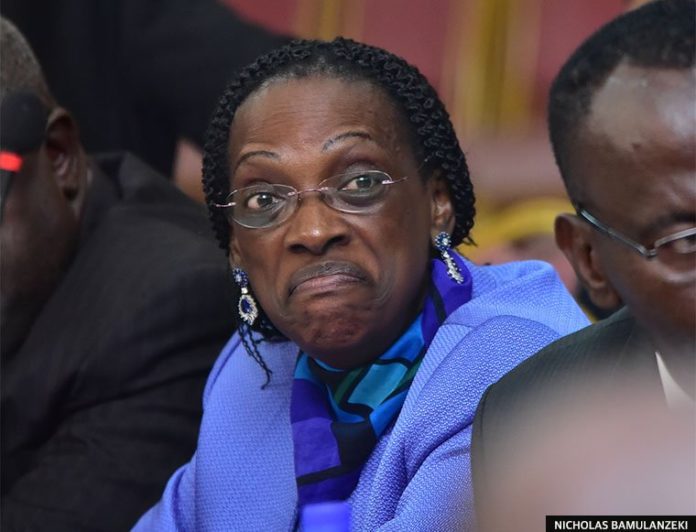
Cosase Probe: Bagyenda faces arrest for sneaking out of country

MPs on Parliament’s Committee on Commissions, Statutory Authorities and State Enterprises (Cosase) have summoned the former Bank of Uganda (BoU) Executive Director of Supervision, Justine Bagyenda to come back and appear before them on Tuesday next without fail, with the Committee Chairman Abdu Katuntu, saying should she fail to appear, a warrant of arrest will be issued against her.

Bagyenda left the country on Thursday November 22 at 10 pm by KLM

Cosase is probing BoU top officials over the controversial liquidation of seven commercial banks and Mrs. Bagyenda was partly involved in the transactions. On Wednesday and Thursday, Bagyenda appeared before the Committee but she did give satisfactory answers to issues raised as regards the liquidation of Greenland Bank by BOU.

Mrs. Bagyenda is out of the country but her letter informing BoU Governor Prof. Emmanuel Tumusiime-Mutebile of her flying out of the country last evening was received Friday morning and she didn’t mention which country she was vising or when she would be coming back. Katuntu also received same the letter Thursday morning.

The MPs were bitter that Mrs. Bagyenda, who also has issues with the Inspector General of Government (IGG) over her illicit accumulation of wealth, left the country without informing them in time, which they said was intentional on her part.

Katuntu decided to adjourn the meeting to Tuesday next week, with summons that the embattled Bagyenda returns to the committee by 10am on that day without fail. Mrs. Bagyenda is believed to have left with documents which is not willing to release.

Katuntu meanwhile has ordered the CID and Uganda police to communicate to Bagyenda on her email, telephone. They are also to look for details of Bagyenda’s travel as declared at the immigrations at Entebbe International Airport.

MP Beatrice Anywa said: “It is disappointing that Bagyenda didn’t have the courtesy to tell the committee that she would be out of the country. When did Bagyenda send in the letter? When is she coming back? It is not indicated in the letter. Has she fled the country? We need to invoke our powers to have her arrested.”

MP Nathan Byandala added: I think Mrs. Bagyenda must be brought to her level. These are people who think they are untouchable. We are not going to accept this,” he said.

Stories Continues after ad

SK Mbuga’s case is complicated, it is him to battle it out – Kuteesa

Minister Sam Kutesa

Minister of Foreign Affairs, Sam Kahamba Kuteesa has revealed that there nothing much that government of Uganda can do to secure the release of socialite Sulaiman Kabangala commonly known as SK Mbuga who is currently detained at Awir Central Jail in Dubai.

Mbuga was early this year arrested in Dubai over allegations of fraud. Together with his wife, Angela Vivienne Chebet, 33, the couple is accused of fraudulent transfer of money amounting to 53m Kronor (about Shs23 billion) from a company account Chebet was running with her 71-year old Swedish boyfriend, Sten Heinsoo.

Appearing before the committee of parliament on foreign affairs, Kuteesa was tasked to explain what Ministry of Foreign Affairs had done to secure the release of Ugandans incarcerated in various detention facilities in different countries and Ugandan a properties broad that are alleged to have been sold to property moguls.

Kuteesa said Mbuga’s case is complicated that it is him to battle it out in the foreign courts of law, adding the government played its role of availing him doctors, visiting him and lawyers are ready to defend him.

He said government through Uganda property management is looking after the 39 commissions and other properties.

The committee that was chaired by Hood Katuramu , queried him to explain the whereabout of the Assistant Commissioner of Police (ACP) Jonathan Baroza who doubled as the former Personal Assistant to the Inspector General of Police (IGP), General Kale Kayihura however, Kutesasaid it police to coordinate with Interpol to bring him home. He is wanted over unknown issues

Stories Continues after ad

Bagyenda absconds parliament, flies out of the country

Embattled former Executive Director in charge of Supervision at Bank of Uganda Justine Bagyenda.

The former Bank of Uganda Executive Director of Supervision, Mrs.Justine Bagyenda has gone out of the country following her appearance before Parliament’s Committee on Commissions, Statutory Authorities and State Enterprises (Cosase) which is probing BoU top officials over the controversial liquidation of seven commercial banks.

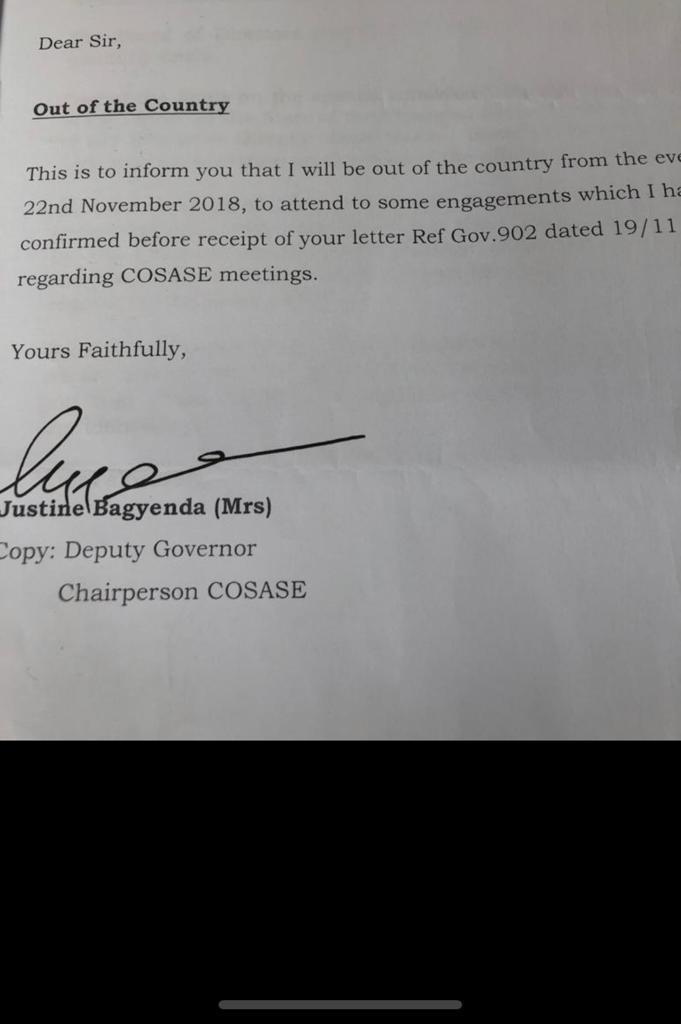
I letter dated November 22, and addressed to the Governor BoU, Prof.Emmanuel Tumusiime-Mutebile and copied to his deputy Dr. Louis Kasekende and Cosase Chairman Abdu Katuntu, Mrs. Bagyenda said she was going to attend to some engagements she says were confirmed before Cosase invited her to give her side of the story in the sale of the banks.

“This is to inform you that I will be out of the country from the evening of 22nd November, 2018, to attend to some engagements which I have confirmed I had confirmed before receipt of your letter…dated 19/11/2018 regarding COSASE meeting,” the letter reads.

Mrs. Bagyenda appeared before Cosase on Wednesday and Thursday as witness in the liquidation of banks but her responses did not help much the MPs. On Wednesday she said she was denied access to documents in BoU while on Thursday she said she sent quarterly reports about the liquidation of Greenland Bank to office of the Governor but he denied he ever received such reports.

Mrs. is said to have hidden some of the required documents.

The Coase report continues today.

Stories Continues after ad

Youth-led startups win Shs140m funding from UNFPA

Each of the eight teams will receive funding, business training, mentorship, and go-to-market technical guidance courtesy of the Up Accelerate WAY (Women, Adolescent and Youth) edition.

Eight youth-run startups in northern Uganda have been selected to benefit from a Shs144 million start-up fund from the United Nations Population Fund (UNFPA) to help them kick-start their businesses aimed at addressing sexual and reproductive health challenges in their communities.

The eight groups from Adjumani, Arua, Yumbe, Moyo, Kitgum, Agago, Amuru and Lamwo districts, were selected following a competition in which they faced a panel of judges.

A total of 250 applications were received after which 22 semi-finalists were shortlisted for three-day workshops conducted in Arua and Kitgum.

Each of the eight teams will receive funding, business training, mentorship, and go-to-market technical guidance courtesy of the Up Accelerate WAY (Women, Adolescent and Youth) edition.

Up Accelerate WAY edition is a health-based social incubator developed by UNFPA in partnership with Outbox, a local business, and innovation incubator, and Reach A Hand Uganda.

The initiative is supported by the Government of Denmark.

The eight teams that were selected are;

Baby Kit: a team using locally made materials to develop infant warmers help mothers in refugee settlements that have given birth to premature or at-risk babies.

The other is IKitty Supplies: a service that will help young men and women living in rural and refugee settlements and host communities in West Nile access affordable family planning services.

The other is Platform 503: a music dance and drama group which creates ‘’you-change skits’’ that will help young women, adolescent girls and young people affected by conflict in refugee and host communities access user friendly information on the causes, prevention and strategies to end gender-based violence through audio/visual context appropriate customer inclusive, educative and entertaining short plays.

Poker Card: A card book that will promote inclusiveness by helping deaf women and youths acquire primary Health care knowledge on HIV/AIDs through graphics, illustrations, and images that can be understood by the deaf.

Fema let’s talk: A solution that provides an interactive edutainment platform (Fe-Ma: let’s talk App) and school clubs that will provide a safe space for adolescent girls and boys aged between 12 to 17 to share, learn and get equipped with knowledge on Gender Based Violence to be agents of behavioral change and promoters of nonviolence.

We help: An interactive voice response system platform that will help women of childbearing age easily access family planning services by describing to them the benefits and likely costs of the chosen contraceptives; using their preferred language also linking them to the nearest health facility.

Mieringa: A mobile Application Service that will help young people between the age of 13 to 17 years affected by conflict and those in refugee host communities access information and consultation services on sexual and reproductive health and rights in both Lugbara and English language using toll free sms and toll free phone calls to help reduce cases of unintended and early pregnancies.

Unity and Prosperity Medical Center: An antenatal care service provider that will help expectant mothers living in refugee communities access safe delivery services within their community to solve the problem of long distances to the nearest health facilities through establishment of mobile antenatal clinics.

Stories Continues after ad

Oulanyah receives Shs10m for nodding disease syndrome

Friends of the Deputy Speaker of parliament, Jacob Oulanyah, have contributed a total of Shs 10 million towards mothers of children affected by the nodding disease syndrome in Omoro district.

Led by the Chairperson National Drug Authority, Dr Medard Bitekyerezo, they handed over their contribution to the Deputy Speaker at his office in Parliament Building on Thursday, 22 November 2018. Dr Bitekyerezo was accompanied by Dr Moses Kamabare, the General Manager National Medical Stores (NMS).

Bitekyerezo, who is also the former MP Mbarara Municipality, said that they were prompted to make the contribution following their visit to Omoro district where they found that the women lacked domestic requirements and other needs to care for the children affected by the disease.

“This money will go into their SACCO and help the women look after themselves and their children. We pray that the children get healed,” said Bitekyerezo.

The funds will go to Odek Sub County in Omoro district. Oulanyah represents Omoro County in Parliament, and has led a campaign to help communities affected by the nodding disease syndrome in northern Uganda. Several groups have provided various items including mattresses, blankets and food supplements.

The contribution follows a visit by the Deputy Speaker to the National Medical Stores (NMS), who in turn visited Omoro and gave food supplements to children suffering from the disease. The supplements containing over 90 nutrients from the Moringa were developed by NMS in conjunction with the Joint Medical Stores (JMS) and Doctors Choice, a non-governmental organization. It was launched in Omoro at the start of November.

Oulanyah was grateful that individuals were coming up to support the communities affected by the disease and appealed to government and partners to come to the rescue of the children in the area.

He said that the women caring for the sick children cannot take part in any activities as they have to attend and care for the sick children.

He said that Doctors Choice would return to Omoro to ascertain the effectiveness of the food supplements after three months.

“We are looking forward to a positive impact [of the supplements]. Our hope is that they can recover,” said Oulanyah adding that “With proper nutrition and medication, the children will recover,”

Stories Continues after ad

Sugar industry regulation: Bill passed but MPs reject zoning proposal

Sugarcane

Parliament has passed the Sugar Bill that seeks to regulate the industry but rejected a government proposal to provide operating zones for mills in the country.

In the Bill, government had proposed a zone of 25 kilometers between mills with no more than one mill in that zone and out-growers in that area only supplying sugarcane to the mill. The proposal was aimed at saving big manufacturers from small ones.

The Sugar Bill, 2016 seeks to provide for the development, regulation and promotion of the sugar industry to ensure that there is a sustainable, diversified, harmonized, modern and competitive sugar sector.

However, instead of the zone proposed by government, the Committee on Trade that considered the Bill, proposed to have a nucleus operating area of 2,000 hectares.

The Chairperson of the Committee, Robert Ssebunya (Nansana Municipality), conversely noted that the committee proposed an amendment that a sugar mill or plant has a nucleus estate instead of a zone of 2,000 hectares from a 25 kilometers radius. “This will be able to address the issue of scarcity of sugarcane, create order and will help mills to operate optimally and break even,” he said.

However, legislators noted that the nucleus would raise a number of issues concerning the availability of land. “You cannot easily get 2,000 hectares today; secondly you will be creating a monopoly in that area because this restricts out-growers to selling sugarcane to only that mill,” said Brenda Asinde (Iganga District).

Jovah Kamateeka (Mitooma District) said the country is running a liberalised economy with no restrictions and that cane growers should be able to trade freely. “A nucleus estate should be preferable but not mandatory otherwise we will be offending the Constitution,” Kamateeka said.

Gaster Mugoya (Bukooli North) added that sugar factories like Madhvani, which started in 1920 with over 320 acres, which was not much land, still grew into successful businesses.
Margaret Baba Diri (Koboko district) said that the decision for a sugar miller to acquire land is dependent on that person and what the locals in the area want to avail them.

“We cannot have government dictating the size of the area where a mill will be established because 2,000 hectares is too much and gives the miller a big expanse to have control over,” she said.
The Minister of State for Trade, Michael Werikhe, said there was need for a mill to have a basis for it to be awarded a license to avoid running out of sugarcane in case out-growers fail to supply enough cane.

Members also voted to double the number of out growers on the Uganda Sugar Board from two to four since they are the majority in the sugar cane growing industry.

“I propose that we have more out-grower representatives than millers on the Board. We should also endeavour to have all regions that grow sugarcane in the country represented so that nobody is left out,” said William Nzoghu (Busongora County North).

Stories Continues after ad

40 million people with diabetes in danger of missing insulin by 2030, study predicts

Insulin

As the number of people living with diabetes continues to surge, the access to insulin needed to meet growing demand will fall short, a new study predicts.

By 2030, 79 million adults with type 2 diabetes are expected to need insulin to manage their condition and if current levels of access remain, only half of them will be able to be able to get an adequate supply, according to a modeling study published Wednesday in the journal Lancet Diabetes and Endocrinology.

Access to the drug must be significantly improved, the researchers warn, particularly in the African, Asian and Oceania regions, which will be most affected.

“These estimates suggest that current levels of insulin access are highly inadequate compared to projected need, particularly in Africa and Asia, and more efforts should be devoted to overcoming this looming health challenge,” said Dr. Sanjay Basu, assistant professor of medicine at Stanford University in the US, who led the research.

“Despite the UN’s commitment to treat non-communicable diseases and ensure universal access to drugs for diabetes, across much of the world insulin is scarce and unnecessarily difficult for patients to access.”

Insulin is needed to treat all people with type 1 diabetes and some people with type 2 diabetes. The latter form of the disease is strongly linked to lifestyle factors such as obesity, poor diet and physical inactivity.

Basu’s team set out to explore how rates of diabetes will change over the next 12 years, namely by how much numbers will rise, in order to predict the amount of insulin that will be needed and whether everyone who needs it will have access.

Using data from the International Diabetes Federation and 14 studies to get a picture of type 2 diabetes numbers across 221 countries, the team modeled the burden of type 2 diabetes from 2018 to 2030.

They predicted that, worldwide, the number of adults with type 2 diabetes will rise from 406 million in 2018 to 511 million in 2030. The United States will have the third highest numbers globally, with 32 million people predicted to be living with the condition in 2030.

“The number of adults with type 2 diabetes is expected to rise over the next 12 years due to aging, urbanization and associated changes in diet and physical activity,” said Basu.

However, not all people with diabetes require insulin. Of that global total of 511 million, 79 million were predicted to be in need of insulin to manage their diabetes — a 20 percent rise in the demand for insulin — and only 38 million are likely to have access to it based on current resources.

Insulin treatment is expensive and the market is currently dominated by three manufacturers, according to the study.

“Unless governments begin initiatives to make insulin available and affordable, then its use is always going to be far from optimal,” said Basu.

Stories Continues after ad

HIV /Aids law cause of stigmatization and victimization of people, review needed

As Uganda prepares to join the rest of the countries to celebrate World AIDS Day, the Uganda Network on Law, Ethics and HIV/AIDS (UGANET) says that the continuous the application of HIV criminal law unjustly is increasingly causing criminalisation, stigmatisation and victimising people who are already with the virus.

In 2014, the Parliament of Uganda enacted HIV and Aids Prevention and Control Act which criminalises people who intentionally infect others with HIV/AIDS. However UGANET has always stood up against some provisions of the law contending that section 18 (e) that authorises a medical practitioner to reveal HIV results to any other person with whom an HIV infected person is in close contact, including sexual partner, infringes on client’s rights to privacy.

Prior to petitioning of Constitutional Court challenging sections of the Act, Dora Musinguzi Kiconco, the Executive Director of UGANET says Section 41 on attempted transmission of HIV and Section 43 on intentional transmission of HIV should be repealed in favour of Section 171 of the Penal Code Act.

UGANET says the two sections above have instilled fear in both women and men and that many of them now fear going for HIV testing due to the fact the law could catch with them, yet HIV testing is an entry point to accessing other HIV prevention services.

According to the spokesperson of Uganda AIDS Commission (UAC) Mr. Reuben Twinomujuni, Uganda is on the list of top countries with the highest HIV prevalence with 1.32 million people currently living with the virus and of these only one million is on antiretroviral (ARVs). In 2016, he said, 1.5 million people estimated to be living with HIV.

He says that with various measures such as condoms, laws against HIV, zero new HIV/ Aids infections, zero aids related deaths, and stigma and discrimination will be registered by 2030 according to government’s strategic plan on HIV/ AIDS.

World AIDS Day Celebrations for Uganda will be held in Manafwa District as HIV and Aids Prevention and Control Act bites. Already sections 41 and 43 have helped authorities remand innocent people in various detention facilities.

Speaking to Assistant Commissioner Health Services in Uganda Prisons, Dr James Kisambu, said prisons continue to receive remanded suspects of HIV transmission. He however declined to avail statistics though he said suspects and convicts are screened and put on medication if found HIV positive.

Under directly observed therapy (DOT) that is monitored by inmate volunteers, the process is said to have increased stigma in prison community since other prisoners get to know their status in the long run. “What we do is monitoring to see if they have taken their medicine,” he said.

“We rarely witness cases of HIV transmission at police, some people come in and such cases are resolved through negotiations,” said Deputy Police Spokesperson Patrick Onyango, adding that unlike in one case where a female suspect was labelled as a murderer by the local media, cases are now handled with confidentiality to minimize effects of stigmatization of suspects with HIV.

He said upon conducting thorough investigations, some suspects are found innocent and it is hard for doctors to determine who first contracted HIV due to lack of evidence. “Such issues are so complicated, so we normally go for negotiations, counselling and linking them to medical facilities for antiretroviral treatment,” Onyango said.

According to Edwin J B Bernard, a global coordinator of HIV Justice Network, among the thousands of the known prosecutions, cases where it was proven beyond reasonable doubt that an individual planned or wanted to infect another with HIV are unusual and extremely rare.

He says that the application of Criminal Law should be rejected by legislators, prosecutors and judges, In particular, he says, it should not be applied to cases where there is no significant risk of transmission.

The Joint United Nations Programme on HIV/AIDS (UNAIDS) has however urged the Ugandan government to limit criminalization to cases of intentional transmission where a person acts with the intent to transmit HIV/AIDS.

Stories Continues after ad