Stanbic Bank
Stanbic Bank
19.2 C
Kampala
Stanbic Bank
Stanbic Bank
Home Blog Page 1422

Farming Up: Uganda’s agriculture and food system can create jobs

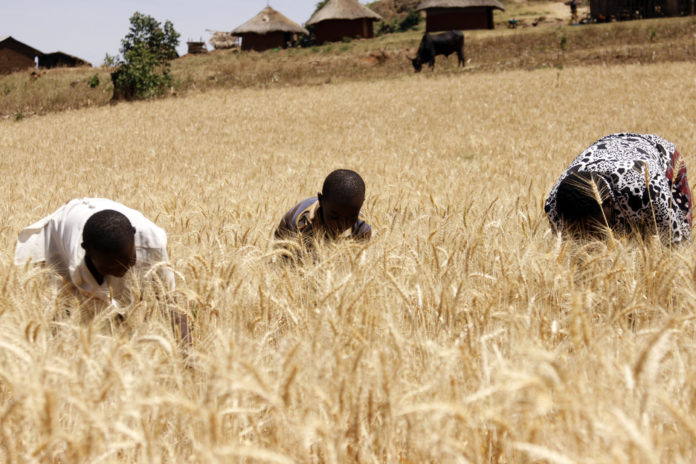
Kapchorwa wheat farmers

By George Mangula

Agriculture can provide jobs to Uganda’s unemployed youth if well harnessed, according to the twelfth Uganda Economic Update published by the World Bank.

The report, “Developing Uganda’s Agri-Food System for Inclusive Economic Growth”, notes that the sector’s economic contribution extends well beyond the production sector into the wider food system, including related processing, manufacturing, and services. However, the employment potential of Uganda’s agriculture and agri-food system remains largely untapped, despite providing 70 percent of the country’s employment opportunities, contributing more than half of all exports, and about one-quarter of gross domestic product (GDP).

To realize agriculture’s potential, the report points out that the country will need to overcome a range of challenges. National agricultural output has grown at about 2 percent per annum over the last five years, which is well below the population growth rate and below the 3-5 percent growth rates in other East African countries.

In the medium term, the agriculture growth rate is expected to remain around 2.5 percent, assuming reasonable weather conditions and no army worm infestations.

The report notes that both domestic and regional demand for agriculture commodities is on a rapid rise, and an increasing number of urban dwellers demand more processed food and protein-rich diets. By 2050, the Bank estimates that about 102 million people will live in Uganda, providing massive opportunities for the country’s agriculture sector and wider agri-food system.

“All steps along the value chain – food production, input provision, processing, handling, marketing, transport and retail – require labor, both skilled and unskilled, and can contribute to inclusive economic growth,” said Richard Ancrum Walker, World Bank Senior Economist and lead author of the report. “Uganda’s agri-food system really has the potential to enhance employment opportunities for the country’s predominantly young population, the majority of whom live in rural areas.”

Diverse agribusinesses, particularly along the dairy, maize and coffee value chains, have developed in recent years, linking farmers to inputs, markets and finance, and improving rural livelihoods. To fully harness the agriculture sector’s unique opportunities, the report recommends spurring the agribusiness dynamism, and continuing to shift the agriculture sector from low-value smallholder farming towards a higher value-added agri-food sector.

“Many Ugandan producers live in remote areas and have only limited access to markets and extension services, but also insecure rights to land; these challenges are particularly pronounced in the northern and northeastern parts of the country,” said Ladisy Komba Chengula, World Bank Lead Agriculture Economist. “To foster the agri-food system transformation and inclusive economic growth, agricultural productivity will need to increase, while the resilience of agriculture production systems and rural livelihoods to climate and market risks needs to be enhanced.”

Achieving agriculture productivity growth and resilience will require better technology, tenure security and sound land management practices, as well as the dissemination of knowledge on sustainable input use through effective extension services. Boosting the sector needs higher-value addition and job creation, policy implementation and regulation will need to be strengthened; institutional coordination improved; and private sector participation encouraged. The organization of producers and their integration into sustainable agri-food value chains should be supported to increase farmers’ access to finance and markets, and for the competitiveness of the sector more broadly.

To address this, the government has undertaken a series of policy and regulatory measures, ranging from new policies on irrigation and seeds to the setup of new agricultural finance mechanisms. These measures have, however, been insufficient according to the report, and sometimes even counterproductive. Furthermore, the report notes that limited differentiation has been made between the needs of smallholder, emerging commercial, and commercial farmers.

The economic update identifies four areas for immediate attention:

Fostering sustainable agricultural total factor productivity growth. To increase agricultural productivity, providing effective advisory (extension) services to smallholder farmers is important to enable them adapt quickly to new production technologies, regulate the markets for agricultural inputs to ensure their quality, and to help smallholder farmers to access inputs through targeted mechanisms, such as e-vouchers.

Promoting commercialization of agriculture, and private sector led value addition and trade. Smallholder farmers need to be assisted to invest in agriculture as a business, meaning producing surplus for the markets, to improve their incomes and livelihoods. To achieve this, access to markets and agro-processing facilities is key through their farmer or producer organizations.

Building resilience to agriculture production systems and managing related risks – climate change, disease and pests. Investing in irrigation and water harvesting technologies to combat climate variability and climate change is critical; as well as putting in place early warning systems (EWS) and emergency response mechanisms (ERM) for managing disasters, such as droughts, floods, and outbreak of pests and diseases.

Improving policy and regulatory environment and strengthening institutions. To attract private investments in the agriculture sector, the government needs to create an enabling business environment. This include addressing institutional capacity gaps at the national and district level, so that they are able to provide advisory and regulatory services; and adopting policies that will enhance competitions in the input (particularly seeds and fertilizers) and output markets, as well as value addition or agro-processing.

Stories Continues after ad

Bulamu boss fired as scandal hits NGO

Gerald-Atwine

Staff at Bulamu International Health (BIH)-Care are in shock following the sudden sacking of their longtime director and co-founder, Gerald Atwiine on allegations of misappropriation funds of the organisation.

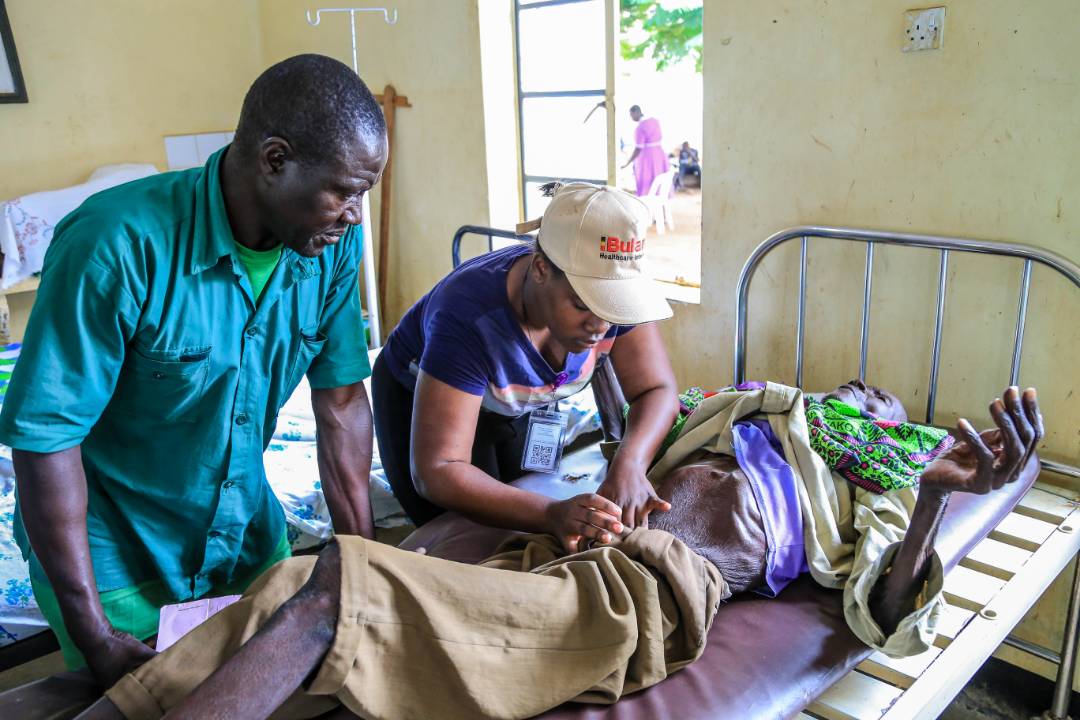
The organisation that has its headquarters in California, United States, has been running medical camps in Ugandan since 2015 when it launched its first camp in Sheema district, freely offering treatment to thousands of patients who hitherto lacked access to basic medical services.

Mr. Atwiine is accused of embezzlement and gross misconduct among many other offenses that went against the organisation’s codes of conduct and statutes, according to the new BHI president, Richard Chandler.

On October 24, 2018, the board of directors terminated Mr. Atwiine’s presidency at BHI in a move to protect BHI’s assets and image after the former president made unlawful transactions from the organisation’s donor account in Dfcu Bank without notifying his senior colleagues.

Mr. Chandler accuses the former director of moving US $50,000 and US $100,000 into his personal account on the October 3 and 5,2018 respectively without signatory acknowledgement from neither the organisation’s Chief Finance Officer nor treasurer. He maintains that Mr. Atwiine still holds onto a whopping Shs150 million he took for ‘safekeeping.’

However, Mr. Atwiine has dismissed the accusations simply dubbing them a ‘colonial maneuver’: “What you are attempting to do is not only meant to crush my spirit but is exactly what colonialists did to this beautiful wealthy continent called Africa-divide and conquer.”

Atwiine say Mr. Chandler was fully aware of the monetary transactions and that he approved them through electronic email without any prior complaints. The founder also questioned the manner in which he was fired: The BHI constitutions require a seven-day notice before the termination of one’s role(s). He said the notice was not given to him despite his immense contribution to the organisation.

Further, citing misconduct on the side pf Mr. Chandler and the board, Atwiine advises those now in-charge of the organisation against pursuing any further action against him, saying that risk tarnishing the organisation’s image and license revoked by government.

Who is Gerald Atwiine?

A charismatic and patriotic young fellow, Gerald left his hometown of Rukungiri at a very young age and set out for greener pastures in America where he studied and became a medical nurse. It was through his practice that he met his benefactor and Co-founder Jim Balassone. Together they teamed up to realize Gerald’s dream that would provide free medical health care to those living in impoverished communities within Uganda. In 2015, BHI under his command launched its first ever medical camp in Sheema district and has since carried out a total of 10 successful camps saving up to 80,000 lives in Uganda including 600 surgeries that were successfully performed. The organisation flourished and gained nationwide recognition under his leadership mainly due to his hands-on approach and exemplary nature that saw him recruit youths into the organisation.

He ensured that BHI did not only treat patients but also created a ‘culture of giving back’ amongst Ugandans abroad that made BHI create a lasting impression on the lives of many.

The news of Atwiine’s sacking has left many shattered and camps divided with some of the former staff celebrating his downfall whilst some vehemently refusing to accept the new changes, claiming the organisation is incapable of functioning in the absence of the sacked official. Both parties are currently seeking legal intervention with the necessary authorities both here and in the U.S.

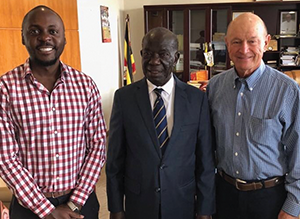
Gerarld and Richard Chandler with VP Edward Sekandi during one of the workshops.

A source close to the case in the U.S claims that Atwiine might come out victorious after all this, given the circumstances the led to his firing: “There is a malicious intent with which they handled his termination as president and founder of BHI; We have only heard their side of the story and people need to pay attention to Gerald’s reasons behind his actions because up till now there is still no evidence provided that he stole a single dime.”

Despite the lines drawn and frontiers put up between the two parties, Chandler assures staff members and the government of Uganda that the organisation’s activities and camps will resume and move forward as before with its first outreach scheduled for January 2019.

BHI is fast getting popularity amongst Ugandans across the nation including some leaders such as the Vice President Edward Ssekandi, who invited them to treat patients in his home town of Masaka due to its ‘super-camp status’. Dubbed a hospital on wheels, the organisation offers more medical services than the average medical camp including fully funded surgical procedures and an Angel programme that covers complicated cases such as Spina bifida and hydrocephalus.

These camps are made successful majorly through donor funding, largely sourced from the U.S as well as partnerships with various organisations such as the Weekly Foundation that seeks to better the health care programmes within Uganda. These super-camps run on a budget of about $40,000 per week, including post camp surgeries that would require extra funding outside of these camps under its fully fledged Angel programme.

Stories Continues after ad

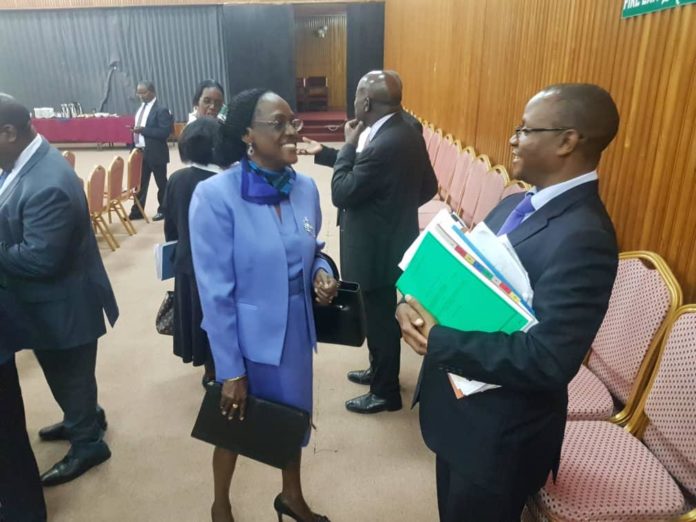
MPs reject Greenland Bank documents, kicks out BoU officials from parliament

Parliament’s Committee on Commissions, Statutory Authorities and State Enterprises (Cosase) on Thursday rejected documents presented by the Bank of Uganda (BoU) on Greenland Bank, with Committee Chairman Abdu Katuntu saying they are not the quarterly progressive reports spelt under the terms of reference the central bank gave Mr. Benedict Sekabira to act as liquidator of Greenland Bank.

Benedict Sekabira is the director Financial Markets Development Coordination at BoU but has risen through ranks, having joined BoU bank in 1989 as a junior banking officer.

MP Katuntu was forced to invoke the powers of the committee and ordered that BoU officials go back and bring all documents on Thursday afternoon. “I am directing the EDS to produce all the files that were handed over by then Executive Director of Supervision Mrs. Justine Bagyenda to the new Executive Director of Supervision,” he said.

The documents rejected on Thursday by the MPs were analysed by the Auditor General John Muwanga who found them to be lacking in some aspects and so he couldn’t refer them as quarterly reports of Greenland Bank which was closed in April 1999.

The Mps are probing officials based on Mr. Muwanga’s special audit report of BoU on seven defunct banks of which Greenland was part. In the report Mr. Muwanga queries why the loans of ICB, Greenland Bank and International Credit Bank were combined and sold at 93 percent discount to a mysterious Nile River Acquisition Company under the agreement that recognised the English Laws but not Ugandan Laws.

“In the case of ICB, Greenland Bank and Cooperative Bank the total loan portfolio sold of Shs135 billion included Secured loans of Shs34.5 billion which had valid, legal or equitable mortgage on the real property and were supported with legal documentation but were sold to Nile River Acquisition Company at a 93 percent discount,” Mr. Muwanga says in a report he released on August 27, 2018 and had been ordered by government to investigate BoU.

Mr. Sekabira, who superintended over the liquidation of Greenland Bank presented files of what he thought were quarterly progressive reports on the bank’s liquidation process but he was asked to take them back, with MP Katuntu saying they were not helpful to the committee. He said: This matter has reached a point where we need to find whether reports are being held somewhere.”

Mrs. Justine Bagyenda, the former executive director of supervision tried to convince the MPs that the reports were presented in summary to the BoU Board of Directors but was not able to ascertain whether she had the original reports from the liquidator of Greenland Bank, Mr. Sekabira who is at the centre of the liquidation of the bank.

Bagyenda when grilled on Wednesday about issues to do Greenland Bank, said she didn’t have access to the documents since she is not long at BoU, having retired early this year, though this didn’t convince MPs that she was scot-free, the reason she appeared on Thursday.

Bagyenda also tried to convince the MPs that the reports were sent to the office of BoU governor Prof Emmanuel Tumusiime-Mutebile, even as he had earlier on said he had never seen the reports in his office. Katuntu said it was wrong for Bagyenda to make allegations against her former boss.

Her former colleague Margaret Matovu, who also served as BoU, director commercial banking was not sure whether all documents related to Greenland Bank liquidation were in the bank. “Some might be in the bank,” she said when asked whether her office received any reports from Mr. Sekabira.

Kalungu West MP, Joseph Sewungu was bitter with the responses of Ms Bagyenda and Ms Matovu, arguing that the ladies be handed over the police for further interrogation concerning the reports.

The BoU officials return to face the committee tomorrow at 10 am.

Stories Continues after ad

Moses Basena steps down as SC Villa manager

Moses Basena

Moses Basena has today resigned from his position as the SC Villa Jogoo head coach, according to various reports.

The development comes after his side drew 2-2 Tooro United in a four goal thriller at Buhinga Stadium.

Basena, who was appointed before the start of the season replacing Wasswa Bossa, leaves the club without winning a single league game.

SC Villa are in relegation zone, in 14th place on the 16-team log with just four points from eight games played.

The 16-time record league champions blew a chance to win the title last season as they finished third, ten points off the champions Vipers SC.

Basena has recently been in charge of a number of top flight clubs including Simba in Tanzania, UPDF, KCCA FC, URA and also served as the Cranes interim for six months until December 2017 when FUFA appointed Sebastien Desabre as Uganda’s national team coach.

Asaph Mwebaze who quit Arua based Onduparaka FC earlier this week, is tipped to be heading to Villa Park to replace Basena.

Stories Continues after ad

Sudhir has no criminal record, says Interpol

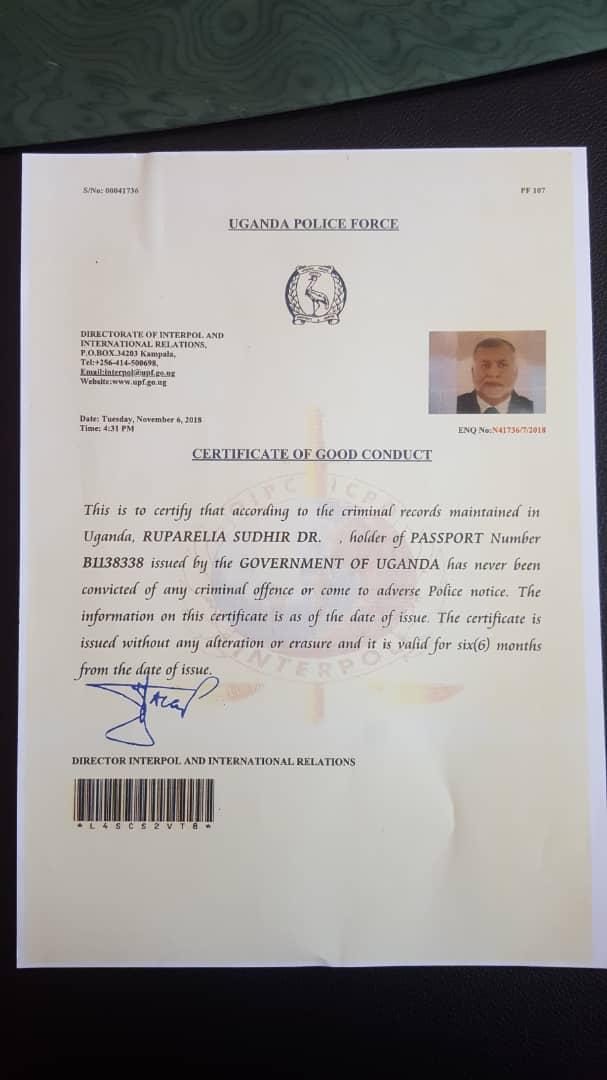
The Chairman of Ruparelia Group Dr Sudhir Ruparelia has no any criminal record, according to the Uganda Police Directorate of Interpol and International Relations.

On November 6, 2018, Interpol issued Sudhir with a Certificate of Good Conduct, saying the tycoon has never been convicted of any criminal or offence or come to adverse police notice.

“The information on this certificate is as of the date of issue. The certificate is issued without any alteration or erasure and it is valid for six (6) months,” it reads.

The certificates puts to rest the allegations in the sections of the media that Dr. Sudhir is involved in corruption related cases, which included the recent allegations that he gave hundreds of millions of money to Cosase committee to favour him in the on-going probe of Bank of Uganda over sale of seven commercial banks, including Crane Bank Limited, where he was the majority shareholder.

Stories Continues after ad

Unity Radio remains closed, as police charges journalists

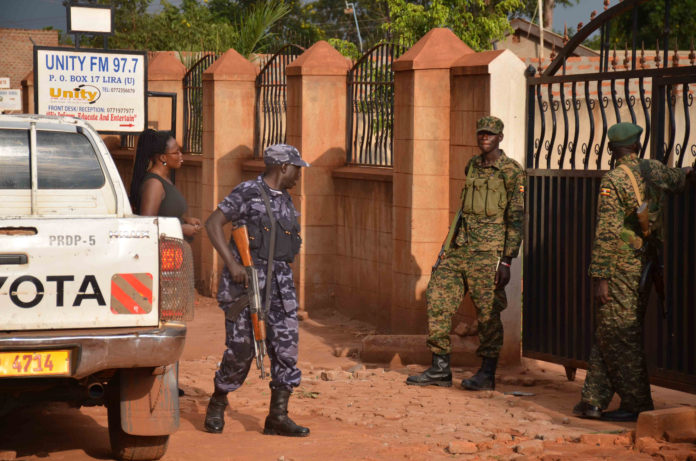
Military and police officers guard premises of Unity Radio.

By last evening Unity FM radio based in Lira was still shut down since November 17, 2018 when the Lira District Police Commander (DPC) Joel Tubanone stormed the Radio station with heavily armed police personnel and military officers, switched off the radio and picked six staff on allegations of inciting violence.

On November 17, 2018, at around 3:20 P.M, police officers arrested six Unity FM journalists and two other clients who were found at the station for business. The arrest was allegedly on the orders of the Resident District Commissioner (RDC) Milton Odong for allegedly inciting the violence.

Those arrested include; Charles Odongo -technical director, Keneth Opio-Assistant station manager, Felix Ogwang-presenter, Moses Alwala-news reporter, Micheal Ogwal-news anchor, Aron Ebwola-producer and Okello Emmanuel Zumulamai and Junior Engola both clients who had brought business announcements to the radio.

The six Unity FM staff were however released on Monday November 19, 2018, but re-arrested the following day at Lira Central Police Station where they had reported to renew their bond.

DPC Tubanone confirmed the re-arrest when contacted by Human Rights Network for Journalists-Uganda. “We gave them bond on Monday because the 48 hours had expired, we received a call from the State Attorney yesterday that their file was ready. So when the suspects reported, we rearrested them but we are taking them to court anytime now,” said Tubanone.

The Director of Unity FM, Uhuru Jimmy confirmed that the DPC Joel Tubanone, RDC Odong Milton and the District Internal Security Officer a one Gilbert, stormed his radio station and arrested six journalists alongside two clients who were at the station. He described the attack on the station as political persecution stemming from the radio consistently holding different district leaders to account to the local community on service delivery as a result of funds received from the government.

The Unity FM Station Manager, Sam Atul said that the other two staff members Akena Rolex and Otto Bill who were held up inside the station without any justifiable reason for four days were released on the evening of Tuesday 20thNovember 2018 without any charges preferred against them.

Efforts to get a comment from the RDC were futile as he was engaged in a meeting. The journalists have since been released again and ordered to report to the police daily at 10am.

The arrest and subsequent shutting down of Unity FM was as a result of the radio relaying live events of the burial ceremony of Dickens Okello, an eleven year old pupil of Alito Primary School in Lira District. It is alleged that Okello was killed by two Asian nationals on 9th Nov, 2018 on his way back home. The local people were not satisfied with the manner in which the police in Lira had handled the matter, hence prompting them to riot.

“The locking up of the two staff members inside the station was an illegal detention which must be challenged in court. The radio station should be re-opened to allow for negotiations in a bid to build peace and flourishing business relationship with the locals. We hope that this matter is handled cautiously to avoid inflaming the peace in the area.” Said the Human Rights Network for Journalists Uganda (HRNJ) Uganda Executive Director, Robert Ssempala.

Stories Continues after ad

Equatorial Guinea terminates of contracts with US based Oil Service Company Subsea 7

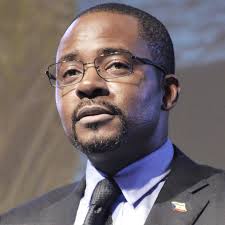
Minister Gabriel Mbaga Obiang Lima

At the South Sudan Oil and Power Conference in Juba, the Minister of Mines and Hydrocarbons announced the decision to mandate all petroleum operators including but not limited to Noble Energy, Exxon Mobil, Kosmos Energy, Trident, Marathon Oil Corporation and other operators to cancel all contracts with US based oil service company Subsea 7, due to noncompliance of Equatorial Guinea’s local content regulations.

“As Minister, I have an obligation to ensure the laws of the country governing the hydrocarbon sector are complied with.” said Gabriel Mbaga Obiang Lima, the Minister of Mines and Hydrocarbons. “Companies operating in the oil sector have an obligation to work within the confines of our very flexible and pragmatic local content regulations that are market driven and ensure that both investors and our citizen benefit. I commend the leadership of Schlumberger and Technip FMC in taking proactive steps to engage with the oil companies and government to ensure local content concerns are resolved.”

The Ministry will continue to work with Oil companies operating in Equatorial Guinea to unwind contracts and find new suppliers for companies that have refused to comply with local content regulations.

A compliance review of the entire sector is ongoing led by the Director of National Content and outside legal advisors of the Ministry. The notice will be expanded to all service companies who are non-compliant as the review continues. Similar measures will be taken.

Under the National Content Regulation of 2014, all agreements must have local content clauses and provisions for capacity building, with preference given to local or regional companies in the award of service contracts. Local shareholders must be part of every contract as prescribed by law. The operators have an obligation to ensure compliance of their subcontractors.

Stories Continues after ad

UNBS seizes 4 tonnes of substandard electrical products at Energy Centre

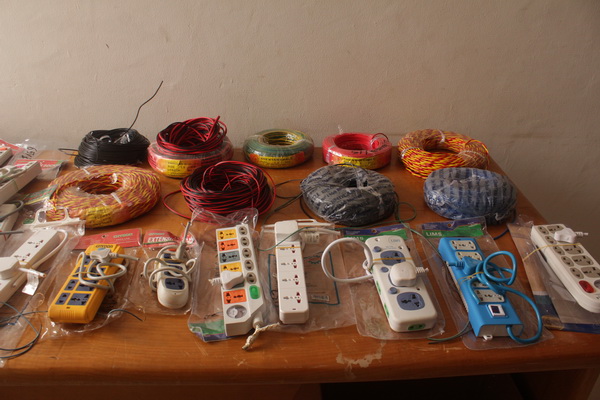
Electrical products

The Uganda Bureau of Standards (UNBS) in a statement it released on Wednesday said the market surveillance operation it carried out at the Energy Centre in Kampala on November 14, led to the seizure of four tonnes of substandard electric products.

“The operation focused on the Energy Centre on Market Street because it had been identified as the main source of substandard electrical products on the market. Such operations will continue to other outlets around the country covering various products,” UNBS says in a statement.

According to the statement, UNBS some the 46 shops inspected had the substandard electrical products that were taken to its warehouse to aid with further investigations. “The business owners were summoned to UNBS CID Office for further investigations and possible prosecution,” says the statement.

“This market surveillance activity was informed by test reports of samples picked between July and September, 2018 that were submitted to UNBS laboratory for testing. From the test reports, it was established that about 80 per cent of the samples tested did not meet standards,” says the statement.

Section 3 (e) and (f) of the UNBS Act gives UNBS the mandate to enforce standards in the protection of the public against harmful ingredients, dangerous components, shoddy material and poor performance while Section 21 (i) prohibits the sell and distribution of substandard products.

“We have noted that substandard products are brought into the country by unscrupulous importers who often use many tricks to circumvent regulatory requirements by: Smuggling such products through un-gazzeted entry points; mis-declaration of cargo by using wrong HS codes; concealment of substandard products so as to avoid detection during verification,” says the statement.

The statement says that whereas UNBS has made significant strides in ensuring compliance with standards, noncompliance continues to pose a challenge. The agency says a recent study it commissioned established that the prevalence of substandard products among the items sampled stood at 54 per cent down from 73 per cent reported in 2013.

Stories Continues after ad

NSSF introduces flexible payment plan for members

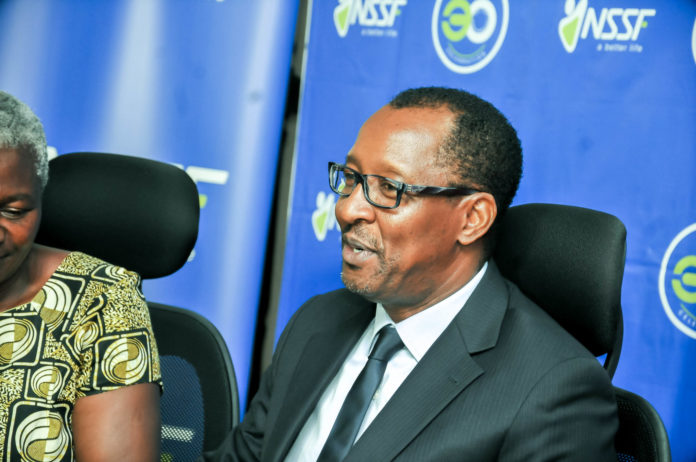
Mr. Richard Byarugaba, NSSF Managing Director who is credited for the smooth running of the fund.

The National Social Security Fund (NSSF), has announced a benefits payment plan dubbed ‘Draw Down’ that will allow qualifying members to retain part of their savings with the Fund at the point of exit.

The plan is meant to help retiring workers keep some amount of money with the Fund, especially for those who may be tempted to spend all the savings got within a short period.

Speaking at the launch of the plan, Patrick Ayota the Fund’s Deputy Managing Director, said the move will enable qualifying members utilize their NSSF savings in installments as they develop a retirement plan or investment that works for them.

A recent survey by the Fund shows that more than 70 per cent of the beneficiaries had depleted their savings received from the Fund within two years, and most of them wished they had an opportunity to receive their savings in installments.

“We have received several requests from qualifying members to pay them a portion of their savings and pay them the balance in installments as they finalize their investment plans for the large sums saved,” Ayota said.

He added: “It will initially be opened to members who attain the age of 55 years and members who attain 50 years but have been out of employment for a period of one year. It will also be paid to a contributing member who joins employment categories that are exempted who have their social protection schemes that are recognized under the existing law and are exempted from contributing to NSSF.”

He said ‘Draw Down’ payment plan will help to extend income security during retirement because a member can decide how much they wish to retain in their NSSF account and when they wish to claim it all.

Stories Continues after ad

Former Ayivu County MP Dick Nyai dead

RIP Dick Nyai in red T-Shirt

Former Ayivu County Member of Parliament and Uganda Peoples’ Congress strongman Dick Nyai is dead.

Nyai passed on at Arua regional referral hospital; Nyai represented Ayivu County in National Resistance Council, Constituent Assembly and 6th Parliament. He was among the vocal legislators that championed good governance and rule of law.

Stories Continues after ad