Stanbic Bank
Stanbic Bank
17.6 C
Kampala
Stanbic Bank
Stanbic Bank
Home Blog Page 1427

Skills every startup team needs to get things done

Martin Zwilling

By Martin Zwilling

Isn’t it amazing that some people you know always seem to be working hard, but never seem to get anything done? As an entrepreneur, you need to avoid partnering with these people, or hiring them into your startup. The challenge is to find people who get things done, as well as work hard. LinkedIn profiles and resumes still focus too much on responsibilities rather than results.

The best entrepreneurs never confuse motion with results. It’s easy to find people in every organization rushing around from one meeting to the next, often working overtime to generate more work for themselves and other people, but rarely taking the action to close an issue or contract. We all need more people around us who make every motion mean something.

So how do you recognize those few people on your team who are getting things done, or even recognize ahead of time those who have that potential? Such people are different, but are not necessarily the smartest or the most skilled. But they do seem to have some common characteristics and approaches that you can look for:

Possess street smarts, as well as skills and experience. People like this quickly figure out how businesses really work, and how to resolve the challenges in their business. They have a special ability to cut through the confusion, dodge any head-on collisions, and negotiate compromises leading to required actions and resolution.

Able to avoid or navigate the politics of the organization. Understanding politics is not the same as being a politician, or using political clout. People who get things done don’t worry about building their own image, but they are politically astute enough find alternate routes around the political and power bastions.

Recognize what it takes to get power leverage, but don’t blatantly use it. The key is to be open and listen to recommendations from those who have to be moved, and find a way to create win-win situations, rather than win-lose. They get things done by using their power to get recognition for key players, rather than for themselves.

Maintain a laser focus on narrowing the scope, rather than expanding it. This means effective negotiating to eliminate sidetracks, combat opinions with facts, and finding the glass half-full, not half-empty. It requires being able to accurately assess the position of others, find some common ground, and snapping people back to reality.

Able to negotiate agreements without committing to future paybacks. People who get things done are driven by an insatiable desire to make progress and help others. They are not looking to build a cache of favors or special attention, and are not willing to make deals that compromise the solutions and can come back to haunt them.

See every problem as an opportunity to innovate, rather than a chance to fail. Obstacles are seen as innovative and creative challenges, not barriers. All the reasons something can’t be done are replaced by better ways to get it done, quicker and at less cost. Nothing is immutable, even the culture of the organization or the business.

Able to balance the paradoxes of highly effective leaders. People who know how to get things done can be analytical as well as intuitive, aggressive or patient as required, and confident and humble at the same time. They instinctively know when and how to escalate issues to the right level, without stubbornly entrenching their position.

To get things done more effectively, people need to really think about each element of their work before they make a move. By culture and habit, many of us expect most of our daily work and personal activities to be pre-defined, and we just go through the paces (the way it’s always been done). We need to practice overt thinking about desired outcomes, to make them a reality.

If your desired outcome is to move up in the organization, or just to get more satisfaction from your daily efforts, now is the time focus on the attributes listed above, and emulate the people on your team who get things done. If you are the entrepreneur or executive in the organization, make sure you are the role model in execution and in hiring. That’s the only way to win in the long run.

The writer is a veteran startup mentor, executive, blogger, author, tech professional, and Angel investor. Published on Forbes, Entrepreneur, Inc, Huffington Post, and others.

Stories Continues after ad

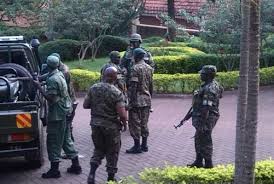
UPDF to guard Chinese businesses as robberies escalate

Some officers of the Uganda Peoples Defence Force (UPDF) will be deployed soon as security guards for the businesses of Chinese investors that have of recent suffered a wave of robberies, according to Brig. Richard Karemire, the army spokesperson.

Brig. Karemire said soldiers would start offering security to Chinese investors in response to a recent series of attacks that have fueled fear in the business community.

Karemire said Chinese investors were being targeted because of their inclination on keeping large huge amounts of cash within their factories.

“Security forces, the military inclusive, will provide security…We hold them dearly because of the employment opportunities they offer,” he said.

In recent months a number of attacks on Chinese-owned businesses has taken place, mostly in Kampala and Wakiso, with robbers grabbing cash and other valuables.

On Wednesday, a local daily quoted an official from an association of Chinese-owned businesses in Uganda as saying some business owners were considering leaving the country because of insecurity.

Uganda hosts a large number of Asian investors and workers, a sizeable portion of them from China, and their numbers has been growing in as China consolidates its footprint in Africa.

Some of Chinese investors have been criticized by the local businessmen for engaging in petty trade and light manufacturing, which local think are reserved for them.

However some Chinese companies have been contracted to embark on huge public infrastructure works in Uganda supported by the Chinese loans to the country. They include hydropower dams, roads and others.

In recent years crime, such as murder, robberies and kidnappings for ransom, has been growing in Uganda and President Yoweri Museveni has said security personnel may be colluding with criminals.

Stories Continues after ad

Confusion as BoU officials give two dates on closure of Teefe Trust Bank

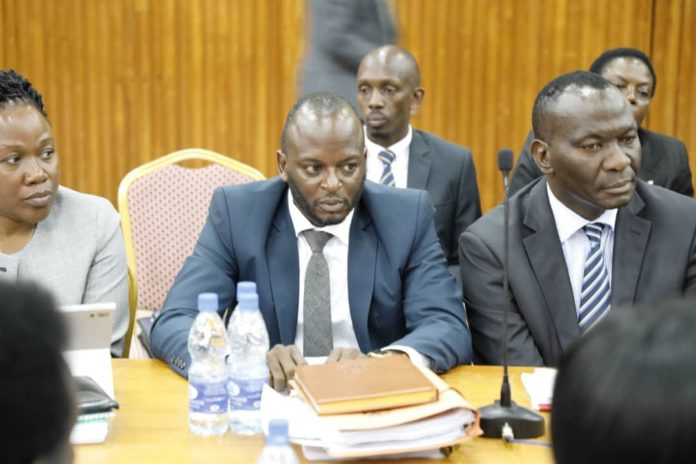
BoU officials before COSASE.

There was confusion on Thursday as parliament’s Committee on Commissions, Statutory Authorities and State Enterprises (Cosase) was presented with two dates on closure of Teefe Trust Bank.

The BoU board of directors led by its Governor Emmanuel Tumusiime-Mutebile presented documents- one saying the bank was closed in February 1993 and the other read November 4, 1993.

Teefe Trust Bank was closed on account of undercapitalization.

Teefe Trust Bank was supposed to be closed under The Financial Institutions Statute (FIS) 1993, yet Bank of Uganda officials say they used the Banking Act 1969 to close the Bank.

However, MPs would later establish that it was the then Finance Minister Jehoash Mayanja Nkangi who closed the bank on November 4, 1993 in a letter he wrote to BoU. But the minister didn’t have powers to close the bank under FIS.

The legal team of BoU was confused as whether the late Mayanja had or did not have the powers to close the bank. Mayanja was appointed Minister of Finance, Planning and Economic Development from 1992 until 1998.

The BoU directors also showed confusion when asked under which legal regime Teefe Trust Bank was closed. At one point they said it was closed under the Banking Act 1969, yet the existing law was the Financial Institutions Act.

The MPs established that the bank was closed under FIA. But Deputy Governor Dr Louis Kasekende earlier on said it did not apply, which was not true. Committee Chairman Abdu Katuntu almost lost cool when he asked Ben Sekabira, former Executive Director in charge of supervision where the 23 properties of Teefe bank are? Sekabira responded “We have them” which was a bit blanket, which irritated Katuntu.

The BoU team came with Dr William Samson Kalema and former Auditor General (AG) James Kahooza who have served on its board. But they were asked to leave because of their conflicting roles. Kalema served on the boards of The Cooperative Bank and Dfcu Bank yet at the same time served on BoU board headed by Tumusiime-Mutebile.

Cosase Chairman Abdu Katuntu, said Kalema and Kahooza would be called later to answer specific queries as investigation continues. But when asked Kahooza said he didn’t audit Teefe Trust Bank but BoU. “I was auditing Bank of Uganda,” he said, forcing Katuntu to ask that he leaves.

Dr Kalema on the other hand wanted to remain in the committee room, saying he could answer queries as regards BoU closure of banks but Katuntu insisted he leaves as it was hard to establish the capacity he had come in given his roles in Cooperative Bank and BoU.

The team also presented Inventory report of Teefe Bank for February 1993 and other documents related to Teefe Trust Bank. Katuntu said he had handed the copies of papers to the Office of the Auditor General John Muwanga for auditing. He received the copies yesterday in the evening.

In his special audit report of BoU on defunct banks Muwanga says he was not given documents of Teefe Trust Bank.

“I was not availed with the Inventory report, loan schedules, customer deposit schedules and statements of affairs of Teefe Trust Bank to enable me to fulfil the specific audit objectives.

Due to this limitation, I could not assess the status of the assets and liabilities of Teefe

Trust Bank from closure to date,” Muwanga said.

Stories Continues after ad

Ugandan goalkeeper joins Kakamega Homeboyz on a short-term deal

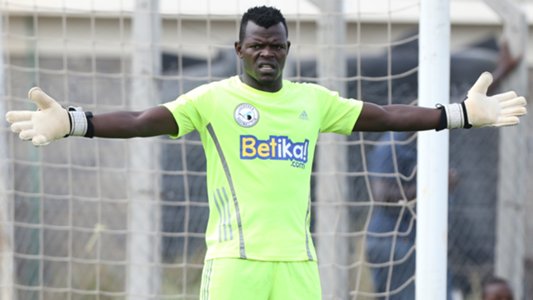
Goalkeeper Mathias Kigonya

Ugandan shot-stopper Mathias Kigonya has joined Kenya Premier League side Kakamega Homeboyz on a short-term deal after he penning a one-year contract with the side, according to Goal in Kenya.

This comes barely two months after the goalie terminated his contract with Sofapaka at the end of last season.

Kigonya fell out of favour with Elly Kalekwa owned side, after both parties failed to agree on a new deal where he played for three seasons.

The diminutive keeper becomes the fourth signing for Kakamega Homeboyz this season ahead of the new season that starts next month.

Other new catches include Luke Namanda, Sosthenes Idah and David Odhiambo.

The Ugandan was part of the KPL All-Stars team that traveled to Spain for exhibition matches against Cordoba and Sevilla Atlético in 2017.

Kakamega Homeboyz finished 10th on the 18-table log last season with 44 points.

The 2018/19 Kenya Premier League season will kick off on 8th December and the Homeboyz will be home to Kenya Commercial Bank Sports Club.

Stories Continues after ad

MPs pay tribute to Kadaga over defeating LGBT agenda at IPU meeting

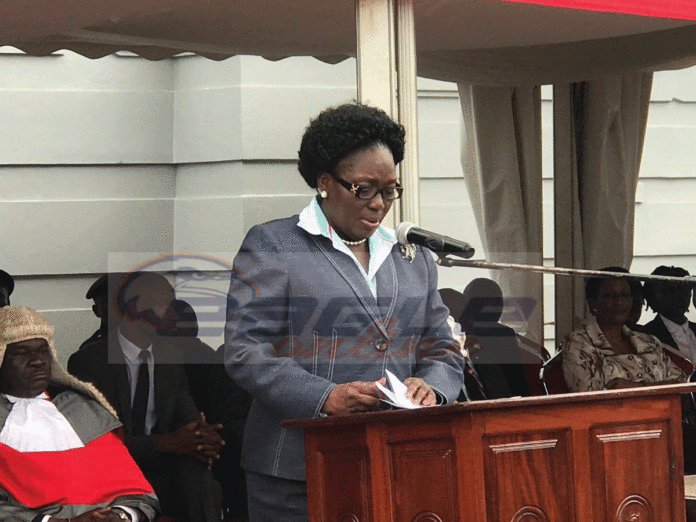
Speaker Rebecca Kadaga

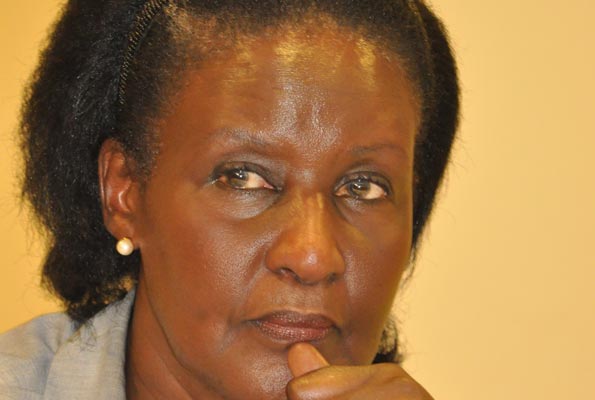
Legislators have paid tribute to the Speaker of Parliament, Rebecca Kadaga, over what they called consistently upholding and protecting Uganda’s cultural values.

MP meeting at the Inter Parliamentary Union (IPU) in Geneva from 14 to 18 October, 2018 voted to ban debate on the subject of Lesbian, Gay, Bisexual, and Transgender (LGBT) from appearing in the IPU agenda ever again.

The Ugandan delegation, led by Speaker Rebecca Kadaga, spearheaded the move against what they termed as a well-orchestrated machination led by Canada and Belgium who had lobbied many delegates to vote in favor of the motion.

Bufumbira County Member of Parliament and former Minister of Ethics and Integrity, Nsaba Buturo moved the motion to commend Kadaga for her contribution in the IPU meeting.

He noted that Kadaga championed a worthy and victorious cause, saying that both her performance and leadership has shown Ugandans her true character.

“This is not the first time that you have engaged in battles on an international stage on behalf of Uganda. This time you have engaged in this battle and emerged victorious,” said Buturo.

He urged Ugandans to stop being timid and fearful whenever the country’s interests, values and morals are threatened.

Over 25 MPs who contributed to the debate on the motion in a session which lasted one hour and applauded the Speaker, saying that her decision to stand for what is right has saved Uganda and the whole world from barbaric acts of homosexuality.

MP Alum Santa said the Kadaga’s straight forwardness has set an example to many Ugandans and leaders. “When we go out as Uganda to negotiate or represent the country, we should remember our aspirations. Leaders should not be threatened by aid withdrawal; we cannot trade our values for aid,” she said

Kilak South County MP Gilbert Olanya said, Kadaga’s boldness is a reflection of her great leadership.

“The way you defended the people of Uganda outside the country, you should do the same in the country and be the president of this country,” he said.

The Minister of State for Housing, Dr. Chris Baryomunsi said that as opposed to arguments that homosexuality is inborn; it is a behavior that should be rejected.

“Homosexuals don’t produce children, they increase numbers by recruiting,” said Baryomunsi.

MPs, Joy Atim Ongom and Annet Nyakecho) called for the re-tabling of the Anti-Homosexuality Act.

“In the Ninth Parliament, we missed the opportunity of legislating against homosexuality because of issues of quorum. I request that this law be brought back so that we show the world that homosexuality is not needed,” said Ongom.

Buhweju County MP Francis Mwijukye who was part of the delegation to Geneva recounted their experience in Geneva.

“We saw members of our neighboring countries disappearing because they did not want to be seen. There was a risk of members of IPU being compromised; it was not easy. The Speaker did great work in mobilizing not only Ugandans but the whole world,” said Mwijukye.

Kadaga commended the delegation, saying that they exhibited a high level of commitment during the meeting.

“I want to urge all of us that when we go for meetings, we have to attend until the end. Most of the times when you move out of the meetings, that is when some issues are smuggled in,” She said .

Stories Continues after ad

The UN Security Council is expected to agree shortly to lift sanctions against Eritrea

An arms embargo, asset freeze, and travel ban were imposed in 2009 amid claims Eritrea supported al-Shabab militants in Somalia.

The resolution, drafted by the UK, has the crucial backing of the US and its Western allies.
The UN vote comes amid a thaw in relations between Eritrea and its neighbours following years of conflict.

Eritrea agreed a peace deal with Ethiopia in June, while the leader of Eritrea and the UN-backed government in Somalia have also met three times this year
Why were sanctions imposed?
The resolution, backed by 13 votes in favour, was passed after the UN Security Council accused Eritrea of arming, training and equipping armed groups including al-Shabab.

The UN had frequently expressed concern about the flow of weapons into Somalia, where Islamist militants were battling government forces for control of the capital Mogadishu.
Eritrea has also been criticised for human rights abuses and mandatory national service conscription, which has led to tens of thousands of young Eritreans fleeing the country for Europe.

The asset freezes and travel ban affected individuals and businesses, as well as the Eritrean leadership.
However, the AFP news agency says the draft resolution says that UN monitors have “not found conclusive evidence that Eritrea supports Al-Shabaab”.

What does Eritrea say?
The Eritrean government has always denied supporting al-Shabab militants, calling the claim a “fabrication” created by US intelligence officials. Ethiopia is a close ally of the US, especially in the fight against al-Shabab.

When they were imposed, Araya Desta, Eritrea’s ambassador to the UN, dismissed the sanctions as “ludicrous punitive measures”.
Eritrea occupies a strategic location on the Red Sea, which connects Europe, Africa and the East. However, its economy has suffered after years of sanctions.
The Eritrean government now says it wants compensation for the sanctions, which it insists were politically motivated.

How peace has broken out in the Horn of Africa
Since the sanctions were imposed, Eritrea has lobbied and fought hard against them. But three times over that period, the UN Security Council has always voted to maintain them, claiming the country was a destabilising factor in the Horn of Africa region.

But all that seems to have changed after Eritrea signed a landmark agreement with Ethiopia in June, committing to end a bitter two-decade dispute.
Since then, diplomatic ties have resumed and both air and land transport between the two countries have re-opened.

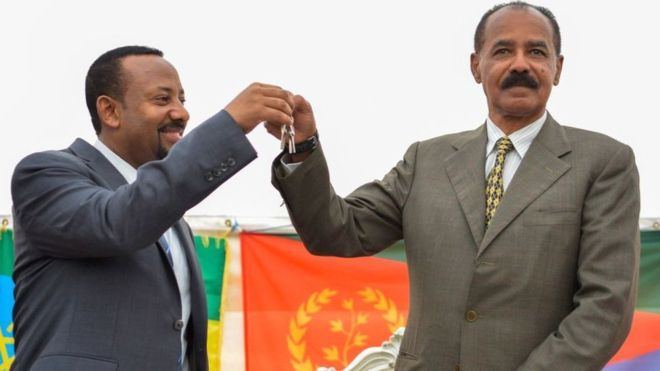
The bromance between Ethiopian’s new reformist leader Abiy Ahmed and Eritrea’s President Isaias Aferweki seems to have rubbed on neighbouring leaders. Eritrea, Ethiopia and Somalia have now signed a joint agreement of cooperation, and leaders of the three countries have met personally on three different occasions this year – something that hadn’t happened in years.

Relations between Eritrea and Djibouti are also thawing after years of a border dispute. There is now even an ambitious talk of the Horn of Africa countries forming an economic bloc of sorts.
Many analysts believe that there are still many issues like the border disputes to resolve before that can be achieved, but so far leaders of the region are daring to believe.

Stories Continues after ad

Trade Ministry launches Uganda trade portal to boost commerce

Trade Minister Amelia Kyambadde

The Minister of Trade, Industry and cooperatives (MTIC), Amelia Kyambadde, on Wednesday launched Shs2 billion Uganda Trade Information Portal, an electronic platform providing ready information on export, import and transit procedures that Ugandan businessmen need to know as they trade with others in the region.

The portal is run by MTIC and the National Trade Facilitation Committee (NTFC), in partnership with Trademark East Africa, USAID, International Trade Center (ITC) and the Government of Uganda.

“The development of this portal is premised on the Trade Facilitation Agreement which came into force on February 22, 2017 where two or three world trade organisation members ratified the agreement, Uganda inclusive,” Kyambadde said as she launched the service at the Kampala Serena Hotel.

The minister said, “Competitiveness of nations in today’s emerging digital global trade will be defined by development and application of innovative digital platform, which enhances movement of goods across borders, particularly applications that improves on transparency, Efficiency and simplification of procedures, documentation, charges and fees relating to exportation, importation and transit of goods among Member States.”

She reiterated government’s commitment in improving the doing of business environment, promoting trade and investment which are critical in promoting socio economic transformation in the country.

“We appreciate the positive measures government is putting in place, we must also note that a lot of work still remains to be done to improve the business environment,” she said.

Uganda has reduced the time for export documentary compliance and border compliance by allowing for electronic document submission and processing of certificates of origin and by further developing the Malaba One-Stop Border Post in 2018.

The country has also made improvements as regards trading across borders, reducing time needed to export and import by implementing the Single Customs Territory, as well as developing the Single Window a platform that lets traders, clearing and forwarding firms to submit and process trade documents electronically, thus saving time.

Stories Continues after ad

Hearing of age limit case for January- Katureebe

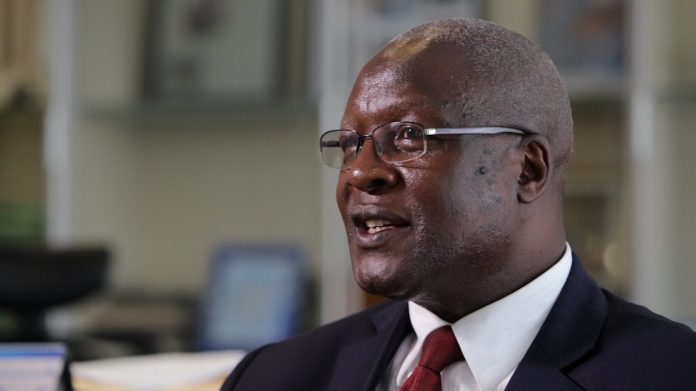
Justice Bart Katureebe who gave the legal opinion when he was still Attorney General.

Supreme Court has set January 15 and 16 as the dates for hearing of consolidated appeal against Constitutional Court’s ruling that maintained parliament’s decision of expunging age limit clause of 75 years.

Appearing before a panel of seven judges of Supreme Court, Chief justice Bart Katureebe, Lillian Tibatemwa Ekirikubinza, Paul Mugamba, Ruby Apio Aweri, Jotham Tumwesigye, Stella Amoko Arach and Eldad Mwanguhya, Katureebe ordered both parties to file their submissions within a fortnight saying complaints filed big volumes of books which needs to be summarized.

He said court has rules governing memorandum of appeal and because rules are clear you can’t just bring anything form the market and bring it as a memorandum of appeal.

“Memorandum of appeal should not be argumentative, not leading evidence and not be a narrative. It should just point out what was wrongly decided by the lower Court that is what should be filed. You file a memorandum of 120 paragraphs and so on is making the work of this court difficult. it’s against the rules and I pray all of you go look at your pleadings by the time we sit tomorrow some of you may find yourselves with no appeal

“Based on consultations, your submissions must be in not more than 50 pages font 14 and in 1.5 spacing. Attorney general will later file his response on December 15.” he ordered.

He said the consolidated appeal will be heard on January 15 and 16 and later judgment will be delivered on notice. In the same court Uganda law society was disqualified for late submission of their appeal.

In December last year Parliament passed age limit bill lifting both the lower and upper presidential age limit cap of 35 and 75 years, giving a leeway for President Yoweri Museveni who is currently 73 years to stand for presidency in 2021.

Due to dissatisfaction with what transpired in Parliament, six opposition legislators led by Winnie Kiiza, Uganda Law Society, and Male Mabirizi among other concerned citizens petitioned the Constitutional Court challenging the ‘Age Limit Act’.

On July 26, four of the five judges of Constitutional court led by Deputy Chief Justice Alphonse Owiny-Dollo, Chebrion Barishaki, Elizabeth Musoke and Remy Kasule endorsed the expunging of both lower and upper presidential age limit that was capped at 75 years according to the 1995 and discarded the elevation of five to seven legislator’s tenure in office.

Both parties, Uganda law society, opposition MPs, and Male Mabirizi, filed a memorandum of appeal at the Supreme Court challenging parts of the constitutional court judgement. They argued that the process of enacting the bill was marred with violence, assault of legislators, storming of Special Forces Command (SFC) in Parliamentary chambers and violations of human rights which among others contradicts with Parliamentary rules and procedures.

Stories Continues after ad

Former Red Cross boss Nataka has no case to answer-DPP

OFF THE HOOK: Michael Nataka. Photo credit, New Vision.

The Director of Public Prosecutions (DPP) has written to the Chief Magistrate of the Anti-Corruption Court, saying that the has decided to drop proceedings against the former Secretary General of the Uganda Red Cross Society (URCS) who was charged with two counts of abuse of office.

“This is to inform Court that the Director of Public Prosecutions has decided to discontinue proceedings against Nataka Michael Richard,” Mike J. Chibita says in a letter dated November 14, 2018. Nataka has been out on bail since May 2015.

In 2015, Nataka was charged before the Anti-Corruption Court in after being accused of abuse of office when in 2013 he transported a vehicle belonging to an individual in the same container carrying a Red Cross consignment.

According to prosecution, the move by Nataka was meant to benefit him from the favorable freight and taxation considerations that Uganda Red Cross enjoys as he went ahead and applied for tax exemption from Uganda Revenue Authority, contrary to the Red Cross Society principles. In November of 2015, The Uganda Red Cross Society has sued its former secretary general, Richard Michael Nataka for having allegedly stolen Shs 60m from its bank account during his reign.

In a suit filed before the High Court in Kampala on November 4, Red Cross said Nataka withdrew the money as his ‘rental costs’ which he was not entitled to. Through its lawyers New Mark Associates, Red Cross claims that Nataka’s package was only Shs6.8 million monthly salary and a motor vehicle. Charge sheet On the first count, prosecution alleges that in 2013 between February and June, at the URCS headquarters in the city suburb of Rubaga, Nataka did an arbitrary act prejudicial to his employer.

“He allowed the importation of a motor vehicle Toyota Tundra belonging to an individual, in the same container transporting consignment belonging to URCS thereby trying to benefit from the favourable freight considerations that URCS enjoys, contrary to URCS principles,” the charge sheet states.

For count number two, it is alleged that in 2013 between May and June at the URCS headquarters, Nataka sought exemption of taxes from Uganda Revenue Authority (URA) for the vehicle. Nataka purportedly declared on the customs bill of entry that the vehicle was part of a list of vehicles for which URCS sought tax exemption, yet he knew that the vehicle did not belong to URCS.

In October 2013, Nataka was grilled by Police over allegations that suspected smuggled goods were imported into the country disguised as those of the humanitarian agency. Police investigated reports that Nataka imported goods valued at between Sh500 million and Sh800 million using the URCS’ name. The goods were found at his home in the city suburb of Munyonyo. Nataka has since denied any wrongdoing, stating that the goods belonged to Red Cross and only ended up at his residence due to exceptional circumstances

Stories Continues after ad

She Cranes prepare for England in Vitality Netball Series

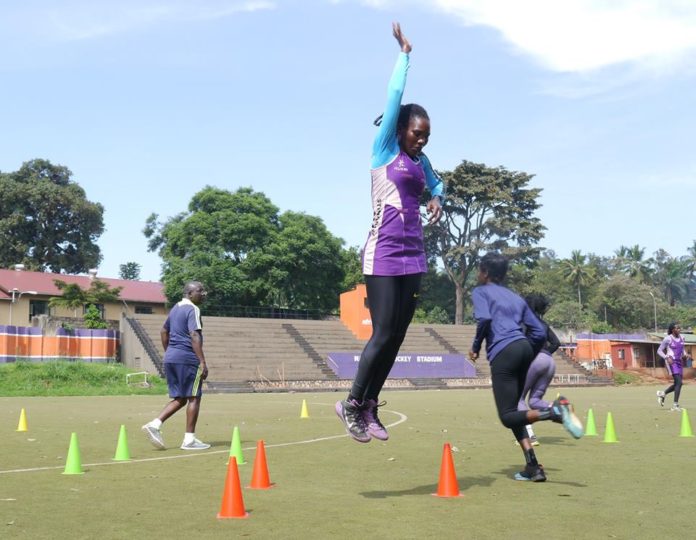
She Cranes in training at mtn arena Lugogo

The Uganda National Netball team, She Cranes will face England Roses in a three-match Vitality Netball International Series as part of the preparations for next year’s World Cup in England.

The She Cranes started training on Tuesday at the MTN Arena in Lugogo, two days after the National netball League concluded.

On their tour to England, She Cranes will most certainly be looking to demonstrate once again their talent and potential on the international stage.

Fans of the Vitality Netball Superleague will recognise Uganda’s captain – Loughborough Lightning star Peace Proscovia.

The She Cranes have developed rapidly over the last few years, rising from 15th (August 2014) in the International Netball Federation’s world rankings to 7th (April 2018).

During this period, they not only clinched their first-ever African netball title but became the first host nation to do so unbeaten.

The England Roses will play on home soil for the first time since being crowned Commonwealth Games champions.

She Cranes Squad:

Peace Proscovia (loughborough Lightning), Lilian Ajio (Prison), Stella Nanfuka (Prison), Stella Oyela (Prison), Rachael Nanyonga (NIC), Ruth Meeme (NIC), Halima Nakachwa (Prison), Florence Adonia (NIC), Joan Nampungu (NIC), Muhayimina Namuwaya (NIC), Desire Birungi (NIC), Betty Kizza (NIC), Fauzia Nakibuule (KCCA), Jesica Achan (Prison), Mary Nubba (NIC), Zamu Seera (NIC), Shafie Nalwanja (KCCA)

Vitality Netball International Series: England Roses vs. Uganda

Tuesday 27th November – Echo Arena, Liverpool

Friday 30th November – Copper Box Arena, Stratford

Sunday 2nd December – Copper Box Arena, Stratford

Stories Continues after ad