Stanbic Bank
Stanbic Bank
16.9 C
Kampala
Stanbic Bank
Stanbic Bank
Home Blog Page 1426

Oliver Kigongo accused of selling UNCCI’s properties

UNCCI President Olive Kigongo

The President of Uganda Chamber of Commerce and Industry (UNCCI) Oliver Kigongo has sold off the chamber’s properties without following due process, according to the letter written by the Minister of Trade, Industry and Cooperatives Amelia Kyambadde.

Minister Kyambadde wrote the letter on December 6, 2018 and addressed it to Ms Kigongo informing her of the petitioners’ concerns, including that Ms Kigongo and her accomplices have not accounted for the properties sold off. According to the petitioners, it is only the Annual General Meeting (AGM) that can approve the sale of properties. Kigongo has not organised the AGM.

The petitioners also accuse Ms Kigongo and her accomplices of organising board meetings without quorum. “The current number of the Board is 12 which is below the mark of 15 as required by Article 31 of UNCCI,” the minister wrote based on what the petitioners told her.

The minister also noted that the petitioners informed her of the indebtedness of Chamber, arising out of recycled bills that include arrears to the National Social Security Fund (NSSF).

According to the letter, Ms Kigongo has not respected the court order which was issued on December 21, 2016, ordering her and other office bearers not make major policy decisions during the subsistence of the injunction that stopped elections of UNCCI President. “The petitioners claim it (injunction) has not been respected. The petitioners are now seeking my intervention on behalf of Government,” the minister further wrote.

The minister has urged Ms Kigongo’s leadership to comply with the court ruling of June 20, 2017. She has also demanded for an Extra-Ordinary General Meeting (EGM) in order to discuss and resolve the other allegation of gross mismanagement as well as the possibility of organising elections.

The minister also wants Kigongo to put a caveat on the properties of UNCCI.

The petitioners, according to the minister’s letter have also accused Ms Kigongo of sacking the Secretary General and staff as well as mismanaging elections.

Stories Continues after ad

Police holding three suspects over armed robbery

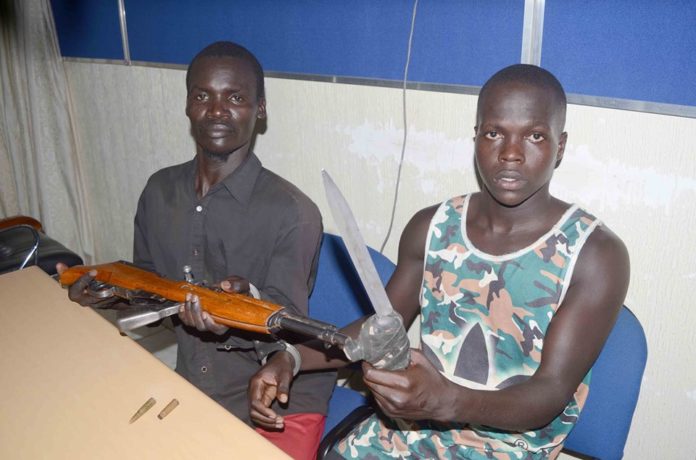
Police are holding three suspects arrested in relation to their indulgence in armed robbery of motorcycles and other valuables.

Their were arrested as a result of the recent murder of a Boda rider identified as Wellaci Makumbi who was shot dead in Bweyogerere on Friday November 30, 2018 and his motorcycle Bajaj Boxer number UEN 922L robbed.

The three were arrested in a joint operation conducted by security agencies, suspects identified as Lawrence Okello a resident of Anthony Namawojjolo, Ouma of Namuwongo and Grace Kahunde the custodian of suspected stolen motorcycles.

The group is suspected to have been involved in a series of motorcycle robberies after they were found with an SAR gun that is averred to be used in committing crimes.

One of the suspects identified as Okello confessed before the security operatives to having responsible for shooting Makumbi in the head while working under the orders of his leader Hassan who is still on the run.

Okello told the officers that he had met Hassan at one of the buildings along Kisekka who befriended him and was introduced to a quick money making venture of carrying out high level motorcycle robbery missions.

He said that Hassan (still at large) brought an SAR gun in a bag and after using it to murder Wellaci Makumbi Kito a resident of Kirinya, he told Okello to meet him Namuwongo for his payment as he took off with the robbed motorcycle plus the gun.

Upon search at Grace Kahunde’s home, the officers recovered motorcycle belonging to the deceased and an SAR gun hidden under a table in a bag.

The suspects are currently detained at Bweyogerere Police Station on charges of murder vide CRB 270/2018 contrary to section 188 and 189 of the Penal Code Act as more investigations are still on going.

Stories Continues after ad

MPs grill BoU on Shs478b spent on Crane Bank Limited takeover

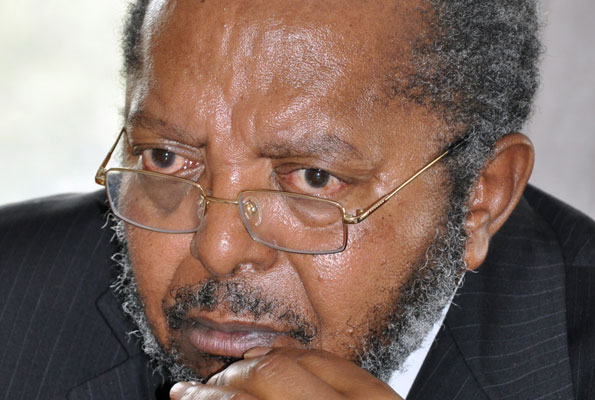
Bank of Uganda's Emmanuel Tumusiime-Mutebile

Bank of Uganda (BoU) officials on Wednesday were grilled by Parliament’s Committee on Commissioners Statutory Authorities and State Enterprises (Cosase) for claiming to have injected Shs478.8 billion in Crane Bank Limited (CBL) yet it needed Shs157 billio for capitalisation before it was finally sold to its competitor Dfcu Bank at Shs200 billion.

The committee has been probing BoU for almost a month over the closure and sale of seven commercial banks. The MPs on the committee are using the Auditor General’s report revealed irregularities in the sale of the banks-CBL, Global Trust Bank, Greenland Bank, International Credit Bank, Cooperative Bank, National Bank of Commerce and Teefe Trust Bank.

Yesterday BoU officials were not on the same page when asked how much undercapitalised Crane Bank was before they took a decision to shut it down. Governor Tumusiime Mutebile admitted he didn’t have the right figure while Ben Ssekabira, the Director Financial Markets Coordination, said it was Shs157 billion .

Ms Justine Bagyenda the former Executive Director bank supervision said CBL needed an additional capital of at least Shs32 billion by September 15, 2016 and progressive capital of Shs56 billion if capital adequacy was to be restored by October 31, 2017.

On Wednesday morning when asked again by Cosase Chairman Abdu Katuntu how much the bank needed for capitalisation before its closure, Sekabira maintained that the money needed was Shs157 billion.

Katikamu South MP Eng. Abraham Byandala wondered why there was a rush to take over Crane Bank since it had been given up to end of October 2016 to recapitalize. “A bank can even be recapitalised within a day but it was taken over 10 days before the time it was given,” he said.

MP Medard Ssegona asked for documentary evidence before Odonga Otto questioned why Shs478 billion was spent on a bank that needed only Shs157 billion at the time of closure.

“If Crane Bank was in deficit of Shs157 billion, why did you use Shs478 billion to clear mess? Why didn’t BoU just capitalise Crane Bank with Shs157 billion,” MP Odonga Otto asked.

BoU spent Shs466. 6 billion during the takeover as liquidation support to CBL to keep it running while Shs12.2 billion was cost to service providers, making a total of Shs478.8 billion which came from taxpayers’ purse.

Stories Continues after ad

Ecobank, the Pan African Bank, appoints MFS Africa Ltd as digital payment partner

Ecobank logo

Ecobank, The Pan-African bank announced the appointment of MFS Africa as digital payment partner enabling cross-platform payment services for Ecobank account holders. The partnership allows Ecobank customers to send and receive money to and from over 170 million mobile money users through an integration with MFS Africa that covers all Telcos in the MFS Africa Hub. The service is both domestic and cross -border intra-Africa transfers leveraging Rapid transfer, a proprietary instant remittance product of Ecobank.

Ecobank operates in 33 African countries, serving over twenty million customers. In line with the bank’s digital strategy, the partnership with MFS Africa Hub creates the first major initiative of interoperability between bank account and mobile money customers. This brings greater value for mobile money customers as they can now send money directly to any bank account in Ecobank without infrastructural hinderances; conversely Ecobank customers can do the same.

MFS Africa operates the largest mobile payments hub network in sub-Saharan Africa, connecting over 170 million mobile wallets, and a wide network of money transfer operators and merchants. Through partnerships with mobile network operators including MTN, Orange, Airtel, Moov, Econet, Tigo, Safaricom and Vodafone, MFS Africa allows mobile financial services to scale across borders, currencies and networks with a Pan African Bank like Ecobank.

“The partnership between Ecobank and MFS Africa represents a significant step in building pan-African linkages between mobile money services and traditional banking channels”, says Ade Ayeyemi, CEO of Ecobank Group.

“Typically, banks and other financial service providers seeking to integrate to mobile wallet systems are confined to domestic markets with almost no interoperability among networks in a single country, let alone across borders, severely inhibiting utility, efficiency, and customer experience. The collaboration between Ecobank Banking Group and MFS Africa eliminates this hurdle and accelerates the ecosystem, driving financial inclusion and offering a greater range of options to Africans”

While conventional wisdom pits banks and mobile money services against each other as incumbents threatened by disruptors, the reality is quite different. Interoperable cross platform services expand the pie of financial possibilities, bringing more choice and value to consumers using bank accounts or mobile wallets, and leveraging the strengths of both types of players.

Speaking on the partnership, Dare Okoudjou, founder and CEO of MFS Africa says that the region’s financial inclusion landscape offers exciting opportunities for innovation and collaboration between Banks, other financial institutions, Mobile Money Operators and Fintech.

“We’re proud to offer seamless payments across networks and borders into the next frontier of financial inclusion – mobile wallets – to Ecobank customers. Historically, the relationship between banks and fintech has been competitive but Ecobank has demonstrated a win-win approach to partnership that takes care of every stakeholder in the value chain. Ecobank is the first financial institution that shares the MFS Africa vision to make financial services more seamless, convenient, and intero perable across Africa”.

Stories Continues after ad

Bank of Africa champions saving culture in children

Kids pose for a picture during the Bank of Africa Tots-to-teens event last week

The Bank of Africa (BOA) in partnership with Jubilee Insurance last weekend launched a countrywide Tot 2 Teens savings campaign in which all parents in Uganda can enjoy up to 25 million in free life insurance and hospital cover.

The campaign which runs through the festive season to early 2019 also covers free medical check-ups, a zero monthly management fees, a free money box and great interest rates. The campaign runs through the festive season to early 2019.

Speaking at the launch of the campaign in Kampala, Stella Atim, the bank’s Head of Retail Banking at said “We are excited to have Jubilee Insurance as our partner of this amazing product and the Tot 2 Teens product is aimed at encouraging parents and children to start saving at an earlier age while enjoying a free insurance benefit.”

She said the interplay between insurance and banking is a critical strategy in supporting the penetration of insurance in the country which is below 1 percent and one of the lowest in the region. “Bank of Africa is one of the few licensed banks operating a Bancassurance business in the country,” Atim said

The Tots 2 Teens account comes with full life assurance component on the product for death, critical illness and permanent disability. The bank also provides financial literacy programs to children which provide a solid base their latter financial freedom and security in life.

The Tots 2 Teens activity is happening a cross all the BOA’s 35 branches in the country for the entire festive season and into 2019 and parents from all walks of life have been invited to visit any branch and register their children for the Tots 2 Teens product.

Stories Continues after ad

EAC tax authorities commit to push for harmonised domestic tax system

Commissioner General of Uganda Revenue Authority Doris Akol

The East African Community (EAC) tax authorities have committed to push for the harmonisation of domestic taxes in the region in order to deepen trade and investment.

In the latest joint communiqué released in Nairobi, Kenya, the commissioners general of the revenue authorities of Tanzania, Rwanda, Kenya, Uganda and Burundi also said they had agreed to enhance tax compliance.

The harmonisation of domestic taxes is expected to be achieved by developing a common customs management system to replace the independent systems used at individual state partner states of the EAC.

“This will enhance information sharing and help prevent cross-border fraud,” said the statement issued at the end of the 45th East Africa Revenue Authorities Commissioners General (EARACGs) meeting that was held days ago.

“To further deepen the EAC Common Market, RAs resolved to more boldly champion the domestic tax harmonisation agenda with a view to removing internal distortions to the free movement of labour and investment flows,” added the communiqué.

The officials agreed to implement the electronic East African Community Customs Valuation System to enable value benchmarking of various goods.

The major goal of these meetings is to ensure that the revenue agencies in the region work together towards the harmonization of tax regimes in the region aimed at fostering competitiveness, employment, and further contribute to the sustainability of public finances and eventually economic growth in the region.

The East African Revenue Authorities Technical Committee (EARATC) helps the Commissioners General to identify challenges, carry out studies and analyse technical issues in tax administration. The committee also provides appropriately researched recommendations in line with international best practice and subsequently ensure implementation of the agreed recommendations.

The EARATC’s key achievements in the past few years include; the annual publication of the Regional Comparative Revenue Report, Performance Based Pay, Succession Management Framework, technical assistance to South Sudan in establishing her revenue administration, study and analysis of production sharing agreements, identification of inadequacies in the laws targeting the extractive industry, among others.

Other achievements include; addressing emerging concern on increased volume of transit of sensitive goods through Kenya and Tanzania to non-EAC countries, harmonization of tax procedures, establishment of forensic laboratories, tax payment through electronic devices, formation of international tax offices, taxation of multinational corporations, and making revenue authorities to be a single revenue collector.

Stories Continues after ad

Vipers name squad for vital CAF Champions League clash in Algeria

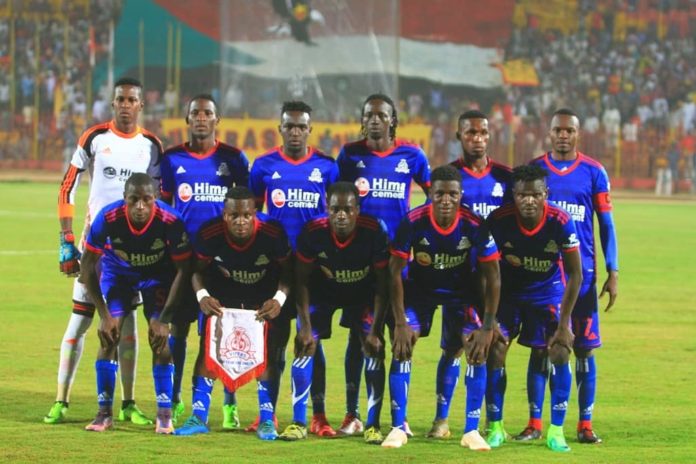
Vipers Team

Uganda Premier League reigning champions Vipers Sports Club are 180 minutes away to making it to the group stages of the 2018/19 Caf champions league group for their first time.

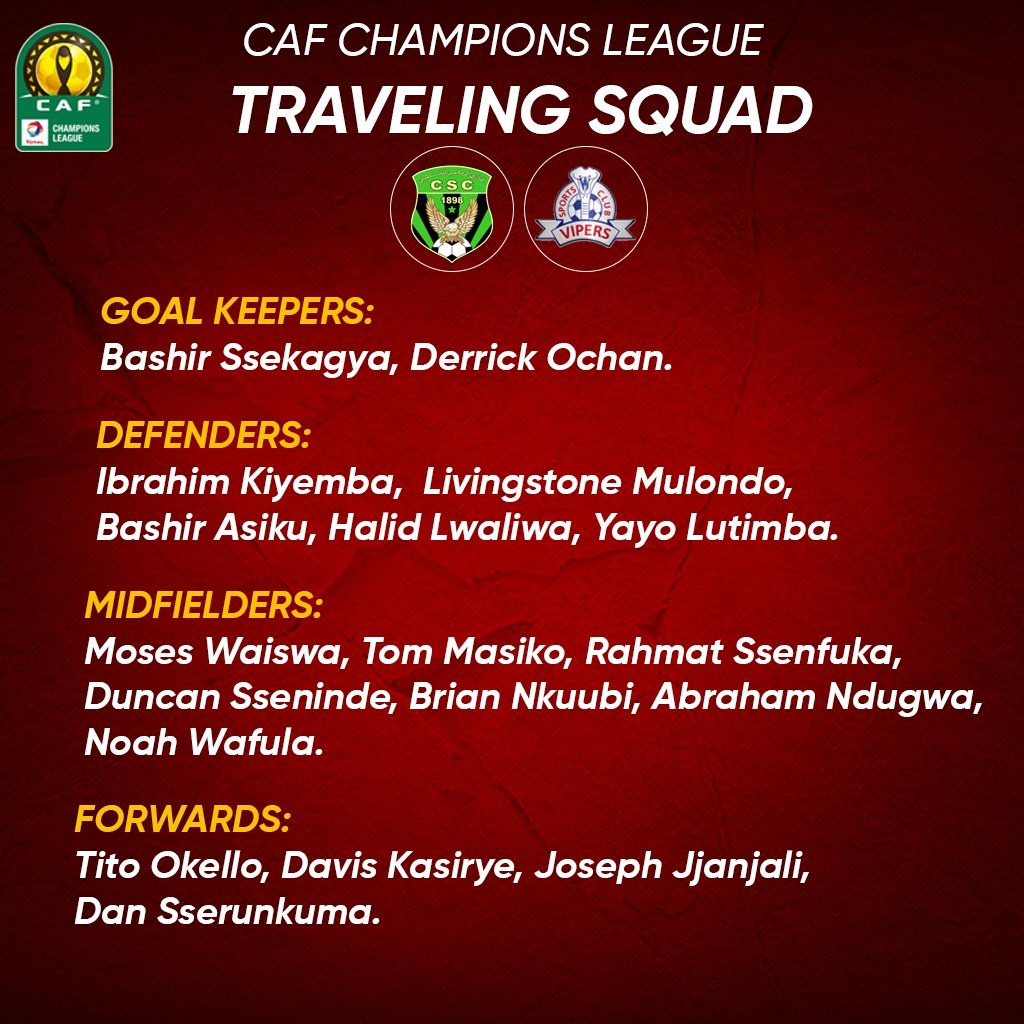
An 18-man squad has been named by manager Javier Martinez Espinosa to travel to Algeria and face Sportive Constantine in the first leg of the qualifier.

The squad consists of two goalkeepers, five defenders, seven midfielders and four forwards.

Captain Tadeo Lwanga and Geoffrey Wasswa miss out from the squad due to accumulation of yellow cards while first choice goalkeeper Fabien Mutombora is still ruled out due to an injury.

The return leg will take place between 21st to 23rd December at St. Mary’s Stadium, Kitende.

The victor of the fixture over the two legs will qualify for the group stages while the loser will drop to the Caf Confederations cup.

The winners at this stage will be a total of 15 clubs that will join CAF Champions League Winner (Season 2018) in the group matches of the 2018-2019 season.

The draw for the 2018/19 CAF Champions League group stage will take place on 28th December 2018.

The match will be played on Friday, 14th December in the city of Constantine at the Stade Mohamed Hamlaoui at 9pm Ugandan time.


Caf Champions League

Friday, 14th December 2018

Sportive Constantine vs Vipers SC

Stories Continues after ad

Uganda’s M-Scan wins Shs93m in 2018 TechCrunch Startup Battlefield Africa

M-Scan has beaten 14 other African companies to emerge winner at the 2018 TechCrunch Startup Battlefield Africa

Ugandan healthtech startup M-Scan has beaten 14 other African companies to emerge winner of the 2018 TechCrunch Startup Battlefield Africa.

Yesterday 15 startups from different African countries faced off in the innovation showdown that would reward the winners with the much needed US$25,000 (about Shs93 million) equity-free grand prize, a trip for two to TechCrunch Disrupt San Francisco 2019, and the coveted title of ‘Africa’s Favorite Startup’.

Held in Lagos, Nigeria, the 2018 TechCrunch Startup Battlefield Africa, was the second bout by TechCrunch in Africa, having held the first last year in Nairobi, Kenya.

TechCrunch says it was impressed by the 2017 event, the reason they came back this year.

“African startups impressed us with their innovative solutions and effective business models, so we had to come back and find even more impressive companies from across the continent,” writes Mike Butcher, a reporter at TechCrunch.

TechCrunch reviewed several hundred startups from across the region to come up with the fifteen that faced off today at the Facebook-funded competition.

M-SCAN, the winner at the 2018 TechCrunch Startup Battlefield Africa, has developed portable mobile ultrasound devices (Ultrasonic probes) that are laptop, tablet, and mobile phone compatible.

According to TechCrunch, “the judges were impressed with its scalability potential to make many other medical access devices affordable for Africa, which mother and infant mortality is unforgivably high.”

Other than M-Scan, Uganda was also represented by LabTech, which has created UriSAF, a urine testing hardware and software solution designed to speed up the diagnosis of Uterine Tract Infections (UTIs).

Bettr, a virtual banking experience powered by your smartphone and your data, was the runner-up.

Bettr has the potential to make banking way more accessible to millions of people currently unbanked across Africa, says TechCrunch.

The other startups that pitched at the 2018 TechCrunch Startup Battlefield Africa were:

Apollo Agriculture: Leverages advances in machine learning, remote imaging via satellite, and mobile money to deliver input finance and agronomic advice to smallholder farmers with radical efficiency and scalability.

Sud-pay: Developed an integrated, multi-support, multi-service, and multi-operator digital tax collection platform that connects merchants to financial institutions.

Complete Farmer: A “crowdfarming” platform that enables users to invest in sustainable farms and monitor farming activities without discarding their daily routine using data-driven cultivation protocols and IoT enabled precision farming.

FoodHubs: Uses mobile solar powered cold carts and cold rooms to help smallholders farmers store their produce, so as to avoid post-harvest losses.

Honey Flow Africa: Optimizes beekeeping operations by digitizing and bringing the power of IoT to the beekeeping process to improve honey production, processing, and predictability.

AgriPredict: Provide farmers with tools that equip them with information that will improve predicting disease, pest infestations, and extreme weather conditions.

MAX: Transforms moto-taxi mobility in Africa using mobile apps, inclusive data-driven asset-finance, and a comprehensive driver on-boarding program that uses machine learning and psychometric tests to profile drivers and create credit scores for them.

MAX enables financial inclusion for drivers, prioritizes safety, and uses IoT technology to track all drivers in real-time.

CodeLn: An end-to-end technical recruitment platform that automates the entire recruitment process, making it fast and easy for companies to find and test Software Developers and reduce the risk of bad hires.

Bankly: An innovative financial product focused on reaching the unbanked in Africa, in a “Recharge to Save” model. Bankly developed a cash-digitization payment and savings products, in which users pay using Bankly vouchers.

Powerstove Energy: The world’s first clean cookstove with built-in self-powered IoT System for real-time monitoring.

Its 100 percent smokeless biomass cookstove cooks food times faster and burns 70 times less of processed proprietary water-resistant Goodlife Biomass Pellets produced from forest and agricultural waste.

Pineapple: A fully decentralized insurer. With Pineapple, members pay premiums into their own wallets rather than a central pot.

When claims occur, they are distributed to all wallets in the community, which collectively help pay for the claim.

Trend Solar: Assimilated a 4G Android Smartphone and Solar Home System to provide affordable access to energy, internet, and mobile in an all-in-one solution that seeks to address the needs of 640 million+ people currently living off-grid in Sub-Saharan Africa.

Stories Continues after ad

Museveni did not say anti-corruption agencies have failed-DPP

DPP Justice Mike Chibita

The Director of Public Prosecutions (DPP) Justice Mike Chibita has said President Yoweri Museveni did not launch State House Anti-Corruption Unit on Monday on because Anti-corruption agencies have failed but that they will hand in hand with the new unit headed by Lt. Col. Edith Nakalema to fight the vice.

“The President did not say the anti-corruption agencies have failed, what he said is that the agencies have some weevils and it is possible some of the matters reported are not looked into,” Chibita said on Wednesday while being hosted on NBS Morning Breeze by journalist Simon Kaggwa Njala.

Chibita was responding to issues related to corruption in the country that touched on agencies fighting the vice, court cases and human resources available to deliver judicial service to Ugandans.

Mr. Chibita said that as the head of state, the president in a way has to take responsibility of what is happening in the country “and you can understand why the country is looking at him.”

Asked as to why Museveni set up the new Anti-corruption unit despite the existence of other agencies like the IGG, CID and others, Chibita said the president did open the unit to enable the people “to call an independent agency on matters to do with corruption and we welcome the creation of the office.”

He said the DPP and the IGG are two prosecuting units in the anti-corruption division at the High court and operate smoothly.

He said DPP prosecutes cases reported by the police while the IGG has an inbuilt office of investigation.

He said the conviction rate of corruption related cases is the highest in the country at 85 percent, which he said includes prosecuting high profile figures. “Right now, we prosecuting the State former Minister for Labor, Employment and Industrial Relations, Herbert Kabafunzaki,” he said.

Asked if he was independent in executing his duties as DPP, Chibita said he does not for instance encounter political interference. “We are independent and have been left to do our work, the only area we are not yet independent is funding of our activities,” he said, urging the public to report corruption and other forms of crime.

“Majority of the officers we are working with are hardworking, patriotic and full of integrity. We have had only 10 cases out of the 600 officers we have,” he said.

Stories Continues after ad

AfDB, Partners, to host workshop on COMESA harmonization of Seed Policy

Fall Armyworm which destroys crops is a key concern for COMESA region

The African Development Bank (AfDB), through its Technologies for African Agriculture Transformation (TAAT) programme, will organise a workshop for regional and partner organizations on seed policy in Nairobi, Kenya, as part of an ongoing effort to harmonize regional policies on registration of new maize varieties and products to control Fall Armyworm.

According to the press release, the workshop will convene delegates from 21 Common Markets for Eastern and Southern African’s member countries (COMESA), and will take place on December 13 and 14, 2018 in Nairobi, Kenya.

According to organisers, the workshop will seek to identify bottlenecks in the process of implementation of harmonized seed policies within the COMESA region and develop an action plan towards eliminating these challenges. This will accelerate the release and deployment of seed in areas with similar agro-ecological conditions.

As part of its TAAT agenda, the AfDB established a Fall Armyworm Compact to mobilize support from researchers, the public and private sector, to confront the pest that is targeting and devastating crops in Africa. The TAAT program seeks to identify new technologies to combat the Fall Armyworm and distribute these technologies to millions of smallholder farmers across the continent.

According to scientists, Fall Armyworm, or Spodoptera frugiperda, is an insect that is native to tropical and subtropical regions of the Americas, now present in Africa. In its larva stage, it can cause significant damage to crops, if not well managed.

Experts say Fall Armyworm is a dangerous transboundary pest with a high potential to continually spread due to its natural migratory capacity. Without appropriate action, it could cause 21 to 53 percent of maize yield losses in 12 African countries within five years, estimated at between US$2.5 billion and US$6.1 billion.

Participants will look at ways to identify policy and regulation the Bank and its partners can work on to support countries within the COMESA region.

The workshop is expected to host participants from regional and sub-regional organizations, Market Matters Inc. (MMI), The African Seed Access Index (TASAI), African Agricultural Technology Foundation (AATF), West and Central African Council for Agricultural Research and Development (CORAF) and its counterparts in East, Southern and North Africa. The International Institute for Tropical Agriculture (IITA) and the Common Markets for Eastern and Southern African’s member countries (COMESA) and other partner institutions, will also be represented.

Stories Continues after ad