Stanbic Bank
Stanbic Bank
18.8 C
Kampala
Stanbic Bank
Stanbic Bank
Home Blog Page 1427

Eight ways to prepare yourself for business crises ahead

Martin Zwilling

By Martin Zwilling

Most entrepreneurs see their new venture as a fun adventure, until the pressures of a cash flow crisis, or a manufacturing quality problem, or a major customer satisfaction problem hits. Even with all my years of experience mentoring in business, I can’t predict how you will prepare for and react to pressure situations. I wish I could, since these often make or break your business future.

Over the years, I have found some key things that you can do to prepare yourself, how a proper mindset can mitigate the pain, and put you back in control. Here are the top approaches I recommend, and the entrepreneur mindsets that I see in survivors:

Evaluate new competitive threats as new opportunities. New competitors can steal your market, or they can open up new markets. Entrepreneurs who react with fear and anger are in major jeopardy of losing their health, since competitors are a constant in the startup world. Use them positively to tune your solution and expand your opportunities.

Use business model pressures as drivers for innovation. There is a natural human tendency to fight the need for change, and the pressure to change causes pain. True entrepreneurs love change – that’s why they are starting a new venture. They use pressures, like shrinking margins, as drivers for their next innovation in manufacturing.

Incorporate fun and humor into pressure relationships. If your team is feeling over-whelmed by the pressures of customer demands, it may be time for an off-site fun event to get them recharged and fully motivated. Fun and humor will also offset the tension in dealing with tough customer issues, resulting in higher satisfaction, loyalty, and referrals.

Take control of the situation by breaking task into chunks. When the challenge ahead looms large, it’s easy to let anxiety get the best of you, and you are afraid to start. Every big task can be broken into milestones, allowing you to enjoy small successes. That’s why I suggest a business plan before you start, with a timeline and deliverables.

Work from your strengths – don’t worry about weaknesses. Most entrepreneurs start with passion and confidence, but many succumb to their weaknesses when pressures set in. Lead with your strengths and in-depth skills, and don’t be afraid to ask for help from advisors or partners to fill in the gaps. Confidence alone will overcome many challenges.

Turn every failure into a positive learning opportunity. When pressures mount and things go wrong, don’t start looking for excuses, or someone else to blame. Make every failure a lesson learned, and project that mindset to your team. Thomas Edison counted many learning opportunities, bouncing back after 1000 failures on the light bulb alone.

Prepare for challenges rather than hope for the best. The best entrepreneurs always have a plan, with alternatives, and continually research their industry and competitors. Others strike out blindly, assume it will be an easy win, and quickly feel the stress and pressure, with minimal insight on how to respond. Be over-prepared, and enlist advisors.

Stay physically fit and balance work with play. Pressure situations will happen in every business, so stay at your best both physically and mentally to respond. Don’t let the “normal” workload wear you down – keep a balanced focus on work, and find other activities, including sleep and entertainment, to keep up your motivation and stamina.

Based on my own experience as a business executive and advising small business owners, I’m convinced that anyone can learn from these techniques to handle the pressures of a new venture or existing business, no matter what their background. It won’t happen by default, and it does take effort and initiative on your part.

You too can then thrive on the challenges and pressures of your business, rather than let these pressures destroy you. Most entrepreneurs I know can’t stand the boredom of “business as usual,” as that threatens their sense contribution and self-worth. Be one of the best, whose motto proudly is “when the going gets tough, the tough get going.”

The writer is a veteran startup mentor, executive, blogger, author, tech professional, professor, and investor. Published on Forbes, Entrepreneur, Inc, Huffington Post.

Stories Continues after ad

Widow accuses Stanbic bank of failure to pay Shs139.7m

Stanbic bank

A widow of a former senior government official has accused Uganda’s biggest bank by assets Stanbic Bank Uganda Limited of refusing to pay her Shs139.748, 000 which court awarded as 14 percent on Shs142.6 million that the bank confirmed one of its staff fraudulently withdrew from the account of the estate of her late husband.

The 14 percent interest was calculated to take account of each of the seven years that the beneficiaries of the late government worker’s estate were deprived of their money. Initially the family had asked for 500 million for damages, lost business opportunities and interest at 24 percent per annum but that demand was amended by the trial judge to 14 percent interest per year for seven years, which the bank agreed to act on but later became adamant and refused to pay the money.

The widow Theresa Regina Arionget Outeke was married to the late Leo Y.A Outeke, the former Auditor General of Uganda who served from mid-1970s to 1988 when he officially retired, but was again engaged on contract basis from 1988 to 19992. He died on June 14, 2007.

The Shs142.6 million was meant to be pension for the late Outeke whose pension number was PEN.13879 under file No.C.P 9849. The money was withdrawn from account No.0140001379901 that belonged to the late Outeke.

In letter dated July 31, 2018, the widow complained to the Bank of Uganda (BoU) executive director bank supervision, Uganda Bankers Association (UBA), State House to act on Stan Bank to pay the money (Shs139.748, 000) as interest. According to the letter Stanbic Bank paid Shs142.046 million to the late Outeke’s family.

The widow aged 80, in the letter said Stanbic Bank Uganda Limited, now Stanbic Holding Limited, has refused to pay the Shs139.748, 000 as directed by the judge and instead sought to appeal through its lawyers ARCADIA ADVOCATES. The widow claims this is causing further inconvenience and suffering to the estate of the once loyal and longest serving Auditor General of the Republic of Uganda.

Stories Continues after ad

Sadolin opens new colour center in Gulu

Uganda’s biggest paint company Sadolin has opened its latest colour center along Main Street, Gulu Municipality in bid to expand market reach and consolidate its position in the Ugandan market.

The establishment, Sadolin’s sixth in the country will offer experiential shopping for high end customers and will be residence to all Sadolin products and services including decorative paints, automotive paints, and coatings among others.

The colour centers are setup through franchise agreements with local entrepreneurs and Sadolin. The Northern Uganda based Colour Centre is run by local businessman Mr.Bramdev Gosai.

Inaugurating the center, Mr. Deon Nieuwoudt, AkzoNobel Commercial Director East Africa, said that this was an affirmation of AkzoNobel commitment to the expansion of Sadolin footprint and growth commitment to Uganda through firming up franchise agreements with local entrepreneurs and stimulating the economy through job creation.

He explained, “The concept of the color centers aims to extend Sadolin product to customers through experiential shopping and to give local entrepreneurs the opportunity to expand their business frontiers by being part of the Sadolin chain while tapping into our rich expertise. To us, this is a stride in enhancing our customer care, proximity of the Sadolin product as well as partnerships with local entrepreneurs.”

Customers in Gulu will have variety and will be able to choose any paint of their choice even if it does not exist on Sadolin’s color chart.

The colour center has a state of the art colour tinting machine that can be able to make, mix and match more than 100 colours. (Give example of making paint in the colour of a shirt/ anything).

It will also be able to manage any bulk paint purchases as well as offer one on one colour consultations for all walk in customers.

The Colour center concept is part of the AkzoNobel paint and coating company projects aimed to give customers experiential color shopping and entrepreneurs and opportunity to have access to world class technology services.

Since re-launch, the Sadolin paint quality has improved a tenfold as the company is benchmarking international quality standards.

Stories Continues after ad

Anena literally disapproves Museveni

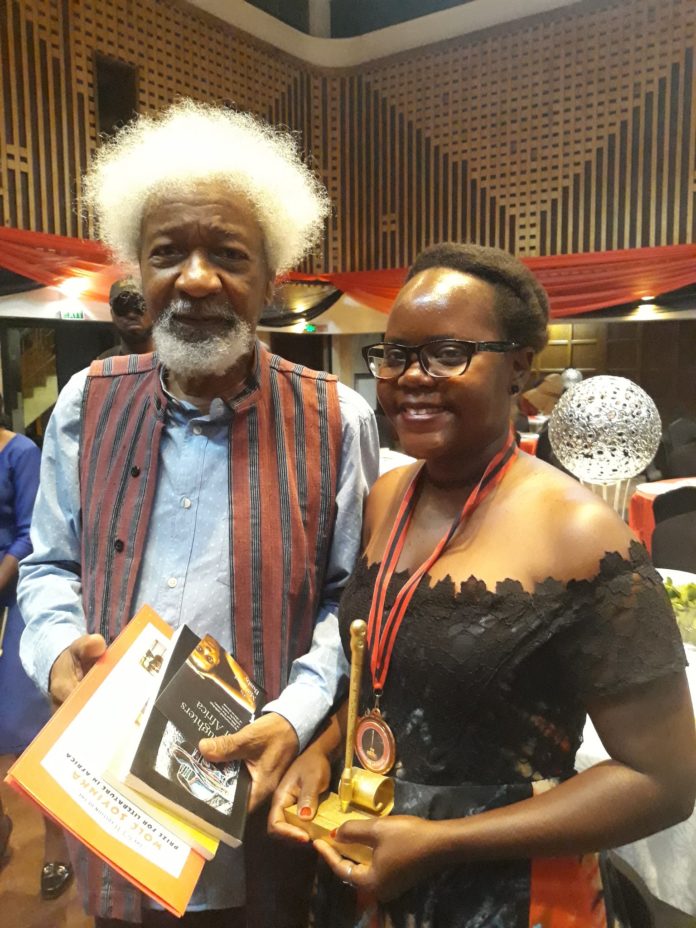
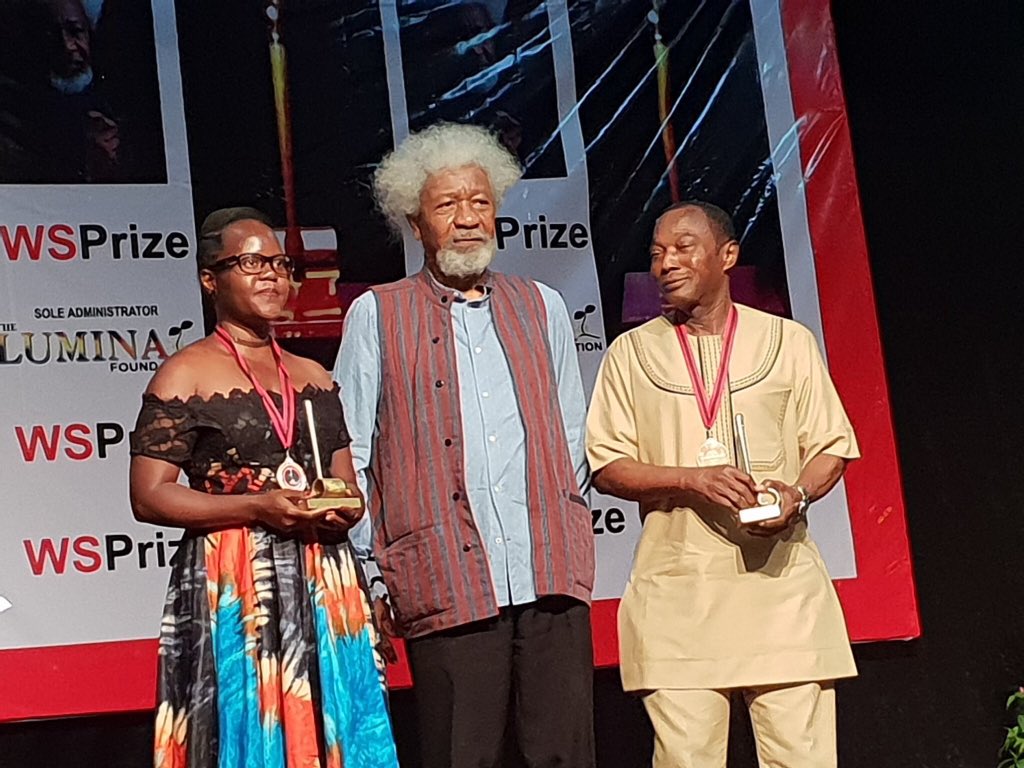
The year 2018 has been one to remember for citizens of Uganda, from the Ugandan Cranes qualifying win to the recent win by Quinn Abenakyo who made it to the top five winners and was crowned MISS AFRICA, Ugandans around the world continue to defy the odds and excel in their various fields of expertise with the latest one being our very own Harriet Anena who also bagged the Wole Soyinka Literary Prize over the weekend at the Muson centre, Lagos Nigeria.

On November, 9 2018, Anena and Prof Tanure Ojaide were both jointly honored with the Wole Soyinka Prize for literature after their works ‘A Nation in Labour’ and ‘Songs of Myself’ respectively, were both considered to be outstanding out of the initial 110 literary works of art that had been submitted from various countries allover the continent of Africa.

This not only comes as a win for the Ugandan born artist but also for young writers and artists around the nation. Despite his propensity to revert to history in his dialogues the president has come out on several occasions to dismiss the various uses of studying humanitarian and arts subjects at higher institutions of learning, instead dubbing them ‘useless’ and ‘unmarketable’ in today’s generation. The young poet’s win only proves that arts subjects are just as equally marketable and yielding as any other discipline.

“It has tremendously brought to light to the Poetry fraternity which has grown into a movement especially in Uganda. Anena has set a bar for writers on how to write for generations.” Isaac Kwizera, writer and librarian, Uganda Museum.

The Wole Soyinka prize for Literature that is awarded after every two years was introduced by the Lamina foundation in honor of the writer and poet: Wole Soyinka, who also happens to be the first African writer to win a Nobel peace prize. His works, like many other African writers, were very fundamental in the formation of the ‘decolonized school of thought.’ Most African writers of this school believe that their works should not only inform but also equip or serve as tools against old colonial writings such as Out of Africa by Karen Blixen; that portrayed Africans as savage and therefore incapable of producing any form or type of literature.

Harriet Anena’s ‘Nation in Labour’ that was published in 2015 is a collection of poems that satirically portray the problems and issues many Ugandans face due to the political instability of the nation since its independence in 1962. The author who survived the Lord Resistance Army rebellion led by Joseph Kony, lived to tell her story and those of other Ugandans living in the post-war period.

Being the first Ugandan to win such an award, Anena got the opportunity to not only Hob-nob with some of Africa’s greatest minds such as Wole Soyinka himself as well as taking home the prize money to a tune of Shs37 million. The excited young poet couldn’t contain her excitement as she took to twitter to share the great news with her kinsmen: “Super happy to be the joint winner of the Wole Soyinka prize for literature in Africa, 2018, for my book a Nation in Labour.”

The young writer and former journalist at daily monitor will have a book signing on 15th December 2018 at the Uganda national Museum where copies of A nation in labour will also be available or order on Amazon and have them delivered by Turn the Page Africa.

Stories Continues after ad

Crane Bank statutory manager did not write key reports for BoU

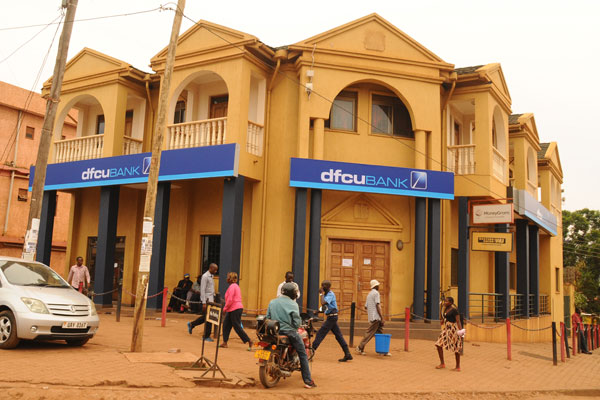
The Former Crane Bank Ntinda branch, which DFCU took over and illegally rebranded in its name, was ordered by the court to vacate and compensate Meera Investments because the property belongs to Meera.

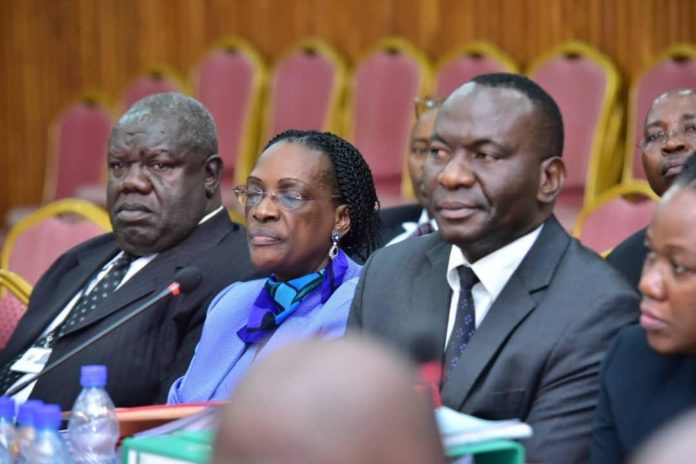
The Bank of Uganda (BoU) official who was appointed the statutory manager of Crane Bank Limited (CBL) has told Parliament’s Committee on Commissions Statutory Authorities and State Enterprises (Cosase) that he did not write a handover report or evaluation report before the CBL was sold to its rival Dfcu Bank by BoU at Shs200 billion in January 2017.

Mr. Edward Katimbo Mugwanya, made the revelation on Tuesday as MPs asked the BoU official to come with the handover report tomorrow, evaluation report, list of depositors and other documents related to the sale of CBL. BoU sold off CBL on account of being significantly undercapitalised to the tune of negative Shs239 billion in core capital.

Mugwanya was appointed CBL’s statutory manager as BoU took over the management of CBL pursuant to sections 87(3) and 88(1Xa) and (b) of the Financial Institutions Act (FIA).

“Pursuant to section 89(2) (g) of the FIA 2004, BoU in a letter ref GOV.122.10G71 dated 20th October, 2016 appointed the Statutory Manager to manage, control and direct the affairs of CBL,” reads the Auditor General Muwanga’s report on seven defunct banks that included Crane Bank, Global Trust Bank , National Bank of Commerce among others.

By saying he did not write a handover report, MPs were left puzzled about what Mugwanya did, since according to FIA, he was supposed to; trace and preserve all the property and assets of the institution, recover debts and other sums of money due and owing to the institution, evaluate the capital structure and management of the institution and recommend to the Central Bank any restructuring or re-organization which he or she considers necessary.

He was also supposed to enter into contracts in the ordinary course of the business of the institution, including raising of funds by borrowing, issue a new balance sheet and profit and loss accounts; and perform any other duties that may be assigned to him or her by the Central Bank.

The report on the compilation of inventory of assets, liabilities and equity as at 20th October 2016 indicated that CBL had total assets of Shs1.,19 trillion and total liabilities of Shs1.32 trillion and a negative total equity and reserves of about Shs131 billion at the start of the statutory management period.

According to the Auditor General (AG), BoU claims that during statutory management, it injected liquidity support of Shs466, 5 billion in CBL. “The Statutory Manager was therefore, expected to prepare a new balance sheet and profit and loss report on events of the statutory management period from 20th October 2016 to 20th January 2017 when CBL was put under Receivership,” says the AG in his report.

“Instead the Statutory manager (Mugwanya) only prepared CBL annual report and financial statements for the year ended 31’t December 2016. BoU would later engage KPMG to audit the financial statements,” the AG says.

According to the AG, The annual report and financial statements for the year ended 31st December 2016 provided were neither signed by BoU nor the Auditors. “Furthermore BoU did not provide financial statements for the period 1st January to 25th January 2017 when the P& A was completed… “I could not establish the details and values of assets and liabilities transferred to Dfcu,” he says.

The AG quotes the BoU memo from Justine Bagyenda, the former executive director of supervision to Governor Prof. Emmanuel Tumusiime-Mutebile, ref. EDS 122,10G dated July 31, 2017. The memo said the bad book of CBL at the time of takeover was Shs570.38 billion out of the gross loans of Shs1, 159 billion.

“This bad book was transferred to Dfcu to provide a resource for repayment of loans of Shs200 billion and bridge the shareholder’s deficit of Shs439.72 billion at the date of takeover. “I could not establish how the consideration of Shs200 billion was derived from the bad book of Shs570.38 billion,” he says in the report that MPs are using to raise some queries that needed responses from BoU.

I was also not provided with the schedule of loans and the corresponding collateral transferred to Dfcu, therefore I was not able to establish the values and categories of loans transferred (performing loans, non-performing loans and fully provisioned/written off loans (bad book),” says Muwanga in his report.

The issue of capitalisation is a sticking matter in BoU takeover of Crane Bank. People are allegedly to have sat and crafted a bizzre plan to defraud taxpayers. The plan was to declare Crane Bank working capital insufficient and draw cash under the guise of capitalisation. According to the shareholders of CBL, this was broad day theft and those involved must pay. They say this has nothing do to with ongoing case.

Stories Continues after ad

EC to spend Shs868b in 2021 elections

The chairperson of Electoral Commission Justice Simon Byabakama has confirmed that a total of Shs868 billion is required to conduct the 2021 general elections that will take place between 10th January and 8th February 2021.

Speaking at the launch of electoral road map, justice Byabakama said, there is a slight increase in electoral body’s budget by Shs368 billion due to continuous improvement in the electoral process, comprehensive voter education and sensitization of stake holders, inclusion of Supreme Court recommendations, price changes and exchange rate fluctuations.

He said their budget is also alluded to increase in the number of districts from 112 to 141, municipalities 80 from 39, sub counties 2000 from 1398, parishes 9500 from 7431, villages 65200 from 57, 842, polling stations 35,000 from 28, 000, Registered voters 19,400,000 from 15,277,198.

“Presidential nominations will be held in the third week of August in 2020, an updated national voter’s register must be ready by May 2020. LC I and II elections will be held in 2022 after the general elections of 2021,”

He said the Strategic Plan and Roadmap will enable them and various stakeholders in the electoral process to achieve better planning, implementation and activity coordination as well as timely implementation of scheduled electoral activities.

“With this strategy we (Electoral Commission) have launched, we shall endeavor that all eligible citizens willing to vote are registered. We are confident it shall lead us and all stakeholders to be more informed, therefore, any suggestion for a polling activity and good register should come now,” he said.

He also noted that, they have always had challenges brought about by delayed enactment and amendment of electoral laws, inadequate voter education due to under funding and Inadequate training for temporary staff.

“We shall also work at strengthening monitoring and evaluation to know if we on the right track both in the activities being carried out and day to day work,” he said.

Prime Minister Dr Ruhakana Rugunda, commended Electoral Commission for its sound consideration of National and international principles in the preparation of strategic plan.

“The strategic road mark, fulfills the constitutional provisions of conducting regular free and fair elections and demonstrates our commitment to other regional and international protocol which provide for general elections as essential,” he said.

He implored political parties and organisations to organize themselves in accordance with this road map and undertake the necessary preparatory activities so as to lawfully undertake in these elections.

Stories Continues after ad

2019 Afcon hosts to be decided in January

Afcon Trophy

The Confederation of African Football’s (CAF) executive committee will hold an extraordinary meeting on 9th January 2019 to choose new hosts for the 2019 Africa Cup of Nations.

Initial hosts Cameroon were stripped of the rights to host the 2019 Africa Cup of Nations last month on grounds of mainly insecurity and unready facilities.

The new host of the 2019 Africa Cup of Nations will be chosen on 9 January 2019 in Dakar, Senegal, a day after the 2018 Caf awards.

CAF launched a new application procedure to designate another host country.

Countries interested in hosting the competition have until 14th December to submit official bids to host the 24-team tournament which begins in June next year.

The potential host could be either Morocco or South Africa. They are the two nations that are most likely to take the hosting rights due to availability of infrastructure.

However, Cameroon was accepted to host the 2021 Africa Cup of Nations and Ivory Coast would host the 2023 Africa Cup of Nations, but it is yet to be confirmed.

Fourteen countries have already confirmed their places at the tournament and they are; Kenya, Ghana, Senegal, Madagascar, Morocco, Mali, Algeria, Tunisia, Nigeria, Egypt, Uganda, Mauritania, Guinea and Ivory Coast.

The other ten places will be decided during the final qualifiers in March 2019.

The 2019 AFCON tournament will be the first to host 24 teams. The competition will be held from 15th June to 13th July.

Stories Continues after ad

Liquid Telecom to invest US$400m in Egyptian network

Leading pan-African telecoms group Liquid Telecom has announced that it is investing 8 billion Egyptian Pounds ($400m) in Egypt over the next three years. This is part of a major partnership with Telecom Egypt which includes network infrastructure and data centres.

The investment was made during a signing ceremony between the two companies on Saturday 8 December at the Africa 2018 Forum . This historical agreement was signed by Ahmed El Beheiry, Managing Director and Chief Executive Officer of Telecom Egypt, and Strive Masiyiwa – Group Executive Chairman of Liquid Telecom’s parent company Econet. It was witnessed Dr. Sahar Nasr, Egyptian Minister of Investment and International Cooperation and Dr Amr Talaat, The Egyptian Ministry of Communications and Information Technology.

Telecom Egypt will use the network to connect Egyptian businesses to the rest of Africa, whilst also partnering with Liquid Telecom to build data centres across Egypt. Following an initial investment of US$50m in data centres and cloud services, Liquid Telecom plans to invest an additional $350m in broadband and financial inclusion initiatives, as well as high capacity data centres. These will be similar to some of the best-in-class data centres in South Africa.

Liquid Telecom’s expanding network is almost 70,000km in length and is linked to more than 600 towns and cities in 13 countries across Africa. It is also part of the wider ‘One Africa’ broadband network which has been strongly supported by the African Union leadership and President Kagame, Chairman of the African Union. President El-Sisi welcomed the development as a major milestone in connecting the African continent with Egypt and said he would continue to push the initiative during his tenure next year as Chair of the AU’s 54 nation body.

This follows the signing of a landmark partnership agreement with Telecom Egypt to mark the completion of Liquid Telecom’s award winning ‘Cape to Cairo’ network. This network represents the first direct land-based terrestrial fibre link from Cape Town to Cairo.

The US$400 million investment will enable Liquid Telecom to significantly expand its position as a connectivity and cloud solutions provider in North Africa, serving businesses in the region with world-class network and data centre services. Through its data centre offering, Africa Data Centres (ADC), Liquid Telecom is facilitating the growth of Africa’s Cloud by providing a platform for cloud services to be delivered locally in many markets for the first time.

According to the Group Executive Chairman of Liquid Telecom’s parent company Econet, Mr Strive Masiyiwa, the next mission is to complete a link between Cairo and Dakar Senegal through Sudan, Chad, and Nigeria, as well as the rest of West Africa. “We have already crossed Africa from East to West through Sudan and Chad. We are at the Nigerian border and we expect to reach Abuja by the end of January in time for the AU Summit. We want to reach Dakar before President El-Sisi finishes his term,” he said.
Mr. Masiyiwa also acknowledged the support of President Kagame, adding: “It would have been impossible to reach this far so quickly without his support. He adopted this initiative as a key project during his tenure and has been highly supportive throughout its development. We know President El-Sisi will help us take it to the next level because he understands the vision of Africa.” Mr Masiyiwa expressed his appreciation for leadership support across the continent. He said the ‘One Africa’ model could encourage other entrepreneurs to build projects in complementary sectors, such as rail and power. “We need to push the linkage of our continental power grids, and also rail and air transportation. Now is the time for bold initiatives to build intra African trade and investment.”

Stories Continues after ad

Bagyenda, Kisaame meet over Global Bank sales

Juma Kisaame

By George Mangula

The former Bank of Uganda (BoU) Executive Director in charge of supervision and former Dfcu Bank Managing Director Juma were involved in a meeting to see how the latter could dodge appearing before the parliamentary Committee on Commissions Statutory Authorities and State Enterprises (Cosase).

Cosase is probing BoU officials over the controversial sale of seven defunct banks such as Tefee Trust Bank, Greenland Bank, International Credit Bank (ICB), Cooperative Bank, Global Trust Bank, National Bank of Commerce and Crane Bank Limited.

Bagyenda days ago admitted she telephoned Kisaame when BoU put up Global Bank for sale in July 2014, a disclosure that surprised the MPs on the committee. Bagyenda and Kisaame would later sign an agreement that handed over Global Trust Bank to Dfcu Bank.

On Monday BoU Governor Prof. Emmanuel Tumusiime-Mutebile admitted he also signed an agreement as presented to him to endorse sale of Global Trust Bank.

According to the Auditor General John Muwanga who wrote a special audit report on defunct banks, BoU did not fall the required guidelines in selling off Global Trust Bank. Bagyenda days ago told the MPs that they did not take the minutes of the negotiations leading to sell of Global Trust Bank to Dfcu Bank.

Stories Continues after ad

I support Cosase probe of BoU-Museveni

The ground can no longer hold for BoU officials.

President Yoweri Museveni has said he supports the on-going probe of Bank of Uganda (BoU) by the Parliamentary Committee on Commissions Statutory Authorities and State Enterprises (Cosase) even though he has reservations on the procedure, saying it should have been in Camera. In-camera describes court cases, parts of it, or process where the public and press are not allowed to observe the procedure or process.

Cosase is probing BoU over the controversial sale of seven commercial banks including; Teefe Trust Bank, Greenland Bank, International Credit Bank (ICB), Cooperative Bank, National Bank of Commerce, Global Trust Bank Uganda and Crane Bank Limited (CBL).

Addressing the press on Monday after the launch of Anti-Corruption Unit, Museveni said he once called BoU officials over the issue of closure of banks though he declined to disclose the details.

The Auditor General John Muwanga authored a report on the sale of the seven banks indicating that BoU did not follow the guidelines for the closure and liquidation of some banks. Cosase, using the report has established missing reports and documents concerning the sale of assets of banks.

For instance, the Auditor General in his report said loans of some banks like Greenland Bank, ICB and Cooperative Bank were combined at sold at a discount of up to 93 percent.

Last week it emerged that Finance Minister Matia Kasaija wanted Museveni to intervene and close the probe but Museveni insisted that the BoU officials must face the probe.

So far the MPs have probed BoU officials over the closure of six banks except CBL. The inquiry has established irregularities in the sale of banks. The MPs will write a report on the same.

Stories Continues after ad