Stanbic Bank
Stanbic Bank
21.2 C
Kampala
Stanbic Bank
Stanbic Bank
Home Blog Page 1445

BREAKING: Tropical bank MD sacked

Tropical-bank

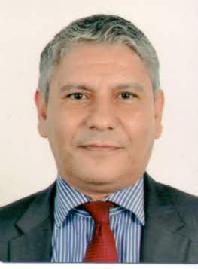
The latest news in the local banking industry is that The Managing Director of Tropical bank Kreshi Sameh Mahmud has had his contract terminated and asked to handover office immediately.

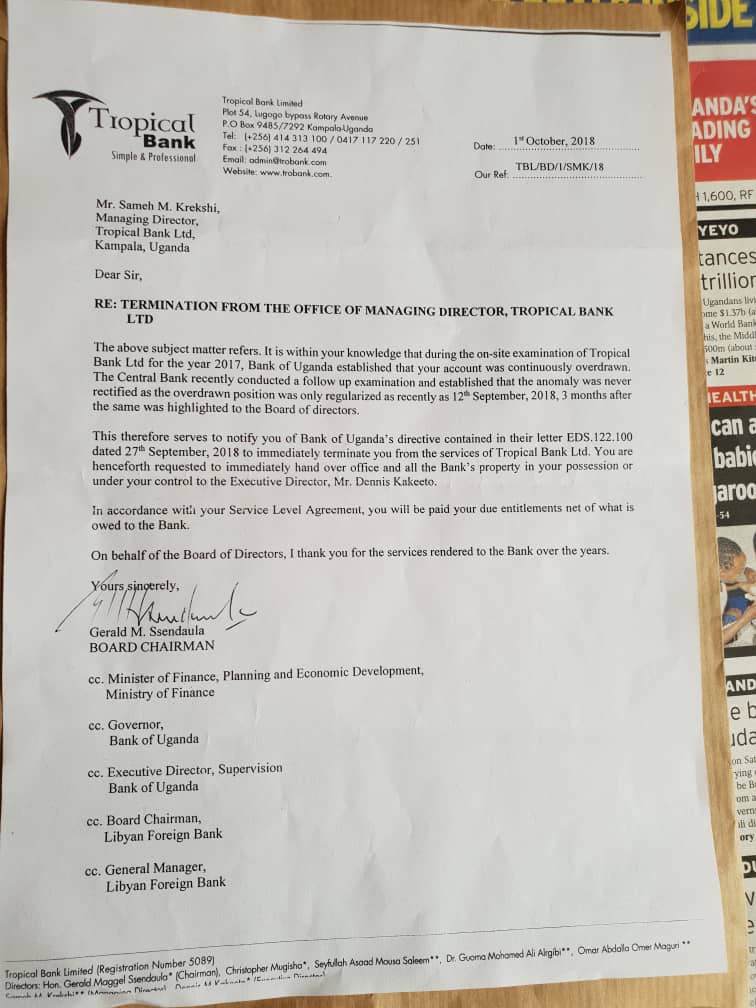
The termination letter was written by the Bank’s board chairman Gerald Ssendaula on October 1, 2018, stating that Mahmud’s bank account was continuously being overdrawn which goes against Bank of Uganda regulations.


“It is within your knowledge that during the on-site examination of Tropical Bank Ltd for the year 2017, Bank of Uganda established that your account was continuously overdrawn. The Central Bank recently conducted a follow up examination and established that the anomaly was never rectified as the overdrawn position was only regularized as recently as 12th September 2018, 3 months after the same was highlighted to the Board of directors,” Ssendaula wrote.

Denis Kakeeto, the Executive Director for now replaces Muhmud in acting position.

Sacking letter.

However, other sources say there is a clique of mafias in the bank eying US$ 7 million lying on one of the accounts for Libyan shareholders and would want to withdraw and shared it. “That’s the reason the termination of the MD is very urgent. That once he is out of the country, it will be easy for them to withdraw this money,” a source says.

Mr. Muhmud has been Managing Director of Tropical Bank Limited since August 17, 2016. Mr. Mahmud served as General Manager of Tropical Bank Limited since 2015 to August 17, 2016. He is a visionary, action oriented and hands-on Leader, with over 20 years’ experience in Treasury Operations, Trade Finance, Investment and Portfolio Management, International relations and Marketing; General bank Operations among others. He has been a Director of Tropical Bank …

Stories Continues after ad

NWSC,two ministries sign Tri-partite MoU to skill technicians in water sector

Eng. Silver Mugisha, NWSC Managing Director who is credited with the latest innovations.

The Ministry of Water and Environment, Ministry of Education and Sports and National Water and Sewerage Corporation (NWSC) have signed a tri-partite Memorandum of Understanding (MoU) aimed at skilling Engineers, plumbers and other technicians in the sector.

The above follows the July 2012, tri–partite MOU) between NWSC, Directorate of Water Development (DWD), and the Directorate of Industrial Training (DIT), under the auspices of Ministry of Education and Sports was signed. The duration of this MOU was five (5) years, and expired at the end (July 2017).

The latest MoU to run for another five years (2018-2023) was signed to benefit more technicians in the water sector, the previous one having been implemented successfully.
Representing the Ministry of Water and Environment, NWSC Board member and Director, directorate of water development in the Ministry of Water and Environment Eng. Aaron M. Kabirizi said that all technicians and plumbers will be required to be certified. “We want to know the different skills they attained from training institutions,”” he said.
Speaking at the signing ceremony, NWSC MD Dr. Eng. Silver Mugisha said a number of NWSC plumbers and technicians have learnt on the job and, therefore, there is need to test the skills.
He said that the programme is in line with the ongoing staff development plans and the corporation has made good strides towards developing training materials and vocational infrastructure/training centres at Gaba and Kachung Vocational Skills Development Facility coming on board very soon. “We have plumbers who have worked with NWSC for over 20 years and we need to certify them,” he said.

Aggrey Kibenge, the education ministry undersecretary, said certification would enable local technicians and plumbers to compete for opportunities even at regional level.
While Dr Martin Kalibala, the manager training and capacity building at NWSC, said since 2016, NWSC is been assessing engineers and technicians from DIT. “It is good for this programme to be rolled out. It has improved service delivery and reduced on costs of monitoring workers, since they are now competent,” he said.

Kalibala said that upon completion of the training and assessment, NWSC technicians will be given certificates known as Worker’s Practically Acquired Skills (Worker’sPAS).
The primary objectives of the MOU are to: develop a highly skilled national technicians’ workforce in the water sector, which shall competently run and maintain water supply, sewerage, and sanitation systems, within and outside the jurisdiction of DWD and other Water Authorities.

The trained personnel will; enhance the schemes’ operational efficiencies; ensure better asset management; and reduction in non–revenue and create synergies with stakeholders and develop capacity at various vocational skills levels, qualification standards, assess/examine candidates and award certificates/qualifications.

Benefits of the MoU to NWSC
NWSC will achieve the following benefits from implementing the MOU:
• Enhance vocational hands–on skills for technicians (plumbers, electro–mechanical technicians, electricians, customer service advisors, welders, water quality experts) for the small towns under DWD jurisdiction.

• Earn additional income from training DWD technicians – through External Services (ES) – since the financing mechanisms of the MOU training activities will come from DWD budgets.
• Strengthen our collaboration with DIT and DWD.
• Enhanced our corporate image, corporate social responsibility (CSR), and visibility by enhancing skills within the water sector.

Last year, over 232 NWSC graduated from the Gaba skills development facility [VSDF].
This year, a total of 284 graduands will graduate at the centre come November 9, 2018.

Stories Continues after ad

Express FC appoints new fitness coach

AG Kiryowa Kiwanuka

Uganda Premier League side Express football club have appointed fitness expert Robert Ssebugwawo into a new role as a leading nutritionist, mental and physical coach to the club’s backroom staff.

The Red Eagles have added Ssebugwawo to help on the players’ general health and fitness as they continue to adopt to the modern day footballing standards and methods.
Robert Ssebugwawo is currently the physical fitness and nutritionist specialist for Parliament of Uganda. Before that, he was the Physical Activity and health diet consultant with University of southern California Institute for global health.

The club Chairman, Mr. Kiryowa Kiwanuka, in part of the letter said, “When my executive took over the reins at Express FC, I stated that one, we intended to raise Express FC footballing pedigree. Two, raise Express FC competitiveness through application of modern day footballing standards and methods.”

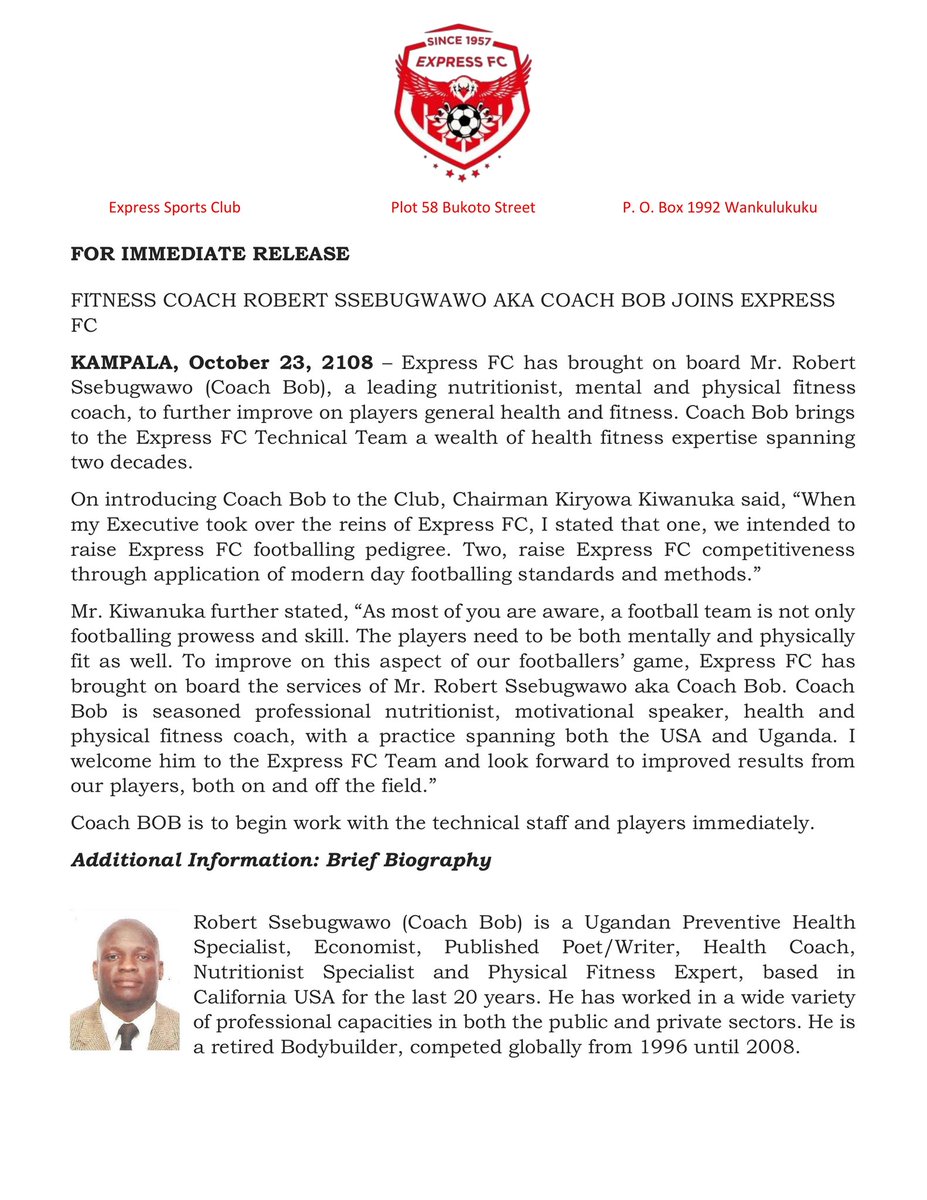
Below are the full details on what the chairman Mr. Kiryowa Kiwanuka says about Coach Bob’s appointment and his profile:

Express appoints new fitness coach (1)

Stories Continues after ad

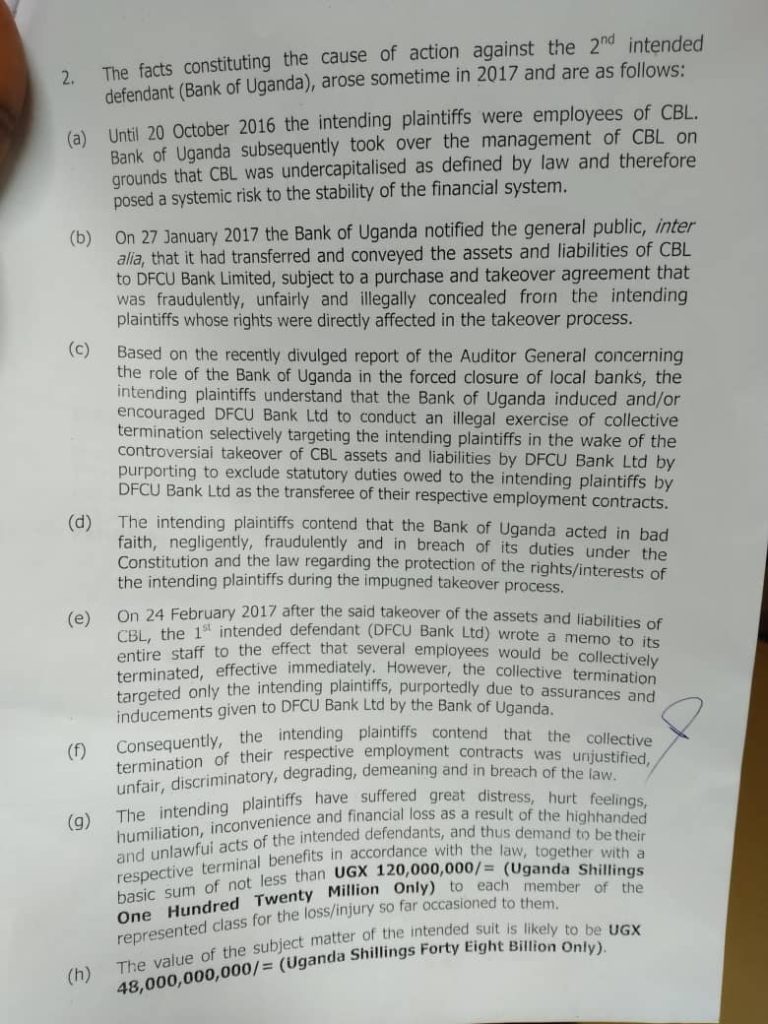
Former Crane Bank employees sue BoU,Dfcu over loss of jobs

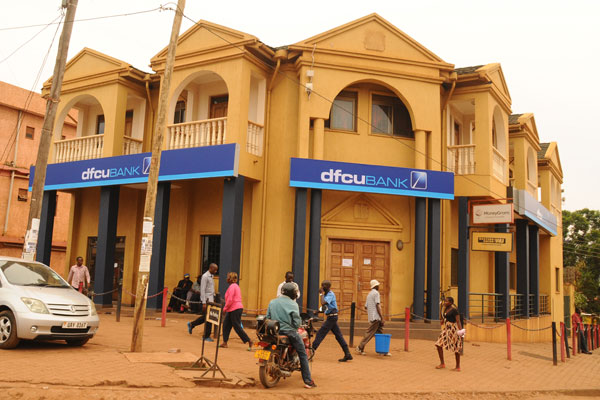
The Former Crane Bank Ntinda branch, which DFCU took over and illegally rebranded in its name, was ordered by the court to vacate and compensate Meera Investments because the property belongs to Meera.

The controversial sale of Crane Bank Limited (CBL) in which Bank of Uganda (BoU) was the seller and Dfcu Bank the buyer, continues to haunt both sides since the transaction was done in January 2017.

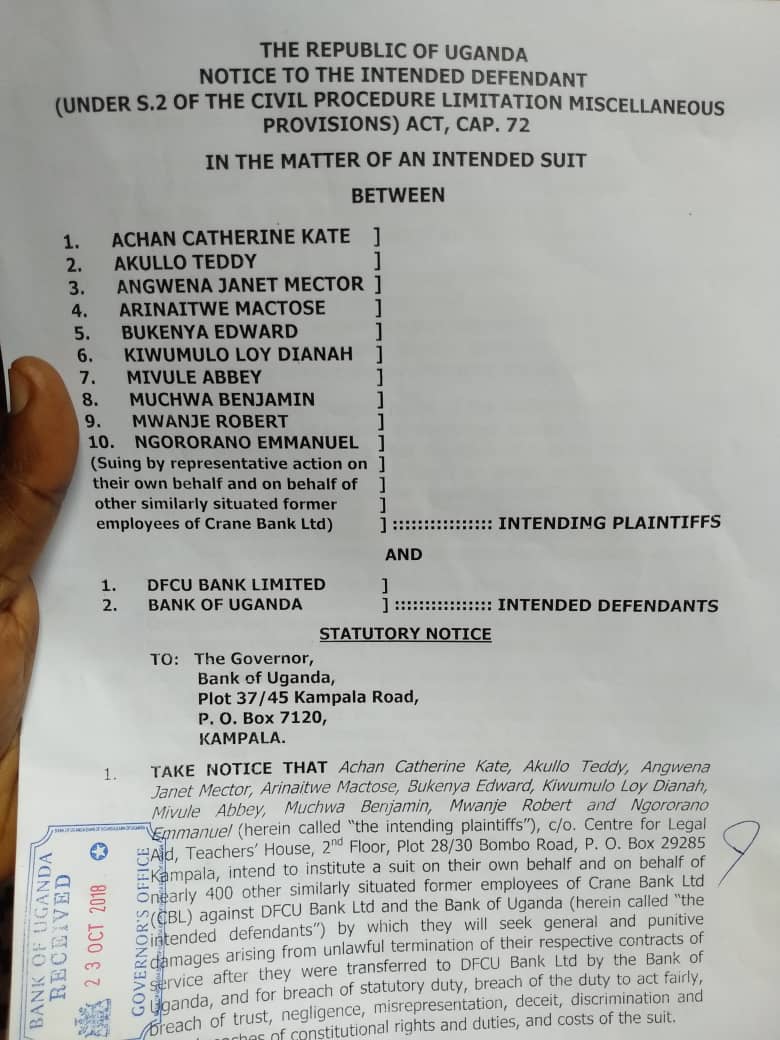
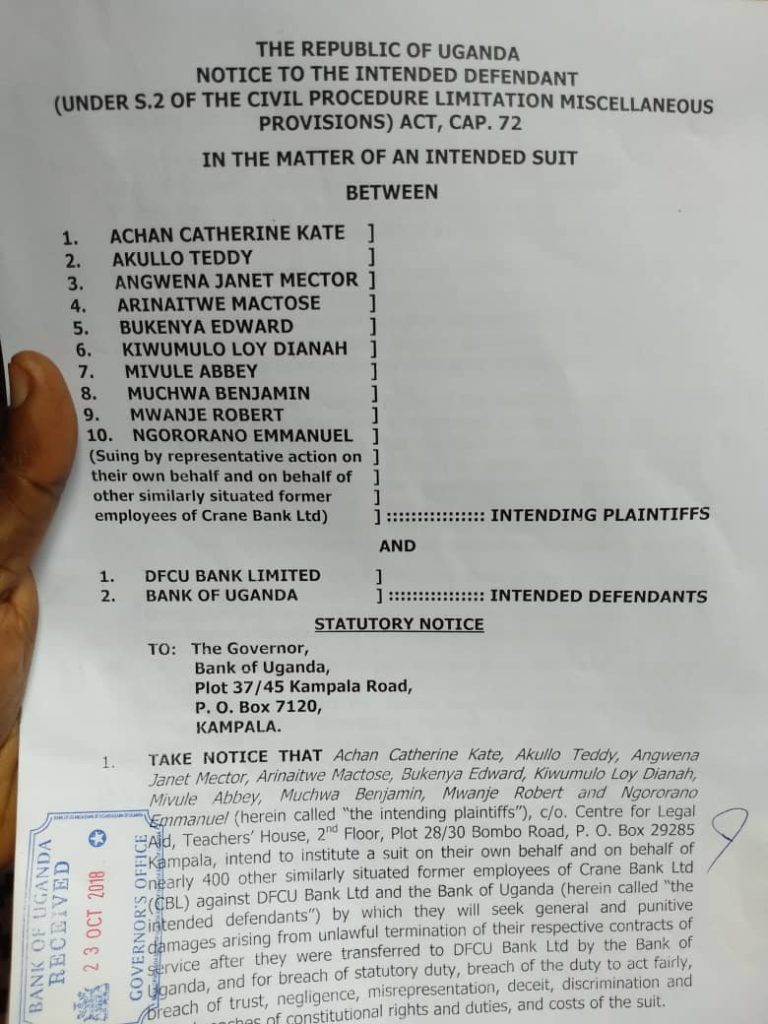
The latest development that BoU and Dfcu Bank have to deal with now, is the decision by over 400 former workers of CBL to sue them in the courts of law for breach of contract, which led to the workers losing their jobs without compensation.

The employees are seeking for general and punitive damages arising from unlawful termination of their respective contracts of service after they were transferred to Dfcu Bank Limited by BoU.

The plaintiffs accuse BoU and Dfcu Bank of breach of statutory duty, breach of the duty to act fairly, breach of trust, negligence, misrepresentation, deceit and discrimination. The plaintiffs want the two defendants (BoU and Dfcu Bank) to meet the costs of the suit.

The plaintiffs are represented by 10 of their colleagues in the names of Achan Catherine Kate, Akullo Teddy, Angwena Janet Mector, Arinatwe Mactose and Bukenya Edward. Others are; Kiwumulo Loy Dianah, Abbey Mivule, Benjamin Muchwa, Robert Mwanje and Emmanuel Ngororano.

The plaintiff are being helped by the Centre for Legal Aid.

The new development at the time when Parliament’s Committee on Commissions, Statutory Authorities and State Enterprises (Cosase) has resolved to summon Bank of Uganda (BoU) top officials for inquiries next week as regards the closure and sale of seven commercial banks, including Crane Bank Limited (CBL).

Cosase Chairman Abdu Katuntu (Bugweri Constituency) said at parliament that the investigation will be based on findings of the Auditor General John Muwanga. “We will begin with the BoU board. The governor (Prof. Emmanuel Tumusiime-Mutebile) is the Board Chairman and the deputy governor (Dr. Louis Kasekende) is the deputy Board Chairman,” Mr. Katuntu said.
The Committee will quiz the BoU officials using the forensic report by the Auditor General John Muwanga which revealed the rot ranging from unaccounted for money, missing land titles, disputed payments to external lawyers and customer loans that were inherited from closed banks and sold at an undervalued rate without justification.
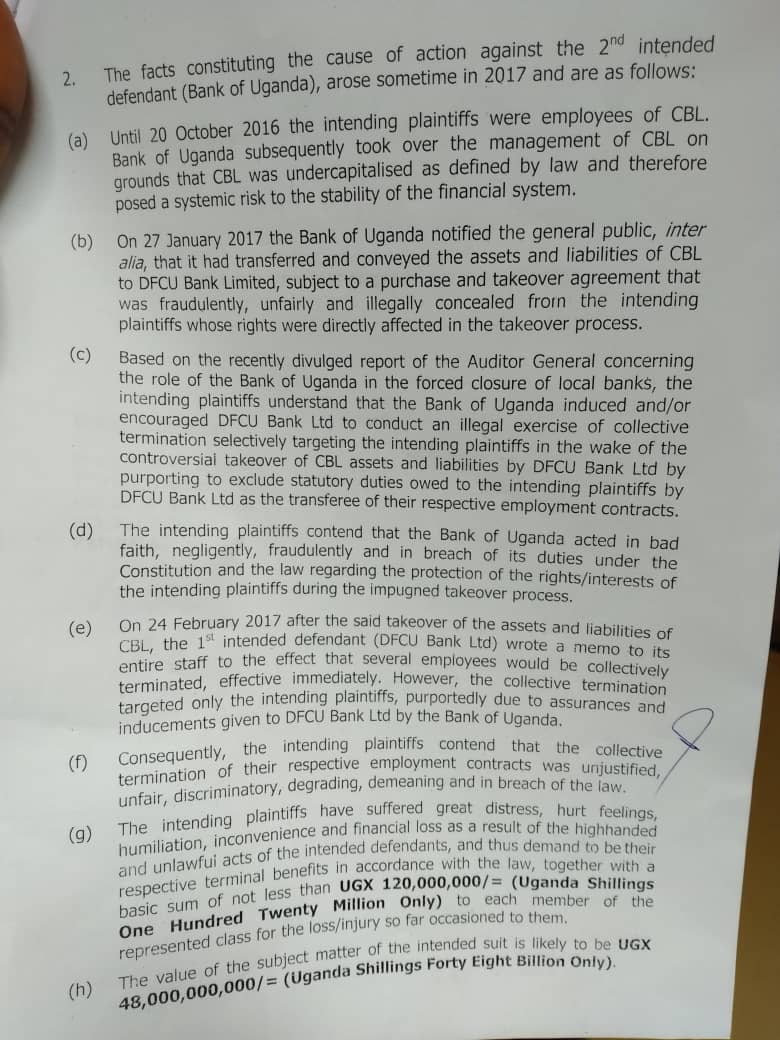
The report now in parliament raises key issues regarding the closure of Teefe Bank (1993), International Credit Bank Ltd (1998), Greenland Bank (1999), The Co-operative Bank (1999), National Bank of Commerce (2012), Global Trust Bank (2014) and the sale of Crane Bank Ltd (CBL).

The report says assets worth Shs23 billion formerly owned by Global Trust Bank (GTB) Uganda were not transferred to dfcu in the purchase and assumption agreements when the bank was closed in July 2014. Some of the assets were: cash balances (Shs6.6 billion), amounts due from other banking institutions[Shs2.3b], other assets (Shs5.1 billion),amounts due from group companies (Shs9 million), property and equipment (Shs5.6 billion),intangible assets(Shs758 million) and deferred tax (Shs2.4 billion).

Auditors in the report say they could not trace Shs9 billion which was taken from other banks as the inventory report highlighted then. The money was not reflected on the recovery account. The Committee chairperson, Abdu Katuntu yesterday said that Cosase would a preparatory meeting today.

The committee is expected to summon a number of other individuals such as; Justine Bagyenda, the former director of supervision at BoU and the dfcu managing director, Mr. Juma Kisaame, as well as the former owners of the seven defunct banks.

Finance minister Matia Kasaija could be summoned over the sale of closed banks.
Mr. Muwanga has also faulted BoU officials for selling CBL assets and some liabilities to dfcu bank without valuation as they depended on Dfcu’s inventory report to sale CBL at only Shs200 billion paid in instalments.

The auditors wonder why BoU sold 79 per cent of the loans it inherited from International Credit Bank, Cooperative Bank and Greenland Bank in 2007 despite having closed the banks in 1998 and 1999.

Stories Continues after ad

MPs summon Mutebile, Kasekende over sale of commercial banks

Emmanuel Tumusiime- Mutebile

Parliament’s Committee on Commissions, Statutory Authorities and State Enterprises (Cosase) has concluded a preparatory meeting today and resolved to summon Bank of Uganda (BoU) top officials for inquiries next week as regards the closure and sale of seven commercial banks, including Crane Bank Limited (CBL) which was controversially sold to Dfcu in January 2017.

Cosase Chairman Abdu Katuntu (Bugweri County ) said at parliament that the investigation will be based on findings of the Auditor General John Muwanga. “We will begin with the BoU board. The governor (Emmanuel Tumusiime-Mutebile) is the Board Chairman and the Deputy Governor (Dr. Louis Kasekende) is the Deputy Board Chairman,” Mr. Katuntu said.

The Committee will quiz the BoU officials using the forensic report by the Auditor General John Muwanga which revealed the rot ranging from unaccounted for money, missing land titles, disputed payments to external lawyers and customer loans that were inherited from closed banks and sold at an undervalued rate without justification.

The report now in parliament raises key issues regarding the closure of Teefe Bank (1993), International Credit Bank Ltd (1998), Greenland Bank (1999), The Co-operative Bank (1999), National Bank of Commerce (2012), Global Trust Bank (2014) and the sale of Crane Bank Ltd (CBL).
The report says assets worth Shs23 billion formerly owned by Global Trust Bank (GTB) Uganda were not transferred to Dfcu in the purchase and assumption agreements when the bank was closed in July 2014. Some of the assets were: cash balances (Shs6.6 billion), amounts due from other banking institutions (Shs2.3b), other assets (Shs5.1 billion),amounts due from group companies (Shs9 million), property and equipment (Shs5.6 billion),intangible assets(Shs758 million) and deferred tax (Shs2.4 billion).

Auditors in the report say they could not trace Shs9 billion which was taken from other banks as the inventory report highlighted then. The money was not reflected on the recovery account. The Committee chairperson, Abdu Katuntu yesterday said that Cosase would a preparatory meeting today.

The committee is expected to summon a number of other individuals such as; Justine Bagyenda, the former director of supervision at BoU and the Dfcu managing director, Mr. Juma Kisaame, as well as the former owners of the seven defunct banks.

Stories Continues after ad
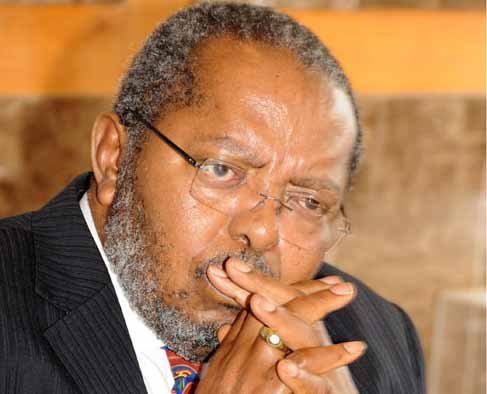
GBV cases on rise in Kaberamaido as corruption hinders justice for victims

60 sub county women leaders in Kaberamaido district get trained on existing laws & policies on Gender Based Violence

The number of Gender Based Violence (GBV) cases between January and September 2018 has surpassed the overall number of cases that were recorded in 2017, according to law enforcement officers in the eastern Uganda district of Kaberamaido.

“Between January and September 2018 the total number of cases stands at 115 compared to the overall number in 2017, which stood at 104,” the Officer in Charge of Child and Family protection, Janet Amuge said.

It is estimated that by the end of the year (2018) the overall number of GBV cases in the district is likely to rise by about 40 percent compared to 2017.
The above, according to officials, points to more efforts to reduce GBV and the related adverse effects. GBV is defined as gross violation of fundamental human rights and has severe, long-term negative impacts on the physical and psychological well being of the survivors, their families, and the community.

Justice delayed
Speaking during a GBV monitoring and assessment exercise, the district police commander, Godfrey Abigaba, highlighted some other factors that tend to hinder or delay the delivery of justice. He pointed out political interference, ignorance of the law and inadequate funds allocated towards investigation of GBV cases.

Abigaba said Kaberamaido district receives operational funds between Sh600, 000-800,000 every quarter. This is then distributed to the different departments within the Police station, including the Child and Family protection unit-which directly deals with cases of GBV and the Criminal Investigations Department which conducts GBV related investigations.

According to district officials, these meagre resources are often used to buy papers and pens for victims to record statements because over the quarter (three months) the funds are often not enough to buy fuel to take victims to hospital.

He also highlighted the issue of victims who sometimes come to police to seek protection and shelter but there are not enough resources to meet their basic needs while under protection. “Sometimes victims of violence come here at the Police station to seek protection because they are afraid to go back to their communities but to our dismay there are often not enough resources to offer basic needs and restorative services,” said Abigaba.

Hindrances
Community members in Katakwi and Kaberamaido district have also cited corruption and bribery as a major hindrance to justice for victims of Gender based violence (GBV). “There are a number of cases where people bribe police when these cases of abuse have reported but the cases are simply neglected,” said a community member.

Another district official who preferred anonymity said there are times when a case is reported as attempted murder only for another file to appear with a lighter charge of grievous harm.
The DPC also said there was lack of witnesses to testify during cases of GBV. “People are often afraid of coming up as witnesses to testify against suspects of GBV because they are scared of reprisals but they are also quite often ignorant of the protection that witnesses enjoy under the law,” he said.

Sensitize communities
Meanwhile, in Katakwi, Reverend Canon Lawrence Onyait, St Philip Ngarium Church of Uganda, Palam Sub County in Katakwi district has urged the civil society to continuously sensitize the community about dangers of violence in families. “The community members still lack awareness and there is widespread poverty which tends to breed gender based violence within families, including the denial of basic needs to the children,” he said.

Stories Continues after ad
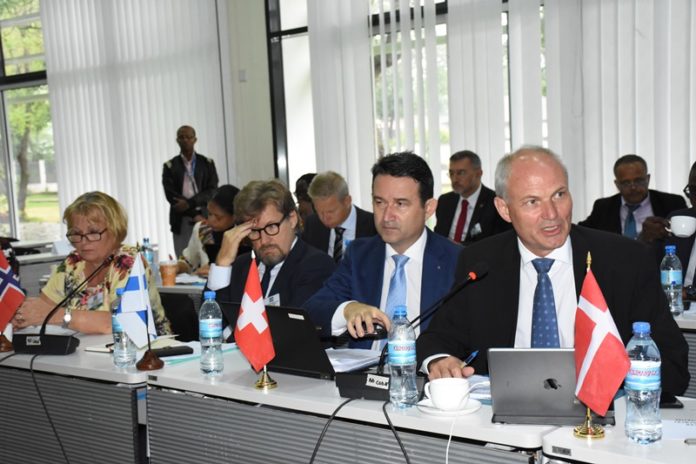
Stakeholders hold 2nd EAC Development Partners Forum in Arusha

The 2nd East African Community (EAC) Development Partners Consultative Forum aimed at promoting better coordination of development support to the bloc by various development partners was held Tuesday at its headquarters in Arusha, Tanzania.

The forum sought to foster synergies and leverage available resources while avoiding duplication of efforts in financing EAC programmes and projects.
Addressing the forum, the EAC Secretary General, Amb. Liberat Mfumukeko said over the last five years, development Partners had committed about US$500 million direct and technical support to various aspects of the EAC integration.

“With this revamped collaboration, the EAC has been able to progress the integration agenda with remarkable speed,” said the Secretary General.
He disclosed that the main contributors to the EAC Development Programmes include Germany, the USA through USAID East Africa, European Union (EU), and the African Development Bank. The total German contribution to EAC amounts to €286,541,354.42; USAID $237,823,555; and the EU Euro 65,000,000.

Amb. Mfumukeko expressed EAC appreciation for the approval of the African Development Bank Regional Integration Strategy Paper for Eastern Africa (EA-RISP 2018-22), in which EAC Projects worth about US$2 billion have been considered in the RISP indicative operational programme. This includes loans to the EAC Partner States for regional programmes and grant to the EAC.
The Secretary General said that the EAC has transformed itself from a loose co-operation framework into a fast-emerging, solid and dynamic regional economic bloc. He added that the EAC has evolved strong institutions and vigorous programme delivery, which are already making an impact on the economies of the region.

Amb. Mfumukeko said that the EAC has been ranked as first among the eight (8) Regional Economic Communities (RECs) from the recently Africa Regional Integration Index Report launched in Addis Ababa through the collaboration between the UN Economic Commission for Africa (ECA), the African Development Bank (AfDB) and the African Union Commission (AUC)
He however called for more partnerships with the business community and, in particular, the East African Business Council in industrial development through investment in private sector development, improvement of doing business environment and finally an enhance.

On his part, the head of Delegation of the European Union, Amb. Roeland van de Geer said the forum is valuable for Development Partners to ensure an alignment of their respective cooperation programmes with those of the EAC.
He appreciated the willingness of the EAC Secretariat to engage on sector specific priority areas particularly on key regional priorities given the wide and ambitious portfolio of EAC.
Roeland emphasized the need for involving all EAC institutions and representatives of key regional non-state actors including the private sector in the forum to share their valuable experience of regional integration.

He assured the EAC that all Development Partners are willing to support the key priorities of as EAC articulated in the 5th Development Strategy endorsed in February 2018.
In his remarks, Mr. Marcellin Ndong Ntah, the lead Economist from the African Development Bank said the Development Partners Consultative Forum promotes the principle of ownership of the development assistance that may be availed to the EAC and its Partner states to drive Region’s development agenda.

He hailed the EAC for establishing the forum noting that it would enable better coordination of development assistance by Development Partners to the Community.

The Forum was attended by: Ambassadors accredited to the EAC; Members of the Proposed EAC Development Partners Group; Other EAC Development Partners and Representatives from EAC organs and institutions among other.

Stories Continues after ad
New report urges global gov’ts to combat tax evasion and corruption

Commissioner General of Uganda Revenue Authority Doris Akol

Countries must step up work to ensure that tax authorities and anti-corruption authorities can effectively co-operate in the fight against tax evasion, bribery, and other forms of corruption, according to a joint OECD/World Bank report.

Drawing on the experiences of 67 countries, the study focuses on the legal, strategic, operational, and cultural aspects of co-operation between tax authorities and anti-corruption authorities. “With annual revenue losses from tax evasion and corruption estimated to be in the billions, it is critical that government agencies are able to join forces to deter, detect, and prosecute these crimes,” says the report.

The report dubbed, “Improving Co-operation between Tax Authorities and Anti-Corruption Authorities in Combating Tax Crime and Corruption” calls on countries to enhance co-operation by:
Making available the broadest range of legal gateways for reporting and information sharing permitted by law. implementing streamlined and efficient operational procedures to ensure that reporting and information sharing is effective in practice, utilising enhanced co-operation mechanisms such as joint operations and taskforces and promoting a culture of co-operation at all levels of an organisation, starting with political leaders and agency heads.

The report will enable countries to review and evaluate their own approaches for co-operation and identify opportunities for improvements based on practices that have proved successful elsewhere.
The report will also support the OECD and World Bank’s ongoing capacity building work and further the OECD’s Oslo Dialogue – which promotes a whole-of-government approach to tackling financial crimes by fostering inter-agency and international co-operation.

Stories Continues after ad
Al Ahly to face Esperance in 2018 Caf Champions League Final

Esperance play Al Ahly in CAF CL final.

Two of KCCA FC’s 2018 Caf champions league group mates will contest in the final of the continental competition in November.

Egyptian giants Al Ahly qualified to play against Esperance of Tunisia in the 2018 CAF Champions League final despite a 2-1 semi-final second leg loss Tuesday at Entente Setif of Algeria.

It was the first Ahly loss in eight Champions League matches since French coach Patrice Carteron replaced Hossam el Badry, who quit after a group defeat to KCCA in Uganda.

The eight time record champions Al Ahly squeezed through to the final having won the first leg 2-0, finishing 3-2 win on aggregate.

Esperance earned a 4-2 victory over Primeiro Agosto of Angola in a dramatic second leg. The Tunisian side qualified 4-3 on aggregate having lost the first leg 1-0 in Luanda.

When the two sides met in the group stages, the first leg in Tunis ended in a goalless draw while Al Ahly won the second leg 1-0 in Cairo.

Al Ahly will be seeking to seal a ninth continental crown while Esperance their third.

The fixture is a repeat of the 2012 CAF Champions League final, which Al Ahly won. The first leg will be played on November 2nd or 3rd in Tunis, with the second leg taking place a week later, on 9th or 10th in Cairo.

At stake will be a $2.5 million (2.2 million euros) first prize and a place in the FIFA Club World Cup to be hosted by the United Arab Emirates during December.

Moroccan side Wydad Casablanca are the defending champions having won Al Ahly 2–1 on aggregate last year.

Stories Continues after ad

SC Villa, Vipers renew old rivalry at Namboole

Vipers sc and Villa last season

Reigning champions SC Vipers and SC Villa Jogoo face off in one of the league’s biggest rivalries in ther Uganda Premier League on Wednesday at Namboole Stadium.

Espinoza Martinez’s men are set to pound more misery on Moses Basena’s SC Villa who are yet to win a game this season.

The 16 league champions are still winless this season, having two draws and one defeat. Moses Basena’s men have also spent 180 minutes without scoring a goal. Villa has scored two and conceded three goals in the previous league fixtures. They are 13th on the 16-log table.

Villa played to a goalless draw with Bright Stars in their last game at Mwerwere whereas Vipers SC edged Nyamityobora FC by a Sserunkuma sole goal at St. Mary’s Stadium in Kitende.

The Venoms have won all their three opening league games, scoring four only conceding once so far this season and a win against SC Villa will take them back to the top of the table replacing KCCA.

The last meeting between the two teams last season in Masaka ended 0-1 in favour of Vipers who completed a double over the Jogoos.

Villa have won only one of their last eight home games against Vipers (D4 L3), their worst record against a Premier League team in that period.

Vipers have not lost in any of their last nine league games (W6 D3). The last time they lost an away league game was the 3-1 defeat to KCCA in November 2017.

Vipers have won three of the four games against SC Villa and drawn the other. They did not concede a single goal in those four.

The Jogoos have not won in any of their last nine games in all competitions, drawing five and losing four.

Winning seventeen and drawing three, the Venoms have not lost in any of their last 20 league games.The game will be played at 4pm.

Team News

Derrick Ochan returned to full training and may be available for selection.

Abraham Ndugwa,Halid Lwalilwa and Rahmat Ssenfuka who were unused substitutes in the previous game, will feature have trained well.

Dan Sserunkuma is expected to lead the striking line for the Venoms.

Aggrey Madoi will not play as he still carries an injury. Yayo Lutimba will keep his place in the left back.

Villa will miss the duo of Edgar Luzige and Yusuf Mukisa through injury while Pius Wangi and Asharaf Mandela are yet to be cleared and are ineligible to face their former side.

Stories Continues after ad