Stanbic Bank
Stanbic Bank
18.9 C
Kampala
Stanbic Bank
Stanbic Bank
Home Blog Page 1448

Bobi Wine to fans: Drop the hashtag against Uganda Cranes

Bobi Wine

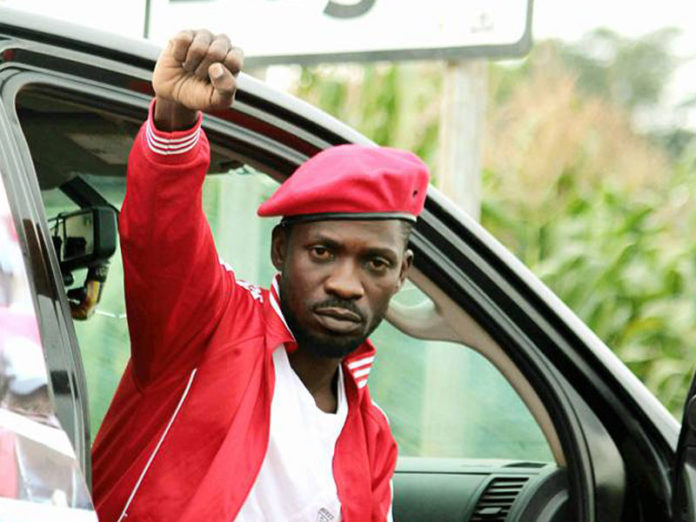
Kyadondo East legislator and Afro beat artist Robert Kyagulanyi aka Bobi Wine has encouraged social media enthusiasts to drop the Hash tag #boycottugandacranes that was picked shortly after the Management of Namboole stadium called off Kyarenga concert.

This is the second time when the Management of Namboole stadium is calling off Kyarenga concert. The music show that is market at launch Bobi Wine’s latest song dubbed as ‘Kyarenga.
The concert was first scheduled on October 20, but was cancelled and the organisers were implored to reschedule it and both parties resolved that the show be hosted no November 11 in 45,202 seating capacity multi-purpose stadium.

The decision was reached after the receiving of a petition that was written by FUFA expressing their worries that the pitch may negatively be affected by the big numbers of people expected to attend it.
In the letter, FUFA contend that following various warning by continental football body CAF, Uganda is likely to be banned from hosting its game against Cape Verde on the November 16 in the famous Namboole stadium if the pitch fails to meet all required standards.

“I have seen some friends act out of anger as a result of the Kyarenga concert cancellation by the Namboole management. Friends, I don’t agree with the trending hashtag #boycottugandacranes. Uganda Cranes is our national team in which we should always take pride and support with all our abilities,” Bobi Wine wrote.

He said, Cranes team is just like other patriotic Ugandans striving hard to raise country’s flag high using their talent even when they are insufficiently facilitated.

“If musical talent is being suffocated, let’s not take all the other talent down the drain. Our national team is the mirror of the best and the worst in us as a nation so all they need is love and understanding, not condemnation. We are all Uganda Cranes and Uganda Cranes is us,” he said in a social media post.

Stories Continues after ad

Tororo district in the spotlight for depositing $71,110 on Kasekende’s account

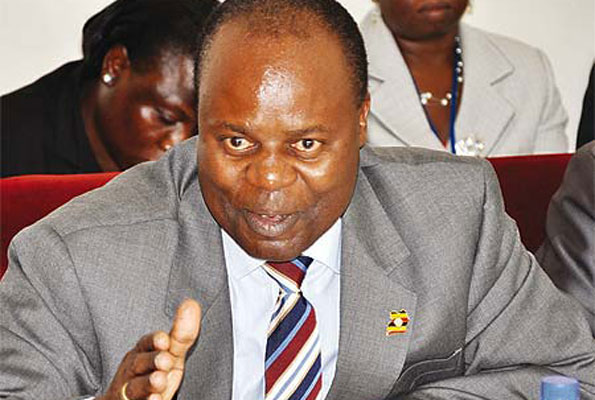
BoU Deputy Governor Dr. Louis Kasekende

A Section of leaders in Tororo district are have said they are surprised why Tororo district paid the Deputy Governor Bank of Uganda, Louis Kasekende US $71,110 about (Shs267 million).

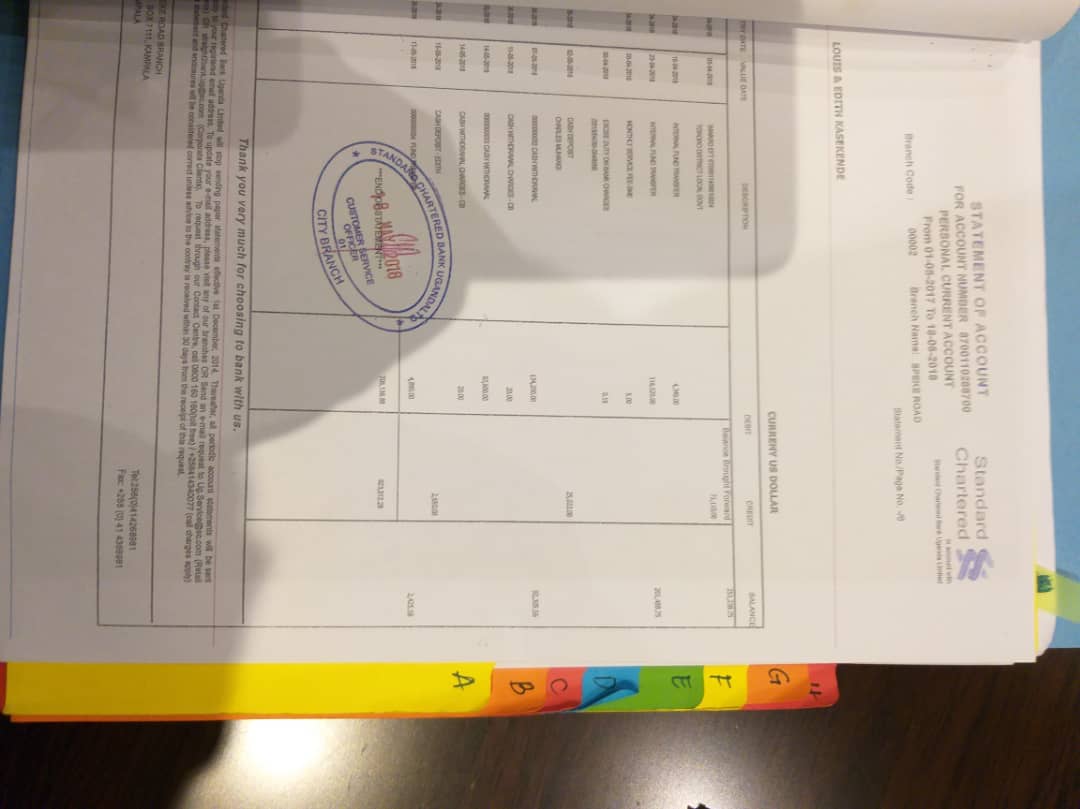
The said money was deposited on a joint account number 8700110288700 Standard Chartered bank Speke Road in the names Louis and Edith Kasekende on May 18, 2018.
According to the documents seen by this website, the leaders want establish purpose of the said money.
“We are shocked that the said money wasn’t even discussed in council and no one bothered to inform council. We got these documents from someone at Standard Chartered bank indicating that our district paid a deputy governor” a source told Eagle Online.
Authorities at the district remained tightlipped over the matter. Dr. Kasekende and a host of other top BoU leaders are under investigation by the IG. The IG wants 100 employees at BoU explain whether their wealth ties with their salary.

The IG’s interest into BoU follows revelation that top officials at the bank had accumulated a lot of wealth. And this was after a report by Auditor General over the closed and sold commercial banks pinned several leaders for culpability.

In the newest inquiry, the IG is said to be looking into the assets and liabilities of over 100 employees but more emphasis is being put on employees in supervision and banking departments.
Although Inspectorate downplayed the inquiry to annual declaration of income, asserts and liabilities of officials, however, sources say the inquiry was triggered off by the reports of Auditor General that among others fault BoU officials especially in supervision for failure to explain how properties of defunct banks has been sold or taken over by officials at the central bank.

“The AG in his report was clear on these properties because whenever a bank is closed, such banks have properties like house and land but in most cases, these properties are silent and basically that is why we want to establish who takes over these properties and could these top bosses taking over them?” a sources said.
One of the declarations of income, assets and liabilities forms filled by Dr Kasekende shows that he owns property worth about Shs8 billion in upscale areas of Kampala, Wakiso and other areas. He is also a shareholder of Green Hill schools, a farm in Bukasa valued at Shs500 million and several commercial buildings which fetch millions of shillings in rent per year. In the declaration form, Dr Kasekende says he picked loans from commercial banks and used his statutory salary, savings from research, gratuity payments and travel allowances to build rentals and acquire the assets.

The Leadership Code Act 2002 requires all specified leaders to declare their Incomes, Assets and Liabilities to the Inspector General of Government. The Code prohibits conduct that is likely to compromise the honesty, impartiality and integrity of leaders or conduct that leads to corruption in public affairs and it imposes penalties on leaders who breach the Code.
Early this year, it is said President Yoweri Museveni ordered Bank of Uganda Governor, Emmanuel Tumusiime Mutebile to ‘sort’ out ‘thieves’ at Bank of Uganda.
Museveni who met the Inspector General of Government and a team from BoU at State House after cabinet lectured the two sides to sort out bickering that could easily hurt the economy but also warned of thieves at BoU.

A tough talking Museveni told me Mutebile that BoU had performed well but the emerging reports that individuals at the central bank had amused wealth were disturbing and such individuals should be fished out.
Recently, the IGG faced with the conundrum as to whether the Bank of Uganda Governor acted within his powers to make administrative changes at the Central Bank, one of which involved the retirement of Justine Bagyenda, the erstwhile Director of Bank Supervision.

‘This is to direct the Board of Directors of BoU not to ratify any actions or decisions taken by the Governor on or around February 7, 2018 in relation to the impugned appointments and transfers until such time as the investigation by the Inspectorate has been concluded or until this office directs otherwise’, the IGG’s March 12 letter states in part.

Stories Continues after ad

Congo rebels kill 15, children abducted in the latest Ebola affected area

WHO ebola treatment centre in Congo.

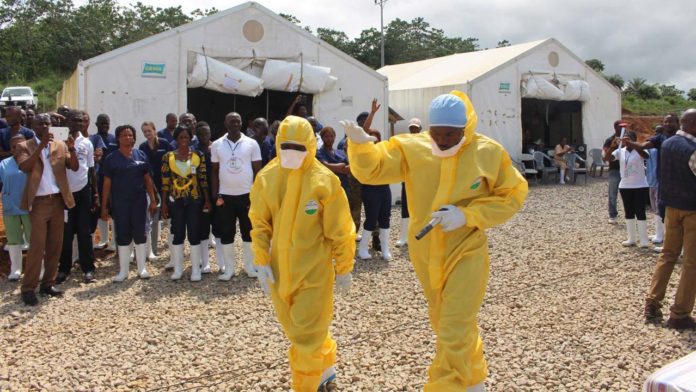
Congolese rebels killed 15 civilians and abducted a dozen children in an attack at the center of the latest deadly Ebola outbreak, Congo’s military has said. The violence has threatened to again force the suspension of crucial virus contamination efforts.

The Allied Democratic Forces rebels, a Ugandan Islamist militant group active in the area since the 1990s, attacked Congolese army positions and several neighborhoods of Beni on Saturday and into Sunday, Capt. Mak Hazukay Mongha told The Associated Press.

Last month, Ebola prevention activities were suspended for days in Beni after a deadly rebel attack, further complicating ways to find and track individuals infected by Ebola. Since then, many of the new Ebola cases have alarmed aid groups. The number of new confirmed cases has more than doubled.

The latest attack comes after two medical workers were killed by a militia in Eastern Congo Saturday while manning a port of entry to try to control the spread of Ebola. It’s believed to be the first time health workers have been killed by rebels in this Ebola outbreak.

Congo’s health minister called it a “dark day” late Saturday for everyone fighting the deadly Ebola outbreak.

The daytime attack appeared to be the first time health workers have been killed by rebels in this outbreak, which is taking place in what has been compared to a war zone. Controlling the Ebola outbreak in Eastern Congo has been hard because it is in the middle of a conflict zone with many armed groups.

The health ministry says a local militia called Mai Mai surged from the forest and opened fire on the unarmed members of Congo’s Rapid Intervention Medical Unit.

“Health agents are not a target for armed groups,” Health Minister Oly Ilunga told the AP. “Our agents will continue to go into the field each day to fulfill the mission entrusted to them. They are true heroes and we will continue to take all necessary measures so that they can do their job safely.”

NPR’s Eyder Peralta reports from Nairobi that health workers have had a tough time vaccinating against the disease, because of persistent rumors that they are spreading Ebola and harvesting organs.

Last week, 22 young bikers in Butembo exhumed the body of a friend to find out if it was intact. After negotiation, they agreed to rebury the body and be vaccinated against Ebola, because they handled an infected corpse. They joined the more than 20-thousand people who have received vaccinations so far.

Earlier this week, the Word Health Organization said it was “deeply concerned” by the outbreak but that it does not yet warrant being declared a global emergency.

As of Oct, 19, confirmed Ebola cases have now reached 200, including 117 deaths, according to WHO.

Stories Continues after ad

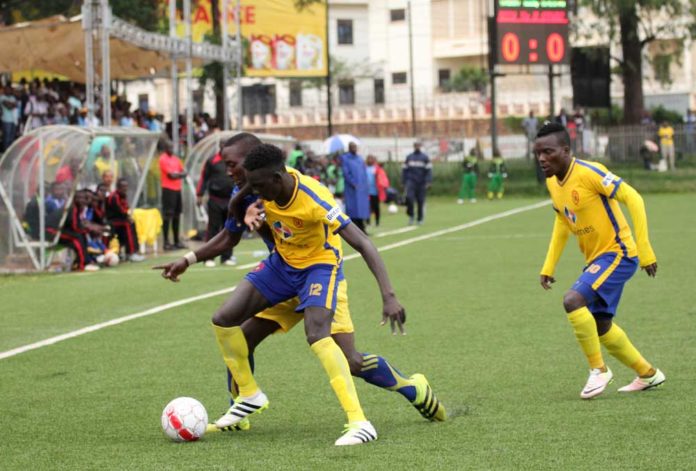
UPL: KCCA, Bright Stars fight for top spot

Kcca against bright stars that ended 0-0 last season

The 2018/19 StarTimes Uganda Premier League enters matchday four with five teams yet to lose a game this season.

Two of the unbeaten sides, KCCA and Bright Stars will face off at the StarTimes stadium in Lugogo with both sides seeking for a win to go top of the league table above Vipers. Both sides are tied on 7 points while leaders Vipers are on 9.

The hosts KCCA come into the game after breaking the Greenlight Stadium Jinx, beating Onduparaka 2-0 in Arua for the first time. Goals from Allan Okello and Timothy Awany were enough to sink the Caterpillars.

Former KCCA forward Nelson Senkatuka will have to be at his best if the Kawempe based side are to leave Lugogo with something in hand while Mutebi will hope Allan Okello, Patrick Kaddu and the returning Julius Poloto are in goal scoring mood.

Last season, this fixture ended in a goalless draw in a game that infuriated Mutebi to attack the opponents’ tactics.

In the other games, Express will hope to build on their impressive 3-1 win against Police last week when they host Bul in Wankulukuku.

The Red Eagles tactician, Kefa Kisala spent last season at Bul and left bitterly with rumours he was being undermined by his assistant Peter Onen who is now the Head Coach.

Kisala’s side will be seeking for a first home win with the help of Congolese import Eric Kambale who returns to the team to compliment forwards Tony Odur and Ibrahim Kayiwa.

Bul, who have won two games including a 3-0 win over newcomers Paidha Black Angels will rely on Hamis Tibita, Timothy Douglas Owori and Villa Oromchan.

Elsewhere, Onduparaka will travel to Jinja hoping to return to winning ways at The Mighty Arena against Kirinya Jinja SSS.

Kirinya are one of the unbeaten sides in the division so far and will also be keen to maintain their good start to the season.

Joel Madondo, the leading goal scorer with four in three games so far will be the main threat Onduparaka will have to deal with while Asaph Mwebaze’s side will rely on the enterprising Viane Sekajugo for goals.

New league entrants Paidha Black Angels will have to put their financial woes behind them when they host Tooro United (formerly called Soana) at the Green Light stadium, Arua.

Simon Sserunkuma and Allan Kayiwa will have to be clinical in front of goal for Tooro United side while experienced Yudah Mugalu will be the key man for Paidha.

The other four fixtures of matchday four will be played on Wednesday, 24th October.

Tuesday, 23rd October fixtures:

KCCA FC Vs Bright Stars – StarTimes stadium, Lugogo Live on Sanyuka TV 4pm

Paidha Black Angels Vs Tooro United – Green Light Stadium, Arua 4.30pm

Kirinya Jinja SS Vs Onduparaka – The Mighty Arena, Jinja 4.30pm

Express Vs Bul – Mutesa II stadium, Wankulukuku 4.30pm

Stories Continues after ad

Museveni commissions Murema Water Project

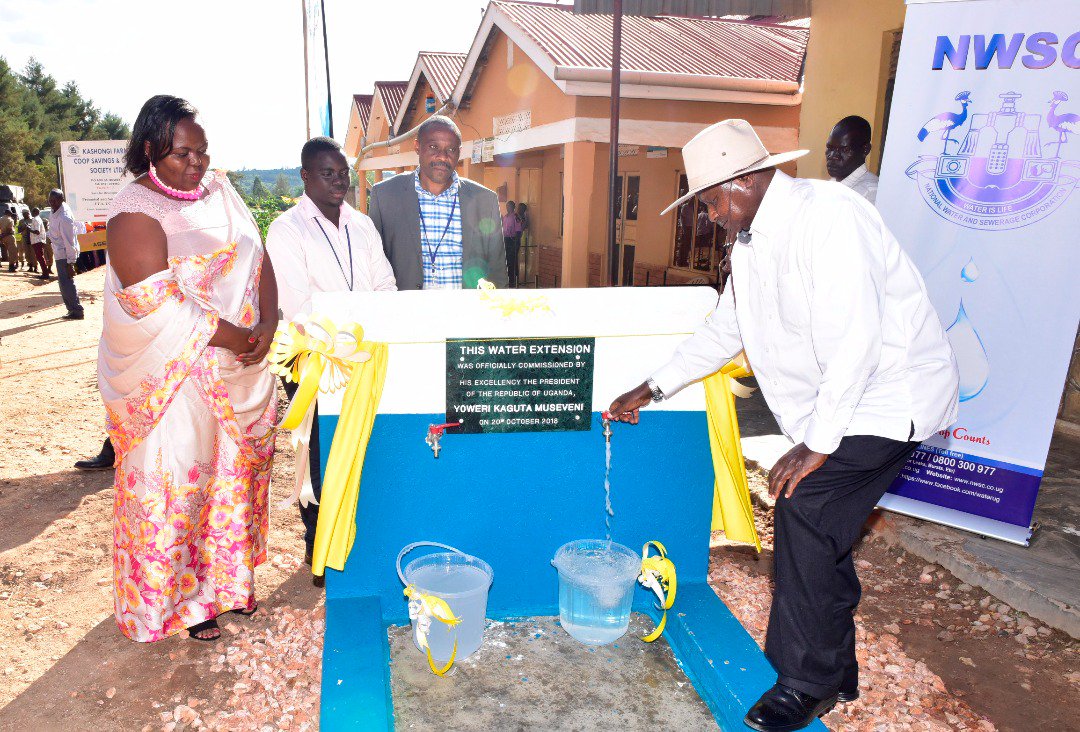
President Museveni commissions Murema water project while below he unveils Kashongi water project in Kiruhura district.

President Yoweri Museveni has launched the Mulema water scheme in Bukanga County of Isingiro District in South Western Uganda saying the service, which the National Resistance Movement government has now availed to the area, forms a foundation for development in the entire Isingiro District.

The president made the remarks yesterday at a public rally that was held at Murema Primary School in Bukanga County shortly after launching the Mulema water scheme. The area has been prone to water shortage, especially during drought spells, affecting both domestic and agricultural activities.

Museveni also laid a foundation stone for the construction of the Nyamiyonga Katogo water system.
“Water has been a challenge in this area. We have provided it and this is the foundation into water development. The Government will get water from River Kagera to serve Mbarara. The water from Mbarara will be extended to Isingiro to serve both domestic and irrigation needs,” he said.

The Mulema water scheme that the President launched supplies 30,708 homes in 25 villages and was implemented using the Government of Uganda funds through the Ministry of Water and Environment while the local government implemented the scheme with support from the Islamic Bank.
Museveni said that the government is addressing a variety of needs that include roads, electricity, water, schools and health services in Isingiro District. He disclosed that the Kikagati – Muronga road will be constructed adding that the Government will fulfill its developmental commitments in the area in particular and other areas of the country as well.

He commended the people of Bukanga County in particular and of Isingiro at large for their commitment to work as was witnessed through the well managed banana plantations. He tasked Agricultural Officers to test and analyze the soil in Isingiro District so that Government may supply them the appropriate fertilizers.

The area Member of Parliament, Stephen Kangwagye, revealed that the NRM government has provided an effective immunization programme in Bukanga County that has enabled rapid population growth. President Museveni also commended NWSC under the leadership of Dr. Silver Mugisha for the commendable task NWSC has rendered the country. The president also over same weekend commissioned Kashongi water project in Kiruhura district.

Stories Continues after ad

Focus on prevention in fight against HIV/AIDS – Museveni

President Yoweri Museveni

President Yoweri Museveni days ago launched a new Presidential Fast-Tracking Initiative on the Elimination of HIV/AIDS that targets total elimination of the scourge from the Uganda by 2030. He used the occasion to remind Ugandans in general and those devoted to the fight against the scourge that the struggle to eliminate HIV/AIDS from our society should focus more on preventive measures because the pandemic is avoidable.

Speaking during the launch of the initiative at Isingiro District headquarters in Isingiro Town Council, Museveni said that because AIDS has no known cure to-date, Ugandans need to focus on how to avoid contracting the virus which, he said, is the only sure way the virus can be eliminated from the Ugandan society. The ceremony attracted representatives from 28 districts if South Western Uganda.

“AIDS is not infectious which was our original worry in the 1980’s and it is spread through a few well known ways that can be avoided and if new infections can be halted AIDS will be history,” he said.

Museveni said that he had started a fresh advocacy initiative in the fight against the HIV/AIDS scourge after getting reports of increasing new infections, especially among young girls, due to complacency in society that was affecting the struggle against the virus. He added that this new initiative is meant to rekindle the earlier efforts and remind Ugandans that HIV/AIDS still exists in our society and poses a great danger but can be defeated.

He, therefore, appealed to those involved in the fight against AIDS to give out clear, bold and straightforward messages to the public with emphasis on prevention, and for those already infected, to get treatment as soon as possible.

The president reminded them that embarking on treatment early, one reaps several advantages including increasing one’s life span but emphasised that the most important one is the fact that once one is on Anti-retroviral (ARVs) drugs, one reduces the risk of spreading HIV/AIDS to others.

He also reminded the people of the importance of testing for HIV/AIDS saying it enables one to properly plan for one’s life and to get treatment where necessary. He noted that although ARVs are not a cure and have several life threatening side effects. They help prolong life making it possible for one to look after one’s family and is far better than one losing life.

Presidency Minister, Hon. Esther Mbayo, who has been put in-charge of the implementation of the Presidential Initiative to eliminate HIV/AIDS, said that the new program is geared at reminding the public that the virus is real and still exists in our society. She said the programme’s core focus is to engage men in HIV/AIDS prevention in order to halt new infections, stopping mother to child transmission of the HIV/AIDS, ensuring financial sustainability of HIV/AIDS related programmes and ensuring institutional effectiveness in the fight against the scourge. She stressed that to achieve that goal, they have engaged all stakeholders, political, religious, civic and cultural ones.

Stories Continues after ad

Stakeholders discuss ways to fight Fall Armyworm in EA

Fall Armyworm

The African Development Bank recently convened a meeting of experts and stakeholders in the agricultural sector to design integrated pest and disease management mechanisms for controlling the spread of the Fall Armyworm in East Africa (EA).

The Fall Armyworm or Spodoptera frugiperda is an invasive insect threatening food supplies and incomes of millions of African smallholder farmers. The multi-stakeholder, regional action plans to stop the menace of the worm in Africa falls under the Bank’s Technologies for African Agriculture Transformation (TAAT) agenda.

Held 11 and 12 October 2018 in Nairobi, Kenya, the meeting brought together government representatives and fall army worm response coordinators from Burundi, Ethiopia, Kenya, Madagascar, the Seychelles, Somalia, South Sudan, Sudan, and Uganda.

Also in attendance were representative of the Food and Agriculture Organization (FAO), the International Institute of Tropical Agriculture (IITA) , regional and international stakeholders in the Agriculture sector. The United States Agency for International Development, the Alliance for a Green Revolution in Africa, the African Agricultural Technology Foundation and Syngenta Foundation were also represented at the meeting.

Joseph Coompson, the African Development Bank’s Regional Manager for Eastern Africa said: “Reports have shown that if no appropriate action is taken, fall army worm could cause maize yield losses of 21-53 per cent – valued at US $2.48 to 6.187 billion, in 12 African countries within five years.”

This trend, if unchecked, “could significantly affect African countries which are already importing food estimated at US $35 billion annually and set to outstrip US $100 billion by 2026,” Coompson said.

Other speakers and participants addressed ineffective chemicals and cultural control methods to reduce the fall armyworm threat. “We look forward to leaving this meeting with technology options to deploy to farmers in the coming season,” said David Mwangi, Head of Plant Protection Services with Kenya’s Ministry of Agriculture’s State Department for Crop Development.

Researchers from the FAO, the International Maize and Wheat Improvement Center, the International Centre of Insect Physiology and Ecology, the African Agricultural Technology Foundation and the Centre for Agriculture and Bioscience International, Syngenta, Corteva and Bayer also presented current initiatives and technologies for controlling the fall army worm.

Country focal persons outlined their plans, including financial, policy and regulatory reforms required for achieving quick wins in the fight against the worm in East Africa. They also discussed options for providing effective technologies for combating the worm to smallholder farmers. They observed that in Southern Africa, Fortenza Duo, a seed treatment pesticide from Syngenta Foundation, proved effective against the worm in the first 30 days after crop emergence.

“The submission of national and regional action plans to target millions of farmers shows the degree to which our “plan to action” approach against the fall army worm threat is being taken seriously and is galvanizing governments and farmers to protect not only fields, but livelihoods too,” said Chris Akem, TAAT Coordinator at IITA.

Stories Continues after ad

Seven keys to timely and compelling new venture progress

Martin Zwilling

By Martin Zwilling

One of the most important skills for every entrepreneur is timely and effective decision making. In a startup, any decision is better than no decision. One of the primary roles of every founder is to solve problems, make a decision, and manage the decision to results. The best entrepreneurs relish this role, while others struggle mightily and ultimately lose their health and their company.

In fact, there is much evidence that these same skills are a key to happiness and success in every area of your life and career. I found the book, “Master Your Time, Master Your Life,” by noted speaker and productivity expert Brian Tracy, who highlights decision making and problem solving as one of the most critical determinants of your success in everything you do.

Since I’m not a life coach, I can’t comment on the broader implications, but in my role as advisor to many startups, I do often find myself recommending a focus on many of his key points, which I will paraphrase here:

Think in terms of action. Action starts with absolute clarity on the goals you want to achieve. Thus I always recommend that you document and clarify, first to yourself, the results you see in your vision of a new venture. Having a great idea is necessary, but not sufficient, to create a great business. Success in business is all about actions, not ideas.

Assume there is always a solution. To solve problems, you need confidence that there is a solution and that you can find it. Without this confidence and determination to make a decision, you will likely fall victim to the malaise of excuses. Everyone needs the growing momentum of solving small problems to incent them to “change the world” with their idea.

Expand your definition of the problem. In business, as in life, most problems have multiple dimensions. The more you understand the scope of a problem, the more likely you are to arrive at the right definition, which will lead to the correct solution. In fact, there are always multiple solutions, so a better definition always leads to a better decision.

Separate symptoms from real constraints. In a new venture, much time can be wasted attacking symptoms rather that the real constraints holding your business back. The right first step is to go back to your goals to focus on the real limiting factors when you encounter problems with sales, growth, profitability, market share, or costs.

Use brainstorming for a range of solutions. Harried entrepreneurs too often jump on the first solution that comes to mind, rather than looking for the best solution. Many techniques have been developed, such as brainstorming, to expand your thinking and identify up to twenty solutions for a given problem. The best will not be first on your list.

Assign responsibility for results. It’s amazing how many business problem-solving meetings end with a clear, agreed-upon decision, but two weeks later the problem still exists. This represents a lack of responsibility assignment or acceptance, or lack of follow-up. Your job as entrepreneur or executive does not end with picking a solution.

Work to enhance your problem-solving skills. Problem-solving skills need constant tuning as your position of responsibility improves, and your business becomes more successful and visible to competitors. Even the best entrepreneurs find more experienced and skillful mentors to help them improve, and explore new tools to conquer problems.

In all cases of business problem solving and making decisions, another important skill is your ability to think about priorities, both before you act and while you are acting. The best entrepreneurs have the ability to focus on the really important issues, and say no to all the other requests vying for their time. Thus they effectively accomplish vastly more than the others.

If you are looking to move up in your business career, or looking to adopt the lifestyle of an entrepreneur to take control of your time and your life, make sure that you follow the steps outlined here for success, self-esteem, and real happiness. Life is too short to be unhappy in your work.

The writer is a veteran startup mentor, executive, blogger, author, tech professional, and Angel investor. Published on Forbes, Entrepreneur, Inc, Huffington Post, and others.

Stories Continues after ad

CSOs urge NEMA to hold public hearings for Tilenga oil project

Tilenga Project logo

The National Environment Management Authority (NEMA) must hold public hearings to enable effective public participation in and consensus on the Tilenga oil project, over 10 civil society organisations (CSOs) working to prevent the impacts of oil on biodiversity in the Albertine Graben have said.

The Tilenga oil project is being developed by Total E&P Uganda B.V. in one of the most biodiverse areas in Africa in Nwoya and Bullisa districts. River Nile, Lake Albert, Murchison Falls National Park and Budongo in addition to Bugoma forests are key national and trans-boundary ecosystems that are going to be affected and are within the Tilenga project area of influence.

Bungugu and Karuma wildlife reserves in addition to the Murchison Falls-Albert Delta Wetland System which is a Ramsar Site are also within the project’s area of influence. On Tuesday October 16, 2018, NEMA published a public notice in the media calling for public comments on the Environmental and Social Impact Assessment (ESIA) study undertaken for the Tilenga project.

In the public notice, NEMA did not indicate that it has an obligation to call for a public hearing on the Tilenga ESIA. Under the Environmental Impact Assessment [EIA] regulations of 1998, the Executive Director of NEMA is mandated to call for a public hearing where there is controversy or where the project may have trans boundary impacts as the Tilenga project will.

“The fact that NEMA did not indicate the date for the public hearing which the law says must be held for projects such as the Tilenga one is a fundamental gap and it concerns us as much as it should concern all Ugandans and our partners,” Mr Dickens Kamugisha, the CEO of Africa Institute for Energy Governance (AFIEGO), says.

Kamugisha says the Tilenga project is located in one of the most biodiverse areas in Africa and is going to affect key forests, rivers and conservation areas which support the most pre-dominant economic 2 activity in the country, agriculture, and on which Ugandans rely to make an income from tourism, fishing, transport and other economic uses.

“The fate of the above ecosystems, which serve millions of Ugandan, DRC, South Sudanese, Sudanese and Egyptian citizens to mention but a few, cannot be decided by NEMA without a public hearing as is mandated under Regulation 21(2) of the 1998 EIA regulations,” Mr Kamugisha, who is also a lawyer,” says.

Trans boundary impacts of Tilenga project

Moreover, Mr Yoram Banyezanki, whose organisation Guild Presidents’ Forum on Oil Governance (GPFOG) works with partner CSOs from Uganda and the Democratic Republic of Congo (DRC) for the sustainable use of trans boundary resources, says that oil activities on Lake Albert have already caused conflicts.

“Oil activities on Lake Albert and use of resources such as fisheries from the same lake have caused conflict between Uganda and the DRC. Just this July [2018], the Ugandan and Congolese navies were involved in fighting on the lake and several lives were lost,” he says adding that the Tilenga oil project, whose activities will include drawing of water from Lake Albert, is bound to increase pressures between the two countries over use of the lake.

He says if the Tilenga project is not well handled, it may worsen conflicts and loss of lives as well as environmental destruction in Uganda and the DRC. Mr Banyenzaki notes that the boundaries which define the Ugandan and DRC sides on Lake Albert remain a challenge.

Efforts such as signing of agreements including the Uganda-Zaire1990 Agreement, the 2007 Uganda-DRC Ngurdoto Agreement and others have failed to achieve lasting results. “Ugandan citizens including those in the Uganda-DRC border areas must therefore participate in the decision on whether to issue an environmental certificate for the Tilenga project through public hearings because the decision made on the project will affect them. Stakeholders across the borders who are likely to be affected by the Tilenga project must also be consulted,” Mr Banyenzaki says.

On his part, Mr Christopher Opio of the Oil Refinery Residents Association (ORRA) underscores the need for public hearings for local communities and other citizens: “Public hearings are important to enable poor, local, illiterate, isolated and other vulnerable host communities to participate in decisions that affect their well-being.”

Fund NEMA, complete environmental laws

The CSOs also want government to adequately fund NEMA so that it can carry out its mandate including supervising ESIAs and facilitating processes of organising public hearings.

“It is no secret that NEMA is under-funded. An under-funded NEMA cannot effectively play its role and can be ignored or bullied as happened with the kaveera [plastic bags] ban so that it fails to implement efforts aimed at ensuring environmental conservation. Every Ugandan must therefore demand that NEMA’s independence is protected through providing it with adequate funding among other measures,” Kamugisha says.

The CSOs are also calling on parliament and government to complete and enact the National Environment Bill of 2017, the draft EIA and Strategic Environment Assessment (SEA) regulations of 2017, the Uganda Wildlife Bill and others. The process of developing and enacting the National Environment Bill has taken over four years yet oil activities are ongoing based on old laws that government recognises cannot protect the environment from oil threats.

“Without relevant laws to improve NEMA’s independence, funding, penalties for environmental offenders and others, the ongoing oil production activities and other threats will worsen environmental degradation in Uganda,” Kamugisha says.

The CSOs reiterate their calls to NEMA to organise public hearings at national and local level with hearings being held in all the Tilenga project host sub-counties of Bullisa and Nwoya and others in Hoima, Masindi and Kampala because the Tilenga project has national, trans-boundary and international impacts.

The CSOs are also committed to continue engaging with oil companies such as Total E&P and others in Uganda to avoid oil activities in critical biodiversity areas.

Infrastructure including 34 well pads with ten in Murchison Falls National Park, pipelines approximately 180km in length (with three pipelines under River Nile) and a central processing facility (CPF) will be developed under the Tilenga project. An airstrip, a ferry crossing on River Nile, a water abstraction system on Lake Albert and others will also be developed.

Some of the CSOs calling for the public hearing are: AFIEGO, National Association of Professional Environmentalist (NAPE), Environmental Conservation Trust of Uganda (ECOTRUST), Guild Presidents Forum on Oil Governance (GPFOG), Center for Constitutional Governance (CCG), South Western Center for Policy and Advocacy (SOWIPA) and World Voices Uganda (WVU). Others are Citizens Concern Africa (CICOA), Community Transformation Foundation Network (COTFONE) –Greater Masaka, Green Organisation Africa (GOA)-Masindi, Oil Refinery Residents Association (ORRA)-Hoima, Kakindo Orphans Care-Bullisa, and Girl Power Foundation-Kasese · Friends of Nature-Kasese

Stories Continues after ad

Business: Interview with Africa’s richest woman, Isabel dos Santos

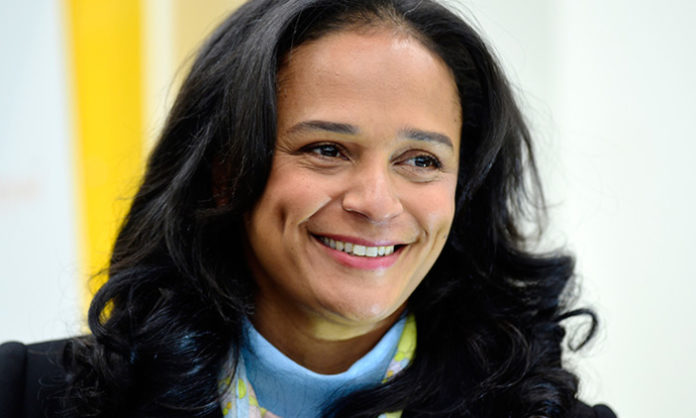
Isabel dos Santos

Many people around the world are familiar with Aliko Dangote, a Nigerian who is often described as Africa’s richest man. But Isabel dos Santos, 45, an Angolan businesswoman, is Africa’s richest woman and the eldest child of Angola’s former President José Eduardo dos Santos, who was in power from 1979 to 2017.

In 2013, according to research by Forbes, her net worth had reached more than three billion US dollars, making her Africa’s first billionaire woman. Five years have passed ever since and her wealth has continued to grow.

But being a woman in a male-dominated business world is not always easy, especially for African women.

In this interview, she talks about business, being a woman in a world dominated by men and how she keeps steaming forward in spite of daily challenges.

How have the men in your life (father, husband, others) supported your growth as a female leader in business, and what advice can you give to men to help contribute to the growth of female leaders?

I realised quite late in life that my education had been quite rare for an African girl. My father raised me exactly has he had done my brothers, and never told me: “girls don’t do this” or “girls cannot be that”. At age 18, going to university, I was undecided on what to apply for, and I remember my father persuading me to become an astronaut or a computer scientist, it never crossed my mind that this is something that African girls don’t do and cannot be.

Finally, I choose to study Engineering at University, and there was only one other girl (Chinese) in my class.

I do not ever recall hearing things like, “Don’t worry, your brothers will work and take care of you”, or “you are girl; one day will marry and find a nice man to take care of you”. I was taught to make my own way in life, and never to depend on any man being it father, brother, or husband.

This built in me a strong spirit of independence. My parents were both insistent on an education that focused on confidence and competitiveness.

As a woman I have also been lucky to have found and married an opened-minded husband who is also African, and who never saw my personal career or success as a threat, and who allowed me the time and space that I needed to dedicate to my work.

My husband has been a pillar of support throughout my career – crucial to my success. He has provided me always with honest advice and encouragement. He is a great father to all of our four children, being there for them when I am absent, during my long work schedules and overseas trips.

The advice I would give to parents is to establish very early on a sense of confidence and responsibility in their girls. Teach them to fend for themselves and to rely only on themselves. Teach your daughter life skills. Teach your daughter the skills on how to best manage her finances, her salary, and her investments wisely. And moreover, treat her as an independent person and whole human being with a true role in society, equal to that of a man’s.

In a male-dominated society, what are some of the biggest challenges you face as a female business woman?

In the business world there are very few female peers, and it is till undoubtedly a very male-dominated society. Discrimination and prejudice exists. On various occasions in business meetings it has happened to me that the other party with whom I am negotiating will look solely at my male advisor or male lawyer, to see what he has to say, even though I am the owner /shareholder of the business and have already clearly stated my decision.

Your opinions are frequently second guessed simply because you are a woman. I am also often asked: “what business does your husband do?” People just assume that as a woman and a mother you are someone less able to be negotiating at the table or that you built your own business. The toughest thing for women is to raise capital and investment for their business, as the financial system has “more confidence” in male-led projects.

Are there particular challenges that you face as an African woman?

Being very often the only black person in the room … is a challenge, people tend to treat you differently. Africa, has unfortunately been marketed in a very poor way. The narrative around African economies and African business isn’t favourable, it’s full of negative connotations. Africa needs better marketing in order to promote its success stories better. There is very little knowledge of African businesses or key business players out there.

How do you maintain your strength to carry forward?

As an African person, I was lucky to receive a top education. In this way I am privileged, and this provides me with a great sense of duty, to do more for others, for my country and for our people. To inspire and help others build their dreams, build their business, get good jobs, and educate their children.

What opportunities exist currently in Angola or other countries in the continent for women who wish to make money and build successful enterprises?

Opportunities for me always start with a simple question: What do you know how to do? What are you good at? And there you will find your opportunity.

Angola in particular has many untapped resources: from minerals and agriculture, manufacturing to services and tourism. Each one comes with a different level of complexity, different need for investment, but all are strong and possible starting points.

The more complex the business, the more it will require, for you to be experienced and skilled, and the need for more capital. Today, the Angolan banking sector offers financing and loans for good projects and businesses, and it is true that interest rates are still high, and that some collateral or partial guarantees is required, as well as some starting capital (savings or land) as equity from the investors. Angola imports over $9 billion of food commodities and consumer goods. Today Africa as a whole continues to import vast amounts of commodities and consumer goods.

A good opportunity in Africa would be the medium scale production of agriculture produce or animal farming or manufacturing. Also in some countries, there is a growing middle class with a growing disposable income, and thus internal tourism such as lodges, and countryside bed and breakfasts are also a developing opportunity for small family-owned businesses. Good quality private education and private health care clinics are also sectors of potential business growth in Africa, as people want to invest in education for their children.

Bigger opportunities, for more capital intensive investments and bigger deals, lie in industries, such as glass or steal manufacturing for construction, or mineral exploration.

How can we get started?

Your best business bet is you, your skills, your motivation, and your passion.
You must have an idea, make a five year plan, prepare your money, ground your idea in detail, be persistent, and partner yourself with a trusted team. Stay passionate always, and execute – don’t delegate.

What are some tips and tricks you can share with young women about managing time, juggling responsibilities, and self-care with all your different ventures and responsibilities?

Time unfortunately is one of those things that none of us has enough of! We always end up sacrificing something, wether it be less time with our family, or our friends, or having our social life. Or even less time at the gym!

It’s a challenge. Priorities are key. You must allocate your time to your priorities, and your priorities must match your life expectations.

How do you manage your time with all your different ventures and responsibilities?

Because you are the richest woman in Africa, many people must ask you for charity and support for their social ventures.

Have you established a formalised way to give back?

Supporting social ventures has always been a priority. From the start, I have installed in my companies a specific division for social responsibility and sponsorship programmes. We sponsor several charities, and we run our own programmes.

My vision is that to have a better society; it’s important for us to give back and help others. Today, giving back has become part of our company culture, and we have thousands of employees that are volunteers and help run our programmes in the community.

We created a culture that engages people, and each person has the opportunity to play an active role in our social ventures. We finance and run a large and diverse programme of social responsibility initiatives such as: supporting a children’s Pediatric hospital where we are one of the largest donors and partners; we finance and run the largest nationwide campaign for the fight and prevention against Malaria; we sponsor a charity for clean water initiatives in poor communities; with our volunteers we run a “special day “ programme for underprivileged or sick children in which organise special play days and fun adventures, for over 10.000 children in all the country, to give them the experiences they would never otherwise have. Last year, I have started the first Christmas telethon, on the nationwide television network, it allowed us to partner up with several companies and businesses to further help and support communities’ needs.

I have encouraged all our employees to be part of our social responsibility programmes, as volunteers, as I believe we need to multiply our efforts and together we are stronger. I am personally very involved, as a donor, but also personally taking part in these actions, as well as in organizing social ventures and engaging with the community directly, as this is a firm commitment I have made to help improve our society.

How do you decide what causes to support, and when to say no?

I choose to support those initiatives that are focused on the needs of children, and with education and healthcare at the core of what I do. The fight against malaria is a cause that I carry very close to my heart and I am very committed to help to its eradication.

My commitment is for one day to see Africa brimming with entrepreneurs, from businesses small and big, with ambitious initiatives, full of perseverance, support and opportunities. In my vision, I believe that we have a true lever for change in Africa, and it’s not our resources, but our education. The quality of education we are able to give our children will determine the future of Africa. Anyone that dreams of changing Africa, education is the key. We must educate our girls, as they are the future mothers, and an encyclopedia of knowledge for their children.

Stories Continues after ad