Stanbic Bank
Stanbic Bank
18.8 C
Kampala
Stanbic Bank
Stanbic Bank
Home Blog Page 1454

KCCA partners with Jhpiego to improve health facilities in Kampala

Kampala Capital City Authority Executive Director Capital City Jenifer Musisi Ssemakula has signed a Memorandum of Understanding with Jhpiego, an international organisation aimed at improving on the health conditions of women and families in developing countries.

Jhpiego is a non-profit health organisation, affiliate of The Johns Hopkins University, USA and dedicated to improving the health of women and families in developing countries.

With funding from the Bill and Melinda Gates Foundation, JHPIEGO is implementing the Challenge Initiative (TCI) East Africa (Tupange for Better Cities) particularly in Uganda and jointly work with KCCA to implement the project to scale up proven family planning interventions targeting men, women and youth in Kampala.

According Musisi, KCCA is joining hands with global health partner to bring relief in health care provision for the Kampala communities. For 40 years and in over 155 countries, the organisation has worked hard to prevent the needless deaths of women and their families.
The programme will include provisions of technical coaching and support in the implementation of the project and further extend access of high-quality health care and family planning services to city communities.

KCCA has for years lobbed for the construction of various health facilities such as Kiruddu, Kawempe hospital and equipping its hospitals.

Stories Continues after ad

Google launches navigation tool for bodaboda riders

Boda-boda riders

Google on Monday announced the launch of Motorbike Mode, a dedicated travel mode for motorcycles, which will provide directions and voice navigation in Kenya, the first in Africa.

“Every day we make decisions about where to go, how to get there, when to set out; and Google Maps can help with these choices. The motorbike, or ‘bodaboda’, has become a popular way to get around in Kenya with over a million Kenyans using motorbikes as their preferred mode of transport. Today, for the first time in Africa, we’re excited to announce a dedicated travel mode for motorcycles, which will provide directions and voice navigation. We hope that Motorbike Mode will help keep Kenyans on the move and we’ll be working to make the feature even more useful in the coming months,” it said in a blog post.

Motorbike Mode was one of a series of products and programmes Google unveiled to mark 11 years since it opened its Nairobi office.

Another is a Street View of 9,500 km of beautiful imagery of the country, which it says will enable Kenyans and tourists alike get a more immersive experience as they navigate and explore cities and destinations around the country. It is available on Google Maps and accessible to everyone around the world.

It also announced a Ksh100 million ($1 million) Google.org initiative to provide digital skills training to more than 100,000 smallholder farmers in low-income and rural Kenya in the next year. Google will partner with Kakamega-based NGO, One Acre Fund and that has experience in providing training, products and services on credit to smallholder farmers.

“The aim is to help these farmers make the most of the web for their agribusinesses, so that they can increase yields and productivity. The funds will allow them to digitise operations and tasks (training, payments, crop health etc),” it said.

Stories Continues after ad

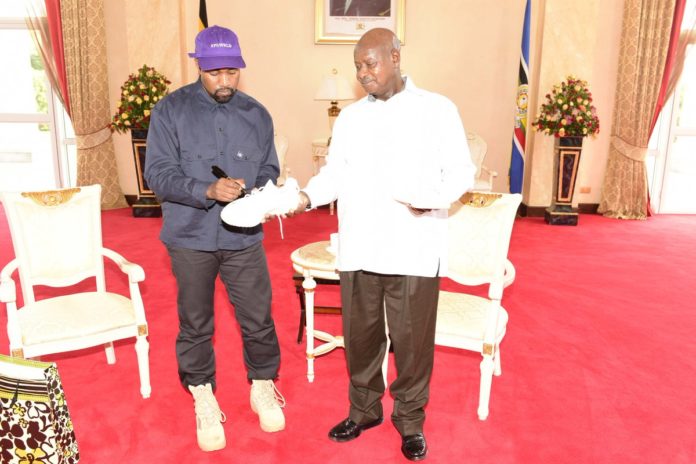
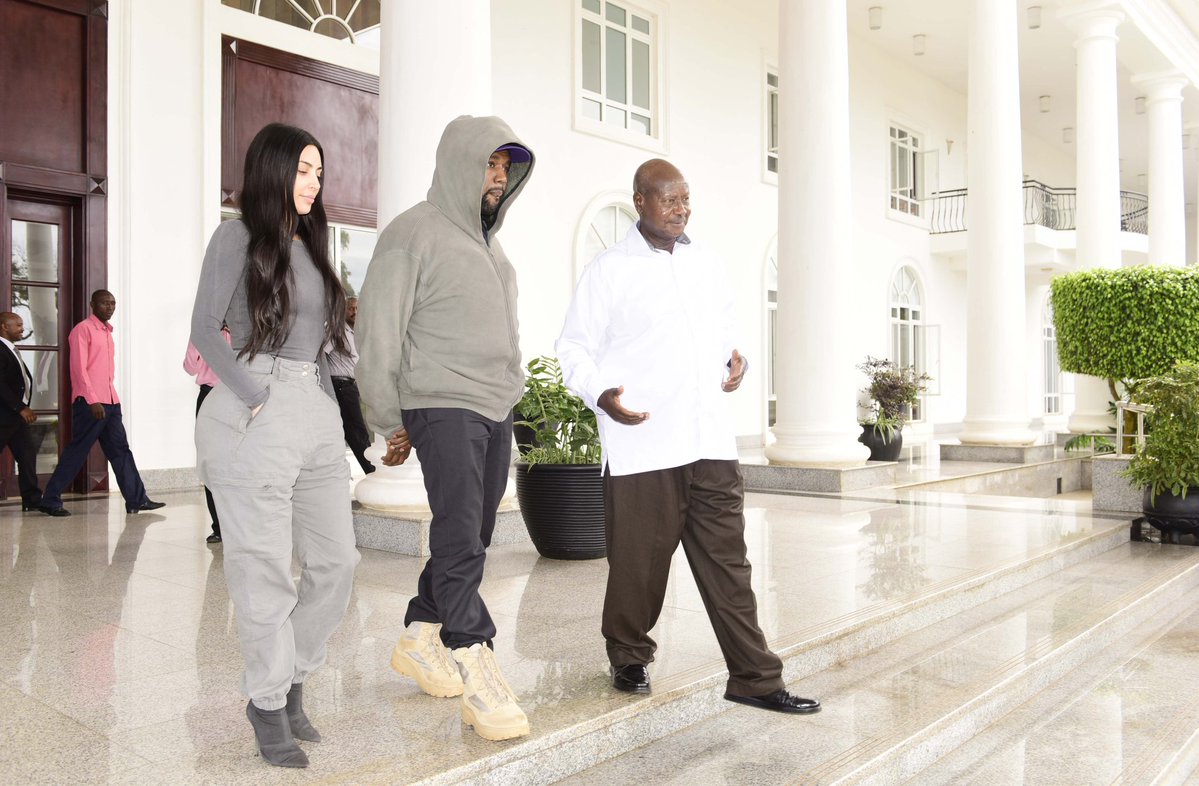
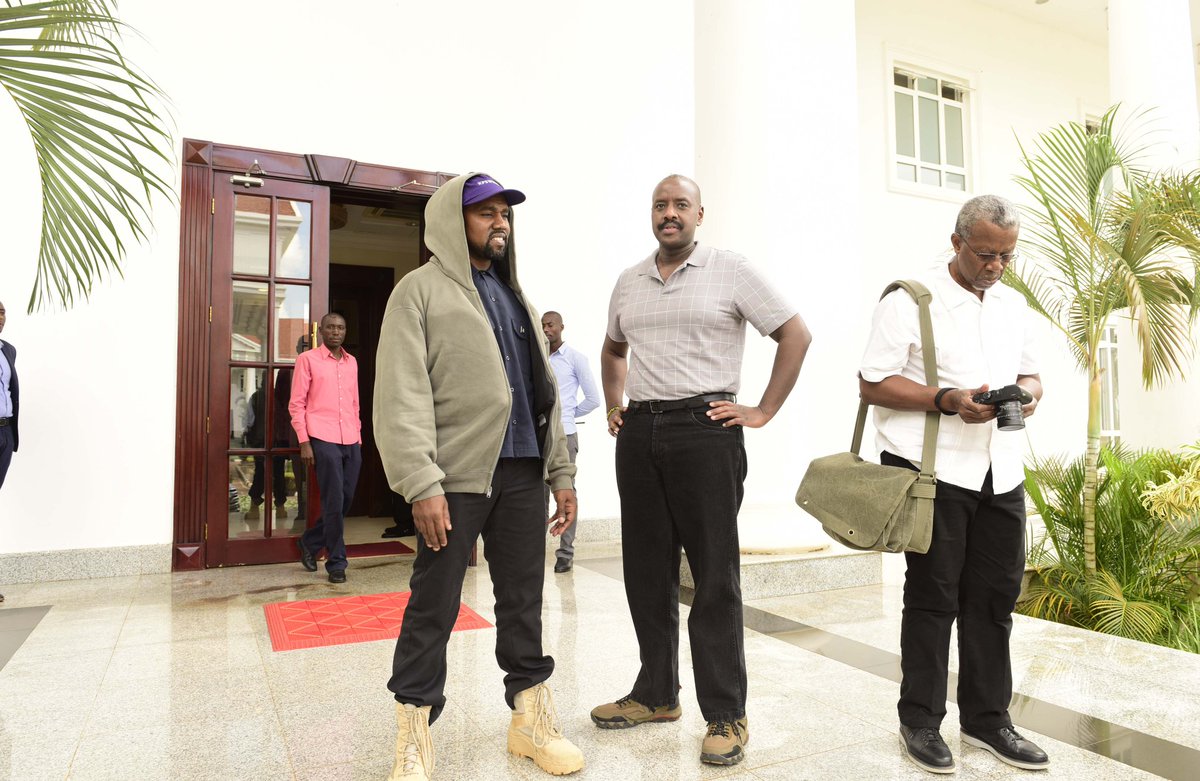
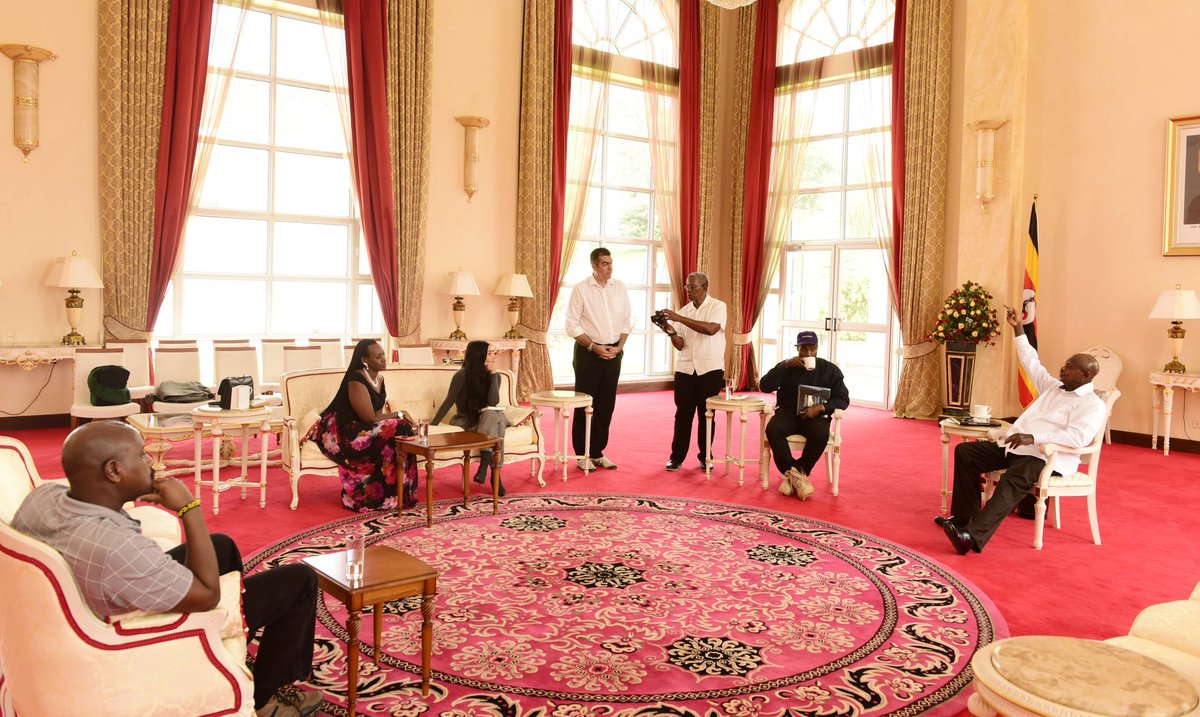
Kanye West, Kim Kardashian meet Museveni

American rapper Kanye omari West also known as Ye and his wife American reality television personality, entrepreneur and socialite Kim Kardashian have met Ugandan leader.

The two met President Yoweri Museveni and his family at State House Entebbe after a three day visit to the country.

Kanye and Kardashian plus their first-born daughter North West, visited Chobe Safari Lodge, where they resided. Chobe is situated in Murchison Falls, the largest of Uganda’s 10 national parks, and lies astride River Nile, the world’s longest river.
Museveni tweeted “I welcome American entertainment stars Kanye West and @KimKardashian to Uganda. I held fruitful discussions with the duo on how to promote Uganda’s tourism and the arts. I thank Kanye for the gift of white sneakers. Enjoy your time in Uganda. It is the true Pearl of Africa”.

Kanye recorded songs, and by some accounts a video shoot, for an album to be released on November 23 or Black Friday.

Stories Continues after ad

Interview: Reflecting on Uganda’s fiscal space for health

Jane Nalunga

Myria Koutsoumpa, a research intern at Wemos and as part of her thesis for the Global Health master’s programme at Maastricht University, took up the opportunity to interview Jane Nalunga, Country Director of SEATINI-Uganda, about the country’s economic and human resources for health (HRH) situation. Below are the excerpts:

QN: Could you share some thoughts about the influence of International Financial Institutions on the Ugandan government’s budget allocation choices, particularly in the public health sector?
Uganda, like many other low-income countries, fully embraced the IMF’s and World Bank’s Structural Adjustment Programmes (SAPs) in the past. These institutions have had a great influence on Uganda’s macroeconomic policy framework. They have been one of the driving forces that encouraged the Ugandan government to embrace increased private investment in the health sector, including blended financing, which considerably reduced the role of the state in the sector’s development.

In fact, at one time in the past, ‘user fees’ were implemented, leading to patients having to pay to access health services. This blocked access to healthcare for many vulnerable people. Liberalization and deregulation of the health sector have also allowed key players to maximize profits over the health welfare of Ugandans. We need more research on the influence of the IMF and the World Bank on Uganda’s budget allocation but – interestingly – the IMF offices are located within the Central Bank of Uganda!

QN: Did the conditionalities of past years also affect the recruitment and wages of health workers at the time?
The SAPs involved staff reduction and reviews of civil servants’ wages which led to lower wages for skilled health professionals and less health professionals per person. Low remuneration is one of the major factors influencing the shortage of HRH in Uganda. The contradiction is that we produce many and competent health workers, but the patient-to health worker ratio is still very low.

QN: I’m curious about your thoughts on ways to mobilizing more revenue for public health. What do you think about higher prioritization of the social sector, and health in particular, within the government’s budget allocation decisions?
This is the most feasible option for mobilizing revenue for health. Budget allocation including grants would be directly channelled to the health sector if it had been prioritized as a social sector. This requires a shift in the mindset of Ugandan policymakers, activists and advocates, i.e. viewing the health sector as an investment. It is important to understand that a healthy population, both physically and mentally, is the biggest asset a country can have.

QN: What about striving for more Development Assistance for Health from external donors?
This is also a good, yet unsustainable option. The current financial architecture of Public-Private –Partnerships (PPPs) and the blending of aid funds with private financing have many negative implications for access to health services, especially for the most vulnerable. Therefore, we need to ensure that any PPP delivers for the good of the people.
It is important to understand that a healthy population, both physically and mentally, is the biggest asset a country can have.

QN: Let’s talk about international trade. Do you think that increased taxation on international trade and foreign investors, especially multinational corporations, is a feasible option?
Increasing taxation on international trade has two main benefits; increased tariff revenues to be used by the government, and protection of the economy. Uganda used to receive more than 40 per cent of its revenue through trade tariffs which has reduced as a result of trade liberalization.

Government needs also to tackle illicit financial flows, which are very common with multinational corporations. A 2018 joint report by SEATINI and Action Aid found that currently, due to illicit financial flows, Uganda annually loses US $739 million, which is about 2.6 per cent of the GDP. This is a huge financial haemorrhage that needs to be tackled, and the regained resources could be injected into the health sector. This is the best option in my opinion, but it should be considered holistically and would require strategic actions.

QN: And as the last option, what do you think about more accommodating macroeconomic policies, such as operating in a larger fiscal deficit or allowing higher inflation rates?
A healthy economy won’t prevail in a situation where inflation is high. Increased inflation rates will result in higher prices of essential commodities, like food. A larger fiscal deficit will also lead to a deeper debt trap for the country. Today, debt repayment is one of the highest items on Uganda’s national budget, leaving limited funds for social services like education and health. However, some fiscal policies could be an option, like low taxes on health products and tax exemptions for health workers, especially in remote areas. The latter could help with their retention in our public health system.

QN: What are your thoughts on oil and gas spurring economic growth in the country?
Allocation is key. The oil and gas sector may spur economic growth, but gained resources may be channelled to the security, infrastructure and ICT sectors, with less regard to the health sector; similar to what happened in oil economies like Angola and Nigeria.
QN:So do you think that the predicted economic growth will actually benefit the people of Uganda?
Today, economic growth is measured by GDP, and by this standard, Uganda’s economic growth has been impressive, according to the IMF and the World Bank. But we need to change the indicators and include social elements, like (quality of) employment, health and education facilities. The government should strive for welfare – not just profit – maximization. It is paramount for the state to be able to regulate the market and the economy. Non-state actors also have to demand accountability and influence resource utilization that benefits everyone.
QN: Speaking of non-state actors, what do you think Ugandan civil society organizations (CSOs) should advocate?
They should advocate equitable mobilization of resources and allocation towards the health sector. CSOs need to engage in taxation and budgeting processes and ensure transparency and accountability. It is not enough to increase the overall budget without influencing where that money is actually going to in a specific sector. Ugandan CSOs should also advocate for tax reforms that will benefit the most vulnerable to access health services.

QN: And is there a role for international CSOs, like Wemos, in advocacy?
It is important for international and local CSOs to reinforce cooperation – especially South-South – in the health sector, on mobility of health workers, provision of aid for health, and health equipment. Illicit financial flows also requires advocacy through partnerships at the national and global level. It is important to bear in mind that poor countries like Uganda need policy space in order to grow their economies and to be able to provide social services for their people.

The Southern and Eastern Africa Trade Information and Negotiations Institute (SEATINI) Uganda, one of Uganda’s leading NGOs working on trade, development and fiscal space, envisions a strong Africa in the world trade sector.

Stories Continues after ad

StrongMinds launches mental health awareness campaign in Uganda

StrongMinds Exectuive Director Dena Batrice

To mark World Mental Health Day on October 10, StrongMinds is launching an awareness campaign dubbed “30 Days of Good Mental Health” in Uganda.

The campaign will see the local media carry mental health tips and messages, beginning on World Mental Health Day and ending shortly after Uganda’s own Mental Health Day celebrations on November 10, according to Daniel, according to officials.

On October 17, Daniel Onyanya, the StongMinds Program manager, will appear on Capital FM, during a special edition of its leading health show- Capital Doctor. He will appear with other StrongMinds representatives to talk about mental health including raising awareness, tackling stigma and support for listeners to improve their own mental health.

According to Onyanya, the radio campaign will be supported by a series of social media graphics that can be easily shared via Facebook, Twitter and WhatsApp to help raise awareness about the importance of good mental health among Ugandans using the hashtag #MakeStrongMinds.

The public and supporters of the campaign are encouraged to Sign Up for more information on the StrongMinds Facebook page or at strongminds.org/support

Speaking in Kampala, Dena Batrice, Executive Director of StrongMinds Uganda, said: “Mental Health is an important and very overlooked issue in Uganda. We want to get the message out that everyone deserves to have good mental health and that treatment services are available for those who are struggling with their mental health. Reaching out and seeking help is a sign of tremendous strength — not a weakness.”

Using radio and social media, the ’30 Days of Good Mental Health’ campaign will be broadcasting lots of really important messages and helpful guidance on how Ugandans can support their own path towards good mental health.

“We want to help Ugandans learn more about mental health including the importance of practicing and using healthy coping techniques to deal with life’s common stresses and challenges. However, most importantly, we want to use this campaign to give information and courage to those who might be struggling and need to seek help,” the official said.

Stories Continues after ad

Not all is well at DFCU, media not telling lies in Crane Bank saga

DFCU board chairman, Elly Karuhanga and another member address a press on the issue of the bank last week.

By Richard Wanambwa

DFCU Bank recently came out saying some online media outlets were spreading malicious information concerning its business operations, stating that it would use the same to lodge a case in courts of law against the media houses it thinks are being paid to write such stories against it.

The local media took an interest in Dfcu especially when it controversially bought its competitor Crane Bank Limited (CBL) in January 2017, as offered by the Bank of Uganda (BoU). It is not the media but the financial analysts and the Parliament of Uganda who thought the deal was controversial given that BoU invested Shs478 billion of the taxpayers’ money in CBL sale yet sold it to Dfcu Bank at only Shs200 billion, yet the money is being paid in installments.

The Auditor General’s Special Audit Report of Bank of Uganda on Defunct Banks released in late August says not all was fine as Dfcu bought off Crane Bank limited and Global Trust Bank Uganda Limited (GTBU) as some documents were not availed to him by BoU top managers for scrutiny. It is parliament that ordered for the special audit.

“I noted that BoU did not carry out a requisite valuation of assets and liabilities of the three defunct banks (GTB… and CBL) resolved using the purchase and assumption arrangement at the time of signing the P&A. In absence of the valuation and or documented evaluation of alternatives and assumptions used, I could not establish how the terms for the transfer of assets and liabilities in the P&A were determined,” the Auditor General (AG) John Muwanga says in his report. A good reader based on this statement will not take time to think that the purchase of CBL and GBTB by Dfcu leaves many questions to be answered and that is what the media has been writing about. The media is not spreading malicious information against Dfcu as management there alleges.

The public has not forgotten that BoU Deputy Governor Dr Louise Kasekende worked so hard to stop Mr. Muwanga’s investigation to the extent that he reached the Solicit General who advised him not to cooperate with the AG’s investigators who had been asked by parliament to investigate BoU over the closure of several banks. True, Kasekende wanted to hide the rot in the transactions, some of which has been revealed by the AG’s report. So it makes no sense when Dfcu top managers say this is all false.

The AG’s report clearly states that BoU used the inventory of report of Dfcu bank to sell CBL. There were no negotiations between Dfcu and BoU on how much to be paid for Cbl. Dfcu determined the price and BoU’s role was to accept what Dfcu had offered. So when the media writes that there was no fairness in this deal, it true. It is not false propaganda against Dfcu.
On some of the shareholders wanting to leave Dfcu, the articles that the media have written are true. They are not against the bank as managers would want to the public to believe. For instance, Britain’s Commonwealth Development Corporation (CDC) Group is on record for wanting to exit Dfcu, and this cannot be taken to be a rumour or fake news as there is a letter to that effect.

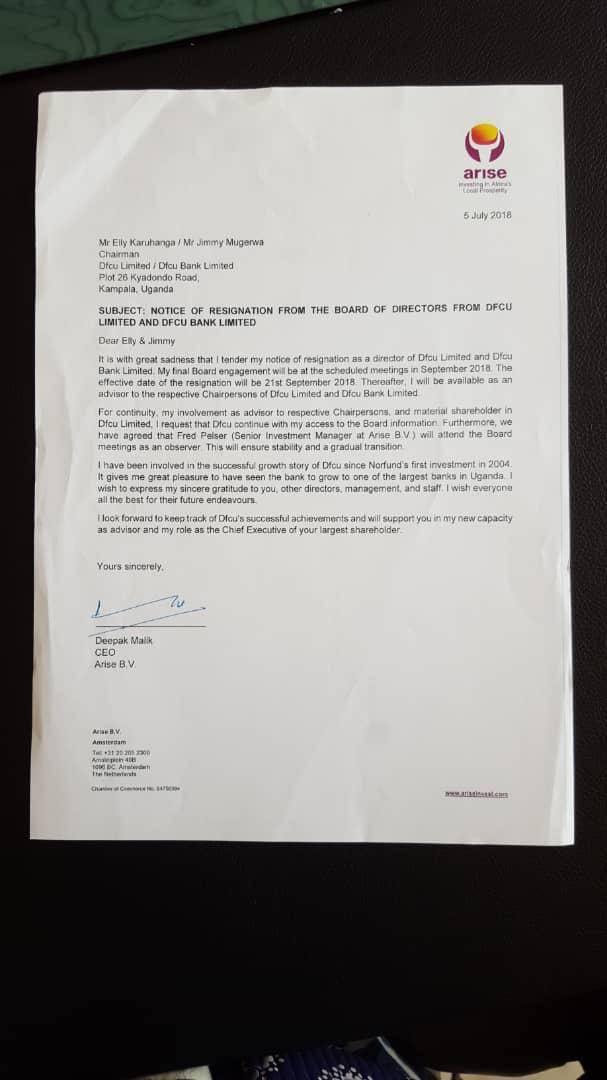
In a letter dated June 14, 2018, Irina Grigorenko, Chief Financial Officer of CDC Group Plc said the company was looking for buyers of its shares of 9.97 per cent from within Dfcu or outside. “After a period of more than 50 years as a shareholder, we aspire to exit in a manner that disrupts business as little as possible and ensures the orderly trading of Dfcu’s stock,” adds the letter, adding that “the goal of the CDC is to identify investors who could support the Dfcu in its new phase of growth,” read part of the letter. Before the letter finally had landed in the hands of reporters, Dfcu top managers were saying it was false/fake news as stated below through their lawyers of Ligomarc Advocates:

“Dfcu Limited (‘Dfcu’) has become aware of several inaccurate and defamatory reports circulating on various media platforms purporting that it is in chaos following the alleged exit of CDC Group Plc, one of its shareholders, and the resignation of Mr. Deepak Malik, a non-executive director representing Arise BV. These alarmist rumours have been perpetrated and coordinated by certain person(s) with the malicious intent of discrediting Dfcu and its successful acquisition of some assets and assumption of some liabilities of Crane bank (in receivership).”

About the resignation of Deepak Malik, the articles were true in that personally Malik on July 5, 2018 wrote to Elly Karuhanga and Jimmy Mugerwe who hold the position of Dfcu Limited chairman and Dfcu bank limited chairman respectively, informing him of his resignation to be effected on September 21, 2018, having been appointed the CEO of Arise BV which is the majority shareholder of Dfcu bank limited with over 58 per cent. This cannot be alleged resignation because the letter confirms Malik’s resignation. Actually Deepak wrote this letter much earlier but Dfcu feared to release it but did so after a month or so.

On resignation of William Sekabembe as CEO of Dfcu bank, it was not malicious news. He did it and is waiting for the agreed upon period to elapse so as he quits. The reason why on July 24, 2018 the Kenya Commercial Bank (KCB) Uganda approached to take over as their Managing Director even as he declined the offer later in a letter dated September 5, 2018.
If the above is what Dfcu Limited/Dfcu bank limited call allegations, the truth will come out in the days ahead especially when parliament embark on digging out what is in the AG’s report on defunct banks.

Stories Continues after ad
Why ask for dialogue when we opted for multiparty system-Otafiire tells opposition

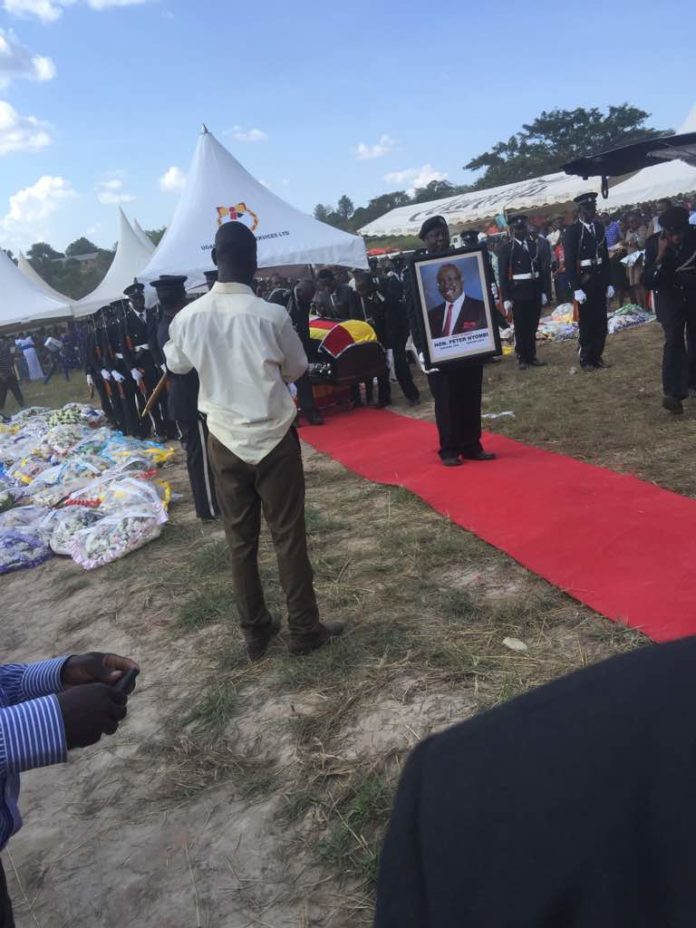
The casket containing the remains of Peter Nyombi being taken to his resting place.

Justice and Constitutional Affairs Minister, Maj. Gen. Kahinda Otafiire has said opposition and other forces opting for dialogue are misdirected as the current political arrangement doesn’t allow negotiation because the country chose multiparty system.

Gen. Otafiire made the remarks on Thursday last week in Nakasongola town council during the burial of former Attorney General, Peter Nyombi.

“You know these youth when they hear that people exchange ideas in parliament, they think exchanging of ideas id exchanging of fists, I hear people talk about dialogue, why dialogue when we went to multiparty system. If you want dialogue, let us go back to movement system.
We went multiparty and that entails that we individually as parties sell our ideals and Ugandans choose from the market place. And being multiparty with others being in opposition doesn’t mean that those in opposition are enemy of government and that is why they are referred as alternative government in waiting”.

Otafiire who worked with the late Nyombi in the same ministry said Nyombi was harshly judged by a section of the public without necessarily having known the real Nyombi
“I worked with Peter Nyombi although one of his friends told me that I would find him difficult but I found out that he was a nice man to work with. He would go around his work even when newspapers would sometimes write bad things about him. They would talk bad things about him but what they would say about him isn’t what I observed” Otafiire observed of the former Attorney General.

Otafiire added “He frank, he was honest. He was a nice man, courageous and indeed he didn’t care about this world”.
The Vice Chancellor of Uganda Christian University who doubles as late Nyombi’s young brother described the departed AG as family man who brought the Kajja’s family together. While Ambassador Henry Mayega, another brother and Uganda’s Deputy Head of mission in China praised him brother for being a firm believer even in his last moments when he was hit by heart attack.

“We bid farewell to the gallant son of Uganda and our elder. We thank God for the time he gave him to us and the time we have sent with him. He was indeed a courageous man despite the pain he went through when he was hit by heart attack”.
Ms Julian Nyombi, the wife to the late, described her late husband as loving and caring man who provided for everything.

Stories Continues after ad
Enact laws that protect rights of migrant women

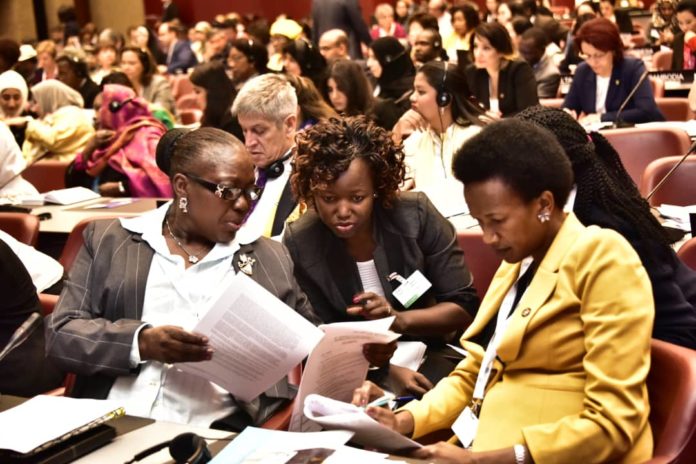
The Speaker of Parliament, Rebecca Kadaga, has implored legislators from around the world to enact laws that protect rights of migrant women.

Kadaga also called on parliamentarians to play a critical role in policy formulation and adherence to international laws pertaining to human rights and freedoms.
“We can use our powers to ensure meaningful, balanced and informed response to migration. Management of human mobility at both international and local levels is more effective when parliaments cooperate with each other through regional and international forums,” Kadaga said.

The Speaker made the call during the 28th Session of the Forum of Women Parliamentarians of the Inter-Parliamentary Union (IPU). The meeting is part of the 139th Assembly of the IPU, which is being held in Geneva, Switzerland.
During the discussion on the theme “Migrant women: inclusion, work and rights in host countries”, Kadaga informed the delegates that Uganda hosts many refugees and it has ratified the International Convention on the Protection of the Rights of All Migrant Workers and Members of Their Families.

“We should all honor our responsibilities as per ratification of these conventions. Unfortunately, as of September 2017, only 37 member states had ratified the five UN legal instruments concerning international migration. Some states have not even ratified a single convention,” Kadaga added.
She also appealed to migrant host countries to respect and protect the rights of women to work and also recognize that migration is a way of improving their rights and opportunities for work within families.

Kadaga called on the MPs to appeal to their respective governments to offer justice to women under migration situations, “For they go through a lot of domestic violence but fear to report to the authorities because of their citizen status in those countries.”

Stories Continues after ad
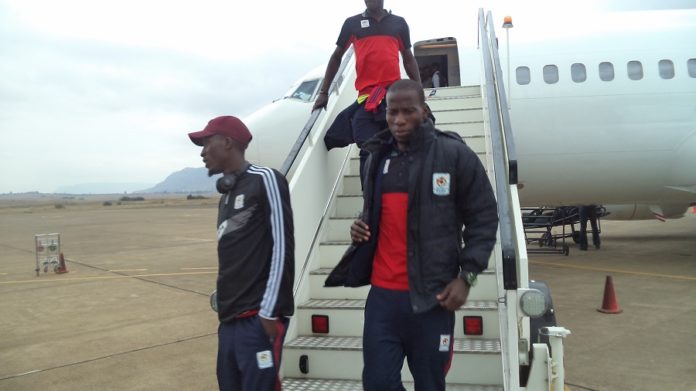
Uganda Cranes arrive in Lesotho for 2019 Afcon qualifiers return leg

Cranes players arrive at Maseru Airport in Lesotho

Barely two days after earning a remarkable 3-0 win over Lesotho, the road to Cameroon 2019 for the African Cup of Nations continues as Uganda Cranes team touched down in Maseru to prepare for the return leg of the doubleheader.

On board were all the 24 players who made the final training camp including some members of the FUFA Executive, delegates, staff, media personnel, some fans and government officials.

A brace from Emmanuel Okwi and a penalty from Farouk Miya at the Mandela National Stadium helped Uganda reclaim the top spot of Group L with a 3-0 home victory over Lesotho on Saturday in the first leg.

The Cranes have seven points from three matches. Cape Verde, who also beat Tanzania 3-0 in Praia are second with 4 points while Lesotho and Tanzania are both on 2 points.
The team will hold the last training on Monday 7pm at the Setsoto stadium, where the match will be played.

The match will be played on Tuesday, 16th October at 7pm Ugandan time.
Tanzania will host Cape Verde in the other group game fixture tomorrow at the Benjamin Mkapa National Stadium.

The travelling 24 players;
Goalkeepers: Denis Onyango, Jamal Salim, Charles Lukwago.
Outfield players: Murushid Juuko, Isaac Isinde, Timothy Awanyi, Denis Iguma, Nicholas Wadada, Godfrey Walusimbi, Isaac Muleme, Joseph Ochaya, Hassan Wasswa, Ibrahim Sadaam, Taddeo Lwanga, Moses Waisswa, Khalid Aucho, Allan Kateregga, Faruku Miya, Emma Okwi, Edris Lubega, Derrick Nsibambi, Milton Karisa, Allan Kyambadde and Patrick Kaddu

Stories Continues after ad
Victoria University celebrates International Day

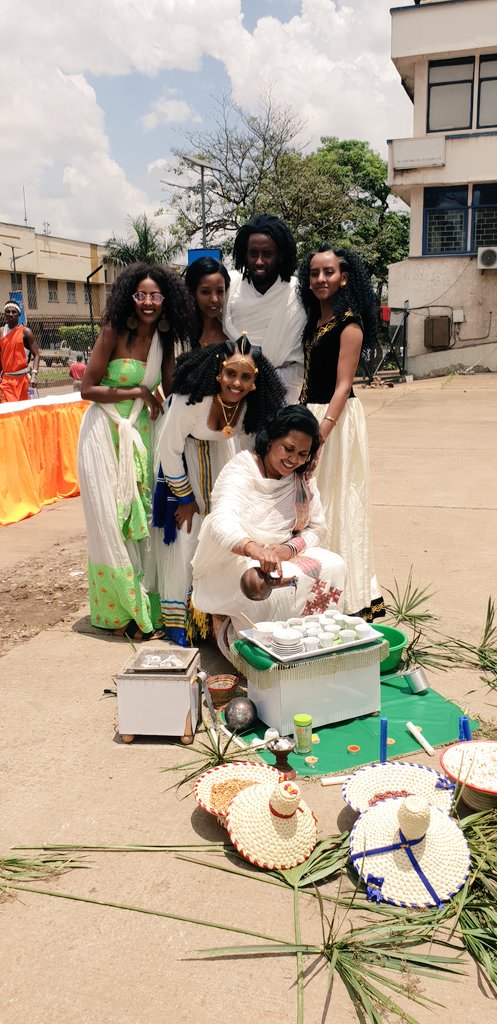
The Eritreans also represented their country.

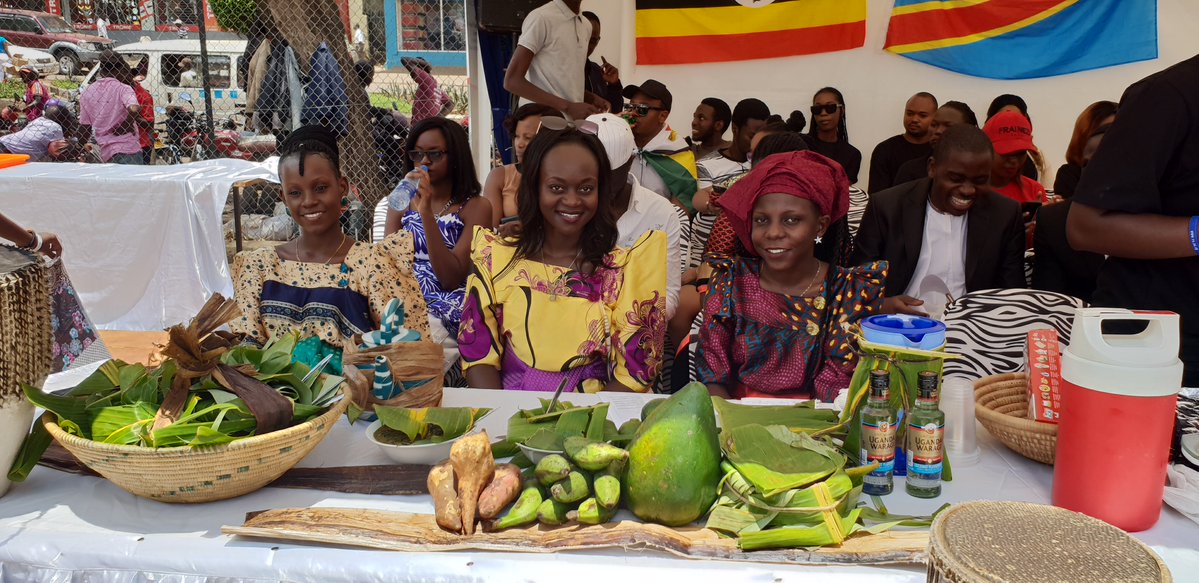
Victoria University celebrated the 2018 international day in style with various incredible performances prepared by the various cultural groups from ten different countries in the university.

The theme of the day was “CELEBRATING CULTURE THROUGH FOOD, LANGUAGE AND DRESS”.
Ten countries were represented and these included; Ghana, Somalia, Nigeria, India, South Sudan, Uganda, Congo DR, Rwanda, Burundi and Eritrea.

The event started off with singing of all the national anthems of the represented countries.
Dr. Krishna-N-Sharma, the University’s Vice Chancellor, also graced the event and took part in showcasing the Indian culture starting with the signing of the Indian National anthem.

Exif_JPEG_420

Students from different countries showcased their way of dressing, traditional dances and how to prepare different dishes to the judges and the public.
It was an enjoyable and lively day for the students, families, guests and friends who attended, with a lot of delicious food prepared from the different countries.
Exif_JPEG_420

The second edition of the event was held on Saturday, 13th October at the university’s parking lot along Jinja Road.
The International day at Victoria University is held annually.

About Victoria University
The university is centrally located in the heart of Kampala City and on the main public transportation routes coupled with ample parking space.
Victoria University is part of Ruparelia Group of Companies, which has a strong presence in the education sector in Uganda and has under its portfolio, Kampala International School Uganda, Kampala Parents School and Delhi Public School International.

The university was opened in August 2010 and has the capacity, the facilities and determination to revitalize higher education in Uganda and in the region.

Stories Continues after ad