Stanbic Bank
Stanbic Bank
24.7 C
Kampala
Stanbic Bank
Stanbic Bank
Home Blog Page 1455

Who will save Mount Elgon?

Mr Nabendeh Wamoto

By Nabendeh Wamoto

Where did Bamasaba of modern times on Mt.Elgon, Uganda side not Kenya go wrong about their habitat and heritage to the point of endangering themselves?.

Conservation is internationally described as the protection of flora and fauna, an area placed under public control for the protection and preservation of wild vegetation and animal life for the benefit, advantage and enjoyment of the general public whose boundaries cannot be altered either by presidential or royal decree except by competent legislative authority i.e. the August house (Parliament) of Uganda.

Therefore, issues of hunting of fauna and collection of flora is prohibited except again with permission of the conservation authorities like Uganda wildlife Authority.

It must be recalled that conservation of game for example started with rulers (Kings) who used to go hunting in the wild. However as people learnt how to develop and use sophisticated weapons (firepower), they threatened the Kings’ interests by reducing the number of game so in order to protect their interests, the rulers put regulations on the hunting activities which protected game.

The Roan Antelope in South Africa for example exclusively belonged to the Kings and in the same way Ivory in Tooro belonged to the Omukama (Tooro King) and no other person was allowed to own the trophy. Conservation or park creation in the United States of America was first initiated in 1872 with YELLOWSTONE conservation area i.e. national park and from hence the idea of conservation spread to other areas albeit with different themes.

In Africa, the first practical move of a conservation area was the Sabi game reserve established in the Transvaal in 1898 which later became known as Kruger national park from 1926.
Before Kruger was named a park, Virunga national park (then Albert national park) was declared in 1925 in the then Belgian Congo, later called Congo Kinshasa, Zaire and now Democratic Republic of Congo to protect mainly the mountain gorillas (scientifically known as Gorilla gorilla berengei).

Uganda joined in the fray and at the moment there are ten national parks Viz: Murchison falls, Queen Elizabeth, Kidepo valley and Lake Mburo national parks which are which are dominantly grasslands, mount Rwenzori and Mgahinga gorilla national parks which are dominated by tropical montane forests, Bwindi impenetrable forest national park which is dominantly low land tropical rain forest, Kibaale forest, Semuliki and Mt. Elgon national parks.

If the ancient leaders would conserve how then can the dotcom ones destroy like what is happening on Mt. Elgon parks?
Are the dotcom proponents worst enemies of our generation than our primitive, ancient forefathers who did wonders to practice sustainable land management such as pooling of labor, contours, fertility enhancement with homemade manure extra?

NABENDEH WAMOTO S.P (0776-658433)
Email: simonwamoto@yahoo.co.uk

Stories Continues after ad

EAC prepares to test its preparedness and response capacity for outbreaks of infectious diseases

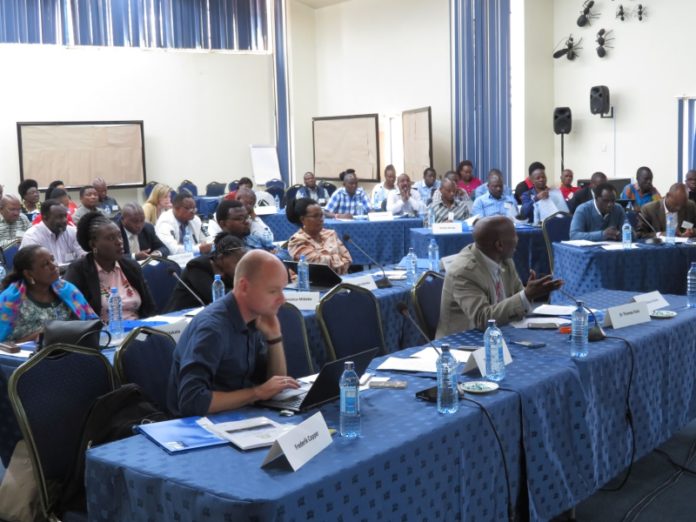
Participants at meeting

The East African Community (EAC) Secretariat is intensifying preparedness efforts against outbreaks of infectious diseases in the region, according to the latest press release.

“The world continues to be challenged by public health threats like the current Ebola virus disease outbreak in the Democratic Republic of Congo which are prone to crossing borders and threatening lives and livelihoods and the economy as a whole”, said Frederik Copper of the World Health Organisation (WHO) Headquarters in Geneva at an EAC stakeholder meeting in Nairobi, Kenya. “It was therefore important to exercise, practice and plan to build capacity for better outbreak preparedness and response,” says part of the press release.

The stakeholder meeting took place at the International Center for Insect Ecology and Physiology (ICIPE) on October 11-12, 2018. It kicked off the preparation for a cross-border field simulation exercise in Namanga in June 2019. “The EAC Secretariat will convene the exercise under the directive of the Sectoral Council of Ministers of Ministers of Health”, says Andrew Charles, EAC Health Department.

The simulation will take place around the One Stop Border Post between Kenya and Tanzania and involve the EAC Partner States of Burundi, Rwanda, South Sudan and Uganda. It will be facilitated by WHO as the lead agency and stage a One Health scenario that involves different sectors of society.

The approach above includes all stakeholders which are affected by an outbreak or can contribute to preparedness, response and mitigation. It reflects the fact that most outbreaks are of a zoonotic nature meaning that they can be transmitted between humans and animals.

The exercise is being planned at a time where the region is under threat of the current Ebola virus disease outbreak close to the border with Uganda. By 9 October 2018 the number of cases was at 188 and 119 people had died of the disease.

Stakeholders from various sectors in Kenya and Tanzania as well as from regional and international organisations participated in the meeting including agriculture and livestock, trade, tourism, environment, the border post and airports, immigration, business, military and police forces. Furthermore, there were representatives from the Namanga community, farmers, traders and religious leaders.

The EAC Secretariat urged participants to prepare for the field simulation exercise through sensitization on existing contingency plans and training of staff on the ground and to contribute to mobilising the necessary resources for pandemic preparedness.

Stories Continues after ad

UCU law students crowned champions of Moot Competition in Kenya

Winners

The moot culture has greatly escalated and has seen various Ugandan university teams partake in these prestigious competitions to achieve not only victory but also the amazing experience to do with it.
The latest to be crown in Kenya are law students of Uganda Christian University (UCU) who beat others from 15 regional universities.

Moot court competitions are basically early preparations that shape law students for the court practice in the actual legal field.

As early as year one, students are encouraged to engage in them to have the “court feeling.” Various international moots have seen gallant law students from MUK,UCU, IUIU and others represent the country say, the CEHURD moot, IHL(international humanitarian law) moots, All Africa moots, not forgetting the JESSUP moot which is every mooter‘s dream moot lifetime achievement.

For the past consecutive years, UCU has surpassed them all and represented well enough to make it for the JESSUP moot that occurs in Washington DC. The most recent moot court competition was the 3rd biennial Strathmore CIPIT (centre for intellectual property on information technology law) Moot Court 2018 held on October 11-12 at the Strathmore University in Kenya with the theme “ICT Law.”

As required participants from differential institutions in East Africa took part.

The best team and winners respectively were all Second-year law students from the UCU namely; Ruth Nanjobe, Phillip Kyoma and Joy Koelewijn who beat 15 teams from the region.

The win was as a result of the tremendous effort of the team together with their coach Kenneth Muhangi, a partner of KTA Advocates, Uganda.

Stories Continues after ad

DFCU’s William Sekabembe declines KCB MD job

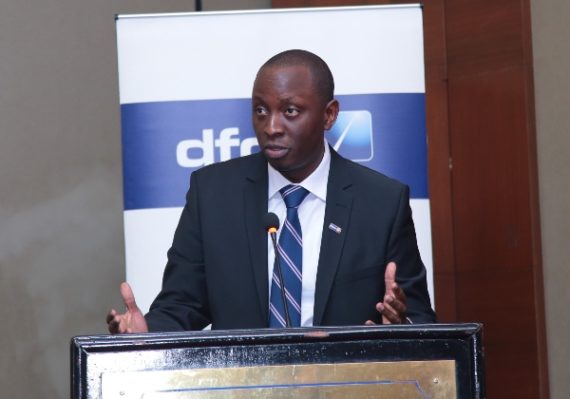
William Sekabembe Dfcu-Bank-Uganda’s-Chief of Business and-Executive Director-William-Sekabembe

Former Chief of Business and Executive Director of Dfcu Bank William Sekabembe has declined a job offer at KCB Uganda as Managing Director. Sekabembe declined the job offer in a letter dated September 5, 2018 which Eagle Online has obtained.

In July reports came out indicating Sekabembe had resigned from Dfcu, with many sources predicting he was to join KCB Uganda, even though the resignation from Dfcu didn’t take immediate effect as he has to wait for three months to elapse.

KCB Uganda had in a letter dated July 24, approached Sekabembe to become its Managing Director, following changes at Dfcu Bank.

But in reply to KCB Uganda’s Head of Human Resources Department, Sekabembe said: “I would like to give my appreciation for the recent Managing Director job offer with KCB…Limited, however, after careful evaluation, I regrettably decline the position.”


Sekabembe further said in a letter that it would be in his best interest to stay employed in “my current position at Dfcu Bank for personal reasons.”

Sources say Sekabembe was supposed to assume the position of MD at early last year, but current MD Kisaame was given more time to manage Dfcu’s acquisition of Crane Bank.

Meanwhile there have been shareholder and individual staff exits at Dfcu in the past few months leaving industry analysts and the public wondering what was happening at the bank.

Mid-June, British government owned development firm CDC indicated that they are leaving Dfcu, which they have partnered with for over 50 years.

After CDC’s announcement, Deepak Malik, the CEO of Arise B.V; Dfcu’s majority shareholder also resigned from the board without giving reasons, though Board Chairman Elly Karuhanga would letter come out to explain Malik’s decision to resign. Karuhanga also confirmed to the media a month ago that indeed the bank was having liquidity problems.

Insider sources indicate that there two camps created among the shareholders, one led by board chairman Elly Karuhanga insisting on current MD Juma Kisaame and the other camp-mainly led by 58.71 majority shareholder Arise BV and Britain’s CDC Group in favouring William Ssekabembe who they think can turn around the fortunes of the bank whose current problems seem to have emerged from the controversial purchase of Crane Bank in January 2017.

DFCU Shareholding percentages
Arise BV 58.71 per cent
CDC Group of the United Kingdom 9.97 per cent
National Social Security Fund (Uganda) 7.69 per cent
Kimberlite Frontier Africa Naster Fund 6.15 per cent
2 undisclosed Institutional Investors 3.22 per cent
SSB-Conrad N. Hilton Foundation 0.98 per cent
Vanderbilt University 0.87 per cent
Blakeney Management 0.63 per cent
Retail investors 11.19 per cent
BoU staff retirement benefit scheme is 0.59 per cent

Stories Continues after ad

Ministry of Health suspends vaccination camps for Hepatitis B

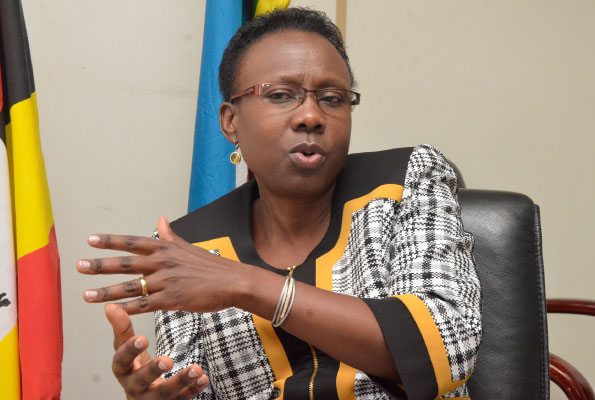
Health Minister, Dr.Ruth Aceng making a point during a past. presentation. She is reported to be against the idea by government to have companies process Marijuana here.

Ministry of Health has Suspended vaccination camps for Hepatitis B by private health workers saying the process of accreditation of new service providers is ongoing.

In March, Ugandan media was washed by stories of counterfeit hepatitis B vaccine at UMC Victoria hospital Bukoto; Mbarara Community hospital, Devine Mercy, Mayanja Memorial hospital, Family Doctors’ clinic Ntungamo, Mbarara City clinic, Malcom Health Care Kisaasi and Kampala Medical Chambers along Buganda road and other health facilities.

In the process, UNDA launched an operation leading to seizing of a total of 196 suspected falsified 10ml units of the vaccine purportedly manufactured by Serum institute of India for investigation.

Heath Minister, Jane Ruth Aceng said, UNDA has made efforts to monitor side effects among those who received the falsified vaccines but none have been identified or reported.

She said falsified vaccines had significantly lower antigen potency than the authentic, thus reducing its efficacy, “The protective ingredient (a protein from the surface of Hepatitis B Virus) was present in some falsified samples and absent in others, presenting uncertainty in efficacy,”

She noted that there were significant labeling differences as earlier confirmed by UNDA and no residual chemicals, contaminants, bacteria or fungi in both samples. There was no possible harm to whoever received falsified vaccine.

“To further establish the actual ingredients of the falsified vaccine, Ministry of health sought assistance from world health organisation and supported confirmatory tests at Medicines and Healthcare Products Regulatory Agency (MHRA),”

She revealed that both the suspected and genuine 10ml multi dose samples had major similarities in physical appearance however the Major differences were observed in external labeling and both samples returned similar pH and extractable volume results.

Stories Continues after ad

Parliament to reconsider amendments of Tobacco Control Act, 2015

Speaker Rebecca Kadaga

The Speaker of Parliament, Rebecca Kadaga, says the August House is set to reconsider the amendments of Tobacco Control Act, 2015 for provisions to control and demand for consumption of tobacco and its products.

Kadaga was responding to remarks by Rob Kelsall, the Director, Nilus Group Company that the Act does not allow them to deal directly with farmers.

She vowed to follow up the amendment when Jinja East MP Paul Mwiru tables Private Members Bill to review this Act. This law was very contentious.

“As Parliament, there are areas that we did not consult on fully and hope we shall rectify that clause that do not allow you to talk to farmers,” she said at the opening of a new tobacco factory in Masese, Jinja.

Mwiru said as parliament passed the act, it mainly concentrated on the use and abuse of tobacco, rather than export, “The bill was largely looking at the health issues. “With the help of the tobacco industry, I will present a Private Members Bill to amend the highlighted issues that have been raised here. We shall work hand in hand with the stakeholders to improve on the bill,” he added.

Kelsall remarked that, the challenge with the tobacco industry is the misinterpretation of the act to the effect that tobacco companies were not to be in contact with the farmers.
He said the act states that the company cannot be in communication with farmers, which means that they cannot provide inputs and training to the farmers.

“How then are we going to expand to other areas? The industry had improved the welfare and livelihoods of farmers,”

Stories Continues after ad

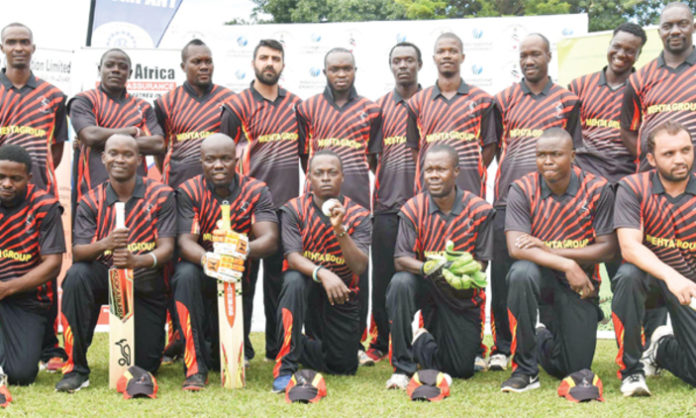
Uganda to host ICC Men’s WT20 Africa regional finals in 2019

Cricket Cranes

Uganda Cricket Association have been awarded the hosting rights for ICC World T20 Africa regional finals for qualification towards ICC World T20 2020 global qualifiers in May 2019.

The development was confirmed by Patricia Kambarami, the development officer for International Cricket Council in the African region.
Six teams will compete at the 2019 ICC World Twenty20 Africa Regional Finals in Kampala.

Nigeria, Ghana, Uganda and Kenya already qualified from the two sub-regional qualifiers held in Nigeria and Rwanda and now await two qualifiers from Group “C” sub-regional qualifiers (the South African region), to be held in Botswana shortly.

Botswana, along with Lesotho, Malawi, Mozambique, St. Helena, Namibia, Swaziland and Zambia will be competing in the 8-nation qualifiers and two teams will progress.

The tournament will be held from 17th to 29th May, 2019 and will see the top 2 teams from the 6-nation event advance to global qualifiers for 2020 ICC World T20 in Australia.

Stories Continues after ad

Ghana set to grab six points from cancelled Sierra Leone clash

Ghana Black Stars

African Football governing body, Confederation of African Football (CAF) could award Ghana Black Stars with six points from its back-to-back Africa Cup of Nations qualifying matches against Sierra Leone as the body decided to call off the matches and they won’t be rescheduled.

Early this month, FIFA suspended Sierra Leone from international football because of government interference in the running of the country’s football association.
Caf said the games had been “cancelled as the Sierra Leone Football Association did not meet the conditions stipulated in the letter sent by Caf on Fifa’s decision to suspend the federation”.

A communique from CAF informed the Ghana Football Association’s (GFA), Normalization Committee that “the CAN 2019 Qualifier match (Ghana vs Sierra Leone) & (Sierra Leone vs Ghana) on the 11th and 14th of October respectively have been cancelled.”
CAF said the matches were cancelled as Sierra Leone did not meet conditions for the lifting of the Fifa-imposed suspension of the country’s FA. However, Sierra Leone have denied any wrongdoing.
African football’s governing body also confirmed that the matches will not be rescheduled but are yet to clarify whether the points will be awarded to the Black Stars.

The CAF Executive Committee could also decide to completely remove Sierra Leone from the qualifying group which means the Black Stars qualifying group will be left with three teams.
Sierra Leone are one of four teams with three points in Group F, which also includes Ethiopia and Kenya.

However if Sierra Leone meets the FIFA conditions and return to the qualifiers, they will lose the six points against Ghana and play the remaining two group matches.

Stories Continues after ad

Lesotho team arrive in Uganda for Afcon qualifier against Cranes

The Lesotho National Football team arrived in Uganda yesterday night ahead of their third 2019 AFCON qualification match against the Cranes on Saturday 13th, October.

They will conduct a training session at Namboole stadium before the encounter on Saturday as per the FIFA rules which dictate that the away side trains on the pitch the where the match will be played.

Uganda faces Lesotho on Saturday at the Mandela National stadium in the first leg before Cranes head to Maseru in Lesotho to face-off again with the Likuena on Tuesday, 16th October.

Meanwhile, Egyptian match officials will handle the first leg of the 2019 AFCON qualifier at Namboole.

Amin Mohamed Omar will be the centre referee. He will be assisted by Samir Gamal Saad and Mahmoud El Regal as the first and second assistant referees respectively.

For the second leg in Lesotho, officials from Comoros will be in charge of the match.

They are; Ali Mohammed Adelaid, who will be the centre referee while Soulaimane Amaldine and Said Omar Chebli as the first and second assistants.

Cranes still top Group L with 4 points from two matches played. Lesotho are second with two points, on level with Tanzania while Cape Verde are bottom with no point.

Tanzania Taifa Stars will be playing Cape Verde in the other group fixture on the same days.

Coach Desabre will be seeking for his second victory since he was appointed. He has won only once, against São Tomé and Príncipe (3-1) in a friendly and picked up five draws and four defeats.

The 2019 AFCON tournament will be hosted in Cameroon. The competition will be held in June and July with 24 teams to take part.

Lesotho’s Full squad;

Goalkeepers: Samuel Khetsekile (FC Masheshena), Lomani Mphuthi (LDF FC), Mohau Kuenane (Free Agent)

Defenders: Kopano Tseka (Lioli Football club), Mafa Moremoholo (Lioli Football club), Nkau Lerotholi (LMPS), Basia Makepe (LMPS)

Midfielders: Tsepo Toloane (LDF), Tsotleho Jane (unattached), Hlompho Kalake (Bantu FC), Mabuti Potloane (Matlama Football club), Tumelo Khutlang, Luciano Matsoso – (Black Leopards), Jane Thaba Ntso (Matlama)

Strikers: Masoabi Nkoto (Real Kings FC), Motebang Sera (Matlama), Setho Moshoeshoe, Thapelo Tale – (LCS)

Stories Continues after ad

Jobs of the future require more investment in people-report

Isabelle Kubwimana (Youth Think Tank Researcher)

By George Mangula

Greater investments in people’s health and education are urgent in a rapidly evolving labour market increasingly shaped by technology, according to the World Development Report 2019: The Changing Nature of Work.

Commenting on the report, World Bank Group President Jim Yong Kim, said the nature of work is not only changing but it’s changing rapidly. “We don’t know what jobs children in primary school today will compete for, because many of those jobs don’t exist yet,” he said.

He said the great challenge is to equip them with the skills they’ll need no matter what future jobs look like – skills such as problem-solving and critical thinking, as well as interpersonal skills like empathy and collaboration. “By measuring countries according to how well they’re investing in their people, we hope to help governments take active steps to better prepare their people to compete in the economy of the future,” he said.

The number of robots operating worldwide is rising rapidly, the report says, stoking fears of a jobs meltdown. But technology is laying down a path to create jobs, increase productivity and deliver effective public services. Fears surrounding innovation, which has already transformed living standards, are unfounded.

Digital technology spurs rapid innovation and growth, disrupting old production patterns and blurring the boundaries of firms. New business models, such as digital platforms, evolve at dizzying speed from local start-ups to global behemoths – often with few tangible assets or employees.

New platform marketplaces are connecting people more quickly than ever before. This “scale without mass” delivers economic opportunity to millions of people, regardless of where they live.

New markets and jobs are driving demand for employees with teamwork, communication and problem-solving skills. Technological change is eliminating repetitive “codifiable” jobs but replacing them with new types of employment: in Europe alone, there will be estimated 23 million new jobs this century.

Technology is changing not just how people work but also the terms on which they work, creating more non-traditional jobs and short-term “gigs.” This is making some work more accessible and flexible, but raises concerns about income instability and the lack of social protection.

Four out of five people in developing countries have never known what it means to live with social protection. With two billion people working in the informal sector, unprotected by stable wage employment, social welfare, or the benefits of education – new working patterns are adding to a dilemma that predates the latest technological wave.

Adjusting to the changing nature of work requires enhanced social protection. New ways of protecting people, regardless of employment status, are needed.

The report challenges governments to take better care of their citizens, calling for a universal guaranteed minimum level of social protection. Full social inclusion will be costly, but it can be achieved with reforms in labor market regulation in some countries and, globally, a long overdue overhaul of taxation policy.

With the boundaries of firms transcending borders and physical assets, it’s easier to shift profits to low-tax jurisdictions, which means billions of dollars go untaxed. The report calls for updates to the international tax system, taking into account the globalized digital economy.

As digital firms – with relatively few tangible assets, increase and grow, withholding taxes are also becoming more relevant. Current taxation patterns reveal large discrepancies, especially between poorer and richer countries. High-income countries collect a much larger share of their national output in direct taxes, while middle and low-income countries rely more on consumption and trade taxes.

The 2019 World Development Report features a chapter containing the recently released Human Capital Index, part of a broader World Bank Group project that recognizes human capital as driver of inclusive growth. In addition to the Index, the Human Capital Project includes a program to strengthen research and measurement on human capital, as well as support to countries to accelerate progress in human capital outcomes.

Stories Continues after ad