Stanbic Bank
Stanbic Bank
25.8 C
Kampala
Stanbic Bank
Stanbic Bank
Home Blog Page 1457

Sub Saharan Africa set third consecutive record of reforms to improve business climate-New report

Doing Business

Economies in Sub Saharan Africa set a new record for a third consecutive year, carrying out 107 reforms in the past year to improve the ease of doing business for domestic small and medium enterprises, says the World Bank Group’s Doing Business 2019: Training for Reform report, released Wednesday.

The latest reforms were a significant increase over the 83 reforms that were implemented in the region the previous year. In addition, this year also saw the highest number of economies carrying out reforms, with 40 of the region’s 48 economies implementing at least one reform, compared to the previous high of 37 economies two years ago.

Four of the region’s economies have earned coveted spots in this year’s global top improvers, Togo, Kenya, Côte d’Ivoire, and Rwanda. And, Mauritius regained a spot in the world’s top ranked economies, in 20th place. Five reforms were carried out in Mauritius during the past year, including the elimination of a sole gender-based barrier.

In the area of Starting a Business, Mauritius equalized the business registration process for men and women and further consolidating the registration process for all applicants. Minority investor protections were strengthened by clarifying ownership and control structures and introducing greater corporate transparency.

Reforms were also carried out in the areas of Registering Property, Trading Across Borders and Paying Taxes. Rwanda carried out the most reforms in the region in past year, with seven, and moved up to 29th rank globally. The latest improvements in Rwanda, which has carried out the most reforms since the inception of Doing Business 16 years ago, included making starting a business less costly by replacing electronic billing machines with free software for value added tax invoices.

In Registering Property, an area in which Rwanda is second only to New Zealand in the world, new land dispute resolution mechanisms made property registration easier. A new insolvency law strengthened access to credit, another area in which Rwanda excels, and made it easier to resolve insolvencies by making insolvency proceedings more accessible for creditors and granting them greater participation in the proceedings.

Other reforms in Rwanda were in the areas of Trading Across Borders and Getting Electricity. Kenya implemented five reforms, advancing to 61 st rank. One reform included the introduction of a new law which helped further strengthen access to credit. This latest reform catapulted Kenya to 8th rank in the world in the area of Getting Credit.

Kenya also made it easier for businesses to pay taxes by consolidating permits and utilizing the country’s iTax platform, while an online system helped make property registration easier. Other improvements strengthened minority investor protections and made it easier to resolve insolvencies.

Notable reforms in Côte d’Ivoire and Togo included the introduction of online systems for filing corporate income tax and value added tax returns, making it easier for businesses to pay their taxes. In Côte d’Ivoire, which carried out five reforms, access to credit and construction quality controls were also strengthened and business registration and enforcing contracts were made easier.

In Togo, which carried out six reforms, business registration was made easier with a reduction of minimum capital requirement and enforcing contracts was made easier with the adoption of a new law on mediation, among other reforms. Nigeria carried out four reforms which included making Starting a Business easier in Kano and Lagos, the two cities covered by Doing Business.

Getting Electricity and Trading Across Borders also saw reforms in the two cities. In addition, Lagos made Enforcing Contracts easier by issuing new rules of civil procedure for small claims courts, while Kano, in a negative move, made property registration less transparent by no longer publishing online the fee schedule and list of documents necessary to transfer a property.

Elsewhere in the region, Ethiopia carried out three reforms to make it easier to register a new business, enforce contracts and obtain construction permits, while two reforms in South Africa improved the monitoring and regulation of power outages and reduced the time needed to start a new business.

Regionally, much of the reform activity in the past year focused on improvements in the area of Enforcing Contracts, with the region’s 27 reforms accounting for more than half of the reforms recorded in this area globally. The uptick was the result of reforms carried out by the 17-member states of the Organization for the Harmonization of Business Law in Africa (OHADA).

The organization adopted a Uniform Act on Mediation in 2017, which introduced mediation as an amicable mode of dispute settlement. Starting a Business saw 17 reforms, which largely focused on reducing the time to obtain a business license, by streamlining existing services or introducing new online solutions.

Burundi, the region’s top-ranking economy in this area with a global rank of 17, further reduced the cost needed to register a new business. “It is a year of records for Sub-Saharan Africa. The significant acceleration in the reform effort over the past year and spanning several years is a testament to the strong impetus for change in in the region.

A more efficient business environment, in which private enterprise thrives, is a fundamental building block for job-creation and growth,” said Santiago Croci Downes, Program Manager of the Doing Business Unit. The region’s economies perform best in the areas of Getting Credit and Starting a Business, with four economies – Kenya, Malawi, Rwanda and Zambia – ranked among the world’s top 10 in Getting Credit ranking.

And, on average, it now takes 21 days and costs 39 percent of income per capita to start a new business in the region, compared with 61 days and 305 percent of income per capita in 2003, when Doing Business was first published. And the minimum capital requirement has been eliminated in a majority of economies and drastically reduced in others.

The region underperforms in the areas of Getting Electricity and Trading Across Borders. For example, it costs on average 3456.5 percent of income per capita for a business to get connected to the electrical grid, compared to 1229 percent globally. And it takes 98 hours to comply with documentation requirements to import, compared with 61 hours globally.

Stories Continues after ad

Desabre names provisional squad for decisive game against Cape Verde

Uganda Cranes head coach desabre.

Uganda Cranes Coach Sebastien Desabre is on the verge of taking the Uganda Cranes team to the 2019 AFCON tournament in Cameroon come next year.

Cranes are top of Group L with ten points and need just one point from the remaining two fixtures to make back to back appearance at the AFCON Finals.

Uganda has two matches lined up starting with the 2019 AFCON Qualifier against Cape Verde on 17th November and Super Eagles of Nigeria on 20th November in a friendly game away at Asaba Stadium.
Emmanuel Okwi will be suspended for the Cape Verde game due to accumulation of yellow cards but will be in contention to face West African giants Nigeria in the international friendly.

“The non-residential training programme will start on 9th November with 14 local based players at Lugogo. The 16 foreign based players summoned will join camp as per FIFA stipulated international break rules” FUFA Communications Manager Ahmed Hussein told the fufa website.

The 2019 AFCON tournament will be hosted in Cameroon. The competition will be held in June and July 2019 to move it from January/February for the first time. It will also be the first Africa Cup of Nations expanded from 16 to 24 teams.

Uganda Cranes Squad:
Goalkeepers: Denis Onyango (Mamelodi Sundowns), Jamal Salim (El Meriekh), Charles Lukwago (KCCA FC), Nicholas Sebwato (Onduparaka FC).
Outfield players: Isaac Isinde (Kirinya Jinja SS), Murushid Juuko (Simba SC), Timothy Awanyi (KCCA FC), Denis Iguma (Kazma FC), Nicholas Wadada (Azam FC), Godfrey Walusimbi (Kaizer Chiefs) FC, Isaac Muleme (Haras El Hodood), Bernard Muwanga (KCCA FC), Yayo Kato Lutimba (Vipers SC), Joseph Ochaya (TP Mazembe), Hassan Wasswa (El Geish), Khalid Aucho(Church Hill Brothers, India), Ibrahim Saddam Juma (KCCA FC), Tadeo Lwanga (Vipers SC), Allan Kateregga (Cape Town City), Faruku Miya (Gorica ), Ambrose Kirya (Sc Villa), Moses Waisswa (Vipers Sc), Milton Karisa (MC Oujda), Allan Kyambadde (KCCA FC), Dan Serunkuma (Vipers SC), Vianne Sekajugo (Onduparaka FC), Emma Okwi (Simba SC), Edrisa Lubega (SV Ried), Derrick Nsibambi (Smouha), Patrick Kaddu (KCCA FC).

2019 AFCON Qualifiers
Saturday, 17th November 2018
Uganda Vs Cape Verde
Mandela National Stadium, Namboole (4pm)

International friendly match
Tuesday, 20th November 2018
Nigeria Vs Uganda
Stephen Keshi Stadium, Asaba

Stories Continues after ad

Bakkabulindi secures bail for commissioner of Sports

Akii-Bua

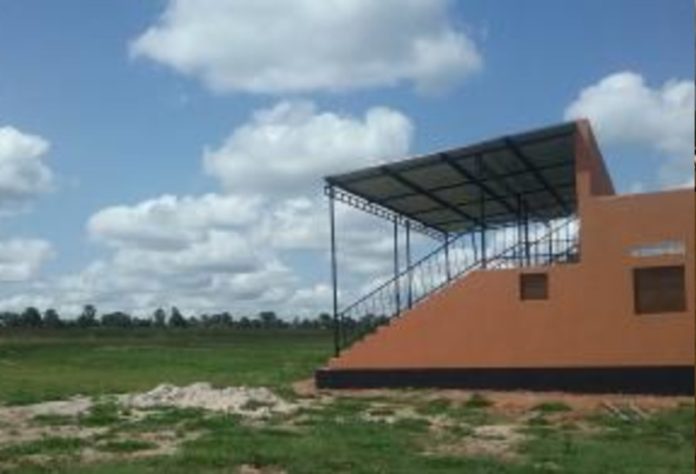
Parliamentary police has released the commissioner for Physical Education in the Ministry of Education and Sports Lameck Omara Apita after he failed to account for Shs640 million disbursed towards the construction Akii-Bua Memorial Stadium in Lira.

Members of Parliament expressed displeasure over the mismanagement of funds disbursed by the Ministry of Education and Sports towards the construction of the Akii-Bua Memorial Stadium.

He was appearing before Parliamentary Committee on Statutory Authorities and State Enterprises (COSASE), chaired by deputy chairperson Anita Among who tasked the NCS officials to follow up on the expenditure of money disbursed towards the development of the stadium.

The Committee deputy chairperson, castigated Omara and his team for failure to involve the necessary Government bodies such as the District Local Government in the finical disbursements and implementation of construction works on the stadium.

“It is important to involve the National Council of Sports since you are not the one to implement,” Among said, adding that “You are a policy maker but when you want to do everything by yourself, you act with impunity,”
She also blamed the team for failure to account for the money disbursed towards the project as well as undermining the Public Procurement and Disposal of Assets (PPDA) law, and directed that the Commissioner be investigated by the Criminal Investigations Directorate of Police (CID) to trace the necessary documents for accountability.

The Commissioner was later detained by parliamentary police and released in the evening with State Minister for Sports, Charles Bakkabulindi standing as his surety.

“The Commission at National Council of Sports should interest itself in what the money has done on the stadium so far. I suggest we ask Charles Bakkabulindi to make a formal statement on this matter when the House resumes sittings,” said MP Peter Ogwang

“From today, all necessary offices must be involved in the construction because the issue of bypassing the rightful people to handle the money and disburse it without monitoring leaves many questions,” said Kasilo County MP Elijah Okupa, adding that, “The minister ought to come and clear the air on this matter,”

According to a report received by the Parliamentary Committee, the money disbursed was aimed at building an access road to the stadium as well as complete works on temporary playgrounds, which had not been worked upon, with only a pavilion erected.

It also indicates that money was disbursed in installments for works on the sports complex, with Shs400 million, Shs150 million and Shs90 million distributed in the financial year 2015/2016, to cater for among others, project monitoring.

On 23 October 2018, Ajuri County MP Hamson Obua and Kwania County MP Tony Ayoo wrote to President Yoweri Museveni, requesting for a progressive report on the construction of Akii-Bua Memorial Stadium in Lira. The letter reminds the president that over Shs600 million had been remitted towards the project since the financial year 2016/2017.

Stories Continues after ad

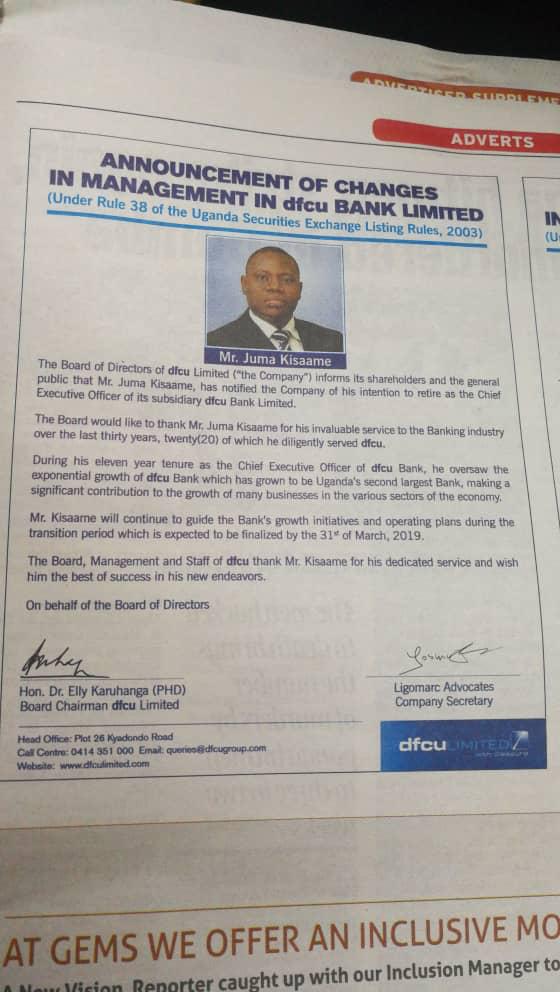
Dfcu’s Juma Kisaame headed for Bank of Tanzania

Juma Kisaame

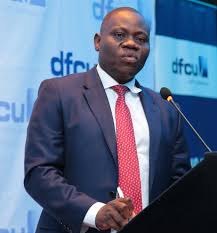
The out-going Managing Director of Dfcu Bank, Juma Kisaame is believed to be headed for Bank of Tanzania around April next year.

Kisaame is said to have done interviews last week and is expected to join his new employees after leaving Dfcu Bank end of March 2019.

Kisaame joined Dfcu in 1992 as head of finance. He held several jobs in Dfcu until 2004, when he joined Tanzania’s Eurafrican Bank as managing director. He would appointed MD of Dfcu in 2007.

Kisaame has been replaced by William Sekabembe, who has been the Chief of business and Executive Director who starts his duties on January 2, 2019.

Kisaame has been in the limelight over the manner in which he connived with officials at Bank of Uganda to takeover Crane Bank Limited. It also emerged recently that he had on his account over $40 million in Tropical African Bank.

Stories Continues after ad

UAE, Uganda to establish one of the world’s first agricultural free zones

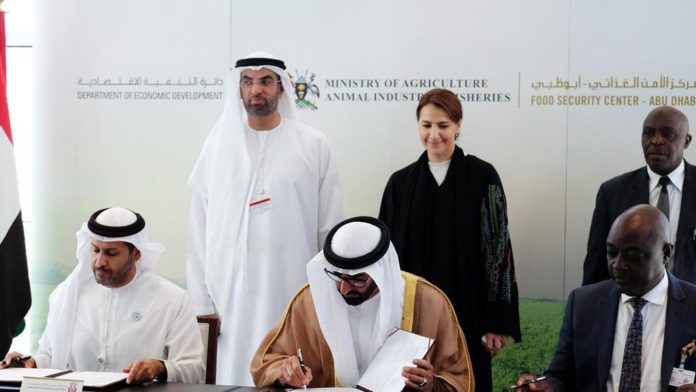
Uganda has signed a memorandum of understanding with UAE to establish one of the world’s only agricultural free zones in an attempt to enhance food security in the Emirates.

The 2,500-hectare free zone will allow private companies from the UAE to invest in agricultural production and development in Uganda.

Mariam Al Mehairi, Minister for Food Security said, it will also act as a launch pad for further investment into East and Central Africa. “There is a lot of potential to be unlocked in that area,” she said.

The agreement was signed at Agriscape, a two-day exhibition in Abu Dhabi that convenes dozens of producers, suppliers and investors from across the globe. The deal will promote agribusiness between the two countries and lead to an increase in UAE imports of Ugandan crops and beef.

As a result, the country imports about 90 per cent of its food and is therefore pursuing mutually beneficial opportunities in Africa and beyond. Talks began with the Ugandan government last year after the Gulfood exhibition in Dubai in February.

“Since then, about 14 Emirati companies have expressed interest in investing in the African country,” Uganda’s Agriculture Minister Vincent Ssempijja noted.

The UAE will look for similar, complementary investments in surrounding countries.

“Africa in general, from Uganda, Rwanda and South Africa to Nigeria and Zambia, is very promising,” said Khadim Al Darei, deputy chairman of Al Dahra, the headline sponsor of Agriscape.

“Currently only 5 per cent of African land has been utilized for agriculture and the consumers are also coming from Africa. Imagine if we find a way to tap into that, we would reduce speculation in prices and also feed the continent. How can it be that 800 million are suffering from hunger, while we have 600 million people suffering from obesity?” said Mr. Khadim

Food security has topped agendas all over the world as temperatures rise, but it is perhaps most pressing in Africa, where hunger is widespread and conflict and political instability deter investors.

Many Sub-Saharan countries feel international agricultural investment is the way to achieve that, “We are here to sell an image of our country as a good investment,” said Emmanuel Mulilo, a minister from the Democratic Republic of the Congo.

He said although the country was racked by conflict, it could feed its population, bolster agricultural production and start to export with agribusiness investment, bringing jobs and wealth.

The UAE has been one of Africa’s biggest investors; last year imports from Africa were valued at $21 billion (Dh77.13 billion).

Stories Continues after ad

Realizing the potential of the G20 Compact with Africa

Christine Lagarde

By Christine Lagarde

The Compact with Africa focuses on a fundamental challenge for the continent: how to accelerate private sector investment and create jobs. To realize its full potential, all parties need to deliver.

The central idea behind the Compact is a simple one: create a platform for closer coordination between African countries, international organizations, and bilateral G20 partners to support economic, business, and financial sector reforms that will attract private investment.

Sixteen months on from the Berlin Summit that effectively launched the initiative, we can, and should, ask ourselves whether Compact countries and their international partners are doing enough to fully implement the initiative, and where we can make further progress.

It starts with a stronger economy

Compact countries have been implementing policies to strengthen economic stability—a fundamental pillar for attracting private investment.

Growth prospects for most Compact countries are favorable, although in many cases, including Egypt, Ethiopia, and Ghana, the fiscal space to scale-up public investment is constrained by elevated public debt levels. With limited room for additional borrowing, countries also need to boost domestic tax revenues and increase the efficiency of public spending to fund higher public investment.

Better business and financing frameworks make the difference

Private investors seek better business frameworks—with streamlined procedures, regulatory certainty, efficient courts, and transparency. Stronger and more developed financial sectors deepen capital markets and expand access to credit.

Equally critical to private investment is coordination between governments and partners. This has been highly effective in some countries, such as Ghana and Morocco—but less so in others. Implementing the ambitious and country-specific reform commitments under the Compact requires strong ownership by African countries, and stepped-up engagement and support from Compact partners to ensure adequate capacity and financing during implementation.

Development partners need to provide fine-tuned public support—such as risk mitigation instruments—to leverage private sector investment. The growing involvement of development finance institutions in G20 countries is welcome. They can contribute extensive expertise in the design and financing of large investment projects.

Stepping up to attract more private investment

Attracting private investment requires connecting countries directly with private investors, as was on display at the recent Germany-Ghana Investors “Virtual” Forum. Other G20 partners could step up their game in this area, including through funding of road shows and peer-learning events that bring together Compact countries and potential investors.

Of course, all these reforms take time and require strong ownership. We must be realistic about how quickly projects can be developed and implemented, and about the challenge of overcoming political opposition in some cases. But the potential rewards of meaningful economic reforms are worth the wait.

The IMF actively supports the Compact

The IMF continues to work closely with Compact countries to build strong macroeconomic, business, and financial frameworks that will encourage a scaling-up of private investment. We maintain a close policy dialogue with all 12 Compact countries, and IMF-supported programs are in place in 10 of those countries.

Our capacity development works to strengthen key public institutions. During 2017 and 2018, the Fund fielded 129 technical assistance missions in Compact countries and trained more than 1,700 government officials, in areas including tax administration, public investment management capacity, and financial sector supervision, to name a few.

A “win-win” collaboration

We continue to actively support the Compact process—a pragmatic “win-win” collaboration between advanced and developing countries. Achieving success in the current Compact countries will lay the basis for expanding the initiative across the continent.

A final thought in closing. In the next decade, 140 million children will come of age in the 12 Compact countries. Increasing private investment is not an abstract concept in terms of those children’s future—it is an imperative if they are to enter productive employment, and thereby deliver on Africa’s demographic dividend. Failure to meet this job creation challenge is not an option—and we have the tools and instruments to achieve success.

Over the past few weeks, we at the IMF have been making a case that this is not a time for complacency in the global economy. We must steer, not drift. The same is true of the Compact with Africa. To deliver on its full potential, reform-minded countries in Africa, international organizations, and G20 partners need to row together.

The writer is the President of IMF

Stories Continues after ad

Raila Odinga to oversee construction of 60,000km Trans-African Highway

Raila Amollo Odinga

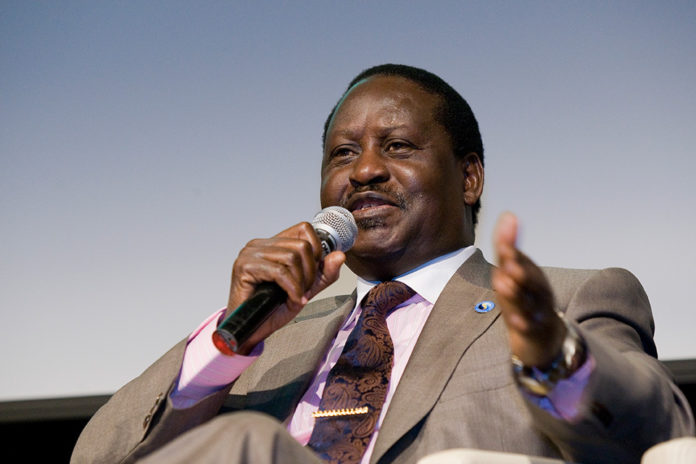
The recently appointed African Union special envoy for infrastructure development in the continent, Raila Odinga, has proclaimed plans to build a 60,000km road linking Mombasa in Kenya to Lagos in Nigeria in bid to link Africa via modern highways and railways.

Odinga said linking Kenya to Nigeria via road will be among his priorities as African Union’s high representative of infrastructure and development. He intends to oversee construction of 60,000km Trans-African highway project commissioned in 1971 to open up continent for trade.

“Primary projects will be an 8,000 kms highway linking Cairo (Egypt) to Dakar in Senegal. Another 8, 0000 kms road will stretch from Cairo and Cape Town (South Africa). A 60,000kms road linking Mombasa (Kenya) to Lagos (Nigeria) is part of this ambitious project,” he said hours ago.

Raila who said he accepted the role by AU because he believed land transport was an integral part of the continent’s economic growth added he intended to have another 4,700kms road between Dakar and Lagos built. He explained that out of nine highways proposed over four decades ago, only the 4,500kms road between Dakar and N’Djamena in Chad had been constructed.

“My belief is that having reliable road infrastructure and railways linking all corners of Africa will open up the continent and make it a gateway to the 21st century. Through my new position I am determined to take Africa to economic independence,” he said.

Stories Continues after ad

2018 African Economic Conference to offer practical solutions- AfDB

Mupotola

The 2018 African Economic Conference (AEC) will feature practical solutions from regional integration experts and the private sector, a senior African Development Bank (AfDB) staff has said, as preparations for the event move into top gear.

The 13th conference of the EAC, will take place in Kigali, Rwanda from December 3–5, 2018, under the theme “Regional and Continental Integration for Africa’s Development.” The United Nations Development Programme (UNDP) will host the meeting. The EAC is the leading forum for discussing African issues of the day.

“Expectations for the 2018 AEC are high,” organizers – African Development Bank, UNDP and United Nations Economic Commission for Africa – said days ago in Abidjan, Ivory Coast.

“The conference will be less academic, geared towards bringing together regional integration practitioners to provide us with practical solutions especially in the implementation of the African Continental Free Trade Area (AfCFTA). Private sector representatives will be sharing their experiences as they do business on the continent,” Bank Director for Integration, Moono Mupotola, said.

Despite some progress and strong affirmations of political commitment by African leaders, the path to continental integration has been slow. The main challenges include lack of political will and the absence of resources, as well as technical capacity to facilitate the implementation of commitments made. Mupotola underscored however that important milestones had been achieved in the recent past, including the launch of the African common passport in July 2016 and the commitment by 44 African countries to the launch of the AfCFTA.

This year’s meeting will focus on initiatives for accelerating progress in infrastructure integration, including the removal of barriers for movement of people goods and services across borders. Experts will share views, best practices and lessons for more effective policy and institutional harmonization in the context of the new Africa Continental Free Trade Area. Africa’s Agenda 2063 and the global Agenda 2030 will also be important frameworks for deliberations and actions taken at the conference.

Mupotola also said a new Bank policy that allows regional projects to allocate 10 per cent of total project budget to soft infrastructure interventions was another important step. The Bank is also currently developing a trade and transport facilitation toolkit which should assist task managers in the transport sector to include “soft” components in their project designs.

“There is need to scale up more, in the area of soft infrastructure to enable and facilitate integration in areas such as policy and regulatory harmonization, removal of non-tariff barriers, improvement in logistics between countries and other factors that affect Africa’s competitiveness,” the Director said.

The African Economic Conference is jointly organized by the African Development Bank, the UNDP and the UNECA. The African Development Bank will lead and host the 2019 EAC conference.

Stories Continues after ad

Germany trains EAC medical experts on early detection and diagnosis of infectious communicable diseases

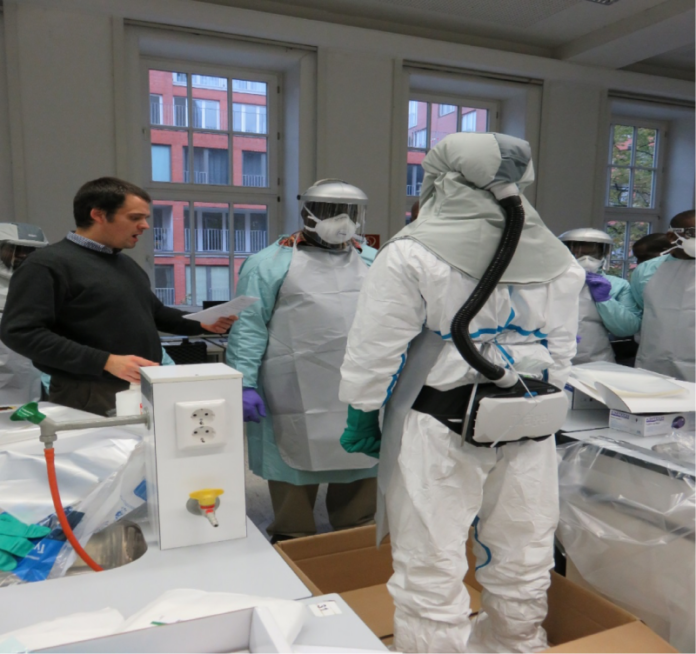
A four-week long practical Training of Trainers (ToTs) course involving twelve (12) medical laboratory experts from the EAC Partner States’ National Public Health Reference Laboratories (NPHLs), concluded on October 26, 2018 at the Bernard Notch Institute for Tropical Medicine (BNITM) Headquarters in Hamburg, Germany.

The training started on October 1, 2018 and focused on the assembly, operation, use and field deployment of the nine High Technology EAC Mobile Medical Laboratory equipment, reagents and supplies for the early detection and diagnosis of various highly infections biological agents such as the various Viral Haemorrhagic Fevers (VHFs), namely: Ebola, Marburg, Crimean-Congo Fever, Yellow Fever, among others which are endemic in East and Central Africa.

Currently, the EAC with technical and financial support from Germany through the Federal Ministry of Economic Cooperation and Development (BMZ), the German Development Bank (KfW) and the Bernard Notch Institute for Tropical Medicine (BNITM) is implementing “East African Community Regional Network of Mobile Medical Reference Laboratories for Communicable Diseases Project.” In 2016, Germany committed an initial three-year funding of Euro 10 Million for the project. Negotiations are currently underway for additional funding of Euro 13 Million for the year 2020 and beyond.

The main objective of the EAC Mobile Medical Laboratories Project is to strengthen capacities in all six EAC Partner States to respond to pathogens of biosafety level 3 and 4 nature and other outbreaks of highly infectious diseases that are prone to cause cross-border epidemics by rapid mobile diagnostic capacities that enable timely interventions through joint collaboration, linkages and cross-border networking among the National Public Health Reference Laboratories (NPHLs) in each of the EAC countries.

The participating NPHLs in the Partner States are: Institut National de Santé Publique (INSP), Burundi; National Public Health Laboratory Services, Kenya; National Reference Laboratory (NRL), Rwanda; Public Health Laboratory and National Blood Transfusion Centre, South Sudan; National Health Laboratory Quality Assurance and Training Centre (NHLQATC), Tanzania and Central Public Health Laboratories (CPHL), Uganda.

In addition, the EAC Mobile Laboratories Project has broad actions that include the training of various health and medical laboratory technical experts on the early detection and diagnosis of highly infectious pathogens and exchange of knowledge among Partner States at regional, national and sub-national levels, including joint disease outbreak investigations and response in cross-border areas.

Stories Continues after ad

Dfcu Bank names Sekabembe MD as Kisaame resigns

William Sekabembe Dfcu-Bank-Uganda’s-Chief of Business and-Executive Director-William-Sekabembe

Dfcu Bank has named its Chief of Business and Executive Director, William Sekabembe, as new Managing Director (MD) following the resignation of Juma Kisaame who has been serving in that position.

Eagle Online days ago published a letter in which Sekabembe declined KCB Uganda’s offer to become their new MD. Sekabembe had all along been wanting to leave Dfcu but was convinced by directors there to stay with the promise that they would give him a fat management job and now he has got it.

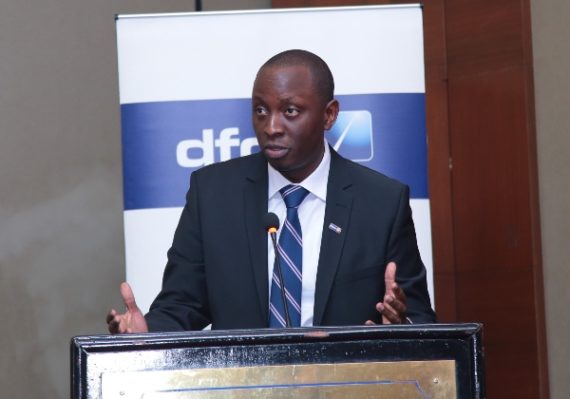
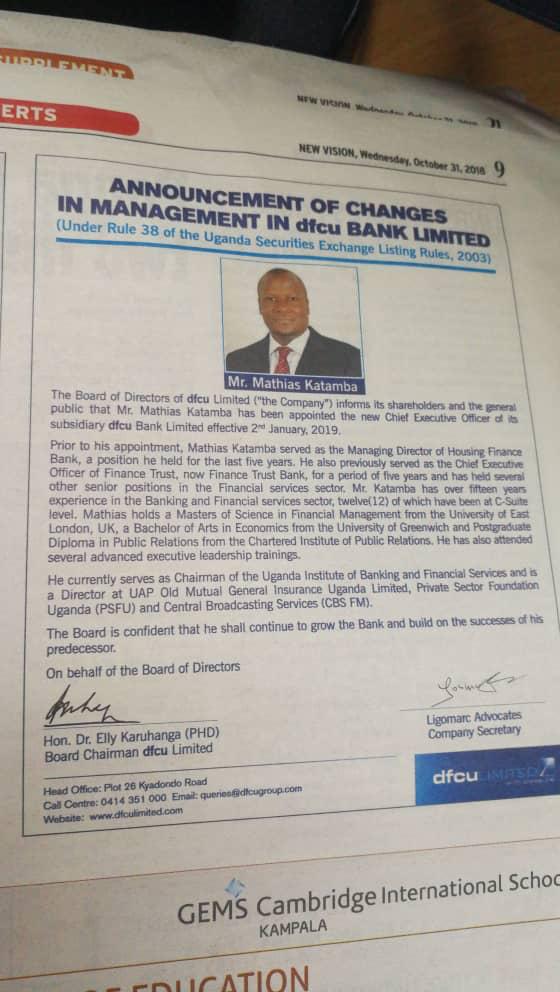
Sekabembe will now work with the Bank’s new Chief Executive Officer Mathias Katamba who recently resigned from Housing Finance Bank (HFB) as MD. Katamba will officially join Dfcu Bank effective January 2, 2019 as confirmed by Dfcu Limited Chairman Dr Elly Karuhanga.


The two men are now expected to turn-around the fortunes of Dfcu Bank which has not settled ever since it acquired its rival Crane Bank Limited (CBL) in a controversial transaction that was recently queried by the Auditor General John Muwanga in his special audit report of Bank of Uganda on defunct banks. Dfcu acquired CBL at Shs200 billion.

Stories Continues after ad