Stanbic Bank
Stanbic Bank
27.6 C
Kampala
Stanbic Bank
Stanbic Bank
Home Blog Page 1460

Borderless tax inspectors make headway in taxing multinational enterprises

URA-Commissioner General, Dorris Akol

At the time When the Uganda Revenue Authority is struggling to tax some multinational companies, an innovative international co-operation initiative that deploys qualified experts in developing countries to strengthen their ability to effectively tax multinational enterprises has achieved significant milestones over the past year, according to a newannual report.

Tax Inspectors Without Borders (TIWB), a joint initiative of the Organisation for Economic Co-operation and Development (OECD) and the United Nations Development Programme (UNDP), is boosting domestic revenue mobilisation by improving tax auditing and tightening compliance efforts across Africa, Asia, Europe, Latin America and the Caribbean.

Increased tax revenues directly attributable to TIWB programmes and TIWB-style support as of April 2018 are estimated at US $ 414 million, according to the report, which documents activities over the second full year of operations under the OECD/UNDP partnership arrangements.

Revenues raised have been about 100 times programme costs, meaning every US dollar spent on TIWB brings in US $100 in additional tax revenues.
TIWB has fully completed 10 programmes, while 34 programmes are ongoing and a further 20 are in the pipeline. TIWB is on track to meet its goal of delivering 100 deployments of tax auditor experts to developing countries by 2020.
Eleven countries have deployed their serving tax officials to provide hands-on, learning-by-doing assistance to auditors in developing countries. New South-South opportunites are being identified, with India, Kenya, Nigeria and South Africa among those now offering expertise.

TIWB programmes are driven by the needs of host administrations and cover a range of technical issues and industry sectors.Current programmes specialise in risk-based audit case selection, audit processes and negotiation of advance pricing arrangements. Audits under TIWB programmes mainly deal with different issues of transfer pricing and international taxation, including permanent establishment, validation of management and service fees and the valuation of intellectual property.

Audits cover a cross-section of industry sectors including agriculture, construction, financial services, information technology and communications, hospitality, manufacturing and mining.

“Tax Inspectors Without Borders is delivering excellent value for money, and while the immediate impact on revenues is important, we are even more excited about the long-term positive outcomes,” said TIWB Head of Secretariat James Karanja.

“The transfer of skills now underway is driving organisational change in tax authorities worldwide, which will prompt much great taxpayer compliance in the future. We are developing a model for systemic change that puts developing countries in the driver’s seat for better using taxation to raise the revenues so badly needed for economic and social development.”

Stories Continues after ad

One in every three Ugandans faces acute food insecurity

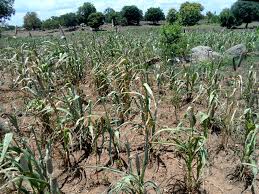
Nakapiripirit district located in the Karamoja region will host the national World Food Day celebrations on October 16, 2018, according to the Minister of Agriculture Vincent SSempijja as one in every three Ugandans faces acute food insecurity, according to the latest Global Hunder Index (GHI) which ranks at 33.

The celebrations will be held at Nabuin Zonal Agriculture Research and Development Institute (Nabuin ZARDI) under the theme: “A zero hunger world by 2030 is possible.” The focus is on hunger, undernutrition, malnutrition and how these variables impact on development.

According to minister Sempijja, the overall nutrition status in Uganda as per Global Hunger Index (GHI) indicators shows: 33 per cent of children below 5 years are stunted; 22 per cent underweight; 6 per cent wasted; 22 per cent of women suffer from maternal malnutrition.
“In Uganda the challenge is population continues to grow at a rapid rate of 3.2 per cent per annum; while agricultural productivity is at 2.9 per cent per annum. There is a 0.3 per cent food gap that must be addressed for all the country is to move towards Zero Hunger by 2030,” warns the minister.

The minister says malnutrition in Uganda affects agricultural productivity as women who provide 60-70 per cent of labor in farming activities are undernourished and underweight due to the heavy workloads gardening, fetching water, collecting firewood and home chores.

The minister says NARO is at the forefront of bio-fortification enhancing nutrient quality of staple foods namely protein rich maize, iron rich beans, zinc in bananas, Vitamin A orange fleshed sweet potatoes among others to address the challenges that come with food insecurity.
Food and Agriculture Organisation (FAO) Representative, Priya Gujadhur, says the latest statistics indicate that 10 percent of the total population in Uganda is food stressed. “Whereas the country is blessed with enough food, and with potential to export more, some regions have remained stressed,” she says.

Globally, over 820 million people are suffering chronic undernourishment, according to the latest FAO 2018 State of Food Security and Nutrition in the World report.
Gujadhur says: “Conflict, extreme weather events linked to climate change, economic slowdown and rapidly increasing overweight and obesity levels are reversing progress made in the fight against hunger and malnutrition.”
“Zero hunger can help build a safer, more prosperous world for everyone. Studies have shown a dollar invested in hunger prevention could return between US $15 and US $139 in benefits and Zero hunger could save the lives of 3.1 million children a year,” says Ssempijja.

In Uganda, the minister Ssempijja says, 85 district local governments that have facilitated development and implementation of Five-year Hunger Eradication Action plans.
He adds that agriculture industrialization driven by Public- Private Sector Partnership or joint ventures is addressing growth of the sector and socio-economic transformation of the country.

Gujadhur says FOA will continue supporting Uganda’s national and institutional efforts to increase resilience among communities and address drivers of food insecurity such as inequities, unbalanced and resource allocation among others.

Stories Continues after ad

Uganda importers dodge Dar es Salaam Port despite media campaign

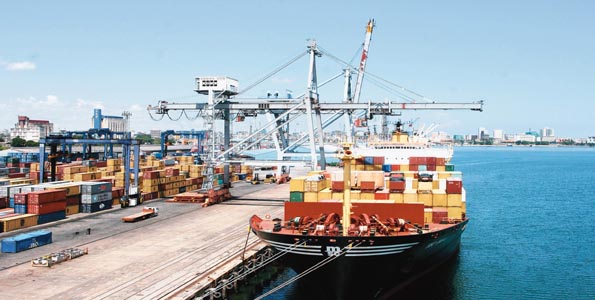
Meli ya MSC Magali, ikiwa imetia nanga katika bandari ya Dar es Salaam juzi, hii ni meli kubwa zaidi kuwahi kutia nanga katika bandari hii. Meli hiyo iliyotokea Salalah nchini Oman ina urefu wa mita 234 na upana wa mita 32 Picha: Hisani ya Executive Solutions

Ugandan importers still prefer to import their goods via Mombasa Port despite the media campaign by Dar es Salaam, urging the Ugandans to use it, a CEO of a Kampala logistics firm has said.

For example, the cost of transporting one container from Dar es Salaam Port to Kampala is around US $4,800 (Sh10.6 million) compared to US $2,700 (Shs6 million) from Mombasa.
“Tanzania Ports Authority still needs to do much more in order to win our market, according to Jennifer Mwijukye, CEO and managing director of UniFreight.

According to Ms Mwijukye, Tanzanian ports are also disadvantaged by the distance to Uganda. For instance, while Dar es Salaam Port is about 1,600 kilometres from Kampala, where most of the Ugandan imports are destined, Mombasa is 1,200 kilometres away.

She said imports through Tanzanian ports would pick up once major improvements are done in clearing goods at the shortest time possible at Dar es Salaam Port.
“The cost of transporting goods from Dar es Salaam remains high,” she said, adding that it would take time for Ugandan imports passing through Tanzania to surpass those passing through Kenya.

The CEO Mwijukye said that despite the recent efforts made by TPA to win over Ugandan importers, including the opening of an office in Kampala, more needs to be done, for example, lowering transportation costs and reduction of the time it takes to clear imports.

The pendulum may nevertheless swing in Dar es Salaam’s favour upon the completion of the standard gauge railway between Dar es Salaam and Mwanza, which is expected to slash the cost of transporting goods between the two destinations.
Also, two inland ports in Uganda are in the process of being upgraded through the support of the European Union and Germany.

Stories Continues after ad

LDU personnel to receive Shs200, 000-Muhoozi

CDF General David Muhoozi

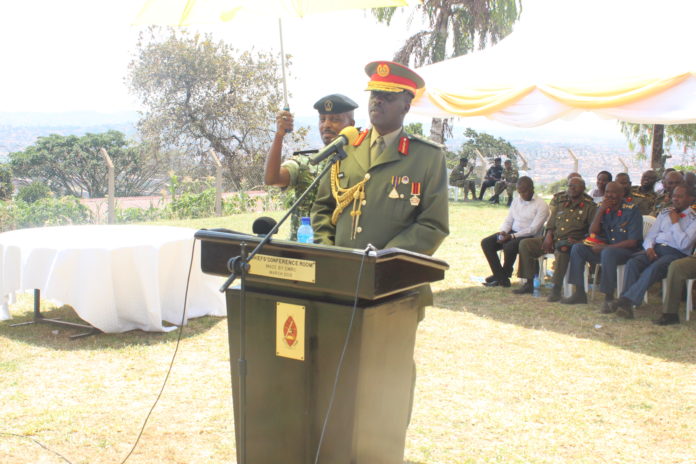
Chief of Defence Forces, Gen. David Muhoozi, has said the army is set to remunerate Local Defense Unit personnel with a monthly salary of Shs200,000, military fatigues and guns.

Gen Muhoozi was part of a Defence and Veteran Affairs Minister Adolf Mwesige – led delegation before Parliament’s Committee on Defence and Internal Affairs.

He said they will conduct patrols, do information collection, attend village security meetings and file patrol reports; they will wear Uganda People’s Defense Forces gazetted uniforms, adding that all enlisted persons will be subject to military law.

The exercise is in line with the intervention to fight the shooting cases of gruesome killings of people. During the Presidential address, the first citizen of Uganda Yoweri Museveni ordered for reviving of LDU, finger printing of all guns, installation of CCTV cameras in major towns, and equipping of forensic laboratories in Mbale and Gulu.

Defence State Minister (Veteran Affairs), Lt. Col. Bright Rwamirama said their payroll will be automated to avoid fraud and that in the meantime, “the initial phase will be 6,000 LDUs and will scale it up with time,” he added.

The group of enlisted persons will be taken through a four months training at Kaweweta UPDF training facility and they will be deployed at their respective villages to tackle the shooting cases of criminality.

Shadow Defense Minister, Muwanga Kivumbi, had inquired about the pay that the LDUs would receive and also faulted the army for opting to recruit groups he called ‘idlers’.
“Your preferred candidates are those without any formal jobs; so you are going to recruit idlers, at the operational level, who is in charge? Is it the army or police? To whom will they report,” he asked.

Insecurities has been witnessed in urban areas. Assistant Inspector General of Police (AIGP) Andrew Felix Kaweesi, Muslim clerics and the recent incident where the outspoken Assistant ASP Muhammed Kirumira was gunned down along a one Resty Nalinya by unknown assailants travelling motor cycles.

Stories Continues after ad

Growth in Sub-Saharan Africa slower than expected

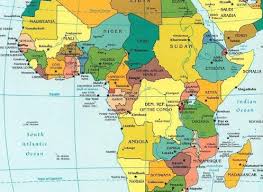
Sub-Saharan Africa

Sub-Saharan African economies are still recovering from the slowdown in 2015-16, but growth is slower than expected, according to the October 2018 issue of Africa’s Pulse, the bi-annual analysis of the state of African economies by the World Bank.

The report puts the average growth rate in the region at 2.7 percent in 2018, which represents a slight increase from 2.3 percent in 2017.

“The region’s economic recovery is in progress but at a slower pace than expected,” said Albert Zeufack, World Bank Chief Economist for Africa. “To accelerate and sustain an inclusive growth momentum, policy makers must continue to focus on investments that foster human capital, reduce resource missallocation and boost productivity. Policymakers in the region must equip themselves to manage new risks arising from changes in the composition of capital flows and debt.”

Slow growth is partially a reflection of a less favorable external environment for the region. Global trade and industrial activity lost momentum, as metals and agricultural prices fell due to concerns about trade tariffs and weakening demand prospects. While oil prices are likely to be on an upward trend into 2019, metals prices may remain subdued amid muted demand, particularly in China. Financial market pressures intensified in some emerging markets and concern about their dollar-denominated debt has risen amid a stronger US dollar.

The slower pace of the recovery in Sub-Saharan Africa (0.4 percentage points lower than the April forecast) is explained by the sluggish expansion in the region’s three largest economies, Nigeria, Angola, and South Africa. Lower oil production in Angola and Nigeria offset higher oil prices, and in South Africa, weak household consumption growth was compounded by a contraction in agriculture. Growth in the region – excluding Angola, Nigeria and South Africa – was steady. Several oil exporters in Central Africa were helped by higher oil prices and an increase in oil production. Economic activity remained solid in the fast-growing non-resource-rich countries, such as Côte d’Ivoire, Kenya, and Rwanda, supported by agricultural production and services on the production side, and household consumption and public investment on the demand side.

Public debt remained high and continues to rise in some countries. Vulnerability to weaker currencies and rising interest rates associated with the changing composition of debt may put the region’s public debt sustainability further at risk. Other domestic risks include fiscal slippage, conflicts, and weather shocks. Consequently, policies and reforms are needed that can strengthen resilience to risks and raise medium-term potential growth.

This issue of Africa’s Pulse highlights sub-Saharan Africa’s lower labor productivity and potentials for improvement “Reforms should include policies which encourage investments in non-resource sectors, generate jobs and improve the efficiency of firms and workers,” said Cesar Calderon, Lead Economist and Lead author of the report.

Stories Continues after ad

Is gov’t creating People power through parliament?

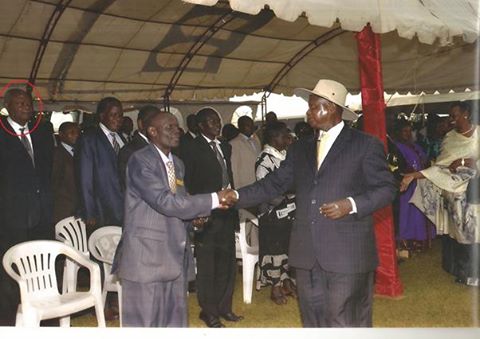
HULLO: President Yoweri Museveni greets the author Mr Nabende Wamoto.

P.L.O Lumumba, the Kenyan Professor once said “Africans are led by their stomachs not their heads (brains), fear is a function of lack of knowledge. To dispel fear you need to reduce your ignorance”. Who does not know that taxation without accountability is tyranny?

It is good that the president has deployed and re-deployed his district representatives (Resident District Commissioners) who may this time act as his doves as in Genesis 8:11 as at the time of Noah, for the peoples’ representatives (Members of Parliament) have either been fearful, dishonest, unreliable to openly brief the president and or government as a whole what the true feelings of their voters on the ground are and that is why government herself is endearing the “peoples’ power” storm whose advocates/front runners as simply taking advantage of. Those who are spearheading this movement have been availed with significant power dynamics cost free by parliament, executive and to some extent the judiciary which is playing in their (opposition) favor.

Haven’t our spy networks attempted to collaborate this current storm to our own background of 1980-81? The youth of that time supported then candidate Y.K Museveni and Uganda Patriotic Movement (UPM) in the general elections of 1980 as bait because they had foreknowledge that the population and international community just like today could not co-operate with the then on-coming Obote II government. They equally knew UPM would perform miserably in the same elections because they had been de-campaigned as thugs and bandits but in the minds of UPM supporters there was a Luweero Triangle or any other location in Buganda region that would be the most salient option not for ballot boxes but bullet boxes. The post-election environment provided the urge that then candidate (Museveni) could initially do what was necessary, then do what was possible and soon thereafter did the impossible as stated by England’s Queen Victoria to her troops “ we are not interested in possibilities of defeat because they do not exist”. Dr.

Milton Obote and eventually his General Tito Okello Lutwa’s fully budget facilitated military out-fit was outwitted and toppled by a rag-tag National Resistance Army (NRA) led by Museveni on 26th January 1986.
For us who are watchful and observant, there is a sharp, similar political arousal in the usually passive Buganda area (majority with a minority mentality) which arousal was heightened by Ssabasajja the Kabaka of Buganda, Ronald Muwenda Mutebi II’s statement to his subjects at his jubilee (25th enthronement anniversary), supported by celebrity factor of musician Bobi Wine and also Ugandans must recall that this people power campaign was sparked off by the mobile money tax that was voted and passed by parliament. There is also youth unemployment and the rampant poverty factor.

Lastly, there is a general moral dilemma among some of the leaders (messengers of the people) who have failed to do their duty of giving feedbacks as it was mentioned earlier concerning the dove that brought back the message of end of the flood of Noah’s age.

Nabendeh Wamoto S.P (0776-658433)
Email: simonwamoto@yahoo.co.uk

Stories Continues after ad

Deals, money at the centre of Dfcu bank wars

DFCU board chairman, Elly Karuhanga and another member address a press on the issue of the bank last week.

Deals and money could see one of Uganda’s promising banks sink if the two are not curtailed in time.
Dfcu that was lured by top bosses at Bank of Uganda (BoU) to takeover Crane Bank is in the storm that business analyst can best describe as trying moment for the 3rd largest bank. Dfcu became 3rd after it took over Crane bank thereby growing its customer base and an increase on asserts.

Eagle Online has however, learnt from sources that bickering over deals and money is at the centre of the current storm facing the bank.

This website has learnt that about a week ago, the shareholders of Dfcu bank summoned a meeting in South Africa where all of them attended including the Managing Director and the board chairperson attended. It is alleged that during the said meeting, the shareholders started accusing each other over their involvement in deals without the knowledge others. The deals at stake are said to be earning of commission from big loans by a section of them without necessarily being shared by all.

It is also said that the transaction of between Dfcu and BoU surfaced and the allegation at hand were that about $3 million of the $8 million deposited by shareholders of Crane bank to BoU was instead shared between top individuals at Dfcu and leading lawyers and only declared $5 million. This website has confirmed with top BoU leadership on the issue of $3 million as having taken by the lawyers and top gurus at Dfcu. It is said that they further questioned why Dfcu is facing bad publicity over the Crane bank takeover as they wondered whether certain information as regards to the takeover was hidden. They concerns are further worsened by the fact that the bank is having liquidity problems.

Nevertheless, as the meeting got stormy, the shareholders started blaming each other of sabotage and backstabbing each other. And it is from this meeting that MD Juma Kisaame is said to have offered to resign. Conversely, the board has put his resignation on halt in order to reexamine the mess. In the meantime, the situation at the bank is tense with workers unsure on what will follow given that most of the senior stuff have been resigning while others were sacked in the ongoing restructuring process.

Inside sources told Eagle Online that also the bank shareholders want to find out allegations that some top officials seem to have chased away potential customers in the way they were handling big clients.
“I think the owners want to find out allegations that people were giving commissions before ‘big’ loans were processed” said a source.
Meanwhile Dfcu top leadership is divided on who is top appear before the committee of parliament to ask questions on regards to the revelation by the Auditor General’s report in regard to the takeover of commercial banks and more so Crane bank which Dfcu took.

DFCU top guru are among those lined up by parliamentary Com-mit¬tee on Com¬mis¬sions, Statu¬tory Au¬thor¬i¬ties and State Enterprises (Cosase) in an inquiry that is expected to begin soon, the Auditor General, John Muwanga, having presented his report on defunct banks sold/liquidated by the Bank of Uganda (BoU), Eagle Online understands.

DFCU bought Crane Bank Limited (CBL) in January 2017 and Global Trust Bank Uganda (GTBU) in July 2014 but the two deals, according to the Auditor General John Muwanga’s special report of BoU on seven defunct banks, are questionable as major documents were not available to him during his inquest of the central bank’s top brass.

The two banks were sold by BoU to DFCU on account of insolvency and under-capitalization respectively, each going for Shs200 billion and about Shs71 billion worth GTBU’s liabilities, respectively.

BoU’s sale of the two banks to DFCU, according to Muwanga was done without following established guidelines, which BoU top managers might have ignored intentionally for selfish interests. BoU sold other banks like Greenland Bank, Cooperative Bank, International Credit Bank and others in this regard of guidelines.

DFCU Shareholding percentages
Arise BV 58.71 per cent
CDC Group of the United Kingdom 9.97 per cent
National Social Security Fund (Uganda) 7.69 per cent
Kimberlite Frontier Africa Naster Fund 6.15 per cent
2 undisclosed Institutional Investors 3.22 per cent
SSB-Conrad N. Hilton Foundation 0.98 per cent
Vanderbilt University 0.87 per cent
Blakeney Management 0.63 per cent
Retail investors 11.19 per cent
BoU staff retirement benefit scheme is 0.59 per cent

Stories Continues after ad

100 to receive medals at 56th independence celebrations in Kyotera

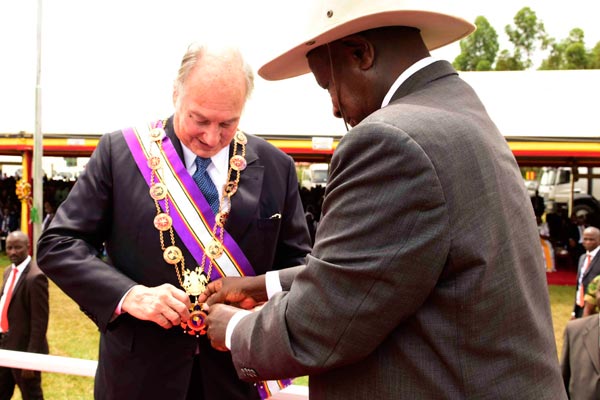
President Yoweri Museveni decorates HH the Aga Khan during the 55th Independence Day celebrations in Bushenyi

About 100 people will receive medals during this year’s national independence celebrations at Kasasa sub county, Kyotera District, according to the latest statement.

President Yoweri Museveni who will be the chief guest will bestow the medals on the recipients.

The Day will celebrated under the theme: “Standing Tall to Celebrate 56 Years of Independence”.

Infrastructure:

According to the statement released for the independence celebrations, Uganda now has over 5200 kilometers of tarmac roads. “Several oil roads are being constructed, at the same time an airport at Kabale in the Albertine region is under construction to prepare the country to harness oil by 2020,” it says.

The statement says the above will be supplemented by a USD 3.5 billion pipeline from Hoima to Tanga to ease export of the elude oil.

“Expansion works at Entebbe International Airport to enable it handle the increased traffic are as well ongoing,” it says, adding that preparations for the commencement of works on the Standard Gauge Railway (SGR) are also in advanced stages. When complete, the SGR will considerably lower the cost of Transport to and from Mombasa, it says.

The stamen says much of this work has been done by the Uganda Government money. “For instance, 58 percent of the funding for roads, has been done or is being done by the Government of Uganda money,” it says.

According to the statement, all the District headquarters, except for Kaabong and Buvuma, have now been connected to the national grid. And that the generation capacity of Uganda will further increase, once Isimba, Karuma and many of the mini-hydro power stations are completed.

Agriculture

The statement notes that during the financial year 2017/18, the agriculture sector grew at 3.2 percent, Industry (at 6.2%) per annum), services (at 7.3%) and ICT (at 7.9%).

However, it says agriculture registered the least growth in Uganda, adding that the slow growth in agriculture continues to be a cause of concern.

Stories Continues after ad

BoU raises CBR to 10 percent in October 2018

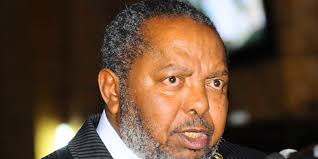
Bank of Uganda's Tumusiime-Mutebile.

The Bank of Uganda has unexpectedly raised its key lending rate-the central bank rate (CBR) to 10 percent in October, a one percentage point from August’s 9.0 percent, on account of rising inflation and the need to maintain the country’s economic growth.

“Inflation is on an upward trajectory and core inflation is projected to rise above the target of 5 percent within the next 12 months,” Bank of Uganda (BoU) Governor Prof. Emmanuel Tumusiime-Mutebile said while reading the monetary policy statement in Kampala on Wednesday.

Tumusiime-Mutebile said that in recent months, rapidly rising oil prices coupled with a weaker shilling exchange rate and indirect tax increases have pushed up inflation.

He said that easing domestic financial conditions and strong domestic demand would maintain a healthy growth momentum.

“The strong rebound in economic growth in financial year 2017/18 has closed the negative output gap, and with growth projected to remain robust in FY2018/19, core inflation could rise higher in the remaining part of the fiscal year,” he said.

Meanwhile, Core inflation, which is the BoU’s monetary policy target, rose from 0.8 percent in June to 3.9 percent in last month.

He attributed the increase in Core inflation partly due to higher services prices, which rose sharply at the beginning of the new financial year reflecting the effect of the Over-The- Top (OTT) tax. “Services inflation rose 1.7 percent in June 2018 to 5.3 percent in August 2018 before slightly easing to 4.5 percent in September 2018,” he said.

The Governor warned that higher prices and the strong domestic demand could push services inflation higher in the remaining part of the year.

Stories Continues after ad

Uganda’s public debt sands at Shs41 trillion—Minister Bahati

State Minister for Finance in charge of General Duties David Bahati

The Finance Ministry, David Bahati says, Uganda’s public debt sands at Shs41 trillion, which is an equivalent of US$10 billion.

In a statement he read to Parliament last evening Bahati, said the debt stock has piled from US$2.5 billion in the 2006/2007 financial year to US$10.7 billion by the end of the last financial year.

He however blamed of the rising debt on the near stagnant tax collection by the revenue collection body, URA. He said by June 2018, the total debt amounted to US$10 billion, with external debt accounting for 67 per cent.

“Our tax base is not growing at the same rate, putting the tax to Gross Domestic Product (GDP) ratio at 14.3 per cent,”

Domestic debt, he added, stands at 32.4 per cent, most of which is drawn from local commercial banks. The public debt as a percentage of the entire economy is 30 per cent, a figure the Opposition is reluctant to believe.

Bahati said the debt, finances the Energy, Works and Agriculture sectors, which are critical in spurring economic growth.

Chief Opposition Whip, Ibrahim Ssemujju, criticized government over what he called ‘lack of prudent financial practices’, which he said is responsible for the growing public debt.

“After borrowing this money, and we see the way His Excellency the President is throwing money at youth groups…you just need to be prudent on the way you spend money,” said Ssemujju.

MP Nandala Mafabi (FDC, Budadiri West) said government should present a gross loan request at once during the consideration of the National Budget rather than bringing piecemeal requests to the House.

He said the practice fuels racketeers and loan sharks who he said inflate the cost of public projects with the hindsight of the loan figures passed.

“As soon as we pass a loan, the first people to celebrate are the sharks out there…if we put in a basket fund, the bids will not be expensive,” said Nandala Mafabi.

Deputy Speaker, Jacob Oulanyah, referred the statement to the Committee on National Economy, criticizing a section of MPs for trivializing the debate.

“The challenge that I face when presiding here is killing debate…just see the way we are proceeding now, we make these issues so trivial yet they are very serious,” said Oulanyah.

Stories Continues after ad