Stanbic Bank
Stanbic Bank
24.1 C
Kampala
Stanbic Bank
Stanbic Bank
Home Blog Page 1485

Coach Desabre names final team for AFCON qualifier match against Tanzania

coach Desabre

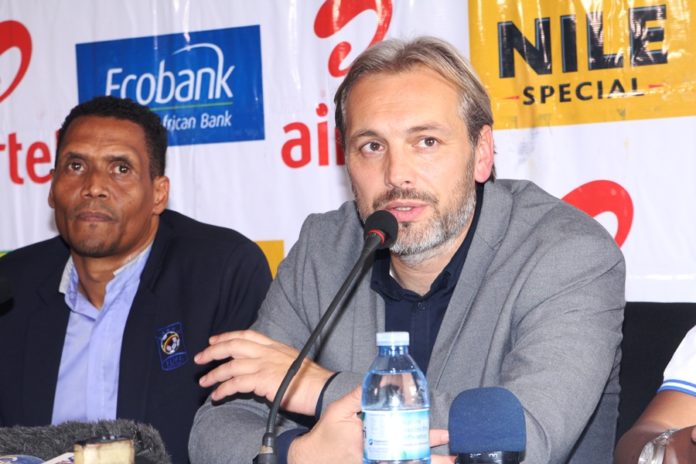
Uganda Cranes head coach Sebastien Desabre has named the final 24-man squad in preparations for the Tanzania Taifa Stars clash in the second game of the 2019 AFCON qualifiers at Mandela National Stadium on Saturday, September 8 2018.

The team trained today morning at the Star Times Stadium, Lugogo for close to two hours and will continue the residential camp in the evening at Jokas Hotel, Kireka.
Sudan based goalkeeper Salim Jamal, Godfrey Walusimbi and Edrisa Lubega are the new faces that joined the national team in today’s training.

More foreign based players are expected in the country and shall attend the training on Tuesday at Mandela National Stadium, Namboole.

Captain Denis Onyango, Derrick Nsibambi, William Luwagga Kizito, Allan Kateregga, Yunus Sentamu, Moses Opondo and Faruku Miya are all expected to join the camp soon.
Uganda Cranes lead group L with three points following the 1-0 away win registered over Cape Verde Islands in the first game. Geoffrey Sserunkuuma scored the only goal.

Tanzania and Lesotho both share a point having played to a one all draw in their opening group game. Lesotho will host Cape Verde in the other group game on September 6.

The 2019 AFCON tournament will be hosted in Cameroon. The competition will be held in June and July 2019 to move it from January/February for the first time. It will also be the first Africa Cup of Nations expanded from 16 to 24 teams.

Final squad:
Goalkeepers: Denis Onyango, Jamal Salim, Charles Lukwago.
Defenders: Denis Iguma, Nico Wakiro Wadada, Godfrey Walusimbi, Isaac Muleme, Murushid Juuko, Denis Timothy Awanyi, Hassan Wasswa.
Midfielders: Ibrahim Sadam Juma, Tadeo Lwanga, William Luwagga Kizito, Joseph Ochaya, Moses Opondo, Allan Kateregga, Khalid Aucho, Faruku Miya, Moses Waiswa.
Forwards: Emmanuel Arnold Okwi, Yunus Sentamu, Edrisa Lubega, Derrick Nsibambi, Patrick Henry Kaddu.

AFCON Qualifier 2019 Group L
Uganda Vs Tanzania
8th September 2018
Mandela National Stadium, Namboole (4pm)

Stories Continues after ad

Bridge schools set to launch girl super power to bond gender equality in education

Morrison Rwakakamba

Bridge Schools Uganda is set to launch a new campaign dubbed as Girl Super Power that is aimed at prioritizing the need for gender equality in education sector.

Latest UN reports indicate that the number of girls out of school girls at primary level grew from 32 million in 2015 to 34 million in 2016. Girls usually have to overcome multiple hurdles to access the same learning opportunities as boys. Around 16 million girls between ages 6-11 never enter a school as a student. #GirlSuperPower !

According to Morrison Rwakakamba, the Country Director for Bridge Schools Uganda, the campaign focuses on science, technology, engineering and mathematics (STEM) skills for girls. STEM skills are traditionally gendered as ‘male’ subjects in Uganda, however young girls in underprivileged communities are pursuing their dreams of becoming doctors, engineers and mathematicians against the odds.

emphasizing on the 2016 Twaweza report, Rwakakamba says nine out of 10 children in Uganda who were assessed in Primary three, were unable to read and comprehend a Primary two level story and correctly solve Primary two level numeracy tasks up to division level.https://www.bridgeinternationalacademies.com/girlsuperpower/

“Girls in Uganda almost need superpowers to gain a decent education. It is deeply disappointing if the number of girls being failed is on the rise despite ongoing international efforts. We know that when given a chance in the classroom girls excel,” says Rwakakamba.

He adds that despite defying odds and overcome near impossible hurdles to reach the classroom, many girls are aspiring to a better future, “thanks to transformative schools in Uganda. We are working to make that the norm rather than the exception,” he added.


The Ugandan stars of the new campaign highlights that with a good schools, a great teacher and a chance to learn; girls can defy expectations, challenge stereotypes and escape poverty.

A twelve -years-old Diana Sembera who attends Bridge School Nsumbi loves science, it’s her best subject and she knows it will help her thrive in later life. She wants to become a doctor so she can treat sick people in her community.

Creating more opportunities to learn is a challenge that the UN and global leaders are united in tackling, Rwakakamba notes that solving this issue will unlock talents, raise standards of living, boost economies, and even improve health and security.

Stories Continues after ad

Museveni set to attend China-Africa summit

President Yoweri Museveni is set to attend China-Africa Cooperation summit that is aimed at discussing strategic partnership cooperation with China in areas of Trade, Infrastructure as well as Economic Development and Energy among others.

The 3rd Heads of State and Government summit scheduled for September 3-4 brings together leaders from the African continent and China. The first took place in 2006 and was held Beijing, South Africa 2015 and 3rd in Beijing-China.

Museveni who is accompanied by the first lady and Minister of Education and Sports, Janet Museveni who are now in china was received by the Director of the Standing Committee of Beijing Municipal People’s Congress Zhang Qing at Beijing Capital International Airport.

The president is expected to discuss the shared future, further dovetail China’s Belt and Road Initiative with African development and deepen people-to-people exchanges.
He also held bilateral talks with his Kenyan counterpart, President Uhuru Kenyatta who called on him at his residence in Beijing.

In the near future, China-funded industrial projects will cover the entire industrial system, Chinese tech companies will set up numerous development bases in Africa, dozens of jointly-built agricultural demonstration centers will bring huge, historical changes to Africa’s agricultural industry, and more private companies will invest in Africa, especially in the cultural field, among others.

Stories Continues after ad

Buganda should treat Bebe Cool as their son just like they do to Bobi Wine

Sam Evidence Orikunda

An awakening call

By Sam Evidence Orikunda

With dismay I watched the shabby incident of throwing mineral water bottles and plastic chairs at singer Bebe Cool recently at a music concert organised by Swangz Avenue. This prompted police to take him away from stage for his safety.

Bebe Cool in his statement recently said he had gone for singing not political campaign. People who were throwing mineral water bottles were chanting free Bobi Wine which means it’s the same reason why the singer was harassed.

At time when musicians have come up to join politics you cannot expect all of them to join one side. One will be opposition and the other shall be NRM depending on what they like and what they believe in. It shouldn’t be an offence for one to belong to a certain political party.

After the Arua by – election chaos and after the news spread all over that Bobi Wine had been tortured, Buganda kingdom officials came out to make a statements that was spread in different media platforms. This was backed by a number of other verbal statements that was made by the officials of Buganda Kingdom on different functions including Churches. This shows that they were so much concerned about what happened to Bobi Wine but one wonders why this hasn’t been done Bebe Cool because what he faced was torture in its kind. Buganda kingdom would have come up to condemn this kind of hooliganism and intolerance of people and this would have been fair both the subjects and the public.

Many people have rushed on social media to make fun of what happened to singer Bebe Cool and most people seem unbothered. If we follow the law what was done was illegal and if we go political the people who did this lacked and still lack political maturity and they lack leadership skills and no sane Ugandan should support this.

Bebe Cool also prominent Musician is a Muganda and born from Buganda. One would expect be treated same way Bobi Wine was treated because they’re all children born and living in one house and that’s Buganda Kingdom. This doesn’t act as a mere cultural institution but also as an institution that should keep equality and sanity between these singers.

For years, the NRM government has been accused of taking some people as though they’re bigger than others. They say some people are valued more than others which could be true or false. Therefore, those who accuse the NRM government of doing that shouldn’t repeat it too.
Singer Bebe Cool being a fun and a supporter of President Museveni doesn’t mean that he is a criminal. As an old man he is entitled to his opinion and should respect. His business as a musician should go on without being interrupted or disturbed in any way.

Most of Bobi Wine’s funs are accusing soldiers to have tortured the person they see as their leader while in prison. They say government could have done this because of a large following that Bobi Wine commands at the moment, however, the same funs do not condemn the acts done against Bebe Cool instead they thank those who did those silly action when Bebe Cool appeared on stage. That’s hypocrisy and lack of political maturity.

I think when you are aspiring to be a leader you aspire to lead all the people not a few, I think a leader should unite not divide because when there’s unity there’s sanity and hence development. This is what NRM has always called for and worked . Because our history tells us about politics that were religious based and tribal based, this divided people to the extent that a Catholic wouldn’t freely associate with a Protestant but over the years this has changed only that some few opposition characters would want to use it as a way of forging their way to power which is very unfortunate.

This kind of behavior that people have created of involving politics even in music shows shouldn’t be tolerated by the people in authority. Perhaps police would have picked those individuals who threw chairs and bottles at Bebe Cool and put them prison as Bebe Cool goes on singing. We have gone by the foolery of useless rights allowed hooligans to take over our society and morals and if we don’t act this will go out of hands.

We should however, be made to know if it is criminal for one to support President Museveni and NRM and we should be made to know if its mandatory for one to support Bobi Wine and other opposition characters.

The Constitution of the Republic of Uganda is very clear on this, every Ugandan has rights to belong to any political party of his choice without being harassed or disturbed in any way. We should be happy and proud of this because in other countries a mere mention of a word against the president or government in power earns you a ticket to prison. Unfortunately the opposition seems to be introducing the politics of forcing people to belong to their sides, one should be made to understand what you’re fighting for or advocating for and when he is satisfied the liberty to decide should be left to him and that’s when peace shall prevail.

Buganda Kingdom as a cultural institution that brings together these musicians especially those born from Buganda should not show sides. Here in Kigezi we believe that there’s no omwana and ekyana simply meaning that there is no a bad child and a good child.

All the children should be parented equally and should get the benefits from parents that are equal without showing side or without showing that the parent falls for the other. When President Museveni and NRM revived cultural kingdoms the main intention was to bring people back together, unite them culturally and uphold their cultural principles. Going against all this will be going against the thoughts of those who revived cultural institutions.

Stories Continues after ad

Regulating the physical location of pharmacies and drug shops is good for consumers

Ms Donna Kusemererwa, National Drug Authority Secretary.

By Donna Kusemererwa

National Drug Authority has been made aware of a petition to the Rt. Hon. Speaker of Parliament, titled Petition on phasing out of drug shops in Ugandan Towns by entity called the National Drug Shops Advocacy Initiative (NDAI).

The said petition is in response to a June 13, 2018 notice to all operators of drug shops reminding them about the provisions of Regulation 9 of Statutory Instrument No. 35 of 2014- (The National Drug Policy And Authority (Licensing) Regulations, 2014), which became law on the March 28, 2014.

That particular law, among others requires drug shops to “be located at a distance of at least one and a half kilometres from a retail pharmacy.”

Contrary to the deliberate distortions in the petition, the regulation of locations of retail and wholesale medicines outlets is not meant to favour any particular group of people in the distribution chain, but rather a critical element in ensuring the availability at all times of essential, efficacious and cost-effective drugs to the entire population of Uganda.

It is important to remember that medicines are not ordinary articles of commerce and the commercial interests of the pharmacy proprietors must be balanced with public health interests.

All over the world, the location of medicine outlets is regulated. Location regulations work to ensure a balance between commercial interests of the operators and the need for effective, efficient and well-distributed medicine outlets especially in areas where there is genuine need for services, rural and remote areas as well as areas of new and sporadic population growth.

Location rules in general, use population to pharmacy ratios and or the distance between pharmacies/drug shops is one of the major parameters to determine placement of drug outlets and Uganda is not any different.

In line with our mandate, NDA in 2018 embarked on an exercise aimed at rationalising the distribution of pharmaceutical services and ‘decongesting’ Kampala of pharmacies in particular. This strategy among other initiatives, involves limiting licensing of pharmacies in areas considered to be sufficiently served as well as charging reduced fees for applicants from up country and rural areas. This has seen a number of pharmacies opening up in districts that did not have any like Alebtong, Amolatar, Amuru, Bundibugyo, Dokolo, Gomba, Nakasongola, Nebbi, Omoro, Otuke, Serere and Sembabule.

This rationalisation exercise was informed by the fact that, despite having 4.4 per cent of the population, Kampala district accounts for 42.6 per cent of pharmacies i.e. 739 licensed pharmacies, out of a total 1,734 countrywide. Matter of fact, Kampala’s pharmacy to population ratio (1:2039) is far more superior to some first world countries such as France (1:2578) and United Kingdom (1:5000). This leaves the rest of the country with a mere 995 pharmacies and a critically low pharmacy to population ratio of 1:33,294.

Again, contrary to the impression presented by the petitioners, drug shops by their very nature are primarily meant to be located in areas which are not sufficiently served by pharmacies. This is because, drug shops are licensed under a legal category of “Licensed sellers” and are legally expected to stock only class C drugs.

Class C drugs are generally regarded as drugs that may be sold without the need for a prescription, due to their low toxicity risk and lower risk of abuse and irrational use. These include cough/cold preparations containing Pholcodine in concentrations less than 1 per cent, antihistamines (drugs used for management of allergic reactions) in preparations for application on the skin, antibiotics contained in animal feeds; among others.

While Pharmacies can sell Class C drugs, drug shops cannot and are not supposed to distribute Class A drugs (prescription-only narcotic drugs, clinically used for management of severe pain that is not helped by other types of painkillers) and Class B drugs. So, allowing a drug shop next to a pharmacy is in the actual sense duplication.

Given the limited range of drugs that drug shops can legally stock, the spirit of the distance provision is an attempt to encourage drug shops to move to under-served areas where they can continue to provide this unique and much needed service.

Drug shops have had 4 years to comply

As mentioned above, Statutory Instrument No. 35 of 2014- became law on the March 28, March 2014. Whereas operators of drug shops had up to one year to comply i.e. either apply for a licence to operate as pharmacies; provided they met the required standards or relocate their business to another underserved area, they have in effect had more than four years, since the passing of the law to upgrade and or comply but chose not to.

NDA values the role played by the over 10,000 drug shops in the country and to kick start the effort to get compliance with the law, we have held several sensitisation meetings all over the country. The feedback we received was largely positive with operators requesting more time to fully comply with the law. We are committed to continuing to work very closely with the individual operators and the different drug shop operators associations including the National Drug Shops Advocacy Initiative (NDAI) to ensure Ugandans across the country have access to essential, efficacious and cost-effective drugs.

We would like to engage NDAI and other like-minded partners to stamp out the numerous vices in Drug Shop such as the dispensing of expired drugs to the public, illegal sale of Government drugs and supplies, stocking class A and class B drugs and poor storage and handling of drugs.
Drug shops are also notorious for illegally operating without licences, as clinics and admitting patients as well as being operated by unqualified personnel and irrational use of drugs. We’re confident that by joining hands with all relevant stakeholders we can address all the challenges faced by the sector.

National Drug Authority is committed to delivering its mandate as prescribed by law, and is taking these steps in the interest of public health and safety. NDA continues to encourage all operators of drug outlets to familiarise themselves with the various laws governing the business of supplying and distributing drugs, in order to foster compliance and best practices on the Ugandan pharmaceutical market.
The writer is Secretary to The Authority

Stories Continues after ad

Kampala book market tackling illiteracy

Despite growing tensions in and around Kampala, for the fourth time running, the Kampala Book Market was held this month and it didn’t disappointment.

With the growing number of people reading and writing in Uganda the Kampala Book Market is turning into the one stop center for everything literary in here Uganda.

Saturday August 25, saw over six publishers exhibited at the book market including our very own Fountain Publishers and Longhorn among others. There were also a number of different authors whose credited works were showcased, the likes of Alex Nkabahona author of “Cultures at Crossroads: Homosexuality and Human Rights in Uganda”, Kevin O’Conor (Insights into Uganda); Mugabi Byenkya (Dear Philomena); Eunice Apio (Zura Maids) Cathy Kreutter (Old Mzee Books) among many other renowned authors.


According to Mr. Wartson Atukwatse, the curator of The Kampala Book Market, the Market features both established and non-established authors as well as publishing houses, readers, performances and book enthusiasts whose main objective is to promote the reading and writing culture here in Uganda and hopefully it can spread further on the African continent.

This month’s book market registered the most diverse of attendances recorded so far with both children and adults of different nationalities taking part in the long day activities of the event despite the rising political tensions and riots happening in and around Kampala.

This Literary initiative has also well been welcomed at a time when the reading culture among Ugandans is increasing and books in high demand. According to the organizers, the book market will be rolled in different parts of the country in a drive to promote literacy and a reading culture amongst Ugandans nationwide.

The next Kampala Book Market will take place on the September 29, at the Uganda Museum.

Stories Continues after ad

ODM condemns Museveni over ill-treatment of Bobi Wine

The Orange Democratic Movement party (ODM) has joined calls to hold the Ugandan government accountable for the inhumane treatment of Kyadondo East MP Robert Kyagulanyi and other leaders.

In a press statement Friday, the Raila Odinga-led party slammed the blocking of Mr Kyagulanyi (alias Bobi Wine) and Mityana Municipality MP Francis Zaake from leaving the country to seek medical treatment abroad.

“We are saddened by the fact that even after leaving custody with injuries that needed treatment abroad, Hon Kyagulanyi was stopped from leaving Uganda, and in the most callous and inhumane manner.
“We urge all parties in Uganda to urgently embrace the values of democracy and justice, for ultimately, dictatorship in the modern world remains unsustainable. We demand that the rights, dignity and freedom of Hon Kyagulanyi be respected by the regime….there are no two ways about this,” the statement says.

ARUA VIOLENCE
The two politicians were stopped by security forces at Entebbe Airport on Thursday night and taken to Kiruddu General Hospital.
Mr Kyagulanyi, a musician, intended to travel out of the country to seek specialised treatment for injuries suffered in the hands of security forces.

They are accused of instigating chaos during by-election campaigns in Arua Municipality early this month.
President Yoweri Museveni’s lead car was vandalised and Mr Kyagulanyi’s driver was shot dead.
Thereafter, Mr Kyagulanyi, Arua Municipality MP Kassiano Wadri, Jinja East MP Paul Mwiru, Ntungamo Municipality MP Gerald Karuhanga and a host of other political activists were arrested and later granted bail on August 27. They are facing treason charges.

The ODM party argued that Kenya’s progress is dependent on the stability of the East African region, which Uganda is a part of.

Hence, they asked President Museveni to promote peace and freedom of the citizens, starting by allowing Mr Kyagulanyi to receive proper medical attention.
“Besides, the barely concealed tendency of its President, Yoweri Museveni, to assert political influence on its neighbours, including Kenya, makes it a country of great interest to us as a party.
“We will keep an eye on these unfolding events, as we encourage the forces of democracy and peaceful revolution to remain unwavering and firm in their resolve to make our countries more responsive to the needs of their people.”

KENYANS PROTEST
Human rights activists in Kenya held peaceful demonstrations in solidarity with the MP and his colleagues.

Law Society of Kenya, Amnesty International, Ugandans living in Kenya and student leaders gathered at the Freedom Corner in Nairobi and marched to the Ugandan embassy on Riverside Drive.
They chastised Mr Museveni for poor leadership and promoting rights violations.

One of the protesters, Mr Boniface Mwangi, said: “President Museveni’s time is up. He is the last of Africa’s dictators and he must go. Bobi Wine is innocent; they are using him as a scapegoat. He is not just a person but an idea.”
Mr Kyagulanyi was freed by the General Court Martial, which also dropped the possession of illegal firearms and ammunition charges against him.

Stories Continues after ad

Rajiv Ruparelia donates to PWDs at annual skills expo

The Managing Director of Crane Management Services a subsidiary of Ruparelia group, Rajiv Rupaleria has donated items and cash to People with Disabilities at the Skills and Talent Expo 2018.

The event was prepared annually by the Rena community Development Association. The occasion was marked yesterday at Mengo Senior School in Mengo and was among others attended by persons with disabilities.

The Executive Director of the Rena Community Development Association, Twaha Katende, said the expo is aimed at finding a solution to the problems faced by PWDs.
“We can only attain this by giving out all that we can to make their lives healthier,” he said.
, Mr Rajiv acknowledged the organizing committee for coming up with such a wonderful idea of uniting people and playing games so that their talents can be identified.

“As Ruparelia group, we have been at the fore front of working closely with the disabled. That’s why in all our buildings, we have decided to set up some places where these people can work,” he said.

He said these facilities were accessible at Kampala Boulevard Building, Hardware City, Market Plaza and Kingdom Kampala.

An Amptic soccer team of UPDF soldiers from Mubende squared off with a selected team from Kampala regional Amptic soccer clubs in a game that was characterised by fan, jubilations and skills.

Stories Continues after ad

Cabinet approves disbandment of UNRA

TIME UP : UNRA ED-Allen Kagina.

Cabinet chaired by President Museveni on Monday this week is reported to have resolved to disband Uganda National Roads Authority and return its functions to Ministry of Works and Transport.

According to sources, the President Yoweri Museveni is angered by the mere fact that UNRA isn’t doing enough to tarmac roads like the previous team. It said Museveni in a meeting said that despite, the old team being corrupt, they did deliver in terms of tarmacking roads is concerned than the current ‘clean’ team.

Reports also indicate, UNRA Executive Director, Allen Kagiina who is now embroiled in an internal fights with some of her staff and she is pissed off for UNRA being described by President Museveni as the most bogus institution.

Kagina blames Gen. Salim Saleh and UNRA board Chairman Fred Jachan Omachi for her woes; she singles out Gen. Saleh for being all out to cut her wings by disbanding UNRA and rendering her useless.

Current UNRA staff will have to apply to Public Service Commission in order for them to be absorbed into the Public Works Department (PWD) of the Ministry of Works and Transport, Kagina who studied Psychology at Makere University joined Uganda Revenue Authority after a short stint at State and UNRA was her second government agency to head.

Mr.Museveni has of late been full of praise for Eng Sebuga Kimeza former ED UNRA describing him as a performer compared to Kagina who has failed to Procure EPC contractors for very crucial planned road projects including Rukungiri-Ishasha-Kanungu Road,Busenga-Mpigi Express highway.

Kagina is accused of dismantling UNRA’s technical capacity by replacing well educated and experienced engineers with relatives and friends with little or no engineering experience and her former colleagues at URA.

UNRA is reportedly employing more lawyers and administrators than engineers, there is also over 100 police officers at UNRA headquarters who monitor telephone calls made by staff and pay attention on supervision of road construction. Insides also the Executive Director travels upcountry in a convoy of 10 Vehicle.

Stories Continues after ad

UNBS lists high risk products in its July compliance report

UNBS ED Dr. Ben Manyindo

The Uganda National Bureau of Standards conducted regular market surveillance inspections in the month of July to determine the level of compliance to Uganda Standards to protect consumers and the environment from dangerous substandard products.

In the month July 2018, the market surveillance inspectors picked 249 samples which were submitted to UNBS laboratories for further analysis. Among the tested samples, cosmetics registered the highest failure rate of 100 per cent.

The cosmetics which failed contained hydroquinone, a banned substance used in skin lightening creams. Various scientific studies have confirmed that hydroquinone may have adverse effects on human heath such as damage to internal organs like liver. As a result, UNBS moved to seize some of the cosmetics from the shelves.

Anti-bacterial toilet soap also registered the second highest failure rate at 71.4 per cent, followed by energy savers at 62.5 per cent and toilet paper at 55.5 per cent respectively.

UNBS Executive Director, Dr. Ben Manyindo, said: “We have published a list of brands that failed our compliance tests because we would like to encourage the public to look out for them and shun them while we continue to play our role of seizing them from the market to protect the health and safety of consumers”.

“Products that fail our compliance tests are seized from the market, kept in our warehouses for further management and/or destruction. We recently destroyed more than 400 metric tonnes of substandard products worth Shs3.5 billion,” Dr. Manyindo said.
The brands that have failed the UNBS compliance tests include:
Cosmetics
Local Hajjati Lususu; Mama Lususu; Sure Deal; Serious Herbal; Skin Doctor; Zero Pimples; Zonei;
Imported Caro light toning; Caro light body lotion; Caro light cream; Citrolight body cream; Eclaire cream; Elegance Rico cream; New Santana; Light Cream; Super Claire Cream; Elegance Rico cream;
Toilet Paper
Local Eden Brand; Cozy; Hemico; Kleena; Lovely; Luxury; Nannies; – Facial Tissue; Relax Blended Tissue; Silkee Jambo; Soft Nap; Softee Toilet Tissue; Super Silk; Swan Soft; Wisper; Kleena; Silkee Jambo; Softee Toilet Tissue; Luxury
Imported Piao; Piao Piao; Virony; Cosy White; Rosy; Sifa; Tena; Soft Wind Piao Piao
Mattresses
Local Eco Foam; Rio Foam.
Energy Savers (Bulbs)
Imported Canny; CIXING; DXBZ; Long stay; Nomi; Semco; Tedex; UNITEC; and Val Light.

As a result of the laboratory analysis, in July the UNBS Market Surveillance Team seized items 6.2 tonnes of assorted food items, 1.2 tonnes of Cosmetics, 2,051 pieces of mattresses, 410 kilograms of electrical items, and 450 kilograms of toilet paper.

UNBS will continue to perform its mandate of enforcing standards to protect consumer health and safety and the environment against dangerous and sub-standard products.

Fighting substandard products requires a concerted effort involving UNBS working together with manufacturers, traders, consumers, and other government agencies. We would like to urge the public to report cases of substandard products on the market on our toll free line: 0800133133.

UNBS is a statutory body responsible for developing and promoting standards and quality of products and services to facilitate fair trade, promote local industries and protect consumers.

Stories Continues after ad