Stanbic Bank
Stanbic Bank
27.7 C
Kampala
Stanbic Bank
Stanbic Bank
Home Blog Page 1494

UN study shows Cancer is a growing global threat

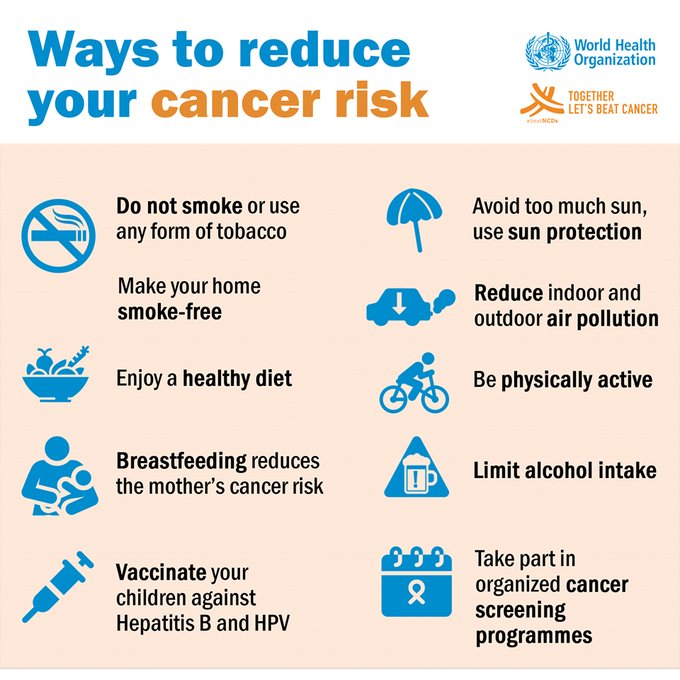
Ways to reduce cancer risk

According to IARC, a specialized cancer agency of the World Health Organization, cancer disease is a growing global health threat.

One in five men and one in six women worldwide, develop cancer during their lifetime, and one in eight men and one in 11 women die from it, IARC’s ’s Global Cancer Observatory says, in its first report since 2012.

“These new figures highlight that much remains to be done to address the alarming rise in the cancer burden globally and that prevention has a key role to play,” said IARC Director, Dr. Christopher Wild.

“Efficient prevention and early detection policies must be implemented urgently to complement treatments in order to control this devastating disease across the world.”

Six years ago, there were an estimated 14.1 million new cancer cases and 8.2 million cancer-related deaths, compared with 12.7 million and 7.6 million, respectively, in 2008.

Globally, it’s estimated that Asia will see nearly half of the new cases and more than half of the cancer deaths in 2018, partly because the region has nearly 60 per cent of the world’s population.

Europe accounts for nearly a quarter of global cancer cases and one-fifth of cancer deaths, although it has only nine per cent of the global population.

The Americas have more than 13 per cent of the global population but account for 21 per cent of cancers and some 14 per cent of global mortality.

In Asia and in Africa, cancer deaths (57.3 per cent and 7.3 per cent respectively) are higher than the number identified (48.4 per cent and 5.8 per cent).

This is because these regions have a higher frequency of certain cancer types that are associated with poorer prognosis, and higher mortality rates, IARC says, in addition to limited access to diagnosis and treatment.

Lung cancer is a leading cause of death for both men and women and is the leading cause of cancer death in women in 28 countries, IARC says.

The highest incidence rates of this form of the disease in women are in North America, Northern and Western Europe – notably Denmark and the Netherlands – China, and Australia and New Zealand; with Hungary topping the list.

The findings suggest that many countries have much more to do to prevent smoking-related cancers, although a significant number have adopted measures to reduce smoking and exposure to second-hand tobacco smoke.

“Given that the tobacco epidemic is at different stages in different regions, and in men and women, the results highlight the need to continue to put in place targeted and effective tobacco control policies in every country of the world,” said Dr. Freddie Bray, IARC’s Head of the Section of Cancer Surveillance.
In addition to cancers of the lungs, those that target the female breast and colorectal areas, are the most common types.

They are also among the five most dangerous forms of cancer, representing one third of all cancer incidence and mortality worldwide, according to IARC’s GLOBOCAN 2018 database, which provides estimates of incidence and mortality in 185 countries for 36 types of cancer.

IARC says that the increasing prevalence of cancer is due to many factors, from population growth and ageing, while a change in the types of cancer diagnosed is linked to social and economic development.

This is particularly true in fast-growing economies, IARC says, noting a shift from cancers related to poverty and infection, to cancers associated with lifestyles more typical of industrialized countries.

Stories Continues after ad

BoU top officials in panic as AG report exposes dirt in sale of banks

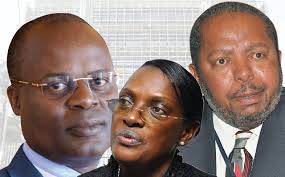
ON THE SPOT: BoU top three that are implicated in the sale of commercial banks.

Bank of Uganda top managers including its Governor Prof Emmanuel Tumusiime-Mutebile are in panic over what explanations they will give to parliament, following the latest Auditor General’s confidential report which says they might have intentionally neglected certain aspects in the closure and sale of at least seven commercial banks, including Crane Bank that is still the talk of the country.

In the new report to parliament, the Auditor General (AG) John Muwanga pins Mutebile and his top directors at BoU for acting in the absence of guidelines, regulations or policies as they closed bank like Teefe Bank in 1993, International Credit Bank Ltd. in 1998, The Cooperative Bank in 1999, Greenland Bank in 1999, The National Bank of Commerce in 2012, Global Trust Bank in 2014 and sale of Crane Bank in 2017 to dfcu Bank.

Muwanga has in the report faulted BoU for not following any guidelines to determine the procedures in the sale or transfer of assets and liabilities of the defunct banks to the identified buyers.
The AG also says there were flaws, including lack of negotiation minutes as BoU sold Crane Bank Limited assets and liabilities to Dfcu in a Shs200 billion transaction. Crane Bank was owned by businessman Sudhir Ruparelia and others.

“In the absence of the minutes, I could not determine how BoU selected the best evaluated bidders and how the terms in P&A were determined,” Muwanga says in the report, adding that BoU did not carry out the valuation of the assets and liabilities of Crane Bank Limited but only relied on inventory report and the due diligence undertaken by Dfcu to reach the P&A agreement.

“I also noted that the P&A did not have complete details of assets and liabilities transferred to Dfcu with their corresponding values; I was therefore unable to establish the status of assets and liabilities transferred to Dfcu.” He says, adding that the some details of the assets and liabilities given to him lacked details of the loans and advances transferred to Dfcu and evidence of valuation of assets before sale “hence it was insufficient to respond to this observation.”

The AG also wants BoU directors to account for Shs478.8 billion they claim to have used as a liquidity support and other activities after they controversially took over Crane Bank on October 20, 2016. Shs12.2 billion of that money, BoU managers claim was used for compiling inventory report, forensic review and investigations, IT and hiring of external lawyers.

BoU is also accused of selling assets of ICB, Greenland Bank, Cooperative Bank, GT Bank and NBC worth Shs164 billion at a discount whooping rate of 80 percent, yielding only Shs32 billion.
The above was also worsened by BoU’s resolve to sell ICB, Greenland Bank and Cooperative Bank, with a total loan of Shs135 billion which included secured loan of Shs34.5 billion (with valid legal documentation) but were sold to Nile River Acquisition Company at another more than huge discount of 93 percent.

The AG in the report has exposed BoU in the GT Bank deal where Sh23 billion obtained remain unaccounted for, 25 land titles missing, and customer loans inherited from closed banks were sold at an under-valued rate.

Stories Continues after ad

Address challenges of fish maw traders Association-Kadaga tells UPDF

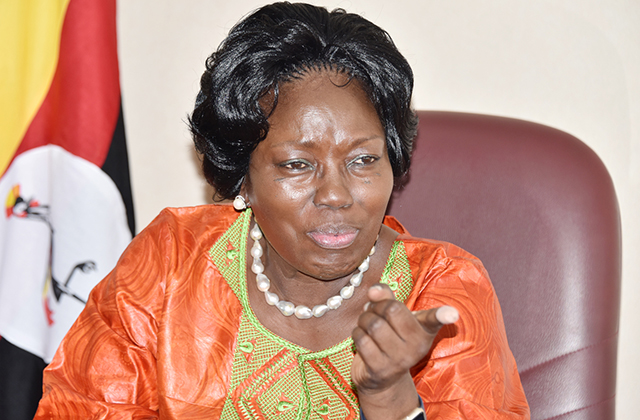
Speaker Rebecca Kadaga

The Speaker of Parliament, Rebecca Kadaga has asked the Ministries of Agriculture, Finance and the Uganda Peoples’ Defense Forces to conclusively address challenges faced by fish maw traders association.

The Speaker observed in a meeting with authorities from the three departments following the tabling of fish maw traders Association’s petition accusing the army of brutality, and government of multiple taxation among other allegations.

The association led by Charles Tebandeke contends that their rights to freely trade or deal in fish maws has been indirectly taken away and sidelined in favour of foreigners by discriminative policies set by the Ministry of Agriculture.

“Some of our colleagues have been subjected to corporal punishment, confiscation of fish maw stock and disposal under unclear circumstances, tortured, maimed and violently subjected to inhumane and degrading treatment by fisheries protection forces,” he noted.

Minister of Agriculture, Vincent Ssempijja, who praised the army’s intervention in the fishing industry, admitted gaps in the law, which he said government is addressing, “ A draft of the said law, already approved by Cabinet, is already before the Solicitor General and will be fast tracked to address any uncertainties,” He said.

Adding “As far as the ministry is concerned, we have no intention of getting people out of business. The problem is that generally, the fish maw issues have not been known to the government,”.
He said they don’t have a specific regulation but government was going to come up with its own stand on fish maws. In the meantime, the meeting agreed, that the Permanent Secretary in the Ministry of Agriculture will issue temporary guidelines to cater for the traders as the law is ready.

Kadaga said as parliament, they will not be part of any arrangement that impoverishes Ugandans and favour foreigners.
“What is illegal about having fish maws, you want these traders to cut these fish maws from trees?” She asked.

Lt. Col. James Nuwagaba, one of the commanding officers on Lake Victoria operation, defended the army and accused the petitioners of ‘lies and exaggerations’.
Nuwagaba accused the petitioners of deception and malice, but said going forward, they need to work together and refrain from escalating the situation.

Stories Continues after ad

Uganda maintains 3.6 score in latest World Bank CPIA report

The World Bank has released a new Country Policy and Institutional Assessment (CPIA) for Africa – an annual diagnostic tool which measures the quality of policies and institutional frameworks, and their ability to support sustainable growth and poverty reduction.

The report provides scores for 16 criteria for each country and an overall regional score, which informs governments of the impact of the country’s efforts to support favorable growth and poverty reduction.

It also helps determine the size of the World Bank’s IDA concessional lending and grants to low-income Sub-Saharan African countries. Uganda scored an overall rating of 3.6, same as 2016.

The investment portfolio in Uganda is primarily financed from the International Development Association (IDA), which provides interest free “credits” and grants on concessional terms, attracting only an administrative service charge of 0.75 per cent on the disbursed credit amount.
Loan repayments are stretched over 38 years, including a six-year grace period. As of August 2018, the World Bank’s portfolio stood at US $3 billion (IDA credits and grants) in net commitment for 19 national and six regional operations.

Around two-thirds supports sustainable development, including 46 percent for infrastructure development (energy, roads, urban, and information and communications technology (ICT), followed by agriculture (14 per cent), and water (7 per cent). Nearly 30 percent supports human development (health 11 per cent, education 9 per cent, and social protection 7 per cent); and 5 per cent supports the private sector and trade.

Stories Continues after ad

IGAD regional heads witness the signing of final agreement to end conflict in South Sudan

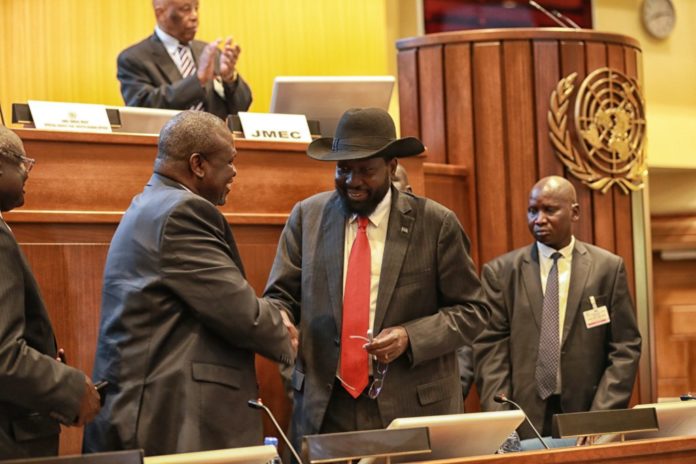
Dr. Riek Macha and President Salva Kiir after the signing ceremony.

The Heads of State and Government of the Intergovernmental Authority on Development (IGAD) have witnessed the signing of the final revitalized agreement of resolution of the conflict in South Sudan.
This signing was witnessed by Prime Minister of Ethiopia Abiy Ahmed, Ismail Omar Guelleh of the Republic of Djibouti, Yoweri Kaguta Museveni of Uganda, Salva Kiir of the Republic of South Sudan, Omar Bashir of Sudan and Mohamed Abdullahi Mohamed ‘Farmajo’ of the Federal Government of Somalia and Cabinet Secretary for Foreign Affairs Amb Monica Juma who represented the President of Kenya
In his remarks the Chairperson of the IGAD Assembly Dr. Abiy congratulated the parties and lauded their commitment to peace, stability and development of South Sudan. He emphasized the need for the South Sudan parties to implement the signed agreement in good faith in order to achieve long lasting peace in South Sudan and set a sound base for harnessing the recent regional magnificent efforts towards regional peace and stability.

He commended IGAD and all the parties in the continued effort and commitment to bringing peace to not only South Sudan but the rest of the IGAD region which will result into the consolidation of the gains made in pursuing the IGAD regional economic integration agenda.
He said the Agreement on the Resolution of the Conflict in the South Sudan (R-ARCSS) is to give peace a chance; he concluded that through the implementation of the agreement Africa will show case its ability to overcome conflicts through reconciliation and shared interest for economic integration.

Amb Mahboub Maalim requested the Republic of South Sudan to embrace regional peace and integration and build on the momentum created by the wave of the recent peace initiatives in the IGAD region.
The IGAD Special Envoy to South Sudan Dr. Ismail Wais in his report to the summit appreciated the support extended by the IGAD Member states and noted the particular inputs of Presidents Omar el Bashir, Dr. Abiy Ahmed, President Museveni. He reported that the negotiations were complete, with the parties ready to sign the peace agreement.

Stories Continues after ad

Defence ministry in Shs540b pension arrears

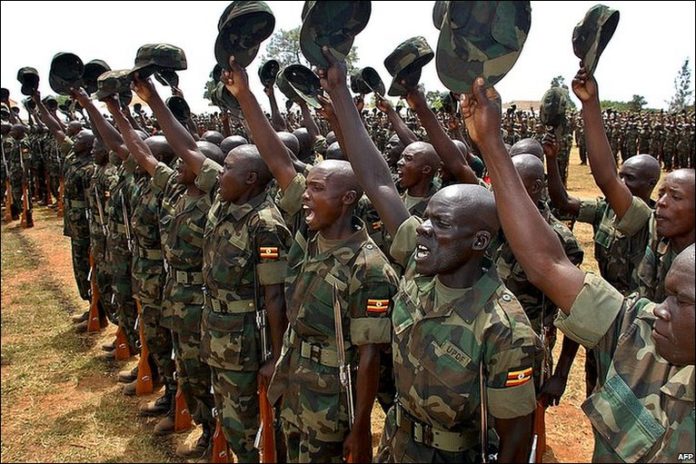
UPDF soldiers

The magnitude of outstanding pensions and gratuities to be paid to Veterans of Reduction in Force (RIF), Survivors Benefits, ex-gratia and Uganda National Liberation Army stand at over Shs. 540 billion, according to a 2017 final report on comprehensive review and restructuring of government ministries, departments and agencies (MDAS).

The report is a result of a study done to address Uganda’s public service jurisdictional ambiguities, inefficiencies, obscurity in accountability, performance gaps inadequate manpower and wastage of resources, across MDAs.

The study was done by conduct Adam Smith International and its consortium partners, UMACIS, DCI and Incafex.

According to the report, veterans numbering 37,300 demand over Shs183.4 billion while survivors numbering 18,501 demand over Shs319.5 billion. On the other hand, UNLA (Ex-gratia) who number about 19,948 demand from government over Shs26.4 billion. Further, there is also a balance of over Shs10.6 billion meant for other exgratia numbering 7,662.

The reports says the backlog of both documented and undocumented military pensions and gratuities and Survivors’ benefits needs to be settled to improve the lives of those who served the country in the military uniform.

It further says that; “the troop morale is not boosted by delayed settlement of terminal benefits in recognition for their contribution to the security of the country.

Further it says that a politically conscious, vibrant and active pool of veterans that are role models to encourage young Ugandans to join and serve in the military is lacking and that there is lack of a robust and streamlined structure for re-settlement and re-integration of Military Veterans into Civilian life;

The report urges government to pay these monies as soon as possible, arguing that Military veterans are faced with Welfare challenges that could create a possibility of internal security threats by a large number of disgruntled military veterans whose compensation packages have not been paid.

In the first quarter of 2018/19 budget Secretary to the Treasury Keith Muhakanizi clarified to the accounting officers that salary, pension and gratuity arrears will have to be paid out of the money that the ministry will release in October, though from the Shs8 trillion released in that quarter, he earmarked Shs43 billion for the payment of pension and gratuity. However,it was not clear whether the money would also cater for army veterans.

Stories Continues after ad

Experts release first study on the incidence of abortion among Ugandan adolescents

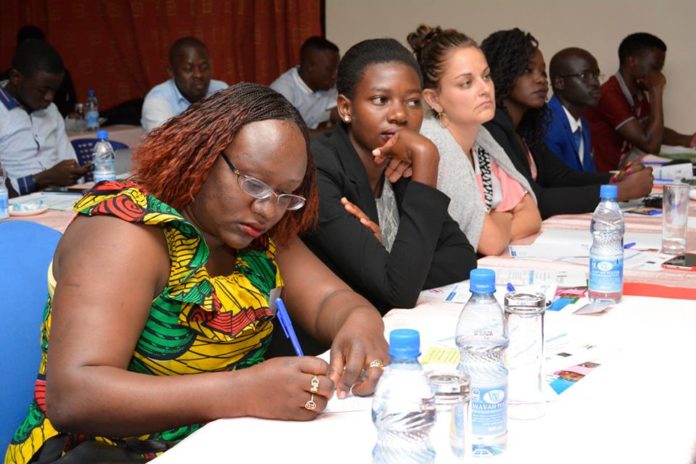
A section of participants at the release of research findings

The first ever research findings in Uganda on induced abortion and post abortion care among adolescents was released Wednesday by the Public Health Ambassadors Uganda (PHAU) at Hotel Africana in Kampala.

The findings were a result of a new study by researchers at the U.S.-based Guttmacher Institute and Uganda’s Makerere University. It highlights for the first time; abortion rates and the severity of abortion-related complications among Ugandan adolescents aged 15–19.

The study, published in Contraception, found that an estimated 57,000 abortions took place among Ugandan adolescents in 2013. The researchers also found that adolescents seeking post-abortion care for complications resulting from an unsafe abortion or miscarriage did not face greater disadvantages in their abortion care experiences, compared with women older than 20.

However, among those seeking post-abortion care, unmarried women, including unmarried adolescents, were more likely than married women to experience severe complications.

Although Ugandan law allows abortion to save a woman’s life and national guidelines permit abortion under additional circumstances including in cases of fetal anomaly, rape and incest, and if the woman is HIV-positive, safe and legal abortion is difficult to obtain.

As a result, many women resort to unsafe abortion, which accounts for more than 10% of all maternal deaths in Uganda. An estimated 314,300 abortions occurred in Uganda in 2013 among all age-groups, and more than 93,000 women were hospitalized for complications from unsafe abortion.

Adolescents were no more likely than older women to be past their first trimester of pregnancy, to report delays in seeking post-abortion care or to have experienced severe complications.

“These findings challenge the perception that adolescents as a group fare worse than older populations when it comes to abortion-related care,” says Elizabeth Sully, senior research scientist at the Guttmacher Institute and the study’s lead author. “Still, sexual and reproductive health services tailored to adolescents’ unique needs remain vital.”

As of 2013, the adolescent abortion rate was lower than that among all women of reproductive age (28 per 1,000 women aged 15–19 vs. 39 per 1,000 women aged 15–49). Among women who were recently sexually active, however, adolescents had the highest abortion rate (76 vs. 56, respectively). Adolescents are less likely to be sexually active than older women, but they often face more barriers to obtaining high-quality contraceptive services.

“We need to better understand how marital status and other social factors influence adolescents’ sexual and reproductive health experiences,” says Lynn Atuyambe, a researcher at Makerere University and one of the study’s authors. “More-effective strategies for addressing these inequities are critically needed.”

The researchers underscore the need to provide adolescents with comprehensive sexuality education and family planning that is both age-appropriate and medically accurate. They recommend further research to understand how marriage and other factors, rather than age alone, may shape sexual and reproductive health experiences and outcomes. This information can be used to ensure that sexual and reproductive health programs meet the diverse needs of all adolescents.

Stories Continues after ad

President George Weah features in international friendly against Nigeria

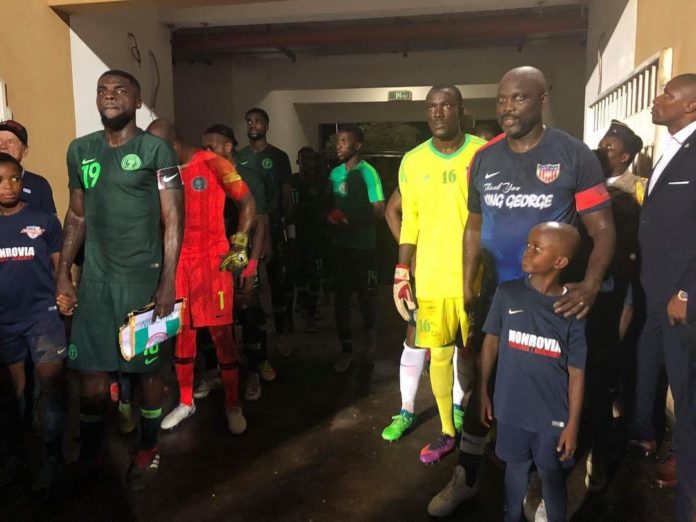
George Weah leading his side out for the match.

Liberia president George Weah returned to international action and played in an international friendly for his country against Nigeria on Tuesday starting as the captain.

The game was meant to retire his shirt number 14, meaning no player in the Liberian national football team will be assigned the shirt number.

The 51-year-old President featured for 79 minutes in their 2-1 home defeat in Monrovia, receiving a standing ovation from fans when he was substituted.

During his professional career, George Weah played for Tonnerre Yaounde, Monaco, Paris St-Germain and AC Milan – with brief spells at Chelsea and Manchester City.

The 1995 World Player of the year retired from football in 2003 and went into politics. He won the presidential elections with a landslide victory in December last year after losing out to Ellen Johnson Sirleaf in 2005.

Nigeria fielded a strong side. Simeon Nwankwo and Henry Onyekuru scored for the Super Eagles while the home side pulled one back with a late penalty from Kpah Sherman.

Meanwhile, his son Timothy Tarpeh Weah represents the United States in international competitions, playing his professional football for giants Paris Saint-Germain (PSG) in the French Ligue 1.

Stories Continues after ad

CIPLA-Quality Chemicals IPO closes August 28

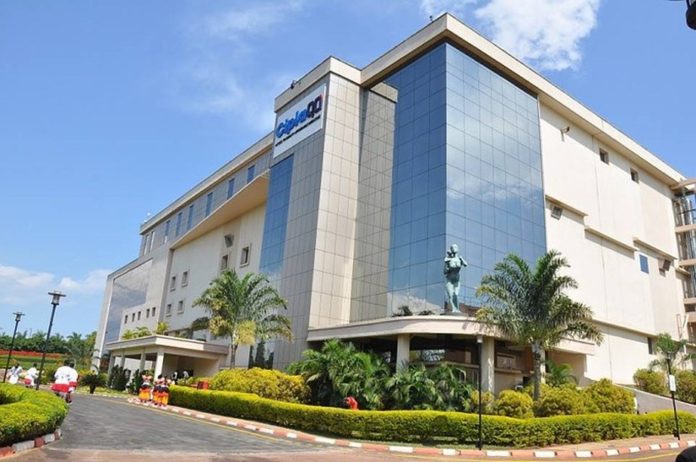
CiplaQCIL headquarters.

CIPLA-Quality Chemicals Limited opened its initial public offer (IPO) on August 13 and will close on August 28, aiming to list on the Uganda Securities Exchange on 24 September.

The pharmaceutical company aims to raise US $45 million (about Shs166.5 billion through offering a 18 per cent stake via 657,179,319 shares at Shs256.50 per share, according to officials.

The company manufactures drugs that include anti-retroviral, anti-malarial and Hepatitis B medicines and its products are sold in Cameroon, Comoros, Kenya, Namibia, Tanzania, Uganda and Zambia.

India’s Cipla Limited, Uganda’s Quality Chemicals and the Government of Uganda set up the company as a joint venture in 2005, and TLG Capital and Capitalworks Investment Partners invested in the company in 2009, holding stakes worth 12.50 per cent and 14.40 per cent respectively.

Lead transaction advisor was reported to be Renaissance Capital in Kenya and Crested Capital in Uganda is the lead sponsoring broker.
It ends a 6-year listing drought as the previous IPO in Uganda was Umeme in 2012.

Stories Continues after ad

Third East African Business and Entrepreneurship Conference & Exhibition to hold session on health

Prof. Gibson Kibiki

A prosperous and healthy region is one where each EAC Partner States can participate fully in trade and industry within an environment which sustains and nourishes its people, free of health threats and capable of providing universal care to all, the latest statement reads by the EAC Secretariat reads.

And adds that porous borders and the fluid movement of people underscore the need for a regional approach to tracking and responding to regional health priority needs while laying the groundwork for a robust and sustainable regional economy. Technology can help to strengthen regional health systems by bolstering the access, use, and improve performance of health services, it says

Adding that the 3rd East Africa Business and Entrepreneurship Conference & Exhibition will have multiple sessions including a jointly organised health session by East Africa Business Council (EABC) and East African Health Platform (EAHP).

According to the statement, Prof. Gibson Kibiki, Executive Secretary, East Africa Health Research Commission (EAHRC) is one of the key high level policy decision makers expected to speak during the sector session on health at the 3rd East African Business & Entrepreneurship Conference & Exhibition. The conference is scheduled to take place on October 30-31, 2018 in Kampala, Uganda.

Prof. Kibiki will shed light on the Digital Regional East African Community Health (Digital REACH) Initiative.“Digital Regional East African Community Health is a ground-breaking initiative within the East African Community (EAC) that will implement ICT across all dimensions of the health sector in East Africa” said Prof. Gibson Kibiki, EAHRC Executive Secretary.

Other key industry champions expected lead discussions and identify missing links to promote an enabling environment for digital health in the EAC include Dr Amit Thakker, Chairman, East African Health Platform, Anne Therese Ndong-Jatta Director, UNESCO Regional Office for Eastern Africa and Dr Roger Ciza Executive Director, Health Healing Network Burundi.

This year’s East African Business and Entrepreneurship Conference and Exhibition will focus on the Digital Economy and evaluate how the EAC policies and regulatory frameworks are currently set to spur growth and enhance the Integration process.

“An important dimension and benefit of creating an enabling environment for digital health in the EAC is in stimulating private-sector investment.” said Prof. Gibson Kibiki, EAHRC Executive Secretary.

Private sector can play an important role in addressing complex, systemic challenges complementing government efforts.

“Tackling issues such as policies, infrastructure and making a clear business case for partnerships and investment can help bring the influence and strength of the private sector to invest in digital health,” said Lilian Awinja, EABC CEO.

The conference sector session and parallel exhibition will showcase investment opportunities in the region as well as innovative market developments in the areas of Internet of Things, energy, agri-business, health, mobility, fin-tech and e-commerce.

The East African Business & Entrepreneurship Conference & Exhibition is an annual event rotating in all Partner States of the East African Community (EAC), co-organized in collaboration with the respective EAC Investment Promotion Authorities. The first East African Business & Entrepreneurship Conference & Exhibition was successfully held in October 2016 in Nairobi, Kenya while the second took place in November 2017 in Dar es Salaam, Tanzania.

The conference aims to enhance policy predictability, increase business confidence, nature entrepreneurship, innovation and attract more cross border and foreign direct investments into the EAC region. It convenes together high-level government and private sector decision makers from the EAC Partner States, entrepreneurs and investors from the region and abroad to discuss policies and legislations as well as chart out appropriate recommendations in a bid to improve the EAC business environment.

Stories Continues after ad