Stanbic Bank
Stanbic Bank
18.8 C
Kampala
Stanbic Bank
Stanbic Bank
Home Blog Page 1499

Amos Nzeyi quizzed for his ‘dubious’ role in Temangalo land saga

Justice Bamugemereire

City businessman Amos Nzeyi was interrogated by the land prob commission over his ‘dubious’ transaction in the sale of land to National Social Security Fund.

The probe unearthed evidence that suggests the deal could have been an empty transaction since the purported land titles given to NSSF turned out to be fake.

However, Mr Nzeyi denied any wrong doing in the Temangalo land scandal which he sold to the fund in 2008 at the exorbitant Shs11 billion shillings.
Last month Asian Family led by Nazim Moosa filed complaint before the Land Commission claiming to be holders of the original title of the land comprised of Block 296 plot 20 in Busiro, on which it operated a Tea Estate -Temangalo Tea estate – before the expulsion of Indians by former President Idi Amin in 1972.

The family testified that they acquired 79 year lease on the disputed land in 1924, from the family of a one Daniel Mugwanya Kato contending that the land was sold without noticing them yet they had ownership about the disputed land.

Nazim said upon return in 1993, they applied for repossession of their land from the Departed Asians Custodian Property Board and they were told that government had no claim over their land since it was never declared upon expulsion.

Appearing before commission, Mr Nzeyi said no one approached him for the more than 10 years he spent on the land in question. Nzeyi said he acquired the land in question from the family of Daniel Mugwanya that sold it to him in pieces due to financial constraints.

The commission however, retrieved documents that indicted that the case about that land October 26, 1994 where court adjourned it to be settles out of court. Since then Nzeyi didn’t act as court directed them. Nzeyi said he has no clue about allegations.

He revealed that he owns multiple land titles on the land in question. He owns land tiles on Plot 12 63 hectares at Temangalo registered in 1992, Plot 16 block 296 8.78 hectares 1991, Block 296, plot 21, 1992, Block 277 plot 191 and other titles.

The inquiry established that despite owning mass titles at Temangalo, Nzeyi owns other pieces of land Plot 613 Kigoma a distant place from the land in question. Commission revealed that Nazim said they have always tried to reach Nzeyi and they have always failed.

“I got some media clips when he was in the commission of inquiry, he said am a big person who can’t be taken to court, unapproachable, a big size west 34,chest 38, am not big , I had 70 kilograms for the last 30 years, such statements annoyed me,” said Nzeyi.

He said the transfer of land to NSSF was done by Joseph Byamugisha and Gilbert Nuwagaba on behalf on his behalf.

He acknowledged that the complaints lodged a case in 2016 and went into arbitration. He said the mediation on his behalf was handled by Fred Muwema and of one his unrevealed son.
When he appeared before the land probe in July, the Managing Director of NSSF Richard Byarugaba said he no clue of the whereabouts of the documents indicating the transfer of land titles from Nzeyi’s names to the fund.

Stories Continues after ad

Uganda on Ebola alert, Kampala and Wakiso among high risk districts

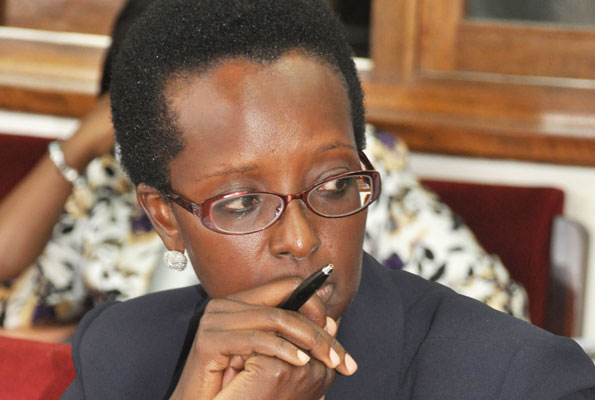
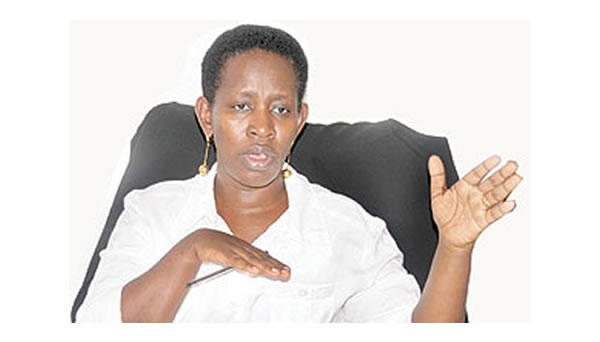
HEALTH PS: Dr Diana Atwiine

Kampala and Wakiso are among 23 high risk districts in the country that could fall victims to the Ebola Virus Disease (EVD), a haemorrhagic fever that has hit the neighbouring Democratic Republic of Congo (DRC), province of North Kivu that shares a borderline with Uganda.

“There is confirmed Ebola outbreak in the Democratic Republic of Congo putting Uganda at high risk. Ebola is a serious disease that kills within a short time. The general public should be calm and be alert to report suspected cases at the nearest health facility,” says the alert posted on Twitter by the Ministry of Health Permanent Secretary Dr Diana Atwine.

Atwine listed other districts at the high risk as; Kabale, Kisoro, Kanungu, Rubirizi, Rukungiri, Bulisa, Bundibugyo, Hoima, Kabarole, Kakadi, Ntoroko and Kasese. Others at the risk of catching the deadly disease are; Adjuman, Arua, Koboko, Maracha, Moyo, Nebbi, Yumbe and Koboko.

According to the Alert signs and symptoms include; bleeding through the eyes, nose, gums, ears, anus and other private parts. Other signs are; sudden fever, feeling tired, muscle pains, headache, sore throat, vomiting blood, diarrhea and rash.

Spread: Ebola spreads through human-to-human transmission via direct contact, through broken skin or mucous membranes, blood, secretions such as urine, faeces, sweat of a person infected with Ebola, vomit, saliva and coming into contact with a person who has died of Ebola. Contact with surfaces and materials like bedding and clothing contaminated with the fluids also spreads the disease from person to person.

“To avoid Ebola, avoid direct contact with body fluids of an infected person, avoid contact with persons who have died of Ebola, avoid contact with/eating bats and monkeys, wash with soap, water and jik. Pour jik and water on vomit feaces of those infected,” reads the Alert.

Yesterday, the acting director of Health Services Dr Henry Mwebesa on Monday issued a notice directing all district health officers in the country to be vigilant.

The Government of the Democratic Republic of the Congo on August 1, announced preliminary laboratory results indicating a cluster of cases of Ebola virus in North Kivu province. The announcement was issued little more than a week after the Ministry of Health declared the end of an outbreak in Equateur Province in the far western part of the country, some 2500 kilometers from North Kivu.

North Kivu hosts over one million displaced people. The province shares borders with Rwanda and Uganda with a great deal of cross border movement due to the trade activities. Who said last week it would work with neighbouring countries to ensure health authorities are alerted and prepared to respond.

Stories Continues after ad

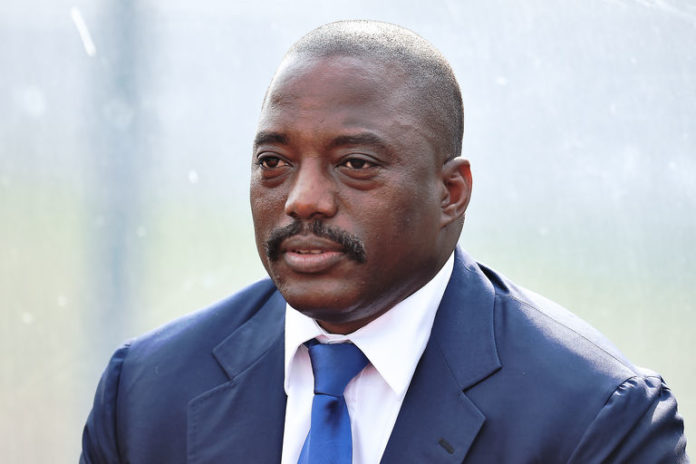
Kabila chooses Emmanuel Ramazani as party candidate as he steps down

DRC President Joseph Kabila

Democratic Republic of Congo President Joseph Kabila will not stand in December’s presidential election, a spokesman said on Wednesday, announcing that former Interior Minister Emmanuel Ramazani Shadary would be the ruling coalition’s candidate.

The announcement by spokesman Lambert Mende at a news conference puts an end to years of speculation about whether Kabila would defy term limits to run for a third term.

The selection of Ramazani, however, represents a defiant move by Kabila. A former Interior Minister, he is under European Union sanctions for alleged human rights abuses, including deadly crackdowns by security forces on protesters.

Even so, the announcement that Kabila will not run again will ease fears in the region and beyond that a Kabila candidacy would drag the country back into the civil wars of the turn of the century in which millions died, mostly from hunger and disease.

The December, 23, 2018, vote should now herald Congo’s first democratic transition of power following decades marked by authoritarian rule, coups and deadly conflict.

Mende said that Ramazani was on his way to the electoral commission headquarters in the capital Kinshasa to file his candidacy.

Several opposition candidates, including former vice president Jean-Pierre Bemba and the president of Congo’s largest opposition party Felix Tshisekedi, have also registered to run.

Stories Continues after ad

Gov’t seeks Shs100 billion to buy farmers’ maize

The price of a kilogram of maize has dropped sharply in Uganda that government has pledged to buy at Shs500.

The Ministry of Finance Matia Kasaijja has said government intends to mobilise Shs100 billion to be given in loans to grain traders and cooperatives willing to buy and stock farmers’ excess maize that is currently going at between Shs150-250 per kilogram.

Minister Kasaija said on Wednesday at the Uganda Media Centre that government has in the meantime sourced Shs5 billion that the dealers can borrow at an interest rate of 15 per cent per annum to buy farmers’ maize at Shs500 per kilogram.

The money will be accessed b through the Agricultural Credit Facility (ACF) set up years ago by the government in partnership with commercial banks, Uganda Development Bank Micro Deposit Taking Institutions (MDIs) and Credit Institutions.

Eligible projects under the ACF include; acquisition of agricultural machinery, post-harvest handling equipment, storage facilities, agro processing, mechanization and any other related agricultural and agro-processing machinery and equipment.

Matia said government in partnership with the Central Bank, The Grain Council of Uganda and commercial banks would work to ensure that all the excess maize on the market is bought off and stocked by the buyers.

“The intervention will enable farmers across the country to sell existing maize stock at not less than Shs500 per kilogram,” the minister said, adding that the measure would also enable famers to prepare for the new season which has in some areas of the country.

Following good rains experienced after an extended drought in 2017, government offered hybrid maize seeds that enabled farmers to produce about five million estimated tons of maize last season, experts said.

After incurring losses, some farmers have vowed never to grow maize again, accusing government of failing to find market for their produce. Some farmers had to use loans to pay labourers, buy fertilisers and pesticides as well as paying for other operational costs such as security.

In Uganda is commonly produced in Kapchorwa, Iganga, Masindi, Mbale, Kiryandongo, Lira, Mubende, Kasese, Kamuli, Jinja and Kabarole districts.

Stories Continues after ad

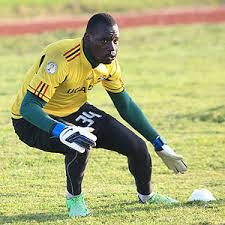
Denis Onyango on head injury: I feel much better

UGANDA CRANES TALISMAN: Goalkeeper Denis Onyango in action

Uganda Cranes team captain Denis Masinde Onyango has posted a message saying he feels better following the head injury he sustained when his club Mamelodi Sundowns played against Polokwane City last evening in the Absa Premiership.

Onyango was involved in a nasty collision with Polokwane City’s striker Mbulelo Wagaba as he jumped into air to collect the ball in the 51st minute.

In a social media video published by Mamelodi Sundowns on twitter, Denis said he feels better now than he was when being taken off the pitch. The club said he will have further multiple tests done following the serious injury.

“Hi, this is Denis, am feeling much better, there is nothing major. Thanks for win and good hard fought game,” he said.
The 2016 African Player of the year was stretched off the pitch, lifted into an ambulance and taken to the hospital for further medical attention. He was then replaced by Zambian goalkeeper Kennedy Mweene.

Team head coach Pitso Mosimane also said the football star will very soon return to action saying it wasn’t a serious injury in the post-match interview.

Mamelodi edged Polokwane City 2-0 at the Peter Mokaba Stadium in Polokwane, in a victory that took the Brazilians to second spot in the league standings while Rise and Shine moved down to 16th place.
The goals were scored by Ricardo Nascimento in the 17th minute and Lebohang Maboe in the 53rd minute.

Stories Continues after ad

UNRA’s Kagina in crisis as whistleblower implicates top directors in corruption scandal

UNDER SPOTLIGHT: UNRA Executive Director Allen Kagina.

The Uganda National Roads Authority Executive Director Allen Catherine Kakuyo Kagina is pleading with the Inspector General of Government, Irene Mulyagonja to release a corruption report on three directors who are said to have had selfish interests in the award of a contract to a Chinese road construction company.

Kagina in her August 2, 2018 letter to the IGG, said UNRA’s board of directors were in need of an update as regards the corruption-related investigations against the three officials who were accused by a whistleblower on July 17, 2018.

There three accused officials include; Mary Kamuli Kuteesa-Director Legal Services, Moses Kasakya-Director Internal Auditor and John Ongimu Omeke-Director Procurement.

The purpose of this letter is to request for an update on this matter to unable us update the UNRA Board of Directors. We enclose here in a photocopy of the whistleblower letter in issue for ease reference,” Kagina wrote in a letter that the IGG received on August 3, 2018.

However in a letter dated August 6, Kagina wrote again to the IGG, suggesting that the implicated officials be helped so as to keep their jobs.

“The Board is on my neck to know the status of UNRA staff that are under investigation by IGG, they might lose their jobs if they are not helped,” she wrote.
However, sources at the office of the IGG say Kagina did not respect their advice to suspend the three officials before investigations against them could be launched. It is not clear whether the UNRA board is aware that the IGG asked Kagina to suspend the officials.

According to the whistleblower, Kuteesa who is a member of UNRA’s contracts committee participated in the award of the contract to a Chinese company in which her husband has interest, yet she had not disclosed the information. She is accused of misleading the board and influence peddling.

The whistleblower accused Kuteesa that her husband through his law firm-Arcodco and Co. Advocates represents Chinese construction companies- China Wuyi, China Communications and China Construction Company (CCCC).

Related story: https://eagle.co.ug/2018/01/17/top-unra-official-under-probe-by-the-igg.html

Further, the whistleblower said her participation in the procurement processes led to the dismissal other companies with justifiable reasons and that she has disorganized the organization’s procurement process.

CCCC won the contract to build the 51.4 kilometers Entebbe Express at about Shs1.2 trillion. The road was launched in mid-June by President Yoweri Museveni and Mr Wang Yang, the chairman of the National Committee of the Chinese People’s Political Consultative Conference.

Eagle Online has reliably learnt that the so called whistleblower is actually an inside at UNRA and this information on deals within the authority is a known but was left out for fear to implicate those seen as clean and the blue eyed officials of the Executive Director.

Stories Continues after ad

UNBS launches automated services

unbs

Uganda national bureau of standards (UNBS) has automated a number of its services for efficiency, transparency and accountability in their processes and systems of work.

E-Services include; Laboratory Information Management Services (LIMS), Certification Information Management Systems (CIMS), Online Support Service and Automated imports clearance procedure that will be executed with guidance from trade mark East Africa.

Speaking at the launch, the executive director for UNBS Ben Manyindo said, e-services have replaced the manual systems and he believes this will go a long way in improving our efficiency, transparency, and accountability in their systems and processes allowing their clients carryout self-assessments thus reducing the cost of doing business.

“Embracing ICT in service delivery is part of government’s effort to promote e-government. Automation will allow us to keep up-to-date with latest trends in the technology and to continuously innovate to better serve our clients,” said Dr. Manyindo.

He said, Most of these goods have to be submitted to laboratory for testing, ‘the Laboratory Information Management System’ is going to be linked to e-portal for execution of work.

He said Certification Information Management Systems (CIMS) allows companies to apply for certification and track their applications up to issuing of e-certificates, the Webstore, which allows for online buying and selling of standards.

Dr Manyindo said UNBS is part electronic single window which allows various government agencies involved in imports clearance to interface and electronically share data, revealing that this will reduce on the cases of corruption and importation and selling of sub-standard goods.

Minister for state and cooperative Amelia Kyambadde congratulated UNBS for the achievements and strides made of quality in the country and east African community.

She said innovations will render a hand reduce delays, human resources issue and corruption.

Stories Continues after ad

Seven ways to demonstrate leadership in a Business crisis

Martin Zwilling

By Martin Zwilling

When the business is struggling, most business owners I know feel like anything but a leader. They start second-guessing their own vision, and are prone to making snap decisions suggested by someone else, in lieu of their carefully crafted processes and metrics. Entrepreneurs who can keep their cool under fire are the long-term winners I look for as an experienced angel investor.

In fact, the best will probably tell you that entrepreneur struggles are the best leadership teachers in the long run. Sir Richard Branson, who has built hundreds of companies, is quick to note that his trails and failures have taught him the most about leadership, and may even have saved his life in other endeavors. The challenge is to anticipate and meet struggles in a productive way.

Effective leadership in a crisis does require a base level of stability and emotional intelligence, which I believe can be sensed by investors and the people around you, even if you don’t have any prior experience in this area. In addition, there are some practical strategies that I recommend, no matter how much you have previously learned or experienced:

Act quickly when you see the team facing issues. When the business is struggling, you should expect anxiety on the team. Communicate with them immediately on the problem and strategy, rather than assume the less they know, the better off everyone is. You need to avoid emotion, don’t place blame, and be the role model for calm.

Be visible, actively solicit and listen to team feedback. People need to know that it’s safe to express views, both positive and negative. Once you get beyond the negatives, most people have real contributions. Your front-line team can give you direct feedback from customers, such as pricing, quality, or support problems, with suggested solutions.

Seek out advisors who will tell you what you need to know. You will get no real help from people in the organization who tend to tell you what you like to hear, or are always negative. Smart entrepreneurs build relationships with trusted advisors, both inside and outside the company, who can see the big picture and recommend practical changes.

Take time to practice management by walking around. Direct contact with people at every level is the best way to learn, generate trust, get support, and expedite action. Don’t assume that your message to direct subordinates will be passed down the management chain, or that input from the team will get back to you by the same process.

Don’t allow analysis paralysis to keep you from taking action. Encourage decisive action by all key players, and be the role model for what you expect. If everyone is accustomed to fixing problems with confidence, the business will prosper, struggles will occur less frequently, and customers will sense the integrity of an effective team.

Eliminate any implied or actual penalties for missteps. Create a culture that encourages and rewards innovation and progress, with no stigma for failed experiments. Eliminate any contention between internal groups and functional areas, including sales, marketing, and development. Make sure everyone is willing and able to pull their weight.

Negotiate alternatives with external partners and investors. New and existing partnerships can provide new sources of revenue, distribution, and support. Investors and major suppliers may be able to provide additional funding and credit to get you through the hard times. Your initiatives will also cement your own leadership perception.

With these strategies, you can feel like and look like the leader you want to be, even when times are tough and the business is struggling. In all cases, it does require that you put aside your ego, emotion, and pride, to listen carefully to the people who want to help, and don’t hesitate to make the critical decisions you have to make for your company, your team, and your customers.

These efforts will take you back to the reasons for taking on your own business in the first place – having full control of your destiny, being your own boss, and doing what you love. Don’t let the struggles, which come with every business, make you forget that.

The Writer is a veteran startup mentor, executive, blogger, author, tech professional, and Angel investor. Published on Forbes, Entrepreneur, Inc.

Stories Continues after ad

Digital trade reforms can help Comesa region reap Shs64.750 trillion-study

The Comesa region would annually gain about Shs64.750 trillion (US$17.5 billion) in intra-Comesa exports if all the member states fully implemented the digital trade facilitation reforms that involves the use of paperless trade facilitation measures.

According to research findings presented to the 5th Comesa Annual Research Forum underway in Nairobi, five countries have the greatest intra-Comesa export trade potential for the region. These are Eritrea, Egypt, Sudan, Libya and Ethiopia.

The researcher, Adam Willie, Principal Economist, Ministry of Commerce, Industry and Enterprise Development of Zimbabwe, said this was based on their low baseline implementation score of the six digital trade facilitation measures in the study.

“The implementation scores used in the study only captured the paperless trade facilitation measures that enable efficient coordination and exchange of data and documents among government border agencies and business community within a country,” Willie said.

Top scorers under the assessment criteria were Kenya, Madagascar, Mauritius and Rwanda. According to the researcher the top scorers have exhausted their potential to generate additional intra-Comesa exports with respect to scaling up implementation of the six e-trade facilitation measures considered in this study.

Comoros, D R Congo, Djibouti, Malawi, Swaziland, Seychelles, Uganda, Zambia and Zimbabwe had medium implementation scores thus presenting significant potential to increase intra-Comesa trade by implementing the DFTA.

The study sought to investigate intra-Comesa exports gains resulting from full implementation of e-trade by Member States. In particular, the study sought to assess the impact of the current implementation level of e-trade facilitation on intra-Comesa exports and secondly, to estimate the regional gain in intra-

Comesa exports when all Member States fully implement digital trade facilitation.

Arising from these findings, the study recommended policy change by countries with low to medium baseline implementation scores to scale up implementation of e-trade facilitation to realise the demonstrated potential benefits for the region.

“Efforts should be made to understand country specific circumstance on why they have not been able to scale up implementation,” Adam cautioned noting that ‘one size fit all policies’ may not work as there is greater variability in baseline implementation levels.

The five days Forum is reviewing the best 11 out 88 research papers submitted by researchers from Comesa members States. The policy implications from the papers will be presented to the COMESA policy organs for consideration as a basis for the policy making for Member States.

Over sixty regional experts drawn from the academia, policy think tanks, government and private sector institutions and international organizations are participating in the Forum

Stories Continues after ad

I do not know why I was appointed LOP- Aol

NEW LoP, Betty Aol Ochan with mic and Gulu Municipality legislator, Lyandro Komakech at a past function.

The newly appointed Leader of Opposition in Parliament, Betty Aol Ochan (Gulu Woman MP), has said she doesn’t know the yardstick used by the Forum for Democratic Change (FDC) Party President, Patrick Amuriat Oboi, to appoint her to replace Kasese Woman MP Winnie Kiiza.

However, Aol said issues of empowerment of women, experience as well as her good relationship with the electorate back home and his clique of party faithfuls could have forced Amuriat to appoint her.

Ms Achan made the statements this morning when appearing on NBS TV’s current affairs program, the Morning Breeze.

She said her appointment was not out of loyalty to Amuriat. “We are all loyal to our president but why did they zero on me,” she asked.

Asked whether she supports Dr. Col. Besigye’s defiance campaign, Aol said she would participate in the campaign as long it is for the good course.

Days ago Amuriat who defended his recent reshuffle, said that naming Betty Aol was not his first option as there was an MP who declined before coming up with Aol’s name. He said that their first option for LoP position declined to take up the challenging, but juicy position that comes with many privileges such as hefty allowances and extended security among others.

“An MP rejected the position of Leader of Opposition, and he had his own reasons. We’ve had a lot of consultation, and work done in so many months. But it’s on record that we talked to everyone before a decision was taken to reshuffle,” he said.

Aol who said she once served as the Deputy opposition Chief Whip is ready for the work ahead of her, despite concerns in some sections of the public that she might not be able to do the job as expected.

Aol said she would embark on mobilization of FDC supporters countrywide, as one of her activities to counter the NRM strengthen.

She said she would work for the unity of the FDC members. “We really need to be at peace at doing the work,” she said, stating that dialogue will be one of those endeavours during her term of office.

She said she would continue to add her efforts in the education and health in the framework of the sustainable development goals (SDGs).

Aol serving parliament for the third term and hopes her experience will help her deliver as expected of her.

Last week, Amuriat in consultation with the party’s National Executive Committee (NEC) resolved to replace Kiiza as LoP ahead of the expiration of her two and half year tenure in December this year. Amuriat retained Kira Municipality MP Ibrahim Ssemujju Nganda as Opposition Chief Whip, appointed Tonny Muhindo as deputy chief whip, named Francis Mwijukye as commissioner among others. In the committees, Amuriat appointed Nathan Nandala Mafabi as PAC chairperson, replacing Angeline Osegge, Abdu Katuntu was dropped for Mubarak Munyagwa as COSASE chair, deputized by Moses Kasibante who replaces Anita Among.

Amuriat days ago said that the changes he made were informed by factors such as loyalty, financial contribution and other details which he said are not for public consumption.

Stories Continues after ad