Stanbic Bank
Stanbic Bank
18.8 C
Kampala
Stanbic Bank
Stanbic Bank
Home Blog Page 1501

Survey shows 80 per cent Nakulabye households lack toilets

A section Nakulabye Neighbourhood.

A recent report indicates that 8 in 10 households (80) per cent of households in Nakulabye do not have private toilets despite the fact that the suburb is one of the most populated areas in Kampala.

That was revealed as the Kampala Capital City Authority (KCCA, Agency for Technical Cooperation and Development (ACTED) in partnership with the Norwegian Refugee Council and other agencies undertook an area-based multi-sector needs assessment there in February and June 2018.

In the report, 28 per cent of the households reported that the quality of basic services available to them was poor, with community leaders saying that poor waste management which has resulted into blocking of the drainage channels. They it is a key public concern, contributing to increased risks of floods.

The report says that Nakulabye has refugees and Ugandan nationals having access to the same basic services, although refugees reported greater barriers to access them. “For example, school-aged children who are part of refugee-headed households are more likely not to attend schools than others, which is mainly attributed to difficulties in paying school fees,” it adds.

“The lack of income is indeed the key concern reported by residents of Nakulabye, and it appears that, based on the median weekly income, refugee-headed households earn slighltly more than Ugandan-headed households. The female-headed households remain less wealthy compared to their male counterparts, regardless of their status,” it adds.

In face of financial difficulties, the report says, households in Nakulabye tend to use similar coping strategies, although refugee-headed households tend to rely more on help from relatives. The vast majority of the refugees in Nakulabye feel well integrated within their host community, and even tend to feel safer than nationals.
Both nationals and refugees tend to report similar answers when it comes to challenges affecting the whole community, namely insecurity and lack of economic opportunities.
School attendance:

According to the report, 15 per cent of school-aged children (7-17 years old) residing in Nakulabye were not attending school, as revealed by the random household survey. Refugee headed households reported that 33 per cent of children of the same age group were not attending school. “Inability to pay school feees is the most common reason given by both households and Key Informants for education facilities to explain school non-attendance and drop-out,” says the report.

Health services:
In addition 10 per cent of the households in Nakulabye reported that the quality of the water sources was not good enough to drink and 33 per cent of communal taps were constructed directly by the community.

Most commonly used health care providers as pointed out are; public health centres, private health centre hospital and Pharmacy respectively. 38 per cent of the health centres had no professional doctor among their staff according to Key informants.

The assessment which saw partners expand to other areas of Kampala was meant to better localise and understand the needs and conditions of access to services for refugees and other vulnerable populations living in vulnerable urban neighborhoods.

The report defines Nakulabye as; a vulnerable urban neighborhood in Kampala. It lies in Rubaga Division. The neighborhood comprises 9 cells, the lower administrative unit for urban settings in Uganda. It is home to vulnerable socio-economic population groups, including refugees.

Stories Continues after ad

Utilize the various ways of generating funds to cater for University students- Prof Nawangwe

MUK Vice Chancellor Prof. Barnabas Nawangwe.

Makerere University Vice Chancellor Prof Barnabas Nawangwe has appealed to all Institutions for Higher learning in Africa to utilize the various ways of generating funds and resources to cater for the rapid growth of the university students’ population.

Prof. Nawangwe made the remarks at the 14th Graduation Ceremony of Mount Kenya University.
Prof. Nawangwe said rapid growth in University student population is a challenge to the sustainable financing of higher education in Africa in spite of the public investment in the higher education sector in the last 15 years.

Under the theme ‘Financing of Higher Education in Africa for Quality and Sustainability’, Nawangwe who presided over as the guest speaker revealed that, both Uganda and Kenyan economies are struggling with many priorities to bring our countries out of poverty. Therefore, universities are under pressure to increase financial base and control costs.

He lauded those graduating for great triumph as well as achievements in their academics, “Indeed, I am delighted to celebrate this occasion with you and I bring you warm salutations from Makerere University,” he added.

He encouraged them to take the idea of freedom they found at the great university and make it ideal wherever they find themselves.
“Living freely creates more freedom. I want you to continue your interest in education, we are living in a global knowledge economy and Africa’s hope is in you young people who have acquired a good education from Mt. Kenya University. You may not all become professors, engineers, accountants or any of the other white collar destinations,”

“Remember that sacrifices have been made so that you can be psychologically emancipated. It is now your responsibility to prove to the world that all these investments were not in vain. Put passion in whatever you do and you will surely succeed,”

“Commended African universities for formulating and implementing policies that promote third stream income generating activities. The income generating activities in African universities are a good example of an entrepreneurial approach to funding universities,” he said at Mount Kenya University.

He applauded Mount Kenya University for establishing the Research Enterprise, Innovation and Development Centre, Mount Kenya University Foundation, Graduate Enterprise Academy, Equip Africa Institute and Centre for Professional Development whose mandate is to coordinate third stream income generating activities.

His invitation as the guest speaker follows the September 19, 2017, Memorandum of Understanding signed between Makerere University and Mount Kenya University aiming at improving higher education in the region.

Stories Continues after ad

Police, Energy Ministry embark on sensitization against illegal mining

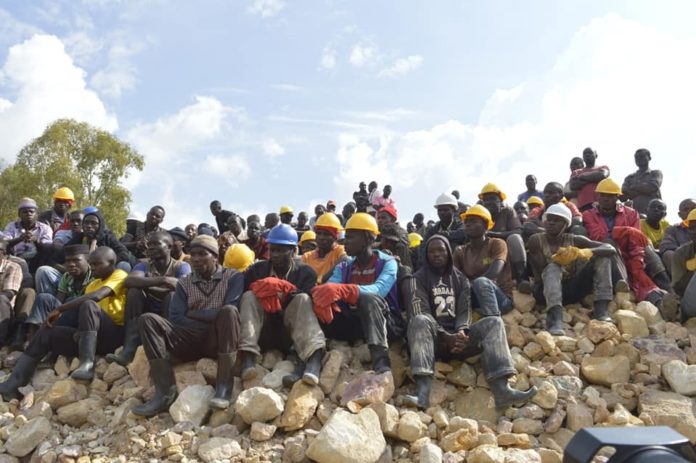
Attentive, miners listening to authorities.

Police, Ministry of Energy and Mineral Development have embarked on a countrywide sensitization campaign in areas with minerals deposits to curtail illegal mining.

Speaking to residents of Katenga and Muti-Kijumbura in Bihanga Sub in Buhweju District, SP Jesca Keigomba the Commandant of Mineral Protection Unit of the Uganda Police said, the team has been traversing around the country sensitizing the locals in mining activity to form associations that can benefit them and the government.

Following the discovery of minerals in Uganda, mining sector attracted both legal mining companies and small-scale miners exploring metallic, industrial and building minerals. Prior to that, the country has over the years lost billions of revenue through transitions of with illegal Artisanal small-scale miners and buyers.

“Government is aiming at licensing, registering and giving identity cards so that whoever is carrying out artisan mining.
“We should know who the directors of the mining sites are, their nationality, and employees,” she added.

She cautioned against the use of chemicals during mining and processing periods saying it is dangerous to the environment and human lives.

“Refrain from using chemicals like cyanide mercury, when it dissolves with water, it is harmful to the environment and your lives. We will teach you modern methods of mining and processing, endeavor to have protective gears like helmets, gloves and gumboots,” she cautioned.

The Mineral Protection Unit was formed last year with the aim of sensitizing miners about the dangers of illegal mining.

Since its establishment, the Unit has established branches in different districts and border points in Mubende, Isingiro, Ntungamo, Busia, Kisoro, Rubanda, Kabale and, Buhweju.

Stories Continues after ad

Brussels Airlines to sponsor UNAA’s 30th Convention

UNAA logo

Brussels Airlines is to sponsor the 30th Uganda North American Association Convention and Expo slated to run from August 31-September 2, 2018 in Seattle, United States, organisers say in a brief.

“UNAA welcomes Brussels Airlines as our proud sponsor of the 30th UNAA convention,” reads part of the brief.
The event will be held under the theme: Technology, Science and Innovation.
Delegates are expected to experience the latest in technological advancement, innovation and networking.

Organisers have planned a Boeing Group Tour where delegates will have an opportunity to view 747, 767, 777 and 787 Dreamliners being assembled on the production line before they take to the sky but delegates will also be admitted to the Aerospace Gallery there.

“You will be taken on a guided tour and provided the opportunity to dive into all things Microsoft. Explore the future of Artificial Intelligence (AI). Build a new world with Minecraft. Put your gaming skills to the test. Learn about our company journey from garage startup to global leader,” another statement says.

There will also be KARIBU NIGHT with guest DJs, youth entertainment and gospel night (Faith Revival). Muscians Dr. Jose Chameleon, Sheebah Karungi and others are expected to perform.
Trade and investment forum.

Delegates will hold discussions on trade with focus on identification of products Uganda can realistically export to the US besides coffee and products made in North America (other than heavy machinery, used clothes and such) for which a market can be found in Uganda. “Discussions will also include such ancillary aspects like AGOA, the challenges of transportation, import/export taxation, distribution,” a statement says.

They will also discuss investment opportunities in real estate, agriculture, manufacturing, tourism in Uganda. “Seattle being the home of Microsoft and other tech giants, there will be significant discussions about tech investment opportunities in Uganda,” the statement adds.
Local Banks-Housing Finance Bank and Post Bank will participate at the event as they exhibit their financial services and products.

UNAA is the largest non- political formal association of Ugandans in the Diaspora with the objective to promote the social, cultural and economic advancement of the Ugandan Community in North America.

Stories Continues after ad

Museveni witnesses conclusive peace agreement between South Sudan and Riak Machar

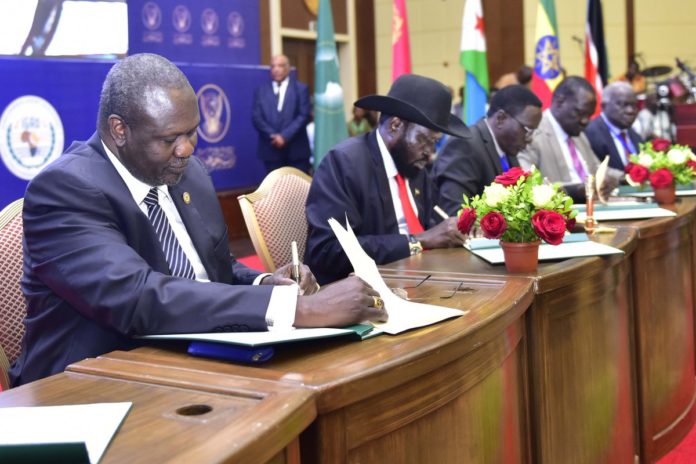
The two principals at the signing of the agreement.

President Yoweri Museveni has witnessed signing of conclusive agreement on peace, security and governance between the government of war-ravaged South Sudan and the country’s main rebel group led by Riak Machar.

The signing of the final pact follows a number of meeting held in Ethiopia, Kenya, Uganda and Sudan, paving way to end South Sudanese civil war that has killed tens of thousands of people as millions escaped to neighboring countries.

According to the agreement, Machar will act as the first vice president, the current vice president will act as the second vice president, the third one will be a woman from opposition and the fourth will be appointed from the general public.

Speaking at the Friendship Hall in Khartoum, Sudan, Museveni implored Leaders to focus on working for the fulfillment of their people’s interests like peace, health, education and creating conducive environment to do business.

“As a guarantor to the agreement, it is my hope that this is the last pact we are signing and that the respective parties are serious and they don’t use the ceasefire as a tactical instrument of preparing for war,” he said.

Museveni said peace effort is like Christian Trinity, involving the three levels of internal players, regional players and the international players. You can’t forget the regional players.

“Even as we sign this agreement, we must reflect deeply on whether it was a just war. We are congratulating ourselves over many dead bodies in South Sudan over the last four years. All the actors in this war must ask whether it was a just war,” He noted.

Sudanese civil war broke out in 2013 between government army of the Sudanese People’s Liberation Movement (SPLM) and Sudanese People’s Liberation Movement in Opposition (SPLM-IO) after the sacking of Riak Machar.

Stories Continues after ad

Interpol after jack Pemba over nude leakage

Jack Pemba with Ivan Byekwaso.

The pornography committee recently shook the entertainment industry when it begun making arrests of individuals found guilty of breaking the law concerning the Pornographic Act.

Pornographic Act Committee was commissioned in 2014 and is headed by Dr. Anette Kezaabu and a nine member panel, under the Ministry of Ethics and Integrity.

The committee sanctioned a number of arrests of perpetrators including local celebrities and socialites like Judith Heard and Jack Pemba who made headlines this year due to their leaked nude photos and graphic footage that continue to promote the culture of immorality and social degradation.

These apprehensions follow a nationwide campaign that brings awareness and sensitization to the various dangers that pornography consumption poses to not only the community but users as well.
The chairperson cited ‘cheap popularity’ and prostitution as some of the major causes for pornographic content circulating on social media.

Dr. Anette Kezaabu

“Most girls want to become famous and be known, so the quickest way for them is to to release nudes and sexual provocative images on social media.” Dr. Kezaabu told Eagle Online.
Among the culprits apprehended by police are Lillian Rukundo and Ashburg katto, who were both found guilty of producing and distributing pornographic content despite the committee’s various efforts to warn citizens against indulging in such lewd behavior publicly.

It was also revealed that some perpetrators with vast resources have managed to evade arrests by flying out of the country or bribing officials, but measures have been put in place like the enlistment of Interpol to ensure that these individuals are captured and prosecuted.

“There is no one who is untouchable by the Law, in fact Jack Pemba ran out of the country and when we put Interpol on him, he started sending lawyers and so forth but he is going to be produced and he will face the Law.” said Dr. Kezaabu who together with the Criminal Investigative Division and Uganda Communications Commission have set up a network of experts and professionals to detect and lock up producers and suppliers of pornography within the country.

However, the committee made it clear that compliance with authorities in special cases that involve unintentional/forced participation like cases such as child pornography, or victims of vengeful motives, the culprits would be allowed a plea and will not be prosecuted heavily as those with intention to distribute pornography both commercially and publicly.

Efforts have been made to ensure that anti-pornography studies are introduced into the school curriculums all over the country in order to create and sustain a pornography free future for Uganda’s generation.

Stories Continues after ad

Sudhir reserves part of land in Masaka for vegetable growing

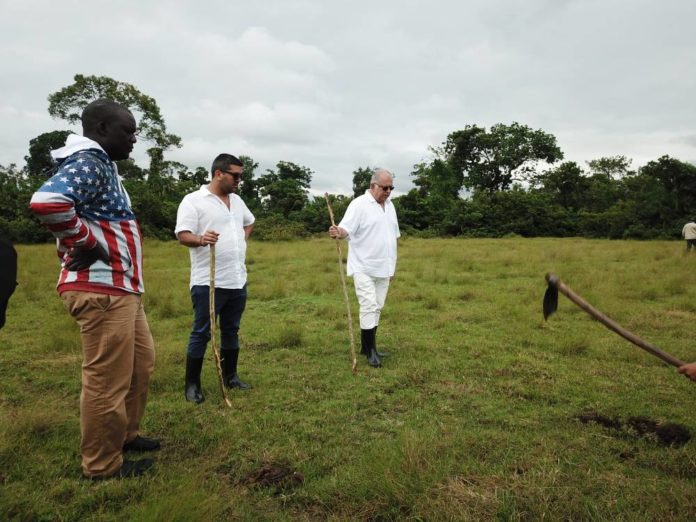
Sudhir and Rajiv testing the fertility of the Masaka land.

Ugandan investor, Sudhir Ruparelia has allocated part of the land he acquired in Masaka district for vegetables growing so as to meet the international demand.

“Farming is the backbone of this economy and I do not want to be left behind,” he said recently as he toured the land in Masaka.
Ruparelia and some members of his family and managers of Ruparelia Group recently toured the said to find out whether the land was fertile enough to support his horticulture business.

In March Sudhir acquired nine square miles of land in Kayunga district to expand on his horticulture and floriculture farming business. Sudhir bought the land in Bbale County as part of expansion to Masaka and Entebbe road floriculture business.

His flower businesses last year were selected the best from the East African region and top the flower exporting countries from East Africa.

Sudhir flower business employs more than 5,000 people both indirect and directly. Ruparelia is one of the top employers in Uganda while his Ruparelia Group is one of the top tax payers and employers in Uganda the country.

His growing horticulture business has made Uganda one of the leading fresh flower exporting countries in the world. He runs two floriculture firms in Entebbe Wakiso district, Rosebud and Premier Roses. The two companies are the biggest producers of flowers in Uganda, exporting over 180 million stands annually to over 10 countries.

Some of the flowers grown by the two companies are; Sweetheart Rises, Valentino (dark red), Viva (blight yellow), Chelsea (Orange), Red Calupso ( blight red), Meera (Champagne), Akito (white) and Brushing Akito.

Stories Continues after ad

Diaspora Basoga donate to the elderly back home

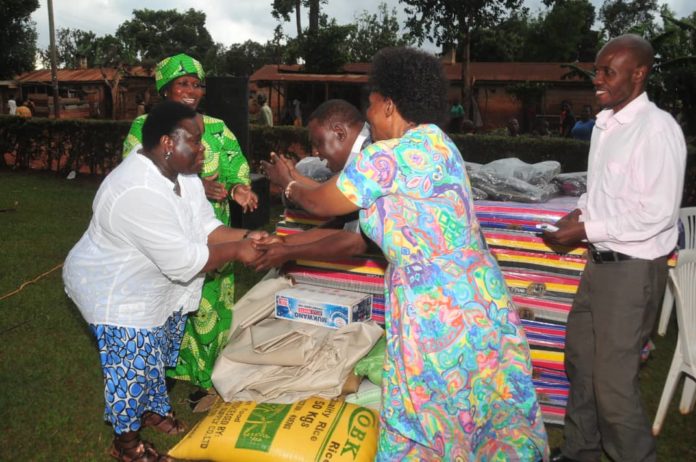
Donations being delivered

Members of the Busoga Nordic Development Association (BUNDA) in Partnership with the Minister of Foreign Affairs in OBB, Owek. Joan Machora Kitto have donated an assortment of aid to the elderly and needy at the Jinja Home of the Elderly and Needy Persons.

The assortment donated on Sunday included Mattresses, Blankets and a Solar system that was fully installed at the home. They will also sink a borehole to provide safe drinking water to the Elderly and needy in the home.

The mattresses and Blankets were handed over to the Administrator of the home, Peter Musoke by BUNDA chairperson Eria Mutyabule who was in company of his vice, Violet Biryeri, Susan Ndizawa and Owek. Machora Kitto.

Beneficiaries taking some of the donated items

The function was officiated by OBB’s Attorney General, Robert Kafuko who represented the 2nd Deputy Katukiro Osman Noor Ahmed.

He was accompanied by the Chief Prince (Issabalangira) of Busoga Samuel Zirabamuzale, the Nkono of Bukono chiefdom and OBB Ministers.

Owek. Kafuko pledged that OBB will work in partnership with BUNDA through the Ministry of Foreign Affairs to develop Busoga region.

He said OBB is ready to work with BUNDA to extend more charity to other Elderly and needy children in the region.

Eria Mutyabule said BUNDA is ready to extend support to vulnerable children, widows and elderly in the region in partnership with Owek. Machora Kitto.

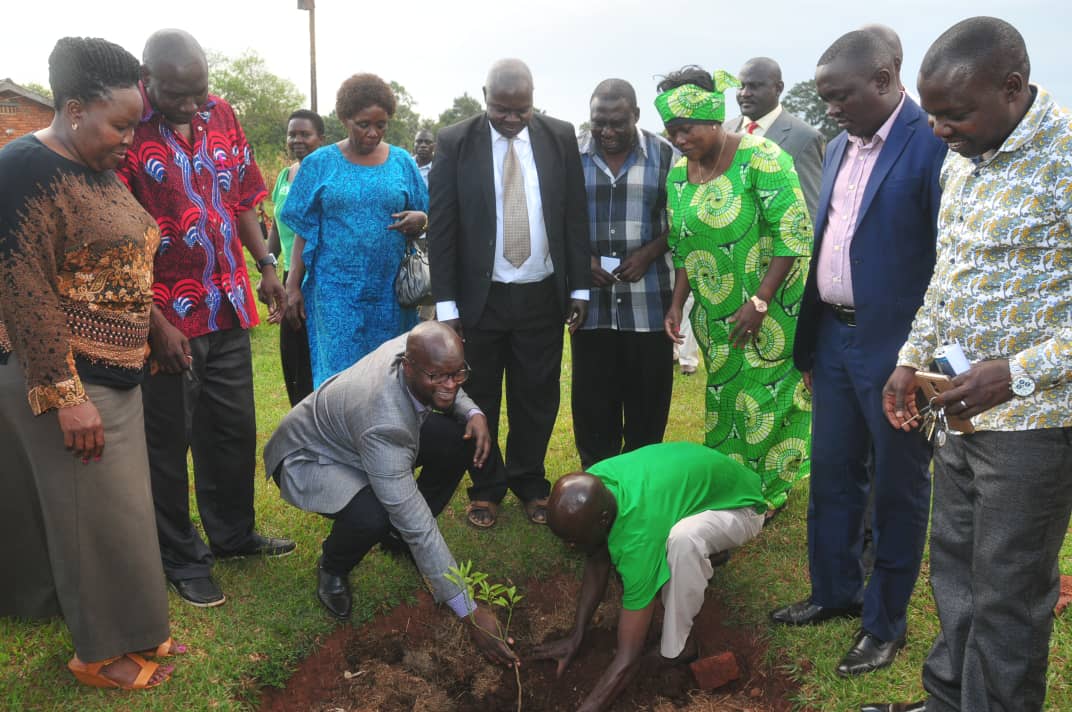
A tree being planted in remembrance of the gesture

Owek. Machora, in her speech, appreciated BUNDA for the support they extended to the Elderly at the Jinja Home of the Elderly and Needy persons.

She said the gesture was a sign to show solidarity with the Elderly and needy in the society.

After the speeches, Owek Kafuko and Owek. Machora launched BUNDA in Busoga and a Certificate of Acknowledgment was handed over to Eria Mutyabule.

Stories Continues after ad

Campaign to eradicate polythene bags launched

Plastic at a garbage Collection centre in the city

By Maria Nassiwa

A campaign to abolish polythene bags commonly known as “Kaveera” in Uganda has been launched under the theme; “tuve ku kaveera”.

The campaign, led by the National Environment Management Authority (NEMA), Vivo Energy and NBS Television, is aimed to sensitize the masses on the dangers of polythene bags in our environment.

The campaign has been launched by the state minister for water and environment Goretti Kitutu who called upon the media’s support in protection of wetlands

“As the State Minister for water and environment, I will not forget to mention other challenges where I want media to support us like protection of wetlands,” said Kitutu.

According to Daniel Okello director of health in KCCA, says KCCA spends 7 billion shillings annually on waste collection and 5% of garbage collected are polythene bags (Kaveera) and these bags cause blockage of the drainage system and hence causing floods.

Earlier on in July 2009, the then minister for Finance, Ms Syda Bbumba, during her budget speech, imposed a total ban on plastic bags.

A moratorium of six months was given to the general public as transition period during which arrangements where to be made, find alternative packing materials that are environment friendly.

Government argued that the polythene bags were blocking drainage systems and degrading the soil. It announced the ban and prohibited the importation and local manufacture of polyethylene bags. However, the ban was not effective.

In as much as polythene bags have different uses, Ugandans overly depend on the carrier bags which have adverse impact on the environment thus this campaign is intended to help Ugandans make informed decisions on polythene bags use.

Stories Continues after ad

Celebrating International Day of the world’s indigenous peoples

Uganda will join the rest of the world to celebrate the International Day of Indigenous peoples on August 9 under the Theme: Indigenous peoples’ migration and movement.

Records show there are an estimated 370 million indigenous people in the world, living across 90 countries. They make up less than 5 per cent of the world’s population, but account for 15 per cent of the poorest. They speak an overwhelming majority of the world’s estimated 7,000 languages and represent 5,000 different cultures.

Indigenous peoples are inheritors and practitioners of unique cultures, and have retained social, cultural, economic and political characteristics distinct from the dominant societies in which they live. Despite their cultural differences, indigenous peoples from around the world share common problems related to the protection of their rights as distinct peoples.
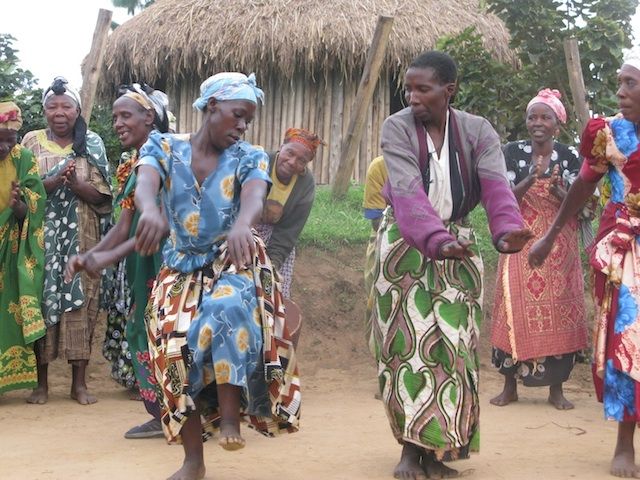
In Uganda, the indigenous peoples include ancient communities of hunters and gatherers, such as Benet and Batwa, also known as Twa. They also include minority groups like the Ik, the Karamojong and the Basongora.

As a result of loss of their lands, territories and resources due to development and other pressures, many indigenous peoples migrate to urban areas in search of better prospects of life, education and employment. They also migrate between countries to escape conflict, persecution and climate change impacts.
Despite the widespread assumption that indigenous peoples live overwhelmingly in rural territories, urban areas are now home to a significant proportion of indigenous populations. In Latin America, around 40 per cent of all indigenous peoples live in urban areas — even 80 per cent in some countries of the region.

In most cases, indigenous peoples who migrate find better employment opportunities and improve their economic situation but alienate themselves from their traditional lands and customs. Additionally, indigenous migrants face a myriad of challenges, including lack of access to public services and additional layers of discrimination.

The 2018 theme will focus on the current situation of indigenous territories, the root causes of migration, trans-border movement and displacement, with a specific focus on indigenous peoples living in urban areas and across international borders. The observance will explore the challenges and ways forward to revitalize indigenous peoples’ identities and encourage the protection of their rights in or outside their traditional territories.

Stories Continues after ad