Stanbic Bank
Stanbic Bank
18.2 C
Kampala
Stanbic Bank
Stanbic Bank
Home Blog Page 1502

UK Defence Secretary cautions on premature exit of AU troops from Somalia

Williamson talkingt to AMISOM Force Commander Lt. General Jim Beesigye Owoyesigire.

UK State Secretary for Defence Gavin Williamson has lauded the progress made on the security front in Somalia, but cautioned that the premature exit of the AU troops from the Horn of Africa country could have an adverse effect on gains already made.

The Defence Secretary said the UK government was keen to ensure the exit of AMISOM from Somalia is not undertaken, until the latter is fully capable of handling the national security responsibility.

“The role they play is one that has sometimes been a little bit forgotten around the world, but it should be something that should be highlighted and should be celebrated; because without the decisive action that has been undertaken, without the work that they have been doing to deliver security, Somalia would be in a very difficult place,” the Defence Secretary said shortly after meeting with the AMISOM Force Commander Lt. General Jim Beesigye Owoyesigire, the Deputy Head of AMISOM Simon Mulongo and other senior AMISOM officials, at the Force Headquarters in the capital Mogadishu, on Tuesday.

“We discussed a number of issues, particularly the ongoing support that they give to the African Union and AMISOM, the Transition Plan implementation, the activities that we are trying to scale up in Somalia; and also, we discussed the new (UN) resolution. AMISOM has certain tasks to undertake in the fulfilment of its mandate,” Mulongo said.

The minister, who was making his first official visit to Somalia expressed the UK government’s commitment to furthering support to the Somali National Security Forces through capacity building.
“What we need to do is make sure that the Somali government has the necessary capabilities and resources, to be able to deliver security within its own borders,” he noted.

The Rt. Hon. Williamson also visited the AMISOM Intelligence, Surveillance and Reconnaissance Cell, where he interacted with the AU and Somali facilitators on issues of child protection, gender and conflict related sexual violence.
He commended the “extensive cooperation” among diverse stakeholders, that is enabling the reconstruction of Somalia.

“Coming here to Somalia, for the first time, has made a huge impression on me,” he noted. “It’s been great to see the close working relationship we have with AMISOM and so many different nations from right around the globe. What has struck me are the real opportunities that Somalia presents.”

The UK government through the United Kingdom Mission Support Team (UKMST), is supporting the AU Mission in diverse ways and has bolstered training support to the troops and their counterparts in the Somali security forces in Mogadishu and in the federal states.

Stories Continues after ad

Survey reveals 11 facts about household finances in Uganda

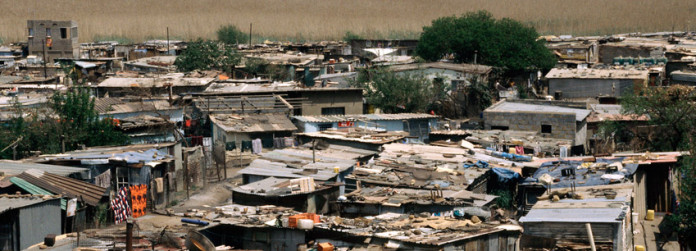
Globalization, market and poverty in South Africa

Data from Twaweza’s new Sauti za Wananchi survey, a nationally-representative, high-frequency mobile phone panel survey, which captured 1,925 respondents between October 6-13, 2017, has revealed major facts about household finances in Uganda. Eagle Online brings the readers the issues captured:

According to the survey, the most serious problems facing Ugandan households are financial. One out of four citizens (26 per cent) say the most serious problem facing their own household is poverty or inequality, while one out of eight (15 per cent) mention hunger / drought or the high cost of living (14 per cent). Public services are the next concern, including water (13 per cent), health (10 per cent) and education (9 per cent).

At national level, there are fewer consensuses. One in six citizens (16 per cent) say the most serious problem facing Uganda today is health, more than for any other issue, but poverty and inequality (14 per cent) and implementation of the constitution (13 per cent) are cited by similar numbers. Several other issues are also named by significant minorities, including corruption (9 per cent), hunger / drought (9 per cent), and water (8 per cent).

The survey shows that 5 out of 6 or 84 per cent of the citizens interviewed are unhappy with the country’s economic management. “The same economic concerns are evident in citizens’ levels of satisfaction in the direction Uganda is heading, the report of the survey shows.
It also indicates there are also high levels of dissatisfaction with the country’s trends on corruption (80 per cent) and employment (71 per cent). However, the report says a majority (62 per cent) are satisfied with the country’s progress on improving security.

The report further reveals that one out of two citizens (49 per cent) had, in the three months before the survey, gone a whole day without eating due to a lack of money or other resources.
Larger numbers experienced difficulties with food security over the same period. “Five out of six (85 per cent) have been worried that they would run out of food, and three out of four (75 per cent) had to skip a meal,” says the report.

However, the report says there is considerable variation in experiences of food security across Uganda, although the number of people going without food for a whole day remains high across groups. 45 per cent of the urban areas and 51 per cent of the rural areas had people go for a whole day without food. Wealthier households had 39 per cent and poorer ones had 60 per cent often go hungry.

The sharpest variations come when considering specific sub-regions. In Karamoja, five out of six residents (85 per cent) went a whole day without food in the three months before the survey, and the numbers are also very high in Central (75 per cent), and Teso (73 per cent). In comparison, one out of ten residents of Lango (9 percent) and three out of ten in Bunyoro (30 per cent) and West Nile (30 per cent) experienced this problem.

The survey also established that only 1 out of 5 or 22 percent of the households had sufficient income to cover their daily needs. This number is consistent across urban (23 per cent) and rural (22 per cent) areas, and wealthier households (28 per cent) are slightly more likely to say their income is sufficient than poorer households (20 per cent).

The report says that some households look for alternative means when they run out income. “When a household’s income comes up short, various coping strategies are used, including borrowing money or obtaining food and other supplies on credit (43 per cent), cutting back on consumption (26 per cent), or asking for assistance from family or friends (15 per cent),” it says in part.
In the hypothetical situation of being given a gift of UGX 350,000 by the government, most citizens interviewed said they would spend on average Shs185, 000, or a little over half the amount, on starting or boosting a business venture. Substantial amounts (Shs59, 000 of the hypothetical gift would also be spent on boosting agricultural productivity and Shs44, 000 on school fees.

“Much smaller amounts would, on average, be spent on day-to-day living expenses, including Shs20, 000 on food and Shs2, 000 on non-food items such as fuel and phone credit,” reads the report.
The report of the survey reveals that only one in six citizens (17 per cent) of the citizens interviewed has a bank account, either alone or jointly with another person. Men (22 per cent) are nearly twice as likely as women (12 per cent) to have an account, and those in urban areas (25 per cent) are much more likely to have an account than those in rural communities (13 per cent).

The report shows there are also strong links with age and wealth, with young people (6 per cent) and the poor (6-7 per cent) particularly unlikely to have a bank account. The wealthiest citizens (37 per cent) are the most likely to have bank accounts.

The most commonly mentioned reason for having opened a bank account is for savings or keeping money safe (64 per cent) while the most common reason given for not having an account is a lack of sufficient funds to make it worthwhile (92 per cent).

“Looking back at earlier data collected, there has been no significant change in the proportion of citizens holding bank accounts in Uganda over the past few years; there may even have been a small decline. The Financial Sector Deepening Trust found that 21 per cent had a bank account in 2009,” the report says. This, the report says, suggests access to formal banking services has been slower than the rate of population growth.

The National Financial Inclusion Strategy, highlights a need to focus on people of particular groups who are more financially excluded than others. The Sauti za Wananchi data shows there is lower ownership of bank accounts among the women, rural communities and young people between 18 to 24 years.

Borrowing money in the past five years
According to the report, one out of three citizens (35 per cent) of the citizens interviewed said they had taken a loan or borrowed money in the past five years. This number is higher among men (40 percent) than women (29 per cent), but consistent between urban (34 per cent) and rural areas (35 per cent).

The biggest source of loans are informal savings groups (30 per cent of those taking a loan) and Savings and Credit Cooperatives (SACCOs; 23 per cent).
Most loans are taken either to invest in a business venture (33 per cent) or spend on school fees, education or training costs (33 per cent).

Owning a mobile money account
According to the survey, a clear majority of citizens (68 percent) make use of mobile money services. But this is higher in urban areas (82 percent) than rural (63 percent). The figures are slightly higher among men (71 percent) than women (66 percent).

“There is no clear link between age and the use of mobile money, but wealthier citizens are more likely to use such services (87 per cent) than the poor (48 per cent),” the report says, adding that mobile money services are dominated by MTN Mobile Money: just over half the adult population interviewed (54 per cent) report using MTN. This is followed by Airtel Money (25 per cent). Other mobile money services have very low reported user levels.
The most common use of mobile money services is to send and receive money and Six out of ten citizens (62 per cent) report using mobile money for this purpose. A significant number (26 per cent) also use the service as an alternative bank account – a simpler way to keep money safe. Further, one out of ten citizens (9 per cent) report receiving their salary or wages through mobile money services.

One out of three citizens (32 per cent) report having borrowed money or airtime from MTN extra, and one out of four (25 per cent) has done so from Beerako.
A clear majority of citizens are satisfied by the value for money offered by mobile money services. Just under half (46 per cent) say the price is just right, and one out of five (22 per cent) say it is so cheap as to cause doubts about the quality of the services offered. One out of three say the service is too expensive (32 per cent).
The report notes that the rapid take-up of mobile money services since their launch in Uganda in 2009, rising to 68 percent of the population in just eight years, can be contrasted with the slow or stagnant take-up of bank accounts.

Access to mobile money services outpaces not just formal banking, but other forms of financial products as well. While two out three citizens (68 per cent) make use of mobile money services, less than one out of six has a debit card (14 per cent) or an account with a SACCO (14 per cent), and less than one out of twenty has an account with a Microfinance Institution (4 per cent), a pension (2 per cent), insurance product (2 per cent) or credit card (1 per cent).

People considered financially included by the survey are those who have an account with either a bank, SACCO or Microfinance institution (MFI), or use mobile money services. Three out of four citizens (73 per cent) are financially included using this definition; made up of three out of ten (28 per cent) who have an account with a bank, SACCO and/or (MFI and a larger proportion (44 per cent) who have no accounts with any of these institutions but who do have a mobile money account.

Financial inclusion is slightly higher among men (75 per cent) than women (71 per cent), and substantially higher in urban areas (85 per cent) than rural (68 per cent). The young and old are less likely to be financially included than those aged between 25 and 54, and there is, unsurprisingly, a strong link between wealth and financial inclusion.

Two groups are particularly dependent on mobile money services to increase their financial inclusion: women and the young. Both groups have very low levels of access to formal financial institutions (banks, SACCOs, MFIs), but to some extent make up for this gap through higher levels of access to mobile money.
The report says: “We are still in the relatively early stages of mobile money uptake and we do not yet have a clear sense of the possible implications of a population that is primarily financially included only through mobile money.” What are the long term implications for the country’s overall banking sector? It asks. Are mobile network operators best placed to manage so much of the nation’s money? Is there a connection between greater financial inclusion and food security?”
It calls for the tackling of the above questions. “These are some of the questions that are worth exploring as part of Uganda’s public policy discussions,” it says.

Stories Continues after ad

Makerere researcher to receive medal from the Vatican for outstanding scientific study

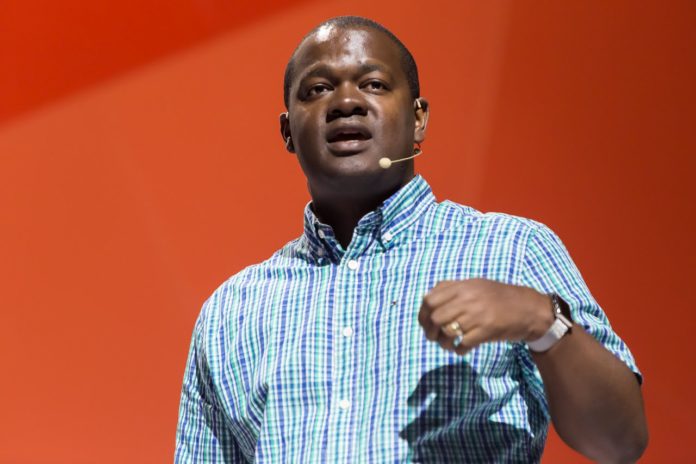
Prof. Noble Banadda

Professor Noble Banadda, Chair of the Department of Agricultural and BioSystems Engineering at Makerere University in Uganda and a former RUFORUM Principal Investigator has been awarded the Pius XI Medal for the year 2018. The award, given by the Pontifical Academy of Sciences based at the Vatican, is in recognition of his outstanding scientific research.

He was selected by unanimous decision of the Academy Council from among many candidates proposed. The Pius XI Medal was established in 1961 by Pope John XXIII to recognize outstanding scientific merit in the field of the natural sciences achieved by a young scientist under the age of 45. It is awarded by the Pontifical Academy of Sciences every two years and a few of the winners have gone on to become members of the Academy. Twenty-eight winners have been awarded the medal since its launch in 1961, but Prof Banadda will be the first African to receive it.

The medal will be presented to Prof. Banadda during the next Plenary Session of the Academy to take place from 12 to 14 November 2018 at the Vatican under the theme, “Transformative roles of science in society: from emerging basic science toward solutions for people’s wellbeing”. The actual award will likely take place during the Solemn Audience be granted by Pope Francis to participants of the Session, during which Prof. Banadda will make a presentation on his most important scientific research.

About Prof Banadda
Prof. Noble Banadda holds a PhD in Chemical Engineering and MSc in Processing Engineering from the Katholieke Universiteit Leuven (Belgium) and a BSc Food Science and Technology from Sokoine University of Agriculture (Tanzania). In 2007, he won the Cochran Fellowship to undertake postdoctoral studies in the Department of Chemical Engineering at Massachusetts Institute of Technology (USA).

A trailblazer, in August 2012 he was appointed a full professor at the age of 37 years. This was the first ever in the Department of Agricultural and BioSystems Engineering at Makerere University and the only one to-date. He was the youngest fellow to join the Uganda National Academy of Sciences in 2013 and the only person to qualify to be in both the young and senior academy in Uganda. In 2015, he was among only seven Africans that qualified as fellows of the prestigious Next Einstein Fellowship.

Prof. Banadda’s research interests are broadly in mathematical modeling, biological systems and renewable energy. In academia, he has served as a visiting professor in universities in Africa, Europe and USA and supervised several master’s and PhD theses. He has authored over 80 peer reviewed scientific papers in international journals and with 1,395 citations on Google Scholar, he is ranked 64th globally and 5th in Africa in waste management research.

Prof. Banadda first won a research grant from the Regional Universities Forum for Capacity Building in Agriculture (RUFORUM) in 2011 through it Competitive Graduate Research Scheme. His research was on, “Investigating contamination risks associated with wrapping indigenous foods in plastic bags during thermal processing.” The study that sought to address public health concerns found that both black and green polyethylene bags, commonly used to wrap food in Uganda, contained heavy metals in varying concentrations which migrated into food during cooking at different temperatures and their migration increased with increase in temperature and holding time. This therefore exposes people to ingesting heavy metals, though in small quantities, but which may accumulate over a long period of time and cause health problems.

In 2015, he won a second grant to carry out research on “Pyrolysis of agricultural waste for bioethanol production”. The purpose of this research was to produce ethanol from low cost agricultural biomass such as banana peels, straws, plant stalks, stovers and molasses in order to make it competitive as a direct fuel or blended into petrol as an additive. Success of this project will, among other benefits, enhance incomes, moderate fuel prices, attract youth into agriculture, and create jobs.

Stories Continues after ad
No bad Sugar on Ugandan market -UNBS

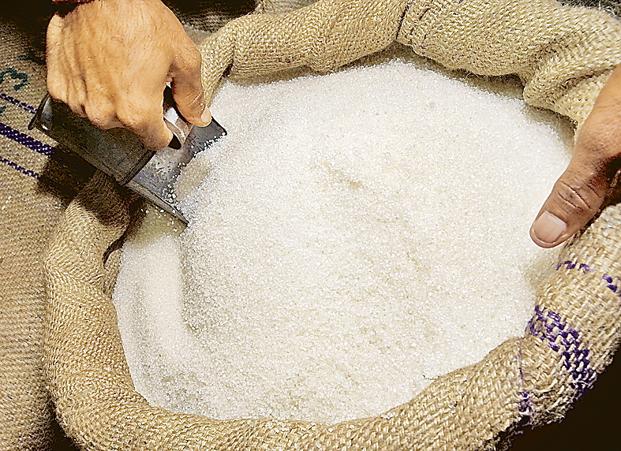
Sugar

The Uganda Bureau of Standards (UNBS) has refuted claims that the sugar which was recently banned in Kenya has found its way on the Ugandan market.

“UNBS would like to reassure the public that, based on the tests done so far, the current sugar on the market is safe for human consumption,” reads part of Friday’s statement.

The New Vision of on Friday ran a headline: “Banned Kenya Sugar Sneaked into Uganda”, causing fear among consumers.
“Our investigations have since established that the sugar reported belongs to Kakira Sugar, a local manufacturer certified by UNBS, contrary to the media reports that it had illegally been imported into the country,” the statement further read.

According to the statement, UNBS has instituted consumer protection measures to ensure that contaminated such sugar is not imported into the country. And that it has since June 2018 cleared 437 consignments of imported sugar and samples tested were found to comply with the required national standards.

“In addition, the UNBS market surveillance team randomly picked over 120 samples from Kampala, and border towns of Mbale, Busia, Malaba, Tororo, which were taken to UNBS laboratories for further testing and analysis,” read the statement.

From the laboratory analyses, it was established that all the samples tested did not contain heavy metals such as copper, lead, mercury that may have adverse effects on human health, it added.
In mid-June, an analysis carried out on samples of the 1,400 bags of illegal sugar seized by the Kenyan police in different operations, revealed that some of the sugar contained contaminated water insoluble matter.

Stories Continues after ad
FAO Food Price Index posts sharp drop in July

The price of a kilogram of maize has dropped sharply in Uganda that government has pledged to buy at Shs500.

Global agricultural food commodity prices fell sharply in July, as all the major traded items posted notable declines, led by dairy and sugar.

The FAO Food Price Index averaged 168.8 points, 3.7 per cent below their June level, the biggest monthly drop since late last year. The index had been steadily rising in 2018 until June.
The FAO Food Price Index is a measure of the monthly change in international prices of a basket of commodities.

The FAO Dairy Price Index led the slide, declining 6.6 per cent, with butter and cheese quotations dropping faster than those for whole and skim milk powders.
The FAO Sugar Price Index fell 6 per cent to a nearly three-year low, largely driven by improved production prospects in India and Thailand, both important sugar-producing countries. Expectations of lower output in Brazil, the world’s largest producer and exporter, limited the fall in international sugar prices.

The FAO Cereal Price Index declined 3.6 per cent from June and is now below its year-ago level. Export quotations for wheat, maize and rice all declined, although wheat and maize values edged higher towards the end of July.

The FAO Vegetable Oil Price Index was 2.9 per cent lower, its sixth consecutive monthly decline, and is now at its lowest level since January 2016.
Part of the July slide was driven by spill-over weakness from the soybean market, which is affected by the trade dispute between China and the United States of America. Rapeseed oil values trended upwards, however, buoyed by improved demand from biodiesel producers and negative crop prospects in the European Union.

The FAO Meat Price Index declined 1.9 per cent from its June value, which was revised up in the wake of higher beef export prices from Brazil due to a truck drivers’ strike.

Stories Continues after ad
Salva Kiir promotes wife to major general in army

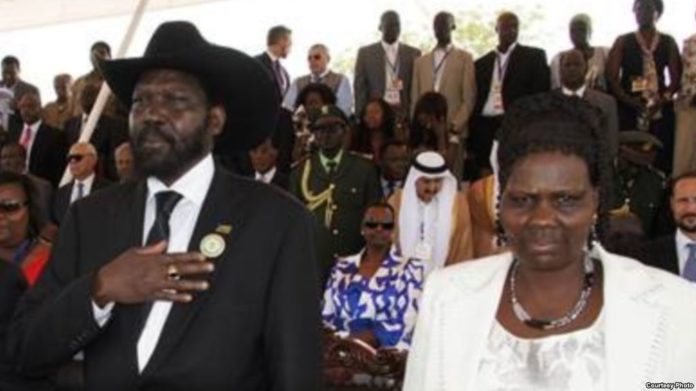
Gen. Kiir and First Lady Mary Ayen .

South Sudan’s President Salva Kiir has promoted his wife Mary Ayen to the rank of a major general in the army, according to the military.

The order issued by President Kiir, who also doubles as the Commander in Chief of the SPLA army, did not specify what duties the First Lady would have in her new assignment as an army general.
Two other women were promoted from a Brigadier to a Major General in the army on 27 July.

SPLA army spokesman Lul Ruai Koang confirmed today that the women were promoted on 27 July.
“The promoted female officers are from Shield One and Shied two in the SPLA. They actually joined the movement since 1983 and they are from the Women’s Battalion known as Katiba Banat,” Lul said.

“General Nyankiir and General Aluel have also been promoted to the rank of a Major General,” he added.
Lul further said the promotions were based on merit and capacity.” It is the first time for female officers to be promoted to the rank of a major general,” he said.

Stories Continues after ad
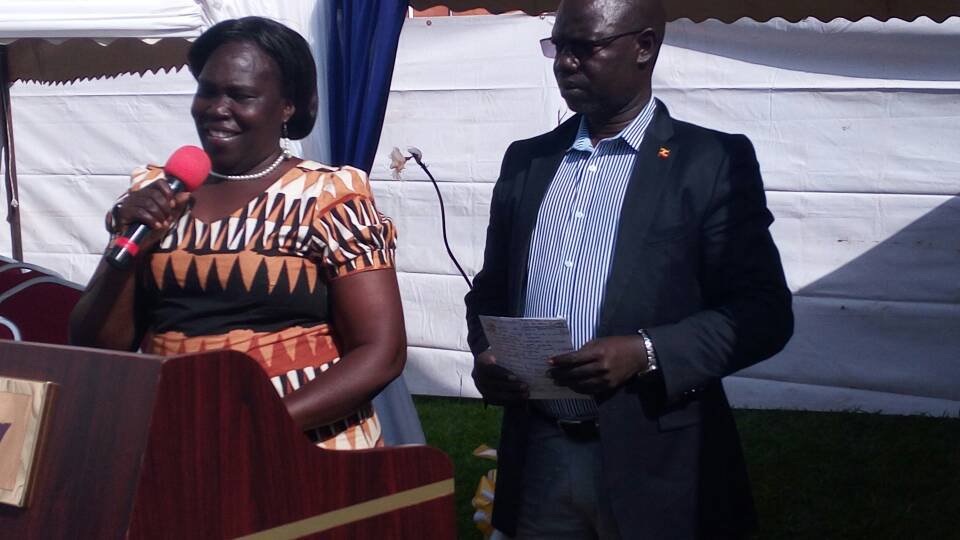
I wanted to draft interest capping bill-Minister Bahati says at BOA Elite banking launch

Minister David Bahati.

The state for Finance David Bahati and Member of Parliament (Ndorwa West) on Thursday said that back then before he became a minister, he had wanted to draft a private member’s bill aimed at capping commercial bank lending rates in Uganda.

A private member’s bill in a parliamentary system of government is defined as a proposed law introduced into a legislature by a legislator who is not acting on behalf of the executive branch. However, such bill are rarely passed.

“When I was still a back-bencher in parliament, I had started drafting a bill to cap the interest rates, the way Kenyans have done. But when I was appointed as minister I abandoned that idea; but it appears you want to force government to do that,” he said.

Minister Bahati said while officiating at the launch of the new Bank of Africa (BOA) Uganda Elite Banking and Mortgage Financing product at the Kampala Serena Hotel.
“The Central Bank has continued to lower the lending rates, but we don’t see a response from the commercial banks,” Bahati said, adding that government could act in the future.

He said reduce prime lending rates would boost economic activities, further stating that government would soon stop borrowing from the domestic market to allow the private sector players access the credit they require for investment.

“While government recognizes the numerous risks that commercial banks have to take care of, it is still concerned about the abnormal interest rates charged on customers,” he said.
On BOA’s Elite Banking product, Bahati lauded the bank, saying that it was an innovative way of handling business.

BOA’s Business Development Manager Ronald Kamulegeya, said the new product is a premium service meant to offer quality in service delivery, convenience, a comfortable and exclusive private banking hall for customers and lifestyle solutions, all at a competitive price.
“Some of the benefits of Elite banking include longer banking hours per customer, customers will be provided with dedicated relationship managers that will handle their day to day transactions and we will also cater for their unexpected emergencies,” he said.

Clients with the Elite Banking card can present it to the banker’s partners for discounts on purchases. Some of the partners include Elite Digital, Gardenia Spa, Sheraton Kampala Hotel, Kampala Serena Hote, Piato Restaurant, The Lawns and CLB Capital among others.
Under the mortgage financing product, Kamulegeya said the bank will be offering 100 per cent financing for mortgages, to the tune of Shs1billion.”

Minister Bahati commended the bank for introducing the new mortgage financing product which he said would addressed the housing gap that continued to afflict Kampala City.
“We still have a shortage of houses in the city, of about 600000 houses,” he said, stating further that lack of affordable mortgages is one of the reasons why people are not building.

BOA Director Bernard Magulu said, the bank wants ordinary citizens to own a decent homes as well as development units for letting. He said the bank was ready to help citizens achieve lifetime goals.
Those in employment and formal trade can apply for any mortgage which has a longer repayment period of up to 25 years but also carry low interest rates. Applicants can apply for the loan for home purchase, equity release, renovations, construction, completion and land purchase.

Stories Continues after ad
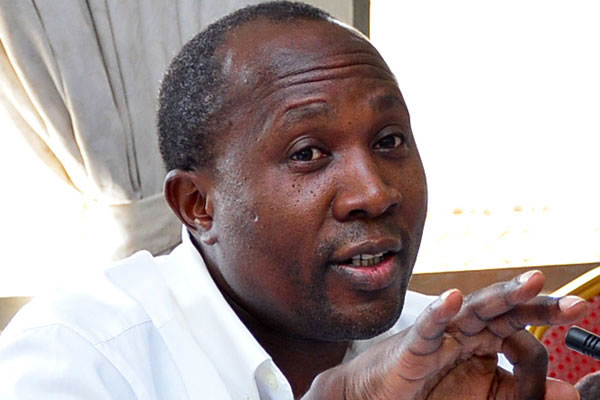
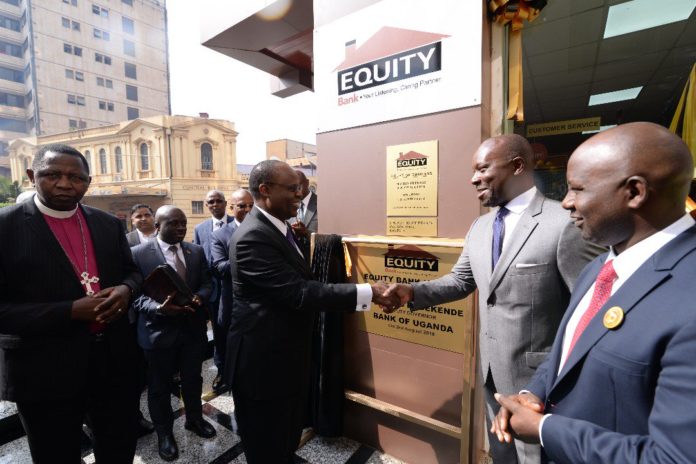
Equity Group MD emphasises role of agent banking as Ugandan affiliate celebrates 10 yrs

BoU Deputy Governor, Kasekende, Archbishop of Church of Uganda, Dr. Stanley Ntagali being welcomed by Equity Bank-Uganda board Chairman, Apollo Makubuya.

Agent banking is playing a leading role in financial inclusion in the East African region, according to Equity Group Managing Director and CEO Dr. James Mwangi who was in Kampala on Friday to celebrate 10 years of the existence of Equity Bank Uganda which has moved its headquarters to new 16-floor Church House on Kampala road.

Dr. Mwangi was speaking to the media after unveiling Equity Bank Uganda’s new headquarters where he also said that by forging strategic partnership, “We achieve shared benefits. Banking is made easy, partners achieve their goals and customers enjoy convenience, ease of access and financial inclusion.” Previously, Equity Bank Uganda, an affiliate of Kenyan Equity Group Holdings, was headquartered in Katwe.

Equity Bank Uganda as of June 2018 had 1608 agent users from 412 attracted in November 2017. Mwangi said Equity Group has invested heavily in the innovative business model that is responsive to the involving societal needs and technological advancements.

Mwangi said that the bank would enhance partnerships in the next ten years to enable citizens to participate in the emerging economic opportunities in agriculture, oil and gas, manufacturing and export businesses “which we believe are the major drivers of Uganda’s socio-economic transformation.”

Mwangi said the Equity Group holdings has potential to lend up to US $250 million (Over Shs2 trillion) to Ugandan firms that would want to participate in the oil and gas sector as the country prepares to produce crude oil.

He said the Equity Group would continue with its corporate responsibility in education, agriculture and entrepreneurial training across Easter Africa and that it has set 2 per cent of its revenue earnings for that purpose.

Speaking to the media the Managing Director of Equity Bank Uganda Samuel Kirubi said the bank was eighth in the market by assets worth Shs1.03 trillion and one of the fastest growing in the country.

Kirubi said the bank has 33 branches countrywide, 971 agents (Equi Duuka), 945 points of sales terminals supporting merchant banking. It also operated in Rwanda, Tanzania, South Sudan and DR Congo.
While talking of digital banking which was launched in 2018, Kirubi said EazzyBanking App has moved a total of Shs87 billion by June 2018.

“Since we launched our digital bank a decade ago, we have continued to grow and expand both in size and in the range of our product offerings,” he said adding that digital banking offers clients customers the freedom to their banking without constraints pf time or distance.

The bank as of June 2018 had 592,464 from 261,154 while deposits have grown to Shs754.3 billion in June 2018 from Shs34.1 billion as of June 2008. It has advanced loans worth Shs600.6 billion as of June 2018 from Shs80.7 billion in 2008.

Speaking at the function, the Bank of Uganda (BoU) Deputy Governor, Dr Louis Kasekende applauded Equity Bank for using technological innovations to reach out to the rural people. He said the agent banking in which Equity Bank is the leader has boosted the financial inclusion in the country.

Dr Kasekende also commended Equity Bank for its customer centric business model where they offer micro loans from Shs300, 000. The micro loans, according to Kirubi, have grown to Shs20 billion as of June 2018 from Shs1 billion in 2008.

However Kasekende used the same forum to tell the public that BOU does not give credit to insolvent banks much as it can offer liquidity to the banks that are in need of it.

Stories Continues after ad

Why pitching your product is not enough for investors

Martin Zwilling

By Martin Zwilling
As an occasional angel investor, I always ask for a business pitch to get me in the mood. I’m still amazed at how many technical entrepreneurs don’t have a business pitch, and offer me their product pitch or product spec instead. I’m a technologist, so I always love to learn about the product, but every investor needs to make sure you have a business, as well as a product.

As a technology buff, I’m all too sensitive to the common investor complaint that technical people often end up selling yet another “solution looking for a problem,” because they are so impressed with their technology. Unfortunately, customers look for value in solving their problem, and new technologies alone scare them, so these solutions don’t get bought by customers, or funded.

In reality, there isn’t much overlap between the business pitch I expect, versus a product pitch. Certainly a slide or two needs to carry over describing the product and features at a high level. Beyond that, the why and how of the business are more important to investors than the what.

Attracting business investors is as tough as attracting customers, but it’s a different challenge.
Investors are looking for motivation to buy a chunk of the business, not the product. Thus using product features to attract investors won’t work. Here are the unique business elements that I expect to hear as a potential investor:

Target market size and growth projections. Most investors won’t be interested unless you can show them a large market (billion-dollar opportunity), with a double-digit growth rate. This implies high odds of a scalable business, simply needing an investment to lead to success. Of course, you wouldn’t include this data in your customer product pitch.

Business model showing costs, pricing, and margins. Potential investors love to see gross margins in the fifty percent range or greater, with recurring revenue through subscriptions, follow-on sales, or services. Online and ecommerce businesses are especially attractive here, since they are instantly worldwide and not people-intensive.

Team skills depth, domain experience, and track record. In my experience, the team’s credentials are more important to the business than product features. Customers may be attracted to product features, but investors look harder at the team (bet on the jockey, rather than the horse). Solo entrepreneurs have a hard time finding an investor.

Intellectual property and sustainable competitive advantage. Patents, trade secrets, and trademarks are very attractive to investors, since these are not easily overcome by competitors. Your solution may include leading technology, but if available to competitors, the lead won’t last. “First to market” is not sustainable with normal startup resources.

Customized marketing strategy and realistic sales plans. “If we build it, they will come” and “word of mouth” are not credible marketing strategies these days. I would expect to see specific plans for distribution, partnerships, and sales channels, as well as the use of social media and conventional marketing, with budgets for the major elements.

Five-year financial projections of revenue and expenses. Of course, investors want to see a positive return on their investment, with timeframes and growth expectations. These are not meant to be an accuracy test, but a check on your commitment level, understanding of business norms, and an assessment of company valuation over time.

Specific investment size request and equity offered. Every investor pitch must include the size of the desired investment, followed by the percentage of equity offered, thus supporting a realistic valuation today. Equally important is a projected use of these funds in scaling the business, including time frames for future investment requirements.

Discussion of likely liquidity events and exit strategy. Since startup stock has little market value for several years until the company goes public (IPO) or is purchased (M&A), investors want to hear your strategy for offering them a good return on their investment. Examples of similar events in your industry are especially helpful.

Creating a great investor pitch is probably more difficult for technical entrepreneurs than creating a great product pitch. But it’s critical to have one. Just as a great business can’t exist without a product, a great product won’t survive without a business to sell it. It’s up to you as an entrepreneur to create both, with the ability to pitch either one, to the right people.
The Writer is a veteran startup mentor, executive, blogger, author, tech professional, and Angel investor. Published on Forbes, Entrepreneur, Inc.

Stories Continues after ad

Winnie Kiiza dropped as the LoP as Mafabi bounces back

DROOPED Winnie Kizza

Forum for Democratic Change has dropped Kasese Woman Member of Parliament Winnie Kiiza as the Leader of Opposition in Parliament in a reshuffle announced by party president Patrick Amuriat.

Winnie Kiiza has been replaced by Gulu Woman MP, Betty AoL Ochan. Kira municipality MP Ssemujju Nganda has been maintained as the Opposition Chief Whip in Parliament.

The party also dropped Bugweri County MP Abdul Kamuntu and appointed Kawempe South legislator Mubarak Munyagwa to head Committee on Commissions, Statutory Authorities and State Enterprises
(COSASE) deputized by Rubaga North MP Moses Kasibante.

NEW LoP, Betty Aol Ochan with mic and Gulu Municipality legislator, Lyandro Komakech at a past function.

Budadiri West Nathan Nandala Mafabi has bounced back and appointed to the head of Public Accounts Committee (PAC). Fungaroo Kaps Hassan of Obongi County has been made Committee Chairperson of Government Assurance.

Amuriat said the changes take immediate effect and are aimed at taking political leadership in the country. “The move was taken after vast consultations among major political icon in the party. There are more 26 positions that will be fill later because the party is participating in election processes across the county,” he said at FDC headquarters.

Nandala Mafabi bounces back as PAC chairperson.

FULL LIST
MINORITY LEADER – Hon Betty Aol Ochan.
MINORITY CHIEF WHIP- Hon Ssemujju Nganda.
DEPUTY MINORITY CHIEF WHIP- Hon Tonny Muhindo
COMMISSIONER- Hon. Mwijukye Francis.
INTER PARLIAMENTARY UNION (IPU) – Hon Roland Kaginda
CPA REPRESENTATIVE – Hon Nambooze
PAN AFRICAN PARLIAMENT – Hon. Nzoghu William
ACP REPRESENTATIVE- Hon. Jack Wamai

COMMITTEE CHAIRPERSONS
PAC- Hon. Nandala Mafaabi, DEPUTY- Hon – PP Okin.
LOCAL GOVERNMENT- Hon. Franka Akello, DEPUTY- HON Gilbert Olanya
COSASE- Hon. Munyagwa Mubarak, DEPUTY- Hon. Kasibante Moses
PUBLIC ASSURANCE
Hon. Kaps Hassan Fungaroo, DEPUTY- Hon. Micheal Kibaziguruka

Stories Continues after ad